
Reviewed · HISTORICAL TOURS
2-Hour Private LGBTQ+ History Tour of London with a Licensed Guide
London’s LGBTQ+ story is written into Bloomsbury’s streets, buildings, books, and old meeting places. This private walk with guide Ric Morris connects the area’s artists, writers, doctors, philosophers, and social rebels from the 18th century to today.
I like the private format, which lets your group of up to 15 stay together without strangers joining in. I also like the unusual subject matter: you’ll hear about Polari, cross-dressing Victorians, lesbian pioneers in medicine, and the first gender affirmation surgeries. The main consideration is price. At $452.52 per group, it is a strong deal for a full group but costly for just one or two people.
In This Review
- Key points to know before you book
- Why Bloomsbury makes such a good setting
- Starting at Bernard Street
- Artists, doctors, and the people who changed the conversation
- Queer spaces and coded London language
- Cross-dressing Victorians and changing ideas of gender
- The literary side of the route
- Ric Morris and the private-tour advantage
- What the $452.52 group price really means
- Ending at Fitzroy Tavern
- Who should book this walk
- Booking, timing, and cancellation advice
- Should you book the LGBTQ+ history tour?
- FAQ
- Where does the tour begin?
- What time does the tour start?
- How long does the experience last?
- Where does the tour finish?
- How many people can join the private tour?
- What language is the tour offered in?
- Who guides the experience?
- Are service animals allowed?
- Can I cancel for a full refund?
Key points to know before you book
- Bloomsbury is the whole classroom: The two-hour walk focuses on one central London district rather than trying to cover the entire city.
- Ric Morris leads the tour: He is described as friendly, entertaining, well paced, and highly informed about the subject.
- The stories reach beyond famous names: Expect artists, medical pioneers, philosophers, booksellers, Victorians, and coded language.
- The private price favors groups: A group of 15 pays about $30 per person, while two people would pay about $226 each.
- The walk ends at Fitzroy Tavern: You can stop for refreshments, with Goodge Street and Tottenham Court Road stations nearby.
- Rain may be a factor: The experience runs outdoors, so bring suitable clothing for London weather.
Why Bloomsbury makes such a good setting
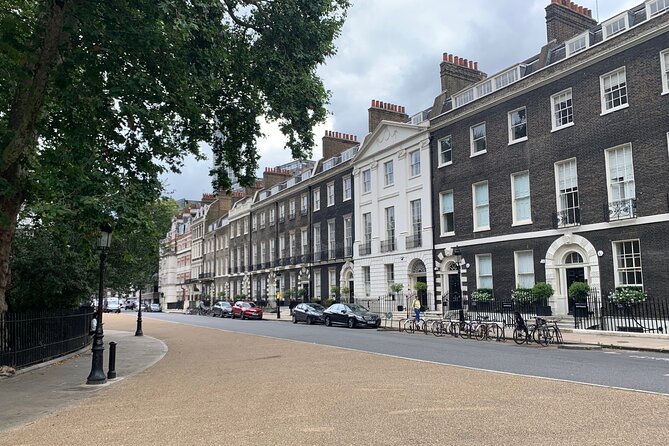
Bloomsbury is an especially useful place to examine London through an LGBTQ+ lens because its story is not limited to one period or one type of person. The route reaches from the 18th century to the present, using the neighborhood as a way to trace changing ideas about love, gender, medicine, art, and public life.
That gives the tour a broader purpose than a quick list of famous figures. You are looking at how queer lives appeared in different settings: private homes, intellectual circles, medical institutions, publishing, literary culture, and public spaces.
I like this approach because it adds meaning to streets you might otherwise pass without a second thought. Bloomsbury is already popular for its museums, squares, and literary associations. This walk gives you another way to read the area, with attention to people who were often left out of standard London sightseeing.
The tour lasts about two hours. That is long enough for a connected story, but short enough to fit around other plans. You should still expect to spend the time walking and listening outdoors, so comfortable shoes and weather protection make sense.
More London history walks:
- London Small Group Tour of Historical Pubs
★ 5.0 · 10,422 reviews - Soho Music & Historic Pubs Tour
★ 5.0 · 1,993 reviews - London: Historic Pubs of Central London Walking Tour
★ 4.9 · 1,065 reviews
Starting at Bernard Street
The tour begins at 2:00 p.m. at 10 Bernard Street, London WC1N 1LT. This is a practical start time if you want a relaxed morning, but it also means you should allow enough time to reach the meeting point after lunch.
The supplied information does not give a detailed list of every street or building visited, so I would not book this expecting a precise checklist of addresses. The value is the guide’s interpretation of Bloomsbury and the way the subjects connect.
Because the activity is private, your group does not share the walk with other bookers. That matters if you want to ask questions, move at your own pace, or keep the subject matter focused on your own interests. It can also make the experience easier for a work group, family group, or LGBTQ+ organization arranging a dedicated outing.
The group limit is 15 people. That is large enough for a company team or social group, while still remaining smaller than a standard city sightseeing crowd. If your party is near the maximum, stay close to the guide at crossings and busy stretches of the route.
Artists, doctors, and the people who changed the conversation
One of the tour’s most interesting threads concerns a free-loving group of artists. The wording points to the Bloomsbury Group, whose members helped make the neighborhood a center for unconventional personal and creative lives.
You will not only hear about art as a finished product. The tour connects artistic work with relationships, social attitudes, and the freedom some people sought in private circles. That helps explain why Bloomsbury mattered as a place where old rules could be questioned.
Another important thread follows lesbian pioneers in women’s medicine. This gives the walk a welcome change of emphasis. LGBTQ+ history is often presented mainly through legislation, policing, nightlife, or famous male writers. Here, medicine and women’s professional lives receive serious attention.
You will also hear about the philosopher who first defended same-sex love. That topic places LGBTQ+ history within the development of ideas, not just personal biography. It asks how people argued for same-sex relationships at a time when public opinion and law offered little protection.
For you, the practical benefit is variety. The two hours are not built around a single celebrity or a narrow political timeline. The material moves between philosophy, medicine, art, gender expression, fiction, and everyday communication.
Queer spaces and coded London language
The route includes an 18th century queer space, a detail that helps show how LGBTQ+ life existed before modern identity terms became common. The word queer itself has changed meaning over time, and the tour’s historical use of the idea should help place people and places in their own period.
You will also learn some Polari, London’s secret gay language. This is one of the tour’s most memorable features because it gives you something concrete to take away. Instead of hearing only about discrimination or social change, you encounter a form of speech used to communicate identity and recognition.
Polari also shows why coded language mattered. When being open could bring social or legal trouble, words and phrases could create a sense of connection while keeping meaning less obvious to outsiders. A short lesson in the language makes that history easier to grasp.
I would especially recommend this part for anyone who enjoys the small details of city life. A vocabulary lesson may sound minor next to famous historical events, but it can make the past feel more human and immediate.
A few more London days worth a look
- London: Ghastly Ghosts 2-Hour Walking Tour
★ 4.9 · 794 reviews - James Bond Shooting Locations 2-Hour Walking Tour of London
★ 4.7 · 332 reviews - 2-Hour Jack the Ripper Small Group Walking Tour in London
★ 4.5 · 160 reviews - London: 2-Hour Historic Pub Tour
★ 4.9 · 133 reviews
Cross-dressing Victorians and changing ideas of gender
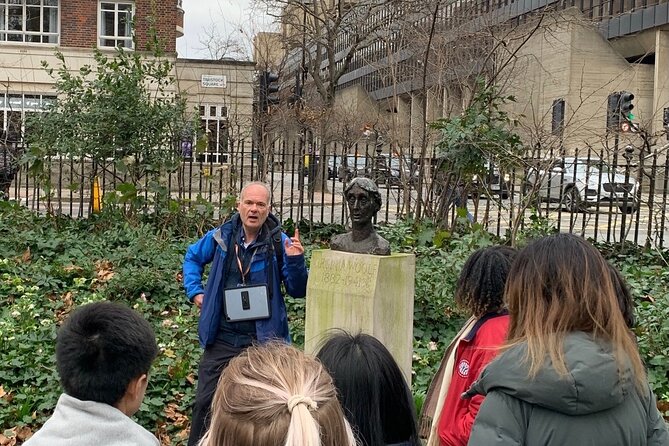
Victorian London is often presented as a world of strict manners and fixed social roles. This tour complicates that picture with stories of cross-dressing Victorians and people who challenged accepted ideas about appearance and identity.
The subject can help you see that gender expression has never fit neatly into one modern period. People found ways to test, bend, or reject social expectations long before today’s language became available.
The material also includes the first gender affirmation surgeries. That is a substantial subject for a short walking tour, and it connects personal identity with the history of medical practice. You should expect an introduction rather than a specialist medical lecture, but the inclusion gives the route unusual breadth.
This is one of the reasons I would not treat the experience as a general introduction to London nightlife or modern LGBTQ+ politics. Its focus is historical and cultural. The route looks at how people lived, wrote, worked, spoke, and sought recognition over a long period.
The literary side of the route
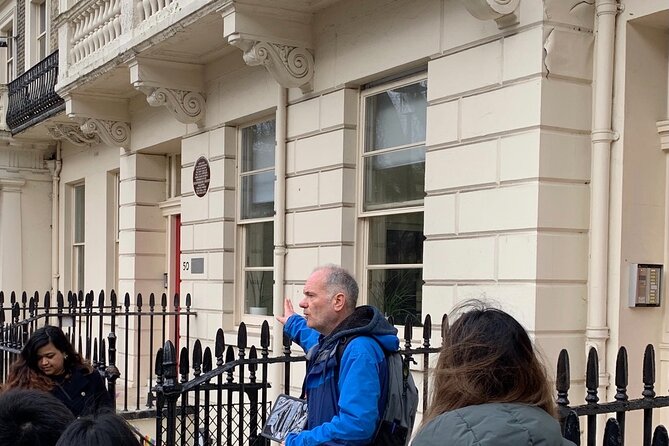
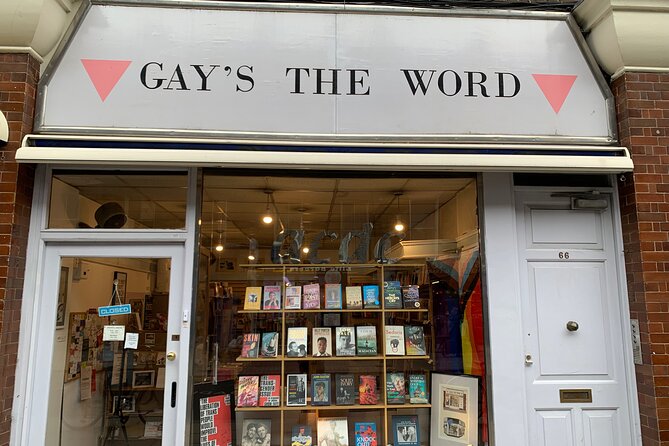
A landmark lesbian novel is part of the story, along with London’s best-loved LGBTQ+ bookshop. These stops bring the history into the world of reading and publishing.
Books matter here for more than literary interest. A novel can put private feelings into public view, while a specialist bookshop can provide a place for community, discovery, and self-understanding. Together, those subjects show how printed culture helped preserve and spread LGBTQ+ voices.
The bookshop reference is especially useful for readers who enjoy connecting places with works of literature. The supplied details do not identify the shop by name, so you should not assume a particular store visit or browsing opportunity. The point is the role of the bookshop in London’s LGBTQ+ cultural life.
I like that the route includes both well-known intellectual figures and practical community institutions. That mix keeps the story from becoming a parade of names. It also gives you a better idea of how history survives through books, shops, language, and ordinary places.
Ric Morris and the private-tour advantage
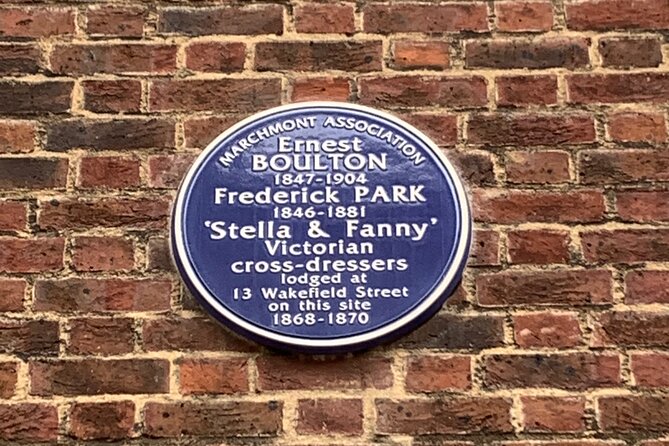
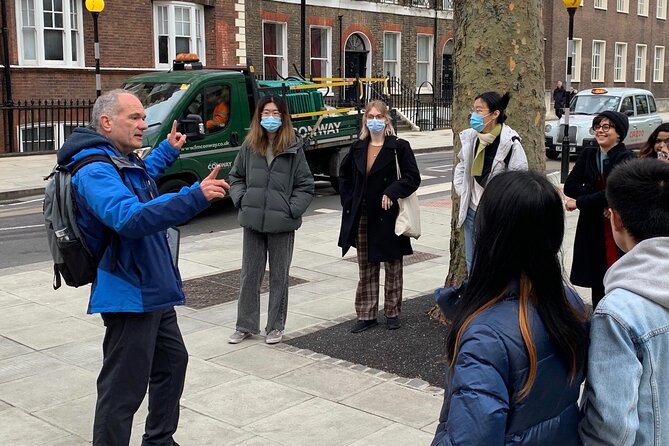
Ric Morris is the named experience provider and guide. The feedback supplied for the tour describes his presentation as entertaining, well paced, friendly, and informed. One group of 12 took the walk as part of an LGBT+ History Month work program, and the experience was used successfully as a team outing.
That work-group example tells you something useful about the tone and structure. The walk can suit people with different levels of prior knowledge, including those who want a shared educational activity rather than a formal academic lecture.
The pace also matters. Two hours can feel rushed if a guide tries to cover too much. The description suggests a carefully timed walk, with enough room to move through several centuries without turning each stop into a long seminar.
The private setting gives you a chance to make the tour more relevant. You can ask Ric to clarify a term, explain a historical connection, or spend a little more time on the subjects your group finds most compelling. No public group means no need to fit your questions around strangers.
One practical point: the tour runs in all the ordinary conditions London can offer. A work group completed it despite intense rain, with Ric keeping spirits up. That is encouraging, but it is not a reason to ignore the forecast. A raincoat or umbrella will make the afternoon much more comfortable.
What the $452.52 group price really means
The listed cost is $452.52 for the entire private group, with up to 15 people included. The price makes the most sense when several people share it.
For a full group of 15, the cost works out to about $30.17 per person. For 12 people, it is about $37.71 each. At six people, it rises to about $75.42 per person, and for two people it reaches about $226.26 each.
That is the key value question. I would consider the tour reasonably priced for a larger family group, office Pride network, university group, or organized LGBTQ+ association. For a couple or solo visitor, the fixed private fee is much harder to justify unless this subject is a major priority.
You are paying for a dedicated guide and a focused subject rather than a general walking tour. If you want a broad introduction to London landmarks, this is not the right use of your money. If you want a specialized history walk and can divide the cost among a group, the calculation improves quickly.
The tour does not list an admission charge for the Bloomsbury portion. It is primarily a guided walk, so you should budget separately for any refreshments you choose at the end.
Ending at Fitzroy Tavern
The walk ends at Fitzroy Tavern, 16 Charlotte Street, London W1T 2LY. The historic pub provides a natural finish after two hours on foot, and you can stop for refreshments before continuing your day.
This ending is useful even if you do not plan to stay long. It gives the group a clear place to pause, discuss what you have heard, and decide where to go next. The pub is not presented as an included meal or formal final activity, so plan to pay for anything you order.
For onward travel, Goodge Street and Tottenham Court Road Underground stations are a short walk away. That makes the tour easy to connect with central London plans, though the information does not specify every Underground line or walking time.
The finish also avoids sending you back to the starting point. If you are building a day around Bloomsbury, Fitzrovia, or nearby central London, the one-way route is convenient. If you need to return to Bernard Street, allow extra time for public transport or walking.
Who should book this walk
I would recommend it most strongly to:
- LGBTQ+ visitors who want London history presented through personal and community stories
- Allies looking for a serious, place-based way to learn
- Work groups planning an LGBT+ History Month activity
- Readers, writers, and history fans interested in Bloomsbury’s cultural life
- Groups of six to 15 who can share the private fee
- London residents who know the area but want to understand its less visible past
It may be less suitable if you want a fast route through major sights, indoor museum time, or a nightlife-focused experience. The walk is also not designed as a complete survey of LGBTQ+ London. Its strength is the concentrated Bloomsbury setting.
The tour is listed as suitable for most people, and service animals are allowed. It is near public transportation, but the activity remains a walking experience, so you should judge your own comfort with two hours outdoors.
Booking, timing, and cancellation advice
Confirmation is normally sent at booking. If you book within nine days of the travel date, confirmation may arrive within 48 hours and depends on availability, so last-minute planners should leave room for that uncertainty.
Free cancellation is available if you cancel at least 24 hours before the 2:00 p.m. start time. Cancellation inside that 24-hour window is not refundable, and changes made during that period are not accepted. The cut-off uses London local time.
The practical rule is simple: check your group size, watch the forecast, and make any changes before the final 24 hours. That matters more for a private booking because the fixed price covers the group, not individual tickets.
Should you book the LGBTQ+ history tour?
Book it if you want a focused, thoughtful walk through Bloomsbury and can share the cost with a group. The strongest features are the range of subjects, the private format, Ric Morris’s friendly and well-paced approach, and the chance to learn details such as Polari and the history of queer spaces.
Think twice if you are booking for only one or two people, since the fixed fee becomes expensive. Also skip it if you prefer indoor attractions or a broad London highlights tour.
For a group marking LGBT+ History Month, planning an educational afternoon, or simply wanting to see Bloomsbury through a different lens, this is a useful choice. You leave near a historic pub and two Underground stations, with a clearer sense of how LGBTQ+ lives shaped London’s art, medicine, language, literature, and public culture.
FAQ
Where does the tour begin?
The tour begins at 10 Bernard Street, London WC1N 1LT, UK.
What time does the tour start?
The scheduled start time is 2:00 p.m.
How long does the experience last?
The tour lasts approximately two hours.
Where does the tour finish?
It finishes at Fitzroy Tavern, 16 Charlotte Street, London W1T 2LY.
How many people can join the private tour?
The price covers one private group of up to 15 people.
What language is the tour offered in?
The tour is offered in English.
Who guides the experience?
Ric Morris is the named experience provider and guide.
Are service animals allowed?
Yes, service animals are allowed.
Can I cancel for a full refund?
Yes. You can receive a full refund if you cancel at least 24 hours before the experience start time. Cancellations or changes made less than 24 hours before the start are not accepted for a refund.
More LGBTQ-Friendly in London
Latest arrivals on the London list
- Easy Access Tower of London Royal Secrets & Scandals Tour★ 5.0 · 3 reviews
- Stonehenge Special Access Guided Morning Tour from London★ 4.5 · 3 reviews
- Shoreditch & East London Walking Tour with a Local, Custom & Private★ 5.0 · 3 reviews
- Madame Tussauds London Fast Track and Champagne Experience★ 3.5 · 3 reviews
- London Private Brixton Tour with a Local – Culture & Stories★ 4.9 · 3 reviews
- Private Full Day Tour – Fast Track Tower of London and Lunch★ 4.6 · 3 reviews
- Private transfer from London Heathrow Airport to Southampton★ 5.0 · 3 reviews
- London Soho District – Guided Walking Tour 12 guests 2,5h★ 4.8 · 3 reviews
Historical Tours, compared.
Royal Historic Pubs Walking Guided Tour in London
Read our review →
Private Group: Historical Pub Walking Tour of London
Read our review →
Browse the lists this tour appears in