
Reviewed · LONDON
Burnings, Butchery & Black Death: London’s Bloody Past
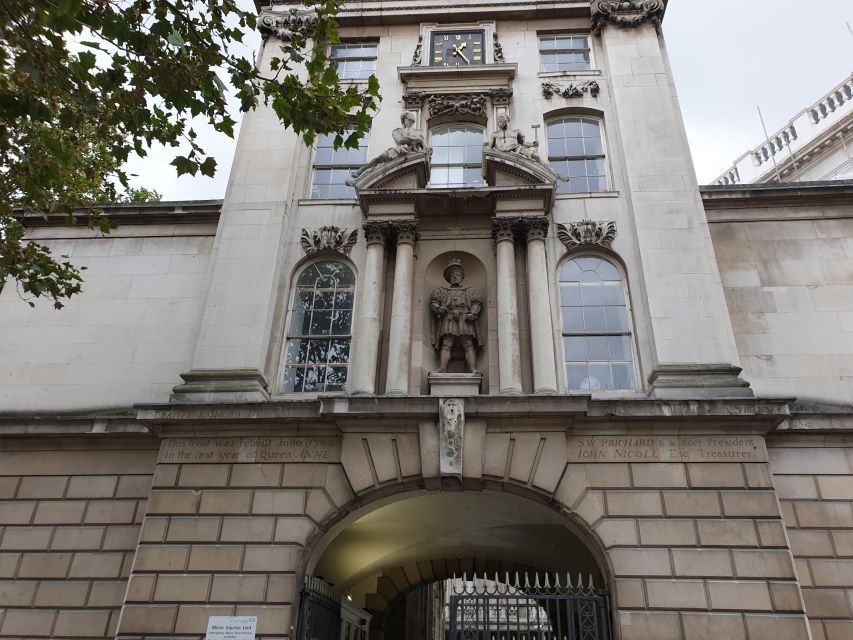
Smithfield’s past is not polished or pretty. For centuries, this corner of London handled animal slaughter, public executions, plague burials, and urban poverty. The two-hour walk turns those hard facts into a readable story, linking Smithfield’s streets with kings, William Wallace, Charles Dickens, and the Black Death.
I like the route’s compact size and clear focus. You walk only about two miles, yet the stops cover a thousand years. I also like the small group limit of 15, which should make it easier to hear the guide and ask questions. The main drawback is the subject matter: this is a grim tour, not a gentle sightseeing stroll, and children under 13 cannot join.
In This Review
- Key things to know before you go
- Why Smithfield makes such a strong setting
- Starting at Barbican Station and Charterhouse Square
- Smithfield Market and the long history of slaughter
- Charterhouse Square, plague burials, and the Black Death
- St John’s Gate and the route’s medieval connections
- Cloth Fair and St Bartholomew the Great
- William Wallace without the Braveheart version
- St Bartholomew’s Hospital and the human cost of London
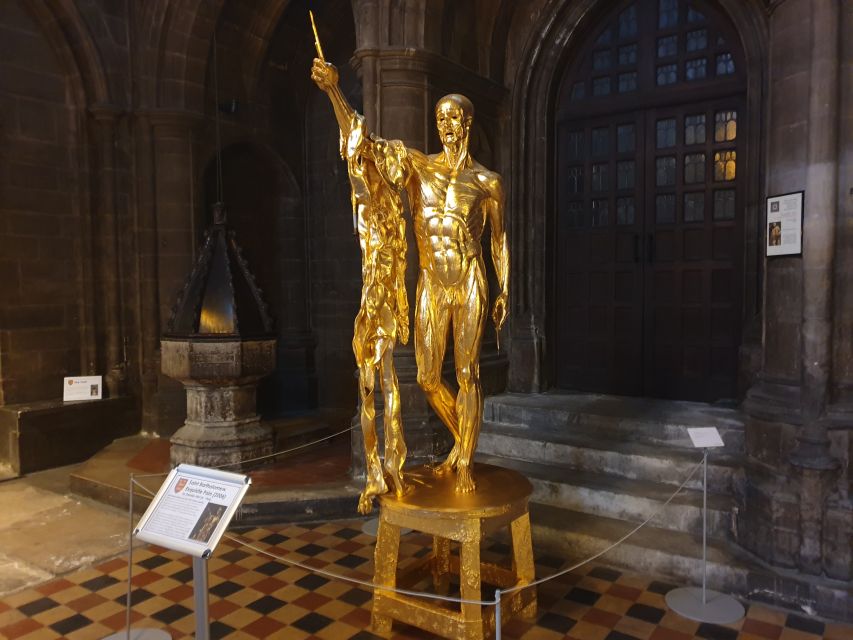
- The Golden Boy of Pye Corner
- Dickens, slums, and the world of Oliver Twist
- Ely Place and the finish near Farringdon
- Guide style and group size
- Is $26 a fair price?
- Who should book this walk?
- Should you book Burnings, Butchery & Black Death?
- FAQ
- Where does the tour begin?
- Where does the tour finish?
- How long is the walking tour?
- How far do you walk?
- What language is the tour in?
- Is entry to the churches included?
- What subjects does the tour cover?
- Can children join the tour?
- How many people can attend?
Key things to know before you go
- Smithfield is the main character: The walk centers on a district long connected with both human and animal slaughter.
- The route covers about two miles: It begins by Barbican Station and finishes at Ely Place near Farringdon.
- Expect plague, executions, and body snatchers: The history is deliberately macabre, with dark humor mixed into the facts.
- William Wallace gets special attention: You’ll hear why Braveheart’s famous freedom cry was impossible during his execution.
- Church visits depend on services: Entry to the churches is included when worship is not taking place.
- The small group matters: A maximum of 15 people gives the guide room to respond to questions.
Why Smithfield makes such a strong setting
Many London walks move from one grand building to another. This one works differently. It uses a compact part of the city to show how practical, violent, crowded, and unequal medieval London could be.
Smithfield has long been linked with slaughter. That means the walk is not just about famous people or isolated events. The streets themselves help explain how London dealt with food, death, punishment, disease, and poverty.
The Black Death forms one of the tour’s most striking threads. In the fourteenth century, tens of thousands of corpses had to be disposed of, and the area became part of that grim response. You are not simply told that the plague was bad. You are shown how a city coped when its normal systems could not handle the number of dead.
The guide also connects Smithfield with later London. The district became a notorious slum, and Charles Dickens used it as part of the world of Oliver Twist. That change over time is important. The walk shows Smithfield not as one fixed medieval scene, but as a place repeatedly reshaped by disease, trade, punishment, and poverty.
Other London favourites people book with this one:
- London: The London Eye Entry Ticket
★ 4.6 · 35,875 reviews - From London: Harry Potter Warner Bros Studio Tour
★ 4.7 · 26,588 reviews - London: Westminster to Greenwich River Thames Cruise
★ 4.5 · 22,836 reviews
Starting at Barbican Station and Charterhouse Square
Meet just outside the Barbican Station exit on Aldersgate Street. Look for the guide holding an Historic London Tours sign. This is a practical meeting point, especially if you are already visiting the Barbican area or using the Underground.
The first listed stop is Charterhouse Square. The guided visit here lasts about five minutes, so think of it as a scene-setting stop rather than a long talk. The square helps place you in the old Smithfield district before the route moves toward its harsher themes.
A short stop can work well on a walking tour. You get the key point, look around, and keep moving instead of standing in one place for too long. Still, anyone hoping for extended time at every location should adjust expectations. The tour has many stops, and two hours passes quickly.
Smithfield Market and the long history of slaughter
Smithfield Market is the route’s central setting. The area was used for animal slaughter for centuries, while also being connected with human executions. That pairing gives the tour its unusual edge.
The guide explains how the same district could serve basic urban needs and public punishment. London needed food brought into the city, but it also used public spaces to display authority and carry out executions. Smithfield brings those subjects together in one place.
You will visit both Smithfield Market and the London Central Markets area associated with it. The itinerary gives each a short guided stop. The market may not look like a medieval execution ground today, and that contrast is part of the point. Modern London often hides the work that once happened in plain view.
If you are sensitive to descriptions of slaughter, punishment, or corpses, take the warning seriously. The title is accurate. The walk aims for gruesome detail, though the guide’s style also includes humor and stories that keep the presentation from becoming relentlessly bleak.
Charterhouse Square, plague burials, and the Black Death
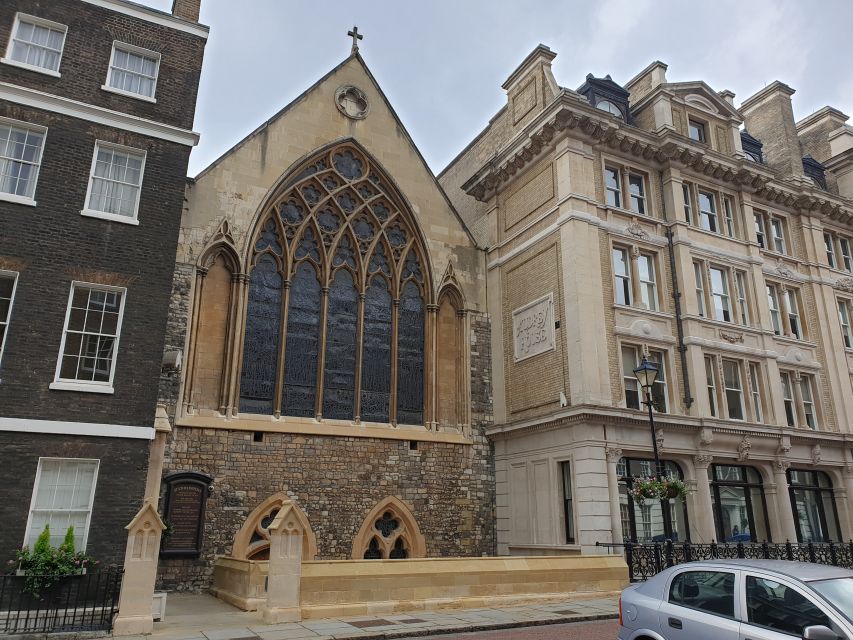
One of the tour’s most valuable sections concerns the Black Death. London had to deal with tens of thousands of bodies in the fourteenth century, and the walk explains how the city disposed of them.
This gives you a useful sense of the plague as a public crisis rather than only a list of symptoms and death rates. The practical question was immediate and terrible: where could a city put so many dead people? Smithfield’s role in that story makes the area feel less like a backdrop and more like evidence.
The guide’s approach appears to combine factual history with a strong sense of place. You are moving through modern streets while hearing about a city under extreme pressure. That contrast can make the past easier to grasp than a museum label or textbook paragraph.
The Black Death material is also why this walk suits adults and older teenagers better than young children. The minimum age is 13, and the subject can be unsettling even for mature participants.
Something completely different for your London days:
- Magical London: Harry Potter Guided Walking Tour
★ 4.7 · 22,044 reviews - London: Madame Tussauds London
★ 4.6 · 20,915 reviews - Stonehenge, Windsor Castle, and Bath from London
★ 4.5 · 18,662 reviews - London: Warner Bros. Studio Tour with Transfers
★ 4.7 · 17,586 reviews
St John’s Gate and the route’s medieval connections
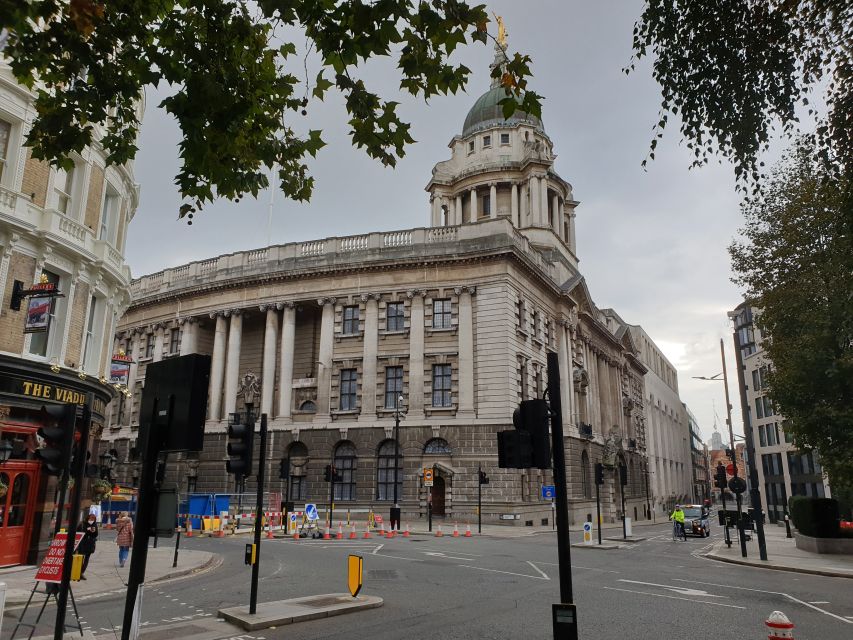
St John’s Gate is one of the short guided stops. The tour uses it to continue the medieval story, bringing together religious institutions, power, and the city’s changing streets.
The stop is part of a larger pattern. Rather than presenting Smithfield’s darker history as a series of unrelated horrors, the guide links people and places across the route. Kings, body snatchers, church buildings, execution sites, and literary characters all fit into the same urban story.
You should expect interpretation rather than long interior visits at every stop. The route includes entry to churches when no service is in progress, but the tour cannot promise that each church will be open for a visit. If entering historic interiors is your top priority, keep that condition in mind.
Cloth Fair and St Bartholomew the Great
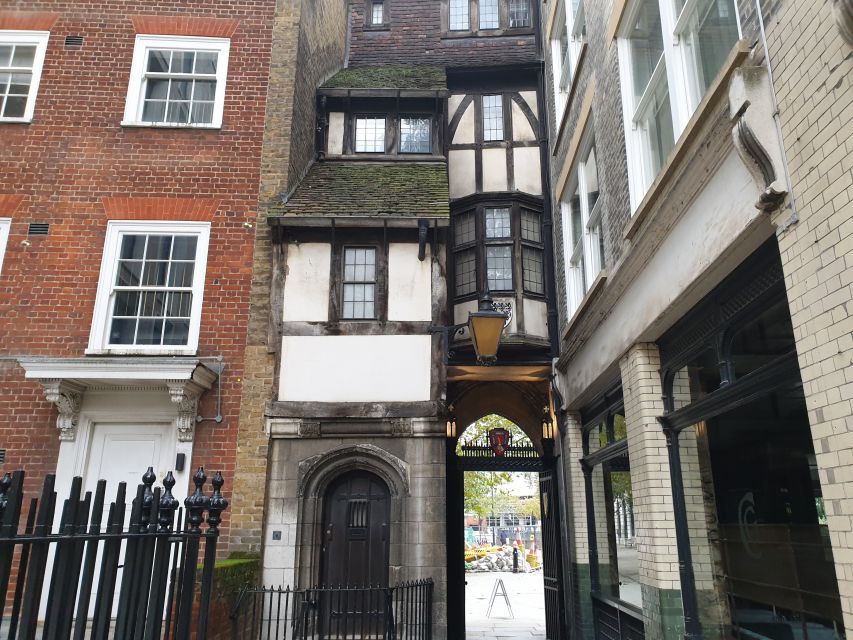
Cloth Fair is another compact stop in the Smithfield area. Its name gives the route a reminder that commerce and daily work existed alongside death and punishment. The tour’s strength is this layering. You hear about ordinary trade and crowded urban life in the same district associated with executions and disease.
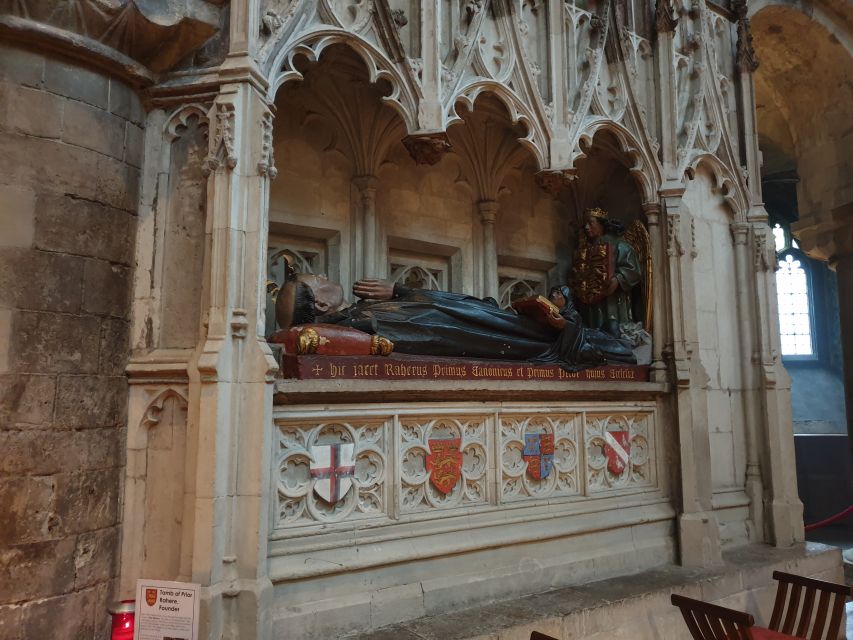
St Bartholomew the Great adds a church setting to the walk. Church entry is included when there is no service, so you might get a closer look inside rather than hearing about the building only from the pavement.
The timing here is brisk, with about five minutes listed for each guided stop. That keeps the walk moving, but it also means you should not expect a full church tour or a long architectural lecture. The emphasis remains on the wider story of Smithfield.
William Wallace without the Braveheart version
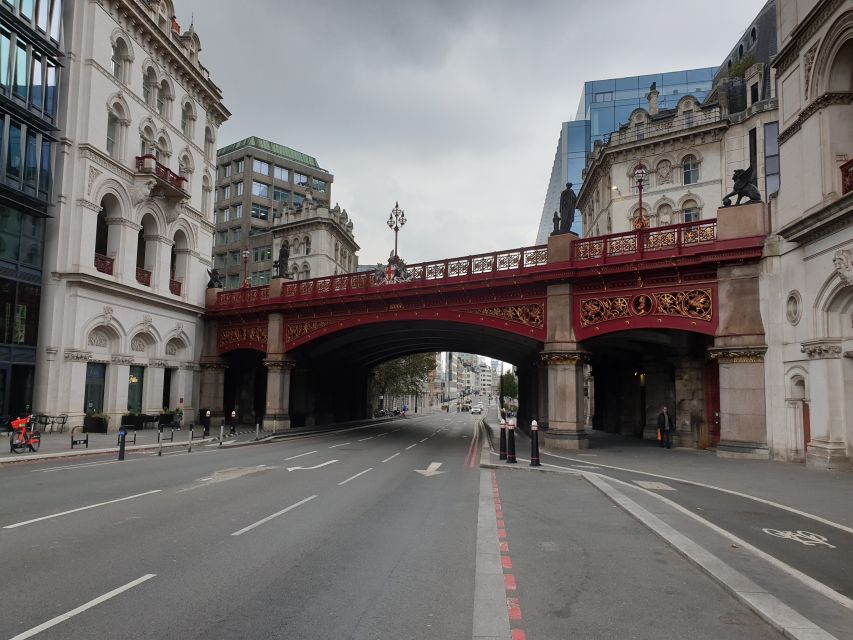
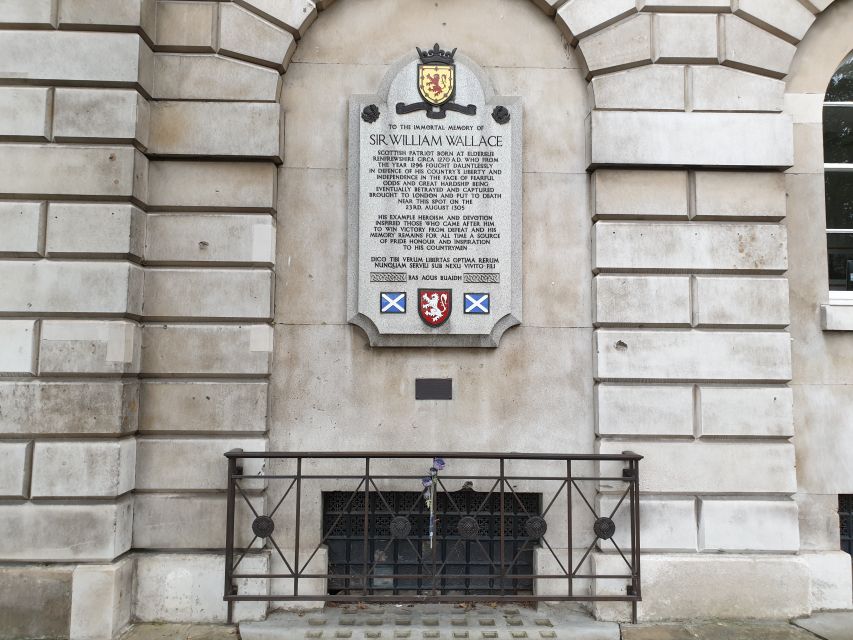
The Sir William Wallace Memorial is one of the route’s most memorable stops. Wallace is better known to many people as Braveheart, but this tour focuses on the grim reality of his execution.
The promised story has a sharp bit of humor: you learn why Wallace was in no condition to shout Freeeedoooommmm! as he was executed. That joke tells you something about the guide’s style. The tour does not soften the violence, but it uses dark humor to make the history easier to remember.
This is also a good example of how the walk handles famous names. It does not simply point at a memorial and repeat a familiar legend. It uses Wallace to question the polished version of medieval history that popular films often leave behind.
If you prefer strictly formal interpretation, the humor may not suit you. If you like history told with personality, this section should be a highlight.
St Bartholomew’s Hospital and the human cost of London
The stop at St Bartholomew’s Hospital broadens the story beyond executions and slaughter. A hospital in this setting brings the city’s response to illness and injury into view.
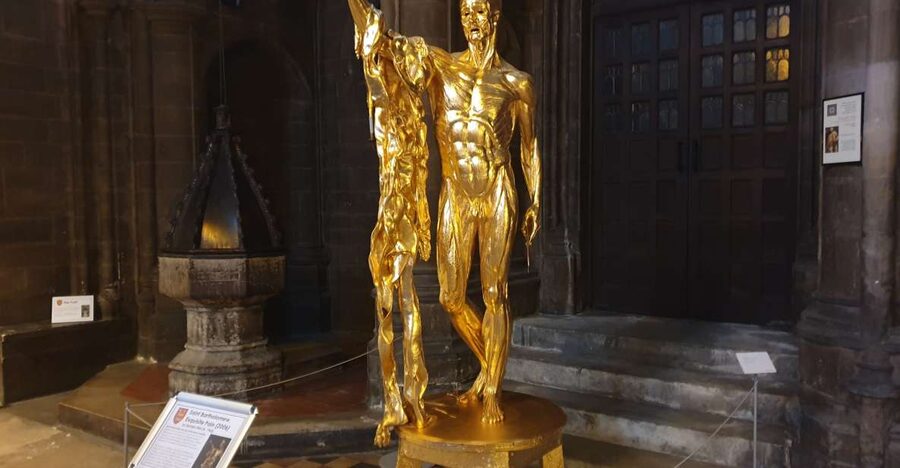
The tour also includes body snatchers among the characters you will meet. That detail points to the uneasy history of medicine and the demand for bodies, though the supplied route does not promise a separate long lecture on the subject. Expect it to form part of the wider story rather than take over the whole walk.
This section helps keep the tour from becoming a string of gruesome anecdotes. Disease, medicine, death, and urban growth all connect. The guide’s job is to show how those pressures shaped the neighborhood.
The Golden Boy of Pye Corner
The Golden Boy of Pye Corner is another short stop, and it adds a memorable landmark to the route. Its inclusion helps you spot small historical markers that are easy to miss when walking through central London on your own.
This is where a guided walk earns its fee. You might pass through the area without knowing why a particular object or site matters. The guide gives it a place in the story, then links it back to the larger themes of fire, hardship, punishment, or urban change covered along the route.
The available details do not specify a long visit here, so allow for a quick explanation and a look around rather than a major attraction visit.
Dickens, slums, and the world of Oliver Twist
Smithfield’s later identity as a notorious slum leads naturally to Charles Dickens. The walk explains how the area became part of the world Dickens memorialized in Oliver Twist.
This is a useful change of period. You move from medieval punishment and plague into the social problems of a later London. The city is still crowded and unequal, but the details have changed. Dickens gives the guide a way to discuss how writers recorded the harsh conditions of ordinary people.
I like this literary connection because it makes the route useful even if you are not mainly interested in executions. Dickens fans will recognize the setting, while other visitors get a clearer sense of why Smithfield appears in stories about poverty and crime.
The tour also brings in an eighteenth-century ghost. That adds a supernatural note without changing the walk into a ghost tour. Expect the ghost story to sit beside documented history, myths, and dark jokes.
Ely Place and the finish near Farringdon
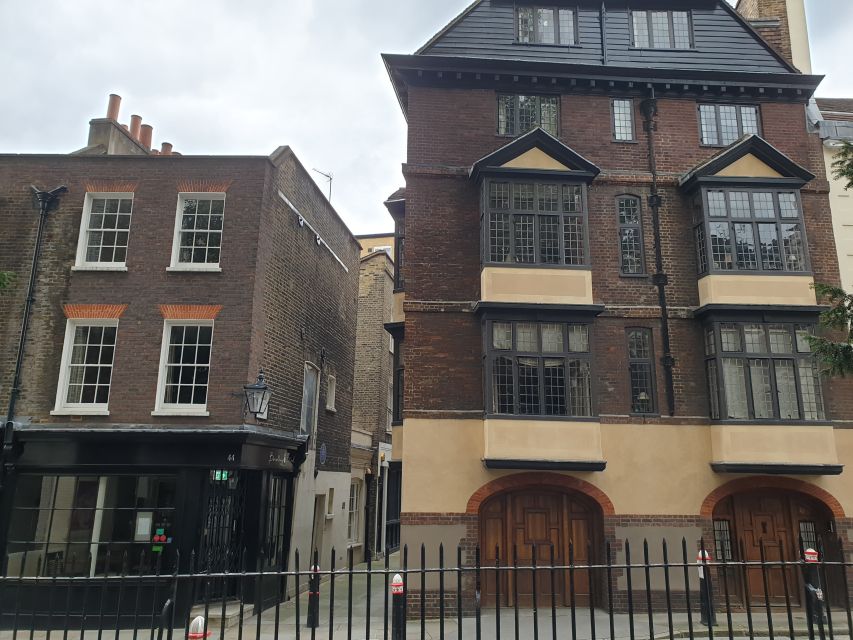
The walk finishes at Ely Place, with the route ending near Farringdon Station. That makes the finish convenient for continuing your day in central London, though the tour does not include transport back to the starting point.
By the end, you have crossed a small area but covered a large span of time. The route begins with medieval London, moves through plague and public punishment, touches medicine and body snatching, then reaches Dickens and the later life of the neighborhood.
The final location is useful for planning. You can treat this as a focused morning or afternoon activity rather than a full-day commitment. At two hours and about two miles, it is substantial enough to feel worthwhile but short enough to fit around other London plans.
Guide style and group size
The guide is live and the tour is in English. Tom is specifically associated with several of the strongest experiences, and his approach combines historical facts, myths, humor, and time for questions.
That last point matters. A good walking tour is not only a speech delivered while you follow behind. The format allows questions, and Tom has been described as responding to them and adjusting his approach to the group. He was also attentive to elderly participants, helping make the pace manageable for older members of a party.
The group limit is 15 people. That is small enough to support conversation without making the activity feel like a private tour. It also helps with a subject that includes many names and dates. If the group is full, you still have a reasonable chance of hearing the guide clearly.
The tour is offered in English only. If you need another language, this is not the right choice.
Is $26 a fair price?
At $26 per person, I see this as fair value for a focused London walk. You are paying for a live guide, a carefully linked route, church entry when services allow, and two hours of interpretation rather than simply walking past landmarks.
The value is strongest if you enjoy history told through streets and buildings. You get several named stops, but the real product is the connection between them. The guide turns Smithfield into a story about plague, slaughter, punishment, literature, and social change.
The price is less appealing if you want long interior visits, a broad survey of London, or a relaxed sightseeing stroll. This is a specialist tour with a dark theme. You should choose it because the subject interests you, not because it covers famous attractions in the usual way.
Free cancellation up to 24 hours before the start and the option to reserve now and pay later add useful flexibility. Keep in mind that the activity is still dependent on the stated meeting point, English-language delivery, and church access being available.
Who should book this walk?
I would choose this tour if you want a different side of London after seeing the main royal and museum sights. It suits adults, older teenagers, Dickens readers, history fans, and anyone who likes urban stories with a sharp edge.
It is especially useful for a repeat visit to London. The route focuses on places you might otherwise walk past, and the short distance makes it easy to add to a day in the Barbican, Smithfield, or Farringdon area.
I would skip it if you dislike graphic historical subjects, want a family activity for children under 13, or prefer a tour centered on art, architecture, or royal history. The subject matter is the whole point, and the guide does not pretend that London’s past was clean.
Should you book Burnings, Butchery & Black Death?
Book it if you want a compact, story-led walk through London’s darker past. The combination of Smithfield, plague burials, medieval executions, William Wallace, Dickens, and the Golden Boy of Pye Corner gives the route a clear identity.
The strongest reasons to go are the small group, the two-mile route, and the guide style associated with Tom: informed, warm, responsive, and willing to use humor when the material turns grim. Just arrive ready for difficult subjects and a brisk series of stops. At $26, it is a worthwhile choice for curious adults who want London explained through its less comfortable stories.
FAQ
Where does the tour begin?
Meet just outside the Barbican Station exit on Aldersgate Street. The guide will be holding an Historic London Tours sign.
Where does the tour finish?
The walk finishes at Ely Place, near Farringdon Station.
How long is the walking tour?
The tour lasts about two hours.
How far do you walk?
The total distance is about two miles.
What language is the tour in?
The tour is conducted in English with a live English-speaking guide.
Is entry to the churches included?
Yes, church entry is included when there is no service in progress. Churches may not be visited internally if services are taking place.
What subjects does the tour cover?
You will hear about Smithfield’s history of animal and human slaughter, the Black Death, medieval execution methods, body snatchers, William Wallace, Charles Dickens, eighteenth-century ghost stories, and the area’s former slums.
Can children join the tour?
Children under 13 are not permitted to take part.
How many people can attend?
Ticket sales are limited to 15 attendees.
Latest arrivals on the London list
- Stonehenge Special Access Guided Morning Tour from London★ 4.5 · 3 reviews
- Easy Access Tower of London Royal Secrets & Scandals Tour★ 5.0 · 3 reviews
- Shoreditch & East London Walking Tour with a Local, Custom & Private★ 5.0 · 3 reviews
- Madame Tussauds London Fast Track and Champagne Experience★ 3.5 · 3 reviews
- London Private Brixton Tour with a Local – Culture & Stories★ 4.9 · 3 reviews
- Private Full Day Tour – Fast Track Tower of London and Lunch★ 4.6 · 3 reviews
- Private transfer from London Heathrow Airport to Southampton★ 5.0 · 3 reviews
- London Soho District – Guided Walking Tour 12 guests 2,5h★ 4.8 · 3 reviews