
Reviewed · CITY TOURS
City of London Mystical and Dragons Walking Tour
The City of London is more than banks, office towers, and grand churches. This tour follows the older stories beneath the streets, linking London Stone, forgotten waterways, sacred sites, and dragon lore in a compact walk from Joe & the Juice to Temple Bar Memorial. It is a good choice if you like your history with a touch of mystery and plenty of questions.
I like two things right away: the small group of no more than eight, which should make it easy to hear and ask questions, and the route itself, which reaches places many standard London walks skip. The tour also gives you a useful new way to read carved symbols, church sites, and city landmarks.
The main consideration is its subject. Ley lines, Druidic traditions, ancient mounds, and dragons belong partly to folklore and interpretation, not only to settled historical fact. Arjun, the guide, presents this material as a blend of history, mythology, and archaeology, but you should come ready to separate documented evidence from symbolic storytelling.
In This Review
- Key points at a glance
- Why this City of London walk feels different
- London Stone and the first layers of the city
- Roman mystery at London Mithraeum
- Bank of England and the power of symbols
- St Mary-le-Bow and the City’s sacred center
- St. Paul’s Cathedral and the route through Christian London
- St Bride’s Church and the layered Fleet Street story
- St Dunstan-in-the-West and the medieval turn
- Temple Church and the Knights Templars
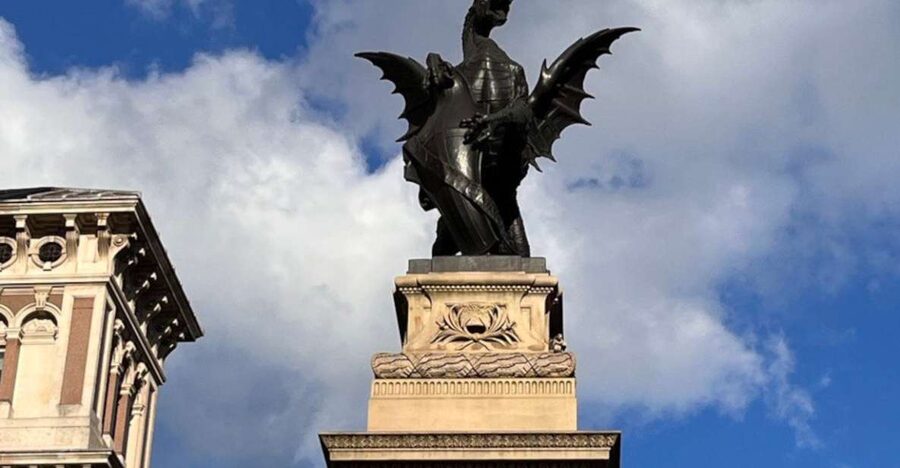
- Finishing at Temple Bar Memorial
- What the small group and timing mean
- Who will get the most from this tour
- Should you book the City of London Mystical and Dragons Walking Tour?
- FAQ
- How long is the City of London Mystical and Dragons Walking Tour?
- Where does the tour start?
- Where does the tour finish?
- What language is the tour in?
- How many people can join the tour?
- Is the tour wheelchair accessible?
Key points at a glance
- London Stone begins the story: See the remaining piece of a famous city object and consider why it has gathered so much legend.
- Forgotten streams meet modern offices: Bloomberg Arcade becomes a stop for thinking about waterways now buried or covered by the modern city.
- St. Paul’s anchors the route: The cathedral helps connect earlier sacred traditions with London’s later Christian identity.
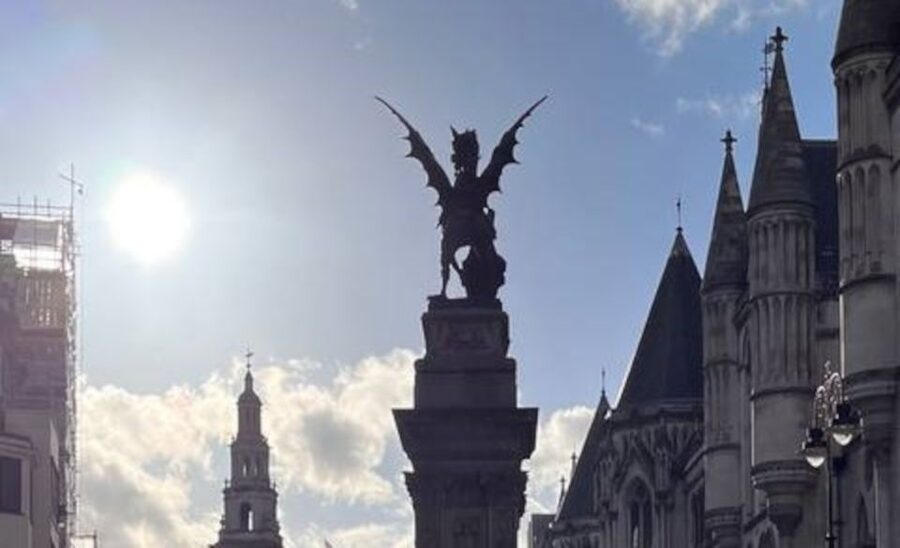
- Dragons appear through symbols and stories: The tour traces dragon lore across cultures and periods rather than treating it as a single tale.
- Temple Church brings in the Knights Templars: This stop adds medieval mystery to the walk’s older themes.
- A practical small-group format: The 2.5-hour English-language tour is limited to eight people and includes a post-tour PDF.
Why this City of London walk feels different
Many City walks explain where events happened. This one asks why certain places were treated as sacred, why symbols recur in architecture, and how older beliefs may have survived in changed forms.
That makes the experience less like a standard list of dates and more like a guided reading of London. You will move from prehistoric and Druidic ideas through Roman and medieval themes, then toward churches and landmarks that still shape the City today.
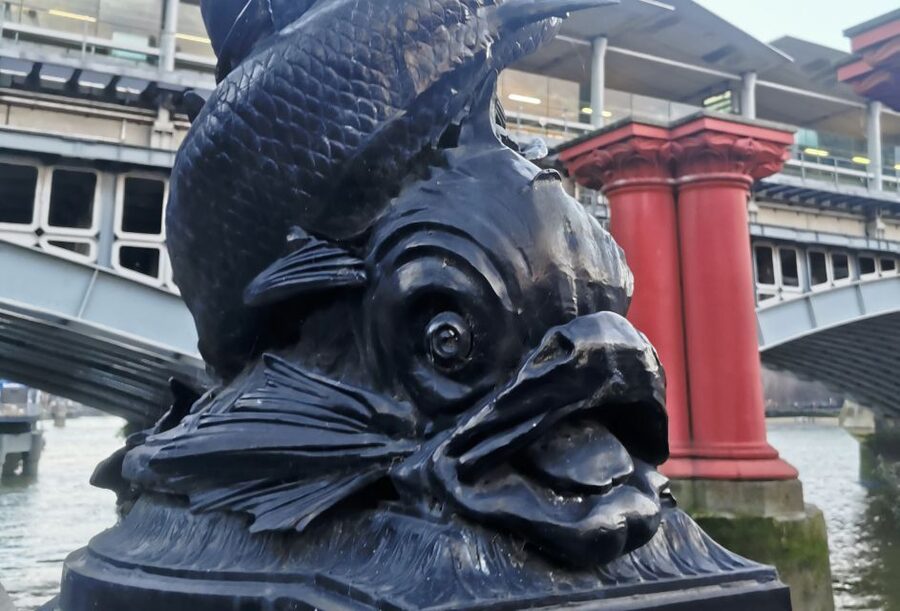
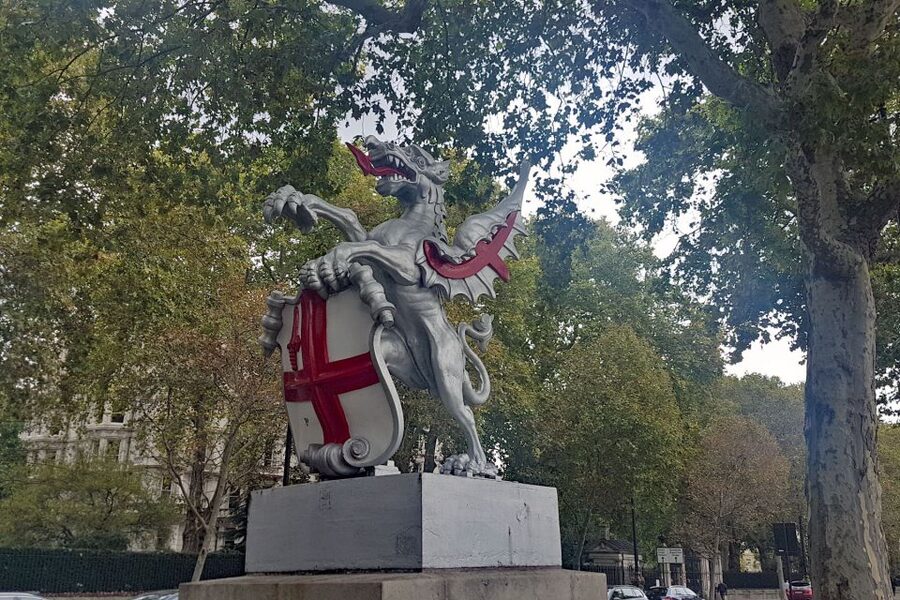
The dragon theme gives the route a clear thread. Dragons have appeared in the lore of many cultures, and the guide uses that broad idea to connect London’s symbols and stories. You are not simply looking for a painted dragon on a building. You are being shown how power, protection, danger, water, earth, and sacred ground can gather around the same image.
Arjun leads the walk in English. The strongest praise attached to this experience focuses on his command of the subject, his clear storytelling, and his kind manner. One useful detail is that the guide is identifiable by longish hair, a beard, and a backpack with a felt green dragon on it.
At $25 per person, the price is reasonable for a 2.5-hour guided walk, especially with a maximum group of eight. The value depends on your interests. If you want a conventional architectural tour or extended time inside major attractions, this is not the best match. If you enjoy connections between mythology, archaeology, churches, and urban history, the small group and unusual route make the fee fair.
More London walking tours:
- Magical London: Harry Potter Guided Walking Tour
★ 4.7 · 22,044 reviews - London: The Original Jack the Ripper Walking Tour
★ 4.7 · 7,833 reviews - Tour for Muggles The Ultimate Harry Potter Walking Tour in London
★ 5.0 · 4,684 reviews
London Stone and the first layers of the city
The meeting point is outside Joe & the Juice Bar. From there, the opening stop is the remaining part of London Stone, with about 10 minutes of guided explanation.
London Stone is an ideal place to begin because it is physically modest but symbolically large. You are not arriving at a grand monument. You are looking at a remnant, and the tour uses it to ask how an object can collect stories about the city’s identity, age, and power.
The stop sets the tone for the rest of the morning. Look closely, listen to the different layers of interpretation, and avoid expecting one tidy answer. The value here is the guide’s framing, not the size of the stone or the amount of time spent beside it.
Next comes Bloomberg Arcade and its forgotten streams, a short five-minute stop. This is a quick look at waterways that once shaped the area but are now largely out of sight.
For me, this is one of the route’s most appealing ideas. London’s streets can make the city seem fixed and solid, yet its ground has changed repeatedly. Watercourses were covered, buildings were rebuilt, and old routes were absorbed into newer ones. A modern arcade becomes a prompt to picture the less visible city below and around you.
Roman mystery at London Mithraeum
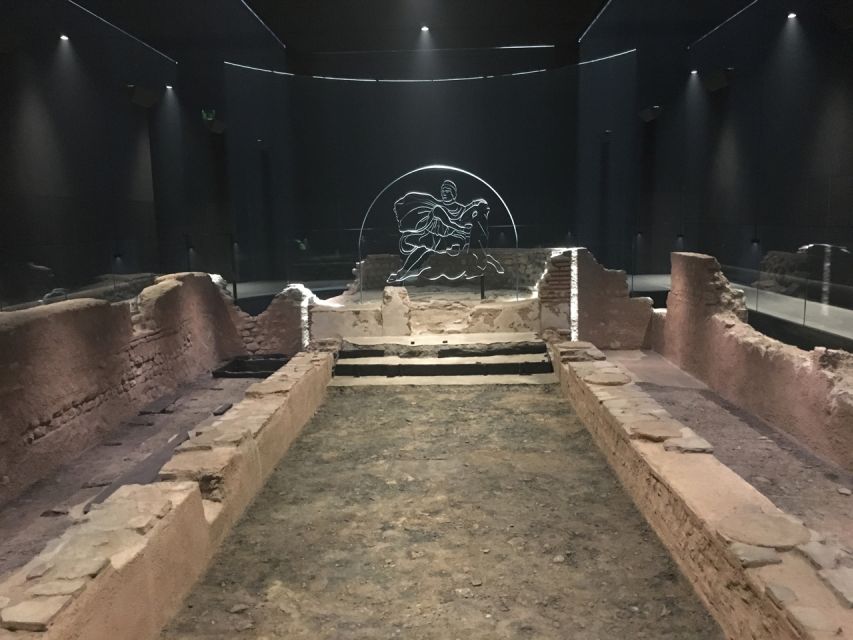
The London Mithraeum receives about five minutes of guided attention. The stop brings Roman religious life into the walk and adds another layer to the City’s spiritual past.
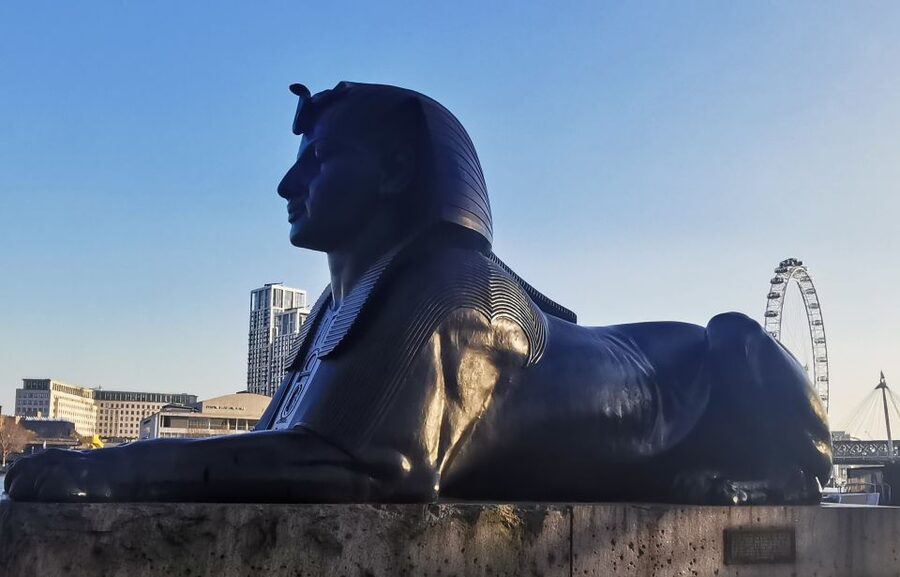
The tour does not treat London as a place with one original belief system. Instead, it traces how different cultures contributed to the city’s stories. The Mithraeum fits that approach well, since it represents a Roman religious presence within a route that also discusses Druidic ideas, Christian churches, medieval orders, and later symbols.
Because the stop is brief, you should think of it as part of a larger explanation rather than a full museum visit. The supplied details do not promise an extended indoor visit or an admission ticket, so do not book this walk expecting a long, self-contained exploration of the site.
Bank of England and the power of symbols
The Bank of England is another short stop, listed at about five minutes. Here the tour shifts from ancient religious sites to a modern institution associated with money, authority, and national power.
This is where the architecture and symbolism theme becomes especially useful. The guide encourages you to consider how buildings communicate strength and permanence, and how symbolic ideas continue even when the setting is no longer a temple or church.
The stop may appeal to you if you enjoy looking at public buildings as statements rather than just backdrops for photographs. It is less useful if you want a detailed financial history of the Bank of England. The tour’s main concern is meaning, symbolism, and the way old ideas can echo in newer places.
A few more London days worth a look
- London: City Sights Hop-On Hop-Off Bus & Bookable Extras
★ 4.4 · 6,579 reviews - City Sightseeing London Hop-On Hop-Off Bus Tour & Bookable Extras
★ 4.0 · 1,224 reviews - London: Go City Explorer Pass® – Tickets for 2-7 Attractions
★ 4.3 · 1,111 reviews - London: Speedboat Tour Through Heart of the City
★ 5.0 · 387 reviews
St Mary-le-Bow and the City’s sacred center
St Mary-le-Bow receives about 15 minutes, making it one of the longer stops. That extra time allows the guide to slow down and connect the church with the tour’s larger themes.
Churches along this route are not treated only as religious buildings. They are markers of continuity, change, rebuilding, and memory. At St Mary-le-Bow, you can expect discussion of architecture and symbolism, along with its place in the changing City.
The route then pauses at what is described as the oldest tree in the City of London, for about five minutes. The tree provides a welcome change from stone, glass, and narrow streets. It also fits the tour’s interest in age, survival, and the relationship between natural features and urban legend.
The information provided does not identify the tree by name or give its precise age, so I would treat this as a brief interpretive stop rather than a major attraction. Still, it adds texture to a walk otherwise focused on buildings and buried features.
St. Paul’s Cathedral and the route through Christian London
St. Paul’s Cathedral receives around 10 minutes. You will not get a full cathedral visit in that time, but you will get a chance to place the building within the long sequence the tour has been tracing.
The cathedral represents a major Christian landmark, yet the tour’s point is not that London’s story began here. Instead, St. Paul’s becomes part of a longer progression from early settlement and sacred ground to Roman influence, medieval Christianity, and the city you see today.
That broad view is one of the tour’s main strengths. You are encouraged to compare the meanings attached to different sites rather than placing each one in isolation.
The Church of St Martin Ludgate follows, with about 10 minutes of guided discussion. It continues the church-focused section and gives the guide another place to explore architecture, local tradition, and the way sacred buildings have occupied important positions in the City.
At Ludgate Circus, the walk pauses for about five minutes. This is more of a connecting point than a headline attraction, but it helps show how modern traffic routes pass through areas with much older associations.
St Bride’s Church and the layered Fleet Street story
St Bride’s Church receives about 15 minutes, one of the longest visits on the route. Its location on Fleet Street gives the stop a strong sense of place, while its church setting keeps the tour focused on architecture, memory, and sacred symbolism.
This is a good point to pay attention to how the guide connects individual sites. The experience is not simply a sequence of unrelated facts. Arjun’s approach, as reflected in the tour’s strongest feedback, is to weave the places together through story, myth, and iconography.
That storytelling style is likely to work best for you if you enjoy following a theme across several sites. It may feel less satisfying if you prefer a strict division between verified history and folklore. The walk’s appeal comes from the conversation between those categories, but that also means you should listen critically.
St Dunstan-in-the-West and the medieval turn
St Dunstan-in-the-West is a shorter five-minute stop. It keeps the church sequence moving before the walk reaches Temple Church.
Brief stops can be useful here. They give you enough context to notice a place without turning the morning into a series of lengthy lectures. At the same time, you should know that the experience is a walking interpretation of the City, not an extended interior tour of every church.
The route’s repeated church visits may be a plus or a minus. I like the pattern because it lets you compare how different religious buildings carry old ideas. If you have limited interest in churches, however, the middle section could feel more specialized than the opening stops.
Temple Church and the Knights Templars
Temple Church receives about 10 minutes and brings the medieval Knights Templars into the story. This is where the tour’s mystical tone may feel most at home, since the Templars have gathered layers of historical fact, legend, and speculation over the centuries.
The guide uses the church to continue the tour’s interest in sacred sites and symbols. You can expect the focus to remain on the building’s place in the larger story rather than on a long, detailed visit inside.
This stop also helps explain why the route works as a whole. The tour moves through different periods without pretending they are all the same. Druidic ideas, Roman religion, Christian churches, medieval orders, and dragon lore are placed in conversation with one another.
That is an interesting way to think about London, but it requires an open mind and a sensible one. Enjoy the stories, then ask yourself which parts are historical evidence, which are local tradition, and which are the guide’s interpretation of recurring symbols.
Finishing at Temple Bar Memorial
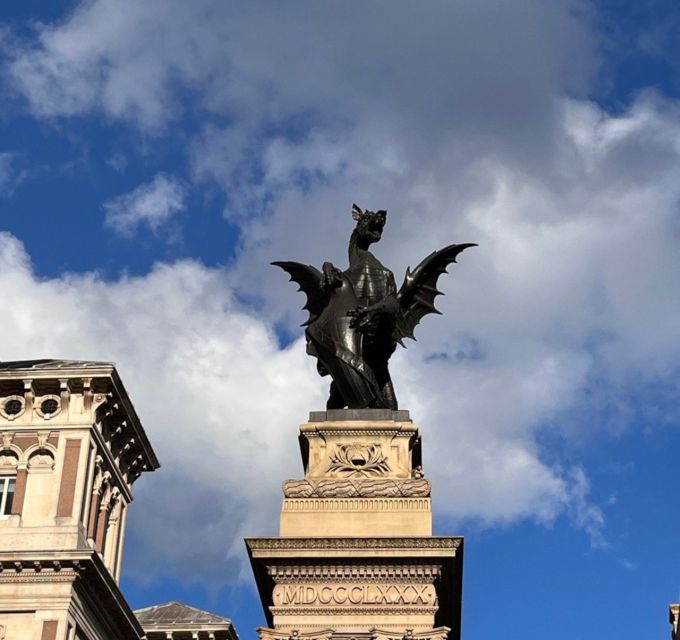
After Temple Church, the walk continues on foot for about five minutes and finishes at Temple Bar Memorial. This gives the tour a clear ending rather than returning you to the starting point.
The final location suits the experience because it is tied to the City’s gateways, boundaries, and public identity. By this point, the walk has moved through ancient references, Roman material, churches, medieval associations, and modern city buildings.
A one-way route is convenient if you plan to continue exploring after the tour. You will need to arrange your own onward plans from Temple Bar Memorial, but the finish puts you near other central London sights and transport connections. The supplied details do not state a return transfer, so plan on the tour ending there.
What the small group and timing mean
The walk lasts 2.5 hours and is limited to eight participants. That size matters on a route where the guide needs to point out small details and explain ideas that can invite questions.
You should expect a steady sequence of short stops rather than long breaks at one attraction. The listed times range from five minutes at quick context points to 15 minutes at London Stone, St Mary-le-Bow, and St Bride’s Church.
Wear comfortable shoes and allow for the fact that this is a city walk, not a seated lecture. The tour is wheelchair accessible, and the language is English. Starting times vary, so check availability before booking.
A post-tour PDF is included. That is a useful extra if you want to remember the locations and themes afterward, especially since the tour covers many ideas in a short span.
Cancellation is free up to 24 hours before the experience for a full refund, and you can reserve now and pay later. Those terms give you some flexibility, but the key booking choice is still whether the theme suits you.
Who will get the most from this tour
I would recommend it to you if you enjoy:
- London’s lesser-known stories and symbolic details
- Mythology presented alongside history and archaeology
- Churches, sacred places, and medieval associations
- Questions about ley lines, ancient mounds, and buried waterways
- Small groups where you can ask the guide about unusual subjects
- Seeing familiar London areas through a different frame
History buffs and mythology enthusiasts are the obvious audience, but you do not need specialist knowledge. Curiosity matters more. The tour also suits repeat visitors who have already seen the main landmarks and want a new way to connect the City’s streets.
I would hesitate to recommend it if you want only firmly documented history, a long interior visit to St. Paul’s or Temple Church, or a conventional introduction to London. The dragon theme is central, and the tour treats myth and symbolism as important parts of the city’s identity.
Should you book the City of London Mystical and Dragons Walking Tour?
At $25, this is a good-value specialty walk for an English-speaking audience that enjoys stories, symbols, and unusual links between places. Arjun’s praised storytelling, the eight-person limit, and the route from London Stone to Temple Bar Memorial give it a personal feel that a large group tour would struggle to match.
Book it if you want to look at London with fresh eyes and can enjoy folklore without confusing it with proven fact. Skip it if you prefer a strictly chronological tour or need substantial time inside major sights. For the right audience, this is an engaging way to spend 2.5 hours in the City, with enough historical grounding to give the dragon stories a firm place in the walk.
FAQ
How long is the City of London Mystical and Dragons Walking Tour?
The tour lasts 2.5 hours.
Where does the tour start?
The meeting point is outside Joe & the Juice Bar.
Where does the tour finish?
The tour finishes at Temple Bar Memorial.
What language is the tour in?
The live guided tour is conducted in English.
How many people can join the tour?
The group is limited to eight participants.
Is the tour wheelchair accessible?
Yes, the activity is listed as wheelchair accessible.
Latest arrivals on the London list
- Stonehenge Special Access Guided Morning Tour from London★ 4.5 · 3 reviews
- Easy Access Tower of London Royal Secrets & Scandals Tour★ 5.0 · 3 reviews
- Shoreditch & East London Walking Tour with a Local, Custom & Private★ 5.0 · 3 reviews
- Madame Tussauds London Fast Track and Champagne Experience★ 3.5 · 3 reviews
- London Private Brixton Tour with a Local – Culture & Stories★ 4.9 · 3 reviews
- Private Full Day Tour – Fast Track Tower of London and Lunch★ 4.6 · 3 reviews
- Private transfer from London Heathrow Airport to Southampton★ 5.0 · 3 reviews
- London Soho District – Guided Walking Tour 12 guests 2,5h★ 4.8 · 3 reviews
City Tours, compared.
City Sights Hop-On Hop-Off Bus & Bookable Extras
Read our review →
City Sightseeing London Hop-On Hop-Off Bus Tour & Bookable Extras
Read our review →
Go City Explorer Pass® – Tickets for 2-7 Attractions
Read our review →

Upside Down House Westfield White City Entry Ticket
Read our review →
Westminster Abbey Priority Access & Guided City Tour
Read our review →
Eating London: The Heart of ‘The City’ Food Tour
Read our review →
London Luxury Dinner Experience with Panoramic City Views
Read our review →Browse the lists this tour appears in