Reviewed · TICKETS
Handel Hendrix House Ticket
Two musicians, separated by nearly 250 years, lived next door to each other on the same Mayfair street. That odd pairing is the heart of Handel Hendrix House: downstairs, the courtly world of George Frideric Handel; upstairs, the intimate London life of Jimi Hendrix.
I like the live harpsichord playing, which gives Handel’s rooms a sound rather than just a display of furniture. I also like the careful recreation of Hendrix’s flat, especially the records, amps, pedals, acoustic guitar, and small domestic details supplied with help from Kathy Etchingham.
The main drawback is scale. This is a compact house, not a full-day museum, and much of the Hendrix room is reconstructed rather than filled with original belongings. Still, at $19, it offers a memorable hour or two in a very central part of London.
In This Review
- Key points to know before you go
- Two London lives at 25 Brook Street
- Handel’s house and the sound of Messiah
- The climb and the practical feel of the house
- Hendrix’s recreated flat at number 23
- Why the contrast between Handel and Hendrix works
- Live music and separate events
- Location, timing, and ticket value
- Who should make time for this house
- Should you book Handel Hendrix House?
- FAQ
- Where is Handel Hendrix House?
- What is the nearest Tube station?
- How much does admission cost?
- How long does the visit take?
- What does the ticket include?
- Are concerts and other events included?
- Can I hear live music during the visit?
- Is the museum wheelchair accessible?
- Can I bring luggage or large bags?
Key points to know before you go
- Two musicians at 25 Brook Street: Handel and Hendrix lived in neighboring spaces centuries apart, giving the museum its unusual appeal.
- Handel wrote Messiah here: His rooms include the workspaces, bedroom, and dressing room linked to his 35 years in London.
- A harpsichord may be playing: Live practice can add a lovely Baroque soundtrack, though it is not guaranteed.
- Hendrix’s room is recreated: The setting is evocative, but only some objects are authentic to the flat.
- Allow one to two hours: You can move quickly, but two to three hours gives you time for the displays, music, and conversations with volunteers.
- Events cost extra: Regular museum entry does not include concerts or other special events.
Two London lives at 25 Brook Street
Handel Hendrix House works because it sets two very different lives side by side. George Frideric Handel lived at 25 Brook Street in the 18th century, while Jimi Hendrix lived next door at number 23 in the 1960s. The museum joins these addresses into one visit, but it does not pretend the two musicians had much in common beyond talent, work, and a powerful connection to London.
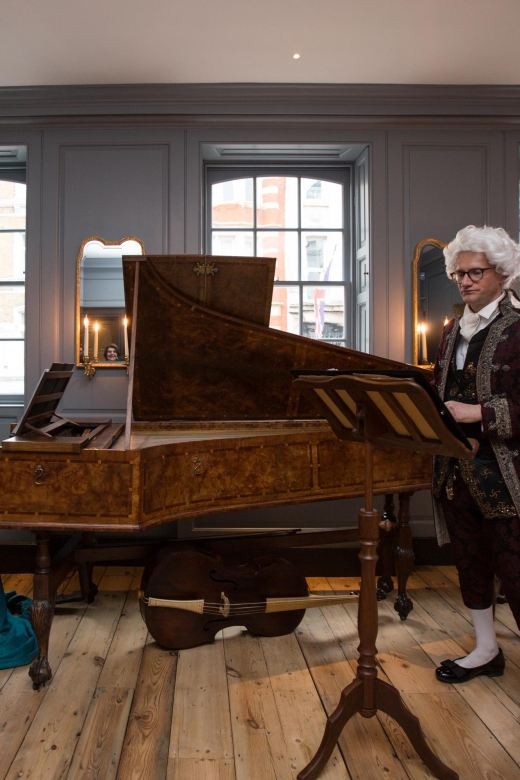
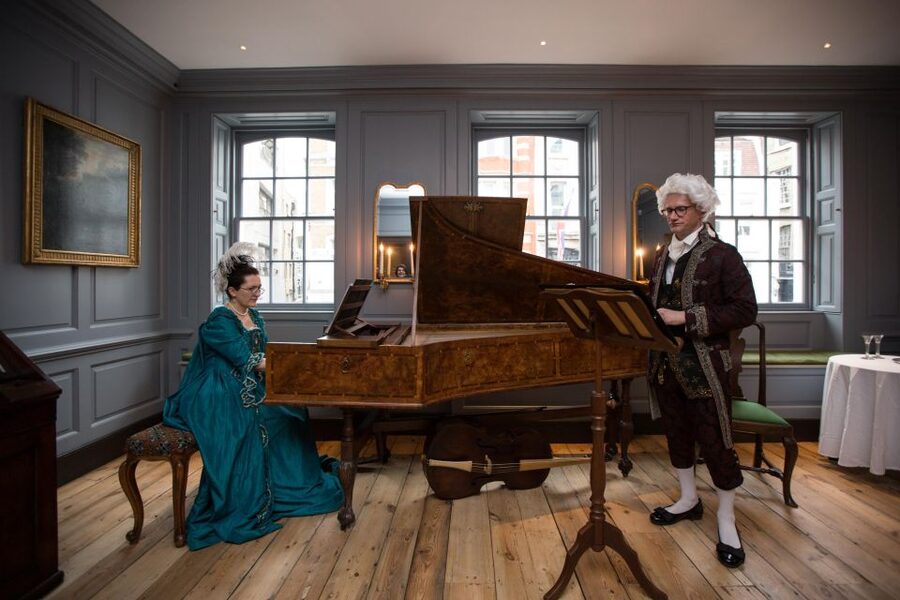
Handel’s rooms carry the weight of an old London home. You climb a crooked 250-year-old staircase, then enter the spaces where Handel composed, rehearsed, entertained, and worked among the leading musicians of the Baroque period. The building itself does much of the work. Uneven steps, old proportions, and worn surfaces help you picture a lived-in house rather than a modern gallery.
The Hendrix rooms shift the mood sharply. You move from Handel’s formal world into 1960s London, where Hendrix shared a flat with Kathy Etchingham. The contrast is not a problem. It is the reason the visit feels more like a story about London than a standard music museum.
I would not book this as a major attraction that fills half a day by itself. I would place it between other Mayfair stops, then allow enough time to avoid rushing through the upstairs rooms.
A few more London days worth a look
- London: The London Eye Entry Ticket
★ 4.6 · 35,875 reviews - London: Tower Bridge Entry Ticket
★ 4.7 · 15,560 reviews - London: Westminster Abbey Entrance Ticket
★ 4.6 · 11,254 reviews
Handel’s house and the sound of Messiah
Handel’s part of the museum is the larger and more substantial section. You see the rooms associated with his working life, including the place where he wrote Messiah. The displays also connect you with the practical side of music-making in his day: composing, rehearsing, performing, and dealing with singers and musicians.
One of the museum’s most memorable stories involves the soprano Cuzzoni. When she refused to sing one of Handel’s arias, he threatened to throw her out of the window. The windows connected with that tale give the story a physical setting, which makes it easier to remember than a date or a paragraph on a wall.
The museum also presents Handel as a working musician with a temper, a home, and a daily routine. You see his dressing room and the bedroom where he died after 35 years in London. That domestic scale matters. Instead of meeting Handel only through famous compositions, you get a sense of where he ate, slept, dressed, and worked.
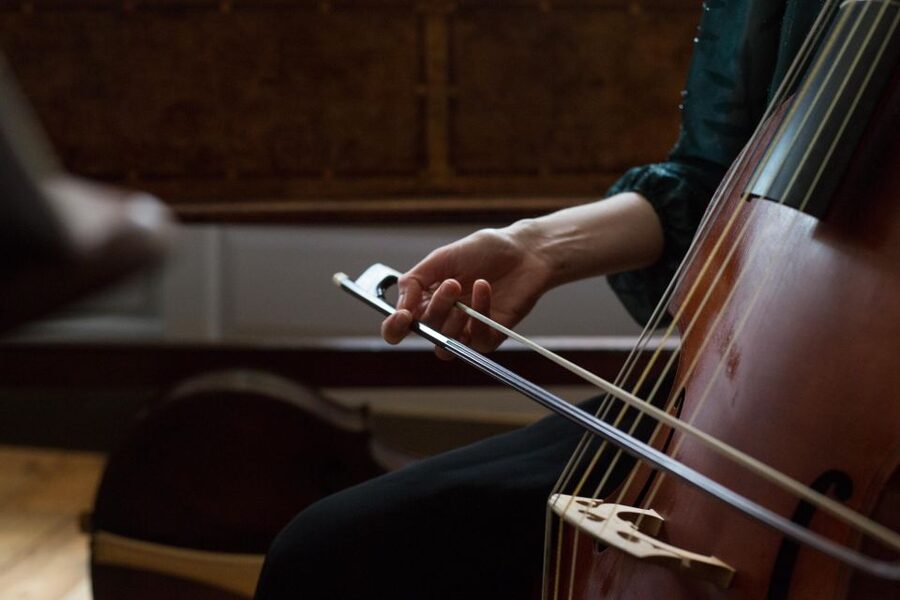
The best extra is the harpsichord. Musicians may practice on one during the day, and you might hear Handel’s music while walking through the rooms. This is not a guaranteed performance, so do not buy a ticket expecting a concert. If you happen to hear a rehearsal, though, the effect is special. An antique instrument playing in the rooms where Handel once worked gives the visit an atmosphere that a recording cannot match.
Some visitors have allowed two to three hours to take in the museum properly, especially when a harpsichord rehearsal was taking place. I think one hour is enough for a quick look, but two hours is the better plan if Handel matters to you.
The climb and the practical feel of the house
The old staircase is part of the experience, but it also affects comfort. It is described as wonky and dates back around 250 years, so take your time as you move between floors. The museum is wheelchair accessible, but the historic structure may still make movement less direct than in a purpose-built museum.
The house is small. That means you are close to the objects and rooms, but it also means the experience can feel busy if several people pause in the same area. The listed group size is limited to nine participants, which helps keep the visit personal. Volunteers are often present and can add information that may not be obvious from the displays.
One useful tip is to speak with the room guides. Their role is not simply to point you toward the next space. They can explain small details and answer questions about the musicians, instruments, and rooms. A volunteer in the Hendrix section was described as especially enthusiastic and engaging, which is useful because that area relies heavily on explanation.
The displays have changed at times. During the pandemic period, some information boards had been removed, making conversations with guides more important. Conditions may be different now, but the larger lesson remains: do not rush past the people stationed in the rooms. A short question may give you more than a quick look at a label.
Hendrix’s recreated flat at number 23

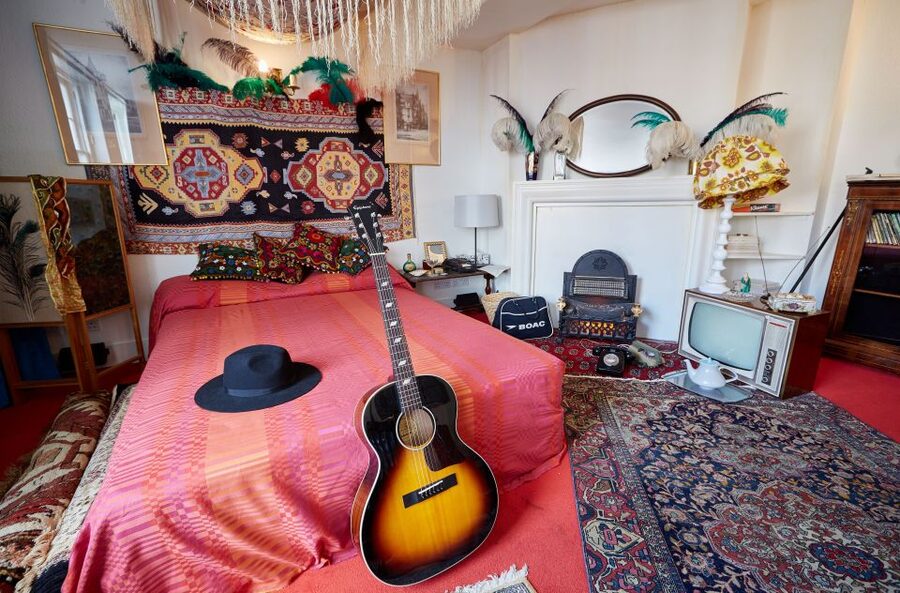
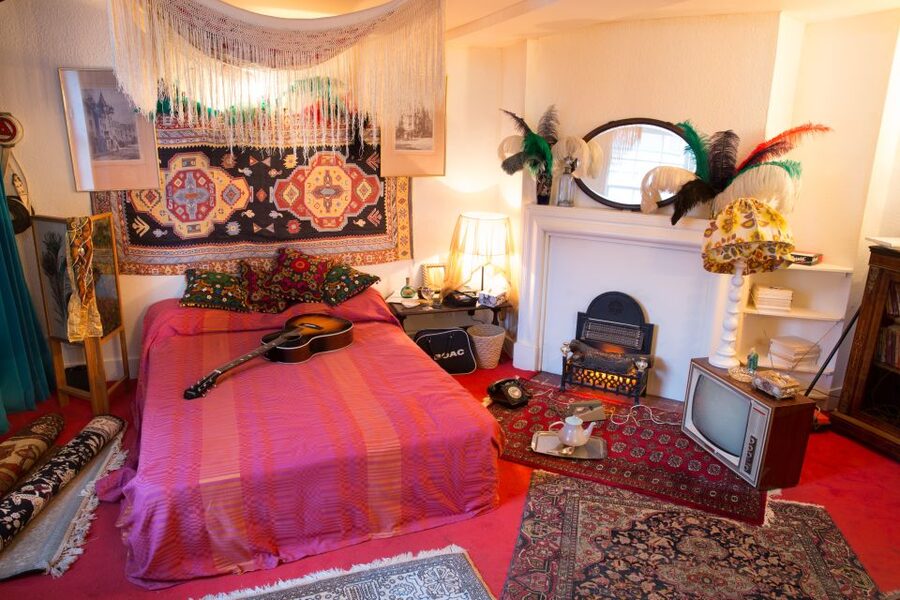
The Hendrix section is likely to be the main reason many people visit. This is the first and only place Jimi Hendrix called home, and the museum recreates the flat through detailed research and help from Kathy Etchingham, his girlfriend at the time.
The room is colorful and evocative, with the feel of a personal living space rather than a shrine. You can look at his record collection and learn what he enjoyed listening to. The records help you think about Hendrix not only as a performer but also as a listener, musician, and young man living in London.
You also see equipment linked to his sound, including amps and pedals, as well as an acoustic guitar. These details are useful for anyone interested in how Hendrix built his famous tone. The displays do not turn the visit into a technical lesson, but they give you enough to connect the tools with the music.
The room is not packed with original Hendrix possessions. A practical expectation is important here. The recreation is the attraction, and one account noted that the mirror was the only clearly authentic item from the flat. That does not make the room pointless, but it does mean you should value the setting, research, and domestic clues more than a large collection of original objects.
The result is strongest when you pay attention to the small details. The room helps you picture where Hendrix lived, loved, and played in 1969, only a year before his death at 27. You get a brief, personal view of a musician often remembered mainly through stage photographs and recordings.
Something completely different for your London days:
- From London: Harry Potter Warner Bros Studio Tour
★ 4.7 · 26,588 reviews - London: Westminster to Greenwich River Thames Cruise
★ 4.5 · 22,836 reviews - Magical London: Harry Potter Guided Walking Tour
★ 4.7 · 22,044 reviews - London: Madame Tussauds London
★ 4.6 · 20,915 reviews
Why the contrast between Handel and Hendrix works
The two sections do not blend into one single story. Handel’s rooms are older, more extensive, and tied to a preserved historic interior. Hendrix’s room is more focused and largely recreated. That difference is worth knowing before you arrive.
Yet the contrast makes the museum more interesting. Handel’s world was linked to court life, opera, and the formal music culture of 18th-century London. Hendrix belonged to the electric, fashion-conscious London of the 1960s. One worked with a harpsichord and singers. The other shaped sound through guitar, amplifiers, and pedals.
The museum lets you move between those worlds in a few minutes. I like that it asks you to compare how musicians lived, worked, and built an audience in different periods. The house becomes a lesson in changing technology and changing social life without needing a large collection.
You do not need to be an expert in classical music or rock to enjoy it. Handel fans will find more rooms and historical detail. Hendrix fans will probably spend more time upstairs with the records and equipment. If you like both, the combination is unusually effective.
Live music and separate events
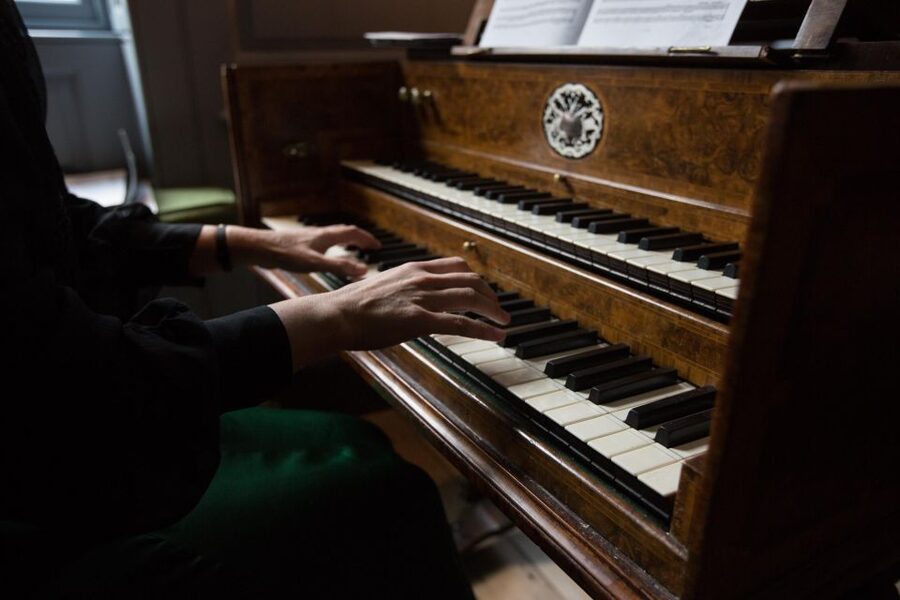
Live music can make the visit feel much more special. Harpsichord practice may take place during normal opening hours, and Saturday afternoon concerts are also associated with the museum. These are separate events, so regular entry does not include them.
Check the event details before you go if a concert matters to you. Do not assume the $19 museum ticket includes admission to a performance. The normal visit remains worthwhile without live music, but the chance to hear an instrument in Handel’s rooms is a good reason to keep your schedule flexible.
The same applies to guided contact. There is no named personal guide assigned in the information provided. Instead, English-speaking hosts or volunteers may be present in the rooms. Their help can vary with the day, but the museum is set up for questions and conversation.
Location, timing, and ticket value
The museum is at 25 Brook Street in Mayfair, London, W1K 4HB. Bond Street is the nearest Tube station, served by the Central and Jubilee lines. That makes the house easy to fit into a central London day.
The ticket costs $19 per person. For that price, you receive museum entrance, not entry to special events. I consider it fair value if you have a real interest in Handel, Hendrix, music history, or historic London homes. It is less compelling if you are looking only for a large collection of original rock memorabilia.
Plan on one to two hours for a normal visit. If you read every display, talk with volunteers, and catch music in the Handel rooms, two to three hours is more realistic. The ticket is valid for one day, with starting times subject to availability.
The booking terms are useful for uncertain London plans. You can cancel up to 24 hours in advance for a full refund, and you can reserve now while paying later. Large bags and luggage are not allowed, so do not arrive with airport cases or bulky shopping.
The venue is wheelchair accessible. English is the listed language, and the host or greeter service is also in English. The small group format, limited to nine participants, is a better fit for people who enjoy quiet rooms and the chance to ask questions.
Who should make time for this house
I would recommend this to anyone who likes seeing where artists actually lived and worked. The Hendrix room gives you a domestic view that a concert museum cannot provide, while Handel’s rooms connect composition with the physical setting of an 18th-century home.
It is also a good choice for music lovers who enjoy contrast. You can compare an acoustic instrument and an electric guitar, formal music-making and rock performance, and a preserved historic interior with a researched reconstruction.
Families with older children may find the Hendrix stories and equipment easier to connect with, while Handel’s famous compositions give the visit extra meaning for classical music fans. The museum is compact enough to fit into a busy London day, but the staircase and small rooms may not suit anyone looking for a broad, open attraction.
I would be cautious if you expect a major Hendrix collection. The recreated room is attractive and personal, but it does not contain a large number of original possessions. The visit succeeds through atmosphere, context, and storytelling rather than quantity.
Should you book Handel Hendrix House?
Book it if you want a focused, unusual London museum with two very different musical personalities under one roof. At $19, it offers good value for an hour or two, particularly if you can hear a harpsichord rehearsal or spend time with the volunteers.
Hendrix fans should know that the room is mainly a reconstruction, while Handel fans receive the larger section and more extensive historic setting. If that balance suits you, this is an easy Mayfair stop with real character. If you want a full concert or a large collection of original rock artifacts, check the separate event options or choose a bigger music museum instead.
FAQ
Where is Handel Hendrix House?
It is at 25 Brook Street, Mayfair, London, W1K 4HB.
What is the nearest Tube station?
Bond Street Station is the nearest Tube stop, served by the Central and Jubilee lines.
How much does admission cost?
The listed price is $19 per person.
How long does the visit take?
You can see the museum in about one to two hours. Allow two to three hours if you want to read more, speak with volunteers, or possibly hear a harpsichord rehearsal.
What does the ticket include?
The ticket includes museum entrance fees.
Are concerts and other events included?
No. Entry to events is not included in the standard museum ticket.
Can I hear live music during the visit?
Musicians may practice on a harpsichord during the day, but this is not guaranteed. Live music events, including Saturday afternoon performances, require separate admission.
Is the museum wheelchair accessible?
Yes, the activity is listed as wheelchair accessible.
Can I bring luggage or large bags?
No. Luggage and large bags are not allowed.
Latest arrivals on the London list
- Heathrow Airport to London Arrival Transfer★ 4.5 · 50 reviews
- London Beatles Tour★ 5.0 · 50 reviews
- One Way Taxi Transfer from London to Gatwick Airport★ 5.0 · 51 reviews
- City & Secrets: Explore London’s Hidden Gems★ 5.0 · 51 reviews
- London: Hidden Baker Street Tube Station Tour★ 4.7 · 51 reviews
- London Christmas Lights Open-Top Bus Tour. 2025 Early Bird★ 3.6 · 51 reviews
- 4 hour London Private Tour, with your own Black Cab Tour Guide★ 5.0 · 51 reviews
- The Beatles Magical History Black Taxi Tour London★ 5.0 · 51 reviews
Tickets, compared.





Buckingham Palace: The State Rooms Entrance Ticket
Read our review →