Reviewed · TOURS
London: Architecture Tour of Benjamin Franklin House
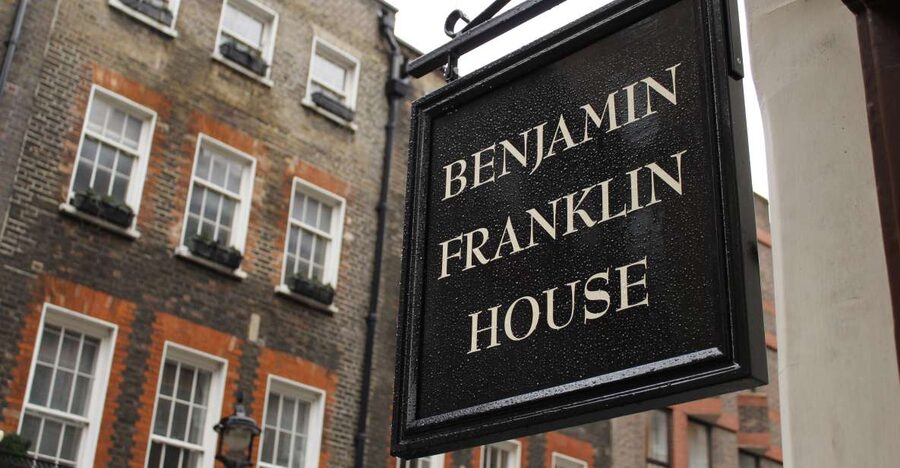
Benjamin Franklin’s only remaining home is tucked behind an easy-to-miss door on Craven Street, just below a Benjamin Franklin House sign. Inside, you move through a five-storey townhouse where Franklin lived for 16 years, worked through political storms, entertained important figures, and later left for America to help sign the Declaration of Independence. The house itself is the star, not just the famous man who lived there.
I like the tour’s mix of intimate rooms and odd, memorable details, especially the Craven Street Bones and the chance to play Franklin’s glass armonica. Guides such as Ron and Brian bring extra facts and energy to the story. The main drawback is practical: narrow, uneven stairs connect every floor, and the entrance can interrupt the tour as people come and go.
In This Review
- Key points
- Finding Franklin at 36 Craven Street
- A Grade I townhouse with a slightly crooked personality
- The kitchen and Franklin’s London diet
- Margaret Stevenson’s parlour and a household full of connections
- Franklin’s parlour, experiments, and political life
- The Craven Street Bones and surgeon Hewson’s anatomy school
- Finishing with Franklin’s glass armonica
- What the one-hour format does well
- Who will get the most from this house tour
- Practical details that affect your visit
- Is Benjamin Franklin House worth $16?
- Should you book Benjamin Franklin House?
- FAQ
- Where does the Benjamin Franklin House tour begin?
- How long does the tour last?
- What language is the tour in?
- What is included in the ticket price?
- Are children admitted for free?
- Can I take photographs inside?
- Is the house wheelchair accessible?
- Are assistance dogs allowed?
- Can I cancel my booking?
Key points
- Franklin’s only surviving home: See the townhouse where he lived in London for 16 years.
- Five floors of Georgian history: Explore original features, sloping floors, and rooms tied to Franklin and the Stevenson family.
- The Craven Street Bones: Learn how surgeon Hewson used part of the house for an anatomy school.
- Franklin’s London life: Hear about his political work, experiments, diet, family ties, and eccentric habits.
- Try the glass armonica: Finish with a hands-on look at Franklin’s unusual musical invention.
- Good value at $16: The price includes admission and a one-hour English-language tour, with children under 12 admitted free.
Finding Franklin at 36 Craven Street
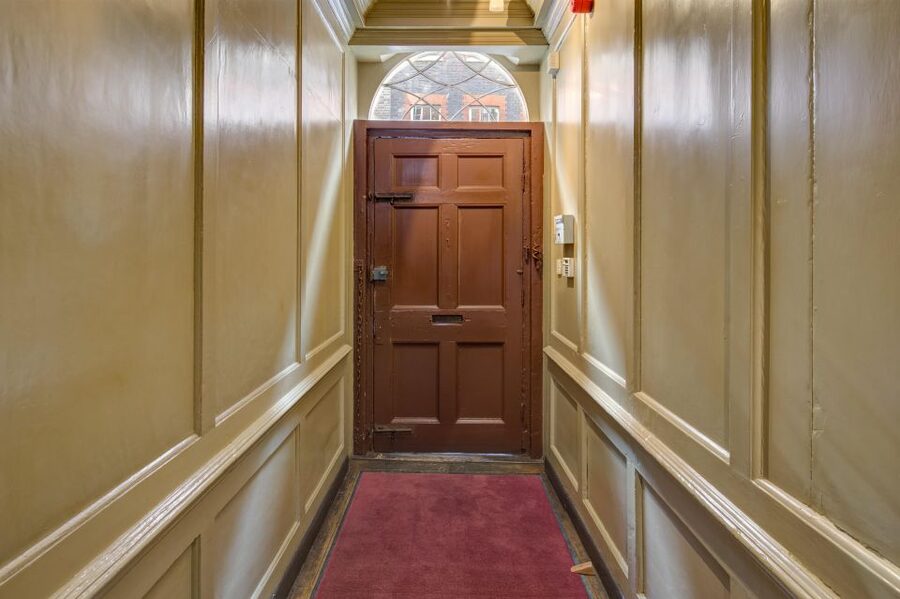
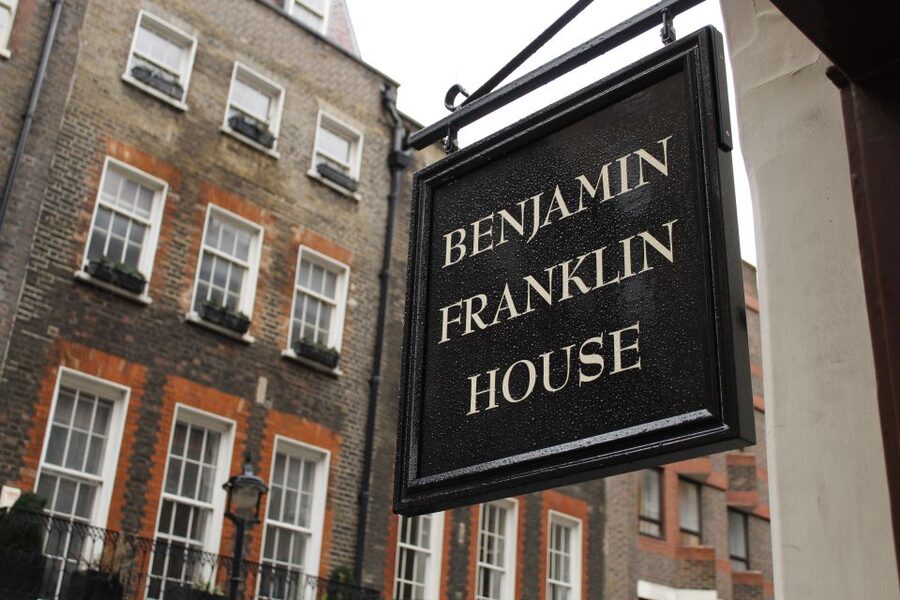
Start by looking for number 36 Craven Street and knock on the door below the Benjamin Franklin House sign. This is not a grand museum entrance. The low-key arrival suits the experience, since the attraction is a preserved townhouse rather than a large public building.
The house sits in southeast England’s London setting, and the tour takes place entirely inside the historic property. Give yourself enough time to locate the door and get settled, since the entrance is part of an active building rather than a wide modern lobby. A practical annoyance is that people entering the house can sometimes interrupt the opening part of the tour.
The price is about $16 per person. For London, that is a fair charge for both admission and a live, hour-long tour in a Grade I listed building. You are paying for access to a place that cannot offer the broad displays of a major museum, but can give you something more personal: the actual rooms in which Franklin lived and worked.
Children under 12 enter free, which makes this a sensible short stop for families. The subject matter suits older children especially well, since the tour links science, politics, music, architecture, and some rather unusual medical history.
Other London favourites people book with this one:
- London: The London Eye Entry Ticket
★ 4.6 · 35,875 reviews - From London: Harry Potter Warner Bros Studio Tour
★ 4.7 · 26,588 reviews - London: Westminster to Greenwich River Thames Cruise
★ 4.5 · 22,836 reviews
A Grade I townhouse with a slightly crooked personality
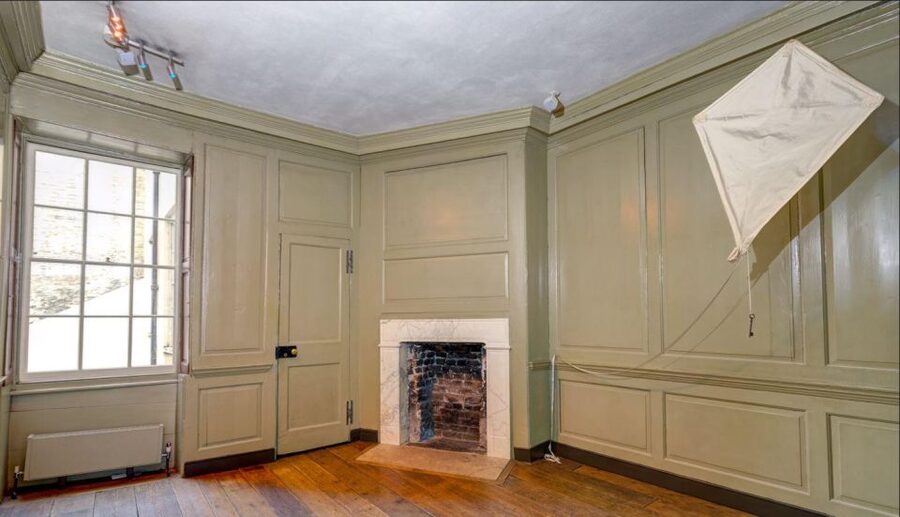
Benjamin Franklin House is a five-storey townhouse with Georgian and Victorian features. The floors and stairs are uneven and sloping, so you should expect a building that feels old in the physical sense, not just one with old objects inside it.
Handrails are fitted on all staircases, and seating is available in each historic room. Still, you will climb stairs between floors during the tour. There is no wheelchair access because of the listed structure and the different levels, and the restroom is in the basement with no accessible restroom.
That limitation matters. If stairs are difficult for you, contact the house before booking and ask about your options. Carers enter free, and visitors with disabilities can use concessionary tickets. Guide dogs and hearing dogs are allowed throughout the house, while other pets are not.
The house’s uneven surfaces are also part of its appeal. You can see how a London townhouse changed over time rather than walking through a polished reconstruction. The preservation project that prepared the building for public access led to its opening in 2006, giving you a chance to see a property that survived with a strong sense of its original shape.
The kitchen and Franklin’s London diet
The tour begins by tying the building’s domestic life to Franklin’s own story. In the kitchen, you learn about Georgian food and Franklin’s thoughts on the London diet.
This is a useful choice for the opening section because it makes Franklin feel like a resident, not only a statesman printed on a banknote. You hear about the everyday setting around him before moving to the bigger subjects of diplomacy and revolution. The kitchen also helps explain how the house functioned as a home, with work, meals, conversation, and politics sharing close quarters.
The tour uses architecture to frame these details. Rather than simply listing dates, the guide points out how the building’s rooms and arrangement shaped life inside it. The short format means you will not spend long on every object, but the story keeps moving from the physical house to the people who used it.
I like this part for travelers who want more than a famous name. Franklin’s London years were not a brief visit. He lived here for 16 years, and the house offers a more grounded way to understand that period.
Margaret Stevenson’s parlour and a household full of connections
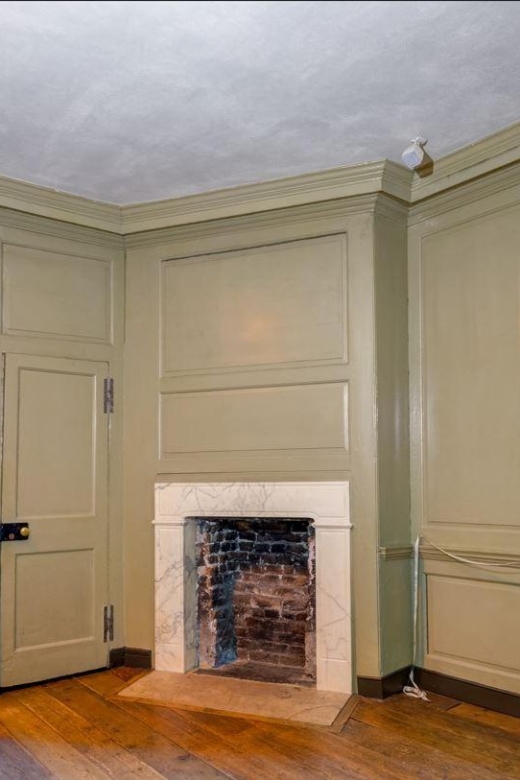
Upstairs, the tour reaches the parlour of Margaret Stevenson, the wealthy widow who rented space to Franklin. Her connection to the house gives the visit a second main character and keeps the story from turning into a one-man biography.
In her parlour, the guide explains the influential people Franklin met and the current affairs they discussed. You also hear about his relationship with the Stevenson family and his connection to his own family. These personal links add warmth to what could otherwise be a purely political account.
The parlour is valuable because it shows how ideas moved through private homes. Franklin’s London life involved conversation, argument, family ties, and public affairs, all within the same domestic setting. The house lets you picture that overlap more clearly than a large portrait gallery usually can.
The rooms are historic and furnished as part of the house experience, but this is not a large-scale period show with endless displays. You should come ready to listen to the guide and look closely at the building itself. Ron and Brian have both led tours here, and their approach includes extra details about Franklin’s life. Ron, in particular, is praised for his enthusiasm and for making the house’s story easy to follow.
Something completely different for your London days:
- Magical London: Harry Potter Guided Walking Tour
★ 4.7 · 22,044 reviews - London: Madame Tussauds London
★ 4.6 · 20,915 reviews - Stonehenge, Windsor Castle, and Bath from London
★ 4.5 · 18,662 reviews - London: Warner Bros. Studio Tour with Transfers
★ 4.7 · 17,586 reviews
Franklin’s parlour, experiments, and political life
The tour then reaches Franklin’s parlour, the floor he rented for his 16 years in London. This is the point where the domestic setting opens into his better-known public life.
You learn about Franklin’s experiments, political beliefs, and political actions. The guide also covers his eccentric personality, which helps balance the familiar image of the serious diplomat and scientist. Franklin was a practical thinker, but he was also curious, social, and willing to test unusual ideas.
The timing of his departure gives the room a clear ending. Franklin left London and the Stevenson family in 1776, returning to America to sign the Declaration of Independence. He never returned to London. Knowing this as you stand in the room gives the final part of his London life a sharper edge.
I find this section especially useful if you already know Franklin as an American founding figure but not as a long-term London resident. The house fills in a missing chapter. It shows the years before 1776 as a sustained period of work and relationships, not a footnote between better-known events.
The tour also makes architecture part of the political story. Rooms are not just containers for objects here. They show where a man could meet people, exchange ideas, conduct experiments, and maintain ties to family. That connection between space and biography is the reason this visit feels different from a standard museum stop.
The Craven Street Bones and surgeon Hewson’s anatomy school
One of the tour’s strangest features is the story of the Craven Street Bones. You learn that surgeon Hewson operated an anatomy school connected with the house, adding a darker medical chapter to the building’s past.
This is not a decorative side note. It changes the way you see the townhouse. A home associated with Franklin’s meals, politics, and experiments also had links to anatomy and surgery. The story gives the property a more complicated character and shows that historic houses often contain uncomfortable facts alongside famous names.
The subject may not suit very young children or anyone who dislikes medical history. If you prefer a simple portrait of Franklin, this section could feel unexpected. I think it improves the tour, because it avoids presenting the building as a tidy stage set.
The guide places the anatomy story within the wider history of the house. You are not simply shown a gruesome detail and hurried along. Instead, the Craven Street Bones help explain how different people used the property and how its past continued beyond Franklin’s residence.
Finishing with Franklin’s glass armonica
The final stop is the Glass Armonica Room. Here, you are invited to try playing a tune on Franklin’s instrument.
This is a smart ending because it turns a historical explanation into a small hands-on moment. You do not merely hear that Franklin experimented with music. You get a direct sense of the unusual object associated with him.
The opportunity is brief, but it gives the hour a change of pace after the more serious political and medical subjects. It also works well for families and for anyone who enjoys inventions more than formal history. You can take photographs during the tour, provided you follow the house rules, and you are encouraged to ask questions.
Flash photography, audio recording, drinks, smoking, and vaping are not allowed. Alcohol and drugs are prohibited, and you should wear shoes rather than go barefoot. These rules protect the building and keep the guided visit manageable.
What the one-hour format does well
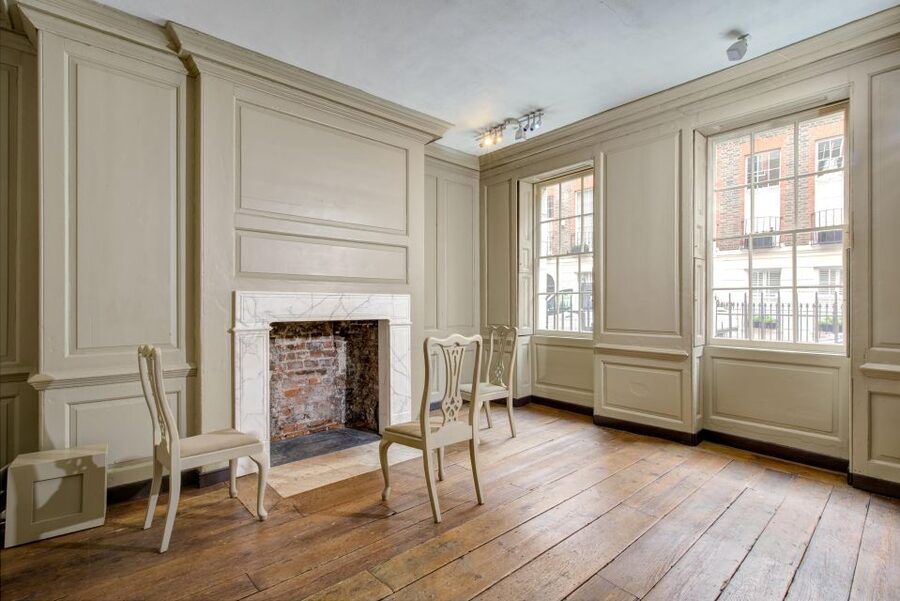
The tour lasts about one hour, which is enough time to build a clear story without making the visit a major commitment. I would plan it as a focused London stop rather than a full-day activity, despite the booking information giving it one-day validity.
A live English-speaking guide leads the tour. That matters in a small historic house because the significance of a room may not be obvious at first glance. The guide explains who lived there, why Franklin came to London, and how the building changed from the 1730s through the conservation project that opened it to the public in 2006.
The short length is also a limit. You will not have unlimited time to examine each Georgian or Victorian feature, and the tour’s pace may feel brisk if you want to study architectural details on your own. Questions are welcome, including at the end, so use that chance to ask about any room or story that catches your attention.
The strongest part of the format is its focus. You move through the building in a set sequence: kitchen, Margaret Stevenson’s parlour, Franklin’s parlour, the anatomy story, and the glass armonica room. Each stop adds a different piece to the picture.
Who will get the most from this house tour
I would recommend Benjamin Franklin House to you if you like historic buildings, political biography, science, or unusual London stories. It is particularly useful if you have already visited large museums and want a smaller experience built around one authentic property.
Families can make good use of the visit, especially with the free admission for children under 12 and the chance to try the glass armonica. The Craven Street Bones may call for a little parental judgment, since the anatomy-school story is more unsettling than the rest of the tour.
Franklin enthusiasts will get the clearest value. You hear about his experiments, political views, London diet, personality, and relationships rather than only his role in American independence. Architecture fans will appreciate the original features and the evidence of a building shaped by several periods.
I would be cautious about booking if you cannot manage stairs. The house has seating and handrails, but there is no wheelchair access, and the floors are uneven and sloping. This is also not the best choice if you want a self-guided visit or a large collection of objects. The main attraction is the building and the guide’s explanation.
Practical details that affect your visit
Book the English-language tour and check the available starting time for your chosen day. The ticket is valid for one day, and you can cancel up to 24 hours in advance for a full refund. A reserve-now, pay-later option is also available, which helps if your London schedule is still changing.
Children under 12 enter free. Carers are admitted without charge, and concessionary tickets are available for visitors with disabilities. Assistance dogs, including guide and hearing dogs, are permitted in all areas, but ordinary pets are not.
The entrance is at 36 Craven Street. Knock on the door below the Benjamin Franklin House sign. Since the building has stairs between all five floors, wear comfortable shoes and avoid carrying anything that makes climbing awkward.
You can take photographs, but flash photography and audio recording are not permitted. There is a gift shop on site, though souvenirs are not included in the ticket price. The restroom is downstairs in the basement, and there is no accessible restroom.
Is Benjamin Franklin House worth $16?
At $16, I think this is good value if you are interested in Franklin or in historic London houses. Admission alone gives you access to a rare property, while the live tour adds the context needed to understand the rooms. The glass armonica demonstration and the Craven Street Bones make the visit more distinctive than a basic house museum.
The value is less certain if you are mainly looking for grand interiors or a long activity. The building is compact, the tour lasts one hour, and the stairs can be demanding. You are paying for a focused story in an authentic townhouse, not for a full afternoon of exhibits.
The strongest praise has gone to the guides’ friendly, well-informed approach. Ron and Brian are named as especially effective guides, and their extra details can make a clear difference in a small house where the building alone may not explain everything. If you get the chance to ask questions at the end, take it.
Should you book Benjamin Franklin House?
Book this tour if you want a short, unusual London experience that connects architecture with Franklin’s science, politics, family life, and final departure for America. The house’s only-surviving-home status, the anatomy-school story, and the glass armonica give it plenty of character for a one-hour visit.
Skip it if stairs are a serious problem, if you need an accessible restroom, or if you prefer a large museum with extensive independent viewing. For most history-minded visitors who can manage the five-storey townhouse, $16 is a reasonable price for a personal look at Franklin’s long London chapter.
FAQ
Where does the Benjamin Franklin House tour begin?
Meet at 36 Craven Street. Knock on the door below the Benjamin Franklin House sign.
How long does the tour last?
The guided tour lasts about one hour.
What language is the tour in?
The tour is conducted in English with a live guide.
What is included in the ticket price?
The price includes entry to Benjamin Franklin House and the one-hour guided tour, with an opportunity to ask questions at the end.
Are children admitted for free?
Children under the age of 12 enter for free.
Can I take photographs inside?
Photography is allowed, but flash photography is not permitted. Audio recording is also prohibited.
Is the house wheelchair accessible?
No. Benjamin Franklin House has five storeys, stairs between each floor, and uneven, sloping floors. There is no wheelchair access.
Are assistance dogs allowed?
Guide dogs and hearing dogs are permitted in all areas of the house. Other pets are not allowed.
Can I cancel my booking?
Yes. You can cancel up to 24 hours in advance for a full refund. A reserve-now, pay-later option is also available.
Latest arrivals on the London list
- Easy Access Tower of London Royal Secrets & Scandals Tour★ 5.0 · 3 reviews
- Stonehenge Special Access Guided Morning Tour from London★ 4.5 · 3 reviews
- Shoreditch & East London Walking Tour with a Local, Custom & Private★ 5.0 · 3 reviews
- Madame Tussauds London Fast Track and Champagne Experience★ 3.5 · 3 reviews
- London Private Brixton Tour with a Local – Culture & Stories★ 4.9 · 3 reviews
- Private Full Day Tour – Fast Track Tower of London and Lunch★ 4.6 · 3 reviews
- Private transfer from London Heathrow Airport to Southampton★ 5.0 · 3 reviews
- London Soho District – Guided Walking Tour 12 guests 2,5h★ 4.8 · 3 reviews
Tours, compared.
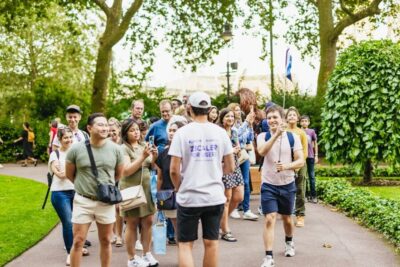
Magical London: Harry Potter Guided Walking Tour
Read our review →

London Big Bus Hop-On Hop-Off Tour with Optional River Cruise
Read our review →
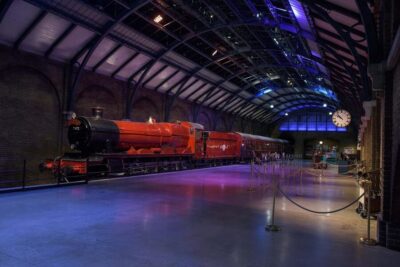
Warner Bros. Studio Harry Potter Tour with Transfers
Read our review →