
Reviewed · SHAKESPEARE & LITERARY LONDON TOURS
London Charles Dickens Puzzle Questo and Self-Guided Tour
London Charles Dickens Puzzle Questo and Self-Guided Tour turns a walk through Holborn and the City into a literary treasure hunt. You begin at the Charles Dickens Museum, then follow clues through old streets, historic inns, churches, theatres, and Fleet Street. The goal is not just to reach the next stop, but to look closely and solve the challenge waiting there.
I like the freedom to start anytime and pause for a pub, coffee, or photo without holding up a group. I also like the low price of $8.33, which makes this a smart choice if you enjoy puzzles and want some Dickens-themed context without paying for a private guide. The main trade-off is clear: there is no human guide to explain the details or help if you get stuck.
In This Review
- Key points at a glance
- Starting with Dickens at 48 Doughty Street
- Vine Street and the clues hidden in London’s streets
- The Three Cripples and the world of Oliver Twist
- Staple Inn, wool, fire, and wartime damage
- Lincoln’s Inn Fields and London theatre
- The Maughan Library and a grand Victorian building
- Dr Johnson’s House and an earlier literary London
- Ye Olde Cheshire Cheese and the rebuilt city
- Churches with Italian and Romanian connections
- The Royal College of Surgeons and the making of medicine
- Finishing near Fleet Street
- How the puzzle format affects your day
- Is $8.33 good value?
- Who should book this Dickens puzzle?
- Should you book the London Charles Dickens puzzle?
- FAQ
- How much does the London Charles Dickens Puzzle Questo tour cost?
- How long does the tour take?
- Where does the tour start?
- Where does the tour finish?
- Is a physical guide included?
- What language is the experience offered in?
- Can I choose my own start time?
- Can I take a break during the game?
- Do I need an internet connection to play?
- Is the activity private?
Key points at a glance
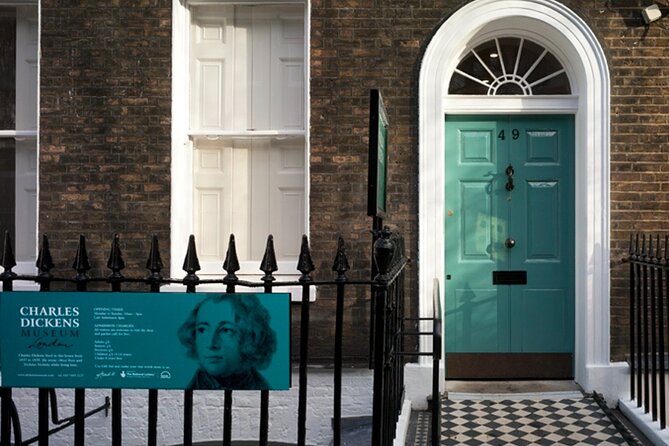
- Start at Dickens’s former home: The route opens at the Charles Dickens Museum on Doughty Street, where he lived from 1837 to 1839.
- Solve clues at 11 locations: Each stop asks you to inspect the surroundings and find an answer before moving on.
- Play on your own schedule: The activity is available around the clock, with breaks allowed at any point.
- Go offline: You do not need an internet connection while playing, a useful feature for a walking game.
- See more than Dickens: The route includes Staple Inn, Dr Johnson’s House, Ye Olde Cheshire Cheese, the Maughan Library, churches, and Fleet Street.
- Expect a brisk hour: The stated duration is about one hour, so you will need to keep moving if you want to complete every stop within that time.
Starting with Dickens at 48 Doughty Street
The strongest opening is the Charles Dickens Museum at 48 Doughty Street. Dickens lived in this Georgian terraced house from 25 March 1837, about a year after his marriage, until December 1839. This was an important period in his life, and the house gives the puzzle a real starting point rather than dropping you beside a random city landmark.
You are asked to look around for the answer to the first challenge. That simple instruction shapes the whole activity. You are not only reading directions on a phone. You are studying a building, sign, feature, or nearby detail and using it to move forward.
The museum itself is the most direct Dickens connection on the route. The later stops widen the story, linking the novelist to London places that reflect his work, his era, and the city he knew. If you are already planning to visit the museum inside, check how much time you want to spend there before beginning the game. The route is designed for about an hour, and a full museum visit could make the outing longer.
More literary London walks:
- Shakespeare’s Globe Guided Tour
★ 4.5 · 481 reviews - From London: Shakespeare’s Stratford-upon-Avon Day Trip by Coach
★ 4.5 · 352 reviews - Full Day Cotswolds Tour & Shakespeare’s Stratford From London
★ 5.0 · 204 reviews
Vine Street and the clues hidden in London’s streets
The next location is Vine Street, a street laid out around 1686. It once extended farther along what is now Man in the Moon Passage, and John Rocque’s 1746 map shows it running from Piccadilly northeast to Warwick Street. In 1720, the main properties included a brewery and a carpenter’s yard.
This is a good example of the route’s wider appeal. Dickens is the headline, but the game also uses London’s older street pattern as part of the story. You get a small lesson in how the city changed, with the clue encouraging you to pay attention to the street itself.
The drawback is that historical street information can be harder to picture than a preserved house or pub. If you prefer major sights with large signs and clear displays, this stop may require more patience. Take your time reading the surroundings rather than rushing straight to the next instruction.
The Three Cripples and the world of Oliver Twist
One stop brings you to a stylish inn dating from 1759. Its Dickens connection arrived in 1838, when he changed its name to the Three Cripples and used it as Bill Sykes’ preferred watering hole in Oliver Twist.
This is one of the most entertaining links on the route because it connects a real place with a fictional character. The stop helps you see how Dickens drew on familiar London settings when building his novels. It also gives the walk a welcome pub atmosphere, even though the experience itself does not include a guided pub visit or drinks.
You can make this part of a relaxed outing. The one published experience of the game describes a sunny day, a quiet City, and stops at several pubs along the way. That is useful practical advice: the flexible format lets you turn a one-hour puzzle into a longer afternoon if you want food or a drink between clues.
Staple Inn, wool, fire, and wartime damage
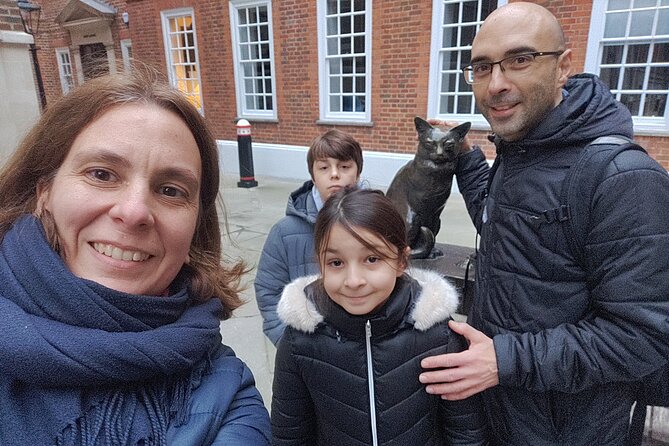
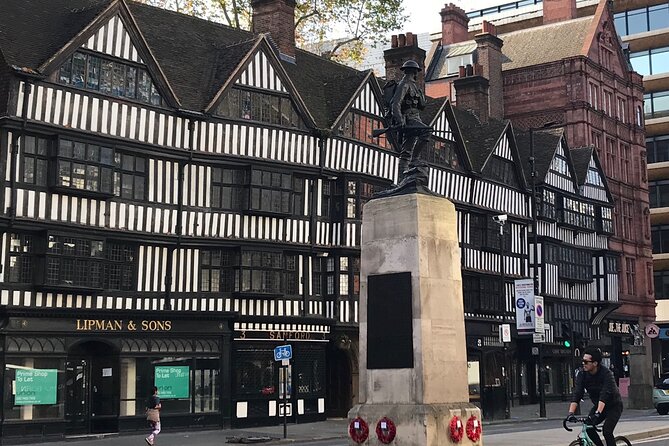
Staple Inn dates from 1585 and began as a wool staple, where wool was weighed and taxed. It survived the Great Fire of London, but a Luftwaffe bomb badly damaged it in 1944. The building was later restored.
This stop gives the route a useful sense of time. You are looking at a place that has survived commercial change, a major city fire, and wartime destruction. It is not only an old facade. Its story covers several defining events in London’s past.
The puzzle format works well here because restoration can make it easy to forget how much a building has endured. The clue asks you to examine what is around you, which can prompt a closer look at the architecture. Still, remember that the game does not provide a full architectural explanation. If you want detailed background, you will need to bring your own interest or do extra reading later.
A few more London days worth a look
- London: Emirates Stadium Entry Ticket and Audio Guide
★ 4.7 · 5,513 reviews - Westminster Abbey Entrance Ticket Including Audio Guide
★ 4.0 · 661 reviews - London: British Museum Audio Tour & Priority Entrance Ticket
★ 4.5 · 631 reviews - London: Churchill War Rooms Ticket & Political London Audio
★ 4.6 · 224 reviews
Lincoln’s Inn Fields and London theatre
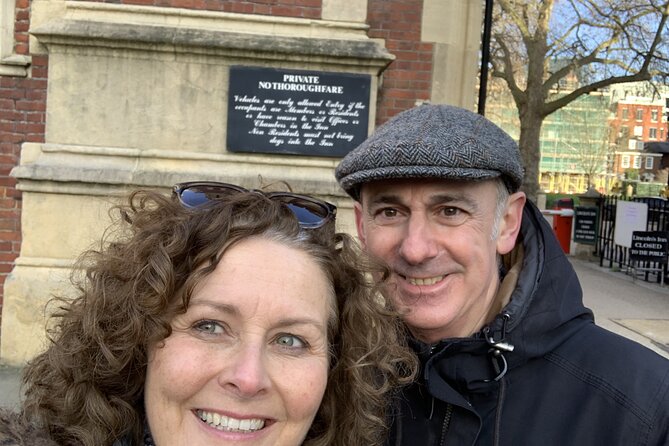
Lincoln’s Inn Fields once held a theatre that operated from 1661 until 1848. Originally called the Duke’s Theatre, it was created by converting Lisle’s Tennis Court in 1695. The theatre was later demolished.
This is a less obvious Dickens stop, but it adds social and cultural context. Theatre was a major part of London life during the period Dickens knew, and the location helps place his stories in a city shaped by performance, public entertainment, and changing neighborhoods.
Because the theatre is gone, you will not see a grand auditorium waiting at the stop. The interest lies in knowing what once occupied the space. That makes the clue-solving element important. You are using the present-day location to connect with something that has disappeared.
The Maughan Library and a grand Victorian building
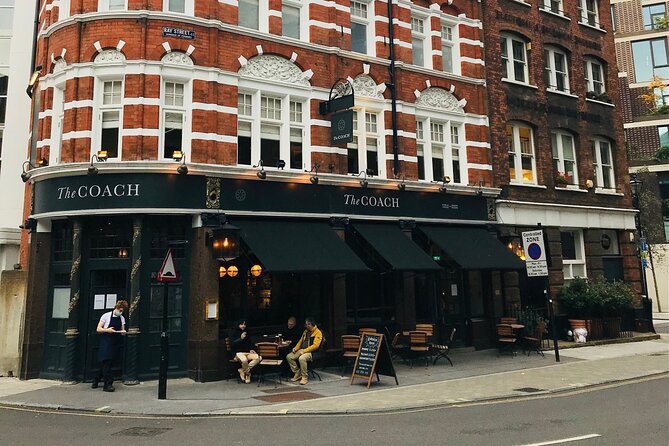
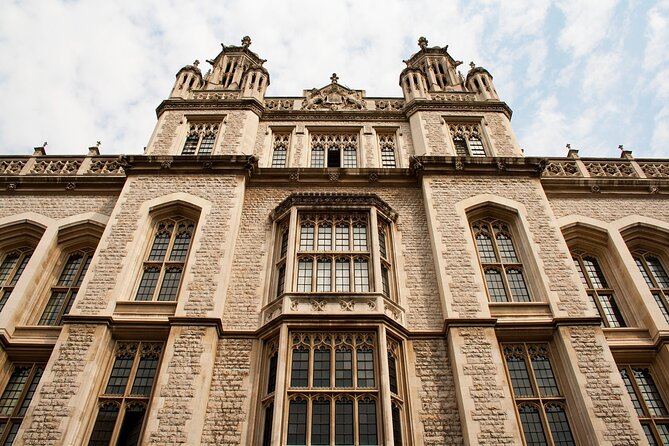
The Maughan Library is housed in a Grade II* listed building designed by Sir James Pennethorne. The main structure was built in 1851, with later extensions added between 1868 and 1900. After a £35 million renovation by Gaunt Francis Architects, it became the largest new university library in the United Kingdom since World War II.
This stop shifts the mood again, from Dickens’s literary world to a major Victorian building with a modern university role. It is a useful reminder that London’s old structures are often still working buildings, not frozen museum pieces.
You may find this stop especially rewarding if you enjoy architecture. The details about its construction and renovation give you reasons to look beyond the puzzle answer. As with other locations, access inside is not promised, so treat the building and its surroundings as the focus unless the game instructions tell you otherwise.
Dr Johnson’s House and an earlier literary London
Dr Johnson’s House was probably built for a City merchant. Its most famous resident, Samuel Johnson, rented it from 1748 to 1759. Johnson was one of the leading figures in English literary life, and his former home adds another writer’s story to the Dickens route.
This is one of the best stops for readers who want more than a single-author theme. Dickens is the main thread, but Samuel Johnson connects you to an earlier generation of English writing and London intellectual life.
The house also gives the walk a human scale. You are moving from large public buildings and vanished theatres to a place tied to one writer’s daily life. If you want to visit the interior, remember that the puzzle price does not include a physical guide or any stated admission to separate attractions.
Ye Olde Cheshire Cheese and the rebuilt city
Ye Olde Cheshire Cheese was first built in the 1530s, but the original pub was destroyed in the Great Fire of London in 1666. The current building dates from 1667 and was among the first London buildings reconstructed after the fire.
This is a natural pause point on a route that mixes literary clues with old city institutions. The pub’s story also makes the Great Fire easier to understand. London was not simply repaired in one grand project. Buildings returned in stages, and some places quickly took on new life.
The self-guided format is handy here. You can stop to look at the building and, if you choose, fit in a pub break without waiting for a scheduled group. Just keep the one-hour estimate in mind. A leisurely stop may mean you finish later than the stated duration.
Churches with Italian and Romanian connections
The route includes a church consecrated on 16 April 1863 as the Church of St Peter of all Nations. At the time, it was the only basilica-style church in the United Kingdom. Its organ was built in 1886 by the Belgian maker Anneesen. During World War II, Irish Pallottines used the church when Italian immigrants were interned.
This stop adds an important human side to the walk. The story is not limited to famous writers and old buildings. It touches migration, wartime policy, religious communities, and the way London’s churches have served changing populations.
Another church on the route is St Dunstan-in-the-West, which shares its building with the Romanian Orthodox community and its St George church. The chapel to the left of the main altar is separated by an iconostasis formerly from Antim Monastery in Bucharest, dedicated in 1966.
These details reward a slower look. You may not get a long explanation during the game, but the clue can prompt you to notice a feature you would otherwise pass without seeing. Religious sites also call for considerate behavior. Keep voices low and follow any access instructions while solving the challenge.
The Royal College of Surgeons and the making of medicine
The Royal College of Surgeons brings a medical chapter to the route. Its earliest roots reach back to the 1540s, when the Company of Barbers and the Fellowship of Surgeons joined to form the Company of Barber-Surgeons. In the 1700s, medicine became more academic, and surgeons sought greater recognition for their expertise.
This stop may appeal to you if you like the practical side of history. It shows how a profession developed from a trade association into a recognized academic field. That change happened during the same broad period when London was growing, rebuilding, and producing the literary culture associated with Dickens.
The museum or interior experience is not part of the stated tour. The value here is the location and the clue. You are collecting pieces of London’s past from different fields, not following a narrow sequence of Dickens landmarks.
Finishing near Fleet Street
The tour ends at 145 Fleet Street. This is a fitting finish for a literary walk, since Fleet Street is strongly linked with London’s publishing and newspaper past. The supplied route information does not promise a final attraction or guided conclusion, so expect the game to end when you solve the last challenge rather than with a formal talk.
That is both a strength and a limitation. You finish with the freedom to continue exploring, find a place to eat, or use nearby public transportation. But if you want a guide to gather the group and explain the full Dickens story, this experience will feel spare.
The route starts at 47 Doughty Street and finishes on Fleet Street. Public transportation is nearby, and most people can participate. The activity is private, meaning only your own group takes part, with no strangers added to your game.
How the puzzle format affects your day
Questo provides the game in English, and you play it on a mobile device. You can begin at any hour, take a break whenever you like, and resume later. It is also designed to work offline, so you do not need an internet connection while playing.
That flexibility is the main reason to choose this over a traditional walking tour. You do not need to meet a guide at a fixed time, and you can adjust the pace for your group. Families, couples, and friends who enjoy solving clues together will likely get the most from it.
The format also asks more of you. A guide can explain a difficult reference, point out a detail, or change the pace when the group loses interest. Here, you need to read carefully, inspect the location, and work out the answer yourselves. The clue difficulty is described as balanced, not too easy and not too hard, but your enjoyment will depend on how much you like that kind of problem solving.
The activity is private and avoids close contact with other groups. Service animals are allowed, and most people can participate. No physical guide is included, so bring a charged phone and be ready to follow the instructions on your own.
Is $8.33 good value?
At $8.33 per person, this is one of the cheaper ways to add structure to a London walk. The price is especially fair if you are already interested in Dickens, historic buildings, or city puzzles. Group discounts may improve the value for larger parties.
You are paying for a self-guided game, not admission to the Charles Dickens Museum, a private historian, food, or a guided tour. That distinction matters. If you want a detailed explanation at every stop, the low price will not buy that experience.
For me, the value comes from the route design. The game gives you a reason to walk from Doughty Street toward Fleet Street and notice places you might otherwise pass. The ability to stop at pubs, take photographs, and continue later makes the cost easier to justify.
Free cancellation is available if you cancel at least 24 hours before the start time. Inside that window, the payment is not refunded, and changes are not accepted. The activity is available every day, around the clock, through 7 February 2027 according to the stated operating dates.
Who should book this Dickens puzzle?
I would choose this for a reader who likes literary London but does not need a guide beside them. It also suits people who prefer a private activity, want to avoid a fixed departure time, or enjoy turning sightseeing into a team challenge.
It is a good fit for:
- Couples who want a light walking activity with built-in conversation
- Families and friends who enjoy solving clues together
- Dickens readers who want to connect fiction with real London places
- Budget-minded visitors who do not need a formal guide
- Repeat London visitors looking for a different way to cross Holborn and the City
I would think twice if you want a slow, detailed museum visit or a full lecture on Dickens’s life. The route covers 11 stops in about an hour, and that is a brisk pace. You may need to extend the outing with your own breaks or plan to return to the museum and other sites separately.
Should you book the London Charles Dickens puzzle?
Book it if you like self-guided discovery, clear clues, and the freedom to set your own pace. The best parts are the Dickens Museum opening, the Oliver Twist connection at the Three Cripples, the old pubs, and the surprising mix of literary, religious, medical, and architectural history.
Skip it if you want a human guide, a polished spoken narrative, or guaranteed interior access to every building. At this price, the experience is a clever city game rather than a full tour.
For the right person, it is a practical and inexpensive way to see a slice of London through Dickens’s eyes, while still leaving room for your own pub stop, photo break, or detour.
FAQ
How much does the London Charles Dickens Puzzle Questo tour cost?
The listed price is $8.33 per person. Group discounts are available.
How long does the tour take?
The expected duration is approximately one hour.
Where does the tour start?
It starts at 47 Doughty Street, London WC1N 2LW, at the Charles Dickens Museum.
Where does the tour finish?
The tour ends at 145 Fleet Street, London EC4A 2BU.
Is a physical guide included?
No. This is a self-guided activity and does not include a physical tour guide.
What language is the experience offered in?
The experience is offered in English.
Can I choose my own start time?
Yes. You can start at any hour because the activity is available 24 hours a day, every day of the week, during the stated operating period.
Can I take a break during the game?
Yes. You can pause at any time and resume later.
Do I need an internet connection to play?
No. The game can be played offline.
Is the activity private?
Yes. It is a private tour or activity, and only your group participates. Service animals are allowed, and most people can take part.
Latest arrivals on the London list
- Easy Access Tower of London Royal Secrets & Scandals Tour★ 5.0 · 3 reviews
- Stonehenge Special Access Guided Morning Tour from London★ 4.5 · 3 reviews
- Shoreditch & East London Walking Tour with a Local, Custom & Private★ 5.0 · 3 reviews
- Madame Tussauds London Fast Track and Champagne Experience★ 3.5 · 3 reviews
- London Private Brixton Tour with a Local – Culture & Stories★ 4.9 · 3 reviews
- Private Full Day Tour – Fast Track Tower of London and Lunch★ 4.6 · 3 reviews
- Private transfer from London Heathrow Airport to Southampton★ 5.0 · 3 reviews
- London Soho District – Guided Walking Tour 12 guests 2,5h★ 4.8 · 3 reviews
Shakespeare & Literary London Tours, compared.

Shakespeare’s Stratford-upon-Avon Day Trip by Coach
Read our review →
Full Day Cotswolds Tour & Shakespeare’s Stratford From London
Read our review →
Shakespeare in the City Walk – In Shakespeare’s footsteps North of the Thames
Read our review →
London Christmas Carol & Charles Dickens Small Group Walking Tour
Read our review →Browse the lists this tour appears in