
Reviewed · WESTMINSTER & BIG BEN TOURS
London in One Day: Tour Royal Westminster and the Square Mile
London packs centuries of power, ceremony, war, faith, and finance into this long walk from Buckingham Palace to the Tower of London. You move from royal Westminster through Whitehall, Fleet Street, and the City of London, finishing beside Tower Bridge and the medieval fortress.
I like the way the route links famous sights with less obvious stops such as Dr. Johnson’s House, St. Clement Danes, and the Bank of England. I also like having one guide handle the route, timing, and stories, rather than piecing together several short tours. The catch is simple: you will walk a lot, and admission to the main interiors is not included.
If Maggie is your guide, expect an engaging storyteller who can connect each building to the people and events behind it. The tour includes a useful lunch break, and a good guide can point you toward a local pub, cafe, or tea shop. The price of $514.18 covers your whole private group, up to 15 people, so it makes far better sense for a family or group than for one or two people.
In This Review
- Key points to know before booking
- From Buckingham Palace to the heart of royal London
- Trafalgar Square, Whitehall, and Britain at war
- Lunch on Villiers Street and views of the Thames
- Fleet Street, Dr. Johnson, and London’s old city
- St. Paul’s and the financial City
- London Bridge, Tower Bridge, and the final fortress
- Is $514.18 good value for your group?
- Who should book this London walk?
- FAQ
- How long does the tour last?
- Where does the tour start and finish?
- Is this a private tour?
- Is lunch included?
- Are admission tickets included?
- Can I see the Changing of the Guard?
- How much does the tour cost?
- What happens if the weather is poor?
Key points to know before booking
- A full London story in one route: You travel from the monarchy and Parliament to wartime London, the legal district, medieval markets, and modern finance.
- Mostly an outdoor sightseeing tour: The itinerary gives you exterior views and explanations. Entry tickets to Westminster Abbey, the Churchill War Rooms, St. Paul’s, the Tower of London, and other attractions are not included.
- Private groups up to 15: Your party stays together with an English-speaking local guide, a useful setup for families and groups with shared interests.
- Changing of the Guard is limited: The ceremony is planned for Mondays, Wednesdays, and Fridays, but weather, royal business, and city events can change the schedule.
- Lunch is flexible, not included: You get about an hour around Villiers Street and can choose among pubs, cafes, sandwich shops, and restaurants.
- The finish is the Tower of London: You see the fortress from the outside at the end, but the tour does not include a visit inside.
From Buckingham Palace to the heart of royal London
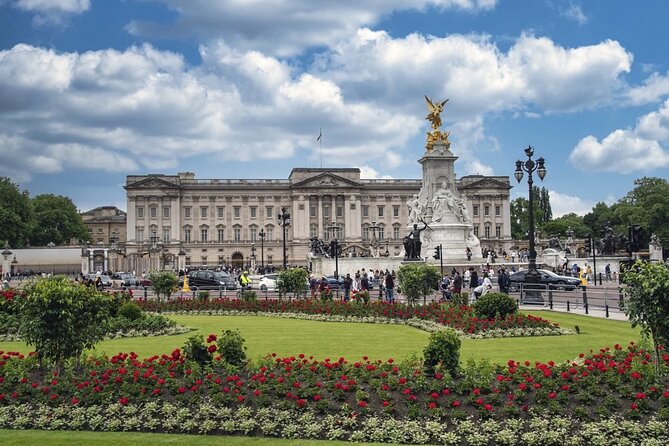
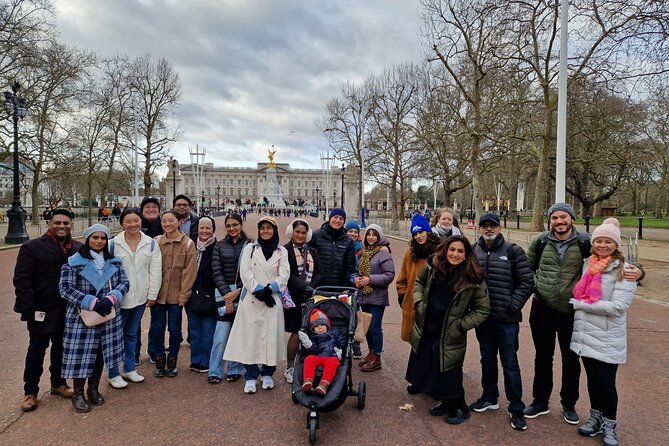
Meet at the Constance Fund fountain of Diana at 10 a.m. The location is in the Buckingham Palace area, so you begin with one of London’s grandest photo opportunities. Your guide positions the group for views of the palace facade and explains its role as the home of the British monarchy for nearly two centuries.
The palace stop lasts about 10 minutes. That is enough for orientation and photographs, but not for an interior visit. Admission is not included, and the tour does not present this as a palace tour.
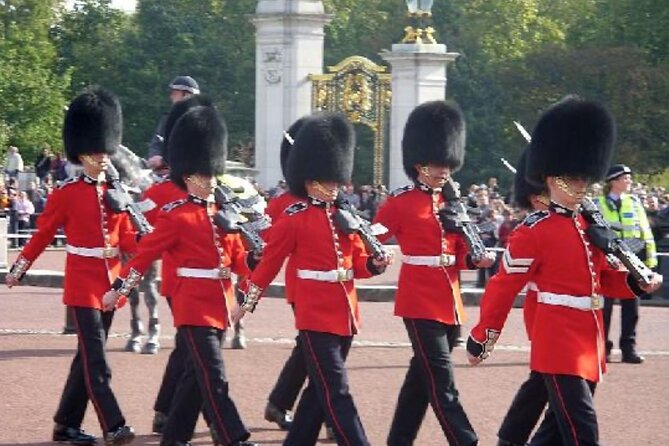
On Mondays, Wednesdays, and Fridays, the route aims to include the Changing of the Guard. You are taken to a tried-and-tested viewpoint rather than left to fight for a place on the pavement. Still, treat this as a possibility rather than a promise. The schedule can change because of rain, official royal activity, or events in London.
Clarence House gives you a glimpse of another royal residence. Once associated with Elizabeth, the Queen Mother, it is now the residence of King Charles III and Queen Camilla. You look through the gates, so the value here is the guide’s explanation and the setting, not a house visit.
At St. James’s Palace, you get an important correction to the usual royal sightseeing circuit. This palace is less visually famous than Buckingham Palace, yet it remains central to the Royal Court. Henry VIII ordered its construction, and your guide can use the stop to explain why royal importance is not always measured by fame.
St. James’s Park offers a welcome change of pace. The walk follows leafy paths through a royal park opened to the public by King Charles II in the 17th century. Keep an eye out for the park’s swans and pelicans, which belong to the King. This short stretch is also useful for catching your breath before the route turns toward Whitehall.
More Westminster and Big Ben walks:
- London: Westminster to Greenwich River Thames Cruise
★ 4.5 · 22,836 reviews - London: Westminster Abbey Entrance Ticket
★ 4.6 · 11,254 reviews - London: Westminster to Tower Bridge River Thames Cruise
★ 4.5 · 6,127 reviews
Trafalgar Square, Whitehall, and Britain at war
Trafalgar Square is not just a photo stop. It is a public stage where Londoners gather for celebrations, protests, ceremonies, and public events. Nelson’s Column and the four lions give you the familiar view, while the guide adds the civic meaning behind the space.
At Horse Guards Parade, the focus shifts to ceremony and military tradition. This open area is home to the King’s Life Guard and their horses, and it provides the setting for Trooping the Colour, the monarch’s annual birthday celebration. If the Changing of the Horse Guards happens during your visit, your guide aims to put you close to the action.
You also pass the guarded entrance to Number 10 Downing Street. You will not enter, but the imposing walls and gates make the point: this is the working center of the prime minister’s official residence. The guide can place the building within Britain’s political system without turning the walk into a dry civics lesson.
The Churchill War Rooms are another outside stop. You walk above the wartime rooms beneath the Treasury, where Winston Churchill directed Britain’s war effort during World War II. The museum itself is open to the public, but admission is not part of this experience.
That distinction matters. If the war rooms are high on your list, you should plan a separate visit and allow several hours for it. This tour gives you the setting and story, then keeps moving.
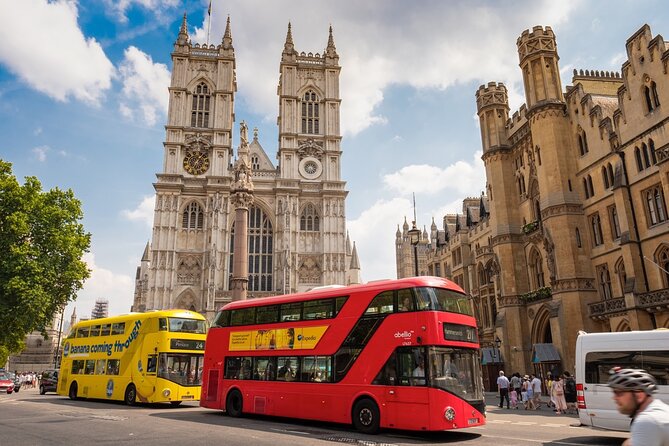
Westminster Abbey is one of the strongest stops on the first half of the route. From outside, you see the church where monarchs are crowned, royal weddings take place, and state funerals are held. The building began more than 1,000 years ago and contains the tombs of kings, queens, and major British figures.
The Palace of Westminster brings the political story back into view. It contains the House of Commons and House of Lords, while Westminster Hall within the complex dates to 1097. Your guide can explain how this old hall has been used for trials, coronation banquets, executions, and lying-in-state ceremonies.
Again, the tour gives you the exterior context rather than an interior Parliament visit. That is efficient for a one-day overview, but it means you should not book this expecting a detailed look inside the Abbey or Palace.
Lunch on Villiers Street and views of the Thames
After the Westminster section, you get about an hour for lunch around Villiers Street and Victoria Embankment Gardens. This is a practical pause, not a fixed meal. The street has pubs, sandwich shops, cafes, and restaurants, and you choose where to eat.
That flexibility is useful because food needs vary widely in a private group. You can choose a quick sandwich and stay on schedule, or sit down for a proper pub meal. Lunch is not included in the price, so budget separately.
There is also time for a drink in an 18th-century underground cellar or a stop in a small park, depending on the group’s choice and the guide’s suggestions. A guide who knows the area can make this break feel local rather than like a forced stop at a standard chain.
The route then gives you views of the River Thames. The river has shaped London’s trade, transport, defense, and daily life for centuries. From the embankment, you can connect the political buildings behind you with the bridges, docks, and commercial districts farther east.
Fleet Street, Dr. Johnson, and London’s old city
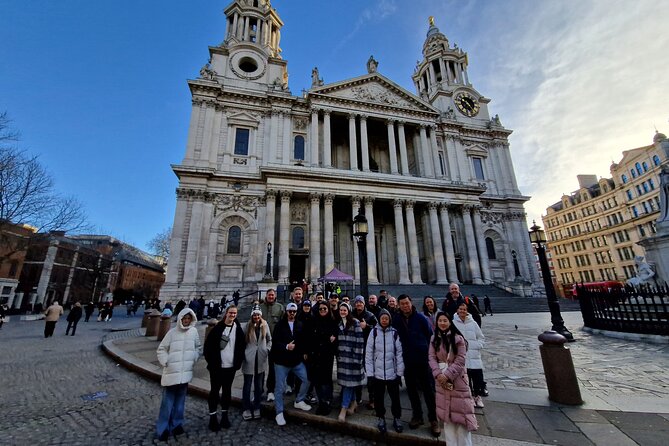
St. Clement Danes Church is an especially worthwhile stop for people interested in the Second World War. The Georgian church, designed by Christopher Wren in the late 17th century, is now the official church of the Royal Air Force. Damage from wartime bombing remains visible rather than being fully concealed.
That physical damage gives the story weight. You are not simply hearing that London was bombed. You are looking at a building that carries the evidence.
The Royal Courts of Justice changes the subject from war to law. Opened by Queen Victoria in 1882, the Neo-Gothic building houses the High Court and Court of Appeal for England and Wales. Its medieval-palace appearance has made it familiar from television and films, including Bridget Jones’s Diary.
At Temple Bar, you enter the City of London, a financial and governmental district with boundaries that reach back to Roman times. The marker also carries a colorful constitutional detail: traditionally, the monarch must ask permission to enter the City. From here, you walk along Fleet Street, once closely tied to newspapers and printing and still linked in popular culture with Sweeney Todd.
Dr. Johnson’s House provides one of the route’s best small-scale surprises. The Georgian townhouse sits in a quiet courtyard away from the traffic. Samuel Johnson lived and worked here while writing the first comprehensive English dictionary.
The courtyard also has an unusual statue connected to Johnson’s cat, a detail that gives the stop some humor. This is exactly the sort of place a fast-moving first visit to London can miss. It does not have the size of St. Paul’s or the fame of Buckingham Palace, but it gives you a more personal sense of how London’s intellectual life developed.
Ye Olde Cheshire Cheese supplies the required pub stop. This old, family-friendly establishment has associations with Charles Dickens, Arthur Conan Doyle, and P. G. Wodehouse. You spend about 10 minutes here, so do not expect a full pub meal during the sightseeing portion. The point is to see a working piece of London tradition and hear how writers and journalists fit into the city’s story.
St. Bride’s Church follows naturally. Often called the Journalists’ Church, it has long connections with the newspaper trade. Wren completed the current Baroque church in 1675 after the Great Fire, and its tiered spire is often linked to the design of traditional wedding cakes.
A few more London days worth a look
- Windsor Castle, Stonehenge, and Oxford Day Trip from London
★ 4.5 · 5,292 reviews - London: Windsor, Stonehenge, Bath, and Roman Baths Day Trip
★ 4.5 · 5,131 reviews - London: Harry Potter Studio Tour and Oxford Day Trip
★ 4.7 · 5,098 reviews - From London: Stonehenge Morning Day Trip with Admission
★ 4.8 · 3,423 reviews
St. Paul’s and the financial City
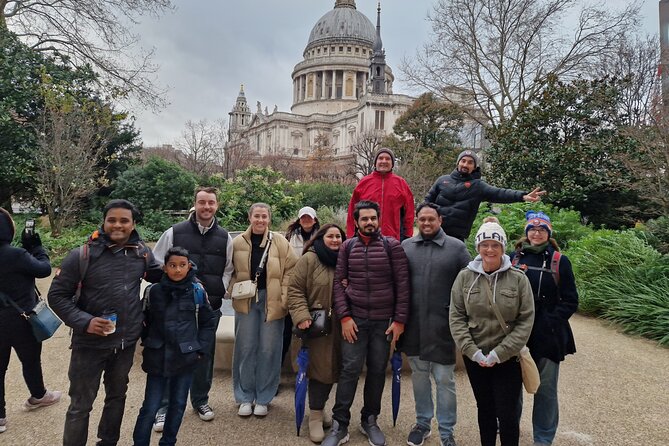
St. Paul’s Cathedral is one of the major visual payoffs of the second half. Wren’s cathedral was completed in the early 18th century and has hosted events such as Winston Churchill’s funeral and the wedding of Prince Charles, now King Charles III, and Diana Spencer.
You get the best outside views and time for photographs, not an interior tour. The inside contains mosaics, grand arches, and the Whispering Gallery, but you need a separate admission ticket to see those features.
St. Mary Le Bow Church takes you into the old Cheapside area. Wren completed the church in 1680 after the Great Fire, and its bells gave rise to the traditional definition of a true Cockney, someone born within earshot of the Bow Bells.
Cheapside was once London’s medieval market district. The name survives in the streets around it, and the stop helps you picture the commercial life that existed long before the modern offices of the City.
The Royal Exchange shows how that commercial tradition changed shape. Established under Queen Elizabeth I, the exchange became a center for merchants and traders. The current building opened in 1844 and has an imposing neoclassical facade with Corinthian columns.
Today, shops, restaurants, and offices occupy the building. The combination of grand architecture and modern use makes this a useful place to understand London as a city that keeps reusing its old spaces.
Mansion House is the official residence of the Lord Mayor of London. Built between 1739 and 1752, it has a grand Georgian facade and hosts official functions, ceremonies, and receptions. The Lord Mayor is not the same person as the mayor who governs Greater London, a distinction your guide can clarify as you pass.
At the Bank of England, the financial story becomes tangible. The institution is the United Kingdom’s central bank, and its building was designed by Sir John Soane. You stand above vaults holding 310 tonnes of solid gold bars.
The Bank of England Museum is not included, so you do not see the collection inside. Still, the outside explanation makes the City feel less like a collection of office towers and more like the machinery of national finance.
London Bridge, Tower Bridge, and the final fortress
The Monument to the Great Fire of London points back to the disaster of 1666. Christopher Wren helped rebuild the City and designed this column to commemorate the fire. If you choose to climb its 211 steps, you can get a distinctive view of London, but the climb and admission are not part of the guided experience.
London Bridge follows. A crossing has occupied this site since AD 42, and the medieval bridge earned its falling down reputation for good reason. The present bridge dates from the 1960s. Your guide can also point you toward the location of the earlier bridge, a useful tip if you want to compare old and new London.
The Shard appears across the river as a sharp contrast to the medieval and Victorian buildings around you. At 310 meters, it is Western Europe’s tallest building. You see it from outside, while the observation decks, restaurants, offices, apartments, and hotel remain separate attractions.
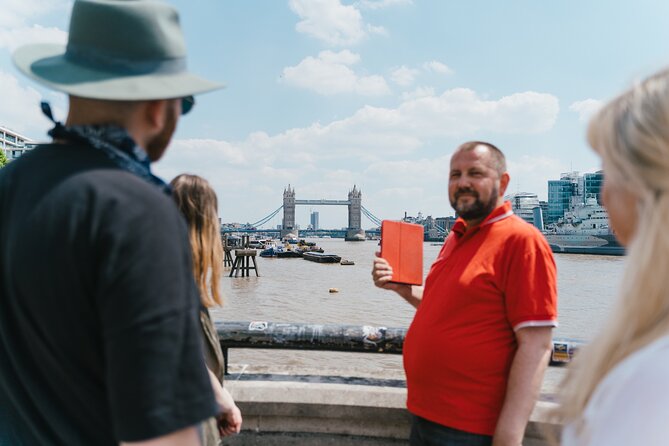
Tower Bridge is the final major bridge stop before the Tower of London. Completed in 1894, it combines Gothic-style towers with a working bascule design. You may see it open for river traffic during a summer afternoon tour, but that is not guaranteed.
Across the water, you can spot HMS Belfast, the former Royal Navy cruiser now used as a floating museum. The ship served during World War II, including the D-Day landings and Arctic convoys. Like the other museums along this route, it requires a separate ticket.
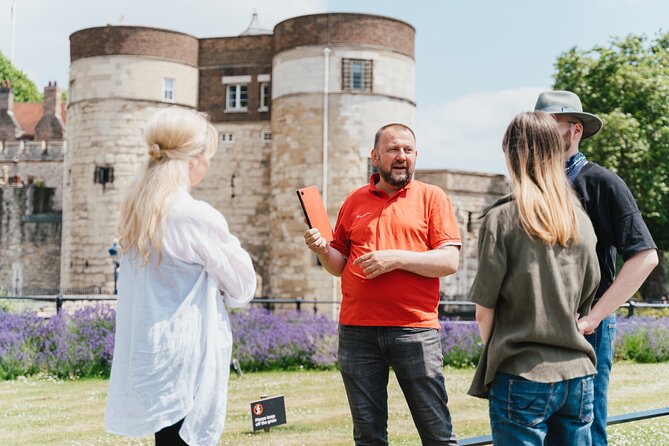
The Tower of London is the grand finale. Founded by William the Conqueror in the 11th century, the fortress has served as a royal palace, prison, and treasury. The White Tower, medieval walls, Tower Green, and Crown Jewels all belong to the wider attraction.
The guided stop lasts about 10 minutes and does not include admission. Think of it as a strong orientation and a natural place to end, not as a Tower visit. The official ticket office is at Tower Hill, so you can continue inside afterward if you have the time and energy.
Is $514.18 good value for your group?
The price is $514.18 per private group of up to 15 people. Filled to capacity, that works out to about $34 per person. For a family or larger party, the cost can be fair because you receive six hours and 15 minutes with a dedicated guide rather than joining a large shared group.
For two people, the calculation is less favorable. You are paying for privacy, route planning, and a guide’s attention, but the major attraction tickets and lunch are extra.
The value also depends on your goals. If you want to cover a huge amount of London in one day and hear the connections between royal, political, religious, military, and financial sites, the route earns its price. If you want to enter several major attractions, buying tickets separately and spending longer inside each may suit you better.
This is a physically active outing. Wear comfortable shoes, expect a substantial amount of walking, and keep the weather in mind. The activity requires good weather, and poor conditions can lead to a different date or a refund.
Free cancellation is available up to 24 hours before the start time. Confirmation arrives when you book, service animals are allowed, and the route is near public transportation.
Who should book this London walk?
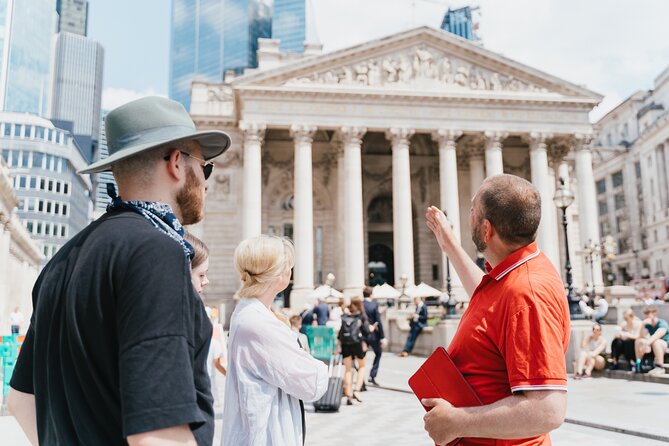
I recommend it most for first-time visitors with one packed day, families who want a private guide, and history fans who enjoy stories as much as photographs. It also suits people fascinated by British royalty, Parliament, wartime leadership, the legal system, journalism, and banking.
It is less suitable if you have limited mobility, dislike long walks, or want lengthy interior visits. The guide keeps you moving, and many stops are short exterior explanations.
Book it if you want a strong framework for London and plan to return to the Tower, Westminster Abbey, St. Paul’s, or the Churchill War Rooms afterward. Skip it if your ideal day means choosing one or two sights and exploring them slowly.
FAQ
How long does the tour last?
The tour lasts approximately 6 hours and 15 minutes. It begins at 10 a.m.
Where does the tour start and finish?
You meet at the Constance Fund fountain of Diana, London SW1A 1RN. The tour ends at the official ticket office for the Tower of London, 2 Tower Hill, London EC3N 4EE.
Is this a private tour?
Yes. Only your group participates, with a maximum group size of 15 people.
Is lunch included?
No. The tour provides about one hour for lunch around Villiers Street, where you can choose among pubs, cafes, sandwich shops, and restaurants.
Are admission tickets included?
No. Admission tickets are not included. The route provides outside views and explanations of places such as Westminster Abbey, the Churchill War Rooms, St. Paul’s Cathedral, the Monument, and the Tower of London.
Can I see the Changing of the Guard?
The tour aims to include the Changing of the Guard on Mondays, Wednesdays, and Fridays. The ceremony schedule can change because of weather, London events, or official activity involving the Royal Family.
How much does the tour cost?
The listed price is $514.18 per group, with up to 15 people. Lunch and attraction admissions cost extra.
What happens if the weather is poor?
The experience requires good weather. If it is canceled because of poor conditions, you are offered another date or a full refund.
Latest arrivals on the London list
- Stonehenge Special Access Guided Morning Tour from London★ 4.5 · 3 reviews
- Easy Access Tower of London Royal Secrets & Scandals Tour★ 5.0 · 3 reviews
- Shoreditch & East London Walking Tour with a Local, Custom & Private★ 5.0 · 3 reviews
- Madame Tussauds London Fast Track and Champagne Experience★ 3.5 · 3 reviews
- London Private Brixton Tour with a Local – Culture & Stories★ 4.9 · 3 reviews
- Private Full Day Tour – Fast Track Tower of London and Lunch★ 4.6 · 3 reviews
- Private transfer from London Heathrow Airport to Southampton★ 5.0 · 3 reviews
- London Soho District – Guided Walking Tour 12 guests 2,5h★ 4.8 · 3 reviews
Westminster & Big Ben Tours, compared.
Westminster to Greenwich River Thames Cruise
Read our review →
Westminster to Tower Bridge River Thames Cruise
Read our review →
Westminster to Greenwich Sightseeing Thames Cruise in London
Read our review →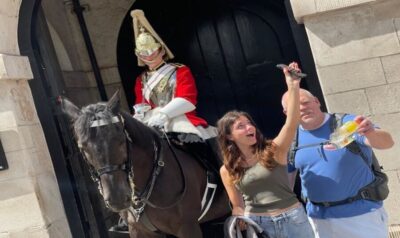
Westminster Abbey, Big Ben & Buckingham Guided Tour
Read our review →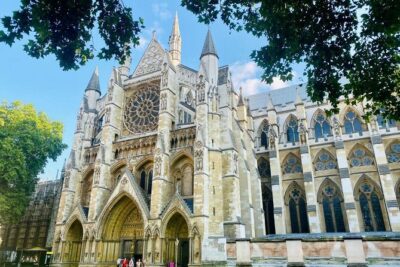
Westminster Guided Walking Tour with Abbey Entry
Read our review →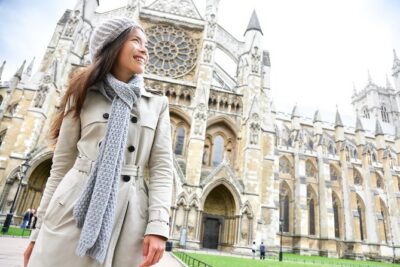
Walking Tour of London Westminster Abbey, Big Ben, Buckingham
Read our review →Browse the lists this tour appears in