Reviewed · GUIDED
London: The Lost Tunnels of Euston Station Guided Tour
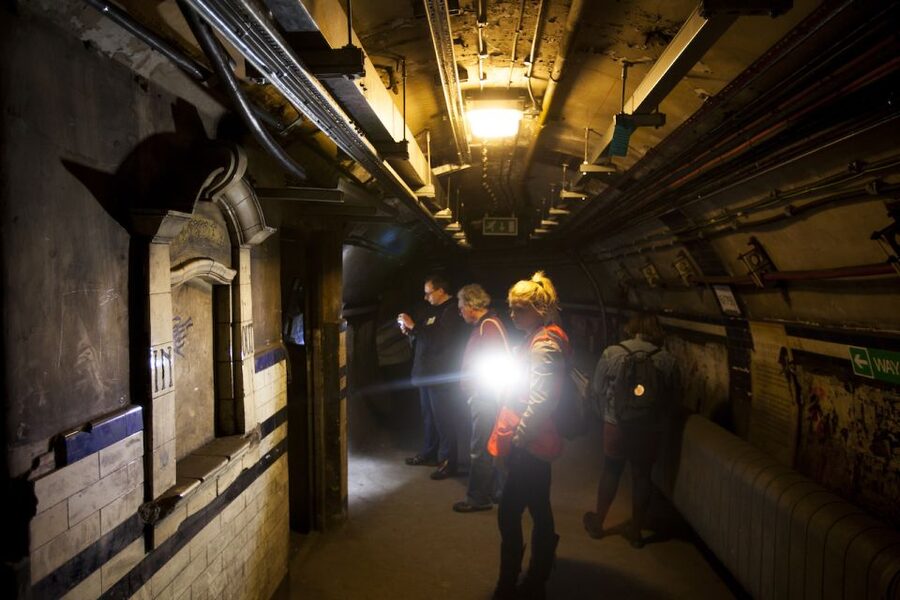
Euston’s busiest public spaces hide a quieter world below ground: disused tunnels, old stairways, and dusty passageways that once carried ordinary Tube passengers. On this 75-minute walk, you follow an expert guide through areas most people rush past without knowing they exist.
I like the sharp sense of place, especially the faded advertising posters concealed for decades. I also like the tour’s look ahead, since the guide connects old Euston with the station’s planned role as a London terminus for HS2. The main drawback is practical: low light, uneven ground, stairs, and narrow spaces make this a poor choice for anyone with mobility limits or claustrophobia.
In This Review
- Key points of the Euston tunnel tour
- Meeting your guide at the correct Euston station
- From Euston’s early days to its working Tube network
- Walking the dark and dusty passageways
- Faded posters that survived for half a century
- The ventilation shaft above Victoria line trains
- Leslie Green’s station design and what may disappear
- What the 75-minute format gives you
- Is the $60.61 price fair?
- Who should book this Euston experience?
- Should you book the Lost Tunnels of Euston tour?
- FAQ
- Where does the tour start?
- How do I identify the correct entrance?
- How long does the tour last?
- What language is the tour in?
- What can I see during the tour?
- Is the tour suitable for children?
- Is the tour suitable for people with mobility impairments?
- Can I bring luggage, food, or drinks?
- Can I cancel the booking?
Key points of the Euston tunnel tour
- Start at Euston Square, not Euston station: Meet at the south exit with the glass façade, beside the hospital side of Euston Road.
- Walk through closed Tube spaces: Follow passageways once used by the public, now dark, dusty, and cut off from daily station traffic.
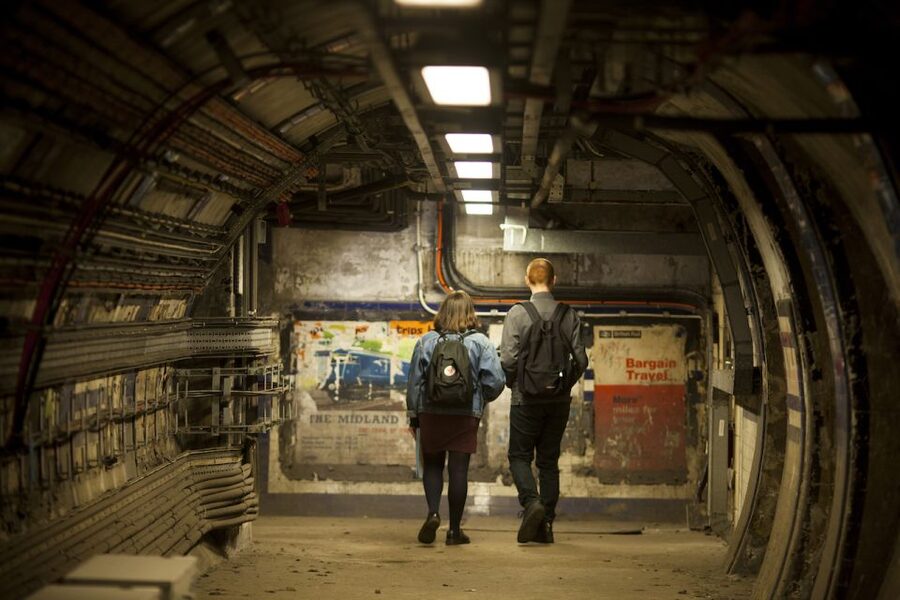
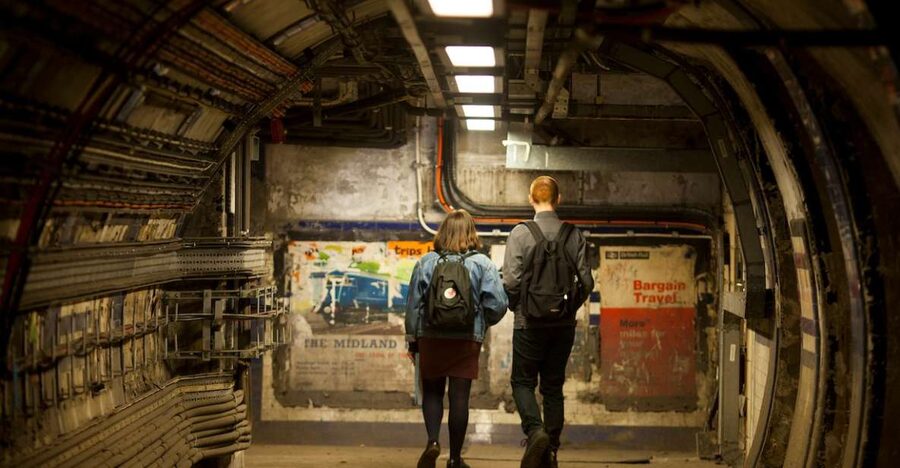
- Spot old advertising posters: Faded remnants remain on walls where they have been out of sight for more than 50 years.
- Look down on Victoria line trains: A secret ventilation shaft offers an unusual view into the working Underground.
- Connect past and future: Hear how Euston developed and how HS2 is expected to change the station.
- Plan for a physical walk: Wear closed, comfortable shoes and bring no large luggage, food, or drinks.
Meeting your guide at the correct Euston station
The tour begins at Euston Square Underground station, not at Euston station itself. This distinction matters because London has several nearby station entrances and the names are easy to mix up.
Meet your guide at the south exit of Euston Square, on the corner of Gower Street and Gower Place, NW1 2BF. Look for the entrance with the glass façade on the hospital side of Euston Road. The what3words location is baked.bend.worry, which can help if you are unsure of the exact doorway.
The meeting point is practical for a central London itinerary, but give yourself time to find it. Arriving at the wrong Euston entrance could mean a hurried walk across the area before the tour begins. Since this is a timed guided visit, I would not treat the station name as a rough suggestion.
The tour is conducted in English. Guides such as Scott and Anthony have been praised for being friendly, clear, and willing to allow time for photographs. That last point is useful underground, where a few extra seconds can make it easier to notice wall details and take a steady picture.
A few more London days worth a look
- Magical London: Harry Potter Guided Walking Tour
★ 4.7 · 22,044 reviews - London: Emirates Stadium Entry Ticket and Audio Guide
★ 4.7 · 5,513 reviews - Stonehenge, Windsor Castle and Bath Full Day Guided Tour
★ 4.5 · 5,346 reviews
From Euston’s early days to its working Tube network
Your guide sets the tunnels in context before leading you into the closed areas. Euston began in a much more modest way on the corner of Melton and Drummond Streets. From those early beginnings, it grew into a major transport hub serving more than 42 million passengers each year.
That change is the key to understanding the tour. You are not simply walking through abandoned corridors for atmosphere. The passageways show how London repeatedly alters its stations to handle new lines, larger crowds, changing safety needs, and better passenger flow.
Euston’s underground spaces were built for practical reasons. Some helped people reach platforms, while others supported ventilation and station operations. Once layouts changed, sections that had carried the public were closed and left behind. The tour lets you see those earlier layers rather than only the polished, modern station.
I like this approach because it gives the dust and peeling surfaces a purpose. You can look at a blocked route and think about the different station that once occupied the same footprint. The guide also explains how improvements to Tube service affected these areas, so the tour is as much about transport planning as old walls.
Walking the dark and dusty passageways
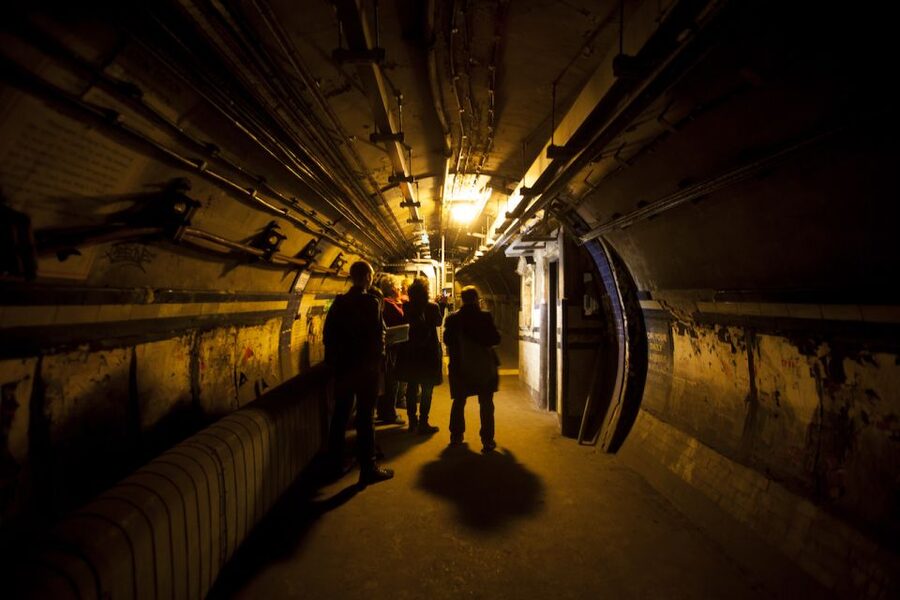
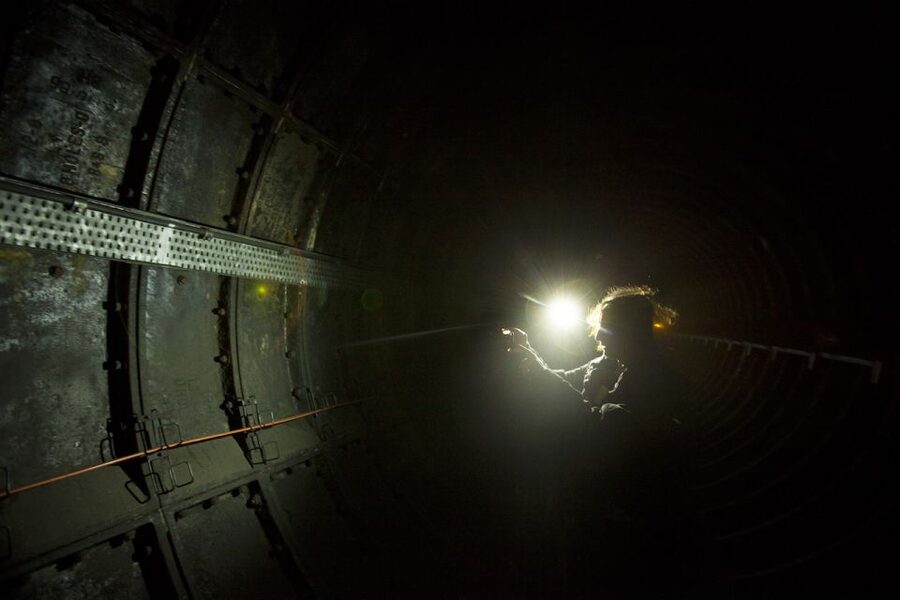
The heart of the visit is a guided walk through a labyrinth of disused tunnels and passageways. These spaces were once part of the passenger experience, but they no longer serve the daily public. Expect low lighting, uneven ground, and stairs as you move from one section to another.
This is not a comfortable, brightly lit museum route. The limited light is part of the character, but it also means you need to watch your footing and stay close to the guide. Comfortable shoes are essential. Open-toed shoes are not allowed, and that rule makes good sense given the conditions.
The route involves a lot of walking in a fairly short period. If you have trouble with stairs, uneven surfaces, or confined spaces, I would choose another London attraction. The tour is specifically unsuitable for people with mobility impairments and claustrophobia.
For everyone else, the physical setting gives the visit its appeal. A closed tunnel feels different from a preserved room behind glass. You are moving through the same kind of infrastructure that once guided passengers beneath the city, with the marks of age still visible around you.
There are no toilets on the tour. Use facilities before meeting your guide, since the 75-minute visit does not include a convenient break.
Faded posters that survived for half a century
One of the most rewarding details is the remains of vintage advertising posters. They have been concealed from public view for more than 50 years, and their survival gives the tunnels a direct link to everyday London life.
The posters are not presented as perfect works of art. You may find faded sections, worn edges, and partial images rather than a complete advertisement. That is exactly why they matter. They show how Tube stations once doubled as advertising spaces and how layers of paint, construction, and closure can preserve pieces of the past.
Your guide helps you notice details you might otherwise miss. In a dark corridor, a patch of color or lettering could look like ordinary damage until someone explains what it is. Allowing time for photographs is helpful here, though the low light may make picture-taking tricky.
I would bring a phone or camera only if you can carry it comfortably and use it without slowing down. Food and drinks are not allowed, and large bags or luggage are not permitted. If you are touring London with suitcases, leave them at your accommodation or use another storage option before arriving.
Something completely different for your London days:
- London: The London Eye Entry Ticket
★ 4.6 · 35,875 reviews - From London: Harry Potter Warner Bros Studio Tour
★ 4.7 · 26,588 reviews - London: Westminster to Greenwich River Thames Cruise
★ 4.5 · 22,836 reviews - London: Madame Tussauds London
★ 4.6 · 20,915 reviews
The ventilation shaft above Victoria line trains
The tour’s most unusual viewpoint comes at a secret ventilation shaft, where you can look down toward Victoria line trains. This changes the mood of the visit. Instead of seeing only a sealed tunnel, you get a reminder that the Underground around you is still active.
The view connects the abandoned and working parts of Euston in one scene. Below, trains continue their routine service. Around you, an older passageway sits outside the normal passenger route. That contrast explains why London’s Tube network can feel like several periods of the city occupying the same space.
The shaft is also a good example of why a guide adds value. Without an explanation, you might see a hole or service area and move on. With context, it becomes part of the station’s ventilation system and a clue to how the Underground functions below street level.
Do not expect a broad city view or a grand architectural reveal. This is a technical, close-up viewpoint rather than a sightseeing platform. Its appeal comes from access and perspective, not scale.
Leslie Green’s station design and what may disappear
The tour also draws attention to the iconic Leslie Green station and its surroundings. Green designed several early Underground stations, and the mention of his work gives the walk a stronger architectural angle.
Here, the important point is not just the appearance of one station. It is the question of what happens when an old transport site must make room for a major new project. Euston is set to change with the arrival of HS2, the high-speed rail line planned to connect London with the Midlands.
Your guide explains how Euston’s future may affect the station and the surrounding structures. Parts of the old setting may be swept away or altered as the new terminal takes shape. That makes the tour feel time-sensitive, though you should think of it as a look at a changing station rather than a guarantee that every feature will soon vanish.
The past and future work well together here. You see the remains of old passenger routes, then hear about new rail infrastructure designed for a different scale of travel. The result is a useful lesson in how London transportation keeps rebuilding itself while still leaving fragments behind.
What the 75-minute format gives you
At 75 minutes, this is a focused experience rather than a full afternoon outing. You get enough time to walk through several disused areas, hear the station story, stop at key details, and take some photographs without committing half a day.
The short length also means the guide has to keep things moving. If you enjoy long historical talks, you may wish the visit lasted longer. On the other hand, the compact format fits neatly before a museum visit, a meal, or another central London activity.
The tour ends back at the meeting point. That makes planning easier, especially if you are using Euston Square for your next Tube connection. Check the available starting times when booking, since the start time is not fixed in the information provided.
Group size can affect the feel of the walk. One reported visit had only four people, which allowed plenty of space and made it easier to hear the explanations. A larger group may feel less intimate, particularly in narrow passages, though the guide remains central to the experience.
Is the $60.61 price fair?
At $60.61 per person, this is not a cheap way to spend 75 minutes in London. You are paying for restricted access, a specialist guide, and a tour developed from the London Transport Museum’s archive and collection, rather than for entry to a large public attraction.
The value depends on what you want from a London tour. If you only want famous landmarks, the price may seem high for a short walk in a closed station. If you enjoy transport history, unusual access, and the physical remains of older infrastructure, the cost is easier to justify.
I see the strongest value in the combination of access and interpretation. You could walk through the active Euston area yourself, but you would not reach these disused tunnels or know what the old posters and ventilation spaces meant. The guide turns overlooked rooms into a readable story.
The booking terms also reduce some risk. You can reserve now and pay later, and cancellation is free up to 24 hours before the tour for a full refund. That flexibility helps if your London schedule is still changing.
Who should book this Euston experience?
I would recommend the tour to:
- Tube and railway enthusiasts who want to see the system away from its public platforms
- Visitors who enjoy unusual London history rather than only major landmarks
- Architecture fans interested in Leslie Green and changing station design
- Photographers who like worn surfaces, old signs, and low-lit industrial spaces
- Repeat London visitors looking for a different kind of city walk
- Families with children aged 10 to 15 who can manage the route, with no more than four children per adult
I would not choose it for young children, anyone uncomfortable in dark or confined areas, or anyone who needs step-free access. Children under 10 are not allowed. The tour also does not suit visitors carrying luggage, since large bags are not permitted.
Wear weather-appropriate clothing even though much of the route is underground. You meet outside, and comfortable clothes will make the stairs and walking easier. Bring a passport or ID card, as identification is required.
Should you book the Lost Tunnels of Euston tour?
Book it if you want a close look at London’s working transport past, and if faded posters, old station layouts, ventilation shafts, and dark service corridors sound more appealing than another standard sightseeing stop.
The best part is the sense of access. You are not just hearing that London has layers beneath its streets. You are walking through one of those layers and seeing where former passengers once went. The Victoria line viewpoint and surviving posters give the tour memorable details, while the HS2 discussion shows why Euston remains a changing place.
Skip it if stairs, low light, uneven ground, or confined spaces would make you uneasy. At $60.61, the tour needs to match your interests. For Tube fans and curious repeat visitors, it offers a specific, well-guided look at a side of Euston that ordinary passengers never see.
FAQ
Where does the tour start?
Meet your guide at the south exit of Euston Square station, NW1 2BF, on the corner of Gower Street and Gower Place.
How do I identify the correct entrance?
Use the Euston Square entrance with the glass façade on the hospital side of Euston Road. There is more than one entrance to Euston Square station.
How long does the tour last?
The guided tour lasts 75 minutes. Starting times vary, so check availability when booking.
What language is the tour in?
The live tour guide speaks English.
What can I see during the tour?
You can see disused tunnels and passageways, remnants of vintage posters hidden for more than 50 years, Leslie Green station features, and a ventilation shaft overlooking Victoria line trains.
Is the tour suitable for children?
Children under 10 are not permitted. Children aged 10 to 15 are allowed, with a maximum of four children per adult.
Is the tour suitable for people with mobility impairments?
No. The route includes substantial walking, uneven ground, low lighting, and stairs, and it is not suitable for people with mobility impairments.
Can I bring luggage, food, or drinks?
No. Food and drinks, luggage, and large bags are not allowed. Open-toed shoes are also prohibited.
Can I cancel the booking?
Yes. You can cancel up to 24 hours in advance for a full refund. You can also reserve now and pay later.
Latest arrivals on the London list
- Easy Access Tower of London Royal Secrets & Scandals Tour★ 5.0 · 3 reviews
- Stonehenge Special Access Guided Morning Tour from London★ 4.5 · 3 reviews
- Shoreditch & East London Walking Tour with a Local, Custom & Private★ 5.0 · 3 reviews
- Madame Tussauds London Fast Track and Champagne Experience★ 3.5 · 3 reviews
- London Private Brixton Tour with a Local – Culture & Stories★ 4.9 · 3 reviews
- Private Full Day Tour – Fast Track Tower of London and Lunch★ 4.6 · 3 reviews
- Private transfer from London Heathrow Airport to Southampton★ 5.0 · 3 reviews
- London Soho District – Guided Walking Tour 12 guests 2,5h★ 4.8 · 3 reviews
Guided, compared.

Magical London: Harry Potter Guided Walking Tour
Read our review →
Emirates Stadium Entry Ticket and Audio Guide
Read our review →
Stonehenge, Windsor Castle and Bath Full Day Guided Tour
Read our review →
London Jack the Ripper Guided Tour with Ripper-Vision
Read our review →
Original Harry Potter Locations Tour – Guided Tour of London
Read our review →

Christmas Lights Nighttime Bus Tour with Live Guide
Read our review →