
Reviewed · THAMES RIVER CRUISES
London Tootbus Hop-on Hop-off (Optional Thames Cruise)
London’s best feature here is simple: one pass links the West End, Westminster, the Tower, St Paul’s, Notting Hill, and the British Museum without forcing you to master the Underground on your first morning. You can ride the full circuit, then hop off when a palace, cathedral, market, or museum catches your eye.
I like the choice of 24-, 48-, and 72-hour passes, and I like the free Tootbus app with live bus tracking and self-guided walking tours. The main caution is service reliability. Traffic, demonstrations, races, and roadworks can cause long waits, route changes, or missed stops, while the audio commentary has been uneven.
In This Review
- Key points to know before you board
- What the Tootbus pass is really good for
- Starting at Coventry Street in the West End
- St Paul’s, London Bridge, and the Tower
- Whitehall, Parliament, and the royal route
- The blue route to King’s Cross and the British Museum
- The app, audio, and what you will hear
- Timing, traffic, and the risk of losing your day
- Comfort, views, and practical limits
- How I would plan a day with the pass
- Who should book it
- FAQ
- How long is the London Tootbus experience?
- How many routes and stops are included?
- Is the Thames cruise included?
- Is there live commentary from a guide?
- Does the bus have Wi-Fi and restrooms?
- Can I cancel for a full refund?
Key points to know before you board
- Three routes and 46 stops: Cover central London, the West End, Kensington, Notting Hill, King’s Cross, St Pancras, St Paul’s, and the Tower.
- A useful first-day overview: A full ride helps you place London’s major sights before choosing where to spend more time.
- The Tootbus app adds practical help: Use real-time tracking, audio commentary, and four self-guided walking tours.
- Audio quality varies: Some buses provide useful historical context, while others may have music, poor synchronization, or faulty volume controls.
- Traffic is part of the deal: Demonstrations, marathons, civic events, and roadworks have caused serious delays and diversions.
- Best value comes from a longer pass: A 24-hour ticket can work for a quick orientation, but 48 or 72 hours gives you more time to absorb delays and hop off often.
What the Tootbus pass is really good for
At about $48.27 per person, this is not the cheapest way to move around London. The Underground and regular buses usually cost less for point-to-point transport. You are paying for a sightseeing network, an elevated view from a double-decker, recorded commentary, and the freedom to get off near major attractions.
That value depends on how you use it. If you sit on the bus for one short ride and then spend the day at the Tower or British Museum, the price is hard to justify. If you use the bus as a moving introduction to London, hop off two or three times, and continue riding on a second day, the calculation improves.
The pass options matter. A 24-hour ticket suits a tightly planned visit, especially if you want a broad look at London on arrival. A 48-hour pass gives you a better cushion when traffic interrupts a ride. The 72-hour option makes the most sense if you want to combine sightseeing with several short journeys and walking tours.
The ticket is mobile, and confirmation comes at booking. Food and drinks are not included, and there is no restroom onboard. Service animals are allowed, and the buses stop near public transportation.
More Thames cruises to compare:
- London: Westminster to Greenwich River Thames Cruise
★ 4.5 · 22,836 reviews - London: Westminster to Tower Bridge River Thames Cruise
★ 4.5 · 6,127 reviews - High-Speed Thames River Speedboat in London
★ 5.0 · 3,971 reviews
Starting at Coventry Street in the West End
The first listed departure point is 1 Coventry Street, in front of Shake Shack. This is a practical starting place if you are already near Leicester Square, Piccadilly Circus, Chinatown, or the theatres.
From there, the central route moves through Pall Mall East and Trafalgar Square, where you are close to the National Gallery, Nelson’s Column, and Whitehall. Trafalgar Square is one of the most useful places to begin a London visit because several major districts meet here. You can walk toward the river, the Mall, Covent Garden, or St James’s.
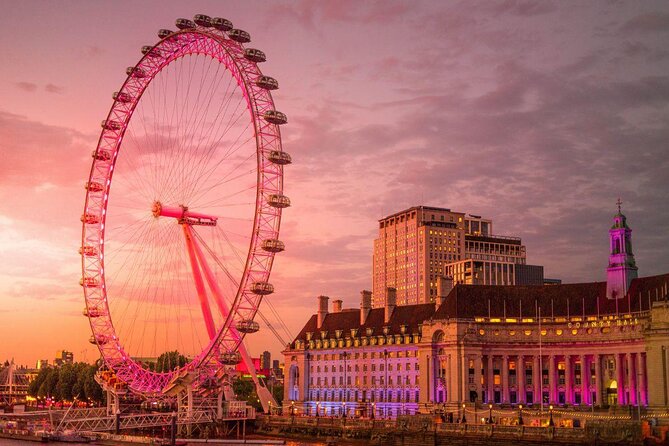
The route then reaches Westminster Bridge and the London Eye. This is one of the best sections for open-top views. Look across the Thames toward the Palace of Westminster, then watch for the London Eye rising beside the river. The bus gives you a fast sense of how close London’s major landmarks are, even when the streets themselves are slow.
Next comes Southbank Place and Waterloo Station. South Bank is good for a hop-off because you can walk along the river, reach the London Eye, and continue toward cultural venues and bridges. Waterloo also gives you a useful transport connection if the bus is delayed.
At Aldwych and Covent Garden, you are near theatres, restaurants, the Royal Opera House area, and the lanes around the market. This stop works well for an evening meal or a break from riding. Covent Garden is compact enough to explore on foot, but it can absorb far more time than you expect.
St Paul’s, London Bridge, and the Tower
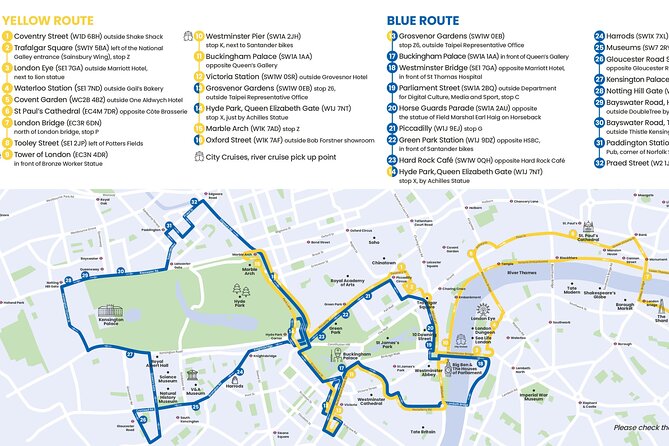
The next stretch takes you to Ludgate Hill and St Paul’s Cathedral. St Paul’s is one of London’s great interior visits, not just a photo stop. If you get off here, check the walking distance and opening hours before committing, since a cathedral visit needs more time than a quick hop-off.
The bus continues toward London Bridge and Tooley Street. This places you near Borough Market, the river, and the walk toward Shakespeare’s Globe. Food is not part of the tour, but this is one of the easiest areas to pause for lunch or a snack.
At Tower Hill and the Tower of London, you reach the most historically concentrated stop on the central route. The Tower deserves several hours if you want to see its major rooms and displays. You can also walk toward Tower Bridge and the riverfront from here.
This part of London is where hop-on hop-off service can save your legs. St Paul’s, London Bridge, the Tower, and Westminster are walkable in sections, but covering all of them on foot takes a large portion of a day. The catch is that a long wait for the next bus can erase that advantage, so check the app before leaving a stop.
The route returns through Victoria Embankment and Temple, then reaches Westminster Pier. The pier is especially useful if you add the optional Thames cruise. The supplied information identifies the cruise as an option, not as a standard inclusion, so confirm the exact ticket type before you count on it.
Whitehall, Parliament, and the royal route
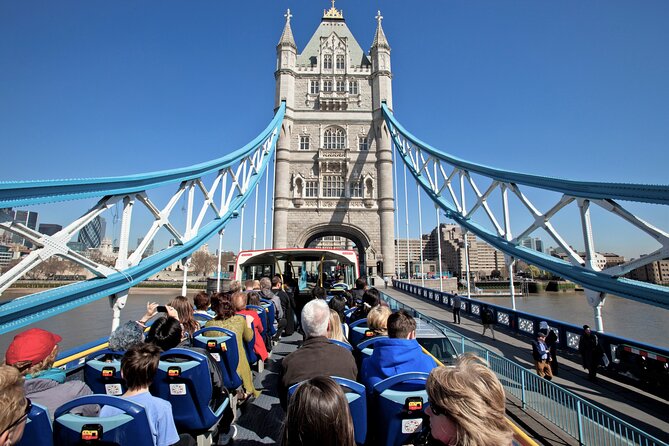
Several stops cluster around Whitehall, including Craig’s Court, Banqueting House, Parliament Street, and Horse Guards Parade. These are close together, and the repeated stop names can be confusing at first. Keep the app or route map open rather than relying only on the stop number.
Whitehall is ideal for a short walking break. You can see the ceremonial heart of government, walk toward Parliament, and reach Trafalgar Square without making a major detour. Horse Guards Parade is a particularly useful hop-off because it connects Whitehall with St James’s Park and the Mall.
The royal route begins at Grosvenor Gardens, with another first and last departure point. It runs through Buckingham Palace Road, Horseferry Road, Lambeth Palace Road, Westminster Bridge Road, Parliament Street, Whitehall, Cockspur Court, and Piccadilly.
This route gives you a different view of London from the central circuit. Buckingham Palace is the obvious anchor, but the ride also places you near the Mall, St James’s, Green Park, and Piccadilly. The palace stop is worth using if you want photographs or a walk through the nearby parks.
The route then moves through Hard Rock London Rock Shop and Queen Elizabeth Gate, followed by Thurloe Place and Gloucester Road Station. Thurloe Place is convenient for the South Kensington museum district, although the museums themselves may require a longer walk and a separate visit. Gloucester Road provides another Underground connection.
From there, the bus reaches Kensington High Street and Notting Hill Gate, then several stops around W2 and London Street. These stops make the royal route more useful for visitors staying west of the center. Notting Hill is best treated as a walking neighborhood rather than a quick window view. Get off only if you have time to explore.
The final section follows Park Lane, including stops at 118 to 127 Park Lane, before returning toward Buckingham Palace Road. Park Lane gives you a view of the edge of Hyde Park and Mayfair. It is scenic, but traffic can be slow, especially when central roads are crowded.
More hop-on hop-off bus tickets:
- London Big Bus Hop-On Hop-Off Tour with Optional River Cruise
★ 3.5 · 10,803 reviews - London: City Sights Hop-On Hop-Off Bus & Bookable Extras
★ 4.4 · 6,579 reviews - London: London Eye, River Cruise, & Hop-on Hop-off Bus Tour
★ 4.4 · 5,332 reviews - London: Tootbus Hop-on Hop-off with optional River Cruise
★ 3.9 · 4,327 reviews
The blue route to King’s Cross and the British Museum
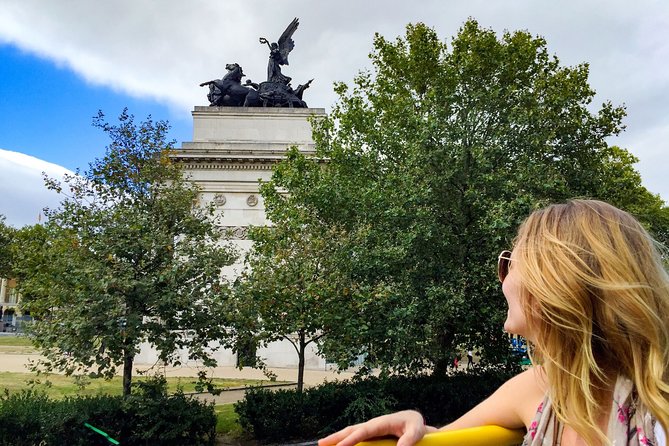
The third route begins at Charing Cross Road near Wyndham’s Theatre. This is handy for the theatre district, Leicester Square, and Covent Garden.
It continues through Duncannon Street and St Martin-in-the-Fields, then heads north to Russell Square. This route is useful if you want to connect the West End with Bloomsbury, an area known for squares, universities, and museums.
The bus then reaches Euston Station, King’s Cross Station, and St Pancras Station. These are important transport stops, but they are also useful landmarks for navigating London. King’s Cross has become a popular photo stop, while St Pancras is one of the city’s most striking railway buildings.
At Great Russell Street and the British Museum, you have one of the strongest hop-off points on the entire network. The museum is large enough to take most of a day, so do not plan to combine a thorough museum visit with a long bus circuit. Use the bus to arrive, then decide if you have the energy for more sightseeing afterward.
The route ends at Aldwych and Covent Garden, linking it back to the central sightseeing area. This connection is useful, but the three-route system can feel confusing. Pay attention to the color of the bus and the direction of travel. Different drivers may give different advice when diversions or route changes are in effect, so the app is your safest reference.
The app, audio, and what you will hear
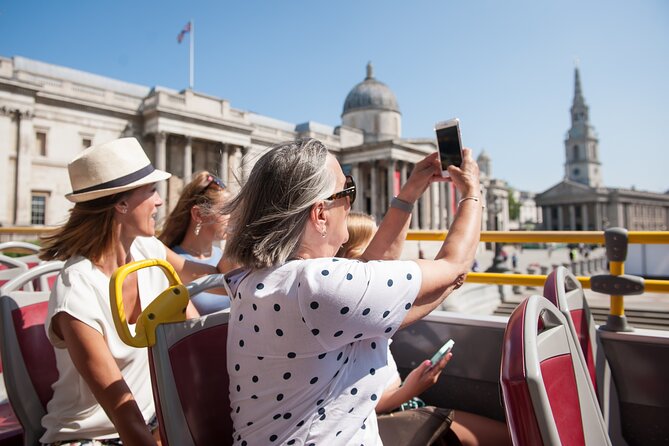
The Tootbus app is one of the better practical features. It provides live bus tracking, audio commentary, and four self-guided walking tours. Free Wi-Fi onboard is also advertised, which can help you follow the map and upload photographs without using as much mobile data.
The audio itself is the weak point. On some rides, you may get useful historical tidbits that give context to monuments and streets. On others, the commentary may lag behind the view, play too much music, or offer only brief information. Faulty headsets, garbled sound, and volume controls that do not work have also been reported.
You should think of the commentary as a bonus, not a substitute for a proper guided tour. If you want detailed stories about London’s kings, churches, neighborhoods, or political history, bring your own guidebook or use the app’s walking tours after getting off.
The buses do not appear to rely on live driver narration. Some drivers are friendly and helpful, but you should not assume the driver will announce every landmark or stop. Watch the route on your phone and be ready to tell the driver where you want to exit.
Timing, traffic, and the risk of losing your day
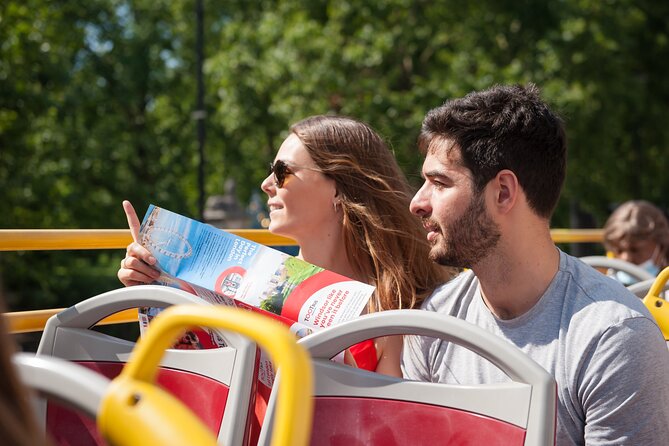
London traffic is the biggest practical issue. Demonstrations, the Lord Mayor’s Show, half-marathons, and roadworks have all caused diversions or suspended stops. One disruption around London Bridge created a delay of roughly 30 minutes, while other service interruptions led to waits of 45 minutes or longer. Two-hour waits have also occurred during major disruptions.
That matters most if you have only one day in London. A delayed bus does not simply shorten your ride. It can make you afraid to hop off because you may not know when the next bus will arrive.
The company has adjusted Yellow Route departure points because of roadworks, and stop locations can change during city events. Check the current route in the Tootbus app on the morning of your ride. Do not assume an old map or a stop sign tells the whole story.
I would also avoid scheduling a time-sensitive attraction immediately after the bus. A theatre ticket, timed museum entry, train, or dinner reservation can turn ordinary London traffic into a costly problem. Use the bus for flexible sightseeing, not as your only transport plan.
Comfort, views, and practical limits
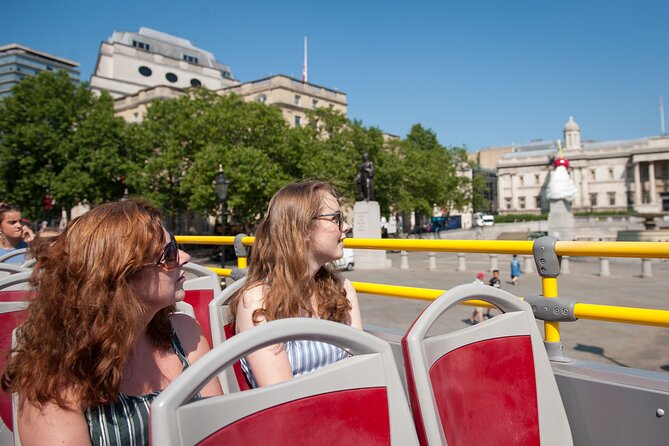
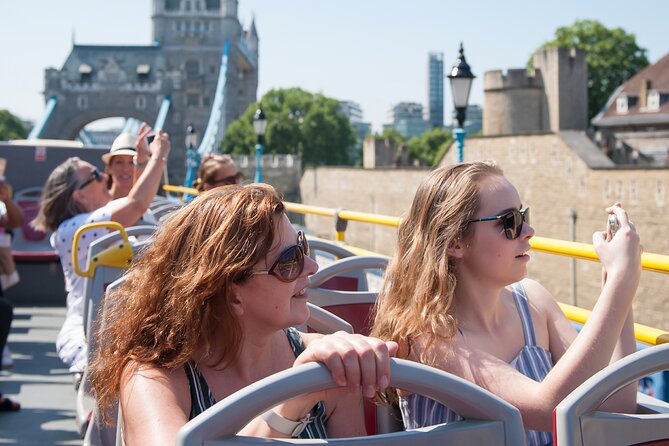
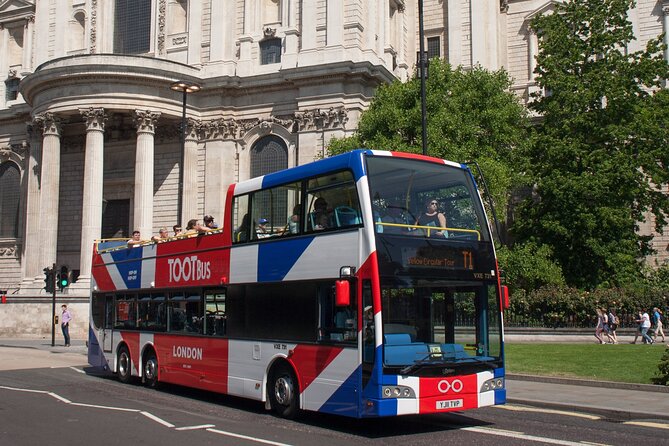
The open-top upper deck is the main physical pleasure of the ride. From the front seats, you get an excellent view of Parliament, the river, bridges, palace roads, and the city’s older streets. On a cold day, the top deck can be chilly, but the view may still be worth a warm coat and hat.
The stairs to the upper deck are steep and narrow. If you have trouble with stairs, a walker, or limited balance, ask staff about lower-deck seating and plan extra time at stops. The information says most people can participate, but the bus layout is not equally comfortable for everyone.
There is no restroom onboard. Plan a stop at a café, museum, department store, or station before starting a long circuit. Food and drinks are not provided, so carry water and use the route to build in a meal break.
The service is not a small-group tour. You are riding a shared double-decker bus, and the experience can feel more like public transport when the audio is poor or traffic stops the vehicle. That is not necessarily a flaw, but it is important to book this for flexibility and city views rather than personal attention.
How I would plan a day with the pass
I would start early at Coventry Street or another confirmed departure point and ride toward Westminster. I would get off around Westminster Bridge or Whitehall, then walk through the government district toward Parliament and the river.
Next, I would continue toward St Paul’s, London Bridge, and the Tower. I would choose only one major interior visit in this section. The Tower needs several hours, while St Paul’s also deserves more than a quick photograph.
After lunch, I would use the app to check service before leaving the Tower area. If buses are running well, I would ride toward Covent Garden or Trafalgar Square. If the wait is long, I would use the Underground or walk instead of sacrificing the afternoon.
On a second day, I would take the royal route toward Buckingham Palace, then continue to South Kensington or Notting Hill. The third route makes a good separate outing for the British Museum and King’s Cross. Splitting the routes this way is more pleasant than trying to complete all three in one day.
Who should book it
This tour suits you if you want a broad first look at London, enjoy sitting upstairs on a double-decker, or prefer a simple sightseeing route over planning every Underground connection. It is especially useful for families and first-time visitors who want to connect major sights before deciding where to spend the day.
It is less suitable if you have only a few hours, need dependable transport, or expect a live guide with detailed commentary. It is also a poor fit for anyone who cannot tolerate long waits in bad weather.
Book it if you can use a 48- or 72-hour pass and keep your plans flexible. For a single tightly scheduled day, I would compare the current bus frequency and road closures first. The best feature is the network of stops. The biggest risk is spending your sightseeing day waiting beside the road.
FAQ
How long is the London Tootbus experience?
A sightseeing circuit is listed as approximately two hours, but the pass itself can be purchased for 24, 48, or 72 hours. Hop-on hop-off time depends on how often you leave the bus.
How many routes and stops are included?
The pass covers three routes and 46 stops across central London, Westminster, Kensington, Notting Hill, King’s Cross, St Pancras, the British Museum, St Paul’s, London Bridge, and the Tower of London.
Is the Thames cruise included?
The Thames cruise is presented as an optional feature. The standard inclusions list the bus routes, app, audio commentary, walking tours, and Wi-Fi, so check your selected ticket before booking.
Is there live commentary from a guide?
The experience includes audio commentary for adults and children through the Tootbus app. Live driver commentary is not guaranteed.
Does the bus have Wi-Fi and restrooms?
Free Wi-Fi is included onboard. There is no restroom on the bus, and food and drinks are not included.
Can I cancel for a full refund?
You can cancel at least 24 hours before the local start time for a full refund. Cancellations or changes made less than 24 hours before the start time are not accepted for a refund.
Latest arrivals on the London list
- Heathrow Airport to London Arrival Transfer★ 4.5 · 50 reviews
- London Beatles Tour★ 5.0 · 50 reviews
- One Way Taxi Transfer from London to Gatwick Airport★ 5.0 · 51 reviews
- London: Hidden Baker Street Tube Station Tour★ 4.7 · 51 reviews
- City & Secrets: Explore London’s Hidden Gems★ 5.0 · 51 reviews
- London Christmas Lights Open-Top Bus Tour. 2025 Early Bird★ 3.6 · 51 reviews
- 4 hour London Private Tour, with your own Black Cab Tour Guide★ 5.0 · 51 reviews
- The Beatles Magical History Black Taxi Tour London★ 5.0 · 51 reviews
Thames River Cruises, compared.

Westminster to Greenwich River Thames Cruise
Read our review →
Westminster to Tower Bridge River Thames Cruise
Read our review →
Thames River Cruise with Optional London Eye Ticket
Read our review →
London Tootbus Hop on Hop off Bus Tour and Thames River Cruise
Read our review →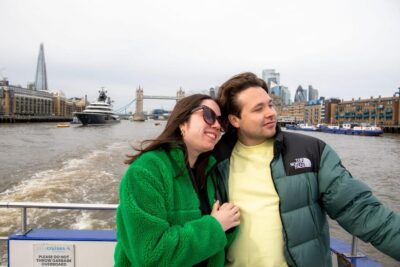
River Thames Hop-On Hop-Off Sightseeing Cruise
Read our review →
Westminster to Greenwich Sightseeing Thames Cruise in London
Read our review →
River Thames Evening Cruise with Bubbly and Canapés
Read our review →Browse the lists this tour appears in