
Reviewed · BEATLES & MUSIC TOURS
Private Rock ‘n’ Roll Music Tour of Central London
The best thing about this private London rock tour is its street-level sense of place. You are not just hearing a playlist of famous names. You are walking from the Palladium to Denmark Street, stopping at old clubs, studios, pubs, shops, and office buildings where British music actually took shape.
I like two things in particular. First, the route covers more than the usual Beatles landmarks, reaching Pink Floyd, Bowie, the Rolling Stones, Eric Clapton, Queen, Elton John, and the Sex Pistols. Second, your guide Michael brings a huge store of stories and leaves room for questions. The main consideration is pace: three hours and roughly 17 stops means plenty of standing and walking, with most visits viewed from outside.
In This Review
- Quick takeaways
- From Beatlemania to Bowie, a walking tour with a soundtrack
- What the private format adds
- Starting at the London Palladium and the BBC
- Pink Floyd’s student beginnings and Carnaby Street style
- Kingly Street, Heddon Street, and the world of Ziggy Stardust
- The Beatles’ rooftop concert at 3 Savile Row
- Hotel Café Royal and the old Marquee Club
- Rolling Stones beginnings, Soho pubs, and Trident Studios
- McCartney’s publishing empire and Ronnie Scott’s
- Brian Epstein, the Sex Pistols, and the road to Denmark Street
- Is $205.67 good value for a three-hour walk?
- Walking demands and practical details
- Who should book this rock music walk?
- Should you book the Private Rock ’n’ Roll Music Tour of Central London?
- FAQ
- How long is the Private Rock ’n’ Roll Music Tour of Central London?
- How much does the private tour cost?
- Where does the tour start?
- Where does the tour finish?
- Is this a private tour?
- Is the tour offered in English?
- Are entrance fees included?
- What level of fitness is needed?
- Can I cancel the booking for a full refund?
Quick takeaways
- The route links major music eras: From Beatlemania at the London Palladium to punk on Denmark Street.
- Michael is the guide to request: His storytelling and broad knowledge are central to the experience.
- The tour is private: Your group alone takes part, with space to ask questions and follow your interests.
- Most stops are free exterior visits: You see locations and plaques, but this is not a ticketed venue tour.
- The ending is musically strong: Denmark Street ties together the Beatles, Stones, Sex Pistols, Elton John, and Bowie.
- The price works best for a group: At $205.67 for up to 15 people, the per-person cost drops sharply when shared.
From Beatlemania to Bowie, a walking tour with a soundtrack
Central London can feel like a giant stage set for popular music, but many of its best stories are easy to miss. A plain doorway may mark a former studio. A pub may have been the place where musicians drank after a club lost its alcohol licence. A shop may connect Eric Clapton to a clothing business.
This tour turns those ordinary-looking streets into a connected story. You begin at the London Palladium on Argyll Street and finish on Denmark Street, passing through the West End, Soho, and Covent Garden. The route is packed with names, but the good part is the human detail: failed plans, odd friendships, strange fashion choices, late-night drinking, business deals, and famous performances.
You should think of this as a guided history walk with rock music at its center, not a concert, museum visit, or backstage tour. The guide does the interpreting. You look at the buildings, plaques, streets, and former venues that remain.
More music history walks:
- Soho Music & Historic Pubs Tour
★ 5.0 · 1,993 reviews - London: The Great British Rock and Roll Music Walking Tour
★ 4.9 · 1,783 reviews - London Rock and Roll Music Tour
★ 4.5 · 943 reviews
What the private format adds
A private booking is useful here because music history invites questions. If your group wants to spend longer on the Beatles, ask about the rooftop concert. If Bowie is your priority, you can focus on Ziggy Stardust, the Marquee Club, and Trident Studios.
The group limit is 15 people. That is small enough for a personal walk, though a full group will feel less intimate than two or four people. The guide can respond to your interests rather than delivering a fixed talk to a large crowd.
Michael is named as the guide in the available feedback, and his role seems especially important. One description credits him with keeping the group entertained through a steady stream of rock and roll stories. Another points to his broad knowledge and recommends him highly. That tells you what this tour sells best: the guide’s storytelling, not access to private interiors.
The tour is offered in English. All guiding fees are included, and admission is free at most stops. Ronnie Scott’s, the Odeon Covent Garden, and Denmark Street are marked as having admission not included, although the experience mainly visits these places as exterior locations.
Starting at the London Palladium and the BBC
The London Palladium is a fitting first stop. This famous theatre hosted major music names and was linked to Sunday Night at the London Palladium, one of Britain’s most popular television programs.
The Palladium is also tied to the moment Beatlemania truly took off. You hear how the Beatles affected the theatre’s audience and why the Rolling Stones caused a stir by refusing to follow the standard behavior expected at the end of a show.
From there, the walk reaches Broadcasting House, headquarters of the BBC and home to major radio stations. A wing is named for John Peel, the influential DJ and music champion. This stop adds an important wrinkle to the story: the BBC helped bring popular music to a huge audience, but it also banned some records from its airwaves.
The value of these first stops is the contrast. One is a glamorous live theatre. The other is a broadcasting institution that helped decide what Britain heard. Together, they show how music reached the public through stages, television, and radio.
Pink Floyd’s student beginnings and Carnaby Street style
The route then pauses at a university building that was once the London Polytechnic. In September 1962, Roger Waters, Nick Mason, and Richard Wright enrolled there to study architecture.
The three students rehearsed in a basement tea room with a band called Sigma 6. Syd Barrett later joined them, and the group became Pink Floyd. This is a strong reminder that famous bands often began in ordinary places, among students, part-time plans, and rough early rehearsals.
Carnaby Street shifts the story from sound to style. In the 1960s, it became a symbol of swinging London fashion. You hear about the unexpected 1950s roots of the flamboyant clothing associated with the Small Faces, The Who, and the Rolling Stones.
The stop also brings in Don Arden, a notorious music promoter and manager. That detail helps connect clothes, image, promotion, and music business tactics. Bands did not simply appear fully formed. Their look and public identity were built around them.
A few more London days worth a look
- The Premier Classic London: Private 4-Hour Tour in a Black Cab
★ 5.0 · 2,737 reviews - Stonehenge Inner Circle Private Tour from London with Bath Visit
★ 5.0 · 1,909 reviews - London: Tower of London Entry & Beefeater Private Audience
★ 4.4 · 1,441 reviews - Private Tour: Black Taxi Tour of London
★ 5.0 · 1,153 reviews
Kingly Street, Heddon Street, and the world of Ziggy Stardust
On Kingly Street, the former Bag O’Nails site recalls a remarkable concentration of musical talent. The club was associated with the Jimi Hendrix Experience, The Who, The Animals, and Tom Jones.
It was also a meeting place for musicians and future spouses. Paul McCartney met Linda there in 1967. This kind of detail gives the walk a personal edge. The story is not only about who played on stage, but who met, socialized, and formed relationships offstage.
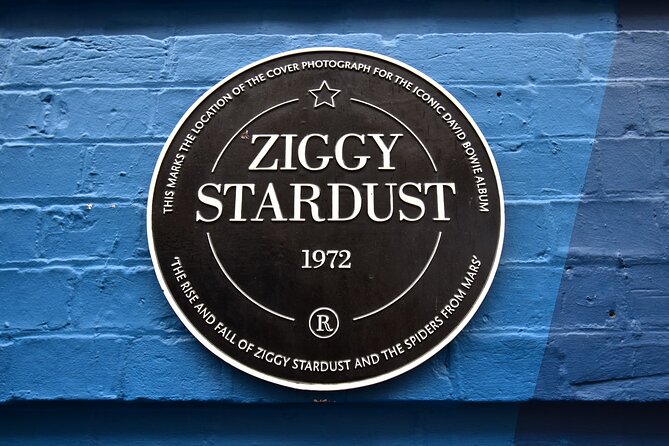
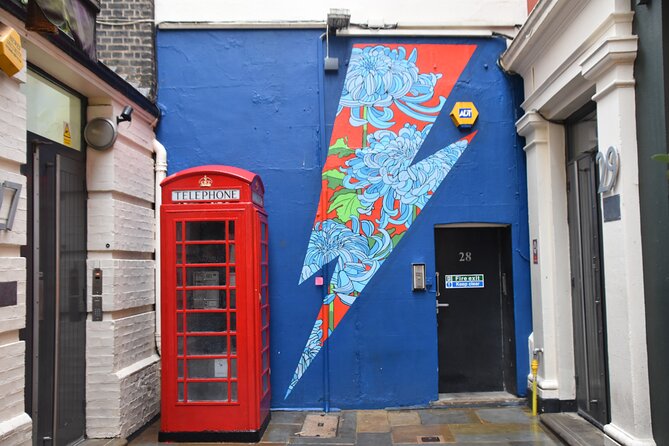
Heddon Street brings you into David Bowie’s world. The street was used for the front and back cover photographs of The Rise and Fall of Ziggy Stardust and the Spiders From Mars. You have a chance to recreate the famous images while hearing about the photo session on a cold, wet January night in 1972.
This is one of the more photograph-friendly stops, but keep expectations sensible. You are recreating the location, not entering a preserved Bowie exhibit. The appeal comes from standing in the same urban setting and learning how the images were made.
The Beatles’ rooftop concert at 3 Savile Row
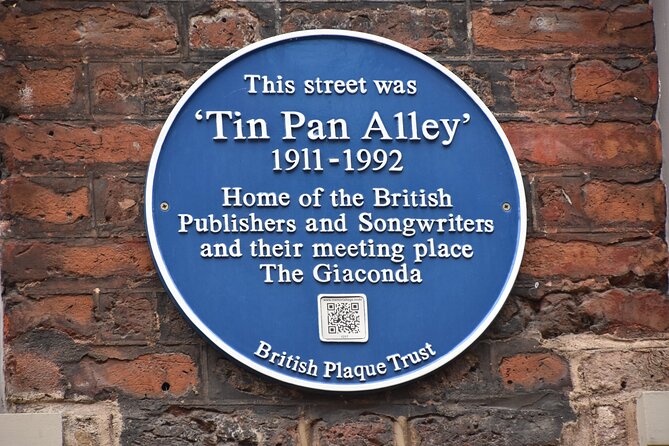
At 3 Savile Row, the tour reaches the former Beatles office and Apple headquarters. The building is famous for the Beatles’ 1969 rooftop concert, later seen in Let It Be and Get Back.
This was the Beatles’ final live performance. The office also attracted fans from around the world and hosted some very interesting visitors, whose stories form part of Michael’s talk.
The building is best understood from the street. You do not get a concert replay or an interior tour, but the location carries real weight. If you have watched Get Back, this stop gives the rooftop sequence a physical setting within the West End.
Nearby, Cordings adds an unexpected Eric Clapton connection. As a teenager, Clapton window-shopped at the clothing store and hoped one day to afford its clothes. Years later, he became a regular customer, invested in the business, and served as its design director.
That is exactly the sort of side story that makes a music walk more interesting than a list of recording dates. It also shows how a musician’s public identity can extend into clothing, design, and business.
Hotel Café Royal and the old Marquee Club
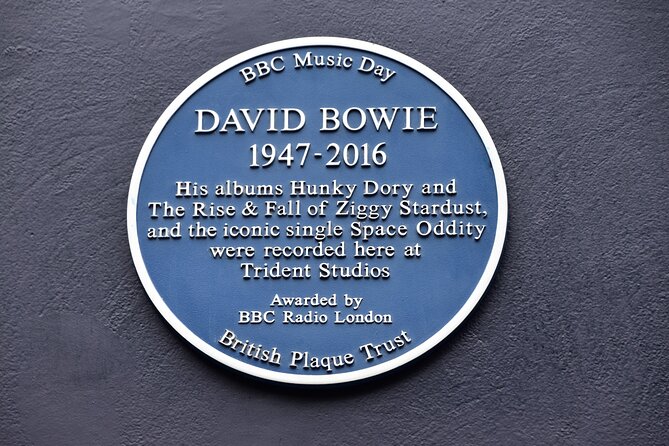
Hotel Café Royal began as a café in 1865. Its music link is David Bowie’s 1973 party, where he retired the Ziggy Stardust character in an expensive, star-filled event.
The story continues through the hotel’s Ziggy Stardust cocktail bar, inspired by that occasion. This stop is especially useful for anyone interested in the theatrical side of Bowie. Ziggy was not just an album character. Bowie created a full public persona and then staged its ending.
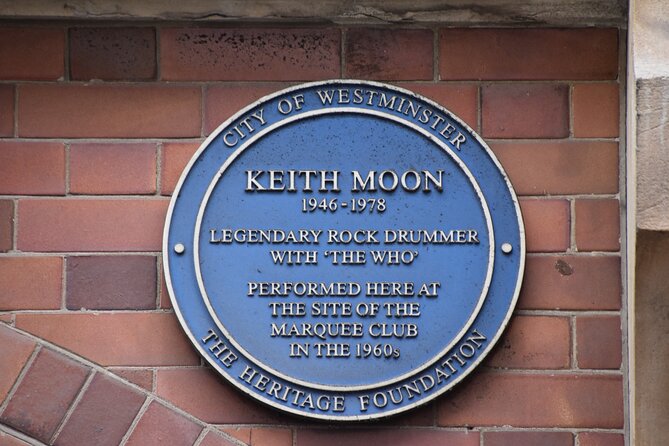
Wardour Street recalls the former Marquee Club, which operated there for 26 years. The venue helped launch the early careers of The Who, David Bowie, and many others.
You also learn why there is a plaque to Keith Moon over a doorway. It is a small marker, and easy to miss without a guide. That is one reason this route earns its keep: the stories often sit beside details you would walk past.
Rolling Stones beginnings, Soho pubs, and Trident Studios
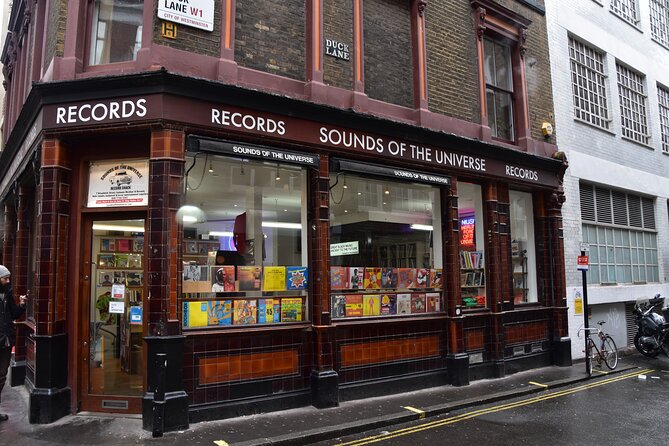
At Sounds Of The Universe, a record shop occupies the former site of the Bricklayers Arms pub. The pub was where the Rolling Stones held their first rehearsal.
The contrast is enjoyable. A modern music shop now occupies the spot, while the original pub has disappeared. The guide bridges the gap between the place you see and the sound that began there.
The Ship pub tells another Soho story. When the Marquee lost its alcohol licence, music fans shifted their drinking to The Ship, and singers and musicians followed. Outside the pub, you hear about the drunken antics of rock stars and why the place became part of the scene.
A small alley near The Ship leads to the Trident Studios plaque. From 1968 to 1981, Trident was used by David Bowie, the Beatles, Queen, Elton John, the Rolling Stones, and Black Sabbath.
The plaque is a quick stop, just five minutes, but its importance is larger than its size. This was a working studio used by artists from several generations and styles. The tour does not take you inside, so the experience depends on your interest in the recording stories.
McCartney’s publishing empire and Ronnie Scott’s
Soho Square is home to MPL, McCartney Publishing Limited, Paul McCartney’s music business. The discussion here explains how publishing helped make McCartney the richest of the Beatles.
This is a welcome change of subject. The walk is not only about performances and celebrity. It also covers the business behind songwriting, ownership, and royalties.
Ronnie Scott’s Jazz Club on Frith Street opened there in 1965 after Ronnie Scott moved the venue. The club hosted famous performers, including a surprise and shocking performance by Lady Gaga, and it was the site of Jimi Hendrix’s final performance.
The club is listed as an admission-not-included stop, so plan to view it from outside unless you arrange something separately. The five-minute visit is brief, but it widens the tour beyond rock and shows London’s connection to jazz and live music.
Brian Epstein, the Sex Pistols, and the road to Denmark Street
At the Odeon Covent Garden, you hear about Beatles manager Brian Epstein’s decision to buy a theatre. His plans, the artists who played there, and the idea of reviving the 1960s all form part of this stop.
Foyles Bookshop brings in punk. The building was once a university site where the Sex Pistols played their first gig. You also learn why manager Malcolm McLaren booked the band mainly for student events in the early days and where Steve Jones obtained their guitars.
This portion of the tour makes clear that London music did not move in a straight line from one famous band to another. The same city supported theatre shows, jazz clubs, hard rock, glam, and punk, often within a short walk of each other.
The final stop, Denmark Street, may be the strongest musical finish. Today it is known for guitar shops and music venues. Its earlier connections include the Beatles’ first music publishing deal and the Rolling Stones recording their first album.
The Sex Pistols also crashed, rehearsed, and left their mark there. John Lydon drew rude pictures on a wall, reportedly still visible. The street also played a part in the early careers of Elton John and David Bowie.
Denmark Street gives the tour a satisfying final chord because it brings together the music business, instruments, rehearsal rooms, recording, publishing, and performance.
Is $205.67 good value for a three-hour walk?
The price is $205.67 per group of up to 15, not per person. For a full group, that is a strong deal. Split among 10 people, it comes to about $20.57 each. For two people, it is about $102.84 each, so the value depends heavily on group size.
You are paying for roughly three hours of private guiding rather than admission tickets. Since most stops are free exterior visits, the guide’s time and knowledge make up most of the cost.
I would consider it good value for a family, club, or group of friends with a serious interest in British music. A couple who wants a very personal experience may still find the price fair, but a solo visitor should compare it with other walking tours or music museums.
The average booking lead time is 51 days, which suggests you should not leave it until the last minute if the date matters. Free cancellation is available up to 24 hours before the start time. After that, the amount paid is not refunded, and late changes are not accepted.
Walking demands and practical details
The meeting point is outside the London Palladium at 8 Argyll Street, London W1F 7TF. The tour ends on Denmark Street, London WC2H. It is near public transportation, but the provided details do not specify which routes to use.
You need a moderate level of physical fitness. The walk lasts about three hours, and the stop times range from five to 15 minutes. That means repeated standing, walking between districts, and listening outdoors.
Service animals are allowed. The tour is offered in English and uses a mobile ticket. Since several stops are outside, weather may affect your comfort, though no special weather arrangements are listed.
Bring your curiosity and a way to note down names. With so many bands, managers, clubs, studios, and dates packed into a short time, a quick photo of a plaque or shopfront can help you remember the story later.
Who should book this rock music walk?
You should book it if you already care about the Beatles, Bowie, the Stones, Pink Floyd, Queen, or the Sex Pistols and want to connect their stories to real London streets.
It also suits couples and small groups who prefer conversation over a set audio guide. Michael’s storytelling is a major part of the experience, and the private format lets you ask questions as you go.
I would be more cautious if you want interior access, live music, or a museum-style display. This tour is largely an outdoor history walk. You see buildings and locations, hear the stories, and imagine the performances that took place there.
Should you book the Private Rock ’n’ Roll Music Tour of Central London?
Book it if the idea of standing outside the Beatles’ former office, recreating Bowie’s Ziggy Stardust photograph, tracing Pink Floyd’s student days, and following the Stones from a Soho pub appeals to you.
The strongest reasons to go are the range of music covered, the private format, and Michael’s entertaining storytelling. The main limits are equally clear: most stops are exterior views, the walk is packed with information, and the price is much better for a group than for one or two people.
For music fans, especially those sharing the cost, this is a thoughtful way to hear London’s rock story where it happened.
FAQ
How long is the Private Rock ’n’ Roll Music Tour of Central London?
The tour lasts approximately three hours.
How much does the private tour cost?
The listed price is $205.67 per group, with up to 15 people included.
Where does the tour start?
It starts outside the London Palladium at 8 Argyll Street, London W1F 7TF, United Kingdom.
Where does the tour finish?
The tour finishes on Denmark Street in London WC2H.
Is this a private tour?
Yes. Only your group participates, and the group can include up to 15 people.
Is the tour offered in English?
Yes, the tour is offered in English.
Are entrance fees included?
All guiding fees are included. Most stops have no admission charge, while Ronnie Scott’s Jazz Club, the Odeon Covent Garden, and Denmark Street are marked as having admission not included.
What level of fitness is needed?
A moderate level of physical fitness is recommended. The experience is a three-hour walking tour with repeated outdoor stops.
Can I cancel the booking for a full refund?
Yes, you can cancel up to 24 hours before the experience start time for a full refund. Cancellations or changes made less than 24 hours before the start time are not accepted for a refund.
Latest arrivals on the London list
- Easy Access Tower of London Royal Secrets & Scandals Tour★ 5.0 · 3 reviews
- Stonehenge Special Access Guided Morning Tour from London★ 4.5 · 3 reviews
- Shoreditch & East London Walking Tour with a Local, Custom & Private★ 5.0 · 3 reviews
- Madame Tussauds London Fast Track and Champagne Experience★ 3.5 · 3 reviews
- London Private Brixton Tour with a Local – Culture & Stories★ 4.9 · 3 reviews
- Private Full Day Tour – Fast Track Tower of London and Lunch★ 4.6 · 3 reviews
- Private transfer from London Heathrow Airport to Southampton★ 5.0 · 3 reviews
- London Soho District – Guided Walking Tour 12 guests 2,5h★ 4.8 · 3 reviews
Beatles & Music Tours, compared.
The Great British Rock and Roll Music Walking Tour
Read our review →
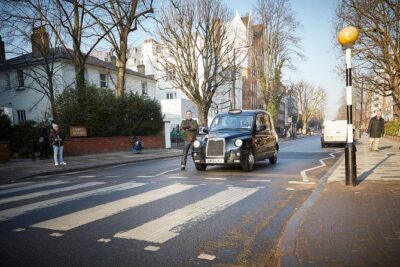
Rock Cab Tours presents Music Legends Private Taxi Tour of London
Read our review →
Beatles and Abbey Road Tour with Richard Porter
Read our review →
Liverpool and The Beatles Day Tour from London
Read our review →Browse the lists this tour appears in