
Reviewed · PHOTOGRAPHY SESSIONS
Private Tour: Night Photography Tour in London
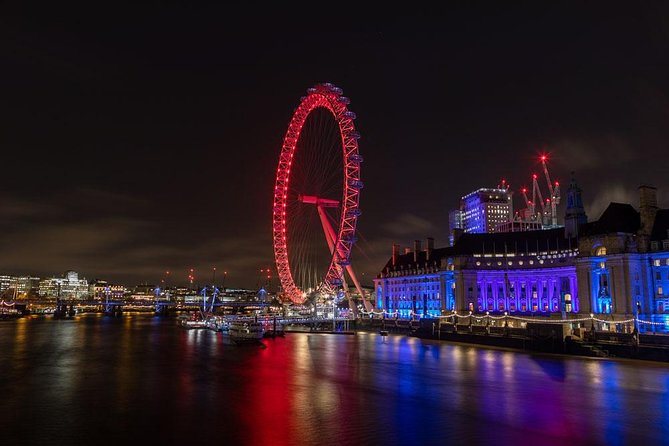
London looks best after dark from the South Bank, where the Thames gives you clear views of Big Ben, Parliament, the London Eye, and the city lights. This private walk puts professional fine art photographer Lou beside you, helping you set up your own camera and shape each shot rather than simply pointing out places.
I especially like the one-to-one instruction, which can be adjusted to your camera and skill level, and the steady run of strong photo locations along the river. The chance to try slow shutter speeds, light trails, reflections, and twilight photography gives the evening real purpose. The main drawback is the price, $337.60 per person, which makes the tour a serious splurge unless you value personal tuition or share the cost with a group.
In This Review
- Key points to know before booking
- Why London at night works so well for photography
- Starting at the South Bank and London Eye
- Following the Thames toward Jubilee Bridge
- Raising your viewpoint at the Golden Jubilee Bridges
- Action and atmosphere at Royal Festival Hall
- Big Ben, Parliament, and Westminster Bridge
- Victoria Embankment and the final London Eye views
- What Lou teaches, and why the private format helps
- Price, group size, and what you receive
- Who should book this night photography walk
- Should you book it?
- FAQ
- How long is the London night photography tour?
- Where does the tour start?
- Where does the tour finish?
- Is this a private tour?
- Is the tour conducted in English?
- What camera can I bring?
- Should I bring a tripod?
- What else should I bring?
- Can I cancel for a full refund?
Key points to know before booking
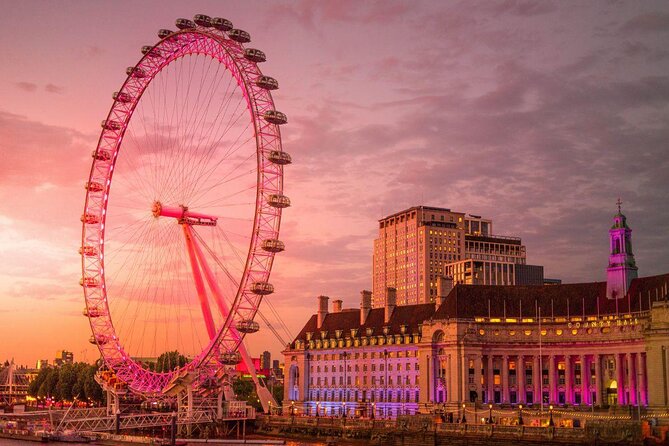
- Big Ben and the London Eye are your evening subjects: The route gives you repeated chances to photograph London’s most familiar sights from different angles.
- Lou teaches the camera you actually own: Instruction suits compact cameras, DSLRs, and different experience levels.
- Long exposure is central to the lesson: You work with traffic trails, moving lights, reflections, and the rotating London Eye.
- The tour is private: Your group gets the photographer’s attention, with the session shaped around your goals.
- Bring the right kit: A fully charged battery, extra memory cards, and a tripod are recommended. A tripod can be hired after booking.
- The route ends at Westminster Station: You finish near the Tube, after a three-hour walk along the Thames.
Why London at night works so well for photography
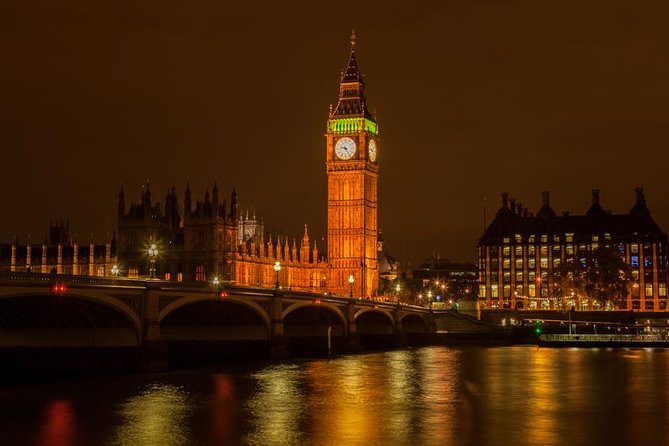
Night photography can make a familiar city feel new. In daylight, the London Eye, Parliament, and Westminster Bridge compete with crowds, gray skies, and ordinary traffic. After dark, artificial light gives you strong colour and shape. The Thames adds reflections, while moving cars create ribbons of light across a long exposure.
That mix makes this more than a sightseeing walk with a camera. You are learning how to control the scene. Lou can show you how to change shutter speed, adjust exposure, choose an angle, and use available light to create different moods.
The private format matters here. Night photography often involves small technical decisions that are easy to miss in a large group. You can ask Lou to explain your own camera settings, repeat a technique, or help you correct a problem as it appears on your screen.
The instruction is designed for all skill levels. You can arrive with a compact camera, a DSLR, or a new SLR and still take part. One especially useful point from the experience is that beginners can begin in automatic mode and still make progress. A first-time SLR owner found the three hours enough to take strong pictures independently afterward, though the person also recognized that more preparation would have helped.
That is a fair warning. You do not need advanced skills, but you will get more from the session if you know the basic controls on your camera. If you have never changed shutter speed or ISO, the lesson may feel full. Still, Lou’s calm and patient approach is suited to building confidence.
A few more London days worth a look
- London: Private Photoshoot with Video Clip Option
★ 4.8 · 182 reviews - Professional Photoshoot in London Photographer
★ 5.0 · 102 reviews - Private landmarks photoshoot for families and couples
★ 5.0 · 92 reviews
Starting at the South Bank and London Eye
The meeting point is London Eye Waterloo Pier, near the South Bank. From here, the evening begins with broad views across the River Thames. Your first task is not necessarily to take the perfect picture. It is to learn how the low light affects your camera and how the river, buildings, and lamps can work together in a composition.
The South Bank is a useful starting point because several major subjects appear within a short walking route. You can frame Big Ben, the Houses of Parliament, and the London Eye from across the water, then keep returning to those subjects from new positions.
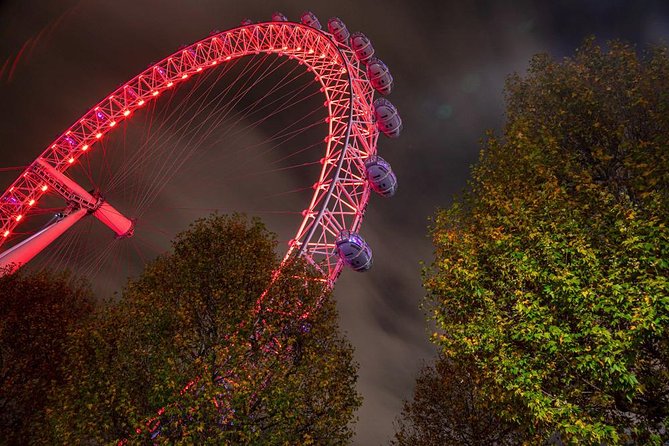
At the London Eye, the rotating wheel becomes a practical lesson in slow exposure. A longer shutter speed can suggest movement and make the structure feel alive. You can also compare exposure times to see how the image changes, then try different angles rather than settling for the usual postcard view.
The guide’s role is important here. A professional photographer can help you see the difference between recording a landmark and making a deliberate composition. You may work with colour, light, empty space, and the circular shape of the wheel. During warmer months, the timing may also include blue hour, twilight, and low-light work before full darkness arrives.
The stop is listed for about 30 minutes, within a longer 45-minute opening section. That gives you time to handle settings without rushing every frame.
Following the Thames toward Jubilee Bridge
The walk continues along the river toward Jubilee Bridge. This part gives you a change of pace and subject. Instead of photographing only grand buildings, you can work with people, movement, illuminated venues, and the shifting reflections on the Thames.
The Royal Festival Hall, National Theatre, and British Film Institute are all part of this stretch. Their lit facades provide strong lines and blocks of colour. The water below gives you a second version of each subject, often softened by ripples.
Here you learn why a tripod is useful. Long exposures are easier when the camera stays still, especially when you want glass-like water or clean architectural lines. A tripod is recommended but not included as standard equipment. If you do not want to carry one through London, you can contact the provider after booking about hiring one.
There is a practical limitation to keep in mind. The advertised stop at the Thames is about 15 minutes, so the time is focused rather than leisurely. You will probably take several frames quickly and then move on. That is fine for a private lesson, but it is not a slow riverside stroll with unlimited setup time.
Raising your viewpoint at the Golden Jubilee Bridges
The Golden Jubilee Bridges offer a higher viewpoint and a different way to frame the river. From here, you can work with Westminster, Parliament, Big Ben, the London Eye, and St Paul’s Cathedral in wider compositions.
This is one of the most useful places to practice framing. A raised viewpoint lets you decide how much water, sky, architecture, and city light to include. You can also compare a tight image of one building with a wider scene that connects several landmarks.
The bridge is also a good place to photograph the life of the river at night. Water movement, passing lights, and reflections can turn a familiar view into something more personal. Lou can help you judge where to place the main subject and how to keep bright lights from overwhelming the frame.
The stop lasts about 15 minutes. That sounds brief, but the route has many locations, and the private guide can keep the instruction pointed at your camera rather than spending time managing a large party.
Something completely different for your London days:
- London: The London Eye Entry Ticket
★ 4.6 · 35,875 reviews - From London: Harry Potter Warner Bros Studio Tour
★ 4.7 · 26,588 reviews - London: Westminster to Greenwich River Thames Cruise
★ 4.5 · 22,836 reviews - Magical London: Harry Potter Guided Walking Tour
★ 4.7 · 22,044 reviews
Action and atmosphere at Royal Festival Hall
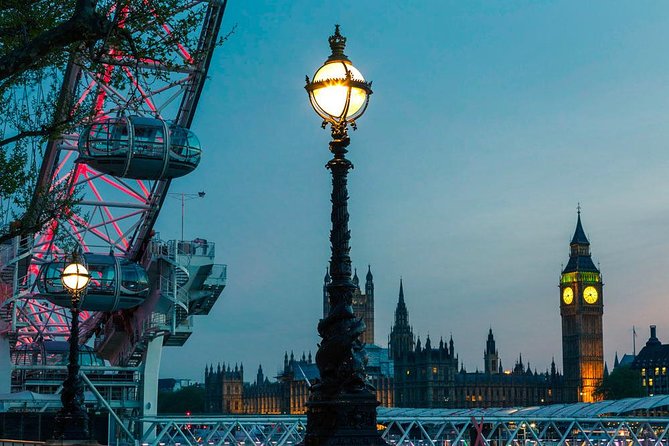
At Royal Festival Hall, the focus shifts to the colourful skate park. This is a welcome break from formal architecture. You can practice freezing action with a faster shutter speed, then try a slower exposure to create a more atmospheric sense of movement.
This section gives the tour useful range. You are not simply collecting pictures of famous buildings. You are learning how the same camera can handle architecture, people, motion, and artificial light.
The guide helps you find viewpoints that show the action clearly. The stop is around 15 minutes, so expect a short practical exercise rather than an extended sports photography session.
For beginners, this can be a helpful reminder that night photography does not always mean placing the camera on a tripod and waiting. You can also work hand-held, react to movement, and make choices based on the subject.
Big Ben, Parliament, and Westminster Bridge
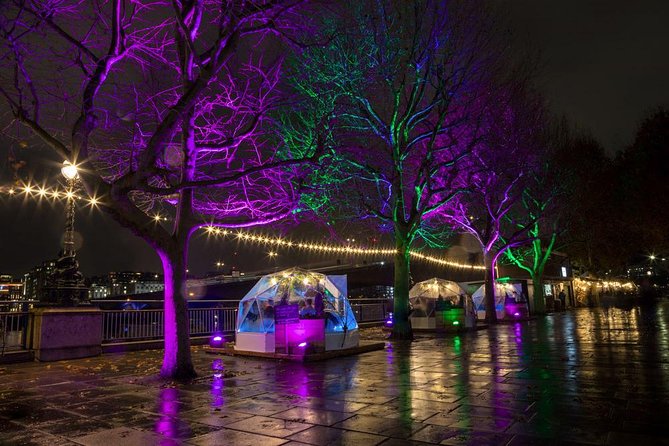
From across the river, Big Ben and the Houses of Parliament become the main subjects. Their illuminated stonework gives you a chance to work on mood, architectural lines, and composition.
The goal is not just to fit the entire building into the frame. Lou can help you decide how much of the river to include, where to place Big Ben, and how to use the darkness around the buildings. This is where a little control over exposure can make a large difference. Bright areas can lose detail if the camera is left to guess, while darker areas can disappear if the exposure is too short.
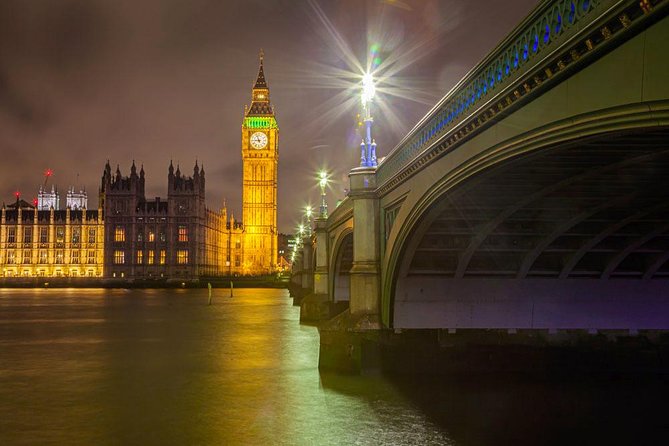
At Westminster Bridge, moving traffic creates another clear exercise. With a slow shutter speed, headlights and taillights become flowing trails. You can experiment with exposure times and watch how the scene changes from a sharp record of traffic to something more abstract.
The bridge also provides a strong connection between the city’s architecture and its movement. Parliament remains fixed while cars, buses, and pedestrians shift through the frame. That contrast gives you a chance to create a picture with more energy than a standard building shot.
The timing here is about 15 minutes per stop, which keeps the evening moving. If you want extended work with one composition, tell Lou early. The private format gives you more room to focus on a technique that matters most to you, but the tour still covers a substantial route.
Victoria Embankment and the final London Eye views
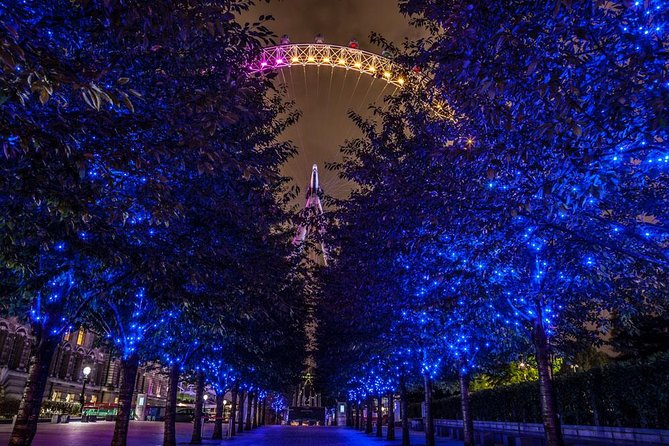
The final section reaches Victoria Embankment, where you photograph the London Eye from across the river. This viewpoint lets you capture the full circular form, rather than only the close South Bank view.
It is a good closing lesson because it brings together several skills from the evening. You can use the Eye’s lights for colour, the Thames for reflections, and a slow exposure to suggest movement. Framing becomes important again, since the circle can easily dominate the image unless you give it a balanced setting.
You may also compare this image with the pictures taken earlier at the South Bank. The subject is familiar, but the angle, distance, water, and surrounding light change the result. That comparison helps show why location choice matters as much as camera settings.
The tour ends near Westminster Underground Station on Bridge Street. That is practical if you plan to continue your evening by Tube, though you should allow for the walk between stops and dress for the conditions. The tour operates in all weather, so a coat suitable for wind and possible rain is sensible.
What Lou teaches, and why the private format helps
The strongest feature is the direct tuition. Lou has extensive teaching experience and works with many types of cameras. The instruction is geared toward the camera you bring, which is far more useful than a generic lecture about photography.
You can expect help with:
- Shutter speed and different exposure times
- Long exposures for the river and moving traffic
- Light and colour after dark
- Composition from street level and bridges
- Reflections on the Thames
- Freezing action at the skate park
- Framing major buildings and the London Eye
- Reviewing photographs and improving your skills
The photo review is particularly valuable. It gives you a chance to look at what you have made during the session and understand why one frame works better than another. The aim is not only to leave with pictures of London. It is to give you techniques you can use later in London, Paris, or at home.
Several strong points about Lou come through clearly: patience, calm instruction, camera skill, and the ability to tailor the session. One beginner wished they had prepared more, but still came away with better control of a new SLR and photographs they could be proud of. That suggests the tour is friendly to newcomers, though intermediate photographers may move faster and make more of the technical advice.
Price, group size, and what you receive
At $337.60 per person, this is expensive for a three-hour walk if you think of it as a standard sightseeing tour. You are not paying for entry tickets, food, or transport. Every stop is free, and refreshments are not included.
The value is in the private instruction. You are paying for a professional photographer’s time, a custom route, hands-on camera help, photo review, and a private group rather than a fixed class. Group discounts are available, so the cost may make more sense when shared with family or friends who all want the same lesson.
I would book it for someone who specifically wants better night photographs, not for someone who only wants a quick introduction to London’s sights. The route covers famous views, but the main product is tuition. If you already own a camera and want to understand it, the personal attention can justify the price.
You need to bring your own camera, a fully charged battery or spare, and enough memory cards for extra photos. A tripod is recommended. Service animals are allowed, public transport is nearby, and most people can participate, but remember that this is a walking tour conducted outdoors at night.
The tour is conducted in English. Confirmation is provided at booking. Free cancellation is available up to 24 hours before the start time, with no refund for cancellations or changes made later.
Who should book this night photography walk
This suits you if you have a camera that you rarely use outside automatic mode. It also works well if you are an intermediate photographer who wants help with night scenes, long exposures, or city composition.
It is especially appealing for:
- Couples or small private groups with a shared interest in photography
- Visitors who have already seen London by day
- Beginners buying or carrying their first SLR
- Photographers who want personal help with unfamiliar camera controls
- Anyone hoping to photograph Big Ben, Parliament, the London Eye, and the Thames in one evening
- People who want a practical lesson rather than a classroom session
It may not suit you if you dislike walking, want refreshments included, or expect a relaxed sightseeing tour with little technical work. You should also think twice if you are unwilling to carry a camera and battery gear or if wet weather would spoil your evening.
Should you book it?
Book this tour if your priority is learning to make better night photographs and taking home strong images of central London. Lou’s patient, hands-on teaching and understanding of many camera types are the main reasons to choose it.
If your budget is tight, compare the $337.60 price with a regular London walking tour and consider how much you value private instruction. For a first-time photographer, it can shorten the learning curve. For a keen photographer, it provides a focused evening of practical work in some of London’s best-lit locations.
The best preparation is simple: charge your battery, clear your memory card, bring a tripod if you have one, and learn where your camera changes shutter speed and ISO. Arrive ready to take many pictures, ask direct questions, and test more than one setting at each major view.
FAQ
How long is the London night photography tour?
The tour lasts approximately three hours.
Where does the tour start?
It starts at London Eye Waterloo Pier in London.
Where does the tour finish?
The tour ends near Westminster Underground Station on Bridge Street.
Is this a private tour?
Yes. The activity is private and only your group participates.
Is the tour conducted in English?
Yes. The tour is offered in English.
What camera can I bring?
The tour is suitable for all types of cameras, from compact cameras to DSLRs. The photographer can tailor instruction to the camera you own.
Should I bring a tripod?
A tripod is recommended for night photography. If you want to hire one, contact the provider after booking.
What else should I bring?
Bring your camera, a fully charged battery or spare battery, and additional memory cards for the extra photos you may take.
Can I cancel for a full refund?
Yes, if you cancel at least 24 hours before the experience start time. Cancellations or changes made less than 24 hours before the start time are not refunded.
Latest arrivals on the London list
- Easy Access Tower of London Royal Secrets & Scandals Tour★ 5.0 · 3 reviews
- Stonehenge Special Access Guided Morning Tour from London★ 4.5 · 3 reviews
- Shoreditch & East London Walking Tour with a Local, Custom & Private★ 5.0 · 3 reviews
- Madame Tussauds London Fast Track and Champagne Experience★ 3.5 · 3 reviews
- London Private Brixton Tour with a Local – Culture & Stories★ 4.9 · 3 reviews
- Private Full Day Tour – Fast Track Tower of London and Lunch★ 4.6 · 3 reviews
- Private transfer from London Heathrow Airport to Southampton★ 5.0 · 3 reviews
- London Soho District – Guided Walking Tour 12 guests 2,5h★ 4.8 · 3 reviews
Photography Sessions, compared.
Professional Photoshoot in London Photographer
Read our review →
30 Major London Attractions Walking Tour With Photos
Read our review →
Browse the lists this tour appears in