
Reviewed · HISTORICAL TOURS
Roman Ruins to Blitz Bombings: London’s Fiery History
London’s oldest quarter is a place where a Roman wall, a medieval church ruin, a royal fortress, and a modern financial district can appear within the same short walk. This tour makes that layered past easy to follow, linking Roman Londinium to the Great Fire, the Blitz, and the City you see today.
I like the route’s two-mile-plus sweep and its mix of famous sights with easy-to-miss corners such as the remaining London Stone and St Dunstan in the East. I also like the small group cap of 15 people, which should make it easier to hear the guide and ask questions. The main drawback is that this is an outdoor overview, not an inside tour, so museum and attraction entry fees are not included.
In This Review
- Key points at a glance
- Two thousand years in 2.5 miles
- Roman Wall of Londinium: London before London
- Tower of London: power, prison, and blood
- St Dunstan in the East: a church turned garden
- Monument to the Great Fire: disaster in plain sight
- London Stone: a small relic with a large legend
- Bank of England: money, tunnels, and the modern City
- Guildhall and the ancient City government
- St Paul’s Cathedral: Wren’s answer to destruction
- Ye Olde Cheshire Cheese: a historic finish
- What the guide does best
- Price, pace, and practical value
- Who should book this City of London walk?
- Should you book Roman Ruins to Blitz Bombings?
- FAQ
- How long does the walking tour last?
- How far do you walk?
- Where does the tour begin?
- Where does the tour finish?
- What language is the tour in?
- Is admission to the Tower of London included?
- Is admission to St Paul’s Cathedral included?
- How large is the group?
- What should I bring?
Key points at a glance
- Roman remains without a museum ticket: See part of the old wall of Londinium in the City of London.
- A story-led route: Move from Boudica and William the Conqueror to Christopher Wren, Anne Boleyn, and the Blitz.
- A useful two-hour orientation: Cover about 2.5 miles between Tower Hill and Blackfriars.
- The City’s stranger details: Hear about London Stone, the Bank of England vaults, and the Lord Mayor’s long-running role.
- A compact group: Bookings are limited to 15 people, a helpful size for a walking tour.
- A pub finish: End near Ye Olde Cheshire Cheese, one of the route’s historic stops.
Two thousand years in 2.5 miles
The clever idea here is scale. You do not spend hours at one monument. Instead, you walk through the City of London and watch its story change every few minutes.
Your guide begins at Tower Hill Station, near the steps leading to the sundial. Look for the Historic London Tours sign. From there, the route heads west through the ancient core of the capital and finishes near Blackfriars Station, close to Ye Olde Cheshire Cheese.
The distance is about 2.5 miles, and the tour lasts around two hours. That gives you roughly enough time for a clear explanation at each stop, but not enough time for long museum visits or extended photography. I would treat this as a lively introduction to the City rather than a full day of sightseeing.
The English-speaking guide is central to the experience. Tom is named in the feedback connected with this tour, and his style is described as clear, friendly, and well judged. He is said to explain complicated subjects without burying you in facts, while still handling detailed questions. That matters in London, where every street corner can lead into a tangle of dates and names.
More London history walks:
- London Small Group Tour of Historical Pubs
★ 5.0 · 10,422 reviews - Soho Music & Historic Pubs Tour
★ 5.0 · 1,993 reviews - London: Historic Pubs of Central London Walking Tour
★ 4.9 · 1,065 reviews
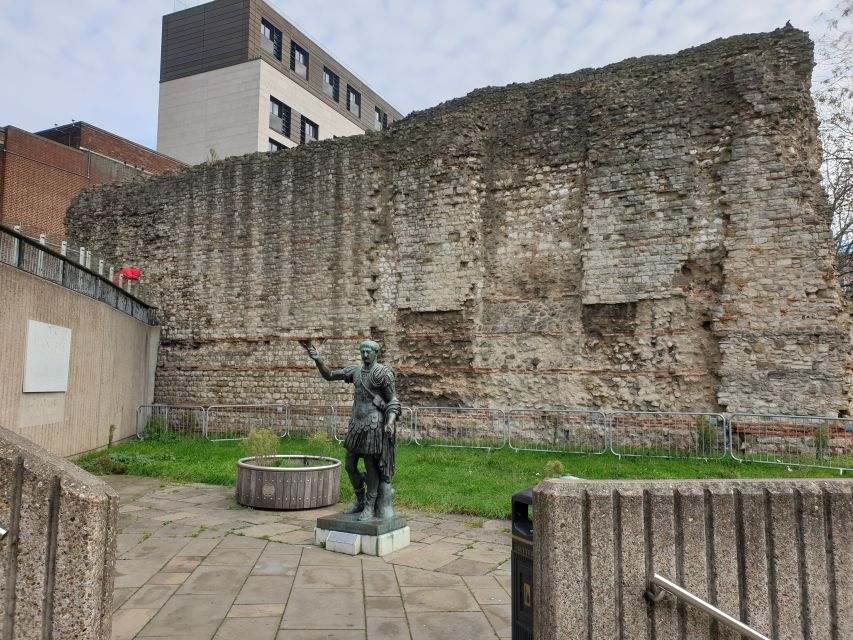
Roman Wall of Londinium: London before London
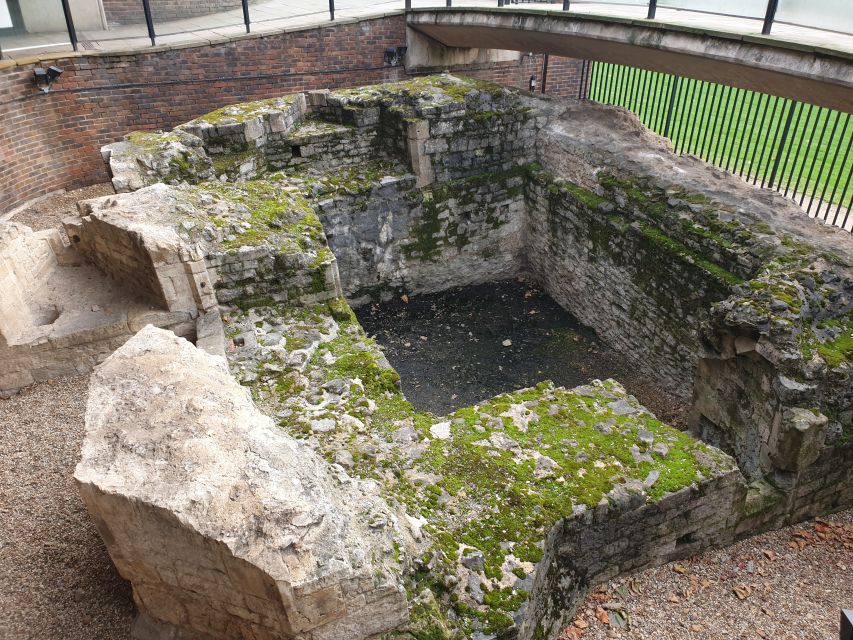
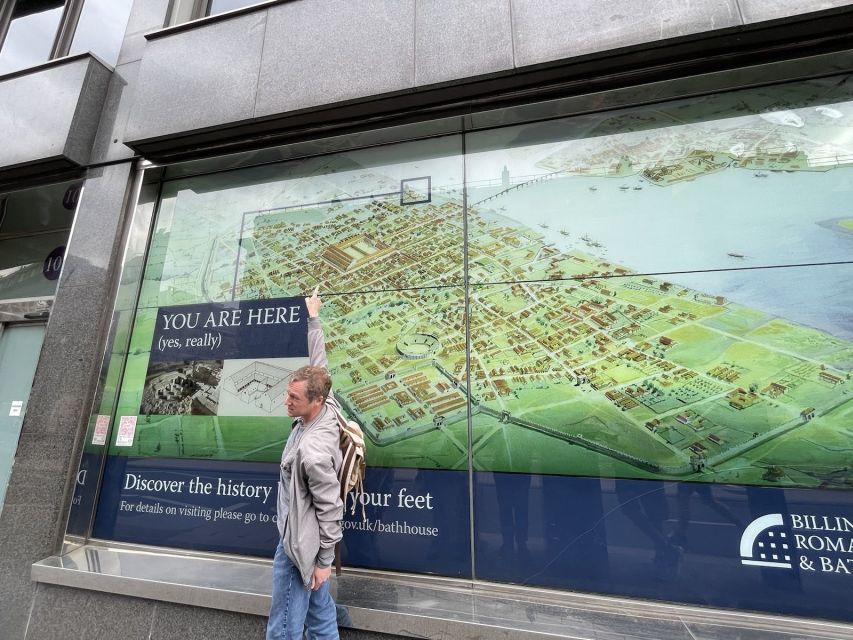
The first major historical stop is part of the Roman Wall of Londinium. This is where the tour establishes its main theme: London has been rebuilt many times, but traces of earlier cities remain under and beside the modern one.
You will hear about the founding of Roman London and where Roman remains can still be found. The stop itself is brief, listed at about five minutes, so do not expect an archaeological lecture or a long look at a large exposed site. The value is the setting. Once you understand that this was a fortified Roman settlement, the City’s tight streets and old boundaries make more sense.
I like beginning here because it gives the rest of the walk a clear time scale. The tour is not simply about old buildings. It is about how one city has adapted after invasion, fire, war, and economic change.
Tower of London: power, prison, and blood
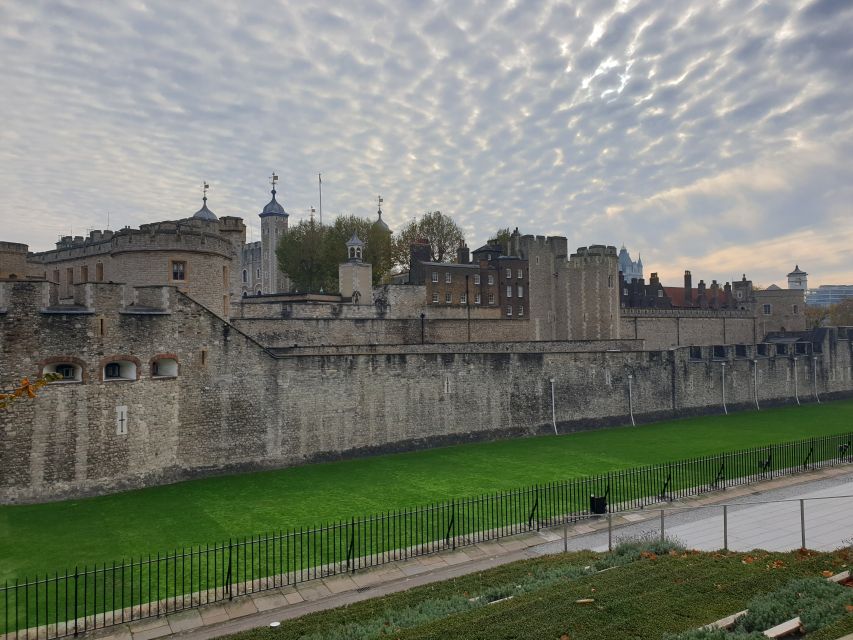
The Tower of London brings the story into the medieval period and the age of royal power. The tour covers its sinister and bloody past, including the people and events tied to this famous fortress.
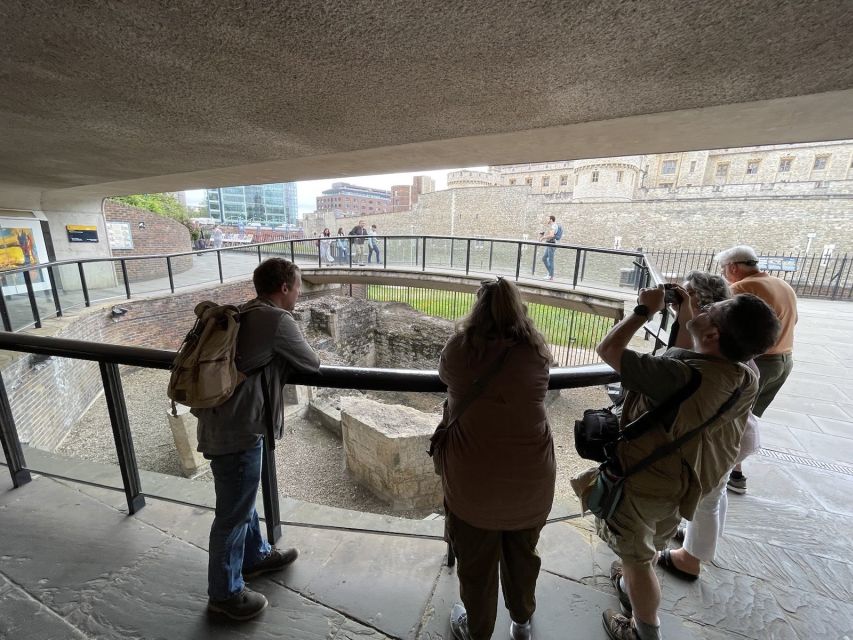
You should be clear about what you are buying. This stop is a guided explanation from outside, not a ticketed visit to the Tower’s interiors, exhibits, or Crown Jewels. If the Tower is high on your London wish list, allow separate time and money for a proper visit.
Still, an outside explanation can be useful before you go in. The fortress is easier to read once you understand its role as a defensive stronghold, royal residence, and prison. The tour also brings in Anne Boleyn’s ghost, adding a touch of London folklore to the political story.
That balance between hard history and unusual trivia is one of the route’s strengths. You get the broad events, but also the kind of odd detail that helps a place stick in your memory.
St Dunstan in the East: a church turned garden
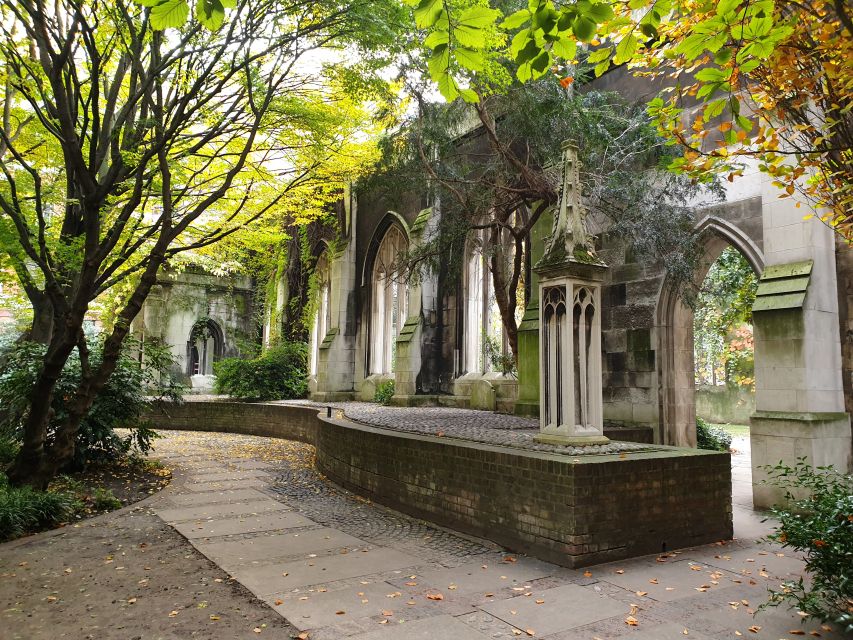
St Dunstan in the East is one of the route’s most atmospheric stops. The old church was damaged over time and heavily affected by wartime bombing, while its remaining structure now frames a public garden.
This is a good place to see how London’s wartime story differs from its earlier disasters. The Great Fire of 1666 changed much of the central city, while the Blitz left damaged buildings that were sometimes repaired, sometimes cleared, and sometimes given a new purpose.
The stop is short, so you may not have much time to sit or explore the garden on your own. Even so, it offers a welcome change from the hard stone and traffic of the City streets. If you want photographs, be ready to take them quickly and avoid letting the group fall behind.
Something completely different for your London days:
- London: The London Eye Entry Ticket
★ 4.6 · 35,875 reviews - From London: Harry Potter Warner Bros Studio Tour
★ 4.7 · 26,588 reviews - London: Westminster to Greenwich River Thames Cruise
★ 4.5 · 22,836 reviews - Magical London: Harry Potter Guided Walking Tour
★ 4.7 · 22,044 reviews
Monument to the Great Fire: disaster in plain sight
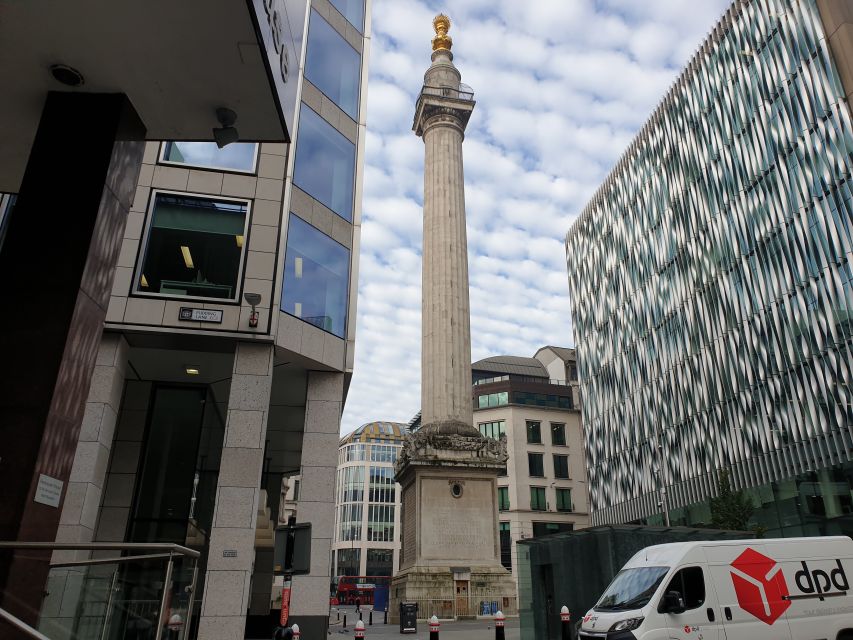
The Monument commemorates the Great Fire of London, which began in 1666 and destroyed a large part of the medieval city. Your guide uses it to explain how the fire reshaped London and why the capital you see today feels so different from the cramped city that came before it.
The monument itself is a striking landmark, but the important point on this tour is the event it represents. Fire was not just a single tragic episode. It changed building practices, streets, and the way London thought about risk and rebuilding.
This is another quick outdoor stop. You will not climb the monument as part of the walking tour, and no entrance is included. If you want the view from the top, you need to arrange that separately. The tour instead gives you the context to understand why this column is here and what it marks.
London Stone: a small relic with a large legend
The remaining part of London Stone is easy to overlook. That makes it a fine choice for a guided route. Without someone pointing it out, you could pass by without realizing that this modest fragment has long been tied to stories about London’s identity and authority.
The guide explains its place in the city’s past, separating established history from the legends that have grown around it. This is the sort of stop I value on a walking tour because it rewards attention rather than size. London’s most interesting evidence is not always grand or photogenic.
The stop also keeps the route from becoming a parade of major monuments. You get a sense of the small markers that help historians and storytellers connect the present street plan with older versions of the city.
Bank of England: money, tunnels, and the modern City
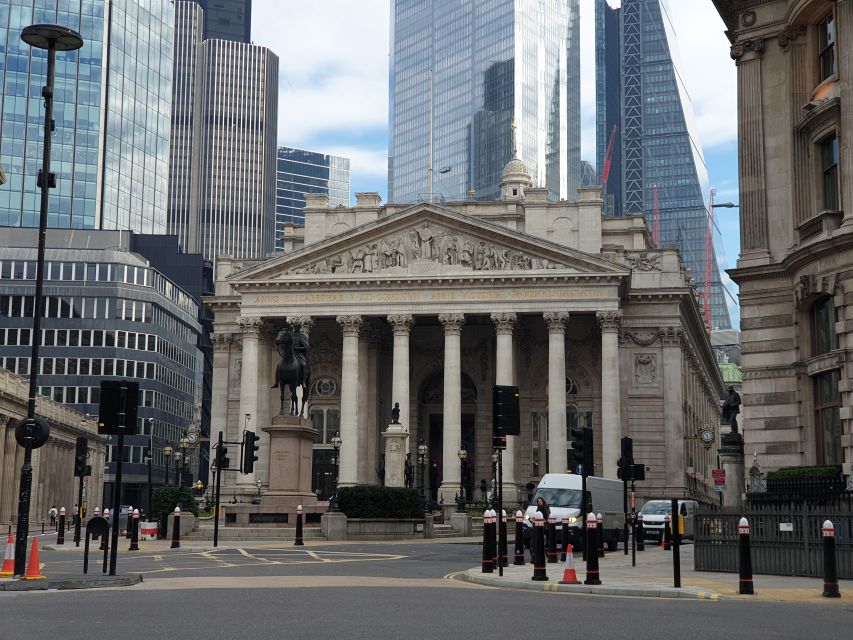
At the Bank of England, the tour shifts from royal and religious power to finance. You will hear about the City’s financial center and, with a playful twist, the easiest way to tunnel into the Bank’s vaults.
This is clearly meant as a story, not practical advice for a burglary. The detail adds humor to a subject that can otherwise feel dry. It also shows how the tour handles the City’s modern identity: with enough explanation to make the institutions meaningful, but with entertaining facts to keep the walk moving.
The Bank of England is another exterior stop. There is no bank museum entrance or vault visit included. I would not choose this tour expecting an inside look at financial institutions. Choose it for the connection between London’s past and the money-driven district that grew around it.
Guildhall and the ancient City government
Guildhall introduces the long history of civic government in the City of London. The route explains the eight-century-old position of Lord Mayor and how this small district has retained a special identity within the wider capital.
That distinction is easy to miss. London feels like one huge city, but the City of London has its own traditions, ceremonies, and institutions. A guide can point out these differences in a way that a self-guided stroll often cannot.
Guildhall also helps connect the Roman and medieval sections of the walk. This is not a new business district built from scratch. It occupies the core of an old settlement, and its government has developed through centuries of change.
St Paul’s Cathedral: Wren’s answer to destruction
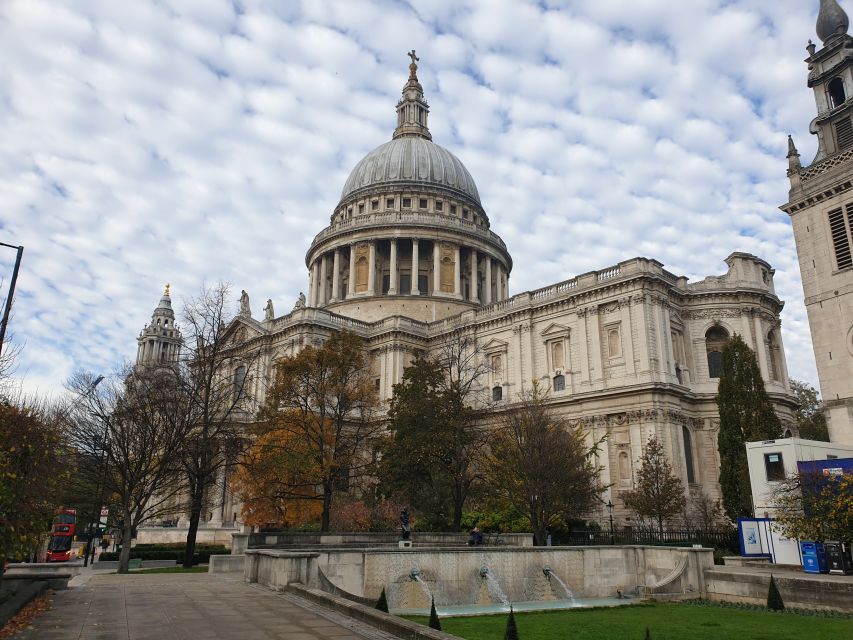
St Paul’s is the grandest landmark on the route. The tour brings in Christopher Wren and the rebuilding of London after the Great Fire.
You will not enter the cathedral during this experience, so plan a separate visit if you want the dome, galleries, memorials, or interior artwork. From the outside, though, St Paul’s gives the guide a strong visual anchor for explaining how London responded to catastrophe.
The cathedral also places the earlier stops in context. Roman walls, medieval churches, fire, and war all lead toward a city repeatedly remade. Wren’s work is not just a beautiful building to photograph. It is part of London’s long argument with destruction.
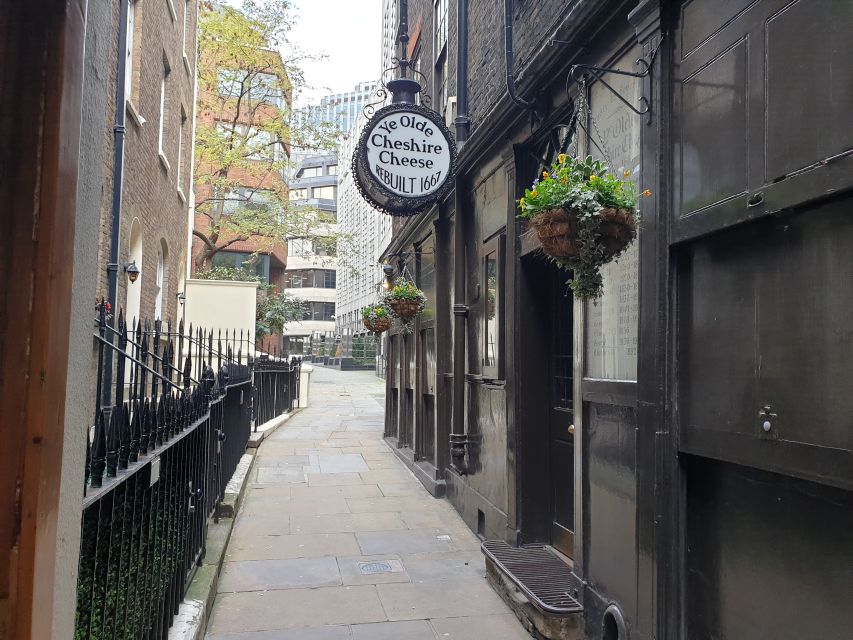
Ye Olde Cheshire Cheese: a historic finish
The tour ends at Ye Olde Cheshire Cheese, a historic pub on Fleet Street. The stop is part of the guided route, and the tour finishes there rather than taking you inside for a meal or drink.
That makes it a practical ending. You can continue exploring, stop for refreshments, or walk toward Blackfriars Station. It also gives the tour a more grounded finish than ending at a large monument. After Roman ruins, royal intrigue, fire, finance, and war, a pub is a suitably London place to pause.
Do not assume food or drinks are included. They are not listed as part of the experience.
What the guide does best
The strongest feature is the delivery. Tom is specifically praised for speaking clearly without shouting, keeping his facts under control, and answering a long stream of questions. He is also noted for admitting when he does not know an obscure answer and directing the questioner to a useful website.
That is a good sign for a history walk. You want a guide who can tell a tight story, not someone who recites every date ever attached to the City.
The tour also mixes solid history with trivia and humor. References to Boudica, her connection to Harry Potter, Anne Boleyn’s ghost, and the Bank of England’s vaults give the walk variety. The jokes may not all suit every audience, but the tone is intended to be friendly and light rather than solemn.
The small group limit helps. Fifteen people is not a private tour, but it is far easier to hear a guide and ask questions than in a large crowd. If you care about discussion, book early for the date you want.
Price, pace, and practical value
At $26 per person, this is a fair price for a two-hour guided orientation in central London. You are paying for a local guide and a carefully connected route, not admission to the Tower, St Paul’s, museums, or the Bank of England.
I see the best value for a first visit or a return visit when you want the City explained rather than simply photographed. The tour covers enough ground to help you plan later visits, and the guide’s recommendations may point you toward places you would not have noticed alone.
The pace should suit most people who are comfortable walking 2.5 miles in two hours. Wear comfortable shoes. There is no need for specialist gear, but London streets can be tiring, and stopping frequently does not remove the distance.
The starting point is outside Tower Hill Station, at the base of the steps leading to the sundial. The finish is near Blackfriars Station at Ye Olde Cheshire Cheese. Check the exact start time when booking, since availability varies.
You can cancel up to 24 hours before the tour for a full refund, and the reserve-now, pay-later option keeps your plans flexible. Those terms are useful if your London schedule is still shifting.
Who should book this City of London walk?
I would recommend it to:
- First-time visitors who want a clear framework for London’s oldest district
- History fans who enjoy Roman, medieval, Tudor, Georgian, and wartime stories in one route
- People who prefer a guide’s explanation to reading plaques at each monument
- Repeat visitors looking for lesser-known stops such as London Stone and St Dunstan in the East
- Curious walkers who like trivia alongside major historical events
I would be more cautious if your main goal is to tour the Tower of London or St Paul’s Cathedral inside. This experience passes those landmarks and explains them, but it does not replace a full admission visit.
It may also feel fast if you want long photography stops or quiet time in each location. The reward is range: you see many parts of the City in one outing, but you give up depth at individual sites.
Should you book Roman Ruins to Blitz Bombings?
Book this tour if you want London’s oldest quarter to make sense as one connected story. The route brings Roman ruins, royal power, fire, finance, civic government, cathedral rebuilding, and wartime damage into a manageable two-hour walk.
The strongest reason to choose it is the guide-led storytelling, especially if Tom is leading your departure. The clearest practical limitation is that every major attraction is viewed from the outside, with no museum or monument entry included.
For $26, a small group, and a sensible finish near Blackfriars, I think it is a good-value primer. Pair it with a separate visit to the Tower or St Paul’s if you want interiors, and wear shoes you can trust.
FAQ
How long does the walking tour last?
The tour takes around two hours.
How far do you walk?
The total distance is about 2.5 miles.
Where does the tour begin?
Meet outside Tower Hill Station. Go to the exit and find the guide at the base of the steps leading up to the sundial. The guide will hold a Historic London Tours sign.
Where does the tour finish?
The tour finishes at Ye Olde Cheshire Cheese, near Blackfriars Station.
What language is the tour in?
The live guided tour is conducted in English.
Is admission to the Tower of London included?
No. The experience includes the walking tour and local guide, but museum and attraction entrances are not included.
Is admission to St Paul’s Cathedral included?
No. St Paul’s Cathedral is an outdoor stop on the route, and entry is not included.
How large is the group?
Ticket sales are limited to 15 attendees.
What should I bring?
Bring comfortable shoes, since the route covers about 2.5 miles on foot.
Latest arrivals on the London list
- Easy Access Tower of London Royal Secrets & Scandals Tour★ 5.0 · 3 reviews
- Stonehenge Special Access Guided Morning Tour from London★ 4.5 · 3 reviews
- Shoreditch & East London Walking Tour with a Local, Custom & Private★ 5.0 · 3 reviews
- Madame Tussauds London Fast Track and Champagne Experience★ 3.5 · 3 reviews
- Private Full Day Tour – Fast Track Tower of London and Lunch★ 4.6 · 3 reviews
- Private transfer from London Heathrow Airport to Southampton★ 5.0 · 3 reviews
- London Private Brixton Tour with a Local – Culture & Stories★ 4.9 · 3 reviews
- London Soho District – Guided Walking Tour 12 guests 2,5h★ 4.8 · 3 reviews
Historical Tours, compared.

Royal Historic Pubs Walking Guided Tour in London
Read our review →
Private Group: Historical Pub Walking Tour of London
Read our review →
Browse the lists this tour appears in