

Reviewed · LONDON
Secret Societies, Freemasons and Occult London
London’s secret history begins in plain sight on this private walk from St James’s Palace. You’ll hear about magical temples, the so-called Suicide Circle, the Hermetic Order of the Golden Dawn, Aleister Crowley, Freemasonry, necromancy, and the cursed stories attached to Cleopatra’s Needle.
I like the unusual route, which links royal London, Pall Mall, Trafalgar Square, Covent Garden, Bloomsbury, and the British Museum through occult themes. I also like the private format: your party gets the guide’s attention, and guides such as Valery and Dani can shape the conversation around your interest in magic and secret societies.
The catch is simple: this is a three-hour walking tour with many brief stops. One past assessment found that the walking took up much of the time, while some locations received only a quick explanation. At $2,314.24 per person, you should have a strong interest in the subject before booking.
In This Review
- Key points about this occult London walk
- Why this tour feels different from ordinary London sightseeing
- St James’s Palace and the first magical stories
- The occult bookshop and the Golden Dawn
- Charing Cross Hotel and the necromancy tale
- Trafalgar Square and the secrets of the lions
- Cleopatra’s Needle, Egyptian influence, and curses
- Freemasons, Ordo Templi Orientis, and Aleister Crowley
- Covent Garden, Bloomsbury, and the British Museum
- Three hours of walking, with short stops
- Is $2,314.24 per person a fair price?
- Who will enjoy this private London experience?
- Should you book Secret Societies, Freemasons and Occult London?
- FAQ
- Where does the tour start?
- Where does the tour end?
- How long does the experience last?
- Is this a private tour?
- What language is the tour offered in?
- What is included in the price?
- Are admission tickets included?
- How physically demanding is the walk?
- Can you cancel for a full refund?
Key points about this occult London walk
- Start at St James’s Palace: Begin beside one of London’s oldest royal palaces and move into stories of magical study and secret groups.
- Follow the Golden Dawn trail: Learn about the Hermetic Order of the Golden Dawn and its members near London’s oldest occult bookshop.
- Hear the darker Cleopatra’s Needle stories: The obelisk brings Egyptian ideas, curses, and British occult interests into the route.
- Visit Freemason and Ordo Templi Orientis territory: The walk connects secret societies with Aleister Crowley, one of England’s best-known occult figures.
- See familiar places differently: Trafalgar Square, Covent Garden, Bloomsbury, and the British Museum take on a less conventional character.
- Plan for steady walking: The activity lasts about three hours, and the route ends at Tottenham Court Road rather than returning to the starting point.
Why this tour feels different from ordinary London sightseeing
Most central London walks explain kings, churches, battles, and grand architecture. This one looks for the ideas beneath the official story: ritual, symbolism, magic, secret brotherhoods, Egyptian influence, and the people who pursued them.
That gives the tour a clear identity. You are not signing up for a general introduction to London. You are choosing a specialty walk built around the city’s more shadowy associations. The appeal comes from seeing well-known streets through an unusual lens.
The tone is also more story-driven than site-driven. Many stops are viewed from outside, and the admission line for each listed stop is free. The value lies in the guide’s explanation and the connections between places, not in entering major attractions.
Guides named in the available information include Valery and Dani. One assessment described Dani as making the walk feel like an outing with an old friend. Another praised Valery’s detailed explanations and friendly manner. That personal connection matters on a subject that can quickly become obscure or overly theatrical.
Other London favourites people book with this one:
- London: The London Eye Entry Ticket
★ 4.6 · 35,875 reviews - From London: Harry Potter Warner Bros Studio Tour
★ 4.7 · 26,588 reviews - London: Westminster to Greenwich River Thames Cruise
★ 4.5 · 22,836 reviews
St James’s Palace and the first magical stories
The meeting point is St James’s Palace on Marlborough Road. This is a practical starting place, since you begin beside a major royal landmark and quickly shift away from the standard royal narrative.
The first part introduces one of the earliest temples devoted to the study of magical arts. The exact amount of time spent here is not stated, so you should expect an opening discussion rather than a formal palace visit. The palace itself is a backdrop and meeting point, not a ticketed interior attraction on this walk.
From here, the route moves through Pall Mall toward stories of a nineteenth-century society called the Suicide Circle. That name sets the mood, but the guide’s treatment will matter. If you enjoy social history, coded groups, and the stranger corners of Victorian London, this section should give the walk its first strong jolt of curiosity.
Pall Mall also helps show how secretive subjects can sit beside grand clubs, royal buildings, and fashionable streets. You do not need a remote setting for an occult tale. The point is that these stories are tied to the same central London streets used by ordinary commuters and sightseers.
The occult bookshop and the Golden Dawn
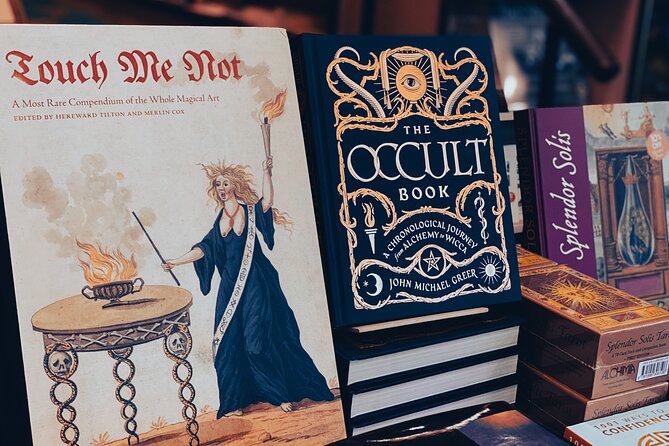
One of the more distinctive stops is London’s oldest occult bookshop. The route does not list an admission charge, and the material provided does not promise time inside the shop, so treat this as a place to see and discuss rather than a guaranteed shopping visit.
The important subject here is the Hermetic Order of the Golden Dawn. The guide explains the order and its members, placing them within London’s wider interest in ritual and magical study.
This may be the strongest portion for readers who already know a little about occult writing. You can ask about the order’s members, books, and influence, and a private guide has more room to follow your questions than a large group tour would.
Still, keep your expectations measured. A three-hour route covers many subjects, so even a fascinating organization may receive a short explanation. If you want a long academic treatment of the Golden Dawn, this is not the right format. If you want a street-level introduction with a real place attached to it, the stop makes good sense.
Charing Cross Hotel and the necromancy tale
The walk continues to the Charing Cross Hotel, connected here with a reported act of necromancy by the French occultist Eliphas Levi.
This is the kind of story that makes the tour different from a normal architectural walk. The building becomes a setting for an event tied to occult practice, rather than simply another Victorian facade. You will want to listen for the details and ask the guide to separate documented facts from later legend if that distinction interests you.
The tour’s subject matter often sits between history, belief, rumor, and theatrical storytelling. That is not a flaw, but it is something to understand before you pay the price. You are buying access to unusual stories and interpretation, not a formal academic lecture with every claim presented in the same way.
Something completely different for your London days:
- Magical London: Harry Potter Guided Walking Tour
★ 4.7 · 22,044 reviews - London: Madame Tussauds London
★ 4.6 · 20,915 reviews - Stonehenge, Windsor Castle, and Bath from London
★ 4.5 · 18,662 reviews - London: Warner Bros. Studio Tour with Transfers
★ 4.7 · 17,586 reviews
Trafalgar Square and the secrets of the lions
Trafalgar Square is one of the route’s brief stops, with about ten minutes set aside for secrets connected to its lions.
The square is already one of London’s most recognizable public spaces, so the value comes from the angle of explanation. Instead of spending the whole visit on Nelson’s Column and the usual photo stops, you look at the animal sculptures and the symbolism around them.
Ten minutes is enough for a pointed story and a few questions, but not for a long exploration of the square. If this is one of your main interests, ask the guide to spend time on the details that matter most to you. The private format gives you a better chance of doing that.
Cleopatra’s Needle, Egyptian influence, and curses

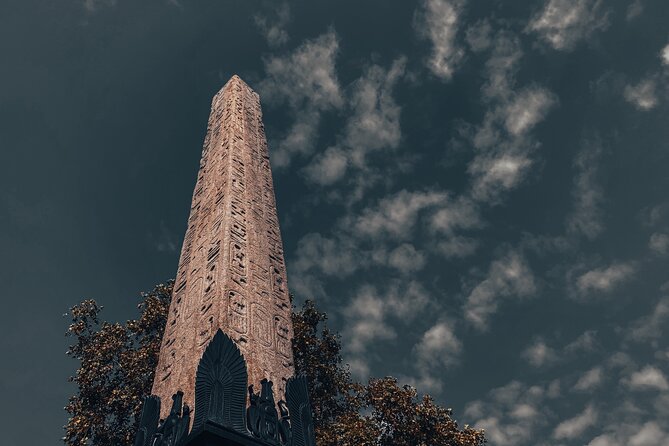
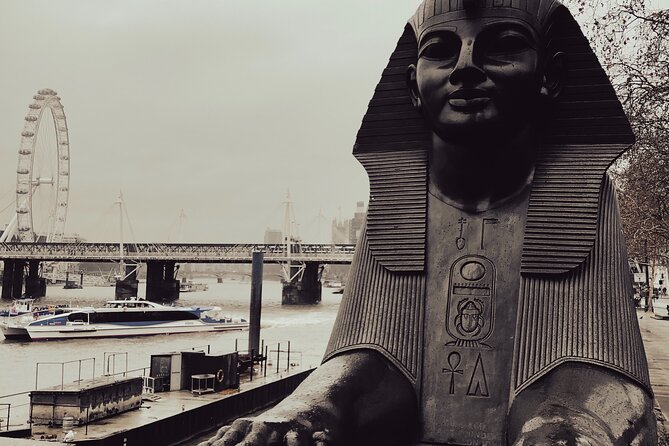
Cleopatra’s Needle gets about fifteen minutes, making it one of the longer named stops. You walk by the obelisk, hear its dark legends, and consider the influence of Egypt on British occultism.
This is a useful bridge between London’s public monuments and the private rituals associated with magical societies. The obelisk is a physical object with a long symbolic life, and the tour uses it to discuss curses, Egyptian imagery, and the way nineteenth-century British occultists looked toward ancient cultures.
The word cursed gives this part a dramatic edge, but you should approach it as legend and interpretation rather than a promise of supernatural proof. That balance is part of the fun. You can enjoy a spooky story while still asking where the tale began and how it changed over time.
Because the stop is outdoors, the experience depends on the guide’s storytelling. There is no listed admission ticket, and the tour does not include a museum visit connected to the monument.
Freemasons, Ordo Templi Orientis, and Aleister Crowley
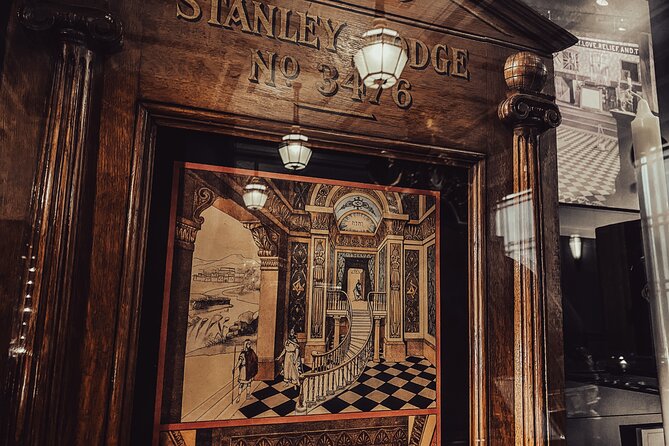
The route then heads toward the Freemasons quarter and a hidden site associated with Ordo Templi Orientis, often shortened to OTO. The material provided identifies Aleister Crowley as the organization’s most influential English member.
For many people, this will be the core of the tour. Freemasonry has a major place in public discussion of secret societies, while Crowley remains a famous and controversial figure in modern occult history. Seeing the streets connected with these subjects gives the stories a physical setting.
Again, the private format is especially useful here. You can ask about the difference between Freemasonry and OTO, Crowley’s role, or how public fascination shaped the reputation of these groups. The route is not presented as an opportunity to enter private Masonic interiors, so expect exterior viewing and explanation.
This section may also reveal the main limitation of the experience. Several subjects are packed into one walk, and each deserves more time than the schedule allows. A curious beginner may enjoy the range. A specialist may want more evidence, dates, and context at each site.
Covent Garden, Bloomsbury, and the British Museum

Covent Garden receives about ten minutes. The area is a familiar London stop, but here you explore it as part of the tour’s magical theme rather than as a market and theater district alone.
The route then continues into Bloomsbury, described as one of London’s oldest areas and presented as another entry into the city’s magical world. The short stop gives you a taste of the district’s connection to the tour’s wider themes, though the available details do not identify a particular building or society here.
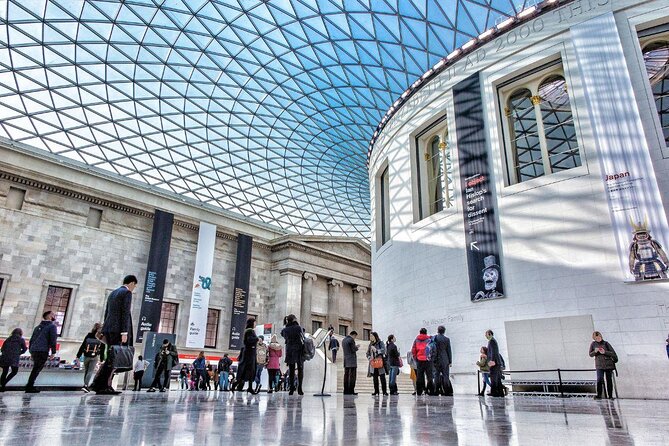
The final listed stop is the British Museum, where you walk by and learn about mysterious objects. This is not a museum admission visit. You should not expect time inside the galleries unless the guide specifically arranges something beyond the stated plan.
That distinction matters. If you want to see Egyptian objects, ritual items, or other museum collections in person, allow separate time for the British Museum. On this walk, the museum serves as an exterior endpoint for discussion, not a replacement for a museum visit.
Three hours of walking, with short stops
The tour lasts about three hours. The listed stops account for roughly sixty-five minutes of named activity, which means the rest of the time is spent walking between locations and listening along the route.
That is not necessarily a problem. Walking is how the tour connects scattered parts of central London, and the movement gives the experience a city-wide feel. But you should wear comfortable shoes and expect a moderate level of physical activity. The booking information specifically calls for a moderate fitness level.
The route starts at St James’s Palace and ends at Tottenham Court Road. That one-way design is useful if you plan to continue sightseeing in central London, but it is less convenient if you need to return to the starting point. Plan your day around the ending location.
Since the ticket is mobile and the tour is offered in English, the practical setup is straightforward. Confirmation arrives at booking, and the activity is private, with only your party participating.
Is $2,314.24 per person a fair price?
The stated price is $2,314.24 per person, which is exceptionally high for a three-hour walking experience. The private format explains part of the cost, but it does not automatically make the tour good value for every booking.
I would judge the price by your level of interest. If you are fascinated by occult London, Freemasonry, Crowley, and the Golden Dawn, a private guide can give you a focused experience that a standard city tour will not offer. The ability to ask questions and shape the conversation adds real value.
If you are only mildly curious, the cost is difficult to defend. Many parts of the route are viewed from public streets, and the stops are short. You are paying for a specialist theme and private attention, not for major entrance tickets or a long indoor program.
The rating is 4.5 from 20 reviews, with praise focused on the unusual subject, friendly guides, and the sense of seeing London in a new way. The main criticism is also useful: some stops can feel cursory because so much of the three hours is spent walking. That makes the tour a better match for an enthusiast than for someone seeking maximum sightseeing per minute.
Who will enjoy this private London experience?
I would recommend it most strongly to you if you:
- Already enjoy occult history, secret societies, or esoteric writing
- Want a private walk rather than a large group tour
- Like connecting familiar places through unusual stories
- Are comfortable spending three hours on foot
- Prefer conversation and interpretation over entering major attractions
- Have enough time and budget to focus on a specialty subject
You may want to skip it if you are looking for royal interiors, museum admission, a broad London introduction, or a tightly packed list of major sights. The route covers many districts, but it does not provide a full tour of each one.
Ask your guide early which subjects interest you most. The private setup is most valuable when you use it to guide the discussion instead of simply following the standard sequence.
Should you book Secret Societies, Freemasons and Occult London?
Book this tour if the theme itself is the reason you came to London. The Golden Dawn, Aleister Crowley, Freemasonry, Eliphas Levi, occult books, Egyptian symbolism, and dark legends make this a rare specialty walk.
Think twice if you are price-sensitive or want detailed treatment at every stop. The walk covers a lot of ground, and some locations receive only ten or fifteen minutes. At this cost, I would book only after deciding that a private occult-focused guide is worth more to you than a conventional sightseeing tour or several museum visits.
FAQ
Where does the tour start?
It starts at St James’s Palace, St James’s Palace, Marlborough Road, London SW1A 1BQ, UK.
Where does the tour end?
The tour ends at Tottenham Court Road in London.
How long does the experience last?
The walking tour lasts approximately three hours.
Is this a private tour?
Yes. Only your party participates in the private activity.
What language is the tour offered in?
The tour is offered in English.
What is included in the price?
A professional guide is included.
Are admission tickets included?
The listed stops show free admission tickets. The experience is primarily an outdoor walking tour, and the British Museum portion is described as walking by the museum rather than entering it.
How physically demanding is the walk?
You should have a moderate level of physical fitness. The route involves substantial walking between stops.
Can you cancel for a full refund?
Yes, if you cancel at least 24 hours before the experience start time. Cancellations made less than 24 hours before the start time are not refunded, and changes within that period are not accepted.
Latest arrivals on the London list
- Bicester Village Private Vehicle Round Trip Service from London★ 4.5 · 3 reviews
- Witchcraft, Ancient Cults & MI15 Spy Secrets★ 4.0 · 3 reviews
- Gastronomic 6-course fine-dining dinner on Luxury London Bus★ 4.5 · 3 reviews
- London: Explore The Tower of London & Tower Bridge!★ 3.7 · 3 reviews
- The Harry Potter Walking Tour with Potter-Vision★ 5.0 · 3 reviews
- London Christmas Eve With 3 Course Dinner and Midnight Mass★ 4.5 · 3 reviews
- London Taco Trail (Self-Guided)★ 4.5 · 3 reviews
- London: Guided Loo Tour★ 5.0 · 3 reviews