
Reviewed · CITY TOURS
Slave Trade Money Trail Tour in the City of London
London’s financial district can look like a polished wall of banks, offices, and grand stone facades. This tour asks you to read those buildings differently, tracing how money from slavery and colonial trade helped shape the City of London, its shipping firms, its insurance market, and its food trade. Guide Darrel Blake leads the three-hour walk with historical evidence, personal stories, and artifacts.
I like two things right away: the route connects famous landmarks to a subject most standard sightseeing walks barely address, and the included booklet gives you something to study after the tour. The small group limit of 30 should also help keep the discussion personal.
The main consideration is the subject itself. This is a serious, sometimes painful history tour, not a light introduction to London. It also relies on walking outdoors and requires good weather, so bring water, check the forecast, and come ready to listen and ask questions.
In This Review
- Key points to know before you book
- Why this City of London walk matters
- Starting at the Royal Exchange in the Bank area
- The Royal Exchange and London’s commercial power
- Fenchurch Street and the shipping connection
- Lloyd’s of London and the business of risk
- Borough Market and the goods produced by forced labor
- Darrel Blake’s approach to a difficult subject
- What you get for $48.01
- Practical details for a smoother afternoon
- Who should take this tour?
- Should you book the Slave Trade Money Trail Tour?
- FAQ
- Where does the Slave Trade Money Trail Tour begin?
- Where does the tour end?
- What time does the tour start?
- How long does the experience last?
- Who leads the tour?
- What language is the tour offered in?
- Is lunch included?
- What happens if bad weather cancels the tour?
Key points to know before you book
- Follow the money from the Royal Exchange to Borough Market: The route links financial institutions, insurers, shipping interests, and food trading to the transatlantic slave trade.
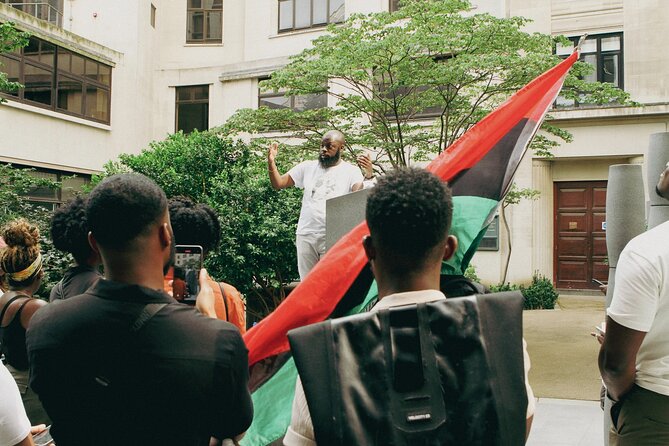
- Hear the story from Darrel Blake: His approach includes clear explanations, questions for the group, personal experiences, and historical artifacts.
- See familiar London places in a new context: The Royal Exchange, Lloyd’s of London, Fenchurch Street, and Borough Market take on a different meaning.
- Plan for about three hours outdoors: The walk begins at noon and ends at Borough Market in Southwark.
- Use the booklet after the walk: It helps you keep track of names, places, and ideas raised during the tour.
- Know what is not covered: Lunch and bottled water are not included, and the tour may be rescheduled or refunded if bad weather causes cancellation.
Why this City of London walk matters
Many London tours explain imperial power through palaces, monuments, and political decisions. This one follows the financial machinery behind that power. You look at the institutions that handled investment, insurance, shipping, and trade, then consider how those systems affected enslaved Africans and the growth of London.
That focus gives the walk a clear purpose. You are not simply collecting dates or photographing buildings. You are being asked to connect a company, an insurance market, or a trading district with the goods and profits tied to forced labor.
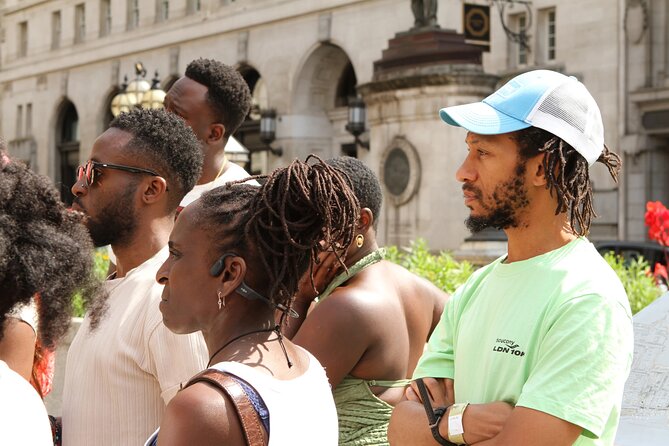
Darrel Blake’s style appears direct and involved. He explains the evidence, asks questions, and checks that the group has followed the point. That approach may suit you if you enjoy history that invites discussion rather than a one-way speech.
The tour also brings in Blake’s personal experiences and artifacts. Those details can make a difficult subject easier to grasp, especially when the financial story feels abstract. The aim is not to soften the facts. It is to show how systems of money had human consequences, and how those consequences remain relevant to modern London.
A few more London days worth a look
- London: City Sights Hop-On Hop-Off Bus & Bookable Extras
★ 4.4 · 6,579 reviews - City Sightseeing London Hop-On Hop-Off Bus Tour & Bookable Extras
★ 4.0 · 1,224 reviews - London: Go City Explorer Pass® – Tickets for 2-7 Attractions
★ 4.3 · 1,111 reviews
Starting at the Royal Exchange in the Bank area
The meeting point is the Royal Exchange, London EC3V 3LL, with a scheduled start at 12:00 p.m. The wider opening part of the walk takes place in the Bank area of the City of London, where you begin looking at financial institutions linked to the transatlantic slave trade.
The area is a useful place to start because its grand buildings can seem detached from the violence and exploitation that helped generate wealth. This tour puts those subjects in the same frame. You consider how financial power and colonial trade supported one another during the 17th to 19th centuries.
The first section is listed as about 15 minutes. That is enough time to establish the central idea without using up the whole afternoon before reaching the main buildings. I would arrive a little early, since the Royal Exchange is the stated meeting point and the City can be confusing if you are rushing between Underground exits and office streets.
The Royal Exchange and London’s commercial power
The Royal Exchange receives about 20 minutes. The building was once a center of London’s commercial life, and the tour uses it to explain how trade and finance helped facilitate the transatlantic slave trade.
This is one of the route’s strongest stops for visitors who already know the Royal Exchange as an architectural landmark. Instead of treating it as a grand backdrop, you examine the commercial activity associated with it. That change in focus can make the building feel less like a monument and more like part of an operating system.
You will likely spend much of this stop listening and discussing rather than entering a museum or viewing a special collection. Admission is listed as free, and the value comes from the guide’s interpretation of the site.
The subject can be difficult to absorb in a short visit. The booklet should help you hold on to key points, while Blake’s use of questions gives you a chance to test your understanding as the story develops.
Fenchurch Street and the shipping connection
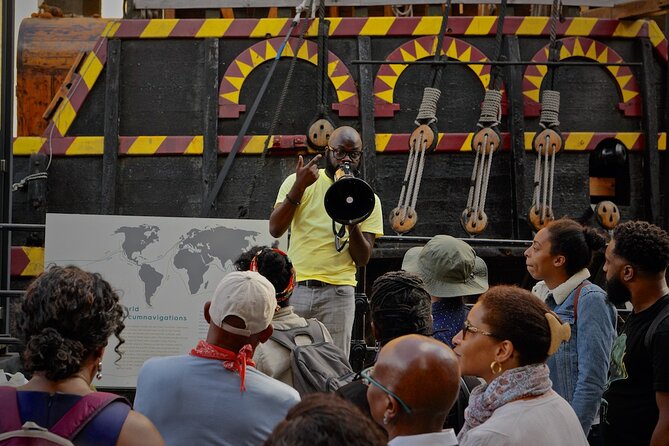
The longest stop is at 20 Fenchurch Street, with about 50 minutes devoted to the area’s links to shipping and the British economy. Major companies connected to the trade were headquartered in this financial district, so this part of the walk shifts attention from grand commercial buildings to the firms and networks behind them.
This is where the money trail becomes more specific. You are encouraged to think about ships, company offices, investment, and the flow of goods and people. The subject is not presented as a remote story that happened somewhere else. The route places it in the streets of the City, among the offices that formed part of Britain’s economic growth.
A 50-minute stop also gives Blake room to explain cause and effect. You can ask how the shipping industry worked, how companies profited, and how financial gains strengthened elite power and social divisions. The supplied description does not promise entry into private offices or a dedicated exhibition, so expect an outdoor explanation centered on the buildings and their historical connections.
If you like detailed social and economic history, this should be one of the most useful sections. If you prefer quick photo stops and broad sightseeing, it may feel slow. That is a fair tradeoff for a tour built around context.
Something completely different for your London days:
- London: The London Eye Entry Ticket
★ 4.6 · 35,875 reviews - From London: Harry Potter Warner Bros Studio Tour
★ 4.7 · 26,588 reviews - London: Westminster to Greenwich River Thames Cruise
★ 4.5 · 22,836 reviews - Magical London: Harry Potter Guided Walking Tour
★ 4.7 · 22,044 reviews
Lloyd’s of London and the business of risk

The walk continues to Lloyd’s of London for roughly 20 minutes. Here, the focus is insurance and the role of underwriting in the transatlantic slave trade.
Insurance can be hard to picture compared with ships or cargo. The tour makes the point that trade depended not only on vessels and merchants, but also on financial arrangements that helped manage risk. In this case, underwriting connected a major London institution to the wider system.
This stop gives you a more complete view of how profits were protected and sustained. The tour is not only about people who owned ships or traded goods. It also examines the financial services that made those activities more workable.
The Lloyd’s section may be especially useful if you want to understand how modern financial institutions grew alongside colonial commerce. It also reinforces the tour’s larger message: the slave trade was supported by many layers of business, not one isolated group.
Borough Market and the goods produced by forced labor
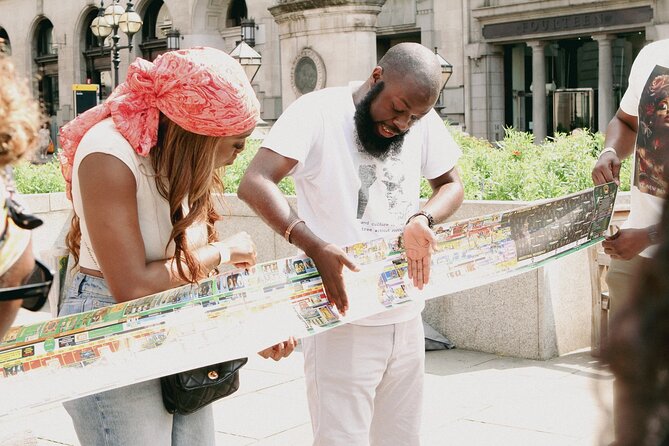
The route ends at Borough Market in Southwark, London SE1 9AL. This stop lasts about 20 minutes and looks at how a historic trading hub connected to goods such as sugar and tobacco, both produced through enslaved labor.
Ending here brings the subject into everyday consumption. Banks and insurers can feel distant, but sugar and tobacco were familiar products. The market setting helps you consider how goods moved from plantations and colonial supply chains into British commerce and daily life.
Borough Market is also a practical end point. You can buy food there after the tour, though lunch is not included in the ticket. The market itself is a busy public place, so you should expect a change from the quieter concentration of the City stops.
The stated information notes that admission is not included at this stop. Since no separate admission cost is specified, check the current arrangements when booking if that detail matters to you. The important point is that the tour ends at Borough Market rather than returning to the Royal Exchange.
Darrel Blake’s approach to a difficult subject

Darrel Blake is the central reason this experience feels different from a standard guided walk. His delivery is described as clear, concise, and backed by evidence. He also uses questions to involve the group, sometimes checking what you remember from the previous explanation.
That teaching style will work well for you if you want to leave with a stronger grasp of the subject, not just a set of memorable anecdotes. Blake also brings artifacts and personal experiences into the discussion. These elements give the walk a human scale and help connect institutional history to lived experience.
The tone is unapologetic but informative. You should not expect the story to be softened for comfort, and you should not expect the guide to avoid the painful parts of slavery and colonialism. At the same time, the available descriptions emphasize explanation, conversation, and evidence rather than shock for its own sake.
The tour has also been used successfully by families with teenagers. One account describes young people aged 13 and 15 taking part and following the material. Still, parents should judge the subject for themselves. The history includes exploitation, violence, and lasting injustice.
What you get for $48.01
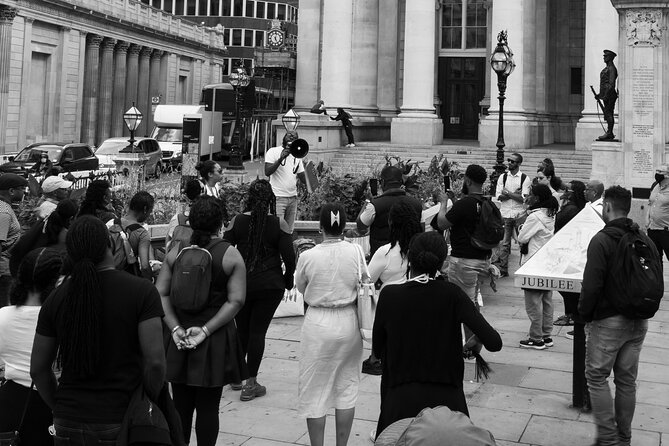
At $48.01 per person, this is not the cheapest way to spend three hours in London. You are paying for a specialist walking tour rather than entry to a major attraction, a meal, or a view from a landmark.
The value depends on what you want from a tour. If you are looking for a standard orientation to the City, cheaper options exist. If you want a focused explanation of London’s financial connection to slavery, the cost is easier to justify. The guide, booklet, small maximum group of 30, and nearly three-hour format give the experience more substance than a quick one-hour walk.
I would also count the route itself as part of the value. The tour joins places that you might otherwise visit separately, including the Royal Exchange, Fenchurch Street, Lloyd’s, and Borough Market. It gives you a framework for noticing the City long after the afternoon ends.
The tour is often booked well ahead, with an average booking time of 42 days in advance. That does not guarantee every date sells out, but it is a useful sign that you should not assume you can leave it until the last minute.
Practical details for a smoother afternoon
The experience is offered in English and uses a mobile ticket. Confirmation arrives when you book, and the maximum group size is 30 people. Service animals are allowed, and the route is near public transportation.
Lunch and bottled water are not included. Since the walk lasts about three hours and ends at Borough Market, bring your own water and plan to eat afterward or before the noon start.
The tour requires good weather. If poor weather causes cancellation, you are offered another date or a full refund. You can also cancel for a full refund up to 24 hours before the start time. Changes or cancellations made less than 24 hours ahead are not accepted, and the cut-off follows London local time.
The route begins at the Royal Exchange and ends at Borough Market, so it is not a round trip. That is convenient if you plan to continue in Southwark, but less convenient if you need to return to Bank immediately. Most people can participate, though the information provided does not give a detailed breakdown of surfaces, stairs, or walking distance.
Who should take this tour?
I would recommend it most strongly to history buffs, people interested in social justice and human rights, and anyone who wants to understand London beyond royal buildings and famous views.
It is also a useful choice if you have Caribbean or African heritage and want to examine Britain’s role in the slave trade from a London-based perspective. The tour can help you identify buildings and institutions that you may have passed many times without knowing their connections.
Families with older children and teenagers may find it worthwhile, especially if they want a serious educational afternoon. Blake’s question-based style can keep younger participants involved, though the topic calls for mature discussion.
You may want to choose another activity if you are seeking light entertainment, shopping time, or a relaxed sightseeing stroll. The walk covers a lot of serious material, and some sections may prompt strong emotions. That is not a flaw, but it is part of the bargain.
Should you book the Slave Trade Money Trail Tour?
Book it if you want a focused, evidence-based look at how slavery and colonial trade helped build London’s financial power. The route is well chosen, the subject is rarely covered in ordinary sightseeing, and Darrel Blake’s direct teaching style adds structure and feeling to a complicated story.
I especially like the combination of financial institutions and everyday goods. You move from banks and insurance to sugar and tobacco, which makes the connection between large systems and ordinary life easier to understand.
Skip it if you want a casual walk or if you will find three hours of outdoor discussion too intense. For the right audience, though, the $48.01 price buys more than a list of historic sites. It gives you a new way to read the City of London, and the booklet lets the conversation continue after you leave Borough Market.
FAQ
Where does the Slave Trade Money Trail Tour begin?
The tour begins at the Royal Exchange, London EC3V 3LL, UK.
Where does the tour end?
The tour ends at Borough Market, London SE1 9AL, UK.
What time does the tour start?
The scheduled start time is 12:00 p.m.
How long does the experience last?
The tour lasts approximately three hours.
Who leads the tour?
The experience provider and guide is Darrel Blake.
What language is the tour offered in?
The tour is offered in English.
Is lunch included?
No. Lunch and bottled water are not included.
What happens if bad weather cancels the tour?
If the tour is canceled due to poor weather, you are offered a different date or a full refund.
Latest arrivals on the London list
- Easy Access Tower of London Royal Secrets & Scandals Tour★ 5.0 · 3 reviews
- Stonehenge Special Access Guided Morning Tour from London★ 4.5 · 3 reviews
- Madame Tussauds London Fast Track and Champagne Experience★ 3.5 · 3 reviews
- Shoreditch & East London Walking Tour with a Local, Custom & Private★ 5.0 · 3 reviews
- London Private Brixton Tour with a Local – Culture & Stories★ 4.9 · 3 reviews
- Private Full Day Tour – Fast Track Tower of London and Lunch★ 4.6 · 3 reviews
- Private transfer from London Heathrow Airport to Southampton★ 5.0 · 3 reviews
- London Soho District – Guided Walking Tour 12 guests 2,5h★ 4.8 · 3 reviews
City Tours, compared.
City Sights Hop-On Hop-Off Bus & Bookable Extras
Read our review →
City Sightseeing London Hop-On Hop-Off Bus Tour & Bookable Extras
Read our review →
Go City Explorer Pass® – Tickets for 2-7 Attractions
Read our review →
Upside Down House Westfield White City Entry Ticket
Read our review →
Westminster Abbey Priority Access & Guided City Tour
Read our review →
Eating London: The Heart of ‘The City’ Food Tour
Read our review →
London Luxury Dinner Experience with Panoramic City Views
Read our review →Browse the lists this tour appears in