
Reviewed · STONEHENGE & BATH DAY TRIPS
Stonehenge Admission Ticket
Stonehenge is more than a circle of old stones. It is a carefully arranged monument built in stages, with the famous lintelled circle raised around 2500 B.C. Your ticket also gives you a useful introduction at the visitor center, where objects, displays, and reconstructed Neolithic houses help explain the people behind the mystery.
I like the short shuttle ride to the stones, which saves your legs for the site itself, and the free audio guide, which turns a silent circle into a more readable place. The main drawback is the open setting: there is no shelter at the monument, and the $33 admission does not include transportation from your town or parking.
In This Review
- Key points at a glance
- Why Stonehenge is still worth seeing
- Begin at the Stonehenge Visitor Center
- See the reconstructed Neolithic houses
- Ride the shuttle to the stone circle
- Follow the route around the ancient stones
- What the audio guide adds
- How long should you allow?
- Is the $33 ticket good value?
- Who will enjoy this visit most?
- Practical tips for a smoother visit
- Should you book the Stonehenge admission ticket?
- FAQ
- Where does the Stonehenge visit begin?
- What does the ticket include?
- Is transportation to Stonehenge included?
- How often do the shuttle buses run?
- Which languages are available for the audio guide?
- Is parking included with admission?
- What should I bring?
Key points at a glance
- Start with the visitor center: See hundreds of prehistoric objects before reaching the stones.
- Take the frequent shuttle: Buses run about every five minutes between the center and the monument.
- Walk through Neolithic houses: Reconstructed buildings show how people may have lived when Stonehenge was built.
- Download the audio guide early: Internet service can be unreliable near the site.
- Allow time for the museum: The two-hour visit can feel rushed if you hurry through the indoor exhibits.
- Prepare for the weather: The stone circle sits in an exposed setting with no shelter.
Why Stonehenge is still worth seeing
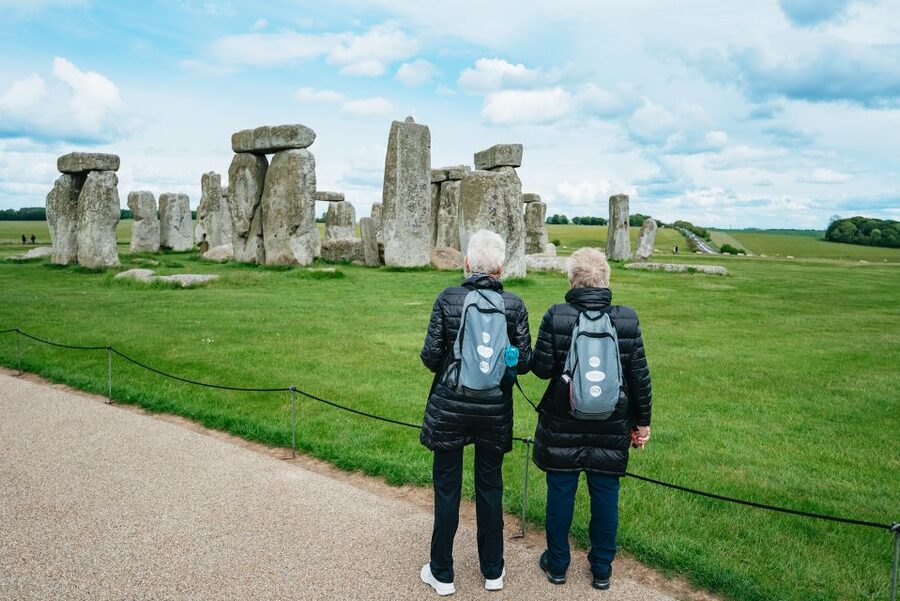
Stonehenge earns its fame the old-fashioned way. The stones are striking, but the real power comes from the question behind them: how did Neolithic people move, shape, and raise such massive stones with simple tools?
The monument began as an earthwork enclosure. It changed over many centuries before the familiar lintelled stone circle appeared in the late Neolithic period, around 2500 B.C. That long building process matters. You are not looking at one sudden construction project, but at a place repeatedly changed and used by prehistoric communities.
Stonehenge, Avebury, and nearby prehistoric sites form a UNESCO World Heritage Site. This ticket focuses on Stonehenge itself, yet the displays help place it within that wider concentration of ancient monuments.
I like that the visit does not leave you alone with a famous silhouette and a few vague theories. The visitor center provides objects and explanations first. Then, when you reach the stones, you have a better sense of what you are looking at and why the site matters.
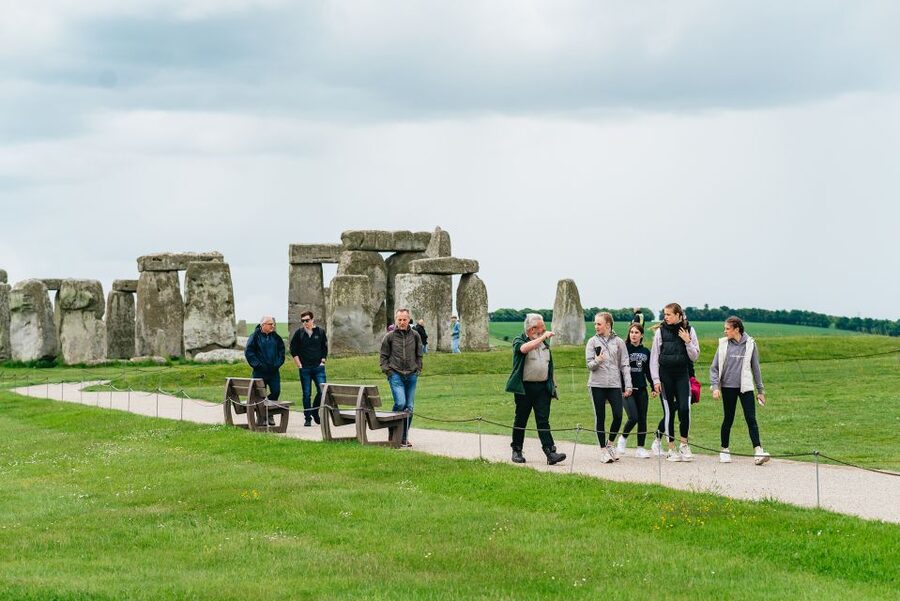
Still, keep your expectations sensible. You cannot walk freely among the stones during a standard admission visit. You follow the marked route around the circle, viewing it from close range while keeping to the visitor path. The setting is impressive, but the monument may look smaller than you expect from photographs.
More Stonehenge and Bath trips:
- Stonehenge, Windsor Castle, and Bath from London
★ 4.5 · 18,662 reviews - Stonehenge, Windsor Castle and Bath with Pub Lunch in Lacock
★ 4.5 · 7,402 reviews - London: Full-Day Windsor, Stonehenge, and Oxford Tour
★ 4.4 · 5,368 reviews
Begin at the Stonehenge Visitor Center
Your visit starts at the Stonehenge Visitor Center, not at the stone circle. This is an important part of the experience, so I would not treat it as a quick ticket checkpoint.
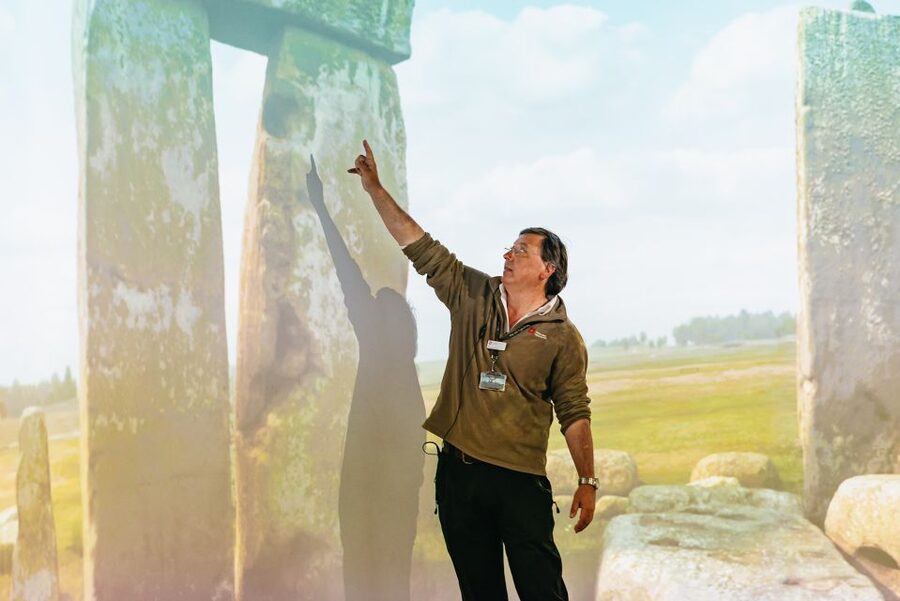
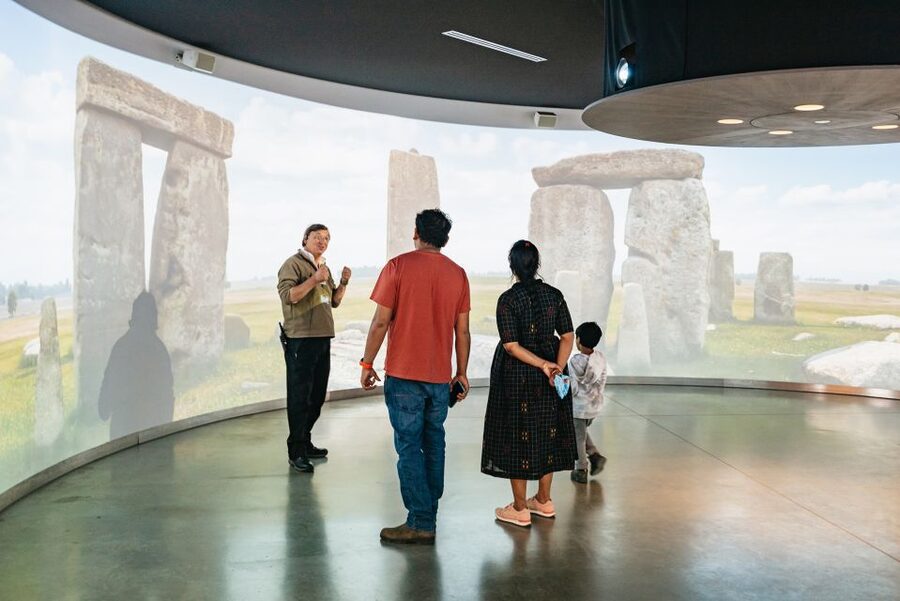
Hundreds of prehistoric objects from the Stonehenge World Heritage Site are displayed here. Together, they offer a clearer picture of the people who made and used the monument. You get context about prehistoric life, tools, and the long period of activity around Stonehenge before facing the central mystery.
The center also helps you understand the scale of the site. Photographs tend to isolate the stones, but the monument belongs to a much larger prehistoric setting. The indoor exhibits give you a useful foundation before you head outdoors.
A film or presentation may be part of the visitor center experience, but facilities can vary on the day. One useful bit of advice is to allow extra time inside. It is easy to hurry toward the main attraction, then realize you have not given the museum enough attention.
If you arrive on a rainy or cold day, the visitor center is also your best chance to spend comfortable time indoors. Plan the order of your visit around the forecast. On a wet day, see the exhibits and houses first, then go to the stones when you are ready.
See the reconstructed Neolithic houses
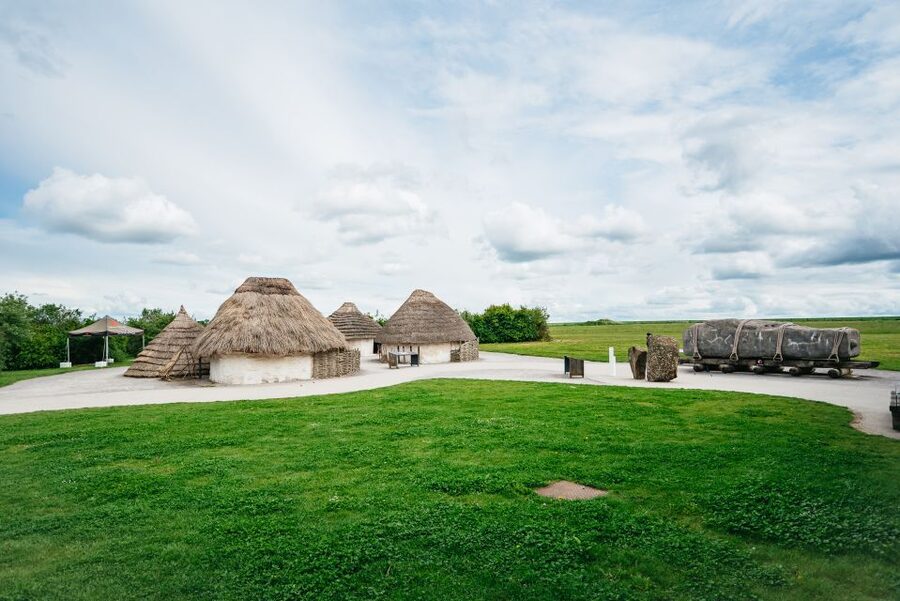
The outdoor gallery contains several reconstructed Neolithic houses built with archaeological evidence and authentic materials. These simple structures may be less famous than the stones, but they add something the monument alone cannot provide.
Inside and around the houses, you can picture the practical side of life in the period when Stonehenge was being built. The houses give the abstract word Neolithic a human scale. Instead of thinking only about engineering, you can think about homes, work, materials, and daily routines.
I especially like this part for families and for anyone who wants more than a photograph. Children often connect more easily with a house they can see and understand than with a monument whose purpose remains uncertain.
The outdoor gallery is also a good place to slow down. The stone circle attracts most of the attention, but the houses help explain who may have organized the work and what sort of society could undertake it.
Do not expect a long guided demonstration or a full living-history show. The houses are reconstructed buildings within the site, not a separate performance. You explore them at your own pace, using the available displays and audio guide for added explanation.
Ride the shuttle to the stone circle
From the visitor center, shuttle buses carry you to the monument. Buses are reported to leave about every five minutes, making this part of the visit straightforward even when the ticket area is busy.
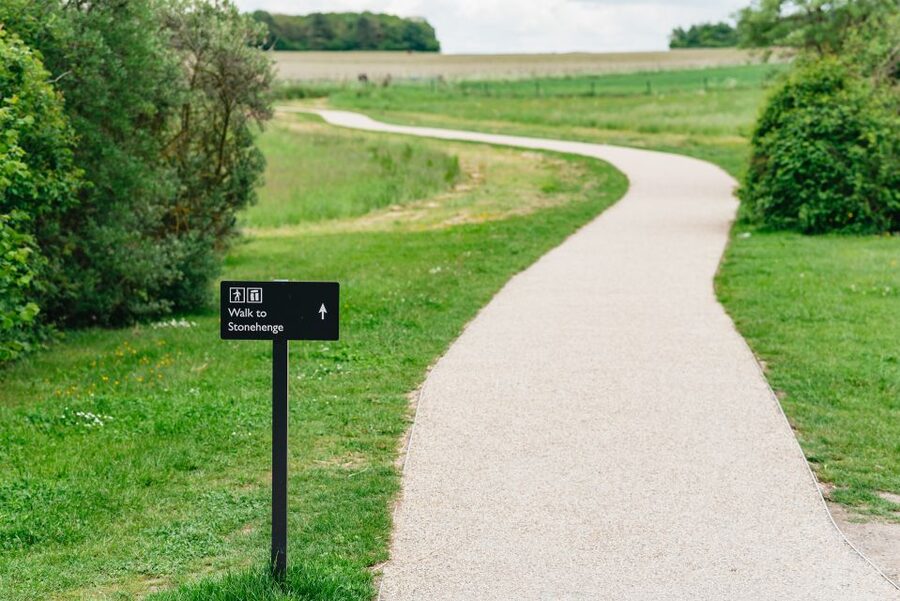
The walk is possible, but it can take around 40 minutes each way according to the site information. Most people will find the bus the practical choice, especially in rain, strong wind, or hot sun. The shuttle also helps visitors with limited stamina save energy for the route around the stones.
On-site staff organize the entry and bus process, and the ticket line can move quickly when you have a timed admission or prepaid voucher. Keep your booking details ready at the entrance. If you are running behind, staff may be able to help, but you should still aim to arrive on time.
The shuttle is not transportation from London, Salisbury, or another town. That is an important distinction. Your admission ticket begins at the Stonehenge Visitor Center, so you must arrange your own trip there.
From Salisbury, you can take a train to Salisbury station and then use the Stonehenge Tour Bus service. If you drive, Stonehenge is roughly two hours from London, with parking available on site. Parking is free for English Heritage members, but standard admission does not include parking.
A few more London days worth a look
- London: The London Eye Entry Ticket
★ 4.6 · 35,875 reviews - London: Tower Bridge Entry Ticket
★ 4.7 · 15,560 reviews - London: Westminster Abbey Entrance Ticket
★ 4.6 · 11,254 reviews - London: St Paul’s Cathedral Entry Ticket
★ 4.7 · 9,813 reviews
Follow the route around the ancient stones
The stone circle is the moment you came for, and it deserves more than a quick photograph. The path leads you around the monument, giving you several angles on the uprights, lintels, gaps, and surrounding earthworks.
The audio guide helps explain each section as you go. It is available in English, German, Spanish, French, Italian, Dutch, Chinese, Japanese, Korean, Russian, Polish, and Portuguese. The commentary is useful because the stones do not explain themselves. Without it, you may notice the shape and scale but miss the clues about construction and use.
Download the free digital audio guide app before you arrive. Internet service can be patchy at the monument, and a phone that is not charged or prepared may leave you reading signs instead of listening. Bring headphones and a fully charged smartphone.
The route also includes ideas for taking photographs and small photo challenges. These can be a pleasant way to look more closely rather than taking the same front-facing picture as everyone else.
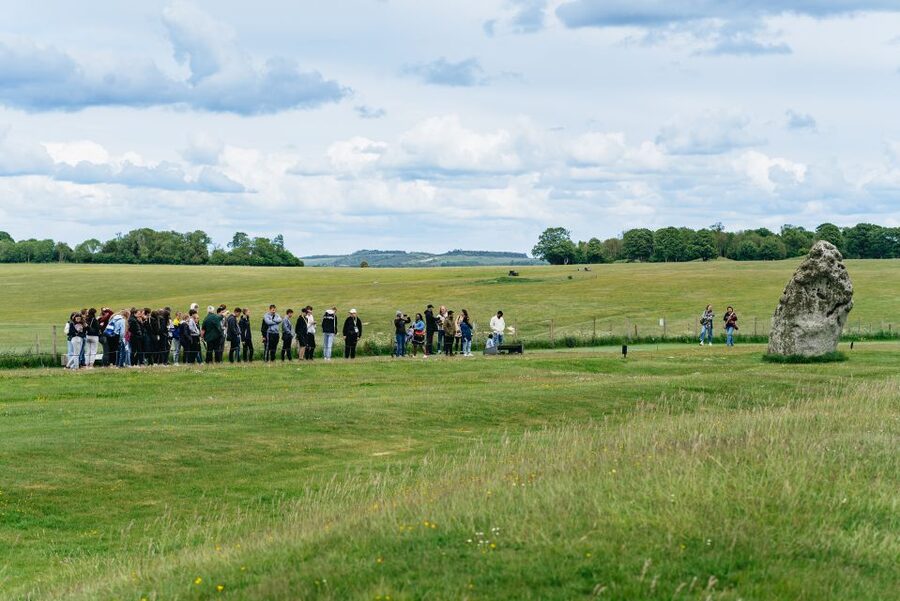
The atmosphere changes with the conditions. On a quiet winter morning, you may find more room for thought and better chances of clear photographs. In summer, the site can feel crowded, even with regular buses and timed entry. Early visits are generally the better choice if you want a calmer setting.
Rain and wind can make the stone circle uncomfortable. There is no shelter beside the monument, so pack a raincoat, umbrella, warm layers, or sun hat according to the forecast. Bring water in hot weather. The open setting is part of the appeal, but it also leaves you exposed.
What the audio guide adds
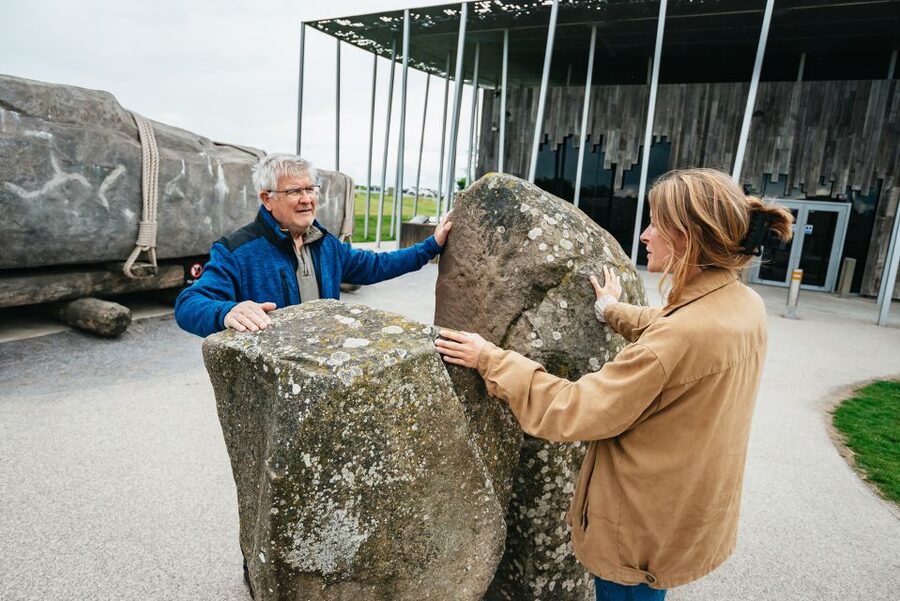
A self-guided visit works well here because the route is clear and the audio guide gives you information at the exact point where you need it.
You can pause, look, and move at your own pace. That is useful if one member of your group wants to study the stones while another prefers to keep walking. The guide is also a good choice if you do not want to join a formal tour.
Keep in mind that this admission ticket does not promise a personal guide. Some visitors arrange separate guided services, and guides such as Tony Abbott and John have received specific praise for keeping explanations moving while adding historical detail. That is a different product from the standard ticket.
For most people, the app supplies enough structure for a satisfying first visit. If you want a detailed discussion about archaeology, competing theories, or the wider prehistoric area, you may want a guidebook or a separate guided tour. An official guidebook is available for purchase, and it can be useful if you want more detail than the audio commentary provides.
How long should you allow?

The listed duration is two hours, which is enough for a focused visit to the visitor center, houses, shuttle, stone circle, and return trip. It is not generous if you want to read every display or stop often for photographs.
I would treat two hours as a minimum working plan rather than a leisurely museum day. Move efficiently through the visitor center, take the shuttle, follow the route, and return. If you are interested in archaeology, photography, or the Neolithic houses, allow more time if your schedule permits.
Some visitors spend longer at the exhibitions than expected. That is understandable. The stones are the headline, but the displays answer many of the questions that make the monument worth seeing.
Weekdays and colder months may offer a quieter visit. Summer weekends and pleasant holidays can bring more people, so timed entry helps protect your schedule but does not guarantee solitude.
Is the $33 ticket good value?
At $33 per person, this is not a casual roadside stop. You are paying for access to one of Britain’s best-known prehistoric monuments, the visitor center exhibitions, the outdoor houses, site transport, and the digital audio guide.
The value is strongest if you use the whole visit. If you arrive, take a fast photo, and leave, the price may feel high. If you study the exhibits, listen to the guide, see the houses, and walk the full route around the stones, the ticket offers a fuller historical visit.
The ticket also includes skip-the-ticket-line access, which can save time at busy periods. Several people found prepaid entry and the dedicated exchange process quick and easy. That matters if you are linking Stonehenge with a train, bus, or other activity.
Check membership before booking. English Heritage and National Trust England members can enter Stonehenge free, although parking rules still matter. If you are already a member, compare the benefits before paying for a separate ticket.
Parking is the main cost concern for drivers. On-site parking is available, but it is not included in the standard ticket. English Heritage members can park free. If you are coming by public transport, remember that the ticket does not cover your train or the Stonehenge Tour Bus.
Who will enjoy this visit most?
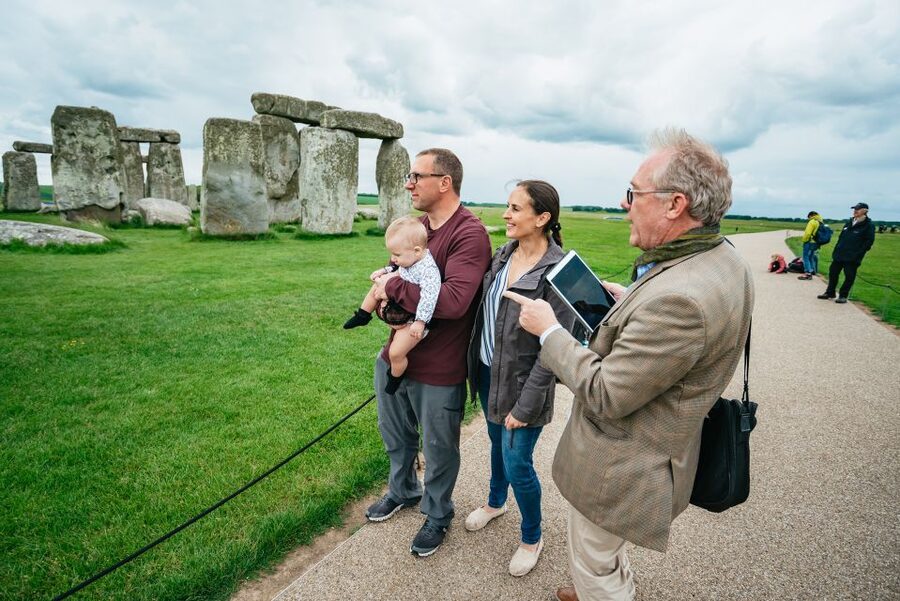
This ticket suits first-time visitors who want independent access without paying for a full private guide. It is also a good fit for families, since the Neolithic houses give children a concrete way to imagine prehistoric life.
History lovers should plan extra time for the indoor displays. Photographers may prefer an early or winter visit, when the site can feel less crowded and the light may be more forgiving. Anyone with limited mobility can request help, and wheelchairs are available on site. The shuttle also reduces the amount of walking required.
You should think twice if your schedule allows only a rushed stop, if you dislike exposed outdoor sites, or if you expect to walk among the stones. The visit is carefully managed, and the monument is viewed from the established route.
Practical tips for a smoother visit
- Download the audio app before leaving your hotel or home, then check that it works.
- Bring headphones, water, warm clothing, rain gear, and sun protection.
- Start at the visitor center exhibitions instead of rushing straight to the shuttle.
- Use the shuttle unless you specifically want the roughly 40-minute walk.
- Book a timed entry in advance during busy periods.
- Check parking and transport costs separately from the admission price.
- Ask staff for assistance if you use a cane or wheelchair.
- If you are a member of English Heritage or National Trust England, check whether your membership covers admission.
- Families should note that the family admission option covers two adults and up to three children aged 5 to 17.
Should you book the Stonehenge admission ticket?
Book it if Stonehenge is a priority and you want more than a distant view from the road. The combination of timed entry, shuttle buses, museum displays, reconstructed houses, and a free multilingual audio guide gives you a well-organized way to understand the site.
I would book early for a popular date, download the app ahead of time, and plan around the weather. If you already hold qualifying English Heritage or National Trust membership, check your benefits first. If you need a personal guide or want to visit several prehistoric sites in depth, compare this ticket with a guided tour.
For a first visit, though, this is a practical choice. You get close to one of the world’s great prehistoric monuments, learn something about the people who built it, and avoid wasting your limited time in ticket lines.
FAQ
Where does the Stonehenge visit begin?
You begin at the Stonehenge Visitor Center. The admission ticket does not start at the stone circle itself.
What does the ticket include?
It includes Stonehenge admission, the visitor center exhibitions, and a free digital audio guide app for your smartphone.
Is transportation to Stonehenge included?
Transportation to the Stonehenge site from London, Salisbury, or another starting point is not included. Shuttle buses between the visitor center and the stone circle are available on site.
How often do the shuttle buses run?
The shuttle buses generally leave about every five minutes. Walking to the stones is also possible and takes around 40 minutes.
Which languages are available for the audio guide?
The audio guide is available in English, German, Spanish, French, Italian, Dutch, Chinese, Japanese, Korean, Russian, Polish, and Portuguese.
Is parking included with admission?
Parking is available on site but is not included in the standard admission ticket. Parking is free for English Heritage members.
What should I bring?
Bring warm clothing, rain gear, an umbrella, a sun hat, water, headphones, and a charged smartphone. Download the audio guide app before arriving because internet service may be unreliable near the stones.
Latest arrivals on the London list
- Heathrow Airport to London Arrival Transfer★ 4.5 · 50 reviews
- London Beatles Tour★ 5.0 · 50 reviews
- One Way Taxi Transfer from London to Gatwick Airport★ 5.0 · 51 reviews
- London: Hidden Baker Street Tube Station Tour★ 4.7 · 51 reviews
- City & Secrets: Explore London’s Hidden Gems★ 5.0 · 51 reviews
- London Christmas Lights Open-Top Bus Tour. 2025 Early Bird★ 3.6 · 51 reviews
- 4 hour London Private Tour, with your own Black Cab Tour Guide★ 5.0 · 51 reviews
- The Beatles Magical History Black Taxi Tour London★ 5.0 · 51 reviews
Stonehenge & Bath Day Trips, compared.

Stonehenge, Windsor Castle, and Bath from London
Read our review →
Stonehenge, Windsor Castle and Bath with Pub Lunch in Lacock
Read our review →
Full-Day Windsor, Stonehenge, and Oxford Tour
Read our review →
Stonehenge, Windsor Castle and Bath Full Day Guided Tour
Read our review →
Windsor Castle, Stonehenge, and Oxford Day Trip from London
Read our review →
Windsor, Stonehenge, Bath, and Roman Baths Day Trip
Read our review →
Stonehenge Morning or Afternoon Tour Optional Lunch
Read our review →Browse the lists this tour appears in