
Reviewed · THAMES RIVER CRUISES
Thames Beachcombing
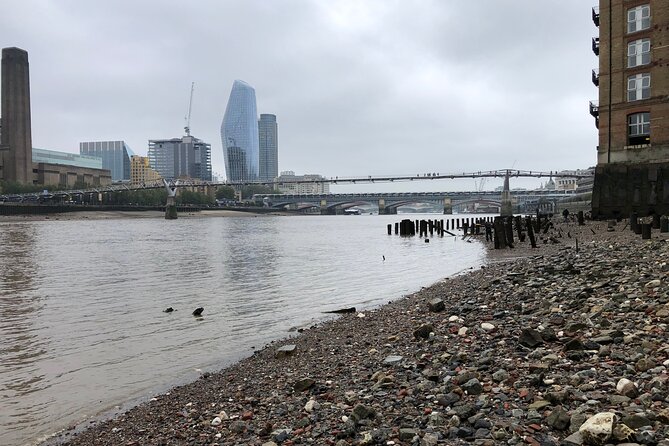
The best part of Thames Beachcombing is its wonderfully simple premise: walk the muddy foreshore at low tide and look down. A broken tile or clay pipe may seem like rubbish at first, but guide Robert can often connect it to London’s past, including objects made before the Great Fire of 1666. The river is your museum floor.
I like the hands-on search and the chance to handle real fragments instead of only viewing them behind glass. I also like the small-group format, which gives Robert time to inspect individual finds and explain what they are. The main drawback is that the meeting place changes with the tide and season, and one outing may produce more ordinary debris than remarkable artifacts.
- Search the Thames foreshore at low tide: Spend about 1.5 hours looking for objects exposed by the retreating river.
- Find old London fragments: You might spot clay pipes, pottery, roof tiles, ceramics, and other pieces.
- Get personal help from Robert: The guide identifies finds and explains their possible age and use.
- Bring suitable footwear: Wellington boots or hiking boots are important on the stony, muddy foreshore.
- Expect a relaxed pace: You have time to search rather than being hurried from one stop to another.
- Plan around changing times: The exact location and start time are provided after booking and vary during the year.
In This Review
- Why Mudlarking Feels Different From a Normal London Tour
- Starting at the Thames Foreshore
- Searching for Clay Pipes, Tiles, and Pottery
- Robert’s Find-by-Find History Lesson
- What You Keep and What You Learn
- Timing, Weather, and the Changing Meeting Point
- Is $41.41 a Fair Price?
- Who Will Enjoy This Two-Hour Thames Adventure?
- Practical Tips for a Better Search
- Should You Book Thames Beachcombing?
- FAQ
- How long does Thames Beachcombing last?
- Where does the tour meet?
- What can I find while mudlarking?
- Are gloves and bags provided?
- What should I wear?
- Can children join the activity?
- What happens if the weather is poor?
Why Mudlarking Feels Different From a Normal London Tour
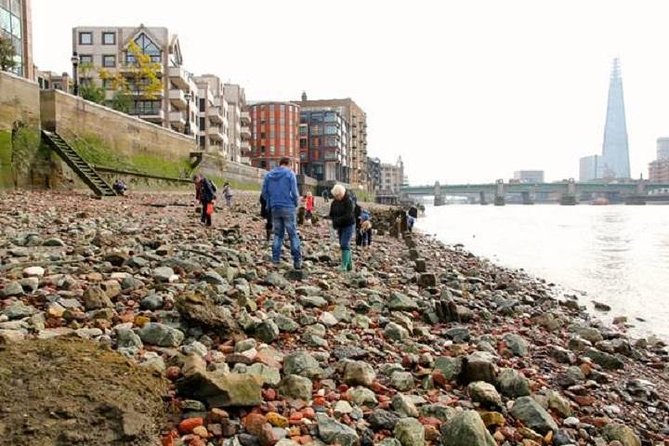
London offers plenty of grand sights, but Thames Beachcombing takes you below the usual sightseeing route. Instead of looking up at bridges, churches, and modern buildings, you spend the morning studying the ground at the river’s edge.
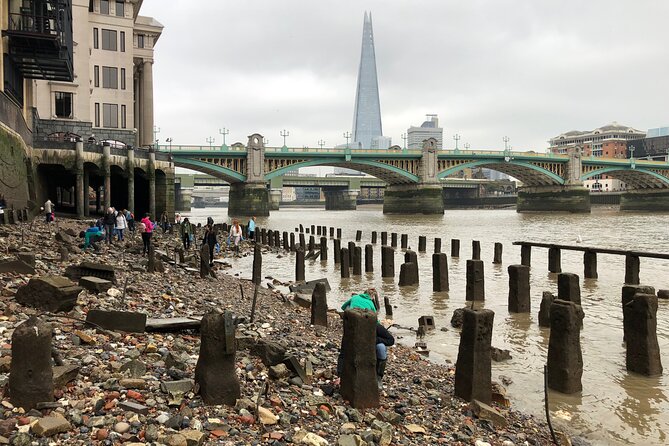
This is mudlarking, a form of beachcombing for objects washed up or exposed along the foreshore. The activity depends on the low tide, when sections of the Thames bank become accessible. Your guide chooses the location and time, so you do not simply turn up at one permanent address.
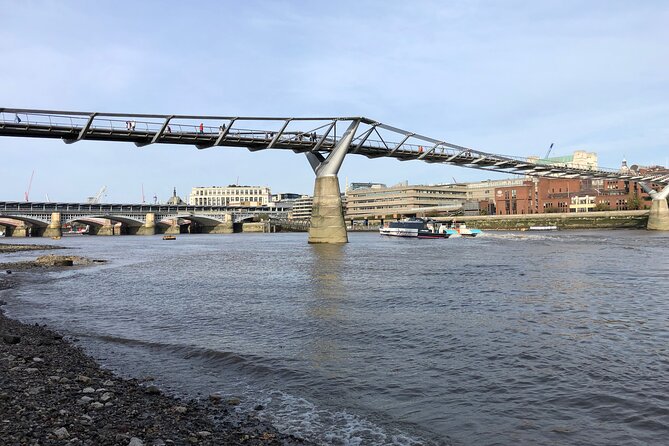
That changing setting is part of the appeal. A stretch near Cannon Street will offer a different feel from one near Putney Bridge, and the objects you find can vary from one section of the river to another. It also means you need to stay flexible. The exact arrangements are sent to you after booking, and the confirmation is subject to availability.
The outing lasts about two hours in total. Roughly 1.5 hours is spent searching, with the remaining time used for introductions, instructions, and a closer look at everyone’s finds. This is not a long walking tour with a few minutes of activity added on. The search itself is the main event.
Starting at the Thames Foreshore
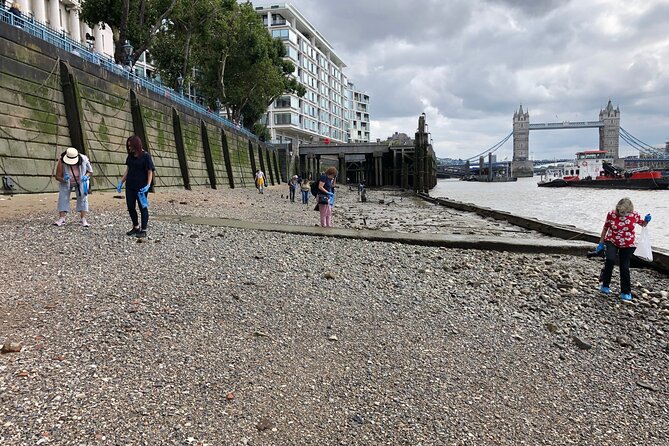
You make your own way to the meeting point in London. The tour ends back there, and the meeting areas are near public transportation, though the specific station depends on the chosen foreshore location.
Once the group gathers, you receive gloves and plastic bags. Robert gives you practical tips on what to look for, and he may show examples or pictures of likely finds before the search begins. That short briefing matters, especially if you have never tried mudlarking before. The foreshore contains plenty of modern rubbish and worn fragments, so knowing what deserves a closer look saves time.
The group size is designed to remain small. The main description says no more than 15 people, while the additional details list a maximum of 20. That is worth confirming when you receive the meeting information. Either way, the format is more personal than a large coach outing, and you should have a reasonable chance to ask about your own discoveries.
Do not expect a polished visitor center or a tidy path down to the river. You are heading onto a stony, muddy bank. Wellington boots or sturdy hiking boots are essential, not optional extras for rainy days. Wear clothes you can get dirty, and expect the Thames foreshore to feel uneven underfoot.
A moderate level of fitness is required. The activity involves walking and standing on rough ground, bending down repeatedly, and carrying the small bag provided for your finds. The information supplied does not promise a fully accessible route, so anyone with mobility concerns should ask about the exact foreshore location before booking.
More Thames cruises to compare:
- London: Westminster to Greenwich River Thames Cruise
★ 4.5 · 22,836 reviews - London: Westminster to Tower Bridge River Thames Cruise
★ 4.5 · 6,127 reviews - High-Speed Thames River Speedboat in London
★ 5.0 · 3,971 reviews
Searching for Clay Pipes, Tiles, and Pottery
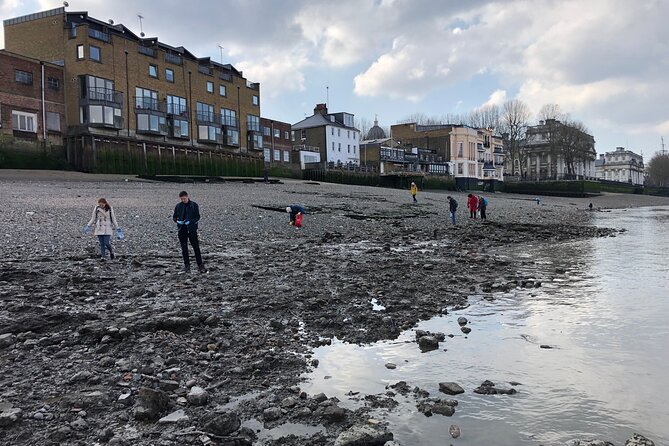
After the introduction, you spread out along the exposed foreshore. You search with your eyes rather than digging tools. That distinction is important: the activity is careful beachcombing, not excavation.
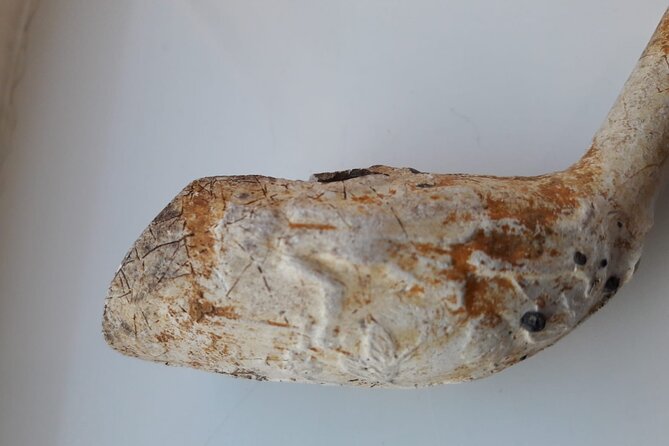
The small objects can be easy to miss. A pale curve may be part of a ceramic bowl. A short white stem may be a clay pipe. A flat, weathered piece could be a roof tile or pottery fragment. Some finds are clearly old, while others are simply river-worn bits of modern material.
That uncertainty is part of the fun. You are not promised a major archaeological discovery, and the river does not provide a reliable selection of prize objects on every visit. A good morning may produce several pieces of old pottery, a pipe fragment, or tiles dating from before the Great Fire. Another outing may offer fewer memorable objects. Robert’s role is to help you sort the interesting from the ordinary.
Past finds have included pottery and roof tiles with possible links to London before 1666. One especially evocative discovery described from this activity was a fingerprint impression left in the handle of an old bowl. Details like that give the fragments a human quality. You are not just holding an old object. You may be seeing the mark of the person who shaped it.
The pace is leisurely. You can search a patch thoroughly, move along the bank, and compare what you find with the objects around you. This makes the activity surprisingly calm. It rewards patience more than speed, and children can take part without needing a long lecture first.
The provided information lists children under 16 as welcome when accompanied by an adult. Families have used the search as a shared activity, and children as young as five have stayed engaged. The supplied gloves may be too large for a very young child, so bringing a smaller pair from home is a sensible idea.
Robert’s Find-by-Find History Lesson
The guide makes the difference between casual beachcombing and a useful historical activity. Robert helps identify objects as you find them, then gives broader context at the end. His explanations can cover what an object was used for, how old it might be, and why it ended up in the river.
That last part is especially interesting. The Thames has long been tied to daily life, trade, building, cooking, and disposal. A small fragment can hint at an ordinary London household or a vanished building. You will not get a full lecture on every period of the city, but the finds provide a direct route into the past.
The final identification session is one of the strongest parts of the outing. Everyone gathers with their bags, and Robert examines the objects one by one. You learn about your own pieces, but also hear about what other people found. That shared comparison gives the ending a friendly, informal feel.
The guide’s help is also practical. You may pick up something that looks old but turns out to be unremarkable, while another plain-looking fragment may be worth keeping. Robert helps separate the likely historical pieces from the junk, so you are not forced to take home every bit of broken material.
The quality of the guiding can vary from one session to another. Most of the feedback praises Robert’s friendly manner, clear explanations, and ability to identify finds. One outing near Putney Bridge was described as less lively, with the guide seeming uninspired. That is a fair reminder that the setting and your own curiosity still matter. The tour gives you the chance to search, but no guide can guarantee a spectacular find.
What You Keep and What You Learn
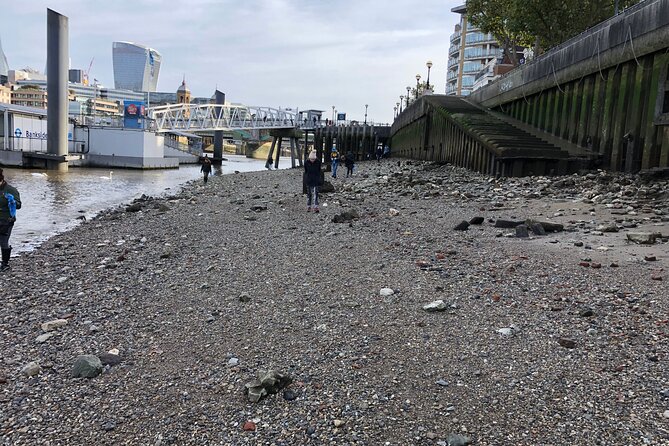
The bags are for collecting the objects you find during the activity. The most interesting pieces may include pottery fragments, clay pipes, tiles, and ceramics. Your guide helps decide what is worth keeping at the end.
Do not book this expecting a guaranteed souvenir of great monetary value. The word treasure here is playful. The real value lies in the story attached to a small object and the process of learning to recognize it.
A pre-Great Fire tile may be more meaningful than a shiny modern object because it connects you to a specific point in London’s past. A clay pipe fragment can show how common smoking once was. A fingerprint in a ceramic handle can make an otherwise plain piece feel personal.
You should also follow Robert’s instructions about what to collect. The activity states that you search with your eyes only, so do not bring tools or start turning the foreshore into an excavation site. The point is to observe carefully and handle only what is already exposed.
The final sorting session helps you leave with realistic expectations. Some items may be old but common. Others may be too worn to identify with certainty. That honest process is better than being told every fragment is special.
Something completely different for your London days:
- London: The London Eye Entry Ticket
★ 4.6 · 35,875 reviews - From London: Harry Potter Warner Bros Studio Tour
★ 4.7 · 26,588 reviews - Magical London: Harry Potter Guided Walking Tour
★ 4.7 · 22,044 reviews - London: Madame Tussauds London
★ 4.6 · 20,915 reviews
Timing, Weather, and the Changing Meeting Point
The exact time is controlled by the tide, and the location changes during the year. You are contacted with the meeting details, so keep an eye on your booking messages and leave room in your London schedule for the appointed time.
This changing arrangement has two sides. It allows the guide to use different parts of the Thames foreshore and choose a workable low-tide window. But it makes the activity less convenient than a fixed tour with a published start time. If you are planning a tightly packed sightseeing day, wait for the confirmed location before arranging other plans.
Weather matters too. The activity requires good weather and may be canceled if conditions are poor. In that case, you are offered another date or a full refund. The cancellation policy also allows a full refund if you cancel at least 24 hours before the start time. Changes or cancellations within 24 hours are not accepted for a refund.
The riverbank can be muddy even on a bright day. A sunny Sunday morning may make the outing especially pleasant, but do not mistake good weather for clean conditions. Gloves are supplied, yet your footwear and clothing do the real work.
Is $41.41 a Fair Price?
At $41.41 per person, the price is reasonable if you value a small-group, hands-on activity rather than a standard sightseeing talk. Your fee covers the local guide, gloves, plastic bags, and about two hours of instruction and searching. There are no listed extra charges for the activity itself.
The value comes mainly from Robert’s help. Without someone to identify the pieces and explain their place in London’s story, you would be walking along the river picking up fragments with little context. The guide turns a simple search into a history lesson you can hold in your hand.
The price is less compelling if you want a guaranteed haul of rare objects or a grand tour of famous London sights. You may find only modest pieces, and one stretch of foreshore can be less rewarding than another. This is a participation-based outing, not a performance with guaranteed highlights.
For families, the cost can make sense because adults and children can search together and learn from the final identification session. Younger children may need help with oversized gloves and uneven ground. For solo visitors, the small group offers company without requiring a full-day commitment.
The experience is often booked well ahead, with an average lead time of about 67 days. That suggests you should reserve early if your London dates are fixed, then wait for the guide to provide the final time and place.
Who Will Enjoy This Two-Hour Thames Adventure?
I would choose this for anyone who likes history, old objects, and activities that require curiosity. You do not need specialist knowledge. In fact, beginners may get the most from Robert’s explanations because every discovery starts with a question.
It suits families particularly well. Children can search, handle safe finds with supervision, and hear about objects made long before modern London. The two-hour length is manageable, though the muddy ground and repeated bending may tire very young children.
It also suits repeat visitors who have already seen the Tower, Westminster, and the major museums. The activity gives you a different view of the city, one based on ordinary objects rather than grand buildings.
You may want to skip it if you dislike mud, uneven ground, or uncertain results. It is also not ideal for anyone who needs a fixed meeting point, a fully accessible route, or a guaranteed artifact. Ask about the exact location before booking if those details matter to you.
Practical Tips for a Better Search
- Wear wellington boots or hiking boots with a solid grip.
- Dress for mud and changing weather.
- Bring smaller gloves for young children, since the supplied gloves may be too large.
- Keep your schedule flexible until the guide sends the tide-based meeting time.
- Search slowly and look for shapes, textures, and unusual colors.
- Listen during the opening briefing, since Robert’s examples can help you recognize likely finds.
- Bring curiosity rather than expectations of valuable treasure.
- Allow time at the end for the identification session. It is a key part of the activity.
Should You Book Thames Beachcombing?
Book it if you want a relaxed, hands-on way to meet London’s past. The strongest reasons are the low-tide setting, the chance to find pottery or clay pipes yourself, and Robert’s personal help in identifying the objects. At $41.41, it offers good value for a two-hour activity with equipment included.
Go in knowing that the river decides the time and place, the foreshore can be muddy, and spectacular finds are never guaranteed. If you are happy with small discoveries and enjoy asking what an ordinary fragment can tell you, this is one of the more unusual ways to spend a morning in London.
FAQ
How long does Thames Beachcombing last?
The activity lasts approximately two hours. About 1.5 hours is spent searching the Thames foreshore, followed by help identifying the objects you find.
Where does the tour meet?
The start and end point is in London, but the exact foreshore location changes during the year. The guide provides the meeting location and time after booking.
What can I find while mudlarking?
You might find clay pipes, pottery fragments, roof tiles, ceramics, and other objects exposed or washed up along the Thames foreshore.
Are gloves and bags provided?
Yes. The tour includes gloves and plastic bags for collecting suitable finds.
What should I wear?
You should wear wellington boots or hiking boots because the foreshore is stony and may be muddy.
Can children join the activity?
Children under 16 must be accompanied by an adult. The activity has been enjoyed by families, but young children may find the supplied gloves too large.
What happens if the weather is poor?
The activity requires good weather. If it is canceled because of poor conditions, you are offered a different date or a full refund. You can also cancel for a full refund up to 24 hours before the start time.
Latest arrivals on the London list
- Heathrow Airport to London Arrival Transfer★ 4.5 · 50 reviews
- London Beatles Tour★ 5.0 · 50 reviews
- One Way Taxi Transfer from London to Gatwick Airport★ 5.0 · 51 reviews
- London: Hidden Baker Street Tube Station Tour★ 4.7 · 51 reviews
- City & Secrets: Explore London’s Hidden Gems★ 5.0 · 51 reviews
- London Christmas Lights Open-Top Bus Tour. 2025 Early Bird★ 3.6 · 51 reviews
- 4 hour London Private Tour, with your own Black Cab Tour Guide★ 5.0 · 51 reviews
- The Beatles Magical History Black Taxi Tour London★ 5.0 · 51 reviews
Thames River Cruises, compared.

Westminster to Greenwich River Thames Cruise
Read our review →
Westminster to Tower Bridge River Thames Cruise
Read our review →

Thames River Cruise with Optional London Eye Ticket
Read our review →
London Tootbus Hop on Hop off Bus Tour and Thames River Cruise
Read our review →
River Thames Hop-On Hop-Off Sightseeing Cruise
Read our review →
Westminster to Greenwich Sightseeing Thames Cruise in London
Read our review →
River Thames Evening Cruise with Bubbly and Canapés
Read our review →Browse the lists this tour appears in