Reviewed · TOURS
The Freemasons Tour of London
London’s oldest stories often hide behind plain walls and narrow lanes. This private tour links wells, Crusader churches, plague pits, monastic ruins, legal courtyards, and Freemasonry in one brisk route from Clerkenwell to Freemasons’ Hall.
I like the private format, since your group can ask questions and linger briefly when a place catches your interest. I also like the hotel pickup, which saves you from finding Farringdon first thing in the morning. The main drawback is pace: 22 stops in about three hours means many visits are short exterior views rather than full museum visits.
In This Review
- Key points at a glance
- Why this London tour feels different
- Starting at Farringdon and Clerk’s Well
- The Knights of St John in Clerkenwell
- Charterhouse, plague pits, and St Bartholomew’s
- William Wallace, Greyfriars, and St Paul’s
- Monastic traces near Blackfriars and Temple
- Fleet Street, Dickens, and a very old pub
- Lincoln’s Inn and the route to Freemasons’ Hall
- What $253.66 means in practical value
- Timing, walking, and booking advice
- Who will enjoy this tour most
- FAQ
- Where does the Freemasons Tour of London begin?
- Where does the tour end?
- How long does the tour last?
- Is hotel pickup included?
- Is this a private tour?
- Which museums or sites are included?
- Should you book it?
Key points at a glance
- Follow London’s knightly past: Visit St John’s Gate, the Museum of the Order of St John, Temple Church, and sites linked with the Knights of St John and the Templars.
- See places most sightseeing routes skip: Clerk’s Well, Charterhouse Square, Blackfriars, Crypt on the Green, and St Bartholomew’s Gatehouse add unusual stops.
- Expect a quick-moving route: Most stops last five to ten minutes, with longer visits at the Order of St John Museum, Charterhouse, and Temple Church.
- Meet at 9:30 am: Pickup is offered from a central London hotel, followed by the Underground or a taxi to Farringdon.
- Finish near Covent Garden: The tour ends at Freemasons’ Hall on Great Queen Street, close to Holborn and Covent Garden Underground stations.
- Plan around museum closures: The Order of St John Museum closes Mondays and Tuesdays, Charterhouse closes Mondays, and the Freemasons Museum closes Mondays.
Why this London tour feels different
This is not a standard parade of Buckingham Palace, Westminster Abbey, and the Tower of London. Instead, it follows the traces left by religious orders and military groups that shaped medieval London, then connects them with the later world of Freemasonry.
The route also brings in plague, the Great Fire, the legal profession, Charles Dickens, William Wallace, Christopher Wren, and the old newspaper trade on Fleet Street. That sounds like a lot, and it is. The pleasure comes from seeing how much history is packed into a small part of central London.
Your guide is the key to the experience. Kevin, named in several accounts of the tour, is a long-time Londoner with a strong interest in local history. His style is enthusiastic and story-led, which suits this route well. You should expect plenty of questions, legends, small details, and connections that would be easy to miss on your own.
The private setup matters here. Many of the sites are tucked into courtyards, gardens, side streets, or church precincts. A guide can point out exactly where to look and explain why a modest doorway or stone remnant matters.
Other London favourites people book with this one:
- London: The London Eye Entry Ticket
★ 4.6 · 35,875 reviews - From London: Harry Potter Warner Bros Studio Tour
★ 4.7 · 26,588 reviews - London: Westminster to Greenwich River Thames Cruise
★ 4.5 · 22,836 reviews
Starting at Farringdon and Clerk’s Well
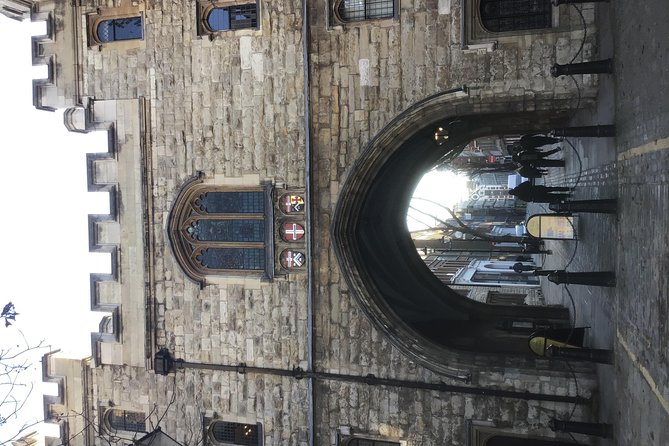
The tour begins at Farringdon Station at 9:30 am, unless you arrange pickup from your central London hotel. The pickup is practical, but remember that your Underground or taxi fare to Farringdon is not included.
From the station, the first stop is Clerk’s Well. It is a small, easily missed site, but its importance is larger than its size. The old well gave its name to Clerkenwell, a district whose identity was shaped by religious houses, craftsmen, political movements, and later industry.
You get only about five minutes here, so do not expect a long visit. The point is to establish the character of the tour: London’s place names often preserve stories that the modern street gives little sign of.
Nearby, the Marx Memorial Library adds a very different layer to Clerkenwell. It reflects the district’s communist and political heritage and remains a working institute. Admission is not included, and the stop is brief, so you will mainly see the location and hear its connection to the area.
This early contrast is useful. The tour is not limited to knights and secret societies. It shows how one London neighborhood accumulated religious, military, political, and social stories over many centuries.
The Knights of St John in Clerkenwell
The next cluster of stops focuses on the Knights of St John. At St John Priory Church, you will see an old church garden planted with traditional medicinal plants. The garden offers a quieter pause after the city traffic, while the mention of an ancient military weapon adds an unexpected military note.
St John’s Gate is one of the route’s strongest early sights. This old gatehouse and tower once served as an entrance to the compound of the Knights of St John. You will have only a few minutes here, but the building gives a clear sense of how religious orders once occupied large working compounds within London.
The Museum of the Order of St John allows a longer look, with about 15 minutes planned inside. The collection includes weapons and armor linked with the order. Admission is included, although you should check the day carefully because the museum is closed Mondays and Tuesdays.
A short museum visit is both a strength and a limit. You get context and a chance to see objects rather than only walls, but 15 minutes is not enough for a full museum visit. If medieval military history is your main interest, you may want to return independently.
Charterhouse, plague pits, and St Bartholomew’s
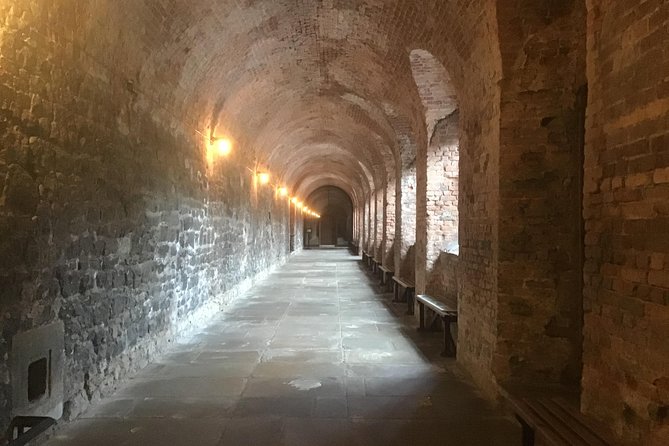
Charterhouse Square brings the Black Death into the story. The square was one of London’s large plague-pit sites, and the tour continues into Charterhouse Chapel, where you may see a recently discovered skeleton identified as a plague victim.
This is one of the route’s more sobering moments. It turns a distant epidemic into something physical and local. The visit lasts about 15 minutes and is free, but Charterhouse is closed Mondays.
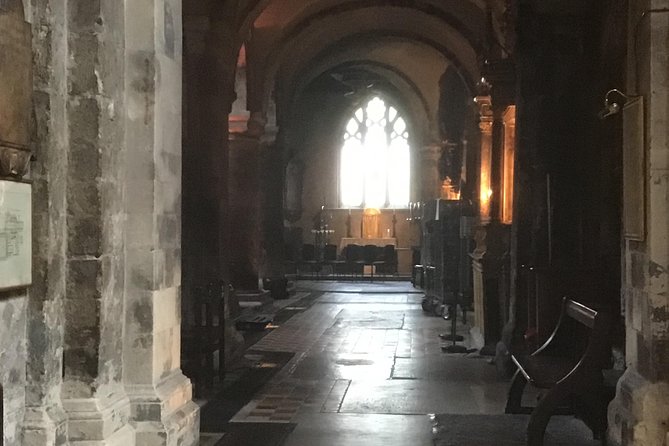
The route then moves to the Church of St Bartholomew the Great, one of London’s oldest churches. Its foundation is linked with a Crusader, so it fits the religious and military theme while also giving you a chance to see one of the city’s major medieval churches.
St Bartholomew’s Gatehouse is another short stop. Dating back almost 800 years, it is easy to pass without knowing what you are seeing. This is precisely the kind of place where the guide adds value. The entrance does not explain its full story by itself.
The pace here is quick. You will not have time to study every church detail or linger at each square. Still, the sequence works well because it moves from religious power to public health, then back to medieval architecture.
Something completely different for your London days:
- Magical London: Harry Potter Guided Walking Tour
★ 4.7 · 22,044 reviews - London: Madame Tussauds London
★ 4.6 · 20,915 reviews - Stonehenge, Windsor Castle, and Bath from London
★ 4.5 · 18,662 reviews - London: Warner Bros. Studio Tour with Transfers
★ 4.7 · 17,586 reviews
William Wallace, Greyfriars, and St Paul’s
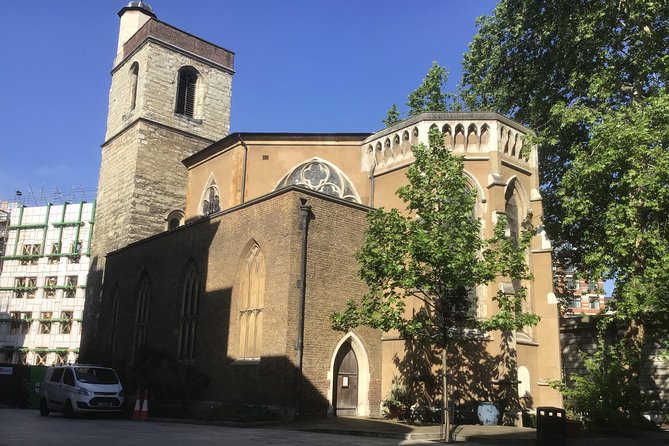
At the William Wallace Memorial, the guide explains the location associated with the death of the Scottish hero known through the film Braveheart. The stop also brings in other events connected with this historic site.
This is a colorful interlude, but it is worth keeping expectations in check. You are seeing a place connected with a dramatic event, not entering a large memorial or museum. The value lies in the story and the setting.
Christchurch Greyfriars Church Garden offers a different mood. The ruins of the former monastic building now form a garden beneath the shadow of St Paul’s Cathedral. It is a pleasant reminder that London’s history is not always preserved as complete buildings. Sometimes the remains have become part of a public green space.
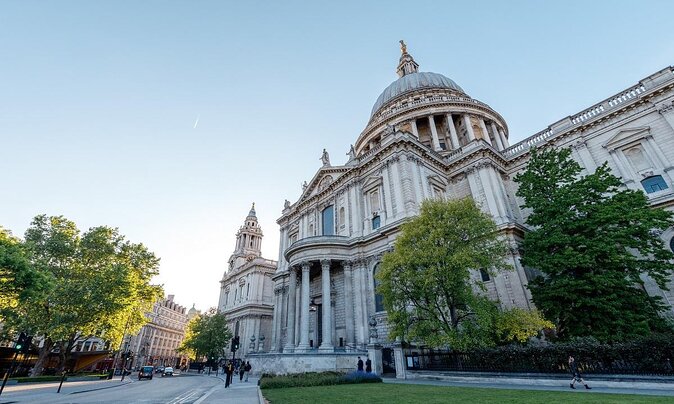
You will also see St Paul’s Cathedral from the route. The stop is short and admission is not included, so this is not a cathedral tour. If you want to visit the cathedral interiors, dome, or galleries, plan that separately.
Monastic traces near Blackfriars and Temple
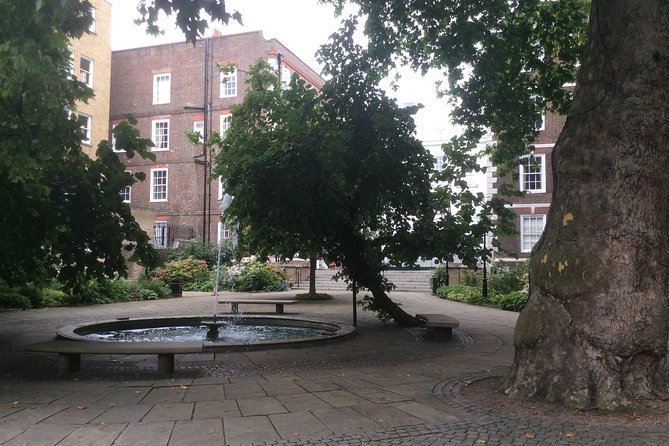
The Blackfriars stop is tucked into a small yard reached by a narrow alley. Only part of the institution remains, but those fragments explain the name of this famous London district.
Next comes the Crypt on the Green, another remnant of a monastic building. It is described as being off the usual sightseeing path, and its location makes it a good example of how much London history is hidden in ordinary-looking spaces.
Middle Temple Lane leads into one of the most atmospheric parts of the day. Middle Temple is a calm legal enclave with old buildings, courtyards, and lanes used in television and films, including Downton Abbey. You are not simply walking along a busy public street here. The setting feels set apart from the surrounding city.
Temple Church is one of the major stops, with about 15 minutes planned inside and admission included. The church was built by the Templars and inspired by what they saw in the Holy Land. Its shape and age give the guide plenty to explain, including the church’s later fame after The Da Vinci Code.
The church is especially worthwhile if you enjoy the overlap between architecture, religious orders, and popular culture. It has also regained a quieter character now that the film-driven crowds have eased.
Listen carefully to the historical explanations here. The church is modeled on the Church of the Holy Sepulchre in Jerusalem, rather than Solomon’s Temple. That distinction matters when discussing the Templars, and you should feel free to ask the guide to clarify the symbolism and terminology.
Inner Temple follows. This is another peaceful legal precinct, and admission is included. The area gives you a useful look at London’s Inns of Court, where legal institutions occupy old compounds that can feel surprisingly removed from the city around them.
Fleet Street, Dickens, and a very old pub
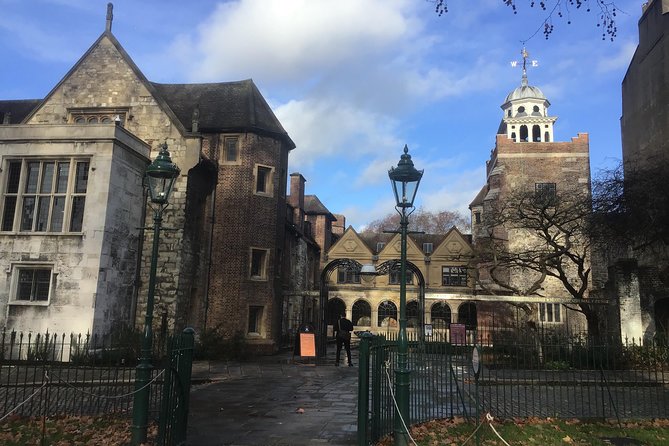
The route continues along Fleet Street, once the center of Britain’s newspaper trade. The street is now better known for its name and traditions than for active newspaper production, but it remains an important part of London’s public life.
You will also pass a long-lost ruin connected with a famous monastic order. Again, the stop is brief, so the story carries more weight than the physical remains.
The Old Curiosity Shop brings in Charles Dickens. The shop is associated with his writing and is presented as the oldest shop in London. You pass by rather than make a long interior visit, and admission is not included.
The Seven Stars is a tiny old pub with an early connection to Freemasonry. It was once a meeting place for Freemasons, making it a natural bridge between the older religious orders and the tour’s final destination.
These stops give the middle of the tour a welcome change of tone. You move from Crusader churches and plague sites to newspapers, literature, pubs, and the beginnings of organized Freemasonry.
Lincoln’s Inn and the route to Freemasons’ Hall
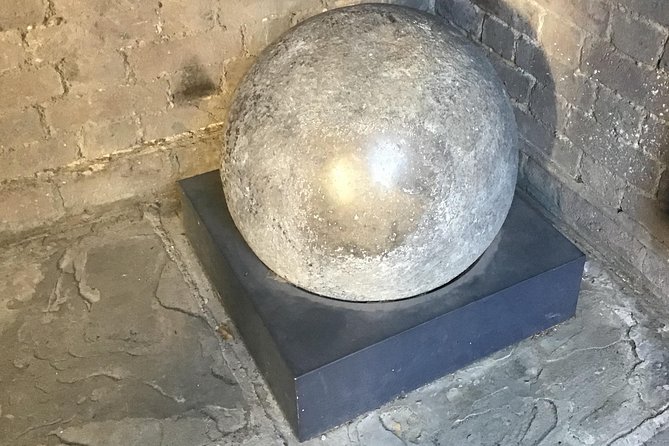
Lincoln’s Inn provides another look at London’s legal world. The route passes through its large square, described as the largest in London, and uses the setting to explain the Great Fire of London.
This stop is less about a single monument and more about scale and atmosphere. The square gives you a sense of how much private, enclosed space survives behind the main streets of central London.
The tour ends at Freemasons’ Hall on Great Queen Street. This is the headquarters of the United Grand Lodge of England and the Supreme Grand Chapter of Royal Arch Masons of England. It also serves as a meeting place for many Masonic lodges in London.
The final visit lasts about 15 minutes. Admission is free, but the Freemasons Museum closes Mondays, so the depth of the stop depends on the day of your booking. The building is close to Holborn and Covent Garden Underground stations, with Covent Garden attractions within easy reach after the tour.
Ending here is convenient. You can continue sightseeing, find lunch, or return to your hotel without crossing the city again.
What $253.66 means in practical value
At $253.66 per person, this is not a bargain-priced walking tour. Its value depends heavily on the size of your private group and how much you want a guide focused on unusual London history.
For a couple or small group, the price buys personal attention, hotel pickup, and a route that would be difficult to recreate efficiently. You would need to research the sites, work out the walking order, check opening days, and find several locations that are not obvious from the street.
The tour also covers a lot in half a day. You see churches, gatehouses, gardens, legal precincts, ruins, memorials, a pub, and Freemasons’ Hall without spending time on general city commentary.
The tradeoff is depth. With about 22 stops in three hours, most visits last five minutes. You are paying for the guide’s connections and storytelling rather than long museum sessions.
If your group prefers a relaxed pace, long coffee stops, or detailed time inside every church, this may feel rushed. If you like moving through a city and collecting unusual stories, the price is easier to justify.
Timing, walking, and booking advice
The tour requires moderate physical fitness. You will walk through streets, courtyards, gardens, church grounds, and small lanes, with the exact pace shaped by your guide and group.
Wear comfortable shoes. The route has many short stops, and the frequent changes between outdoor sites and indoor spaces mean you will want to stay ready to move.
The tour is booked, on average, 68 days ahead. That does not guarantee every date requires early booking, but it is a useful sign that you should reserve ahead if your London schedule is fixed.
Tell the operator your central London hotel when booking if you want pickup. The meeting can also be outside Farringdon Station. Service animals are allowed, and the tour is near public transport.
Free cancellation is available up to 24 hours before the start time. Cancellations or changes made inside that window are not accepted for a refund.
Who will enjoy this tour most
I would choose this for a repeat London visitor, a history-minded couple, or a small private group that wants more than the standard landmarks. It is also a good fit if you enjoy religious history, military orders, old churches, plague stories, Freemasonry, Dickens, or London’s legal districts.
The route suits curious adults and older children who can manage a quick walking pace. The short stops may not work well for very young children, though the weapons, knights, secret lanes, skeleton, and stories of the city’s darker past could hold the attention of older kids.
You should skip it if your main goal is to tour St Paul’s Cathedral, spend hours in museums, or see London’s best-known landmarks from inside. This is a story-rich route through overlooked places, not a replacement for the Tower of London or Westminster Abbey.
FAQ
Where does the Freemasons Tour of London begin?
The tour begins at Farringdon Station, Cowcross Street, London EC1M 6BY, at 9:30 am. Pickup can also be arranged from your central London hotel.
Where does the tour end?
The tour ends at Freemasons’ Hall, 60 Great Queen Street. It is a few minutes’ walk from Holborn and Covent Garden Underground stations.
How long does the tour last?
The tour lasts approximately three hours.
Is hotel pickup included?
Hotel pickup is included if you provide the details of your central London hotel. The guide then travels with you to Farringdon by Underground or taxi. Tube or taxi tickets are not included.
Is this a private tour?
Yes. Only your group participates in the activity.
Which museums or sites are included?
Admission is included for the Museum of the Order of St John and Temple Church. The itinerary also lists included admission for Inner Temple, while several other stops are free exterior visits or do not include admission. The Order of St John Museum closes Mondays and Tuesdays, Charterhouse closes Mondays, and the Freemasons Museum closes Mondays.
Should you book it?
Book this tour if you want London’s side streets, old orders, church ruins, plague stories, and Masonic connections explained by a passionate local guide. Kevin’s enthusiasm and personal knowledge have been a major strength, and the private format gives you room to ask about the details that catch your attention.
Do not book it expecting a slow museum day. The route is ambitious, the price is high for a three-hour tour, and many stops last only five minutes. But for a small group that values access to overlooked places and a strong narrative linking medieval London with the modern city, this is an unusually focused way to spend a morning.
Latest arrivals on the London list
- Easy Access Tower of London Royal Secrets & Scandals Tour★ 5.0 · 3 reviews
- Stonehenge Special Access Guided Morning Tour from London★ 4.5 · 3 reviews
- Shoreditch & East London Walking Tour with a Local, Custom & Private★ 5.0 · 3 reviews
- Madame Tussauds London Fast Track and Champagne Experience★ 3.5 · 3 reviews
- London Private Brixton Tour with a Local – Culture & Stories★ 4.9 · 3 reviews
- Private Full Day Tour – Fast Track Tower of London and Lunch★ 4.6 · 3 reviews
- Private transfer from London Heathrow Airport to Southampton★ 5.0 · 3 reviews
- London Soho District – Guided Walking Tour 12 guests 2,5h★ 4.8 · 3 reviews
Tours, compared.
Magical London: Harry Potter Guided Walking Tour
Read our review →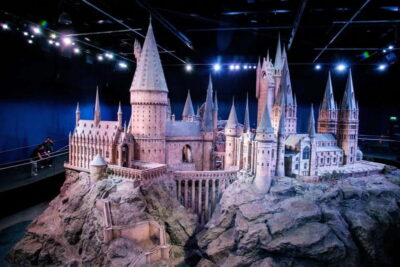
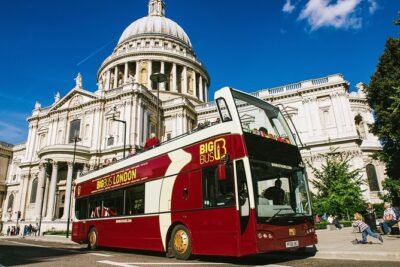
London Big Bus Hop-On Hop-Off Tour with Optional River Cruise
Read our review →
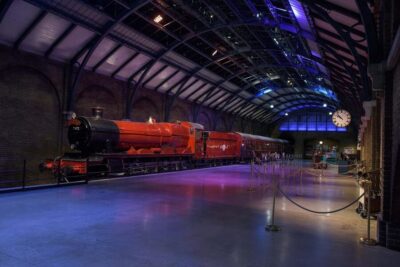
Warner Bros. Studio Harry Potter Tour with Transfers
Read our review →