
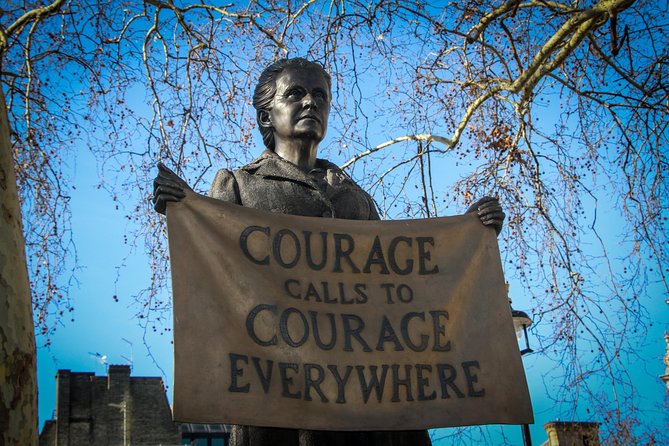
Reviewed · LONDON
The women of London
London’s grand story is often told through kings, generals, and prime ministers. This tour shifts the focus to the women who changed the city and the nation, from Florence Nightingale and Emmeline Pankhurst to Agatha Christie. You’ll connect famous landmarks with campaigns for political rights, wartime service, literature, and public life.
I especially like the small maximum of 10 people, which gives you room to ask questions, and the route itself, which uses familiar places such as Buckingham Palace and Parliament Square to tell a less familiar story. The main consideration is that the tour is conducted in Spanish or French, so it will not suit you if you need an English-language experience.
In This Review
- Key Points
- London’s Women Take Center Stage
- Meeting at the Diana Fountain
- Florence Nightingale at the Crimean War Memorial
- Millicent Garrett Fawcett and Parliament Square
- Emmeline Pankhurst and the WSPU
- The Women of World War II Memorial and Downing Street
- Trafalgar Square, World War I, and the Vote
- Edith Cavell’s Memorial and a Different Kind of Courage
- Agatha Christie on Cranbourn Street
- What the Small Group Changes
- Is $20.53 Good Value?
- Who Should Book This Tour?
- Should You Book The Women of London?
- FAQ
- What language is the tour offered in?
- How long does the tour last?
- What is the maximum group size?
- Where does the tour begin?
- What time does the tour start?
- Where does the tour finish?
- Can I cancel for a full refund?
Key Points
- A feminist reading of central London: See major landmarks through the work and struggles of women who helped shape Britain.
- A genuinely small group: The tour accepts no more than 10 people, making questions easier and the experience more personal.
- Carmen is a notable guide: Her Spanish-language tours have earned warm praise for her energy and strong command of the suffragette story.
- Eight focused stops: The route includes Buckingham Palace, Parliament Square, Trafalgar Square, and several memorials.
- Good value at $20.53: For roughly two and a half hours of guided context, the price is modest, especially if London is new to you.
- Simple central London logistics: Meet at the Diana fountain at 2:00 pm and finish near the Agatha Christie Memorial on Cranbourn Street.
London’s Women Take Center Stage
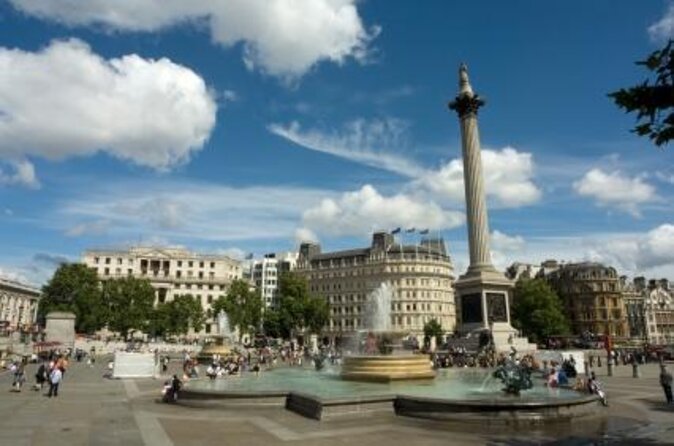
This is not a general sightseeing walk with a few female names added at the edges. The whole route asks you to look again at places you may already know.
Buckingham Palace becomes a starting point for thinking about monarchy and the women who occupied its most visible position. Parliament Square opens the story of women’s political rights. Trafalgar Square connects war, public protest, and voting rights. The final stops turn toward Edith Cavell and Agatha Christie, showing that the tour is not limited to suffrage.
That range is one of its strengths. You get political history, military service, nursing, literature, royal life, and the daily struggle for public recognition. I like tours that help you see a familiar city with new questions, and this one has a clear point of view without leaving the main sights behind.
The experience lasts about two hours and 30 minutes. At $20.53 per person, that works out to a low hourly cost for a guide-led look at central London. You are not paying for museum entry, transport, or a long formal lecture. You are paying for connections between places and people that you might miss on your own.
Other London favourites people book with this one:
- London: The London Eye Entry Ticket
★ 4.6 · 35,875 reviews - From London: Harry Potter Warner Bros Studio Tour
★ 4.7 · 26,588 reviews - London: Westminster to Greenwich River Thames Cruise
★ 4.5 · 22,836 reviews
Meeting at the Diana Fountain
The tour begins at the Constance Fund fountain of Diana, near Buckingham Palace, at 2:00 pm. The location puts you in one of London’s most recognizable areas from the first minute.
Buckingham Palace itself is listed as a 15-minute stop, and admission is not included. That is not a serious problem here because the tour’s purpose is the outdoor setting and the story connected with the Mall and the monarchy, not an interior visit.
You should arrive with enough time to find the fountain and prepare for an outdoor tour. The meeting point is in central London and near public transportation, but the supplied information does not give a precise station, route, or advice about luggage. Keep your arrangements simple and allow extra time if you are unfamiliar with the area.
The opening stop also sets the tone. Instead of treating the palace as only a royal photo opportunity, the guide uses it as a place to consider women’s public roles and the image of female power in Britain.
Florence Nightingale at the Crimean War Memorial
The second stop is the Crimean War Memorial, where the focus turns to Florence Nightingale. The visit lasts about 10 minutes and admission is free.
Nightingale is often reduced to a single image of a nurse carrying a lamp. A good guide can place her work in a wider setting, and this stop gives the tour a chance to consider women’s work during war and the way that service can reshape public life.
This is a short stop, so expect a focused explanation rather than a long presentation. That pacing helps the tour cover several women without spending the entire afternoon in one place.
For me, this is an important early change of subject. The route moves from the palace and royal symbolism to a woman known for practical service and reform. It reminds you that the tour is not only about famous campaigners. It also asks how women gained influence through medicine, organization, and work in difficult conditions.
Millicent Garrett Fawcett and Parliament Square
Parliament Square is the political heart of the route. The stop lasts about 20 minutes and centers on Millicent Garrett Fawcett and Black Friday.
This is likely to be one of the most substantial sections of the tour. Parliament Square gives the guide a strong setting for explaining the campaign for votes for women, the arguments used against female suffrage, and the difference between public persuasion and direct protest.
Fawcett represents an important part of that story. The tour does not treat the suffrage movement as a single united effort led by one person. By placing Fawcett here, it can show the range of tactics and personalities within the wider campaign.
Black Friday adds a more difficult edge. The name refers to a major confrontation connected with the suffrage movement, and the subject helps explain that gaining political rights was not a tidy or polite process. You should expect this stop to carry more political detail than the shorter memorial visits.
The square is also a useful place to ask questions. With no more than 10 people, you have a better chance of speaking directly with the guide instead of trying to catch an answer in a large crowd. That matters most for subjects such as Black Friday, where a short explanation can leave out important context.
Something completely different for your London days:
- Magical London: Harry Potter Guided Walking Tour
★ 4.7 · 22,044 reviews - London: Madame Tussauds London
★ 4.6 · 20,915 reviews - Stonehenge, Windsor Castle, and Bath from London
★ 4.5 · 18,662 reviews - London: Warner Bros. Studio Tour with Transfers
★ 4.7 · 17,586 reviews
Emmeline Pankhurst and the WSPU
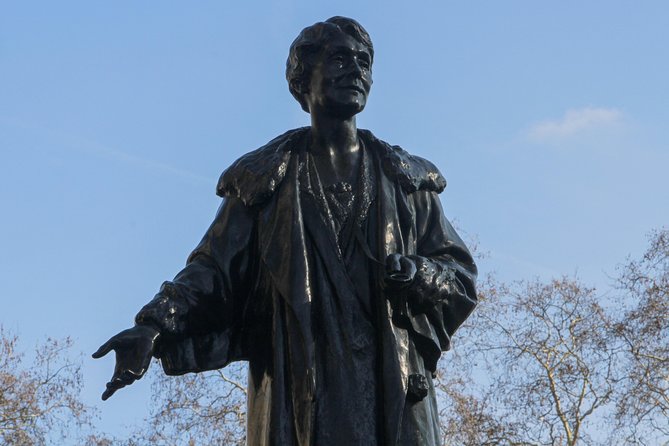
The Emmeline Pankhurst Memorial is the next major stop, with about 15 minutes devoted to Pankhurst and the Women’s Social and Political Union, known as the WSPU.
Pankhurst gives the tour a different face of the suffrage movement. Her organization became associated with more confrontational tactics, and the stop lets the guide set those methods beside the approach represented by Fawcett.
I like the way these two stops work together. You are not simply given a list of celebrated women. You are shown a movement with internal differences, competing methods, and a difficult political goal. That makes the story easier to understand and less likely to become a string of heroic names.
The information provided does not promise access to a museum or an indoor exhibition at this stop. Treat it as an outdoor explanation at the memorial. If you want a highly detailed academic treatment of the WSPU, two and a half hours cannot provide everything. If you want a clear introduction tied to the actual streets of London, the format makes sense.
Carmen has received particularly warm praise for her treatment of the suffragettes and for the enthusiasm she brings to the subject. If Carmen is your guide, you can expect the suffrage material to receive lively attention. The available information does not guarantee that she leads every departure, so check the language and guide details when booking.
The Women of World War II Memorial and Downing Street
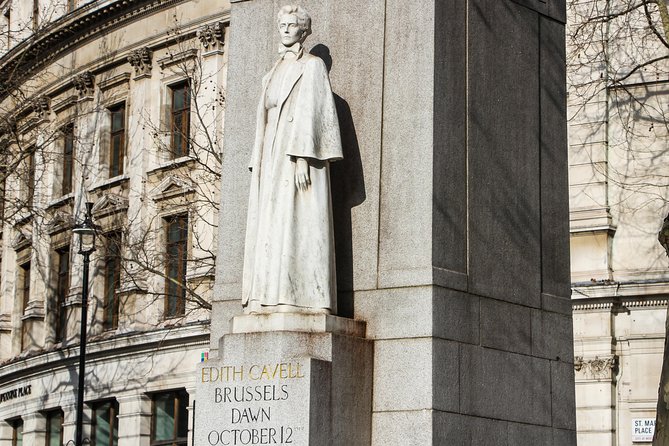
This is the shortest stop, at about five minutes. The focus is the Women of World War II Memorial, along with Downing Street and the suffragettes.
Do not expect a long lecture here. The stop works as a compact reminder that women’s public contribution did not end with the vote. War work, service, and the duties women took on during national crises form another part of the story.
The brief timing may be a drawback if wartime history is your main interest. It is enough to establish a connection, but not enough for an extensive account of the many roles women played during World War II.
Still, the location is well chosen. Downing Street is closely tied to British government, while the memorial gives the guide a way to discuss women’s work in a public setting. The tour keeps returning to that contrast between women’s actual contribution and the recognition they received.
Trafalgar Square, World War I, and the Vote
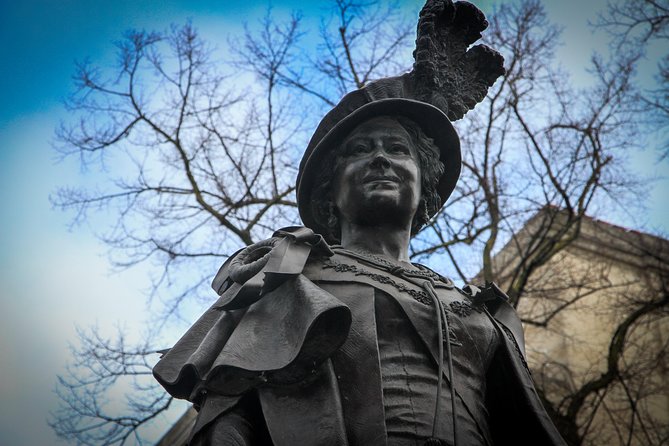
The Trafalgar Square stop lasts about 10 minutes and links World War I with votes for women.
The square is one of London’s most familiar public spaces, so this section continues the tour’s habit of using major landmarks as historical evidence. The guide can connect wartime service and social change, showing how national emergencies affected the debate over women’s political rights.
You may find this stop especially useful if you know the basic outline of suffrage but have not considered how war changed the political climate. The tour keeps the connection practical by placing the discussion in a square built for public gatherings and national ceremony.
Again, this is an outdoor stop with a fixed time. You will get a concise explanation rather than a full course on World War I or British voting law. That is a fair trade for seeing several parts of central London in one outing.
Edith Cavell’s Memorial and a Different Kind of Courage
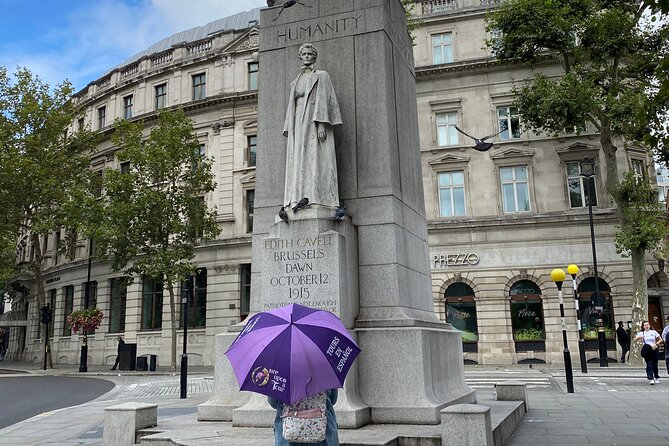
The Edith Cavell Memorial receives about five minutes. The stop focuses on Cavell’s life and gives the tour another way to discuss women’s wartime service.
Cavell’s story broadens the tour beyond organized political campaigns. Alongside Pankhurst and Fawcett, you encounter a woman remembered for her wartime actions and personal courage.
Because the stop is short, the guide will need to be selective. You should think of it as a sharp introduction to Cavell rather than a complete biography. Its value comes from the contrast with the preceding political sections and from the way the memorial preserves an individual story in the middle of the city.
The tour’s range is one of its better features. You move from queens to nurses, campaigners, wartime figures, and writers. That makes the experience suitable for you if you want a broad picture of women’s place in London, not only a tour about the suffrage movement.
Agatha Christie on Cranbourn Street
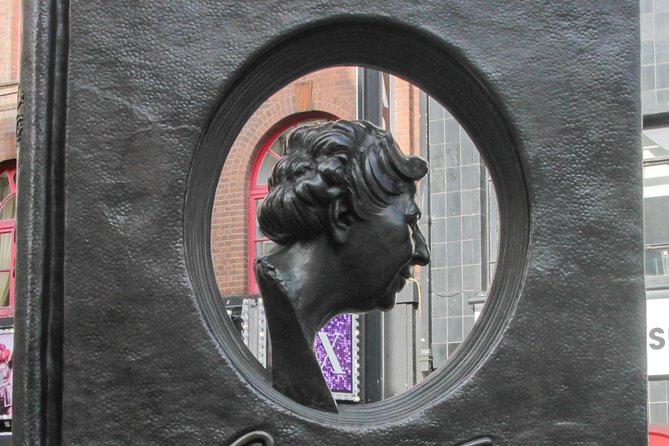
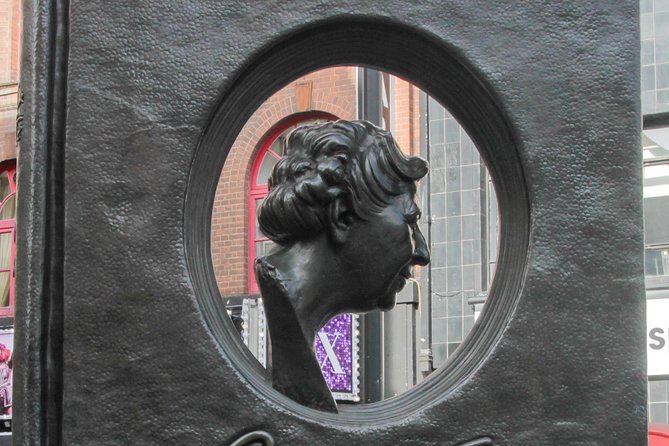
The final stop is the Agatha Christie Memorial on Cranbourn Street, where the tour ends. About 10 minutes are set aside for Christie’s life.
Ending with Christie gives the route a lighter but still significant change of direction. Her contribution was cultural rather than political or military, and her inclusion makes the point that women shaped London through literature and popular imagination as well as public campaigns.
The finish near the Agatha Christie Memorial is practical if you plan to continue in central London. The tour ends on Cranbourn Street, London WC2H 7AB, rather than returning you to the Buckingham Palace area. Plan your next stop from there.
This final section also helps prevent the tour from becoming too narrowly defined. The women here are not all remembered for the same reason, and that variety is exactly what gives the experience its useful perspective.
What the Small Group Changes
The maximum group size is 10. That is a meaningful feature, not just a line in the booking details.
Small groups make it easier to hear explanations in busy central areas and easier to ask about a name, event, or memorial that catches your attention. The tour specifically promises time for questions, and a group of 10 makes that promise more realistic than a large coach-style outing.
You should still expect an outdoor city experience. The tour visits public squares, memorials, a palace exterior, and streets in central London. The information says most people can participate and that the route is near public transportation, but it does not provide detailed accessibility notes, walking distance, seating, or restroom information.
The language choice is central. The tour is available in Spanish or French, and Carmen’s praised work appears in Spanish. If you speak one of those languages comfortably, the format could make complicated historical subjects easier to discuss. If you need English, choose another experience.
Is $20.53 Good Value?
At $20.53 per person, this is inexpensive for a two-and-a-half-hour guided experience in central London. The price is especially reasonable if you are already planning to see Buckingham Palace, Parliament Square, and Trafalgar Square, because the guide adds meaning without requiring paid admission at most stops.
Buckingham Palace admission is not included, but the other listed stops are free. You are not buying entry to a palace or museum. You are buying a themed route, an organized explanation, and a chance to ask questions in a small group.
Tips are optional and not included. The cancellation policy is flexible if your plans change: you can cancel up to 24 hours before the start for a full refund. Changes made less than 24 hours before the 2:00 pm start are not accepted, and the experience may be canceled if its minimum number of participants is not reached. In that case, you are offered another date or experience, or a full refund.
Who Should Book This Tour?
I would choose this tour if you have already seen London’s major sights and want a new way to read them. It is also a strong pick for anyone interested in women’s rights, political movements, nursing, wartime service, or British literature.
The experience suits you best if you can follow Spanish or French and prefer a focused outdoor tour to a formal museum visit. The small group and question time are useful for curious visitors who want more than a memorized list of dates.
You may want something else if you want to enter Buckingham Palace, spend a long time at each memorial, or receive the tour in English. The eight stops cover a lot of ground in 150 minutes, so the explanations must be selective.
Should You Book The Women of London?
Book it if you want London’s famous streets to tell a different story. The route gives proper attention to Millicent Garrett Fawcett, Emmeline Pankhurst, Florence Nightingale, Edith Cavell, Agatha Christie, and other women whose work helped shape Britain.
The strongest reason to go is the combination of Carmen’s praised suffragette focus, a group capped at 10, and a price of just $20.53. Confirm the tour language and guide details before paying, then meet at the Diana fountain at 2:00 pm ready for a concise, idea-filled look at central London.
FAQ
What language is the tour offered in?
The tour is available in Spanish or French. The provided information does not list an English-language option.
How long does the tour last?
The experience lasts approximately two hours and 30 minutes.
What is the maximum group size?
The tour has a maximum of 10 participants.
Where does the tour begin?
The meeting point is the Constance Fund fountain of Diana, London SW1A 1RD, near Buckingham Palace.
What time does the tour start?
The stated start time is 2:00 pm.
Where does the tour finish?
The tour ends at the Agatha Christie Memorial on Cranbourn Street, London WC2H 7AB.
Can I cancel for a full refund?
Yes. You can cancel at least 24 hours before the experience start time for a full refund. Cancellations or changes made less than 24 hours before the start are not accepted for a refund.
Latest arrivals on the London list
- Easy Access Tower of London Royal Secrets & Scandals Tour★ 5.0 · 3 reviews
- Stonehenge Special Access Guided Morning Tour from London★ 4.5 · 3 reviews
- Shoreditch & East London Walking Tour with a Local, Custom & Private★ 5.0 · 3 reviews
- Madame Tussauds London Fast Track and Champagne Experience★ 3.5 · 3 reviews
- Private transfer from London Heathrow Airport to Southampton★ 5.0 · 3 reviews
- London Private Brixton Tour with a Local – Culture & Stories★ 4.9 · 3 reviews
- Private Full Day Tour – Fast Track Tower of London and Lunch★ 4.6 · 3 reviews
- London Soho District – Guided Walking Tour 12 guests 2,5h★ 4.8 · 3 reviews