
Reviewed · LONDON
Turmoil, Templars, Oliver Twist: London’s Squalor & Splendor
London can change character in a single street. On this walk, Holborn’s grand buildings and grim prison stories sit close together, while Dickens, the Knights Templar, Freemasons, Saxons, and the Bow Street Runners all enter the tale. You finish near Blackfriars after about two hours and two and a half miles.
I like the strong mix of literary London and lesser-known institutions, especially the links to Fagin’s den and execution in Oliver Twist. I also like the small group limit of 15, which should make it easier to hear the guide and ask questions. The main consideration is pace: the route covers many subjects and stops in a short time, so this suits curious walkers more than visitors wanting long interior visits.
In This Review
- Key points to know before you book
- Why Holborn makes such a good history walk
- From Bow Street to Freemasons’ Hall
- Aldwych and the Royal Courts of Justice
- The Knights Templar and Temple Church
- The London Silver Vaults and the city of trade
- Staple Inn, Hatton Garden, and the city’s working past
- Holy Sepulchre Church and Oliver Twist
- The Old Bailey and the Bridewell Centre
- What the two-hour format really feels like
- Is $26 a fair price?
- Who should take this walk?
- Should you book Turmoil, Templars, Oliver Twist?
- FAQ
- Where does the tour begin?
- Where does the tour finish?
- How long is the walking tour?
- How far do you walk?
- What language is the tour in?
- How large is the group?
- Is the tour suitable for children?
- Does the tour include a guide?
- What places are covered?
- Can I cancel the booking?
Key points to know before you book
- Fagin, prisons, and Dickens: Connect the fictional world of Oliver Twist with real London locations.
- A two-hour historical walk: Cover roughly 2.5 miles from Covent Garden to Blackfriars.
- Big institutions in a compact route: See Freemasons’ Hall, Temple Church, the Royal Courts of Justice, and the Old Bailey.
- A small group of up to 15: The format is designed for conversation rather than a large crowd.
- An unusual silver stop: Learn about the world’s largest collection of retail silver at the London Silver Vaults.
- English storytelling: The live tour is given in English, with guides such as Tom bringing an energetic, approachable manner.
Why Holborn makes such a good history walk
Holborn is a useful part of London for seeing how power, crime, religion, trade, and storytelling have overlapped. The route does not stay with one period. Instead, you move from Saxon turmoil to the world of Dickens, then to legal buildings, religious foundations, secretive societies, and old prisons.
That variety is the tour’s main strength. You are not simply looking at one famous building after another. You are hearing how different Londons occupied the same ground. One stop may point toward a fictional criminal, while the next introduces the Knights Templar or the Freemasons.
The experience begins outside Covent Garden Station. That is practical for a first-time visitor, since the station is easy to find and the meeting point is clearly defined: look for the guide holding a Historic London Tours sign outside the station exit.
The walk ends at 36 to 37 New Bridge Street, near Blackfriars Station. Since the start and finish are in different parts of central London, this works well as a way to connect an afternoon in Covent Garden with the City or the South Bank. You should not expect to return to the starting point.
Other London favourites people book with this one:
- London: The London Eye Entry Ticket
★ 4.6 · 35,875 reviews - From London: Harry Potter Warner Bros Studio Tour
★ 4.7 · 26,588 reviews - London: Westminster to Greenwich River Thames Cruise
★ 4.5 · 22,836 reviews
From Bow Street to Freemasons’ Hall
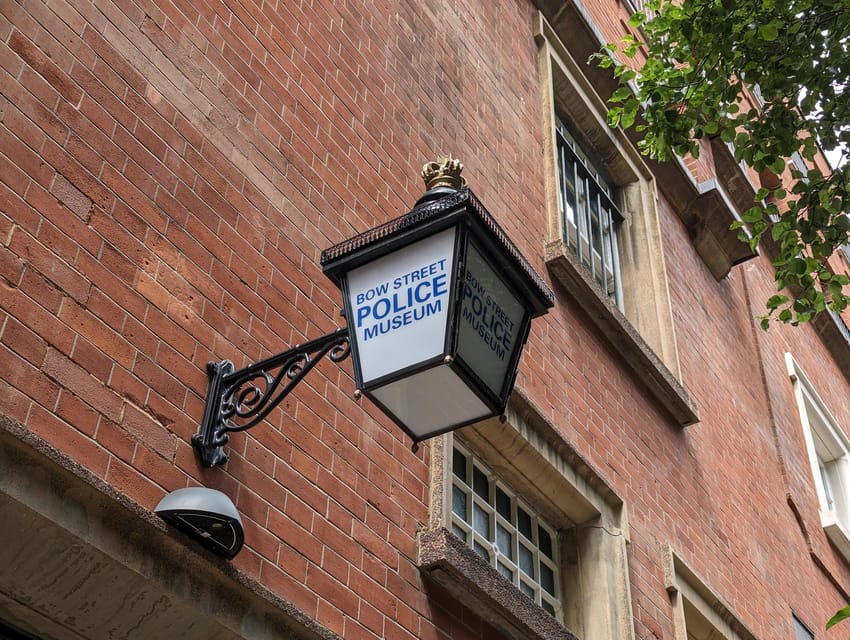
The first listed stop is the Bow Street Police Museum, where the tour spends about five minutes. The Bow Street name is tied to early policing and the Bow Street Runners, one of the groups that helped enforce order in London before the modern police system took shape.
This is a good early stop because it sets up the tour’s interest in crime and justice. You will hear about the people and institutions that tried to control a city known for sharp class divisions and rough street life. Five minutes is enough for an introduction, but not for a long museum visit, so think of this as a guided look and story stop rather than a full museum experience.
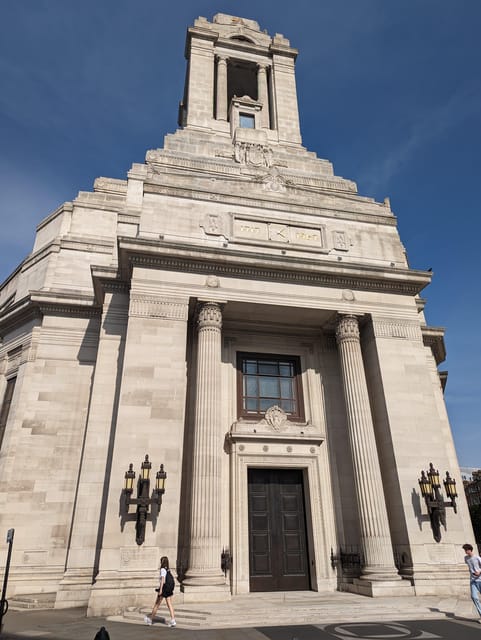
Next comes Freemasons’ Hall. The hall is one of the route’s grander sights, and it brings the tour away from courts and crime toward ceremony, architecture, and the influence of the Freemasons in London life.
The short stop is useful for getting the building into context. You may see the splendour of the hall and hear why it matters, but the schedule does not promise an extended interior tour. If ornate architecture is your main interest, you may wish the stop were longer. If you like a fast-moving walk with several themes, the brief visit keeps things moving.
Aldwych and the Royal Courts of Justice
Aldwych adds another layer to the walk. The area is included as a guided stop, and the guide uses it to continue the story of London’s changing streets and institutions.
The itinerary gives about five minutes here, so the value comes from the explanation rather than a long stay. I find that helpful on a route like this. A guide can point out a place that might otherwise look like an ordinary London street and explain why it belongs in the city’s story.
The Royal Courts of Justice then brings the subject of law into full view. Its presence helps you understand the contrast running through the tour: legal power and public order on one side, crime, punishment, and poverty on the other.
You should expect a short guided visit at this stop, not a court proceeding or a detailed legal history. The building is part of the walking experience, and the guide gives it meaning within the wider route. This is one reason the tour is better suited to people who enjoy historical connections than to those seeking long photo sessions at each site.
The Knights Templar and Temple Church
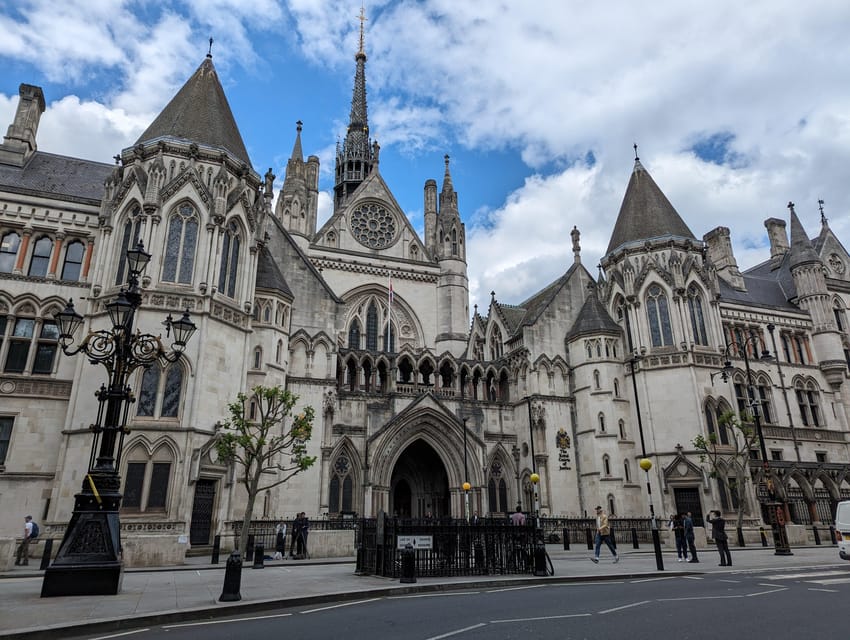
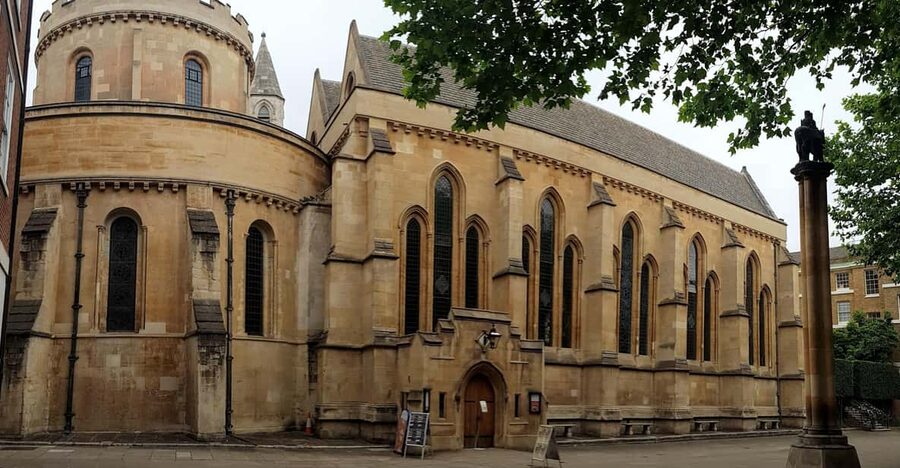
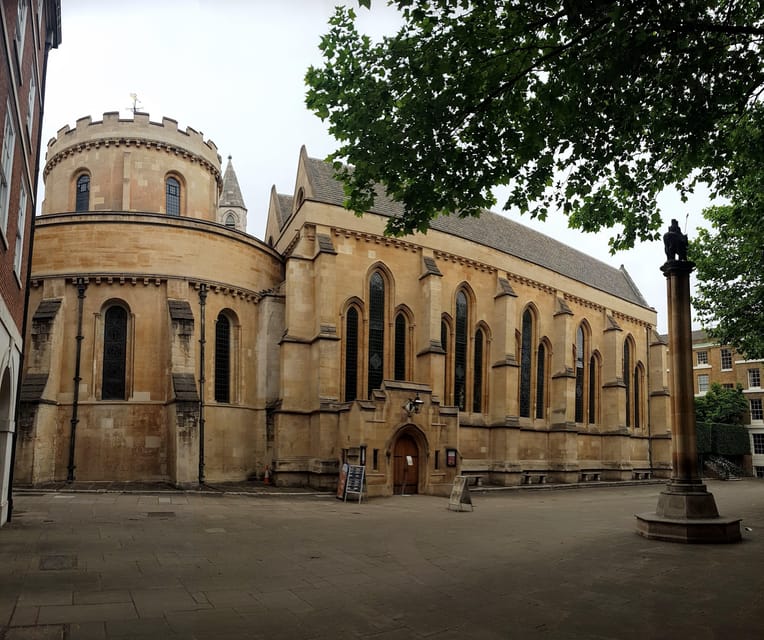
Temple Church is among the most distinctive stops. The church is linked with the Knights Templar headquarters, giving you a direct connection to one of medieval Europe’s most famous military and religious orders.
The tour uses the site to move into another period of London’s past. You have already heard about policing, crime, and modern legal institutions. Here, the focus shifts to medieval power and the role of the Templars.
Again, the stop is listed as roughly five minutes. That makes it a compact introduction rather than a full study of the church or the Templars. If you have a special interest in medieval London, you may want to return independently for a longer visit when possible. During the walk, though, the brief stop gives welcome variety and keeps the larger story moving.
I like this point in the route because it shows how quickly London’s historical layers sit beside one another. The same walk can take you from the beginnings of organized policing to a medieval headquarters and then back toward commerce and law.
Something completely different for your London days:
- Magical London: Harry Potter Guided Walking Tour
★ 4.7 · 22,044 reviews - London: Madame Tussauds London
★ 4.6 · 20,915 reviews - Stonehenge, Windsor Castle, and Bath from London
★ 4.5 · 18,662 reviews - London: Warner Bros. Studio Tour with Transfers
★ 4.7 · 17,586 reviews
The London Silver Vaults and the city of trade
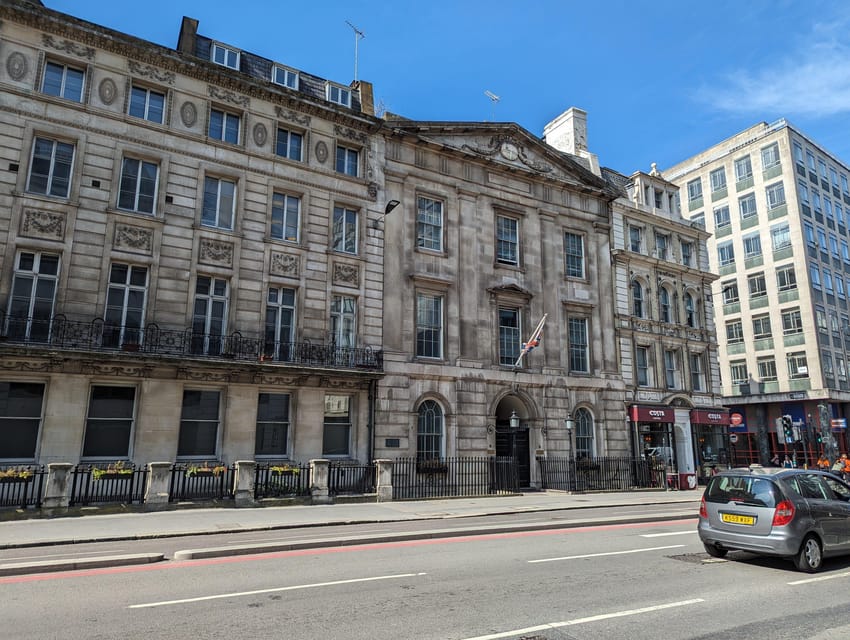
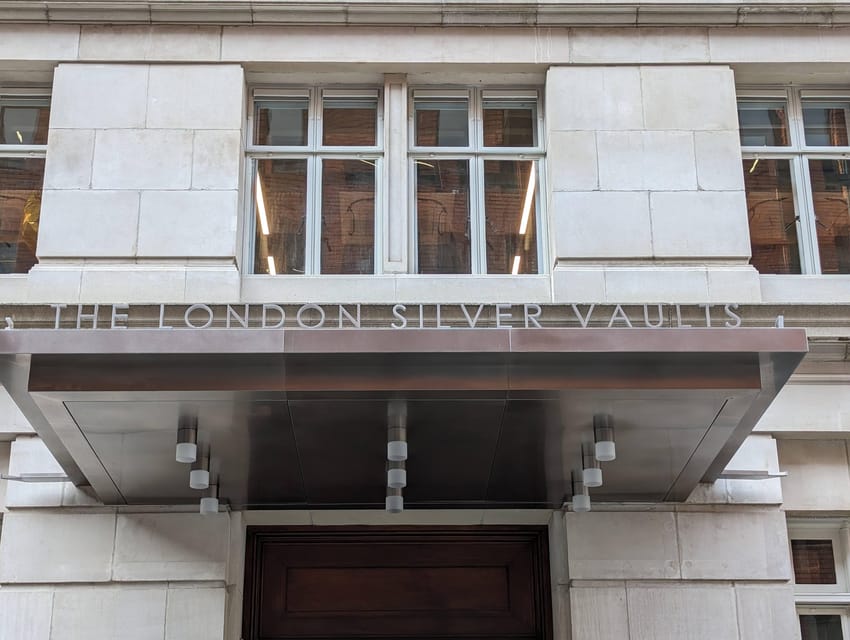
The London Silver Vaults is one of the route’s more unusual stops. The tour introduces you to what is described as the world’s largest collection of retail silver.
That detail alone gives the walk a subject most general London tours leave out. You are not just hearing about kings, churches, and famous writers. You are also seeing how specialist trade forms part of the city’s identity.
The stop is guided and lasts about five minutes. The short timing means you should not expect to browse every silver dealer or shop for a purchase during the tour. Instead, the guide draws your attention to this remarkable collection and explains why it belongs in a story about London’s wealth and commerce.
This is also a useful stop for anyone who likes practical discoveries. You may pass through the area later and recognize it as more than another central London street. The experience adds a small but memorable piece of commercial London to a route otherwise dominated by crime, law, and historic organizations.
Staple Inn, Hatton Garden, and the city’s working past
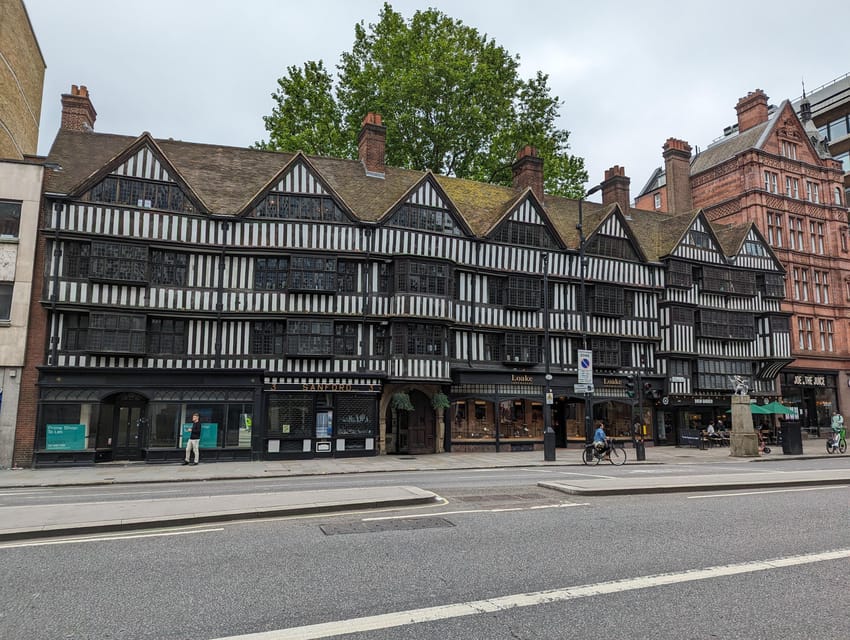
Staple Inn and Hatton Garden continue the walk through Holborn’s changing character. The tour gives each place its own guided stop, with roughly five minutes at each.
Staple Inn helps maintain the sense of old London within a modern central district. Its inclusion fits the tour’s broader purpose: to show that history is not confined to a single museum or monument. It can appear in a building front, a narrow passage, or a street name.
Hatton Garden adds another commercial note. Along with the London Silver Vaults, it reminds you that Holborn has long been connected with specialist trade and working life. The guide’s role matters here because the streets may not explain themselves. A good story can turn a quick look into a useful piece of London geography.
These stops are best approached with realistic expectations. The tour moves quickly, and five minutes does not allow time to explore every corner. You will get the guide’s interpretation and a chance to see the location as part of the route. If you want detailed architectural study, plan extra time before or after the walk.
Holy Sepulchre Church and Oliver Twist
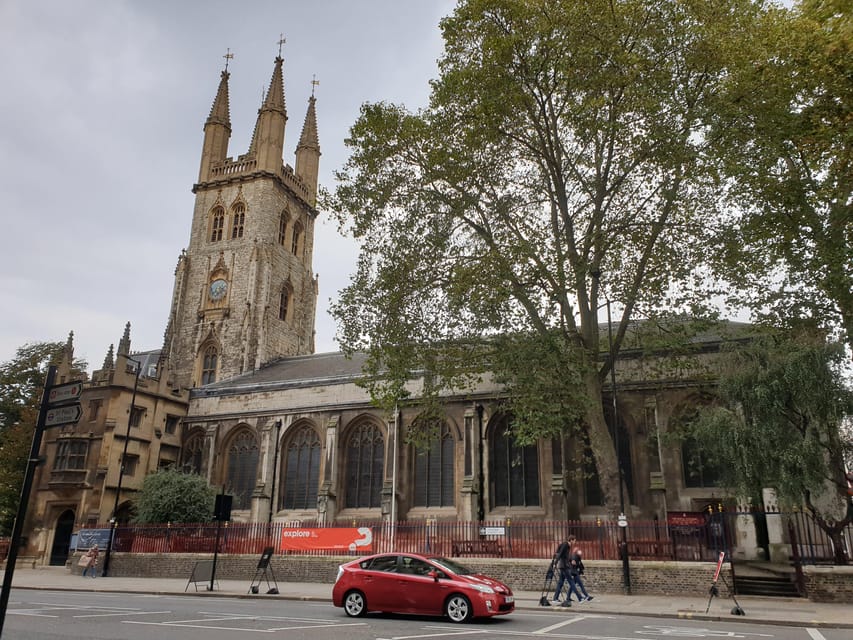
Holy Sepulchre Church is where the route returns to the darker side of the city. The church is included alongside stories of crime, punishment, and the world Charles Dickens used in Oliver Twist.
One of the strongest hooks is the connection to Fagin’s den and execution. These are not simply general Dickens references. The walk identifies locations associated with the fictional criminal underworld of the novel, helping you place the story within actual London streets.
That makes this section especially appealing if you have read Oliver Twist or seen one of its adaptations. You can listen for the gap between Dickens’s fictional world and the real places that helped shape the atmosphere of the book. The tour does not turn into a literary lecture, since many other subjects are covered, but the Dickens material gives the route a strong human focus.
Holy Sepulchre Church also supports the tour’s interest in London’s relationship with death and punishment. The subject matter can be grim, but it is handled as part of the city’s past rather than as empty shock value. If you prefer light sightseeing, this may feel intense. If you want a less polished view of London, it is one of the most compelling sections.
The Old Bailey and the Bridewell Centre
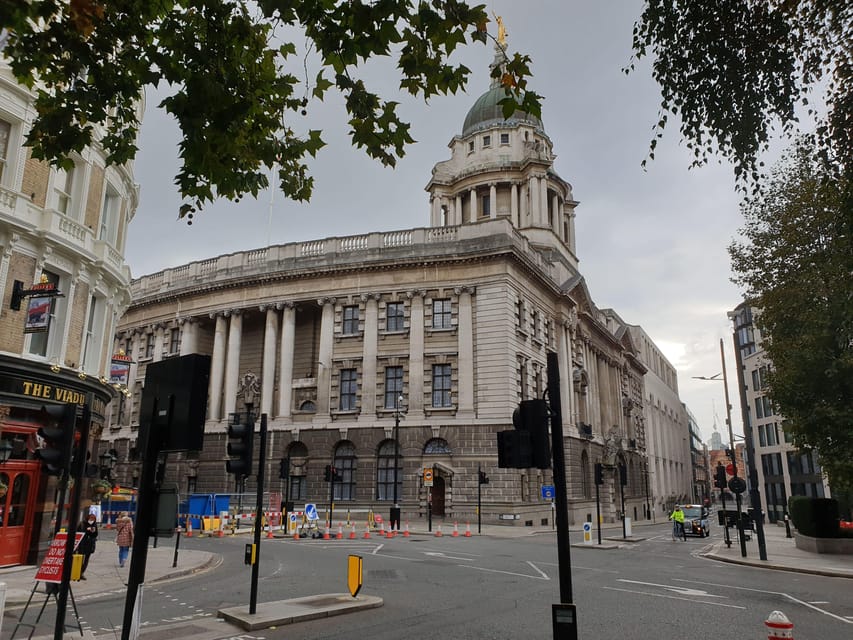
The Old Bailey brings the route back to the formal machinery of justice. It is one of London’s best-known criminal courts, and its place on the walk fits naturally with the earlier references to Bow Street and the city’s notorious prisons.
The guide helps connect these separate places. You hear about the people accused of crimes, the authorities who pursued them, the courts that judged them, and the prisons that held them. That chain gives the walking tour more shape than a collection of unrelated facts.
The Bridewell Centre adds another prison-related stop. The tour also covers a couple of London’s most notorious prisons, making punishment one of its recurring themes.
The five-minute format keeps the material moving, but it also means you should listen closely. There is no promise of a long interior visit or a detailed exhibition at each stop. The reward is the overall pattern: London’s grand civic buildings and its harsh systems of punishment developed side by side.
For me, this is where the tour’s title makes sense. Squalor and splendour are not separate parts of the city. They are part of the same story, often only a short walk apart.
What the two-hour format really feels like
The advertised duration is about two hours, covering roughly two and a half miles. That is a moderate distance, but the route includes many stops and a steady supply of stories.
You should wear comfortable shoes and arrive ready to walk. The tour begins at Covent Garden Station and finishes near Blackfriars Station, so allow enough time afterward to continue your day from the other end of the route.
The small group limit is important. With no more than 15 people, the guide has a better chance of being heard on city streets, and you can ask questions without having to compete with a crowd. Several recent ratings gave the experience five stars, with particular praise for its interesting, informative storytelling and the guide’s willingness to answer questions.
Tom is one guide specifically praised for making the tour both interesting and fun. The provider may assign a different guide, but the format depends heavily on this personal storytelling. This is not an audio guide or a self-guided route. You are paying for the live explanation and the links between the places.
The five-minute stop pattern is both an advantage and a limitation. You see a lot in two hours, but no single site receives much time. I would choose this walk for breadth, atmosphere, and connections. I would not choose it as a substitute for a full visit to Temple Church, Freemasons’ Hall, the Old Bailey, or any museum along the way.
Is $26 a fair price?
At $26 per person, the tour offers a reasonably priced way to spend two hours in central London. The cost works out well if you value a live guide who can combine several subjects that would otherwise require separate research.
You are getting more than a standard landmark walk. The route includes literary history, medieval religion, early policing, prisons, courts, Freemasons, specialist retail silver, and the Saxon period. That range gives the experience good value for anyone who wants a broad introduction to Holborn.
The price is less compelling if you mainly want entry into major buildings or long guided visits inside them. The listed stops are short, and the central product is the walking commentary. You are buying context, not a series of extended admissions.
Booking is flexible, with cancellation allowed up to 24 hours before the start for a full refund. You can also reserve and pay later. Children under 13 are not permitted, so the experience is aimed at older children and adults.
Who should take this walk?
I would recommend it to you if you enjoy London’s less polished stories and like moving between several historical periods in one outing. It is especially suitable for readers of Oliver Twist, people interested in crime and justice, and visitors who want more than the usual royal and museum circuit.
It also suits a return visit to London. If you have already seen the major sights, the London Silver Vaults, Bow Street, Staple Inn, and the prison stories offer a different way to understand the city.
The tour may not suit young children, since those under 13 cannot join and the subject matter includes executions, prisons, and crime. It may also disappoint anyone expecting a slow architectural tour with plenty of time inside each building.
For the best experience, read or watch a little Oliver Twist beforehand, arrive at Covent Garden Station a few minutes early, and keep your schedule flexible at the end. The walk finishes near Blackfriars rather than returning to Covent Garden.
Should you book Turmoil, Templars, Oliver Twist?
Book this tour if you want a compact, story-led walk through London’s contradictions. The strongest reasons are the Dickens connections, the Knights Templar and Freemasons material, the prison history, and the chance to hear about the unusual London Silver Vaults.
Skip it if you need long visits inside each landmark or prefer a relaxed route with only two or three major sights. At $26, it is a good buy for a small-group overview of Holborn, provided you understand that the guide’s stories, not extended admissions, are the main event.
FAQ
Where does the tour begin?
The tour begins outside the exit of Covent Garden Station. The guide will be holding a Historic London Tours sign.
Where does the tour finish?
It finishes at 36 to 37 New Bridge Street, London EC4V 6BJ, near Blackfriars Station.
How long is the walking tour?
The tour takes about two hours.
How far do you walk?
The total distance is about two and a half miles.
What language is the tour in?
The live guided tour is given in English.
How large is the group?
Ticket sales are limited to 15 attendees.
Is the tour suitable for children?
Children under 13 are not permitted to join the tour.
Does the tour include a guide?
Yes. A live guide leads the walking tour.
What places are covered?
Stops include Bow Street Police Museum, Freemasons’ Hall, Aldwych, the Royal Courts of Justice, Temple Church, the London Silver Vaults, Staple Inn, Hatton Garden, Holy Sepulchre Church, the Old Bailey, and the Bridewell Centre.
Can I cancel the booking?
You can cancel up to 24 hours in advance for a full refund. You can also reserve now and pay later.
Latest arrivals on the London list
- Stonehenge Special Access Guided Morning Tour from London★ 4.5 · 3 reviews
- Easy Access Tower of London Royal Secrets & Scandals Tour★ 5.0 · 3 reviews
- Shoreditch & East London Walking Tour with a Local, Custom & Private★ 5.0 · 3 reviews
- Madame Tussauds London Fast Track and Champagne Experience★ 3.5 · 3 reviews
- London Private Brixton Tour with a Local – Culture & Stories★ 4.9 · 3 reviews
- Private Full Day Tour – Fast Track Tower of London and Lunch★ 4.6 · 3 reviews
- Private transfer from London Heathrow Airport to Southampton★ 5.0 · 3 reviews
- London Soho District – Guided Walking Tour 12 guests 2,5h★ 4.8 · 3 reviews