
Reviewed · LONDON
Booze, Brothels & the Bard: London’s Bawdy Borough
Southwark tells a different story of London. For centuries, this patch south of the Thames sat outside the City of London’s control, making it a handy place for brothels, prisons, theatres, and other disreputable business. This two-hour walk follows that rough-edged past through Borough and Bankside, mixing medieval scandal with Shakespeare, Charles Dickens, and a few delightfully odd characters.
I like two things right away. First, the route links small, easy-to-miss remains with major sights such as Borough Market and Shakespeare’s Globe, so you see more than the usual postcard London. Second, the group is capped at 15 people, which gives the guide room to answer questions. Tom Currie is especially good at keeping the talk clear, brisk, and funny.
The main drawback is time. Two hours and roughly two miles gives you a strong introduction, but most stops are brief. You see the outside of several sites rather than touring their interiors, and the Globe itself requires a separate ticket if you want to go inside.
In This Review
- Key points to know before booking
- Why Southwark earned its bawdy reputation
- Marshalsea Prison and the memory of confinement
- Crossbones Garden and the Winchester Geese
- The Hop Exchange and the George Inn
- Borough Market, the oldest living part of the route
- The Old Operating Theatre and Southwark Cathedral
- London Bridge and the medieval Winchester Palace
- The Clink and Southwark’s prison story
- From the original Globe site to Shakespeare’s theatre
- What the guide adds to the walk
- Timing, price, and practical value
- Who will enjoy this Southwark walk
- Should you book Booze, Brothels & the Bard?
- FAQ
- Where does the tour begin?
- Where does the tour finish?
- How long is the walking route?
- How long does the tour last?
- What language is the tour in?
- How many people can join the tour?
- Are children allowed to join?
- Does the ticket include entry to Shakespeare’s Globe?
- Can I cancel the booking?
Key points to know before booking
- A bawdy history lesson: Learn why Southwark became London’s notorious entertainment district outside City jurisdiction.
- Thirteen compact stops: The route includes Marshalsea Prison, Crossbones Garden, Borough Market, Southwark Cathedral, Winchester Palace, the Clink, and both Globe locations.
- A small walking group: Attendance is limited to 15 people, a useful advantage on crowded Borough High Street.
- A two-mile route: The walk begins outside Borough Station and finishes near Shakespeare’s Globe, close to London Bridge Station.
- A guide-led experience: The tour is in English, and Tom Currie has received especially strong praise for his humor, clarity, and willingness to answer questions.
- Best for adults and older teens: Children under 13 are not permitted, and the subject matter includes prostitution, crime, prisons, and public punishment.
Why Southwark earned its bawdy reputation
The tour begins outside Borough Station on Borough High Street. Look for the guide holding a Historic London Tours sign. This is a practical meeting point, with the route then heading toward the old Southwark district.
Your guide sets up the central idea early: Southwark was close to the City of London but outside its jurisdiction. That legal boundary mattered. Businesses and activities restricted inside the City could operate more freely here, and the district became associated with drinking, prostitution, prisons, theatres, and rough entertainment.
The story reaches back more than a thousand years. The tour also connects Southwark’s older reputation to the Roman period, when prostitution was already part of the area’s history. You are not simply being shown old buildings. You are being shown why this particular part of London developed such a different character from the respectable City across the river.
That larger explanation is what makes the walk worthwhile. Without a guide, you could pass several of these places without noticing them. With one, a small wall or remnant becomes part of a much bigger story.
Other London favourites people book with this one:
- London: The London Eye Entry Ticket
★ 4.6 · 35,875 reviews - From London: Harry Potter Warner Bros Studio Tour
★ 4.7 · 26,588 reviews - London: Westminster to Greenwich River Thames Cruise
★ 4.5 · 22,836 reviews
Marshalsea Prison and the memory of confinement
The first major stop is the site of Marshalsea Prison. Only parts of the former prison remain, but that is enough to give the stop real weight. You learn about one of Southwark’s two most notorious prisons and how confinement shaped the district.
This stop has an important literary connection. Charles Dickens knew the area well, and Marshalsea Prison is tied to his family history and writing. The tour uses Dickens to connect the physical remains with the human cost of debt and imprisonment.
You should expect a short guided visit rather than entry into a full prison museum. The listed stop lasts around five minutes, so listen closely. The value comes from the explanation, not from a large collection of objects or preserved rooms.
Crossbones Garden and the Winchester Geese
Next comes Crossbones Garden, a memorial site associated with the area’s medieval prostitutes, known as the Winchester Geese. The name comes from the Bishop of Winchester, whose authority included the medieval liberties of Southwark.
This is one of the more atmospheric stops on the route. It helps explain how prostitution was tolerated, controlled, and connected to powerful institutions. The subject is not treated as a side note. It is central to the story of why Southwark became known as London’s Bawdy Borough.
The stop is brief, but the garden gives the history a human scale. You are not only hearing about laws and bishops. You are being reminded of the people who lived and worked in this difficult part of the city.
The Hop Exchange and the George Inn
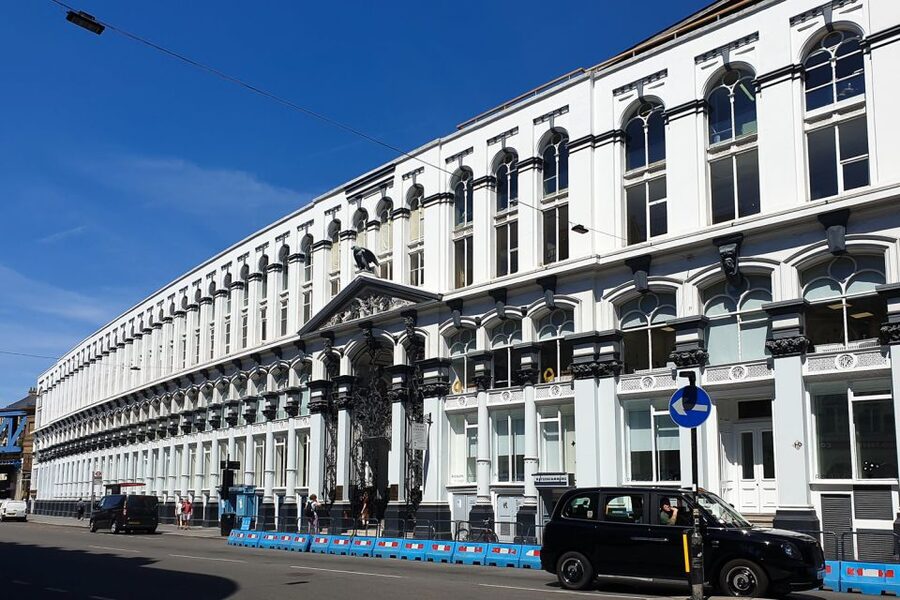
The Hop Exchange brings in the story of trade and drinking. Its name points to the old hop trade, which supplied breweries. In a tour built around booze, brothels, and theatre, this is a useful pause from prisons and prostitution.
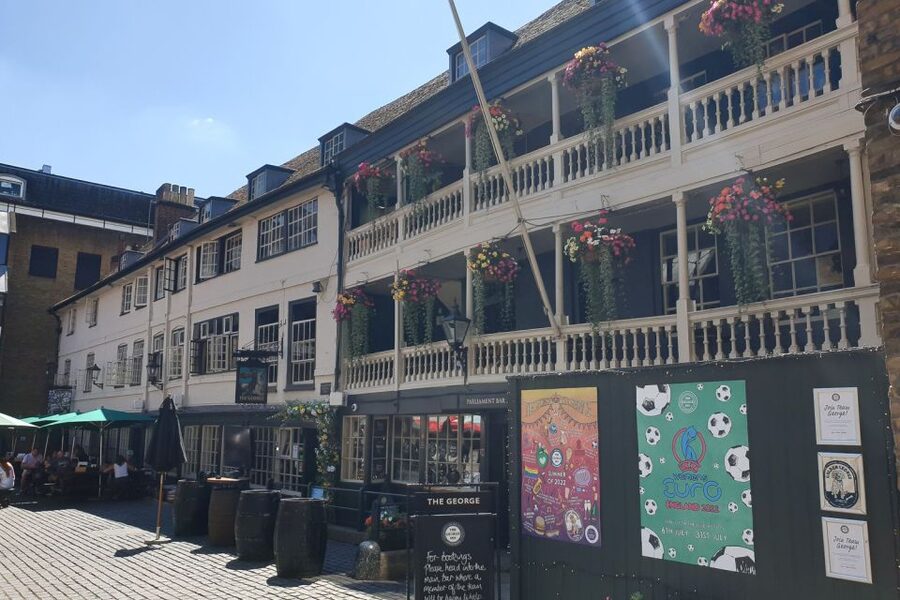
The guide then takes you to the George Inn, one of the area’s most famous historic pubs. The stop connects Southwark’s drinking culture with its role as a major arrival point for people coming into London.
The George also fits neatly into the Shakespeare and Dickens threads. It is the kind of place that helps you picture the crowded old district, with inns, travellers, performers, traders, and questionable entertainment packed close together.
You will not be lingering for a drink as part of the tour. The stop is about the building and its place in the story, so plan to return later if you want to explore it at your own pace.
Something completely different for your London days:
- Magical London: Harry Potter Guided Walking Tour
★ 4.7 · 22,044 reviews - London: Madame Tussauds London
★ 4.6 · 20,915 reviews - Stonehenge, Windsor Castle, and Bath from London
★ 4.5 · 18,662 reviews - London: Warner Bros. Studio Tour with Transfers
★ 4.7 · 17,586 reviews
Borough Market, the oldest living part of the route
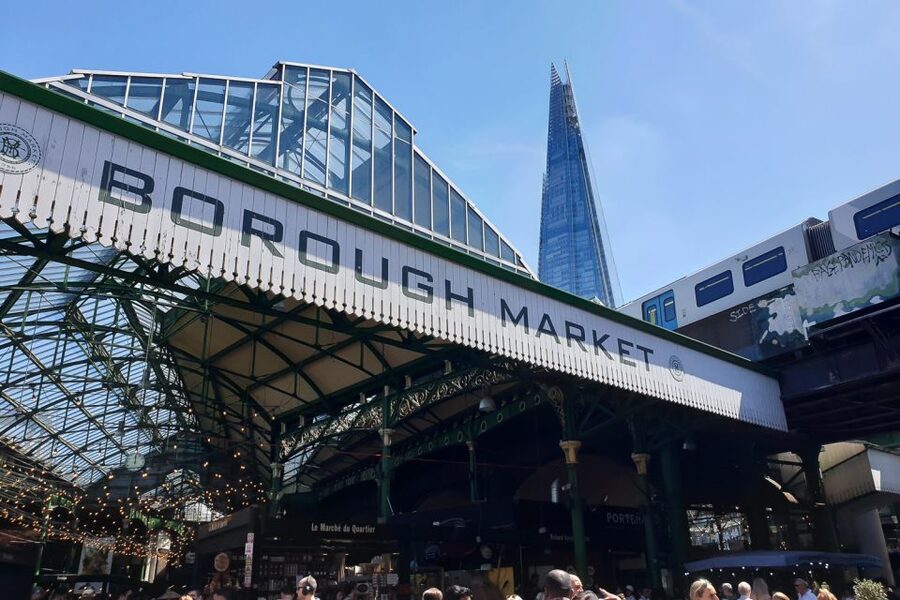
Borough Market is one of the most useful stops for understanding how Southwark has changed without losing its role as a place of commerce. It is described as London’s largest and oldest market, and the route passes through it after the older prison and pub sites.
Expect crowds, particularly on a Sunday. One participant found the market very busy but still enjoyed being guided through it. That is a fair warning: you may need to stay close to the guide, especially around crowded stalls and narrow passages.
The market is also the point where the tour shifts from remains and historical traces to a place still operating as a major public market. I like that contrast. You are not walking through a sealed historic zone. You are seeing an active part of Southwark that has continued to serve the public over a very long period.
There is no indication that food or drink is included, so treat the market as a place to look, listen, and make a note for a later meal.
The Old Operating Theatre and Southwark Cathedral
The Old Operating Theatre Museum and Herb Garret adds medicine to the tour’s list of unsettling subjects. The stop broadens the story beyond crime and entertainment, showing another side of old Southwark’s public life.
The tour then reaches Southwark Cathedral. The building’s antiquity is a key part of the guide’s talk, and this is one stop worth returning to if you want to see the interior properly. The walking tour gives you an introduction, but it does not replace a separate visit inside.
That distinction matters. One participant went back after the tour because the cathedral’s age had sparked further interest. This is a good sign of the route’s value: it can point you toward places you might otherwise skip.
The cathedral also offers a useful change of mood. After the stories of brothels, prisons, and pubs, you get a reminder that Southwark has long included religious and civic institutions as well.
London Bridge and the medieval Winchester Palace
At London Bridge, the tour reaches one of the area’s defining crossings. The bridge connects Southwark to the City and helps explain why this district mattered so much. People, goods, money, and trouble all moved across the river here.
The next stop is Winchester Palace, or what remains of the medieval palace. The ruins are not a complete palace complex, so keep your expectations sensible. What you see is a fragment, but the fragment is important because it reveals the influence and wealth of the Bishop of Winchester in Southwark.
This is one of the strongest examples of the tour’s method. A few surviving stones can be easy to overlook. The guide supplies the missing context, showing how a powerful medieval institution could sit beside prisons, markets, theatres, and brothels.
The Clink and Southwark’s prison story
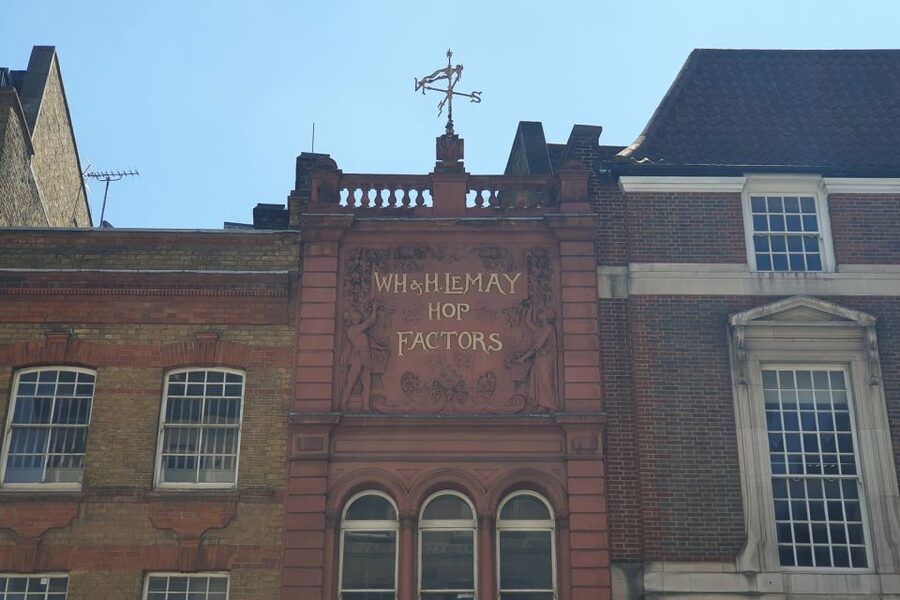
The Clink Prison Museum is the second notorious prison on the route. Unlike Marshalsea, it is presented as a museum, but the walking tour does not include a separate museum visit. You see the location and learn how the prison fits into Southwark’s darker reputation.
The Clink is also where the tour’s title makes sense as a whole. Booze, brothels, and the bard were not separate themes. They operated within the same small district, alongside law courts, religious power, trade, and punishment.
The tour is especially useful if you enjoy history that is not polished for display. Southwark’s past includes poverty, crime, sexual commerce, debt, and public disorder. The guide presents that side of London without pretending it was genteel.
From the original Globe site to Shakespeare’s theatre
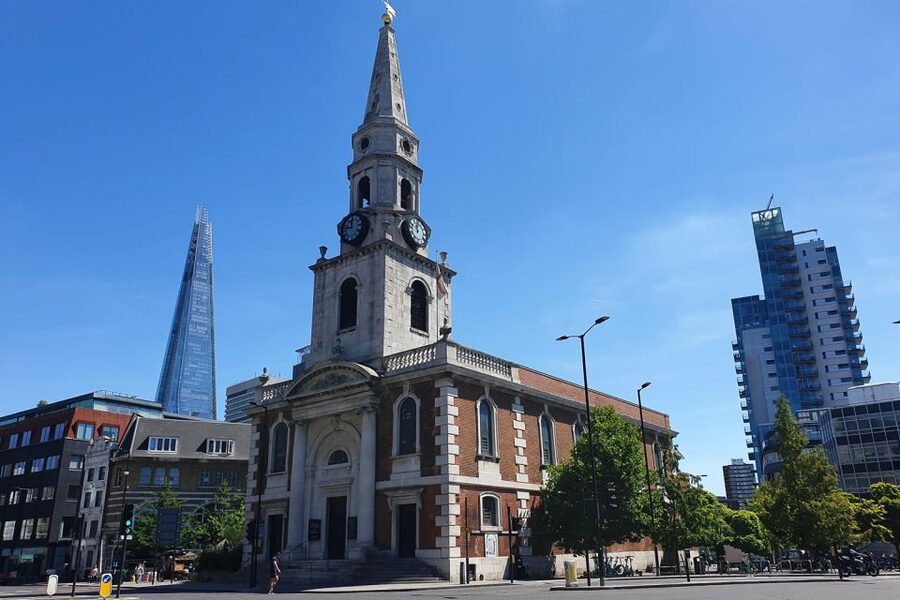
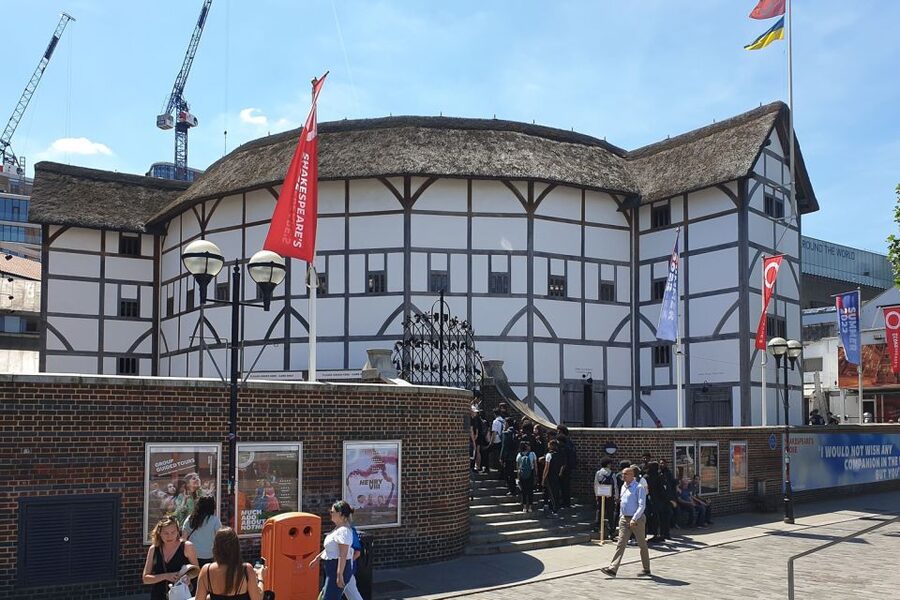
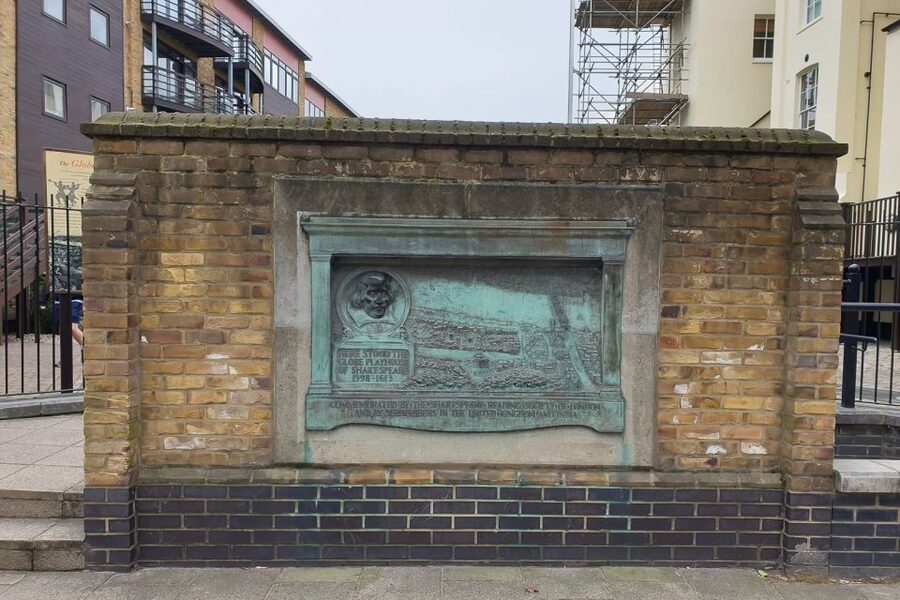
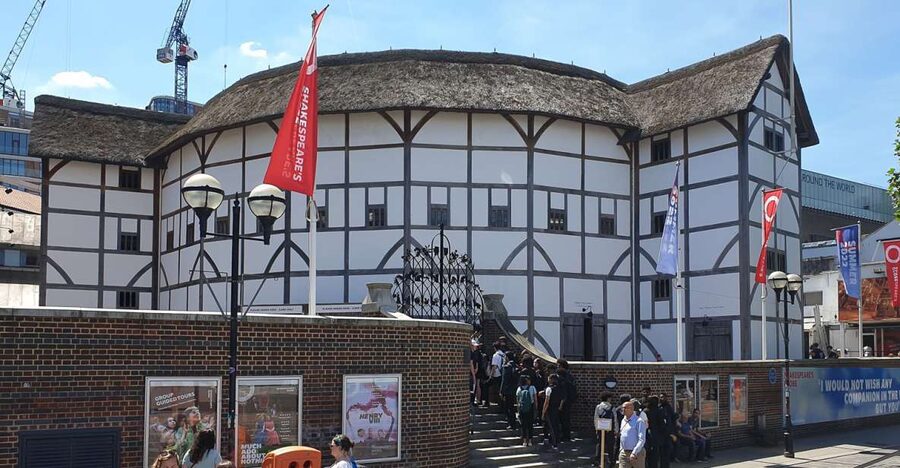
The final stretch follows Shakespeare. You visit the original site of the Globe Theatre and then the modern Shakespeare’s Globe near the river.
This is the payoff for anyone interested in the Bard, but it is also a lesson in how theatre depended on Southwark’s permissive setting. The theatres were outside the City, in the same general area known for drinking and prostitution. That connection gives Shakespeare a stronger local setting than a simple theatre visit can provide.
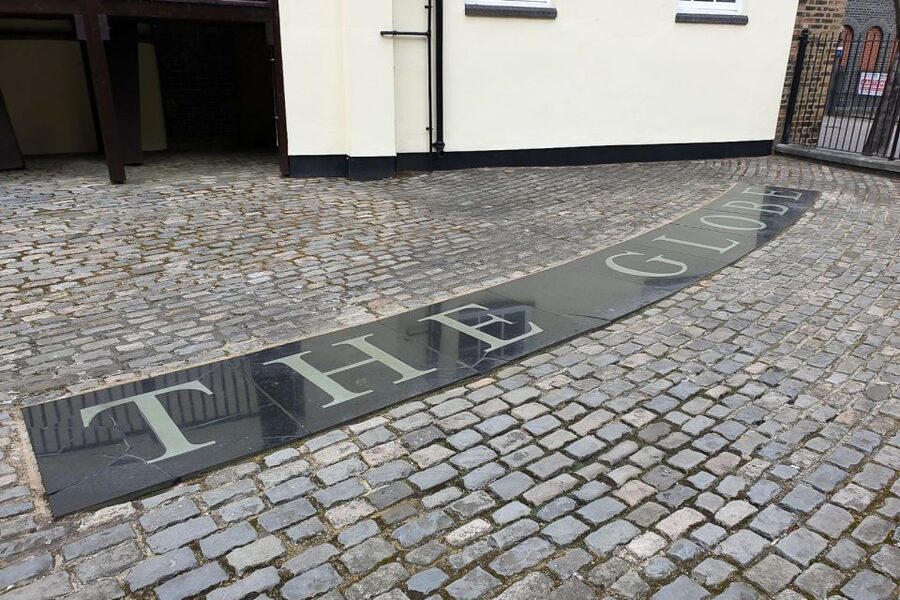
The original site is a historical marker rather than a complete theatre. The modern Globe is the visual finish, with the guide explaining how the old and new locations relate to one another.
You should know that the walking tour does not include time inside the Globe. One participant wanted more time there, then discovered that an interior visit required a separate ticket. If the Globe is a main reason for booking, allow extra time after the walk and arrange that visit separately.
What the guide adds to the walk
A good guide matters on a route like this because many stops are fragments. Tom Currie is repeatedly praised for being friendly, clear, and confident with questions. His approach appears to be conversational rather than stiff, with enough detail to make the story memorable without turning every stop into a lecture.
One useful touch is a link provided after the tour, allowing you to read through the information again later. That matters because the route covers a lot in two hours: Roman-era prostitution, medieval liberties, prisons, Dickens, markets, religious power, London Bridge, and Shakespeare.
The group limit of 15 also helps. Southwark Market and Borough High Street can be crowded, so a small party is easier to keep together. A compact group also makes it more practical to ask questions and hear the guide at each stop.
The tour is in English only. If you are comfortable following a fast-moving historical explanation in English, that should work well. If you need frequent translation or long pauses, the pace may feel demanding.
Timing, price, and practical value
At $26 per person, the tour offers solid value if you want context rather than paid entry to a single attraction. You cover about two miles in two hours and visit 13 stops, including several sites that are easy to miss on your own.
The price does not include admission to the Globe or other museums. That keeps the walk affordable, but it also means you should budget separately if you want to enter the Globe, the Clink Prison Museum, or the Old Operating Theatre Museum.
The route begins at Borough Station and ends near London Bridge Station and Shakespeare’s Globe. That makes it easy to pair with another Southwark visit, though you should not schedule a tight booking immediately afterward. Crowds, questions, and the number of stops can affect the exact finish time.
Wear shoes suited to two miles of city walking. The distance is not extreme, but the tour involves streets, market areas, and frequent standing. Children under 13 cannot join, and the adult subject matter makes the age restriction sensible.
Free cancellation up to 24 hours before the start gives you some flexibility. You can also reserve and pay later, which is useful when your London plans are still changing.
Who will enjoy this Southwark walk
I would choose this tour if you enjoy:
- The less polished side of London: You get prisons, prostitution, debt, trade, and theatrical scandal rather than only royal palaces and grand avenues.
- Literary connections: Dickens and Shakespeare are not added as decoration. Both help explain Southwark’s character.
- Small historical remains: The route teaches you how to read fragments, ruins, and old sites within a modern city.
- A compact first look: Two hours gives you a useful introduction before you return to Borough Market, Southwark Cathedral, or the Globe on your own.
- A guide who welcomes questions: Tom Currie is a strong choice if available, particularly for those who want both facts and a little humor.
I would skip it if you want long interior visits, a food tour, or a leisurely market experience. It is also not suitable for children under 13, and some of the subject matter may not appeal to anyone seeking a gentler version of London’s past.
Should you book Booze, Brothels & the Bard?
Book it if you want London history with its rough edges left visible. For $26, you get a focused route, a small group, a live English-speaking guide, and a clear explanation of why Southwark became such an important and notorious district.
The smartest way to use the tour is as a framework for a longer visit. Afterward, return to Borough Market for food, go inside Southwark Cathedral, or arrange a separate Globe visit. If you want a broad, entertaining introduction to Southwark in two hours, this walk is an excellent buy. If you want detailed access to each attraction, treat it as a starting point rather than a complete sightseeing day.
FAQ
Where does the tour begin?
The tour begins just outside Borough Station on Borough High Street. The guide will be holding a Historic London Tours sign.
Where does the tour finish?
The walk finishes at Shakespeare’s Globe, near London Bridge Station.
How long is the walking route?
The total distance is about two miles, or 3.2 kilometers.
How long does the tour last?
The walking tour lasts around two hours.
What language is the tour in?
The tour is conducted in English with a live English-speaking guide.
How many people can join the tour?
Ticket sales are limited to 15 attendees.
Are children allowed to join?
Children under 13 are not permitted on this tour.
Does the ticket include entry to Shakespeare’s Globe?
No. The walking tour visits the original Globe site and the modern Globe, but entry to the theatre requires a separate ticket.
Can I cancel the booking?
Yes. You can cancel up to 24 hours in advance for a full refund. You can also reserve your place and pay later.
Latest arrivals on the London list
- Rochester, Dover Castle Guided Tour and the Cliffs★ 4.5 · 3 reviews
- Historic pub tour with Brazilian guide (in Portuguese)★ 5.0 · 3 reviews
- Oxford, Shakespeare Country & Warwick castle private Tour★ 4.0 · 3 reviews
- In-Person Meditation Class★ 5.0 · 3 reviews
- Buckingham Palace Exterior and Royal History Private Tour★ 5.0 · 3 reviews
- Tower of London Guided Tour, Crown Jewels, Tower Bridge★ 4.5 · 3 reviews
- British Museum Tour: Rosetta Stone, Parthenon, Mummies★ 5.0 · 3 reviews
- Private Jack The Ripper Tour of London★ 5.0 · 3 reviews