
Reviewed · BRITISH MUSEUM TOURS
British Museum Tour: Rosetta Stone, Parthenon, Mummies
The Rosetta Stone is the star here, but this tour gives you much more than a quick look at one famous slab. In two hours, you move from ancient Egypt to Greece, Anglo-Saxon England, and Mesopotamia, seeing objects that shaped our understanding of the past.
I like the focused route, which keeps the British Museum from becoming an exhausting maze. I also like the guide’s mix of mythology, archaeology, and the story of how the museum acquired its collections. The main drawback is sound: the galleries can be very busy, and one guide was reported to speak softly enough that parts of the commentary were hard to hear.
In This Review
- Key points at a glance
- Why a focused route makes sense at the British Museum
- The Great Court gives you an impressive first look
- The Rosetta Stone and the breakthrough in Egyptian writing
- Parthenon sculptures and the question of ownership
- Egyptian mummies and the evidence of everyday belief
- Sutton Hoo brings the story closer to home
- Winged Bulls from Khorsabad and the power of scale
- What the guide adds to the two-hour visit
- Is $84.69 good value for two hours?
- Timing, booking, and practical limits
- Who should book this British Museum tour?
- Should you book it?
- FAQ
- Where does the British Museum tour begin?
- How early should I arrive?
- How long does the tour last?
- What language is the tour conducted in?
- Does the tour include hotel pickup?
- Is the tour private?
- Is the tour suitable for wheelchair users?
Key points at a glance
- Rosetta Stone: See the inscription that helped scholars decipher Egyptian hieroglyphics.
- Parthenon sculptures: Learn why these celebrated Greek works remain the center of a major cultural debate.
- Egyptian mummies: Examine burial objects and human remains that reveal religious beliefs and daily life.
- Sutton Hoo treasures: View remarkable finds from an Anglo-Saxon burial site in England.
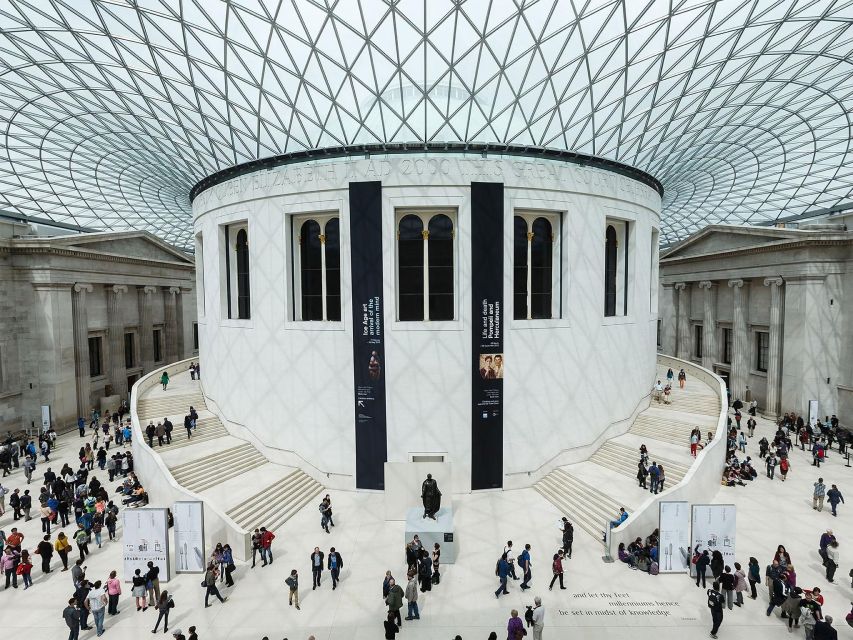
- Winged Bulls from Khorsabad: Get close to monumental Assyrian guardians carved for a royal palace.
- Two-hour guided route: A practical introduction to the museum, though expect plenty of walking and a shared group setting.
Why a focused route makes sense at the British Museum
The British Museum is so large that trying to see everything in one visit is a poor plan. You can spend an hour in a single gallery and still feel as if you have only skimmed the surface. This tour solves that problem by choosing a short list of major objects and linking them through a story about writing, religion, power, burial, and empire.
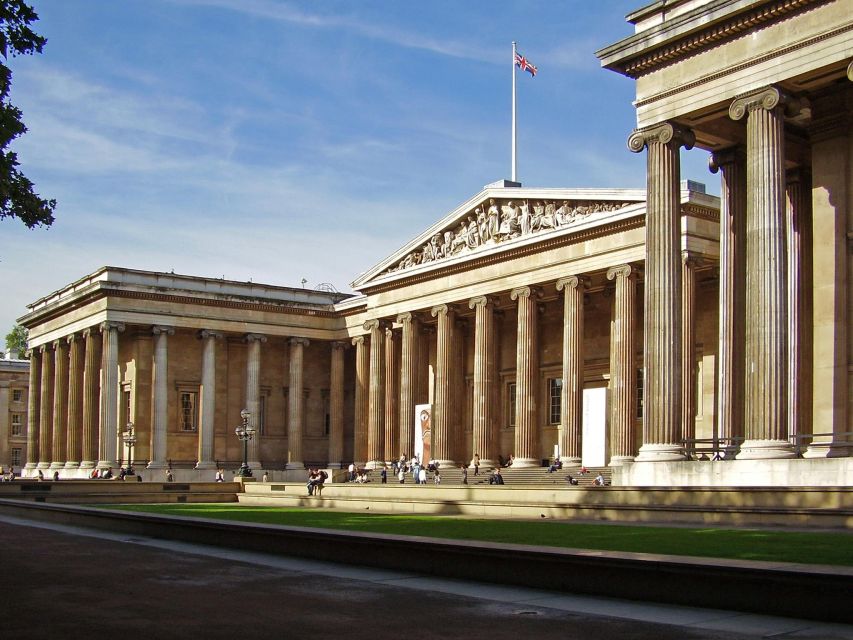
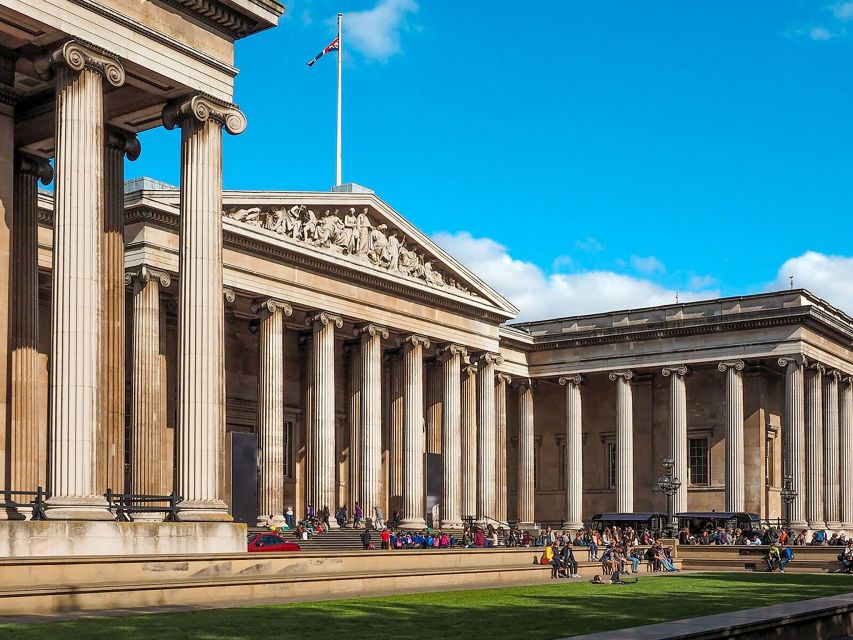
The route begins and ends at the museum, so there is no hotel pickup or transport to arrange. You meet the guide on the stairs at the main entrance, after passing through security. Arrive at least 15 minutes early, since the meeting point is outside the tour itself and delays can make it harder to join the group.
This is a shared tour, not a private visit. That keeps the price at $84.69 per person, but it also means the pace and conversation are shaped by the whole group. If you want a quiet, highly personal museum visit, this may feel limited. If you want a clear introduction without spending half a day studying a map, the format is useful.
The tour is conducted in English. Comfortable shoes matter because the museum is large, and the visit is entirely on foot.
More British Museum visits:
- London: British Museum Guided Tour
★ 4.3 · 1,182 reviews - British Museum London Guided Tour Semi-Private 8ppl Max
★ 5.0 · 984 reviews - London: Tour of the British Museum
★ 4.1 · 678 reviews
The Great Court gives you an impressive first look
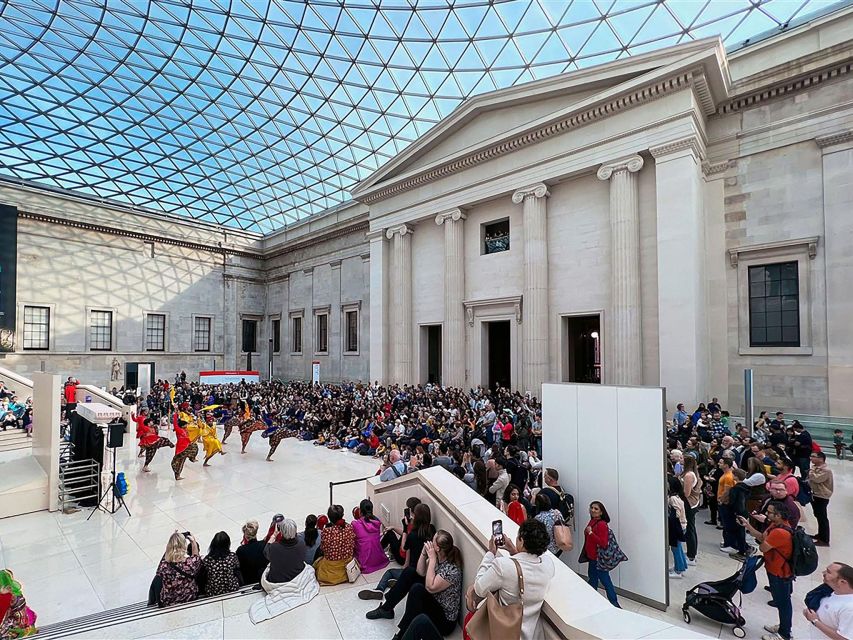
Before reaching the oldest objects, you pass through the Great Court. Its glass roof transforms the central space with a bright, modern structure set inside a historic museum. It is one of the few parts of the visit where the building itself competes with the collection.
This opening stop also helps you understand the scale of the place. The Great Court is spacious, but it can be crowded, and the museum’s size becomes clear as soon as you look beyond the central area. Your guide uses the setting to introduce the institution and prepare you for a fast but purposeful walk.
Do not expect a long architectural tour. The focus remains on the objects, and the Great Court works mainly as an orientation point. Still, it is a worthwhile beginning because you see the contrast between the museum’s old structure and its striking contemporary roof.
The Rosetta Stone and the breakthrough in Egyptian writing
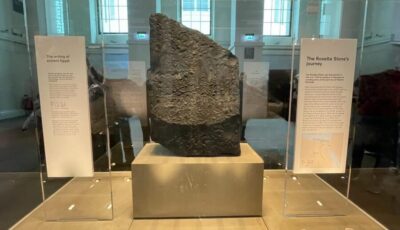
The Rosetta Stone is the first major object on the route, and it earns its reputation. The stone carries the same decree in three scripts, including Greek and two forms of ancient Egyptian writing. Comparing the versions allowed scholars to connect known Greek text with Egyptian hieroglyphics.
That may sound technical, but the basic idea is wonderfully clear. The stone was not valuable only because it was old. It provided the comparison needed to make sense of a writing system that had remained unread for centuries.
Your guide adds context about its role in the study of ancient Egypt, helping you see the object as a tool of discovery rather than simply a famous piece of black stone. You also get a better sense of why written language matters so much to our understanding of ancient societies. Without readable records, much of the past remains guesswork.
The display can attract a crowd, so do not expect a private moment with the stone. A soft-spoken guide may also be difficult to hear here. Stay close, pay attention to where the guide is standing, and ask for repetition if the group noise swallows a key point.
Parthenon sculptures and the question of ownership
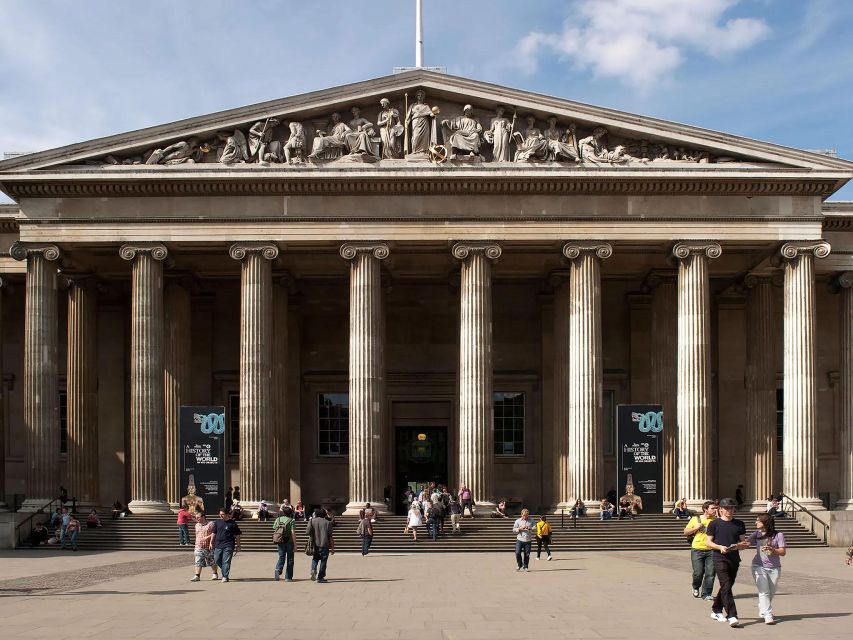
The Parthenon sculptures bring a different kind of story. Their artistic quality is only part of what makes them important. The larger issue is how they left Athens and reached London after being removed from the Parthenon by Lord Elgin, who served as British ambassador to the Ottoman Empire.
The tour presents the sculptures alongside the controversy surrounding their removal. That is essential. You are not just looking at carved figures from ancient Greece. You are also confronting the way collecting, diplomacy, imperial power, and museum ownership have shaped what people see today.
I value this part of the route because it avoids treating famous objects as if they exist outside politics. The sculptures can be admired for their detail and craftsmanship while you also consider why Greece has long argued for their return. The tension is part of the object’s modern story.
The galleries also make a strong contrast with the Rosetta Stone. The stone helped scholars read the past, while the Parthenon sculptures raise questions about who has the right to display and interpret it. That shift keeps the tour from becoming a simple parade of beautiful artifacts.
More London museums to visit:
- Tower of London and Crown Jewels Exhibition Ticket
★ 4.5 · 6,677 reviews - London: Chelsea Football Club Stadium and Museum Tour
★ 4.8 · 4,576 reviews - Chelsea FC Stadium Tours and Museum
★ 5.0 · 1,908 reviews - London Transport Museum Entrance Ticket
★ 4.5 · 1,323 reviews
Egyptian mummies and the evidence of everyday belief
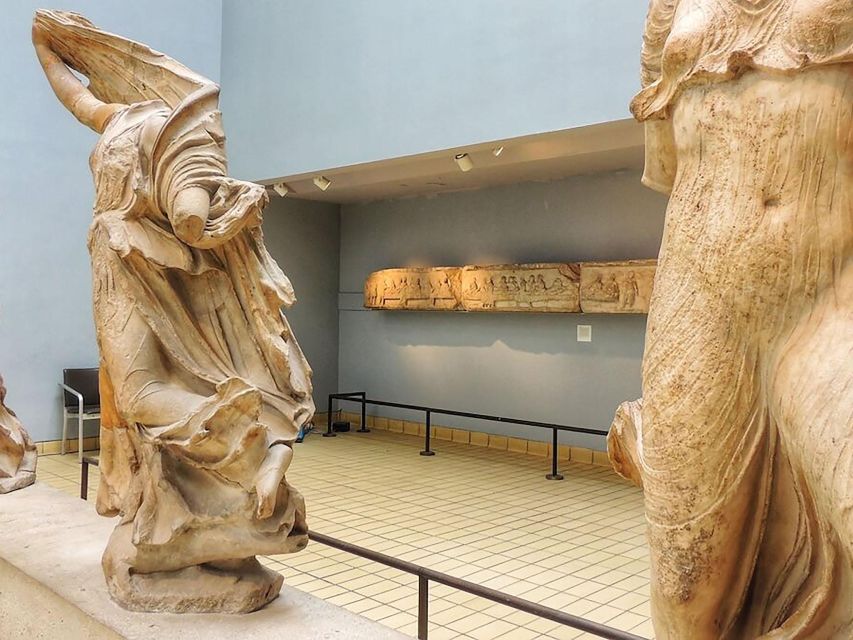
The Egyptian galleries offer some of the museum’s most memorable displays. You see mummies, burial objects, and related artifacts that show how ancient Egyptians prepared for death and imagined the next stage of existence.
A mummy can attract attention because it is physically striking, but the surrounding objects are just as important. Burial items reveal ideas about the body, the soul, household life, craftsmanship, and social position. Your guide connects those pieces to Egyptian religious practices and the practical work involved in preparing the dead.
This section can feel intense, especially if you are sensitive to human remains. The presentation is educational, but the people represented here were once living individuals, not merely archaeological material. I appreciate taking a respectful pace through this gallery rather than rushing from one famous object to another.
The Egyptian collection is large, so two hours cannot cover it in full. That is not a flaw in the route. It is a reminder that this tour is an introduction. If Egypt is your main interest, you will want to return on your own and spend extra time with the objects that catch your attention.
Sutton Hoo brings the story closer to home
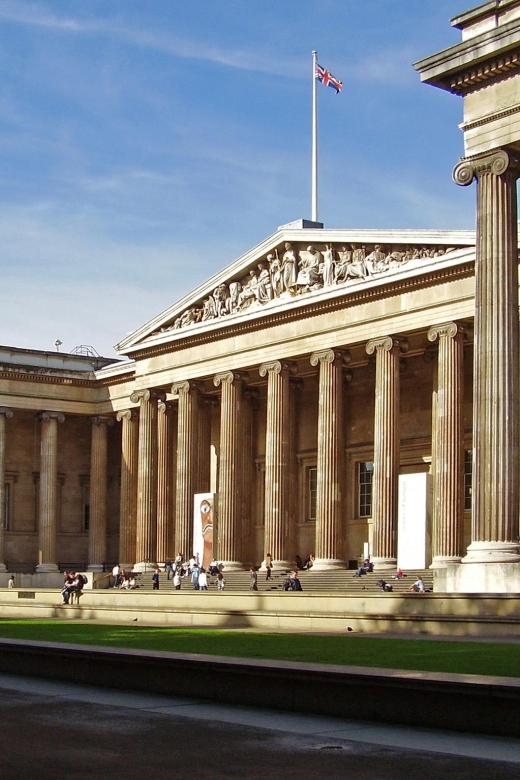
Sutton Hoo changes the mood and the geography. Instead of ancient Egypt or classical Greece, you encounter treasures from an Anglo-Saxon burial site in England. The objects provide a window into early medieval society and the beliefs surrounding elite burial.
The importance of Sutton Hoo lies in what the objects suggest about status, trade, ceremony, and contact between cultures. Burial goods can tell you what a society valued, how its leaders wanted to be remembered, and what skills its craftsmen possessed.
This stop is especially useful if you think of the British Museum only as a place for Egyptian and Greek antiquities. Sutton Hoo shows that the collection also tells the story of Britain itself. It gives the tour a local connection after the earlier focus on the Mediterranean and North Africa.
The display also rewards careful looking. Large famous objects naturally pull your attention, but smaller burial artifacts can provide some of the best clues about how people lived. Your guide’s background on prehistory and antiquity helps tie this section to the broader story of human societies.
Winged Bulls from Khorsabad and the power of scale
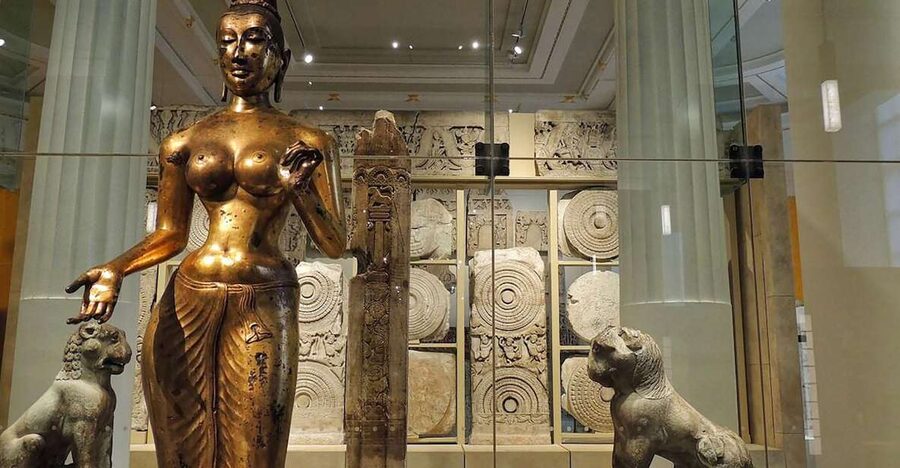
The final major stop is the Winged Bulls from Khorsabad, monumental sculptures from ancient Mesopotamia. These imposing figures once guarded a grand Assyrian palace, and their size immediately changes your sense of the gallery.
They were not made as small personal objects. They were built to impress, protect, and communicate royal power. The combination of a human head, wings, and a powerful animal body carries symbolic meaning, while the scale would have made visitors feel watched and controlled as they approached the palace.
This is a strong ending because it gives you a physical sense of ancient imperial architecture. The Rosetta Stone asks you to study an inscription closely. The Winged Bulls ask you to look up and imagine an entire palace entrance organized around these guardians.
The sculptures also show why a museum visit benefits from a guide. Without context, they can seem like enormous mythical creatures. With explanation, you begin to see how art, architecture, religion, and political authority worked together in Assyrian society.
What the guide adds to the two-hour visit
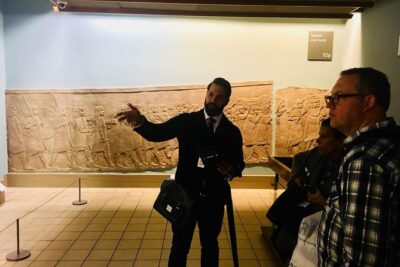
The guide provides historical and mythological background, along with information about the museum and how its objects reached London. That combination is valuable because the tour is not limited to dates and labels. You get help understanding both the original culture and the modern institution displaying it.
The guide’s role matters most when you move quickly between very different civilizations. A good explanation can connect Egyptian burial practices, Greek sculpture, Anglo-Saxon ceremony, and Assyrian kingship without making the visit feel like a list of unrelated rooms.
There is one practical concern: keep near the guide. The museum can be noisy, and a soft-spoken guide may be hard to hear, particularly when other groups are nearby. The commentary has been praised for its historical and mythological detail, but you may need to concentrate more than you would in a quiet private tour.
Online support is available at the time of boarding the tour, which can help if you need assistance locating the meeting point. The main responsibility remains yours: arrive early, clear security, and be ready to walk.
Is $84.69 good value for two hours?

At $84.69 per person, this is not the cheapest way to enter the British Museum. The museum’s appeal is that many of its galleries can be visited without an admission charge, so you should think of this purchase as payment for structure, commentary, and a planned route rather than simply for access to the building.
The value depends on how you normally visit museums. If you arrive without a plan, the British Museum’s scale can leave you tired and uncertain about what you have seen. A guide takes you directly to several of the institution’s most important objects and explains why they matter.
The price is easier to justify if you have limited time in London, prefer guided visits, or want a first introduction before exploring alone. It is harder to justify if you enjoy reading labels at your own pace, already know the collection well, or want to spend a full morning in one department.
The tour also advertises a priority queue rather than the ordinary long queue. That does not mean walking straight inside without any waiting. It means using a faster entrance line shared with other visitors who have chosen the same option. Since security is still involved, arriving early remains sensible.
Timing, booking, and practical limits
The activity lasts two hours, with starting times shown according to availability. A chosen time may be changed to another available slot on the same day. For example, a selected 10:00 start could be moved to 14:00 if the original time is unavailable.
Last-minute bookings require extra care. If there are no places on the booked date, you may be placed on the following day. Check the confirmed time and date closely before setting out.
You can cancel up to 24 hours in advance for a full refund, and the reserve-now, pay-later option gives you some flexibility when your London plans are still changing. Food and drinks are not included, and there is no hotel pickup.
Bring a passport or identity card. The tour is not suitable for wheelchair users, and comfortable shoes are recommended because you will cover a lot of ground inside a very large museum.
Who should book this British Museum tour?
I would choose this tour for a first visit when I wanted a firm route through the museum’s major collections. It suits you if the Rosetta Stone, Egyptian mummies, the Parthenon sculptures, Sutton Hoo, and ancient Mesopotamia all sound appealing, but you do not want to plan the visit room by room.
It is also a good match for anyone who enjoys the arguments behind museum objects. The Parthenon sculptures offer a chance to discuss ownership and cultural heritage, while the Egyptian and Mesopotamian galleries show how modern museums frame objects removed from their original settings.
You may prefer to visit independently if you need a wheelchair-accessible experience, want a private guide, or dislike the pace of a shared group. You should also reconsider if you need perfectly clear audio at every moment or have only one narrow time window, since scheduled times can change.
Should you book it?
Book this experience if you want a well-chosen introduction to the British Museum and value explanation more than unlimited time. The route covers an unusually broad range of cultures, and the mix of famous objects and museum history gives you a stronger sense of why the collection matters.
Skip it if you already have a detailed plan, want to study one gallery slowly, or need a private and fully accessible visit. For most first-time visitors with two hours to spare, the focused route is a sensible way to make the museum feel manageable rather than overwhelming.
FAQ
Where does the British Museum tour begin?
Meet the guide on the stairs at the museum’s main entrance after completing the security checks.
How early should I arrive?
Arrive at least 15 minutes before your scheduled tour time.
How long does the tour last?
The guided visit lasts two hours.
What language is the tour conducted in?
The live tour guide speaks English.
Does the tour include hotel pickup?
No. Hotel pickup is not included, and the activity begins and ends at the British Museum.
Is the tour private?
No. This is a shared tour with other participants.
Is the tour suitable for wheelchair users?
No. The activity is listed as unsuitable for wheelchair users.
Latest arrivals on the London list
- Rochester, Dover Castle Guided Tour and the Cliffs★ 4.5 · 3 reviews
- Historic pub tour with Brazilian guide (in Portuguese)★ 5.0 · 3 reviews
- Oxford, Shakespeare Country & Warwick castle private Tour★ 4.0 · 3 reviews
- In-Person Meditation Class★ 5.0 · 3 reviews
- Buckingham Palace Exterior and Royal History Private Tour★ 5.0 · 3 reviews
- Tower of London Guided Tour, Crown Jewels, Tower Bridge★ 4.5 · 3 reviews
- Private Jack The Ripper Tour of London★ 5.0 · 3 reviews
- Private Walking Tour: Jack The Ripper and East End★ 5.0 · 3 reviews
British Museum Tours, compared.

British Museum London Guided Tour Semi-Private 8ppl Max
Read our review →
British Museum Audio Tour & Priority Entrance Ticket
Read our review →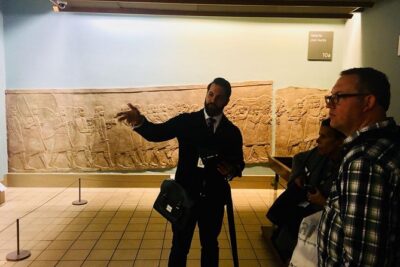
The British Museum London – Exclusive Guided Museum Tour
Read our review →
Browse the lists this tour appears in