

Reviewed · BRITISH MUSEUM TOURS
London: British Museum Guided Tour
The British Museum is so large that a first visit can feel like opening ten history books at once. This two-hour guided route gives you a clear path through the biggest sights, from the Rosetta Stone and Egyptian mummies to the Parthenon sculptures, Sutton Hoo treasures, and a moai from Easter Island.
I like the way the tour links objects across cultures instead of treating each gallery as a separate room. I also like the practical value: guides such as Filomena, Stuart, Tara, Lucia, and Maya have been praised for making the museum easier to navigate and for adding context you would miss by reading labels alone. The main drawback is sound. In crowded galleries, one guide may be hard to hear, especially without a microphone or earbuds.
In This Review
- Key points to know before you book
- Why a guide helps at the British Museum
- Meeting inside the museum
- Ancient Egypt and the Rosetta Stone
- Ancient Greece and the Elgin Marbles
- Rome through statues, mosaics, and engineering
- Sutton Hoo and early English life
- Hoa Hakananai’a and cultures beyond Europe
- Guide quality and the sound problem
- Is $39 good value?
- Who should book this two-hour route?
- Practical booking advice
- Should you book it?
- FAQ
- How long is the British Museum guided tour?
- How much does the tour cost?
- What objects are included on the route?
- Is the British Museum admission ticket included?
- Where do I meet the guide?
- How will I receive my admission ticket?
- What languages are available?
- Is the tour wheelchair accessible?
- Can I cancel the tour for a refund?
Key points to know before you book
- A fast route through a huge museum: You see major objects without spending the first hour deciding where to go.
- Rosetta Stone and Egyptian galleries first: The tour begins with ancient Egypt and the object that helped scholars read hieroglyphics.
- Parthenon sculptures with context: The Greek galleries include the controversial Elgin Marbles and discussion of ownership and removal.
- More than the usual headline pieces: Sutton Hoo, Roman mosaics, and Hoa Hakananai’a from Easter Island are part of the route.
- Strong guide reports: Filomena, Stuart, Tara, Lucia, and Maya are among the guides praised for warmth, detail, and engaging explanations.
- Two hours means highlights, not everything: You get a useful introduction, then should return on your own if a particular gallery catches your eye.
Why a guide helps at the British Museum

The British Museum is free to enter as a public museum, but free does not mean easy. Its collection covers human societies across thousands of years, and the main challenge is not finding something interesting. It is deciding what deserves your limited time.
At $39 per person, this tour is a paid shortcut through that problem. You are paying for a guide’s route, interpretation, and help with orientation rather than for a long private viewing of every gallery. For a first visit, that can be a sensible trade.
I would especially consider it if you have only one afternoon in London, are visiting with children, or prefer stories to label reading. The guide can point out why an object matters, connect it to another culture, and keep the group moving before two hours disappear in one room.
The format is not designed for slow, solitary museum wandering. If you enjoy examining every inscription at your own pace, a self-guided visit may suit you better. One review put the choice neatly: this tour is for people who want the key objects shown to them efficiently, not for those who enjoy the whole process of exploring a massive museum alone.
More British Museum visits:
- London: British Museum Guided Tour
★ 4.3 · 1,182 reviews - British Museum London Guided Tour Semi-Private 8ppl Max
★ 5.0 · 984 reviews - London: Tour of the British Museum
★ 4.1 · 678 reviews
Meeting inside the museum
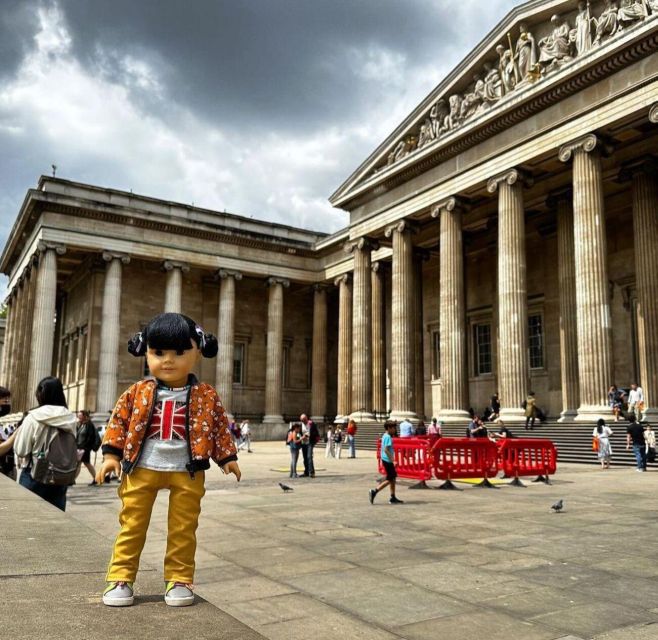
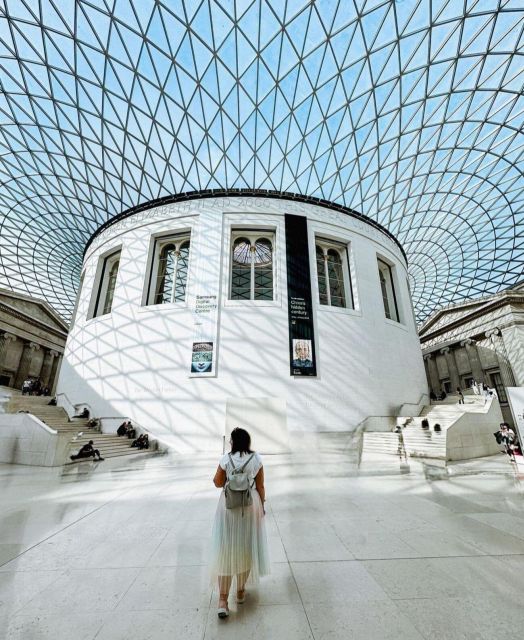
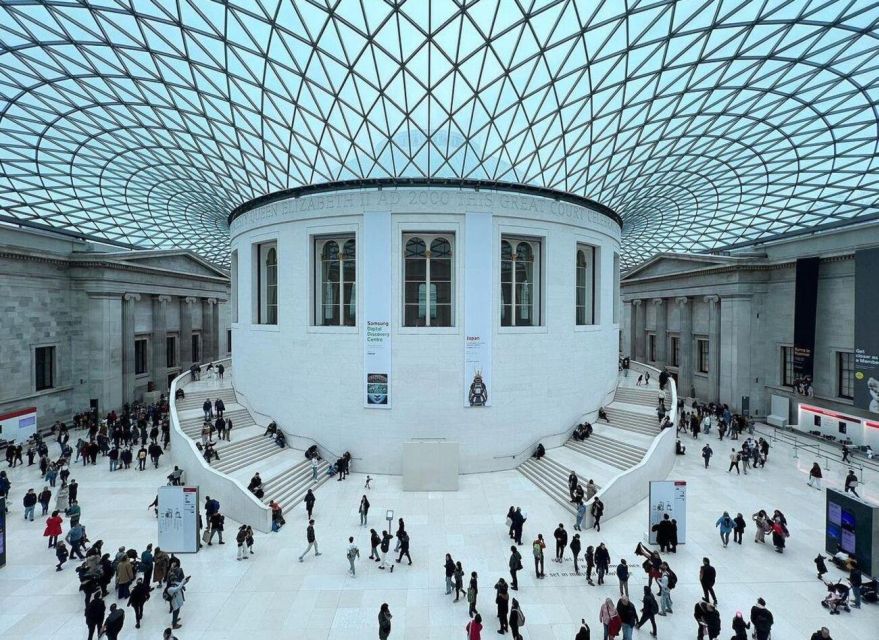
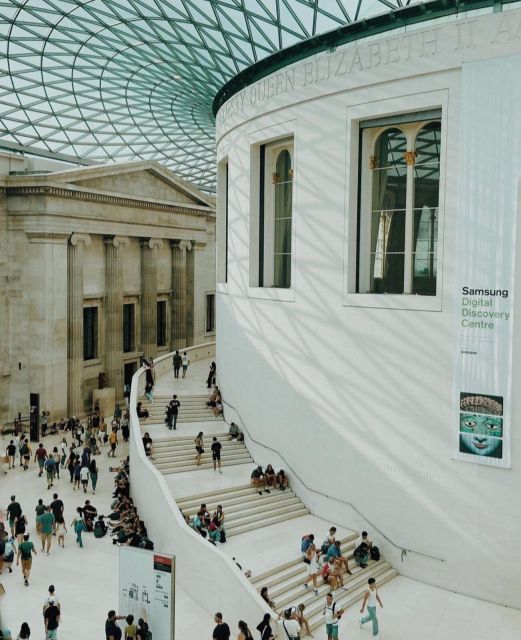
Your meeting point is easy to misunderstand, so pay attention. Meet your guide after passing security, in front of the British Museum portals, on the stairs near the pillars. Do not wait outside the gates.
Admission tickets are supplied about one to two hours before the tour. They are sent through WhatsApp, or by email if you do not use WhatsApp. Check your messages before heading to the museum, and allow time for security and finding the interior meeting point.
The activity includes the tour guide, but not transportation. You make your own way to the museum. Wear comfortable shoes and dress for the weather, since part of your arrival and waiting time may be outdoors.
The experience lasts two hours. English, French, and Italian are offered, though demand may mean that two languages are used during the same tour. If you need one language only, confirm the arrangement when booking.
Ancient Egypt and the Rosetta Stone
The route begins with ancient Egypt, a smart choice because these galleries offer an immediate sense of scale. You can expect to see objects connected with pharaohs, religious beliefs, writing, and daily life.
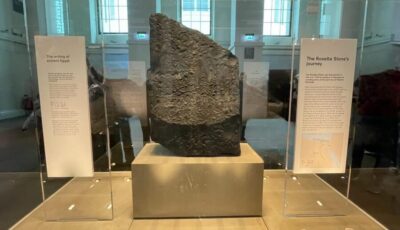
The main prize is the Rosetta Stone. Its importance is not just its appearance, but its role in deciphering Egyptian hieroglyphics. The same decree appears in different scripts, allowing scholars to compare them and begin reading a writing system that had long resisted translation.
A guide adds the missing link between the object and the result. Instead of seeing a dark stone behind glass and moving on, you learn why its inscriptions mattered and how one artifact helped open access to a whole body of Egyptian records.
The Egyptian section can be crowded, and the tour will not pause at every case. That is part of the deal. You get the central story and major sights, then can return later if you want more time with smaller objects.
Ancient Greece and the Elgin Marbles
The Greek galleries shift the focus to sculpture, architecture, civic life, and ideas that shaped later European culture. Here you see sculptures from the Parthenon, along with marble inscriptions and other objects connected with ancient Greece.
The Parthenon sculptures are visually powerful, but they are also politically difficult. Their presence in London is tied to Lord Elgin’s removal of pieces from the Athenian temple in the early nineteenth century. Greece has long sought their return, while the British Museum has defended its ownership and display.
A useful guide should not treat these objects as simple trophies. The strongest part of this tour is its willingness to discuss contested pieces, including the Greek marble and, according to the route, other disputed objects such as the Benin Bronzes. That gives you a more honest visit.
You may hear the same broad ideas repeated in different forms: what museums collect, who has the right to hold cultural objects, and how empire shaped modern collections. The tour cannot settle those questions in two hours, but it can help you see why the arguments remain current.
More London museums to visit:
- Tower of London and Crown Jewels Exhibition Ticket
★ 4.5 · 6,677 reviews - London: Chelsea Football Club Stadium and Museum Tour
★ 4.8 · 4,576 reviews - Chelsea FC Stadium Tours and Museum
★ 5.0 · 1,908 reviews - London Transport Museum Entrance Ticket
★ 4.5 · 1,323 reviews
Rome through statues, mosaics, and engineering
The Roman section brings a different mood. Ancient Rome is presented through emperors, gods, heroes, decorative art, and the practical skill behind Roman engineering.
Expect statues and intricate mosaics, with the guide using them to explain how Roman power and belief appeared in public and private life. The objects are not just decoration. They show how Romans presented authority, worshiped a wide range of gods, and used art to mark status.
This section also gives the tour a useful bridge between Greece and Rome. Roman artists borrowed heavily from Greek models, while Roman rulers used those artistic traditions for their own purposes. A good explanation helps you spot that relationship instead of treating Greece and Rome as two unrelated stops.
Because the museum’s Roman collection is broad, the route necessarily selects. You will see representative highlights rather than a full account of Roman Britain, imperial politics, or everyday life. If Rome is your main interest, plan to stay after the guided portion.
Sutton Hoo and early English life
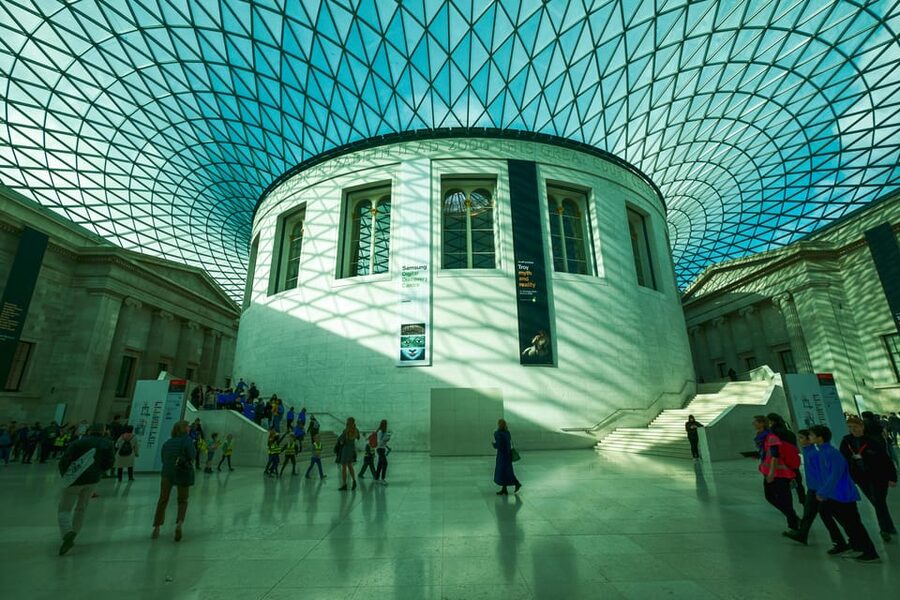
Sutton Hoo offers a change of pace from the Mediterranean galleries. The Anglo-Saxon treasures give you a glimpse into early English life through burial objects, metalwork, weapons, and signs of wealth and status.
The attraction here is the contrast. After pharaohs, Greek temples, and Roman emperors, Sutton Hoo brings the story closer to England. It also reminds you that sophisticated art and political power were not limited to the civilizations usually placed at the center of ancient history.
A guide can make this stop more meaningful by explaining what the objects reveal and what remains uncertain. Archaeological finds rarely tell a complete story. They offer clues about people, ceremony, trade, and social rank, and the gaps are part of the interest.
This is one of the stops that can be easy to miss when visiting alone, particularly if you arrive with only the Rosetta Stone and Parthenon in mind. The guided route gives it a place in the main story rather than leaving it as an optional side room.
Hoa Hakananai’a and cultures beyond Europe
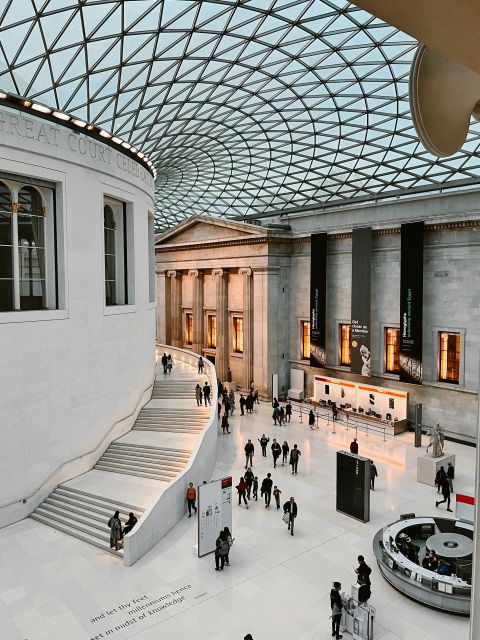
Hoa Hakananai’a, a moai from Easter Island, widens the tour again. The statue embodies the spiritual life of a distant Polynesian culture, and its presence helps move the visit beyond the familiar Egypt, Greece, and Rome sequence.
The moai is also a reminder that the museum’s collection is global, not simply a collection of European encounters with the ancient Mediterranean. You begin to see how different societies represented ancestors, leaders, gods, and communal identity.
The experience does not provide enough time to understand every culture represented in the museum. Still, this stop gives the route a broader purpose. Human creativity did not follow one path, and the objects on display reflect very different ideas about memory, power, faith, and beauty.
The final part of the tour continues through artifacts from around the world. That variety is exciting, but it can also feel quick. Think of it as a map of what the museum contains, with several strong markers for a later return.
Guide quality and the sound problem

The guides are the heart of this experience. Filomena is repeatedly described as warm, attentive, and able to explain a wide range of objects in clear English. Several visitors also valued her patience with people who were not fully comfortable speaking English.
Stuart receives similar praise for his humor, passion, and ability to add detail about both famous and less visited objects. One winter booking became a private tour when other participants did not arrive, and another small group had the same good fortune. Those private or near-private conditions are not guaranteed, but they show how the experience can feel personal when numbers are low.
Tara is described as giving a very full account of the objects and advising what else to see afterward. Lucia is praised for making the museum interesting and easy to follow. Maya is noted for engaging both children and adults and for summarizing the museum efficiently in two hours.
Do not assume a particular guide will lead your tour. Names can change with scheduling and language demand. The consistent strength is the guide-led format: friendly explanations, a planned route, and help deciding what deserves your attention.
The main weakness is acoustics. The museum can be noisy, and one guide may not have a loud enough voice for everyone. Stay close to the guide, especially in crowded rooms, and ask politely if you miss a point. The experience would be easier to follow if a microphone or earbuds were provided, but they are not listed as included.
Is $39 good value?
The $39 price makes sense if you value structure and interpretation. The museum itself is public and free, so you should not book this expecting a discount on admission. You are buying two hours of focused guidance.
For a first-time visitor, the value is strong. You will see the main objects quickly, learn why they matter, and avoid wandering through a huge building without a plan. A guide can also help you make sense of difficult subjects, especially the ownership questions around the Elgin Marbles and other contested objects.
For a repeat visitor, the calculation is different. If you already know the museum’s layout and have a list of specific galleries, spending $39 on a guide may not be necessary. You can enter independently and devote your time to the objects that interest you most.
The tour is particularly good value for families and small groups. One guide has been praised for keeping children and adults engaged, and several bookings became almost private tours because of small attendance. That said, group size varies, so do not book expecting a private experience.
Who should book this two-hour route?
I would recommend it for:
- First-time British Museum visitors
- People with limited time in London
- Families who want a clear route
- Museum visitors who prefer spoken explanation to reading labels
- People interested in both famous objects and less obvious stops
- Those who want context around disputed acquisitions
I would be more cautious if you need long, quiet viewing time. The route covers a lot, and two hours passes quickly. You may leave with a strong overview but still want to return to Egypt, Greece, Rome, or Sutton Hoo.
The tour is wheelchair accessible. Comfortable footwear remains a good idea because the museum is large and the route involves substantial walking. The activity does not include transportation, so check your route to the museum before the meeting time.
Practical booking advice
Reserve now and pay later if you want to keep your London schedule flexible. Cancellation is allowed up to 24 hours before the activity for a full refund, according to the booking conditions.
Since tickets arrive by WhatsApp or email shortly before the tour, make sure the provider has a working contact method. If you do not use WhatsApp, contact the provider in advance so the tickets can be sent by email.
Choose an off-peak starting time if you can. A January Saturday was described as relatively quiet, and smaller crowds make it easier to hear the guide and see the objects. Busy periods may feel more rushed, especially in front of the Rosetta Stone and Parthenon sculptures.
Should you book it?
Book this tour if you want the British Museum’s major stories without spending half your visit finding them. At $39, it is a fair price for a clear route, a live guide, and useful context around objects that can otherwise seem disconnected.
Skip it if you prefer to wander slowly, read every label, or focus on one collection. My best advice is to use the tour as your introduction, then return on your own to the gallery that caught your attention. That gives you both the helpful overview and the freedom the museum deserves.
FAQ
How long is the British Museum guided tour?
The tour lasts two hours.
How much does the tour cost?
The listed price is $39 per person.
What objects are included on the route?
The route includes ancient Egyptian objects and the Rosetta Stone, Greek artifacts and the Parthenon sculptures, Roman statues and mosaics, Sutton Hoo treasures, Hoa Hakananai’a from Easter Island, and other objects from around the world.
Is the British Museum admission ticket included?
Admission tickets are supplied before the tour if needed. The activity includes a tour guide, and transportation is not included.
Where do I meet the guide?
Meet inside the British Museum after security, in front of the museum portals on the stairs near the pillars. Do not wait outside the gates.
How will I receive my admission ticket?
The ticket is usually sent one to two hours before the tour through WhatsApp. If you do not have WhatsApp, contact the provider by email so the ticket can be sent there.
What languages are available?
Tours are offered in English, French, and Italian. Depending on demand, two languages may be used at the same time.
Is the tour wheelchair accessible?
Yes, the activity is listed as wheelchair accessible.
Can I cancel the tour for a refund?
Yes. You can cancel up to 24 hours in advance for a full refund. You can also reserve now and pay later.
Latest arrivals on the London list
- Heathrow Airport to London Arrival Transfer★ 4.5 · 50 reviews
- London Beatles Tour★ 5.0 · 50 reviews
- One Way Taxi Transfer from London to Gatwick Airport★ 5.0 · 51 reviews
- London: Hidden Baker Street Tube Station Tour★ 4.7 · 51 reviews
- City & Secrets: Explore London’s Hidden Gems★ 5.0 · 51 reviews
- London Christmas Lights Open-Top Bus Tour. 2025 Early Bird★ 3.6 · 51 reviews
- 4 hour London Private Tour, with your own Black Cab Tour Guide★ 5.0 · 51 reviews
- The Beatles Magical History Black Taxi Tour London★ 5.0 · 51 reviews
British Museum Tours, compared.

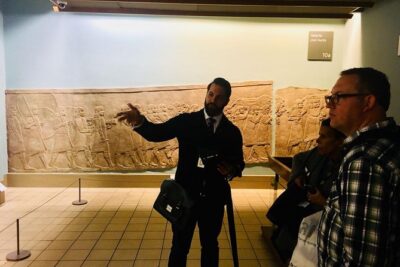
British Museum London Guided Tour Semi-Private 8ppl Max
Read our review →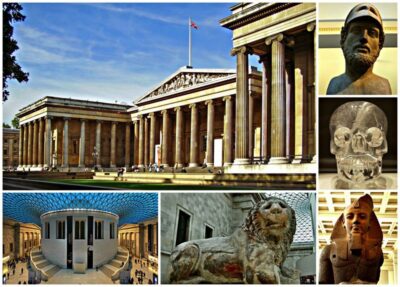
British Museum Audio Tour & Priority Entrance Ticket
Read our review →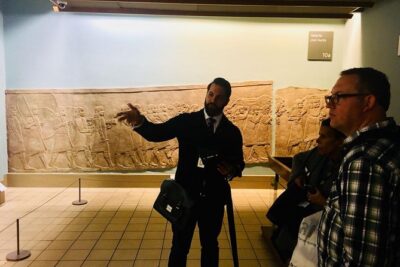
The British Museum London – Exclusive Guided Museum Tour
Read our review →

Private Guided Tour of the British Museum – Tickets Included
Read our review →Browse the lists this tour appears in