
Reviewed · BRITISH MUSEUM TOURS
British Museum London Guided Tour Semi-Private 8ppl Max
The best thing about this British Museum tour is its focus. Instead of wandering through eight million objects and wondering what you missed, you follow a guide through a thoughtful run of major treasures, from the Rosetta Stone to the Lewis Chessmen and Assyrian lion-hunt reliefs.
I like the maximum group of eight, which makes it easier to hear, ask questions, and keep moving through crowded rooms. I also like the 2.5-hour length: long enough for real context, but short enough for a busy London day. The main drawback is that the museum itself is free, so you are paying for the guide and the efficient route rather than admission.
In This Review
- Key points to know before booking
- Why a small group matters inside the British Museum
- Beginning on Great Russell Street
- The British Museum’s enormous scope
- The Rosetta Stone and the power of one object
- Egyptian galleries and the Mummy of Katebet
- Assyrian lion-hunt reliefs and scenes of royal power
- The Lewis Chessmen and medieval life
- Parthenon sculptures and difficult questions
- A carefully chosen route in 2.5 hours
- What the guides add to the experience
- Is $108.44 a fair price?
- Who should book this tour?
- Practical tips for a smoother museum visit
- FAQ
- How long does the British Museum tour last?
- How many people can join the semi-private tour?
- Is museum admission included?
- Where does the tour start and finish?
- Which British Museum objects will I see?
- Is the tour suitable for wheelchair users?
- Can I cancel for a full refund?
- Should you book the British Museum guided tour?
Key points to know before booking
- Eight-person maximum: The semi-private group stays small, with a private upgrade also available.
- Major pieces plus lesser-known stops: Expect the Rosetta Stone, Mummy of Katebet, Lewis Chessmen, Parthenon sculptures, and Assyrian lion-hunt scenes.
- A guide-led route: Guides such as Ivo, Jake, James, Laurence, Steph, Guy, and Darcy have been praised for clear explanations, humor, and thoughtful answers.
- Built for limited time: The 2.5-hour visit gives you a useful introduction without trying to cover the entire museum.
- Central meeting point: Start and finish at the British Museum on Great Russell Street.
- Plan for walking and security: Wear comfortable shoes, arrive on time, and bring only a small bag.
Why a small group matters inside the British Museum
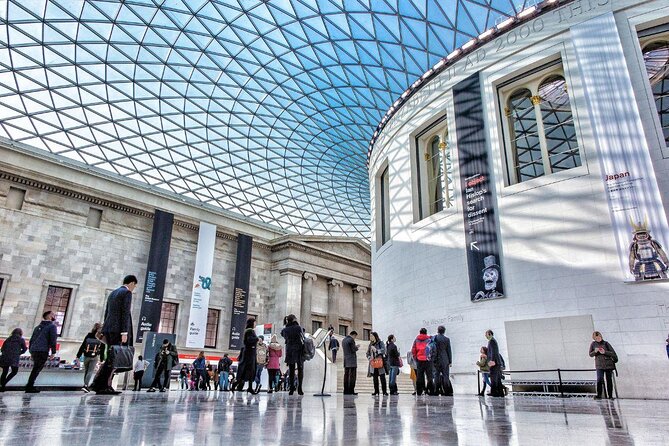
The British Museum is not a quick stroll past a handful of display cases. Its collection contains roughly eight million objects covering 6,000 years of human history. You can spend hours there and still leave without seeing the pieces you came for.
That scale is the reason this tour makes sense. A guide gives you a route and a reason for each stop. You are not simply looking at an old stone or a carved figure. You are learning what it was made for, who used it, and why it matters.
The eight-person limit is especially useful in a museum where rooms can fill quickly. A large group tends to stretch across doorways and lose people at every turn. With fewer than nine people, your guide can keep the group together and respond when your interests shift.
The experience is semi-private, not automatically private. If you want the guide’s attention only for your own party, a private upgrade is available. The small shared group is likely the better value for most couples and families, while a private option makes more sense if your group has specific interests or needs a flexible pace.
More British Museum visits:
- London: British Museum Guided Tour
★ 4.3 · 1,182 reviews - London: Tour of the British Museum
★ 4.1 · 678 reviews - London: British Museum Audio Tour & Priority Entrance Ticket
★ 4.5 · 631 reviews
Beginning on Great Russell Street
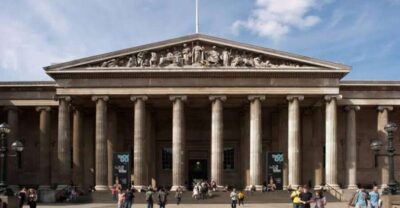
You meet your guide at the British Museum, Great Russell Street, London WC1B 3DG. The tour ends back at the same meeting point, so you can plan the rest of your day from the museum rather than finding a second drop-off location.
Several start times are offered. That matters in London, where a morning visit to Westminster, a lunch reservation, or an evening theater booking can shape the whole day. Pick your departure time when booking, then allow enough time to reach the museum and find the meeting point.
Do not arrive late. This is a timed group experience, and the guide cannot wait indefinitely while the rest of the group stands outside. The meeting point is near public transport, and a taxi or Uber is suggested instead of hotel pickup, since transportation to and from the museum is not included.
Security can add a little time at the entrance. Large bags and suitcases are not allowed inside. Bring a handbag or small, thin backpack, and keep your phone handy because the operator requires a mobile number with country code when you book.
The British Museum’s enormous scope
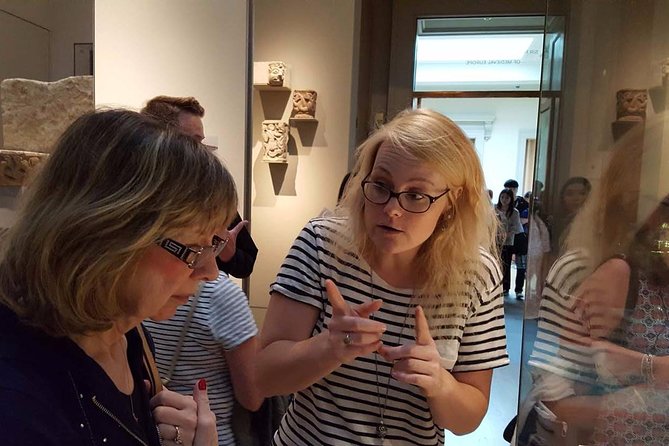
Your guide begins with an introduction to the museum and its place among the world’s major collections. The collection reaches across continents and thousands of years, so the opening explanation helps you understand why the visit jumps between Egypt, the ancient Near East, medieval Europe, and the classical world.
This broad range is both the museum’s strength and its challenge. You may see samurai armor a few rooms away from an Egyptian mummy, then find Assyrian reliefs and medieval game pieces on the same general route. Without a plan, the displays can feel disconnected.
A good guide turns that variety into a human story. The emphasis is not only on famous rulers or pretty objects. You also get glimpses of daily life, belief, warfare, trade, technology, and the ways societies recorded what mattered to them.
The tour takes a serious but approachable tone. Guides have been praised for making complicated subjects easy to follow, using wit without turning the museum into a comedy show. That balance helps families and mixed-age groups stay interested.
The Rosetta Stone and the power of one object
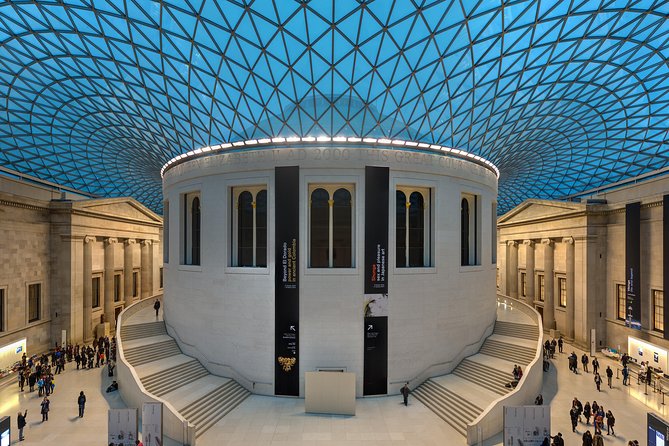
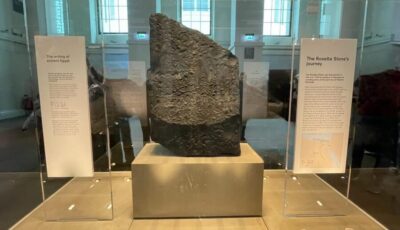
The Rosetta Stone is an obvious early highlight, but it earns its place. This is the actual stone that helped scholars read Egyptian hieroglyphs, not the language-learning program with a similar name.
The value of seeing it with a guide is the explanation around the object. You learn why the inscriptions mattered and how the stone changed the study of ancient Egypt. On your own, you might recognize the name and take a quick photograph. With context, you understand why this one slab has such importance.
Crowds often gather around famous objects, so do not expect a quiet, private viewing. A guide can help you find the best position, keep the group together, and point out details while you have a clear view.
This stop also sets the tone for the rest of the route. The point is not to collect famous names. It is to see how a specific object can reveal a much larger story about language, power, and human curiosity.
More London museums to visit:
- Tower of London and Crown Jewels Exhibition Ticket
★ 4.5 · 6,677 reviews - London: Chelsea Football Club Stadium and Museum Tour
★ 4.8 · 4,576 reviews - Chelsea FC Stadium Tours and Museum
★ 5.0 · 1,908 reviews - London Transport Museum Entrance Ticket
★ 4.5 · 1,323 reviews
Egyptian galleries and the Mummy of Katebet
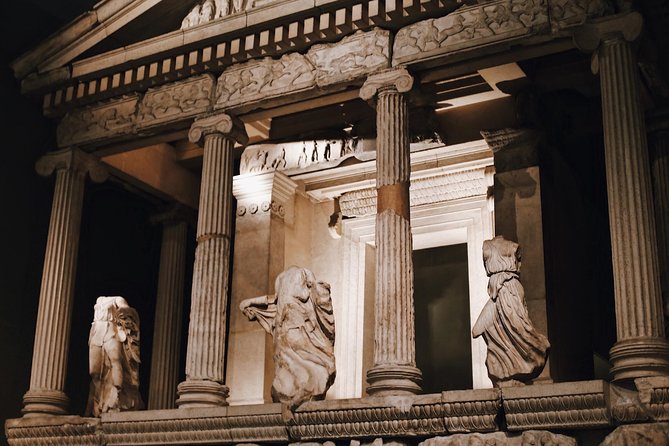
The Mummy of Katebet offers a more personal encounter with ancient Egypt. Rather than treating the object as a spooky curiosity, the guide explains what the burial tells us about the person and the culture that prepared her for the afterlife.
This is one of the places where guided commentary adds real value. Egyptian objects can be visually striking, but their symbols and burial customs are not always self-explanatory. Your guide helps you read the decoration and understand the purpose behind it.
The tour does not attempt to cover every Egyptian gallery. That is a benefit for a first visit, since trying to see the entire section in one morning can leave you tired and unsure what you actually saw. You get a focused selection instead, with time to listen and ask questions.
If Egypt is your main reason for visiting, tell your guide at the start. The itinerary is designed around major museum highlights, but guides have shown flexibility when a group has particular interests.
Assyrian lion-hunt reliefs and scenes of royal power
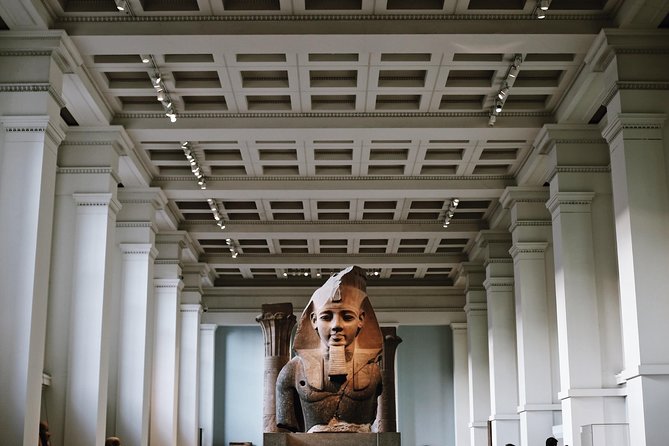
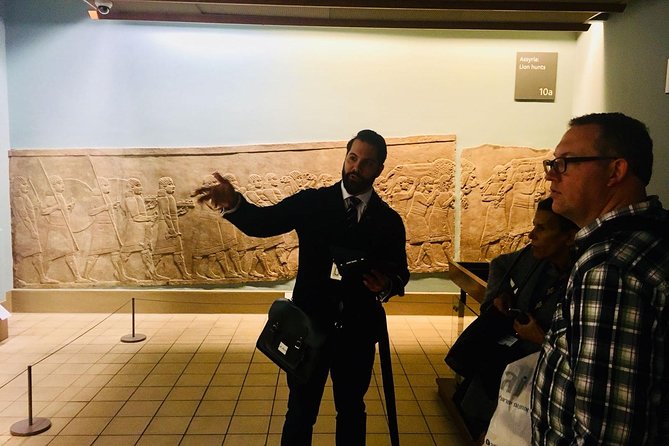
One of the strongest less-obvious stops is the Assyrian section, especially the reliefs showing a royal lion hunt. These carvings date to the 7th century BC and present power in a very direct way.
The scenes are more than decorative wall panels. They show the king as a skilled hunter and powerful ruler, while the wounded lions are rendered with striking attention to movement and emotion. Your guide can explain how the images worked as public statements about authority.
This is a good example of why a guided route beats a simple checklist. You may come to see the Rosetta Stone and Parthenon sculptures, then find that the Assyrian reliefs become one of the morning’s most memorable stops.
The room can be busy, and some museum spaces require quiet or restrict speaking. Your guide will explain those rules before you enter. That helps the group listen in the right places and avoids an awkward interruption once inside.
The Lewis Chessmen and medieval life
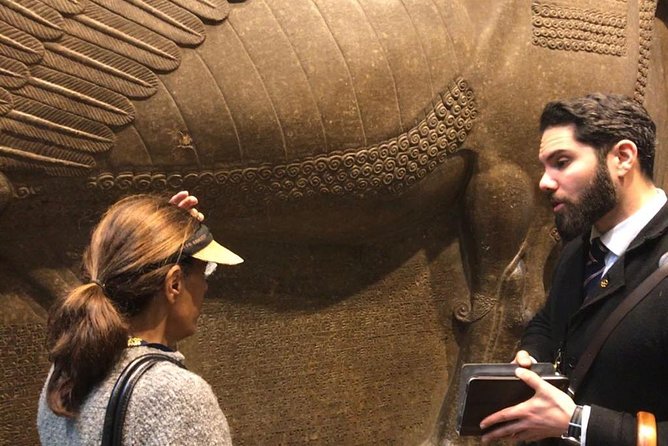
The 12th-century Lewis Chessmen bring the visit down to a more familiar human scale. These small carved figures are linked to medieval gaming, but they also reveal how people represented status, identity, and social roles.
The pieces are visually approachable, which makes them a useful stop for children and adults who may need a break from monumental sculpture and royal imagery. You can look closely at individual figures and notice the expressions and details that make them feel surprisingly personal.
A guide helps connect the chess pieces to the wider medieval world rather than presenting them as a cute novelty. You learn why they matter as objects of art and evidence of how people spent time and imagined society.
This is one of the tour’s smart changes of pace. The route moves from monumental ancient objects to something compact and familiar, showing that a museum visit is not only about the largest or oldest item in the room.
Parthenon sculptures and difficult questions
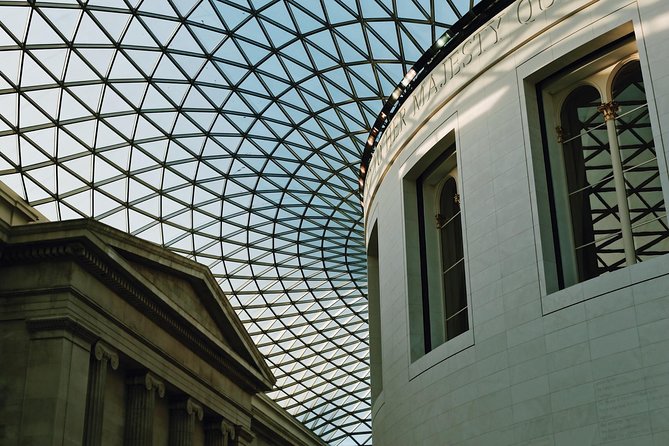
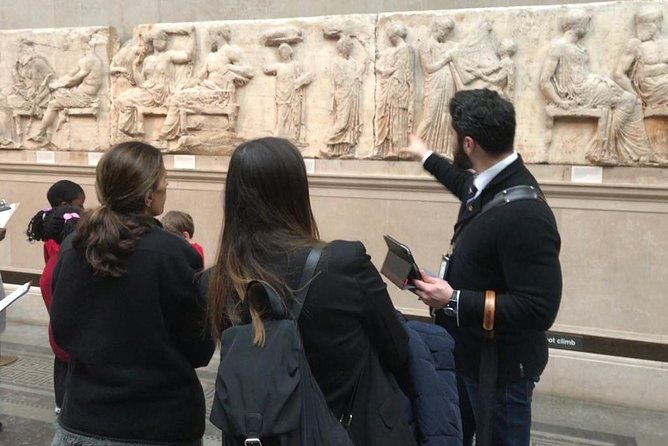
The Parthenon sculptures are among the British Museum’s most famous displays. They are also tied to difficult questions about ownership, removal, empire, and the right place for cultural objects.
A strong guide does not skip those questions. The tour’s approach includes historical context and room for honest discussion about how objects entered the collection. That matters because the British Museum is not just a celebration of world art. It is also a place where the history of collecting can be uncomfortable.
You should not expect a full academic debate in a 2.5-hour highlights tour. You will, however, get useful framing instead of a purely admiring walk past the sculptures. Guides have been praised for answering sensitive questions directly and offering a contemporary view alongside the older historical material.
For many people, this makes the visit more worthwhile. You leave with a better sense of both the artistic achievement and the arguments surrounding these objects.
A carefully chosen route in 2.5 hours
The tour lasts about two and a half hours. That is enough time to cover major pieces and several sections without turning the museum into an endurance test.
The route includes selected highlights rather than every room. Depending on the guide and the museum’s changing access, the exact order and selection may vary. Collections can change during the year, and occasional closures can affect the route.
That flexibility is practical. A guide such as Andy has been praised for moving a group through crowded areas while still making sure the family saw the points that mattered to them. Another guide may spend more time on the Assyrian reliefs, Egyptian objects, or the museum’s collecting history if the group’s questions lead that way.
You should treat the tour as a strong first introduction, not a complete British Museum education. Afterward, you may want to return on your own to spend longer in a favorite gallery. Since museum admission is free, a second visit is easy to justify.
What the guides add to the experience
The guide is the main reason to book this instead of walking in alone. The guides vary, but the strongest feedback centers on the same traits: clear explanations, humor, good pacing, and the ability to answer questions.
Ivo has been praised for weaving historical details into the objects and bringing them to life. Jake has been noted for addressing controversial subjects instead of avoiding them. James combines humor with detailed explanations, while Guy has a lively style that can keep teenagers interested.
Laurence is a strong choice for visitors who want an efficient route through the museum’s major sights. Steph has been praised for telling the visit as a connected story and for sharing follow-up material. Darcy is known for pairing useful information with an entertaining manner, and Eleisha has been appreciated for adapting her conversation to the group.
You cannot usually guarantee a specific guide unless the booking process allows it. Still, these names give you a sense of the style available: this is not meant to be a dry lecture. You should expect interaction, questions, and interpretation rather than a string of memorized dates.
Is $108.44 a fair price?
At $108.44 per person, this is not a budget museum visit. The British Museum’s general admission is free, so the entire price pays for the guided experience, small group format, and booking service.
The value depends on how you use the museum. If you are happy to read labels, wander without a plan, and return for another visit, save the money and explore independently. If you have only one chance to see the museum, the fee can be worthwhile because it saves time and gives you a sensible path through an enormous collection.
The eight-person limit is important to that calculation. You are not paying for a crowded coach group where the guide’s voice disappears in the room. You are paying for access to explanations and a chance to ask questions without competing with dozens of people.
Families should also think about the value of focus. A two-hour-and-thirty-minute route can keep a first museum visit from becoming tiring. Couples and small groups may find the price easier to justify, especially if the British Museum is a top priority during a short London stay.
Group discounts may be available, and a private option costs more. Check the final price for your party and date before deciding.
Who should book this tour?
I would recommend it most to first-time British Museum visitors, people with a tight London schedule, and anyone who feels overwhelmed by very large museums. It also suits families who want the children to see major objects without spending the whole day reading labels.
It is a good fit if you want context about how the objects were made and used, including the harder questions around collection and ownership. The guides have shown they can handle both standard sightseeing questions and more serious discussion.
You may prefer a self-guided visit if you have already seen the main pieces, want to focus on one narrow collection, or dislike keeping to a group schedule. The tour also may not suit anyone with walking disabilities or anyone using a wheelchair, since the experience requires a moderate level of physical fitness and is not listed as accessible for those needs.
Temporary exhibitions are not included. If a temporary show is your main goal, you will need a separate ticket and plan.
Practical tips for a smoother museum visit
Wear comfortable shoes. Two and a half hours inside a major museum means plenty of standing and walking, even with a focused route.
Bring an umbrella for the journey to the museum, especially if you are crossing central London on foot. Arrive early enough to meet your guide without rushing through security.
Keep your bag small. Large bags and suitcases are not permitted, and only handbags or small, thin backpacks can pass through security.
Bring reading glasses if you use them. You may want to examine small objects and labels after the guided portion, especially around the Lewis Chessmen.
The gift shop is worth a look if you have time after the tour. The activity ends at the meeting point, so you can browse before heading to your next London stop.
The museum can sometimes close rooms or delay opening without much warning. If the opening time is delayed by more than an hour, an alternative may be offered. Refunds or discounts are not available for every unexpected museum change, so keep your schedule slightly flexible.
FAQ
How long does the British Museum tour last?
The tour lasts approximately 2 hours and 30 minutes.
How many people can join the semi-private tour?
The group has a maximum of eight travelers. A private option is also available.
Is museum admission included?
The tour includes the semi-private museum tour and professional guide. The museum admission ticket is listed as free.
Where does the tour start and finish?
The tour starts at the British Museum, Great Russell Street, London WC1B 3DG, and ends back at the meeting point.
Which British Museum objects will I see?
The route includes major highlights such as the Rosetta Stone, Mummy of Katebet, Lewis Chessmen, Parthenon sculptures, and Assyrian lion-hunt reliefs. The exact collections may vary during the year.
Is the tour suitable for wheelchair users?
No. The experience is not available for people with walking disabilities or those using a wheelchair, and a moderate level of physical fitness is required.
Can I cancel for a full refund?
Yes. You can cancel at least 24 hours before the start time for a full refund. Cancellations or changes made less than 24 hours before the start time are not accepted for a refund.
Should you book the British Museum guided tour?
Book it if you want a clear route through an overwhelming museum and value a small group, lively explanations, and honest context around famous objects. The Rosetta Stone and Parthenon sculptures are easy to find on your own, but understanding why they matter is harder without help.
Skip it if you prefer to wander slowly, already know the museum well, or want to spend your time in temporary exhibitions. For a first visit with limited time, though, the eight-person format and 2.5-hour plan offer a practical way to meet the British Museum’s biggest treasures without losing the human stories behind them.
Latest arrivals on the London list
- Heathrow Airport to London Arrival Transfer★ 4.5 · 50 reviews
- London Beatles Tour★ 5.0 · 50 reviews
- One Way Taxi Transfer from London to Gatwick Airport★ 5.0 · 51 reviews
- London: Hidden Baker Street Tube Station Tour★ 4.7 · 51 reviews
- City & Secrets: Explore London’s Hidden Gems★ 5.0 · 51 reviews
- London Christmas Lights Open-Top Bus Tour. 2025 Early Bird★ 3.6 · 51 reviews
- 4 hour London Private Tour, with your own Black Cab Tour Guide★ 5.0 · 51 reviews
- The Beatles Magical History Black Taxi Tour London★ 5.0 · 51 reviews
British Museum Tours, compared.
British Museum Audio Tour & Priority Entrance Ticket
Read our review →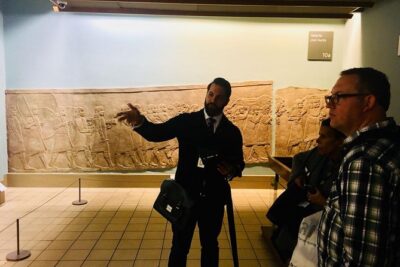
The British Museum London – Exclusive Guided Museum Tour
Read our review →
Private Guided Tour of the British Museum – Tickets Included
Read our review →Browse the lists this tour appears in