
Reviewed · MUSEUMS
London Transport Museum Entrance Ticket
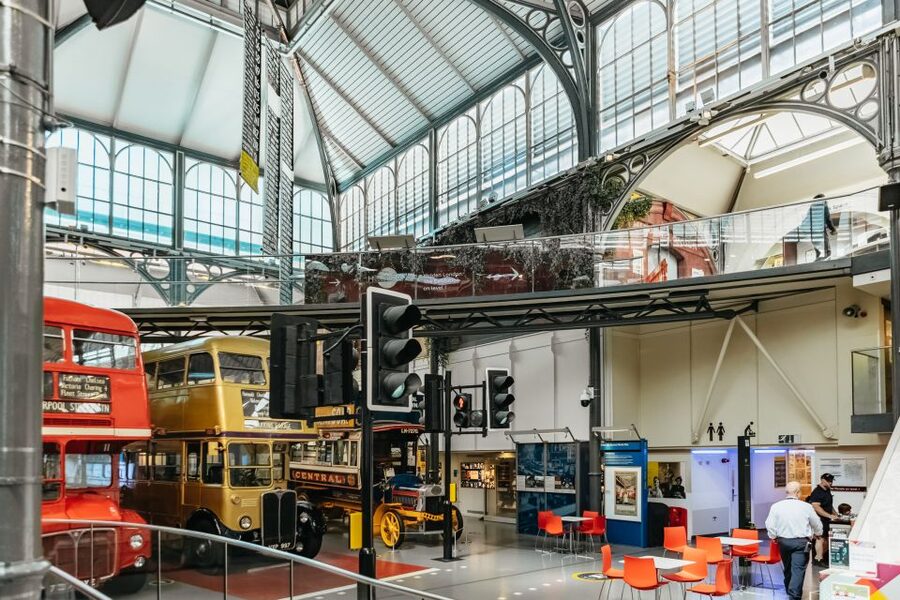
London Transport Museum makes a strong case for the idea that transport is the skeleton of a city. In the heart of Covent Garden, you can follow London from horse-drawn buses to electric Tube trains, while historic vehicles and bold graphic design show how the capital grew around its network. I especially like the first Underground steam train and the way the museum connects engineering with daily life.
I also like the hands-on activities, including a Tube-driving simulator, rail controls, and engineering challenges. They give children something to do while adults read about maps, vehicles, and city planning. The main drawback is noise and crowding during weekends and school holidays, when the family play areas can make the museum feel less like a quiet gallery.
In This Review
- Key points to know before you go
- A city story told through buses, trains, and maps
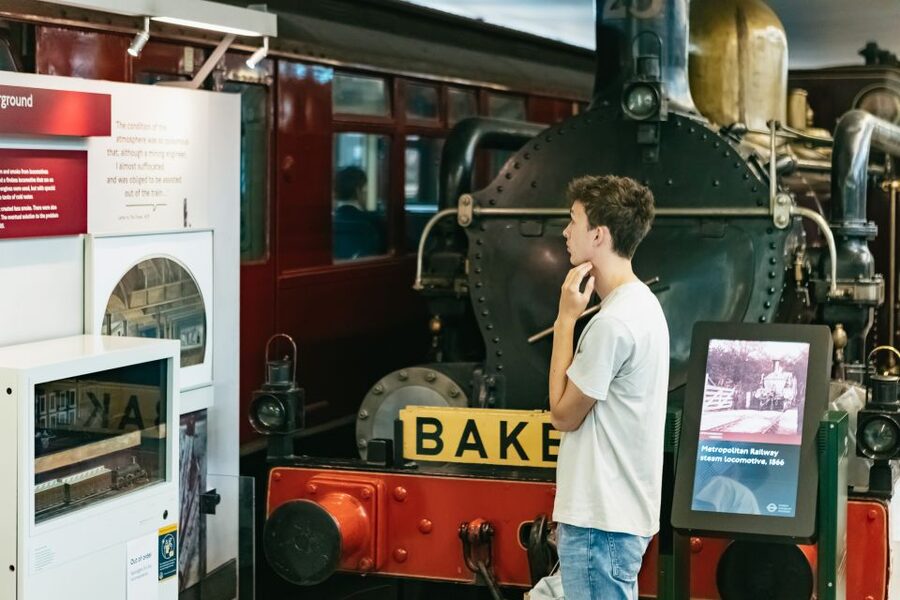
- The first Underground trains make the past feel real
- The Tube map and the power of a simple symbol
- The Global Poster Gallery adds a different kind of energy
- Hands-on exhibits keep children involved
- How long should you stay?
- Is the $33 admission good value?
- Getting there and handling the practical details
- Who will enjoy this museum most?
- Should you book the London Transport Museum?
- FAQ
- Where is London Transport Museum located?
- How much does the entrance ticket cost?
- How long is the ticket valid?
- What does admission include?
- What time is the last entry?
- Are large bags or luggage allowed?
- Is the museum wheelchair accessible?
- Is stroller parking available?
- Can I cancel my booking?
Key points to know before you go
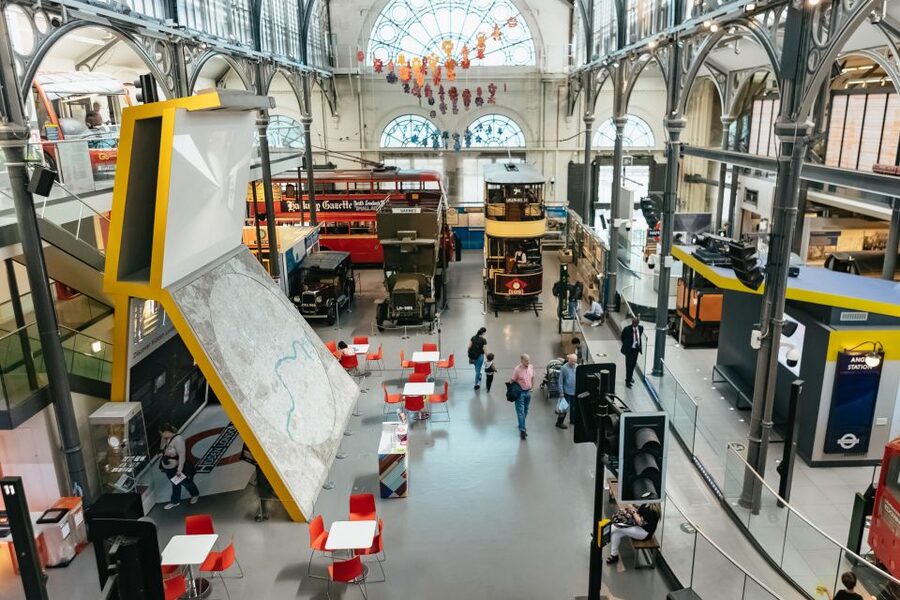
- See the technology that started the Underground: View the world’s first underground steam train and an early electric Tube railway.
- Follow London’s growth through transport: Horse buses, trams, buses, trains, maps, and posters explain how the city changed from the 1800s onward.
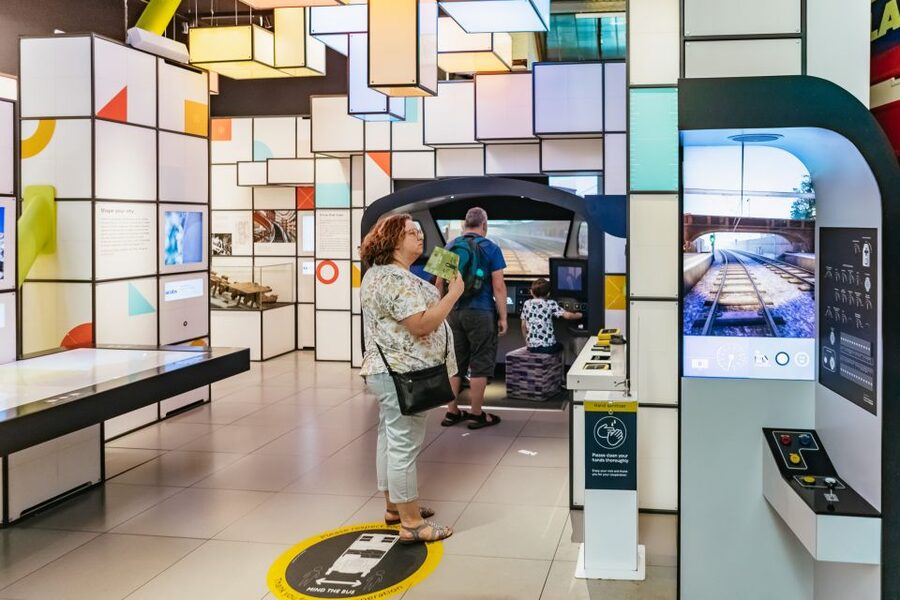
- Try the Elizabeth line simulator: The Future Engineer area lets you operate a modern train in a hands-on activity.
- Allow at least 1 to 1.5 hours: A quick visit covers the main displays, while a careful family visit can take 3 to 4 hours.
- Visit the Global Poster Gallery: More than 100 poster artworks explore commercial design and the poster-making process.
- Plan around busy periods: The museum is especially suited to families, but noise and queues can increase on Saturdays, Sundays, and school breaks.
A city story told through buses, trains, and maps
The museum is not simply a garage full of old vehicles. It uses transport to explain how modern London took shape. As the capital expanded from the 1800s onward, people needed faster ways to reach work, markets, homes, and entertainment. The vehicles here show that change in a very direct way.
You begin with the practical problem of moving people around a growing city. Horse-drawn buses represent an older London, when transport depended on animals, roads, and slow journeys. From there, the displays lead toward trams, motor buses, and the Underground, showing how each new system changed the scale and rhythm of city life.
I like this approach because it gives the objects a purpose. You are not just looking at an old bus and asking how it compares with today’s vehicles. You are considering why London needed it, who used it, and what it made possible.
The exhibits also show that London transport is part of the city’s identity. The familiar roundel, the diagrammatic Tube map, and the distinctive appearance of buses and stations are treated as design achievements as well as working tools. You start to see the network not only as infrastructure, but as one of the clearest visual signatures of London.
More London museums to visit:
- Tower of London and Crown Jewels Exhibition Ticket
★ 4.5 · 6,677 reviews - London: Chelsea Football Club Stadium and Museum Tour
★ 4.8 · 4,576 reviews - Chelsea FC Stadium Tours and Museum
★ 5.0 · 1,908 reviews
The first Underground trains make the past feel real
One of the museum’s strongest displays is the world’s first underground steam train. It represents the earliest attempt to carry passengers below London’s streets, long before the Tube became a normal part of daily life.
Steam underground sounds awkward by modern standards, and that is exactly what makes the exhibit useful. It helps you picture the engineering challenges of building railways beneath a crowded city. The display gives context to the later electric Tube railway, which made underground travel cleaner, faster, and more practical.
The electric railway is another important stop. I would spend time here even if you are not especially interested in trains, because it shows the point at which the Underground began to resemble the system you recognize today.
Historic vehicles are presented as large physical objects, not just photographs or small models. That matters for children, who can understand the scale of a bus or train much faster when they are looking at the real thing. Adults get the pleasure of noticing old details, while younger children can focus on wheels, controls, seats, and doors.
The museum also covers buses and trams from different periods. These displays are useful for comparing the changing shape of London transport. A visit can become a gentle family history lesson, especially if you point out how vehicles, routes, and passenger spaces developed over time.
The Tube map and the power of a simple symbol
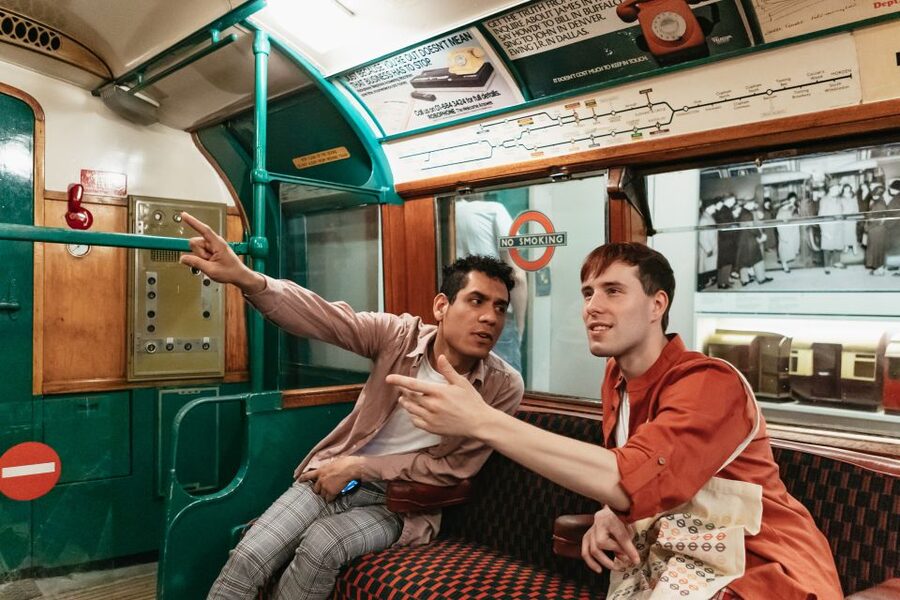
London’s transport system is famous partly because it is easy to recognize. The museum explains the origins of that identity through objects such as the Tube map and the roundel logo.
The Tube map is a particularly good example of practical design. Instead of trying to reproduce every street and curve above ground, it turns a complicated network into a clear diagram. You can study how a difficult city system became something passengers could read quickly.
The roundel works in a similar way. It is simple, bold, and easy to spot. The museum shows how transport branding helped create a consistent look across vehicles, stations, signs, and printed material.
This part of the museum is valuable for adults who enjoy design, but it also works for children. A map can become a puzzle. You can ask a child to find a line, trace a route, or imagine how many different journeys are possible.
I find this section more rewarding when you slow down. The large vehicles draw the eye first, but the small signs, maps, and printed objects explain why London transport became so recognizable around the world.
The Global Poster Gallery adds a different kind of energy
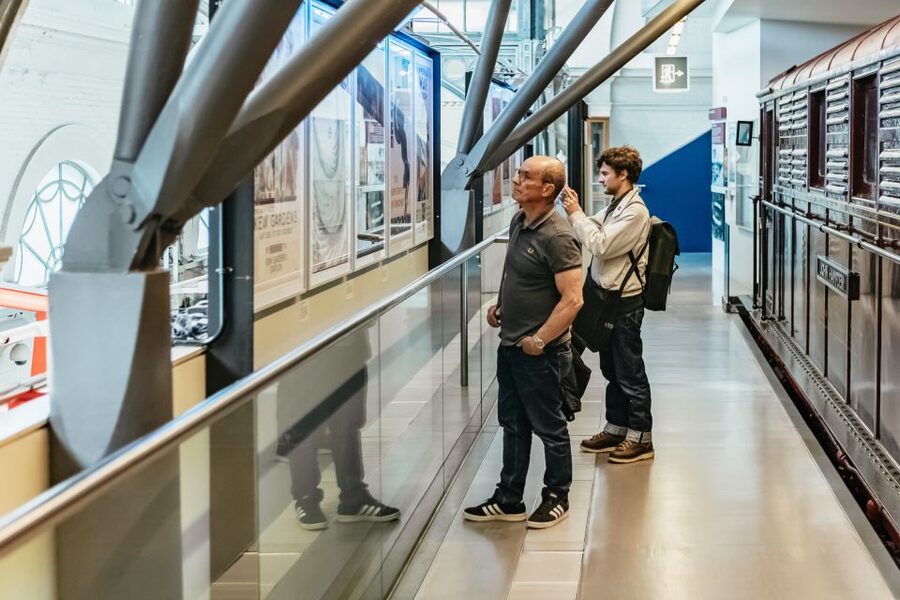
The Global Poster Gallery opened in October 2023 and is included with museum admission. It is dedicated to commercial poster art and design, with more than 100 poster artworks and posters on display.
This gallery broadens the museum’s subject. Transport posters were not only announcements. They encouraged people to visit parks, attend events, explore the city, or use a new service. They helped London transport sell an idea of movement and possibility.
The exhibition How to Make a Poster looks at the process behind poster creation from 1900 onward. It focuses on commissioning and creativity in the pre-digital age, which gives you a useful contrast with today’s instant digital advertising.
I like this gallery because it reminds you that a transport system communicates through images as much as through timetables. A well-designed poster had to catch the eye from a distance and deliver its message quickly. That pressure produced strong colors, clear lettering, and memorable shapes.
You do not need to know anything about graphic design to enjoy the display. Look for the choices that make each poster work: the size of the lettering, the balance between image and text, and the way a place or event is presented. If you are interested in London’s famous visual style, this is one of the museum’s most worthwhile additions.
A few more London days worth a look
- London: The London Eye Entry Ticket
★ 4.6 · 35,875 reviews - London: Tower Bridge Entry Ticket
★ 4.7 · 15,560 reviews - London: Westminster Abbey Entrance Ticket
★ 4.6 · 11,254 reviews - London: St Paul’s Cathedral Entry Ticket
★ 4.7 · 9,813 reviews
Hands-on exhibits keep children involved
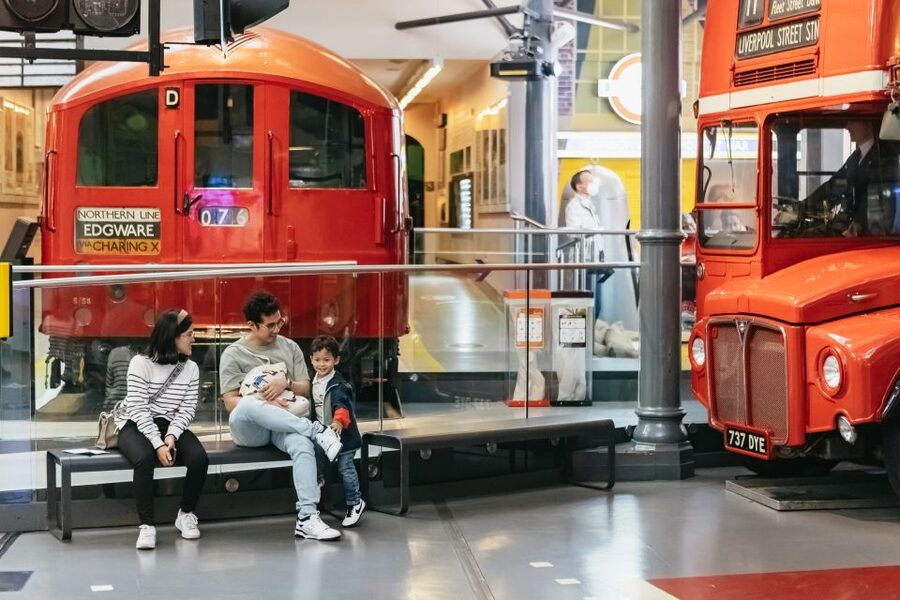
The museum is especially effective for families because it does not ask young children to stand still and read labels for hours. Interactive activities let them operate, draw, test, and play while the adults follow the historical story.
The Future Engineer’s simulation allows you to drive a modern Elizabeth line train. It gives the museum a link to present-day London and shows that transport history is still being made.
Other hands-on activities include working with rail track switches and taking part in a brake pad change. These displays make engineering feel practical rather than abstract. A child may not remember every technical explanation, but they are likely to remember having control over a railway system or trying to solve a mechanical task.
The children’s play areas are another reason families tend to stay longer. They are useful for toddlers and younger children who may not yet have the patience for the full exhibition. Older children can spend time with puzzles and interactive controls, while teenagers and adults may prefer the vehicles, maps, and design displays.
The tradeoff is sound. The museum can become noisy when several play areas are full, especially during weekends and school holidays. If you want a quieter visit, aim for the morning, when the museum may be less crowded, or choose a weekday outside school breaks.
How long should you stay?

You can see the main highlights in about 1 to 1.5 hours. That is enough for a brisk walk through the historic vehicles, early Underground displays, interactive stations, and a portion of the poster gallery.
I would allow 2 to 3 hours for a more relaxed visit. Families often need extra time because children return to favorite activities, and adults may want to read the explanations around the Tube map, branding, or engineering exhibits.
A careful visit can stretch to 3 or 4 hours. That is realistic if you stop at most displays, allow time in the play areas, and give the Global Poster Gallery proper attention.
The one-day ticket gives you access for the day, so you do not need to race through the building. Still, the museum closes at 6:00 PM, and last entry is at 5:00 PM. I would avoid arriving late in the afternoon, particularly if you are visiting with children.
Is the $33 admission good value?
At about $33 per person, this is not the cheapest museum stop in London. Its value depends on how you use it.
For a short adult visit of one hour, the price may feel high compared with London’s many free museums. The case becomes stronger if you stay for several hours, use the interactive displays, visit the Global Poster Gallery, and treat the museum as a substantial Covent Garden activity rather than a quick stop.
Families usually get the best value because several age groups can find something useful. A two-year-old has a play area, an eight-year-old has controls and simulations, and an adult can spend time with the history, design, and engineering. That broad age range is a real advantage.
The ticket also includes access to temporary exhibitions and the Global Poster Gallery. If you are already spending time in Covent Garden, the location helps. You can combine the museum with the surrounding market area and central London sights without making a separate journey across the city.
You can also reserve now and pay later, and cancellation is allowed up to 24 hours before the visit for a full refund. Those options are useful when your London schedule is still shifting, though you should still check the available starting times before booking.
Getting there and handling the practical details
The meeting point is London Transport Museum itself in Covent Garden. You do not need to meet a guide elsewhere or join a group transfer, which keeps the visit simple.
Large bags and luggage are not allowed. Do not plan to arrive with full-size suitcases or bulky shopping bags. Stroller and buggy parking is available, which is helpful for families with young children, though you should be ready to leave the buggy parked while exploring.
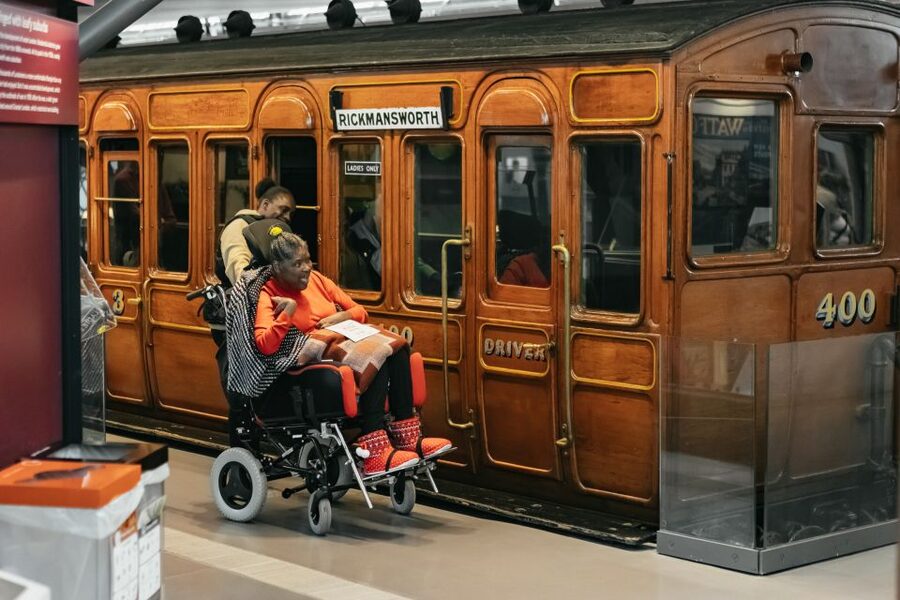
The museum is wheelchair accessible. That makes it suitable for a wide range of visitors, but the supplied details do not specify every route or facility, so anyone needing particular access arrangements should check with the museum before arrival.
Prebooking is sensible at busy times. It may not eliminate every queue, but it can reduce uncertainty at the entrance. Saturday mornings can already be busy, while quieter morning visits are possible outside peak periods.
The museum’s gift shop is worth a look at the end. It carries transport-themed gifts and London design items. If you are buying clothing, check the size carefully before leaving, since sizing may not match what you normally expect.
Who will enjoy this museum most?
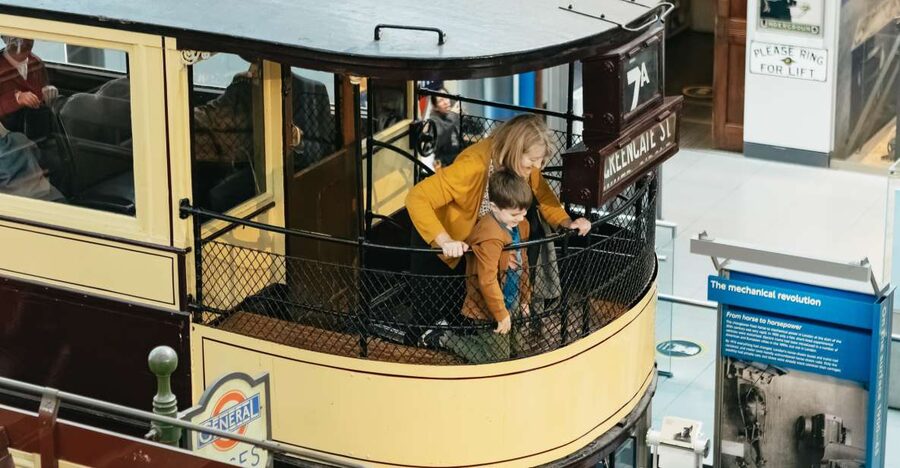
Families with children from toddler age through the early teenage years are the clearest match. The museum gives children permission to touch, operate, and play, while still offering enough information for adults.
It also suits adults who like public transport, industrial design, maps, or London social history. You do not need to be a rail enthusiast. The collection explains how transport affected ordinary routines, city expansion, and the way London presents itself.
Grandparents and grandchildren can find common ground here. Older adults may recognize buses, trams, or Underground features from earlier decades, while children can focus on the controls and play spaces. The exhibits work well across generations because the subject is both historical and familiar.
Couples and solo visitors should think about timing. The displays can be fascinating, but the atmosphere may be loud when children’s areas are full. Visit at a quieter time if you want to concentrate on the posters, vehicles, and design details.
Should you book the London Transport Museum?
I would book this entrance ticket if you want a family-friendly London museum that combines real vehicles with practical activities. The Elizabeth line simulator, early Underground trains, historic buses, Tube map, and Global Poster Gallery give you more variety than the title might suggest.
I would be less quick to book if you only want a quiet art museum or have no interest in how cities work. The price makes most sense when you stay for at least two hours and take advantage of the interactive displays and poster collection.
For a first London visit, the museum gives you useful context for the transport network you will use throughout the rest of your trip. For returning visitors, it adds the design, engineering, and social story behind the familiar roundel and red buses.
FAQ
Where is London Transport Museum located?
The museum is in Covent Garden, in the heart of London.
How much does the entrance ticket cost?
The listed price is $33 per person.
How long is the ticket valid?
The ticket provides access for one day.
What does admission include?
Admission includes the entrance ticket, access to temporary exhibitions, and entry to the Global Poster Gallery.
What time is the last entry?
Last entry is at 5:00 PM daily. The museum closes at 6:00 PM.
Are large bags or luggage allowed?
No. Luggage and large bags are not allowed inside.
Is the museum wheelchair accessible?
Yes, the activity is wheelchair accessible.
Is stroller parking available?
Yes, stroller and buggy parking is available.
Can I cancel my booking?
Yes. You can cancel up to 24 hours in advance for a full refund. You can also reserve now and pay later.
Latest arrivals on the London list
- Heathrow Airport to London Arrival Transfer★ 4.5 · 50 reviews
- London Beatles Tour★ 5.0 · 50 reviews
- One Way Taxi Transfer from London to Gatwick Airport★ 5.0 · 51 reviews
- London: Hidden Baker Street Tube Station Tour★ 4.7 · 51 reviews
- City & Secrets: Explore London’s Hidden Gems★ 5.0 · 51 reviews
- London Christmas Lights Open-Top Bus Tour. 2025 Early Bird★ 3.6 · 51 reviews
- 4 hour London Private Tour, with your own Black Cab Tour Guide★ 5.0 · 51 reviews
- The Beatles Magical History Black Taxi Tour London★ 5.0 · 51 reviews
Museums, compared.

Tower of London and Crown Jewels Exhibition Ticket
Read our review →
Chelsea Football Club Stadium and Museum Tour
Read our review →


Official tickets: Moco Modern & Contemporary Art Museum
Read our review →
British Museum London Guided Tour Semi-Private 8ppl Max
Read our review →
Browse the lists this tour appears in