
Reviewed · JACK THE RIPPER TOURS
London: Jack the Ripper Museum Tickets
London’s Jack the Ripper Museum turns a grim Victorian crime story into a six-floor walk through Whitechapel in 1888. You move from a recreated murder scene to a police station, then into Jack the Ripper’s sitting room and the cramped bedroom of Mary Jane Kelly. It is theatrical, unsettling, and more serious than the name alone suggests.
I like the strong focus on the nine women who were murdered, rather than treating the killer as a celebrity. I also like the sound effects, original newspapers, police artifacts, and the small details of East End life, such as boots, bonnets, and a straw mattress. The drawback is its size: many people finish in about 45 minutes, though careful readers can spend around 90 minutes inside.
In This Review
- Key points
- Entering 1888 Whitechapel on Cable Street
- Mitre Square and the first crime scene
- Jack the Ripper’s sitting room
- Whitechapel Police Station and the evidence boards
- Mary Jane Kelly’s attic bedroom
- The morgue and the graphic material
- How long the museum takes
- Price, location, and practical value
- Who should visit the Jack the Ripper Museum
- Should you book this museum?
- FAQ
- Where is the Jack the Ripper Museum?
- How long is the visit?
- Is this a guided tour?
- What can I see inside?
- Are the displays graphic?
- Is transportation included?
- Can I cancel my booking?
Key points
- Six floors of Victorian crime history: Follow the story through recreated rooms, police evidence, and period displays.
- A chilling Mitre Square scene: See a waxwork recreation of P. C. Watkins discovering Catherine Eddowes’s body.
- The women receive proper attention: Read about the victims’ lives, families, and difficult conditions in the Victorian East End.
- Rare police-related objects: View the From Hell and Dear Boss letters, newspapers, and items linked to P. C. Watkins.
- The attic bedroom is the emotional center: Mary Jane Kelly’s room shows the domestic reality behind the crime.
- A compact, self-guided visit: It suits a spare hour near Tower Hill, Aldgate East, or Tower Gateway.
Entering 1888 Whitechapel on Cable Street
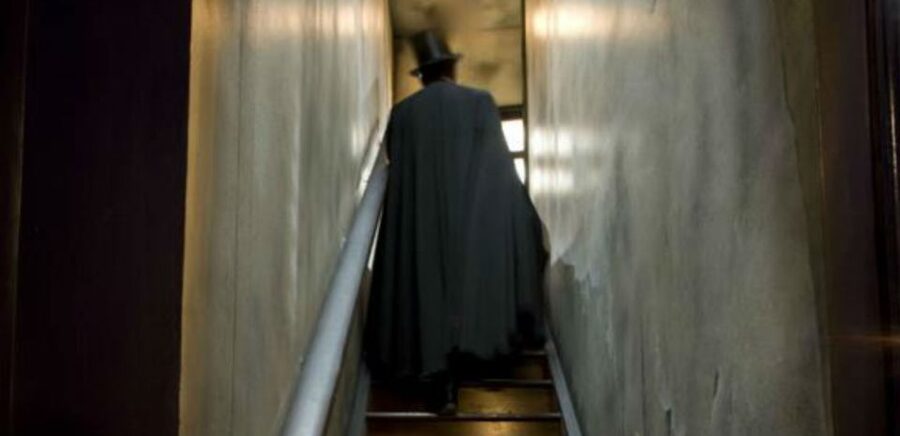
The museum is at 12 Cable Street, east of central London, near Tower Gateway, Tower Hill, and Aldgate East stations. From the outside, the building can look more like an ordinary house than a major London attraction. That modest entrance is part of the surprise. Inside, the rooms are arranged to make you feel that you are moving through the physical world of the investigation.
This is not a conventional guided walking tour through Whitechapel. Your ticket gives you admission, and the museum is generally experienced at your own pace. You can read the wall panels, examine objects, listen to sound effects, and move between the six floors without being tied to a group schedule.
That flexibility matters. I would plan on 45 minutes if you read selectively, but allow 60 to 90 minutes if you want to study the displays. The museum is small enough for a quick stop and detailed enough to reward patience.
The tone is dark from the beginning. This is a museum about murder, poverty, and gruesome injury, not a light London curiosity. If you are interested in true crime, Victorian social history, or horror set design, the atmosphere will likely appeal to you. If graphic material bothers you, the morgue and crime-scene displays deserve caution.
More Ripper walks in the East End:
- London: The Original Jack the Ripper Walking Tour
★ 4.7 · 7,833 reviews - London Jack the Ripper Guided Tour with Ripper-Vision
★ 4.5 · 4,840 reviews - London: Jack the Ripper Small Group Tour
★ 4.7 · 3,159 reviews
Mitre Square and the first crime scene
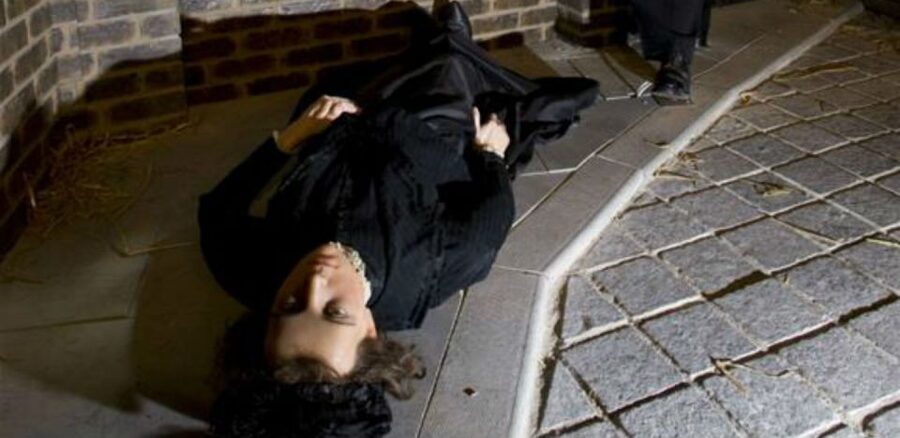
One of the most memorable rooms recreates Mitre Square, where P. C. Watkins discovered Catherine Eddowes. A waxwork figure shows the constable finding the body, giving the scene a dramatic, almost stage-like quality.
The display works because it places the police response at the center. You are not simply shown a name and date on a wall. You see the moment that turned a brutal killing into an urgent investigation, with a police officer confronted by evidence that demanded immediate action.
The recreation is intentionally frightening. Sound, dim surroundings, and lifelike figures create a horror-museum mood. That approach will suit you if you want atmosphere, but it may feel too theatrical if you are looking for a strictly academic museum.
Still, the room offers a useful starting point. It connects the famous case to the people who had to respond to it on the ground. The museum repeatedly returns to that tension: the public fascination with the murderer versus the real fear and suffering experienced by the women and the East London community.
Jack the Ripper’s sitting room
The next major setting is a recreation of Jack the Ripper’s sitting room. It includes medical instruments, books, maps, letters, and Victorian Ripper memorabilia. The room is designed around the question that has kept the case alive for more than a century: who could have committed the murders?
The display gives you objects to examine rather than only a written theory. Walter Sickert receives particular attention, with an original drawing of a woman’s body on a metal bed, signed in red ink. The drawing is presented in connection with Sickert’s status as a prime suspect, though the museum does not turn the question into a tidy solved mystery.
That uncertainty is important. The identity of Jack the Ripper has never been confirmed, so any suspect display should be viewed as part of the historical debate, not proof. The museum’s props and clues create an engaging detective-room feel, but you should keep the difference between evidence, theory, and speculation in mind.
I like this room best when approached as a snapshot of Victorian fascination. Maps and letters show how the case spread through newspapers and public conversation. Medical objects reflect the period’s grim forensic interests. The room also makes clear why the story has outlived the original investigation: every object seems to invite one more theory.
Whitechapel Police Station and the evidence boards
The recreated Whitechapel Police Station is one of the museum’s more useful sections. It shows the investigation from the police side, with crime-scene boards, newspaper reports, and artifacts linked to the case.
Here you can inspect the From Hell and Dear Boss letters. These documents matter because they helped shape the public image of Jack the Ripper, even though their authorship and meaning remain disputed. Their presence lets you see how communication, rumor, and newspaper coverage fed the growing legend.
The display also includes a whistle, notebook, handcuffs, and truncheon connected with P. C. Watkins. The whistle was used to call for help after he found the body in Mitre Square. These everyday police objects are less sensational than a murder scene, but they provide a stronger sense of how the investigation functioned.
I find this room valuable because it shifts the story away from the killer’s supposed cleverness. Police officers had to work with notebooks, patrol routines, incomplete information, and pressure from the public. The artifacts make the investigation feel physical and immediate.
The museum presents these as highly significant Ripper-related objects, outside Scotland Yard’s private Crime Museum. You should still remember that a display label is not the same as a full scholarly archive. The room is best enjoyed as a well-presented introduction to the evidence and the period.
More London museums to visit:
- Tower of London and Crown Jewels Exhibition Ticket
★ 4.5 · 6,677 reviews - London: Chelsea Football Club Stadium and Museum Tour
★ 4.8 · 4,576 reviews - Chelsea FC Stadium Tours and Museum
★ 5.0 · 1,908 reviews - London Transport Museum Entrance Ticket
★ 4.5 · 1,323 reviews
Mary Jane Kelly’s attic bedroom
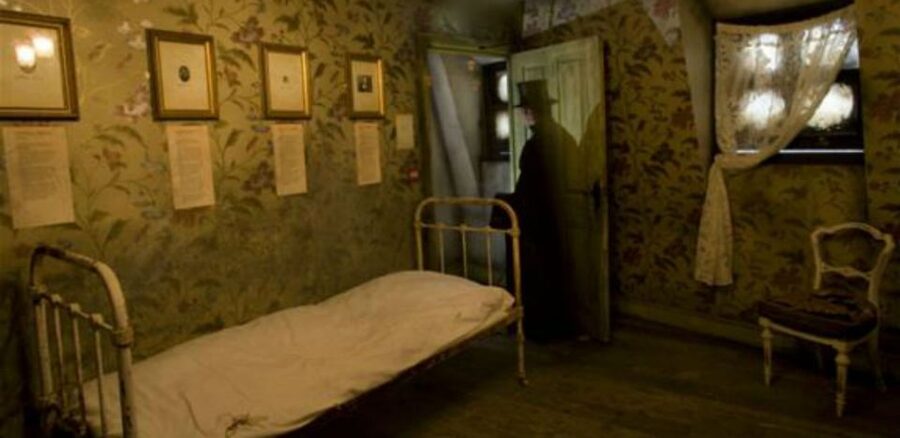
The attic recreation of Mary Jane Kelly’s bedroom is the museum’s most affecting space. It represents the scene of the Ripper’s most horrific murder, but the presentation also shows how women in the Victorian East End lived.
You see a metal-framed bed with a straw mattress, boots, bonnets, domestic photographs, and a few meager possessions. These details do more than establish a period look. They remind you that the women had homes, belongings, families, and ordinary routines before they became names in a murder case.
The room includes stories about the victims and photographs of the women with their families. That emphasis is one of the museum’s strongest choices. Jack the Ripper is one of the most famous names in criminal history, but the people harmed by the murders are often reduced to brief entries in a timeline.
Sound adds to the mood. A woman singing through a speaker in the attic has a haunting effect, and it changes the room from a simple set into something more personal. You may find the scene moving, or you may find the theatrical treatment too heavy. Either response is understandable.
Take your time here. The objects are sparse because the women were poor, not because their lives were unimportant. The room asks you to picture the conditions of working-class Victorian London rather than viewing the murders as isolated horror stories.
The morgue and the graphic material
The final major section is the morgue. Here you can study actual autopsy photographs and read reports describing the mutilation and deaths of the nine women associated with the Ripper case.
This is the point where the experience becomes genuinely graphic. The museum does not simply suggest violence through wax figures and dark lighting. The photographs and reports are presented as historical material, and they may be upsetting.
If you want the full experience, approach this room slowly and read only what you are comfortable reading. If you are visiting with children, decide in advance whether the material is appropriate. Some young people may enjoy the wax figures and detective-room displays, but the autopsy photographs are a different matter.
The morgue also changes the mood of the museum. Earlier rooms can feel like a crime-themed attraction, with props and theatrical scenes. Here the reality of the murders is harder to avoid. I appreciate that the museum includes this evidence, but I would not describe the visit as family-friendly without qualification.
How long the museum takes
The official ticket is valid for one day, with entry times based on availability. Once inside, you can walk through the museum at your own speed rather than following a fixed presentation.
A quick visit can take about 45 minutes. That is enough to see each floor and read the main information. I would allow around 90 minutes if you are interested in the documents, police objects, victim biographies, and period details.
The small size is both a strength and a weakness. You can cover the museum without giving up half a day of sightseeing, which makes it easy to pair with the Tower of London area or a walk around historic East London. On the other hand, you should not expect a large national museum with extensive galleries.
The experience is best for focused attention. If you rush from room to room, you will mainly remember the wax figures and dark atmosphere. If you slow down, the display offers more about Victorian policing, newspaper culture, poverty, and the lives of the victims.
Price, location, and practical value
Admission is listed at about $18.86 per person. The value depends on what you want from a museum. For a short, atmospheric attraction with six floors and a clear subject, that price can make sense, especially if you are already near Tower Hill or Aldgate East.
It is less attractive if you expect a long, expert-led tour or a large collection of authenticated artifacts. Transportation is not included, and the museum is a standalone admission rather than a broader Whitechapel sightseeing package.
The location helps. Tower Gateway, Tower Hill, and Aldgate East are the nearest underground and train stations, so you can fit the museum into an East London day. The visit ends back at the museum, with no transport component to arrange.
The ticket also allows cancellation up to 24 hours before the activity for a full refund, and you can reserve now and pay later. A disabled person’s accompanying companion receives free entrance. The museum is closed on Christmas Day.
Who should visit the Jack the Ripper Museum
I would recommend this museum to you if you enjoy:
- True crime presented through rooms, objects, and documents
- Victorian London and the social conditions of the East End
- Atmospheric horror with historical material
- Self-guided attractions where you control the pace
- Short museum visits that fit around larger London sights
It may not suit you if you want a neutral academic treatment with little theatrical staging. The waxworks, sound effects, dark rooms, and recreated interiors are central to the experience. This is history presented with a strong horror edge.
Families should use judgment. Some children may enjoy the unusual setting and interactive displays, but the autopsy photos and murder scenes are graphic. Teenagers interested in horror or crime may find it compelling, while younger children could find it too frightening.
The museum can also suit dedicated historians, but I would treat it as an accessible introduction rather than the final word on the case. The displays raise questions about suspects, letters, and police work, but they do not settle the identity of Jack the Ripper.
Should you book this museum?
Book it if you want a compact, atmospheric look at the 1888 murders and can handle graphic material. The best parts are the Whitechapel Police Station recreation, the victim-focused attic bedroom, and the small police objects that make the investigation feel more real.
Skip it if you are short on money, dislike waxwork attractions, or want a full walking tour of the actual Whitechapel streets. You will not receive transportation or a broad London sightseeing experience with this ticket.
For most true-crime fans, horror enthusiasts, and visitors curious about Victorian London, the museum offers a worthwhile hour near Tower Hill. Go slowly, give the women’s stories as much attention as the killer’s, and save the morgue for last.
FAQ
Where is the Jack the Ripper Museum?
The museum is at 12 Cable Street, London E1 8JG. The nearest underground and train stations are Tower Gateway, Tower Hill, and Aldgate East.
How long is the visit?
The ticket is valid for one day. Many people complete the museum in about 45 minutes, while a slower visit focused on the reading and displays can take around 90 minutes.
Is this a guided tour?
The experience is described as a self-guided walk through the museum. Some visits may include staff or guides, but the admission ticket itself is for museum entry.
What can I see inside?
You can see recreated crime scenes, a recreation of Whitechapel Police Station, Jack the Ripper’s sitting room, Mary Jane Kelly’s bedroom, and a morgue with autopsy photographs and reports.
Are the displays graphic?
Yes. The museum includes waxwork murder scenes, actual autopsy photographs, and written reports about the mutilation and deaths of nine women. Consider this before bringing children or anyone sensitive to graphic material.
Is transportation included?
No. Transportation is not included. You make your own way to the museum at Cable Street.
Can I cancel my booking?
You can cancel up to 24 hours in advance for a full refund. The activity also offers a reserve-now, pay-later option.
Latest arrivals on the London list
- Heathrow Airport to London Arrival Transfer★ 4.5 · 50 reviews
- London Beatles Tour★ 5.0 · 50 reviews
- One Way Taxi Transfer from London to Gatwick Airport★ 5.0 · 51 reviews
- City & Secrets: Explore London’s Hidden Gems★ 5.0 · 51 reviews
- London: Hidden Baker Street Tube Station Tour★ 4.7 · 51 reviews
- London Christmas Lights Open-Top Bus Tour. 2025 Early Bird★ 3.6 · 51 reviews
- 4 hour London Private Tour, with your own Black Cab Tour Guide★ 5.0 · 51 reviews
- The Beatles Magical History Black Taxi Tour London★ 5.0 · 51 reviews
Jack the Ripper Tours, compared.
London Jack the Ripper Guided Tour with Ripper-Vision
Read our review →
German Language : Original Jack the Ripper Tour
Read our review →
Jack the Ripper Walking Tour – Ripper Vision Tours
Read our review →
Ultimate Jack the Ripper : Guided Tour of London
Read our review →
Browse the lists this tour appears in