
Reviewed · WALKING TOURS
Burnings, Butchery & Black Death: A Walking Tour of London’s Bloody Past
London’s dark past is not locked away in a museum. It sits under your feet, behind quiet alleys, beside pubs, and around the churches and markets you might otherwise pass without a glance. This two-hour walk links plague, executions, fire, medieval religion, wartime damage, and Victorian sanitation across a compact part of the city.
I like the way the tour reaches beyond the usual Jack the Ripper circuit, and I like the small size, capped at 15 people. Tom, the named guide in the feedback, is praised for clear storytelling, quick wit, and his ability to answer questions. The main drawback is that two hours can only offer a sharp sample of more than 1,000 years of history, and the outdoor format depends on good weather.
In This Review
- Key points about London’s bloody past
- Why this route feels different from a standard London tour
- Starting at the Charterhouse and its plague pit
- Smithfield Market and the hard business of food
- St John’s Gate and the Knights Hospitallers
- Cloth Fair and the art of missing the obvious
- William Wallace, public memory, and the surprise of location
- St Bartholomew’s Church, a quiet historic anchor
- The Golden Boy of Pye Corner and the Great Fire
- Holborn Viaduct and the River Fleet
- Ye Olde Mitre and the practical end of the walk
- St Bartholomew’s Hospital and the medical side of the story
- What the $27.73 price gets you
- Timing, walking effort, and who will enjoy it
- Guide style and the value of Tom’s storytelling
- Booking, weather, and practical details
- Should you book this London history walk?
- FAQ
- How long does the tour last?
- How much does the tour cost?
- Where does the tour start?
- Where does the tour end?
- How large is the tour group?
- Is the tour offered in English?
- Is admission included?
- Can I cancel for a refund?
Key points about London’s bloody past
- A thousand years in two hours: The route moves from medieval monasteries and plague pits to Victorian sewers and wartime bomb damage.
- Ten compact stops: You see major historic sites and easily missed corners without spending all day on your feet.
- Tom’s lively guiding: Expect history mixed with local details, filming locations, pub suggestions, and stories tied to modern London.
- A small group of 15 maximum: The size should make it easier to hear the guide and ask questions.
- St Bartholomew’s Church included: One of London’s oldest surviving parish churches is the only listed stop with admission included.
- A useful finish near Farringdon: The walk ends on Ely Place, around the corner from Farringdon Station.
Why this route feels different from a standard London tour
Many London history walks stay with royal palaces, grand monuments, and famous squares. This one takes a less polished route. It asks you to look at places built for illness, punishment, trade, worship, burial, and waste.
That gives the walk a useful sense of place. Smithfield was not simply an old market. The Charterhouse was not simply an impressive building. Holborn Viaduct was not simply a road crossing. Each stop reveals how London dealt with the unpleasant problems of city life.
I especially like the way the route mixes famous names with details you can easily miss. William Wallace has a memorial here, but the surrounding lanes and buildings often attract less attention than the larger sights in central London. St John’s Gate recalls the medieval Knights Hospitallers, while the Golden Boy of Pye Corner marks the end of the Great Fire of 1666 and later became linked with eighteenth-century ghost hysteria.
The walk also avoids leaning only on grisly celebrity stories. The focus is broader: disease, food, religion, punishment, fire, sanitation, and the ways Londoners tried to control a growing city.
More London walking tours:
- Magical London: Harry Potter Guided Walking Tour
★ 4.7 · 22,044 reviews - London: The Original Jack the Ripper Walking Tour
★ 4.7 · 7,833 reviews - Tour for Muggles The Ultimate Harry Potter Walking Tour in London
★ 5.0 · 4,684 reviews
Starting at the Charterhouse and its plague pit
The meeting point is on Aldersgate Street, near the Barbican, at Underground Ltd. From there, the first stop is the Charterhouse, a fourteenth-century monastery associated with a plague pit.
This is a strong opening because it sets the tone at once. Medieval London was shaped by disease as much as by kings and churches. A plague pit is a blunt reminder that the city’s population faced mass death with limited medical understanding and few safe places to put the dead.
You should expect about 10 minutes at each stop. That keeps the route moving, but it also means the guide must choose the best details rather than attempt a full lecture. Tom’s strength, based on the feedback about his delivery, is making those short stops feel connected rather than random.
The Charterhouse also shows how a site can change function over time. The tour uses it to discuss its monastic past and plague connection, giving you an early example of London’s habit of building new lives on top of old ones.
Smithfield Market and the hard business of food
Next comes Smithfield Market, described as a 1,000-year-old meat market. Few places better show the practical side of medieval and later London.
Markets bring food into a city, but they also create noise, waste, smells, crowds, and conflict. Smithfield’s history connects directly with the tour’s themes of butchery and public life. You are looking at a place where the daily business of feeding London carried a darker side.
The guide also uses the area to discuss bomb attacks during the Blitz, according to the details shared about the walk. That adds a twentieth-century layer to a market already tied to medieval trade. The result is not a single story about one old building. It is a lesson in how the same patch of ground can absorb very different kinds of danger.
Give yourself time to look around between explanations. The value here is partly visual. A guide can point out how much history is packed into a small area, but you also get a chance to see the working character of the district.
St John’s Gate and the Knights Hospitallers
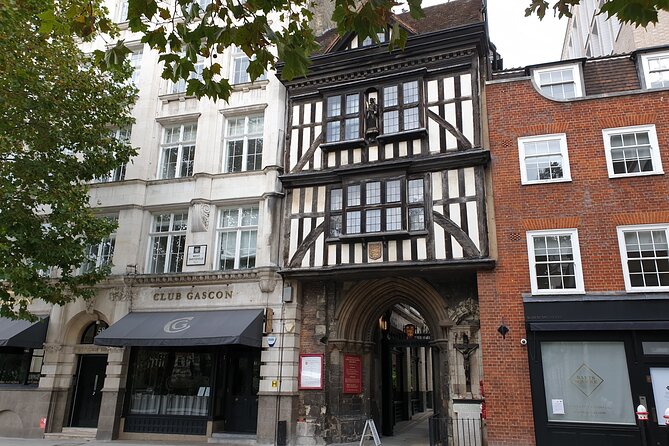
St John’s Gate was home to the medieval Knights Hospitallers, a religious and military order. The stop brings a different kind of power into the walk.
The Charterhouse and Smithfield show illness and food. St John’s Gate shows the role of organized religion, charity, and military service in medieval London. The site also links to the origins of St John Ambulance, a detail included in the tour’s storytelling.
That connection makes the stop useful for modern visitors. You are not just hearing about a distant order with an unfamiliar name. You are also hearing how an older institution connects with a service many people recognize today.
The ten-minute format works well here. You can grasp the main story without getting lost in a long account of medieval organizations. If you want a detailed study of the Knights Hospitallers, this tour will not be enough by itself. If you want a clear introduction while moving through central London, it fits nicely.
Something completely different for your London days:
- London: The London Eye Entry Ticket
★ 4.6 · 35,875 reviews - From London: Harry Potter Warner Bros Studio Tour
★ 4.7 · 26,588 reviews - London: Westminster to Greenwich River Thames Cruise
★ 4.5 · 22,836 reviews - London: Madame Tussauds London
★ 4.6 · 20,915 reviews
Cloth Fair and the art of missing the obvious
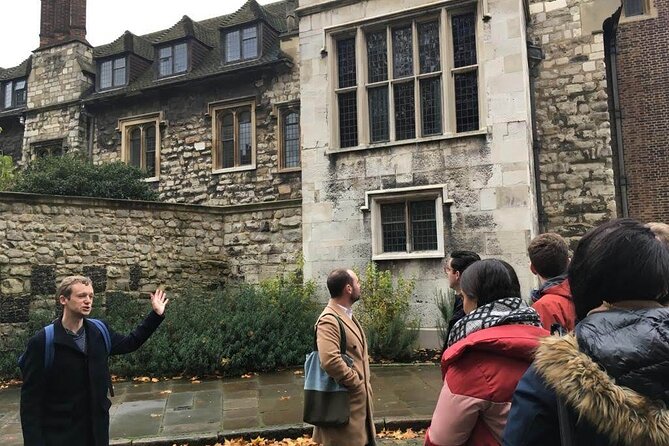
Cloth Fair is a quiet alley with a noisy history. This is exactly the sort of stop that rewards a guided walk.
On your own, you might pass through without noticing much. With Tom pointing out the area’s past, the ordinary lane becomes part of the larger story of medieval London, trade, crowds, and change.
I like these smaller places because they make the city feel less like a row of postcard sights. You are not waiting for a famous view. You are learning how to read street names, alleys, and old building lines.
The tradeoff is that some stops may feel understated if you expect grand ruins or dramatic displays. This is a street-level history tour. Its best moments come from the explanation rather than from a large object behind glass.
William Wallace, public memory, and the surprise of location
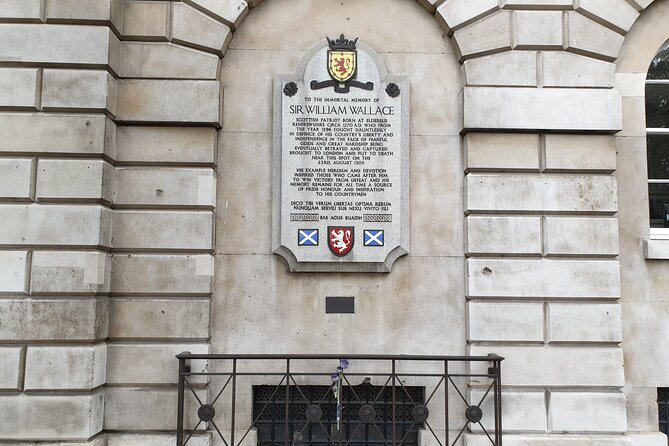
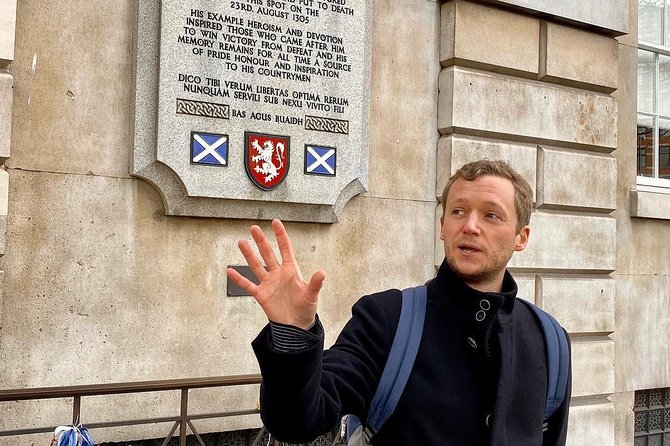
The William Wallace Memorial brings one of Scotland’s best-known historical figures into the route. Wallace is widely known as Braveheart, but the memorial’s presence in this part of London may surprise you.
This stop offers a good chance to consider how cities remember famous people. A monument does not need to sit in a grand square to carry a large story. Here, the memorial becomes one more clue in a district full of religious, commercial, and civic history.
The tour also includes filming locations along the way. That gives the walk a modern touch without pulling it away from the past. You can move from medieval figures to the way London is presented on screen, then back to the physical evidence in front of you.
St Bartholomew’s Church, a quiet historic anchor
Church of St Bartholomew the Great is London’s oldest surviving parish church, and admission is included in the tour.
This is one of the route’s clearest interior highlights. After several outdoor stops, entering an old church gives the history a stronger physical presence. Stone, age, and layers of use can communicate something that dates and names cannot.
The church also helps explain why this area mattered for so long. Religious buildings were not isolated decoration. They were tied to hospitals, markets, communities, and the daily workings of the city.
You should note that the wider tour remains brisk. The listed timing gives about 10 minutes at the stop, so this is an introduction rather than a long architectural visit. Still, including admission means you get more than a street-side explanation.
The Golden Boy of Pye Corner and the Great Fire
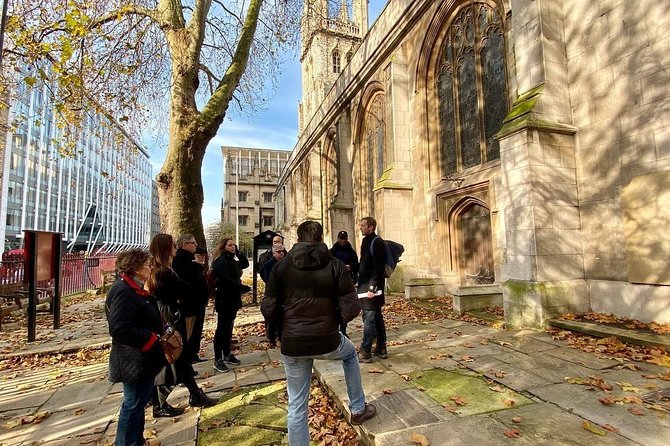
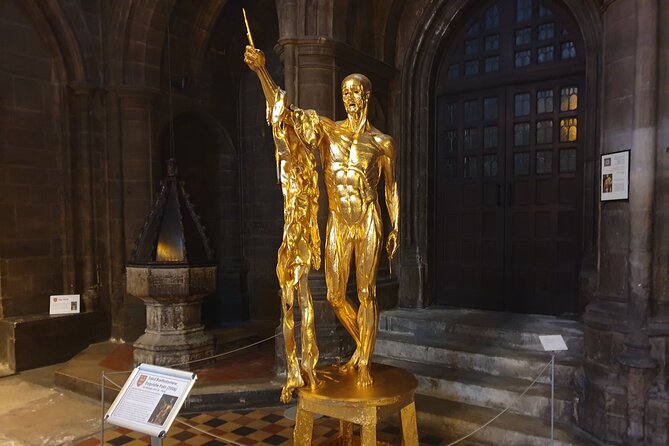
The Golden Boy of Pye Corner marks the place where the Great Fire of 1666 died out. It also connects with eighteenth-century ghost hysteria.
This small marker carries two very different kinds of history. The Great Fire is one of London’s defining disasters, while the later ghost stories show how fear can continue after the original crisis has passed.
The stop is a reminder that a monument can be modest in size but large in meaning. You will not find a vast memorial complex here. You get a marker on a street, then the guide supplies the connection between fire, rebuilding, rumor, and public memory.
This is also where a sharp guide earns the price of the tour. Without context, a small statue can be easy to ignore. With context, it becomes a useful key to the city around it.
Holborn Viaduct and the River Fleet
At Holborn Viaduct, the route turns to Victorian public health. This was the site of the River Fleet, described as Victorian London’s largest open-air sewer.
The stop shows how the city’s problems changed over time. Medieval London struggled with plague and food supply. Victorian London faced the consequences of rapid growth, inadequate drainage, and polluted waterways.
You may find this one of the most revealing stops because it challenges the modern appearance of the city. A busy road and transport connection can conceal the route of an old river and sewer. The city looks orderly now, but its infrastructure was built through repeated attempts to manage waste and disease.
The walk does not treat the past as a string of colorful tales only. It also shows why public works mattered. Clean water, covered sewers, and sanitation were not abstract improvements. They changed survival in a crowded city.
Ye Olde Mitre and the practical end of the walk
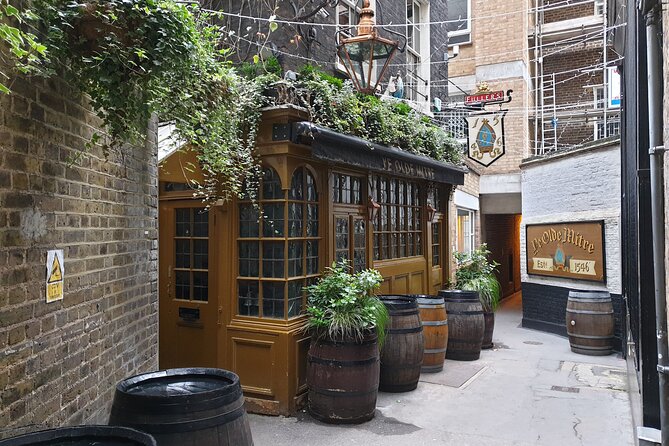
The walk finishes on Ely Place, near Farringdon Station, with Ye Olde Mitre nearby. The pub is described as hidden down an alleyway, with an atmospheric setting and food such as cheese toasties and pork pies mentioned in the tour feedback.
Food and drink are not included in the tour price, so plan to pay separately if you stop there. Still, the pub is a sensible ending point. After two hours of grim subjects, a traditional pub gives you somewhere to sit, talk, and continue exploring.
The end location is practical too. Ely Place is around the corner from Farringdon Station, making it easy to connect with the rest of London. The tour does not return to the starting point, so you should think of it as a one-way walk from Aldersgate Street toward Farringdon.
St Bartholomew’s Hospital and the medical side of the story
The final listed stop is St Bartholomew’s Hospital Museum, the oldest surviving hospital in the country. It adds a medical dimension to the walk’s stories of plague, injury, disease, and care.
The hospital helps balance the tour’s darker subjects. London’s bloody past was not only about violence and disaster. It was also about how people treated the sick, organized care, and built institutions that continued through changing centuries.
The museum is listed as a stop with no admission charge. As with the other ten-minute sections, you should expect a focused introduction rather than a full museum visit. If medical history is your main interest, you may want to return separately, but the stop works well within the route.
What the $27.73 price gets you
At about $27.73 per person, this is reasonably priced for a two-hour guided walk in central London. The value comes from the route and the interpretation, not from expensive admissions. Most stops are free, and St Bartholomew’s Church admission is included.
That makes the tour a good choice if you want someone to connect places that you could technically visit on your own. London’s streets are full of signs and monuments, but the important context is often missing. A guide can explain why a plague pit matters, how a market shaped the district, and what once flowed beneath Holborn Viaduct.
A private tour would cost far more, while a large free walk may give you less room to ask questions. The maximum group size of 15 is an important part of the value. Several comments specifically praise the fact that everyone can hear the guide.
You should still keep your expectations realistic. This is not a full museum day, a formal historical seminar, or a meal tour. It is a compact walking lesson with a dark theme and a local guide.
Timing, walking effort, and who will enjoy it
The tour lasts about two hours and includes ten stops of roughly 10 minutes each. The description calls the walk not too demanding, but you are still outdoors and moving between sites. Comfortable shoes are sensible.
The route suits adults and older children who can handle subjects such as plague, executions, butchery, disease, and sewers. The mood is grim, but the guiding style is described as humorous and approachable rather than purely frightening.
I would choose this tour for a first or second visit to London if you want to understand the City of London beyond the major landmarks. It is also a good fit for repeat visitors. The route covers places you might have missed, including quiet alleys, small memorials, and old institutional buildings.
You may want something else if you prefer royal history, art, architecture, or a slower pace with long interior visits. The dark theme is broad, but the tour is still a history walk rather than a ghost tour. It does not simply repeat the familiar Jack the Ripper material.
Guide style and the value of Tom’s storytelling
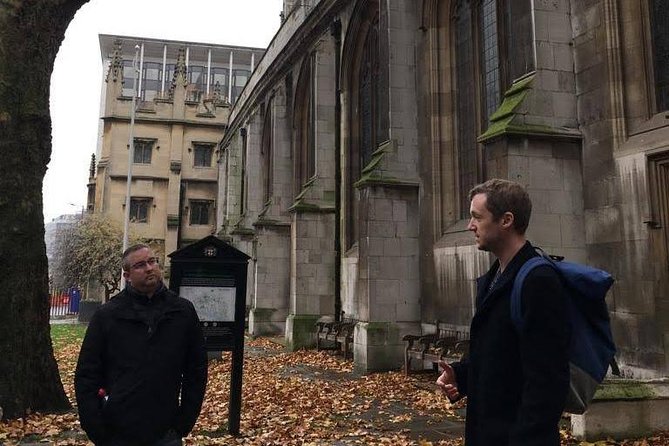
Tom receives the strongest praise in the supplied material. He is described as clear-speaking, funny, approachable, and able to answer questions. The most useful point for you is that his role goes beyond reciting dates.
He connects the sites to modern London, points out filming locations, discusses Blitz damage, explains the origins of St John Ambulance, and offers ideas for places to eat or explore afterward. That turns the tour into both a history lesson and a practical introduction to the district.
Good guiding matters especially on this route because several sites are visually modest. Tom’s storytelling is what links the Charterhouse, market, church, sewer route, and pub into one story.
The tour is offered in English. If you need a different language, this experience will not meet that need.
Booking, weather, and practical details
The tour is often booked well ahead, with an average booking time of 47 days. That does not guarantee every date will sell out, but it is a useful reason to reserve early if your London schedule is fixed.
You receive confirmation when booking. The tour is near public transport, starts on Aldersgate Street in the Barbican area, and ends on Ely Place near Farringdon Station. Service animals are allowed, and the activity states that most people can participate.
Free cancellation is available up to 24 hours before the start time for a full refund. Cancellations or changes made inside that 24-hour window are not refunded or accepted. The experience requires good weather, so a cancellation caused by poor conditions brings the choice of another date or a full refund.
Bring a phone with the mobile ticket ready, wear shoes suited to city walking, and allow a little time before the start to locate the meeting point. Since the end is in a different area, do not leave your next booking too tightly timed.
Should you book this London history walk?
I would book it if you want a small-group tour with a clear theme, strong local storytelling, and places that are easy to miss. The combination of plague, markets, medieval religion, fire, medical care, sewers, and wartime damage gives you a more complete picture of how London lived and suffered.
The best reason to choose it is not the promise of gore. It is the chance to understand the city’s less polished foundations. You will see how illness, food, faith, waste, and public memory shaped the streets.
Skip it if you dislike grim subjects, outdoor walking, or a brisk schedule. For everyone else, the $27.73 price is fair, the group limit is reassuring, and the finish near Ye Olde Mitre and Farringdon makes the walk easy to build into a day in London.
FAQ
How long does the tour last?
The tour lasts approximately two hours.
How much does the tour cost?
The listed price is $27.73 per person.
Where does the tour start?
The meeting point is Underground Ltd, Aldersgate Street, Barbican, London EC1A 4JA, UK.
Where does the tour end?
The tour ends on Ely Place, around the corner from Farringdon Station.
How large is the tour group?
The experience has a maximum of 15 travelers.
Is the tour offered in English?
Yes. The tour is offered in English.
Is admission included?
The tour is included. Admission to Church of St Bartholomew the Great is listed as included, while the other listed stops have no admission charge.
Can I cancel for a refund?
Yes. You can cancel at least 24 hours before the start time for a full refund. If poor weather causes the tour to be canceled, you will be offered another date or a full refund.
Latest arrivals on the London list
- Heathrow Airport to London Arrival Transfer★ 4.5 · 50 reviews
- London Beatles Tour★ 5.0 · 50 reviews
- One Way Taxi Transfer from London to Gatwick Airport★ 5.0 · 51 reviews
- London: Hidden Baker Street Tube Station Tour★ 4.7 · 51 reviews
- City & Secrets: Explore London’s Hidden Gems★ 5.0 · 51 reviews
- 4 hour London Private Tour, with your own Black Cab Tour Guide★ 5.0 · 51 reviews
- The Beatles Magical History Black Taxi Tour London★ 5.0 · 51 reviews
- London Christmas Lights Open-Top Bus Tour. 2025 Early Bird★ 3.6 · 51 reviews
Walking Tours, compared.
Magical London: Harry Potter Guided Walking Tour
Read our review →
Tour for Muggles The Ultimate Harry Potter Walking Tour in London
Read our review →

Harry Potter Movies Walking Tour (Kids Go Free)
Read our review →
Changing of the Guard Guided Walking Tour in London
Read our review →
The Great British Rock and Roll Music Walking Tour
Read our review →
Jack the Ripper Walking Tour – Ripper Vision Tours
Read our review →Browse the lists this tour appears in