
Reviewed · PHOTOGRAPHY SESSIONS
Discover Photography
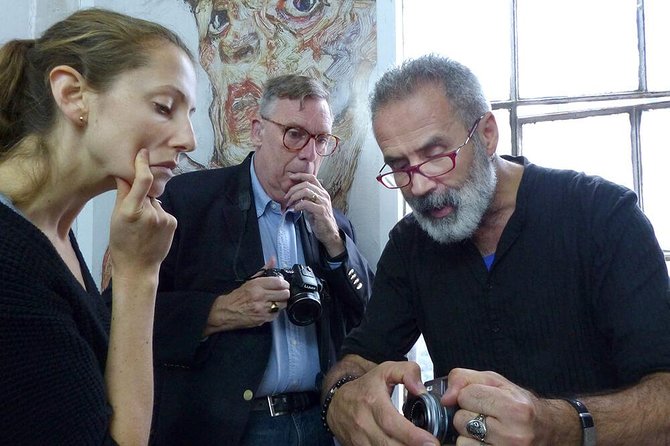
The useful part of this London class is that it moves you past the camera’s big green Auto button. In two and a half hours, you work with aperture, shutter speed, and ISO, then see how those settings change a picture in practice. The course is taught by an award-winning photographer, with Vehbi Koca and Pierre among the instructors connected with the sessions.
I like the small group of no more than 12, since camera questions are personal and a crowded class would make hands-on help much harder. I also like the practical exercise, which lets you test the theory rather than simply copy notes. The main catch is simple: you need a DSLR or compact digital camera with manual settings to get the full value, and the $95.80 price is harder to justify if you only use a phone.
In This Review
- Key points at a glance
- What this London photography class is really teaching
- Starting at Westland Place Studios3
- The first lesson: getting familiar with your camera
- Aperture, shutter speed, and ISO in plain language
- The practical exercise is where the lesson clicks
- Lenses, focal length, and perspective
- Colour temperature and white balance
- Instruction from Vehbi Koca and Pierre
- A small group makes the $95.80 price easier to assess
- Who will get the most from this class
- Practical details to settle before booking
- Should you book Discover Photography?
- FAQ
- How much does Discover Photography cost?
- How long does the photography course last?
- Where does the course start?
- Where does the activity end?
- What type of camera do I need?
- How many people can attend?
- What photography topics are covered?
- What is the minimum age?
- Is the booking refundable or changeable?
Key points at a glance
- Manual settings without the usual fog: Learn how aperture, shutter speed, and ISO work together to create the exposure you want.
- A compact class: The group is capped at 12, giving you a better chance to ask about your own camera.
- Practical camera work: You apply the lessons through an exercise that explores the effects of aperture and shutter speed.
- More than exposure: The session also covers lenses, focal length, perspective, composition, colour temperature, and white balance.
- Experienced instruction: Award-winning photographer Vehbi Koca has taught the course, while Pierre has led an iPhone-focused session.
- A central London starting point: Meet at Westland Place Studios3, 11 Westland Place, London N1 7LP, close to public transportation.
What this London photography class is really teaching
Many beginner photography classes promise better pictures but spend too much time naming buttons. This course aims at the more useful goal: helping you understand why a picture looks the way it does, then giving you control over the result.
You learn the three settings that shape exposure. Aperture controls how much light enters through the lens and affects depth of field. Shutter speed controls how long the camera records the scene and can change the look of movement. ISO is part of the same exposure relationship, helping you balance the other two settings.
That may sound technical at first, but the value is practical. Once you understand the relationship, you can make a deliberate choice instead of accepting whatever the automatic mode gives you. You can also switch between automatic, semi-automatic, and manual modes with a clearer idea of what each mode is doing.
The class is aimed at beginners, so you do not need to arrive as a photographer who already speaks in camera shorthand. Still, you should bring a camera that allows manual control. A basic digital camera with the right settings is more useful here than an expensive model locked in automatic mode.
A few more London days worth a look
- London: Private Photoshoot with Video Clip Option
★ 4.8 · 182 reviews - Professional Photoshoot in London Photographer
★ 5.0 · 102 reviews - Private landmarks photoshoot for families and couples
★ 5.0 · 92 reviews
Starting at Westland Place Studios3
The class begins at Westland Place Studios3, at 11 Westland Place, London N1 7LP. The location is near public transportation, which makes it a practical meeting point for a London day that includes other plans.
The activity ends back at the same meeting point. That matters if you are fitting the class between a museum visit, a meal, or another booking. You are not left trying to find your way back from an unfamiliar end point.
The supplied details do not give a detailed walking route or name specific places used for the outdoor exercise. I would therefore treat the meeting point as the firm part of the plan and allow enough time to arrive with your camera ready. Your confirmation arrives at booking, so check that message for the exact meeting instructions.
The first lesson: getting familiar with your camera
The early part of the course focuses on operating the camera. This is where a small class can make a real difference. Menus and control wheels vary from one model to another, so a general explanation is only half the job. The useful part is applying the idea to the camera in your hands.
You learn how to move between automatic and manual settings, along with the semi-automatic modes that let you control one major setting while the camera manages another. For a new photographer, this is a sensible progression. You can start with more support, then take on more control as the session goes on.
I would expect this section to be especially helpful if you have owned a camera for some time but still rely on Auto. The course is not just about buying a better camera. It is about using the one you have with more purpose.
Be ready to ask direct questions. The small-group format is best used by bringing up the setting that confuses you, rather than waiting for a generic explanation to solve everything.
Aperture, shutter speed, and ISO in plain language
The heart of the course is exposure. You learn how aperture, shutter speed, and ISO interact, rather than treating them as three unrelated menu items.
Aperture affects the opening in the lens and the amount of the scene that appears sharp. The course also covers depth of field, so you can begin to see why one picture has a more isolated subject while another keeps more of the frame in focus.
Shutter speed affects the way movement is recorded. A different shutter setting can change whether movement looks sharp or shows a sense of motion. The practical exercise is important here because this idea is much easier to understand when you can compare the results yourself.
ISO completes the basic exposure picture. The class teaches how it relates to aperture and shutter speed, helping you make better choices when the available light changes. The aim is not to memorize a single correct setting. It is to understand the trade-offs.
That is the kind of lesson that travels well. You can use it with street scenes, indoor subjects, people, buildings, and holiday photographs. The course cannot make every situation easy, but it gives you a method for working things out.
Something completely different for your London days:
- London: The London Eye Entry Ticket
★ 4.6 · 35,875 reviews - From London: Harry Potter Warner Bros Studio Tour
★ 4.7 · 26,588 reviews - London: Westminster to Greenwich River Thames Cruise
★ 4.5 · 22,836 reviews - Magical London: Harry Potter Guided Walking Tour
★ 4.7 · 22,044 reviews
The practical exercise is where the lesson clicks
The course includes a practical exercise exploring the effects of aperture and shutter speed. This is the strongest part for anyone who learns by doing.
Rather than hearing that aperture affects depth of field and leaving it as an abstract rule, you get to make a change and inspect what happened. The same applies to shutter speed. The exercise gives you a chance to connect the control on the camera with the visual result in the photograph.
The session also includes practical work out and about, according to the course experience. The supplied information does not specify the exact route or subjects, so do not book it expecting a fixed sightseeing tour of famous London views. This is a photography lesson first.
That distinction helps set expectations. If you want a guided photo walk with a long list of landmarks, this may feel too classroom-focused. If you want to understand your camera and practice using it, the balance makes more sense.
Lenses, focal length, and perspective
The class does not stop with exposure. It covers lenses, focal length, angle of view, and perspective, which are often the missing pieces in a beginner’s camera education.
Different lenses show different amounts of a scene. Focal length affects the angle of view, while your choice of lens changes how you frame the subject. Perspective also depends on where you stand, so the lesson can help you think beyond simply zooming in or out.
This is useful when you are carrying one camera on a trip and trying to make it handle many jobs. A lens choice affects how much you include, how close you need to be, and how the subject relates to its surroundings.
The course also covers composition. That means you are not only learning to make an image correctly exposed. You are considering what belongs in the frame and how the parts of the picture work together.
Do not expect a single class to turn composition into second nature. What it can do is give you a better checklist: look at the edges of the frame, consider your angle, decide what matters most, and use the lens with a reason.
Colour temperature and white balance
Colour can look wrong even when exposure is correct. Indoor light, daylight, and other light sources can give an image a different colour cast. The course introduces colour temperature and white balance so you can understand why that happens.
This is a useful topic for holiday photography. A scene may look natural to your eyes while the camera records it with a warmer or cooler tone. Knowing where white balance fits into the process gives you another way to correct the result while shooting.
The lesson is not only about technical accuracy. Colour affects mood and how a place feels in a photograph. Understanding the setting helps you decide when to correct a colour cast and when a warmer or cooler look may suit the picture.
For beginners, white balance can seem like one more setting to ignore. Here, it is placed beside the other core controls, which makes it easier to see as part of the whole camera system.
Instruction from Vehbi Koca and Pierre
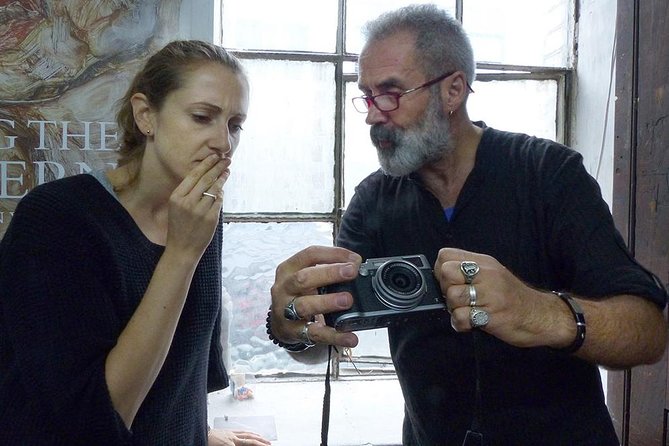
The course is led by an award-winning photographer. Vehbi Koca has taught the session and is described as explaining ideas simply, using clear methods, and encouraging experimentation with different cameras.
That last point is worth noting. A beginner class works best when the instructor helps you use your own equipment instead of assuming every camera has the same controls. Vehbi’s teaching style, as presented in the supplied material, places emphasis on practical help and experimentation.
Pierre has also led an iPhone photography session linked to this experience. That session focused on understanding what the iPhone’s settings could do for photographs, with time for questions and making sure everyone kept up.
The main course information specifically says you need a DSLR or compact digital camera with manual settings to get the most from the class. Since an iPhone session is also associated with the experience, phone users should confirm the correct session before paying. Do not assume that a phone-only class and the manual-camera course cover the same material.
A small group makes the $95.80 price easier to assess
At $95.80 per person, this is not a casual drop-in activity. You are paying for a focused 2-hour-30-minute lesson, an award-winning instructor, and a group limited to 12 people.
I see the value if you own a camera and have been stuck in Auto. A few useful breakthroughs about exposure, lenses, or manual control can improve every picture you take afterward. The practical exercise also gives the fee more weight than a lecture-only class.
The price is less attractive if you already understand aperture, shutter speed, ISO, white balance, and manual operation. It is also harder to justify if your main camera is a phone and you have not confirmed that the booked session is designed for it.
The class size matters here. Twelve is not one-to-one tuition, but it is small enough to allow questions and individual camera help. A larger workshop could make the same price feel poor value, especially when everyone arrives with a different camera menu.
Who will get the most from this class
I would recommend this for an adult beginner who owns a digital camera with manual settings and wants to stop guessing. It suits someone preparing for a trip, someone who has recently bought a camera, or someone who has taken many pictures without understanding why some work better than others.
It is also a good fit if you want a structured starting point. The course moves through camera operation, exposure, lenses, composition, colour, and practical use, rather than asking you to piece everything together from scattered online tips.
You may want to choose something else if you want a full day of shooting, a detailed tour of London landmarks, or advanced instruction in studio lighting and editing. None of those features is promised here.
The minimum age is 18. The additional information also says children must be accompanied by an adult and both need paid tickets, but the stated minimum age means you should confirm the rules before booking for anyone younger.
Practical details to settle before booking
The activity is mobile-ticketed, and confirmation is sent when you book. Bring the camera you actually want to learn, not a different model that stays in your hotel room. A camera with manual settings is required to get the most from the class.
The meeting point is Westland Place Studios3, 11 Westland Place, London N1 7LP. The activity ends there, and the area is near public transportation.
Most people can participate, according to the supplied information. No special access details are provided, so contact the provider if you have a specific mobility or participation need.
The booking is non-refundable and cannot be changed for any reason. If the provider cancels because the minimum number of participants has not been reached, you are offered another date or experience, or a full refund. That strict policy makes it wise to check your schedule and camera before committing.
Should you book Discover Photography?
Book it if you want a practical introduction to manual camera control in London, especially if you learn best by changing a setting and seeing the result. The small group, hands-on exercise, and instruction from photographers such as Vehbi Koca give the class a useful edge over a basic talk.
Skip it if you already shoot confidently in manual mode, want a landmark-focused photo walk, or mainly use a phone without confirming the right session. At $95.80, this is a course fee, not a cheap sightseeing add-on.
For the right beginner, the payoff is lasting. You leave with a better grasp of your camera’s controls, and that can improve the photographs you take long after the class ends.
FAQ
How much does Discover Photography cost?
The price is $95.80 per person.
How long does the photography course last?
The course lasts approximately 2 hours and 30 minutes.
Where does the course start?
It starts at Westland Place Studios3, 11 Westland Place, London N1 7LP, UK.
Where does the activity end?
The activity ends back at the meeting point.
What type of camera do I need?
You need a DSLR camera or a compact digital camera with manual settings to get the most from the course.
How many people can attend?
The activity has a maximum of 12 participants.
What photography topics are covered?
The course covers lenses, composition, colour temperature, white balance, semi-automatic and manual modes, depth of field, aperture, shutter speed, focal length, angle of view, perspective, ISO, exposure, and a practical exercise.
What is the minimum age?
The minimum age is 18. The additional information also says children must be accompanied by an adult and both must have paid tickets.
Is the booking refundable or changeable?
No. The experience is non-refundable and cannot be changed for any reason. If it is canceled because the minimum number of participants is not reached, you are offered another date or experience, or a full refund.
Latest arrivals on the London list
- Easy Access Tower of London Royal Secrets & Scandals Tour★ 5.0 · 3 reviews
- Stonehenge Special Access Guided Morning Tour from London★ 4.5 · 3 reviews
- Shoreditch & East London Walking Tour with a Local, Custom & Private★ 5.0 · 3 reviews
- Madame Tussauds London Fast Track and Champagne Experience★ 3.5 · 3 reviews
- Private Full Day Tour – Fast Track Tower of London and Lunch★ 4.6 · 3 reviews
- Private transfer from London Heathrow Airport to Southampton★ 5.0 · 3 reviews
- London Private Brixton Tour with a Local – Culture & Stories★ 4.9 · 3 reviews
- London Soho District – Guided Walking Tour 12 guests 2,5h★ 4.8 · 3 reviews
Photography Sessions, compared.
Professional Photoshoot in London Photographer
Read our review →
30 Major London Attractions Walking Tour With Photos
Read our review →
Browse the lists this tour appears in