
Reviewed · HISTORICAL TOURS
Fashion History Walking Tour in London
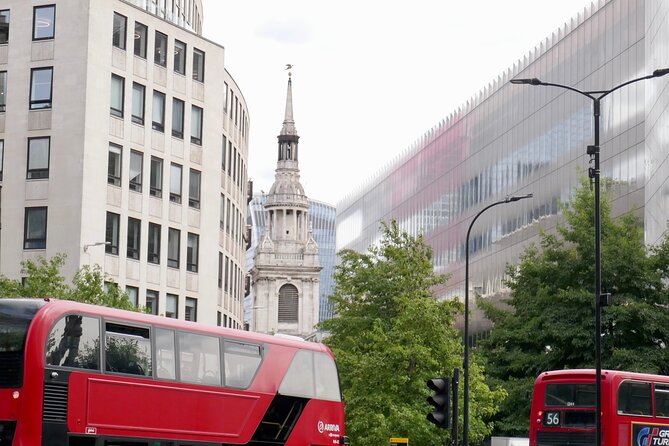
London’s fashion story is not confined to glossy shops and famous designers. On this 90-minute walk, clothing becomes a way to understand how Londoners signaled rank, work, wealth, and belonging, from the Barbican to the City. Fashion is the lens, but the real subject is London itself.
I like the route’s two clear strengths: it connects three very different City districts, and it gives you a guide to question rather than a fixed audio script. The $27.43 price is fair for a small-group walk, though the tour stays outdoors, includes no snacks, and may feel brief if you want a full fashion museum-style experience.
In This Review
- Key points at a glance
- Fashion as a guide to London
- Starting at the Barbican Highwalk
- St. Paul’s and the social meaning of dress
- Through the Square Mile’s shopping streets
- The Royal Exchange and London’s old shopping culture
- Ending near the Bank of England
- What the price gives you for $27.43
- Who will enjoy this walk most
- Timing, meeting point, and cancellation
- Should you book the Fashion History Walking Tour?
- FAQ
- How long does the Fashion History Walking Tour last?
- What time does the tour begin?
- Where does the tour start?
- Where does the tour end?
- Is the tour offered in English?
- Can I cancel for a full refund?
Key points at a glance
- The Barbican starts the story: Learn how fashion and the clothing trade shaped this neighborhood.
- St. Paul’s adds social context: The cathedral district helps explain changing styles and public dress.
- The Royal Exchange brings shopping into focus: Explore the area around London’s oldest shopping mall.
- The final stop looks at modern dress codes: The Bank of England area connects old rules with today’s City clothing.
- The group is capped at 15 people: That gives you a better chance to ask questions and hear the guide.
- The route runs from 2:00 pm to about 3:30 pm: It is easy to fit into a day of sightseeing, but you should plan for an outdoor walk.
Fashion as a guide to London
This tour takes a smart approach. Instead of treating fashion as a parade of famous names or expensive clothes, it uses clothing to explain how London worked.
Dress has long told people who holds power, who belongs in a certain place, and who is expected to behave in a certain way. A business suit, a formal hat, a working outfit, or a carefully chosen accessory can say a great deal before anyone speaks. Your guide uses London’s streets and buildings to show how those signals changed over time.
That makes the walk useful even if you are not especially interested in fashion. I would book it if you enjoy social history, architecture, shopping districts, or the small rules that shape city life. You do not need to know designers or clothing terms before you arrive.
The route also avoids making the subject feel locked inside a museum. You move through working streets, historic passages, and major landmarks. The setting keeps the discussion tied to real places where people shopped, worked, met, and dressed for public life.
More London history walks:
- London Small Group Tour of Historical Pubs
★ 5.0 · 10,422 reviews - Soho Music & Historic Pubs Tour
★ 5.0 · 1,993 reviews - London: Historic Pubs of Central London Walking Tour
★ 4.9 · 1,065 reviews
Starting at the Barbican Highwalk
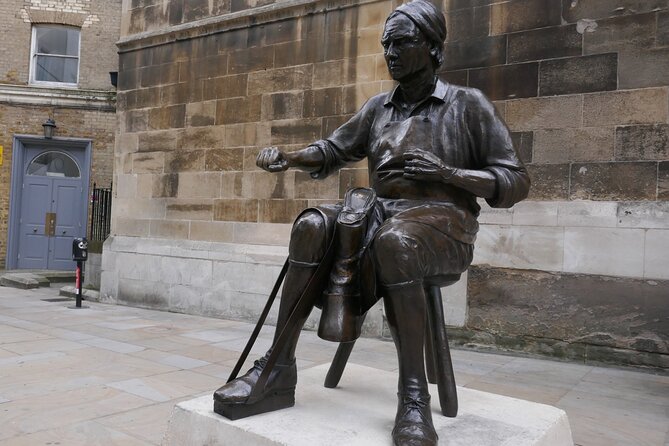
The walk begins at Underground Ltd on Aldersgate Street, near the Barbican, at 2:00 pm. From there, the first 30 minutes focus on and around the Barbican Estate.
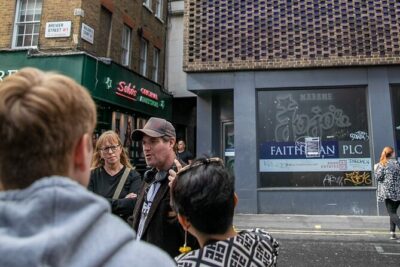
The Barbican is an interesting starting point because its bold architecture gives the guide a clear way to discuss how neighborhoods change. Here, the focus is on the history of the fashion industry in the area. You can expect the guide to connect the local setting with the people, businesses, and clothing culture that once shaped this part of London.
This first section is not simply a shopping stop. It gives you a sense of how fashion belongs to a neighborhood, not just to a shop window. You may find the discussion especially useful if you like learning how trade and daily work affect the character of a district.
The Barbican Highwalk also sets the tone for the tour. You are looking at London from street level and from its pedestrian routes, while the guide explains how clothing and commerce fit into the city around you. The admission cost for this stop is included, and there is no separate ticket to buy.
One practical point: the walk is outdoors, so wear shoes you can use comfortably for 90 minutes. The tour description does not promise indoor seating or a weather backup, so check the forecast and dress sensibly. That advice feels fitting for a tour about clothing.
St. Paul’s and the social meaning of dress
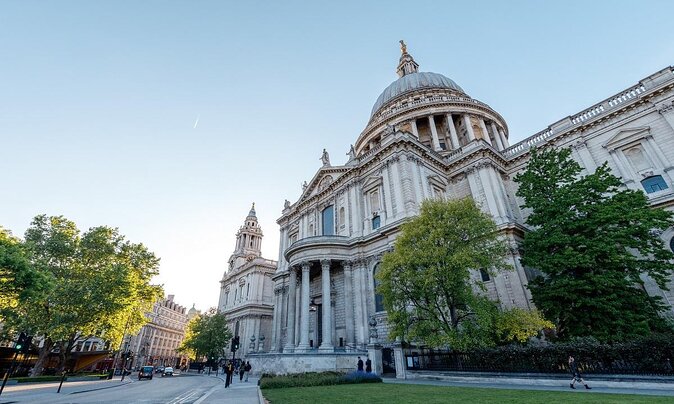
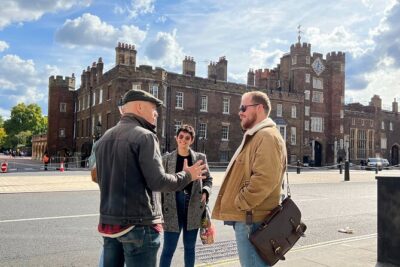
The second section spends about 30 minutes around St. Paul’s Cathedral. The cathedral itself is one of London’s most recognizable buildings, but the fashion discussion gives you a different way to look at the area.
The district around St. Paul’s has long brought together commerce, religion, work, ceremony, and public display. That mix makes it a good place to examine the dress codes of earlier periods. Your guide can explain how people dressed for different settings and why certain clothes carried social meaning.
You should not expect entry into St. Paul’s Cathedral as part of the tour. The route explores the area around it, and the listed stops do not include an admission ticket to the cathedral. This keeps the price low and the focus on the walk, but it also means you will need a separate visit if you want to go inside.
I like this middle section because it links fashion to behavior. Clothing is not only about taste. It can show respect, profession, wealth, status, or an attempt to fit into a particular crowd. The guide’s role is important here, since the value comes from explanation and questions rather than from viewing a collection of garments.
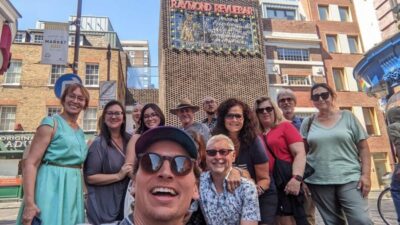
The tour has an English-speaking guide, and the small group limit is no more than 15 people. That matters in an urban setting. You can hear the explanation more easily than you might in a large group, and you have a reasonable chance to ask about details that catch your eye.
Through the Square Mile’s shopping streets
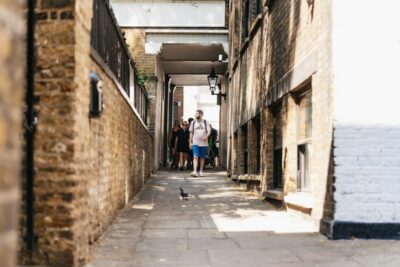
After St. Paul’s, the route continues through the City of London’s shopping streets and historic alleyways. This part gives the tour movement and variety. Instead of staying beside one landmark, you see how fashion sits within the wider pattern of the Square Mile.
The wording of the route suggests a mix of established shopping areas and older lanes. You should expect the guide to point out how London’s shopping culture changed and how different streets served different customers or purposes. The walk is not presented as a shopping spree, so do not arrive expecting personal shopping advice or a list of current boutiques.
That is also one of the tour’s strengths. You get a wider view of shopping as part of city history. Stores, streets, and dress codes all reflect what a city values at a given time. The tour can help you notice that connection as you continue through the City later in your own sightseeing.
The route includes the Royal Exchange, described as London’s oldest shopping mall. This is one of the clearest links between commerce and fashion on the walk. The building and its surroundings give the guide a place to explain how shopping became tied to status, display, and urban identity.
Because the tour lasts only about an hour and a half, the discussion at each location needs to stay focused. That suits you if you prefer a brisk introduction with several stops. If you want long historical lectures or time to browse every shopping area, you may find the schedule too tight.
More London walking tours:
- Magical London: Harry Potter Guided Walking Tour
★ 4.7 · 22,044 reviews - London: The Original Jack the Ripper Walking Tour
★ 4.7 · 7,833 reviews - Tour for Muggles The Ultimate Harry Potter Walking Tour in London
★ 5.0 · 4,684 reviews - London Jack The Ripper Guided Walking Tour
★ 5.0 · 3,131 reviews
The Royal Exchange and London’s old shopping culture
The Royal Exchange is a highlight for anyone curious about the commercial side of London. Its inclusion shows that the tour is not limited to clothing as art. It looks at fashion as business, social signal, and part of the city’s public life.
Calling it London’s oldest shopping mall gives the stop a useful modern comparison. Today, you might think of a mall as a place built around retail and comfort. Older shopping spaces had a different feel, with commerce tied closely to finance, status, and the movement of people through the City.
The guide can use this setting to explain why shopping areas mattered to London’s dress codes. What you wore could affect how you were treated, where you felt comfortable, and what kind of place you appeared to belong in. That makes the Royal Exchange more than a quick photo stop.
The tour does not include snacks, and there is no food break listed. That is easy to manage, since the walk takes place in a central part of London, but you should eat beforehand if you need a proper meal. The 2:00 pm start also means lunch timing is worth considering.
Ending near the Bank of England
The final 30 minutes take you toward the Bank of England, ending near Bank Underground station on Threadneedle Street. This is where the tour brings its historical discussion into the present by examining dress codes in the City today.
The ending works well because the City still carries strong ideas about professional appearance. The guide can compare older expectations with the way people dress for work, business, formal events, and public spaces now. You get a clear closing question: what do clothes still tell us about a person’s role?
The tour ends outside the Bank of England, not with a long indoor visit. This keeps the route compact and makes the finish practical. Bank Underground station is nearby, so you can continue to another part of London without retracing your steps.
I also like the structure of the ending. The walk begins with the history of a neighborhood, moves through a major landmark and shopping streets, then finishes with modern City dress codes. It gives the experience a simple progression from local industry to public status to present-day work culture.
What the price gives you for $27.43
At $27.43 per person, this is priced as an affordable guided introduction rather than a major paid attraction. You are paying for roughly 90 minutes of interpretation, a planned route, and the chance to ask an English-speaking guide questions.
There are no separate admission charges for the listed stops, and the tour does not add food or shopping costs. That helps keep your spending predictable. You can also compare the price with the cost of exploring the same streets alone. The buildings and streets remain free, but you would not get the fashion-focused connections between them without a guide.
The value depends on your interests. If you want a clear story that ties London’s neighborhoods to clothing, the price makes sense. If you mainly want entry inside St. Paul’s Cathedral or a long shopping session, your money would be better spent elsewhere.
The group limit of 15 is another reason the price feels reasonable. It is not a private tour, but it is small enough to support questions and conversation. One excellent rating from a participant praised the way the guide used fashion to explain London and the city itself. That is the main promise here: not a costume show, but a different way to read the capital.
Who will enjoy this walk most
I would suggest this tour to you if you like:
- Social history and everyday life
- Shopping districts with a story behind them
- London architecture viewed through a less familiar subject
- Short walking tours with a clear theme
- Asking a guide questions during the route
- Small groups rather than large sightseeing crowds
It may also suit a first visit to London because the route covers several central areas in one sitting. You get an introduction to the Barbican, St. Paul’s, the Square Mile, the Royal Exchange, and the Bank of England area without needing a full-day commitment.
You may want to skip it if you are looking for a fashion museum, designer-focused tour, or indoor experience. The information provided does not list designer studios, garment collections, shopping discounts, or interior visits. The attraction is the guide’s interpretation of the streets and their dress codes.
Most people can participate, and service animals are allowed. The tour is near public transportation, with the start near Barbican and the finish near Bank Underground station. Since no detailed mobility information is supplied, you should contact the provider if you need specific guidance about surfaces, stairs, or step-free access.
Timing, meeting point, and cancellation
Plan to arrive at the stated starting point, Underground Ltd on Aldersgate Street in Barbican, before the 2:00 pm start. The route ends near Bank Underground station, which is useful if you have an evening booking elsewhere in central London.
The tour is offered in English and uses a mobile ticket. Confirmation is sent when you book. Since the experience is usually reserved about 24 days ahead, booking early may be sensible if your London dates are fixed, especially because the group is limited to 15 people.
You can cancel for a full refund up to 24 hours before the start time. Changes or cancellations made within 24 hours are not accepted for a refund, and the cut-off uses London local time. That policy is fairly clear, but remember to check your plans before the final day.
Should you book the Fashion History Walking Tour?
Book it if you want London explained through clothing, commerce, and social rules, rather than through the usual royal or political story. The route is compact, the price is reasonable, and the subject gives familiar places a fresh purpose.
I would especially choose it for a free afternoon when you want something more focused than a general city walk. You will visit the Barbican, St. Paul’s area, the Royal Exchange, and the Bank of England district, while the guide connects them through London’s changing dress codes.
Skip it if your priority is going inside major landmarks or spending time in shops. For everyone else, this is a smart small-group walk that can change the way you notice London’s streets, and the people moving through them.
FAQ
How long does the Fashion History Walking Tour last?
The tour lasts approximately 1 hour and 30 minutes.
What time does the tour begin?
The tour starts at 2:00 pm.
Where does the tour start?
The meeting point is Underground Ltd on Aldersgate Street in Barbican, London EC1A 4JA, UK.
Where does the tour end?
The walk ends outside the Bank of England on Threadneedle Street, near Bank Underground station.
Is the tour offered in English?
Yes. The experience is offered in English.
Can I cancel for a full refund?
Yes. You can cancel at least 24 hours before the experience start time for a full refund. Cancellations or changes made less than 24 hours before the start time are not accepted for a refund.
Latest arrivals on the London list
- Easy Access Tower of London Royal Secrets & Scandals Tour★ 5.0 · 3 reviews
- Stonehenge Special Access Guided Morning Tour from London★ 4.5 · 3 reviews
- Madame Tussauds London Fast Track and Champagne Experience★ 3.5 · 3 reviews
- Shoreditch & East London Walking Tour with a Local, Custom & Private★ 5.0 · 3 reviews
- London Private Brixton Tour with a Local – Culture & Stories★ 4.9 · 3 reviews
- Private Full Day Tour – Fast Track Tower of London and Lunch★ 4.6 · 3 reviews
- Private transfer from London Heathrow Airport to Southampton★ 5.0 · 3 reviews
- London Soho District – Guided Walking Tour 12 guests 2,5h★ 4.8 · 3 reviews
Historical Tours, compared.
Royal Historic Pubs Walking Guided Tour in London
Read our review →
Private Group: Historical Pub Walking Tour of London
Read our review →
Browse the lists this tour appears in