
Reviewed · LONDON
Interactive Treasure Hunt Experience – Central London’s Secrets
Piccadilly Circus is only the opening move. This self-guided London treasure hunt sends you east through Covent Garden, Seven Dials, and Soho, using 15 phone-based clues to reveal streets and corners you could easily miss on a standard sightseeing walk. I like the freedom to start whenever you choose, and I like that you can treat it as either a relaxed puzzle walk or a race against other teams.
The price is reasonable at about $20.57 per person, especially for a private activity lasting roughly two and a half to three and a half hours. The main caution is the technology and clue difficulty: most people should be able to start quickly, but a few had serious trouble receiving the link or getting help, and some found the clues far too obscure.
In This Review
- Key points at a glance
- A London walk that makes you earn the next street
- Piccadilly Circus starts the hunt
- Covent Garden brings the first major pause
- Seven Dials keeps the route playful
- Soho provides a fitting finish
- How the phone system affects the experience
- The real walking time is longer than 4.5 km
- Is $20.57 good value?
- Who should book this experience?
- Tips for a smoother hunt
- Cancellation and access details
- FAQ
- How long does the London treasure hunt take?
- Where does the activity start?
- How far do you walk?
- How many clues are included?
- Can I choose my own start time?
- Are food and drinks included?
- What happens if I get stuck or lost?
- Should you book Central London’s Secrets?
Key points at a glance

- Start at Piccadilly Circus: Follow a route east through some of central London’s most entertaining streets.
- 15 cryptic clues: Each answer leads you to the next location by phone.
- 4.5 km on foot: Allow two and a half to three and a half hours, especially if you stop for refreshments.
- Two optional pub breaks: One is near Covent Garden in a tavern once associated with Dickens, and another comes near the end in Soho.
- Flexible timing: Start at any time that suits your group, with no fixed departure hour.
- Difficulty rated 3 out of 5: Hints and a lost command are available, but the puzzles will not suit everyone.
A London walk that makes you earn the next street
This is not a guide-led tour where you follow a flag and listen while London passes by. CityDays sends each clue to your mobile phone. You read the puzzle, walk to the suggested area, search for the answer, and send it back. A correct response gives you the next instruction.
That simple setup changes how you see the city. Instead of moving directly from Piccadilly Circus to Covent Garden, you pay attention to signs, doorways, street details, and odd little corners. The city becomes a playing board, but it does not feel like a classroom.
I especially like the flexible start time. You can fit the activity around a museum visit, lunch, or a theatre booking. You also get a private experience for your own group rather than being matched with strangers. If you enjoy word puzzles, escape rooms, or friendly competition, the format makes good sense.
The catch is that this is only as enjoyable as your team’s patience. The clues are cryptic, and difficulty varies sharply from person to person. Some groups find the challenge satisfying. Others feel stuck too often and lose the fun.
Other London favourites people book with this one:
- London: The London Eye Entry Ticket
★ 4.6 · 35,875 reviews - From London: Harry Potter Warner Bros Studio Tour
★ 4.7 · 26,588 reviews - London: Westminster to Greenwich River Thames Cruise
★ 4.5 · 22,836 reviews
Piccadilly Circus starts the hunt
Your route begins at Piccadilly Circus, one of London’s loudest and most recognizable meeting points. It is an easy place to reach by Underground, and the nearby streets give you an immediate sense of central London’s scale and energy.
The opening section is useful for getting your bearings and understanding how the game works. You will need to read the clue carefully, look around rather than rush, and agree on one answer before sending it. If your group sends repeated answers from different phones, you can create confusion and possibly time penalties for wrong responses.
That is one of the most useful practical tips for this activity: choose one person to operate the phone. Let the rest of your team search, debate, and check the surroundings. If a correct answer does not seem to send at once, wait before trying again. Sending the same answer from a second device can put your team out of step.
Piccadilly Circus itself is not the point of the tour. Think of it as the launch pad. The fun begins when the clues pull you away from the familiar center and ask you to notice what normally gets ignored.
Covent Garden brings the first major pause
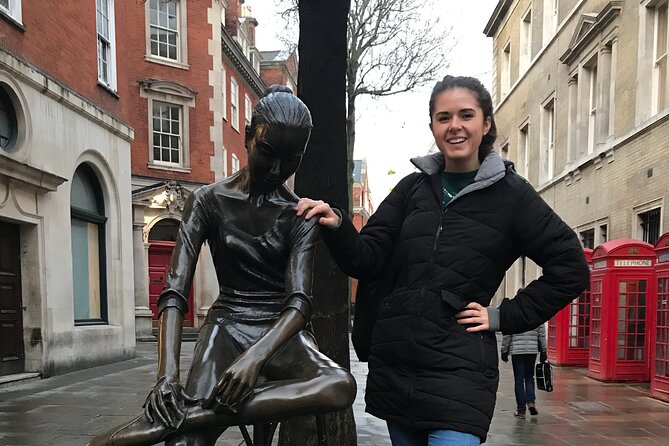
As you work east, the route reaches the Covent Garden area. This is where the experience begins to feel less like a basic city scavenger hunt and more like a guided story told through places.
The route includes a tucked-away tavern near Covent Garden that was once associated with Charles Dickens. The pub stop is optional, so you can pause for a drink, warm up, or use it as a natural break before continuing. It is a smart feature for a walking game, since the route covers 4.5 km and can take longer if your group studies every clue.
Do not treat the pub stop as part of the admission price. Drinks, food, and cafe breaks are not included. You are paying for the hunt itself, then deciding how much extra time and money to spend along the way.
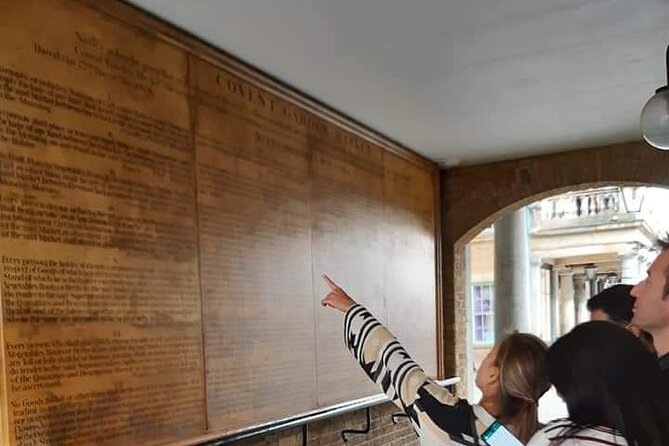
Covent Garden can be crowded, particularly around its better-known points, but the clue-led approach encourages you to look beyond the main flow of people. You might notice side streets and small details that you would pass during a conventional walk between major sights.
This section also makes a good test of your group. If everyone enjoys debating a clue and scanning the street for an answer, you are probably in the right activity. If your team wants a smooth route with clear directions and little mental effort, the puzzles may become tiring.
Seven Dials keeps the route playful
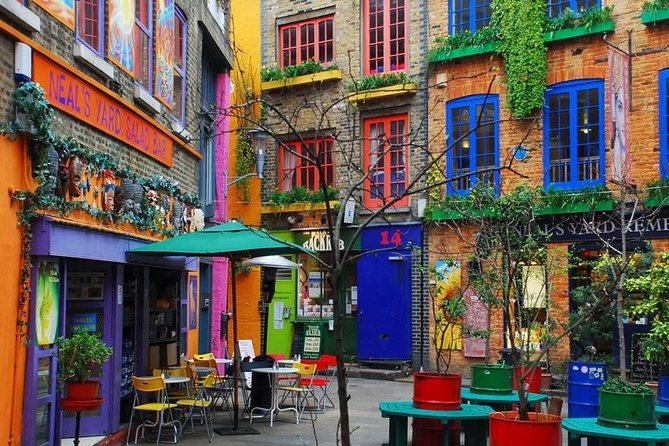
The hunt continues through Seven Dials, an area known for its unusual street layout and compact lanes. It is a natural setting for a puzzle walk because the streets offer plenty of visual information and several possible directions.
You are not simply told to go from one famous landmark to another. The next location depends on solving the clue, so your attention stays on the details around you. A short distance between answers can still take time if the wording sends your group down the wrong line of thought.
The listed difficulty is 3 out of 5, which sounds moderate and is a fair expectation for many groups. Still, difficulty is personal. One group completed the puzzles without much trouble, while another found them so obscure that the activity stopped feeling playful.
Use the available hints before frustration takes over. A lost command is also available if you are unsure where to go. These tools matter because there is a difference between a puzzle that makes you think and a puzzle that leaves you wandering without a plan.
I would set a simple rule before starting: spend a reasonable amount of time on each clue, then use a hint. Do not let one stubborn answer consume half the afternoon.
Something completely different for your London days:
- Magical London: Harry Potter Guided Walking Tour
★ 4.7 · 22,044 reviews - London: Madame Tussauds London
★ 4.6 · 20,915 reviews - Stonehenge, Windsor Castle, and Bath from London
★ 4.5 · 18,662 reviews - London: Warner Bros. Studio Tour with Transfers
★ 4.7 · 17,586 reviews
Soho provides a fitting finish
The trail moves onward into Soho, one of central London’s most characterful districts. It is a lively place to finish a walking game, with plenty of streets to explore after the final answer.
The route description includes another good pub near the end, giving you a place to sit down and celebrate, compare answers, or recover from the walking. Again, this is an optional break and not included in the price.
The supplied meeting information says the activity ends back at the meeting point, while the route description places the final pub in the Soho area. Because those details do not perfectly match, check the final instructions sent to your phone before setting a later appointment. Do not schedule a tight theatre booking based only on the advertised two and a half hours.
Soho also gives you a useful choice. You can race to complete the clues, or slow down and treat the route as a neighborhood walk. The experience works best when your group agrees on the pace from the start.
How the phone system affects the experience
The mobile system is the engine of the hunt. Each clue arrives on your phone, and your answer controls what comes next. This keeps the activity private and flexible, but it also makes setup more important than it would be on a normal walking tour.
Confirmation is sent at booking, and the activity is offered in English. In most cases, setup should be quick. However, a few bookings have involved missing start links, delayed messages, or poor contact with customer support. CityDays has responded to those problems and has invited affected customers to contact [email protected], with support messages signed by Tom.
That does not mean you should expect a problem, but I would prepare before reaching Piccadilly Circus. Make sure the booking email and phone have a good connection, and give yourself a few minutes before the planned start. A group with only one charged phone is taking an avoidable risk.
The game is built for a private team, not a shared public group. You can play against other teams through the timed ranking system if competition appeals to you. If not, ignore the clock and use the clues as a self-guided route.
The real walking time is longer than 4.5 km
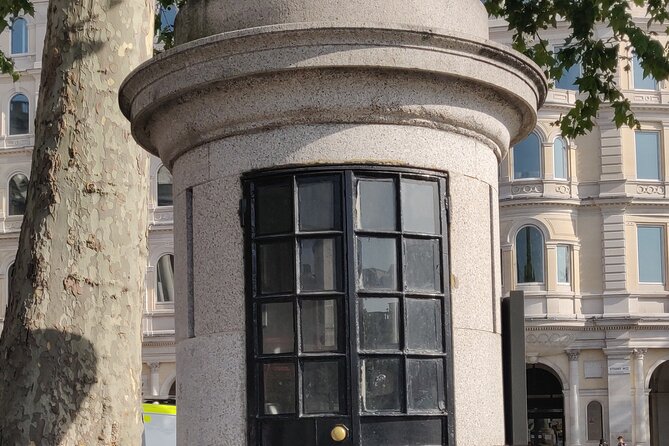
The official distance is 4.5 km, which sounds manageable. It is manageable for most participants, but the actual outing can stretch to three and a half hours once you include wrong turns, clue discussions, photos, and pub or cafe stops.
Wear comfortable shoes. The route is mostly an urban walk on pavement, and one group found that heat made it difficult to continue after halfway. Warm weather, tired knees, or a slow-moving team can change the experience quickly.
I would avoid placing this activity in the middle of a packed sightseeing day. Give yourself a broad window, particularly if you want to stop at the tavern near Covent Garden or the pub near Soho. The flexible start time helps, but it does not remove the walking.
The route stays near central London districts and public transport, so you are not stranded far from the city if you decide to stop. Still, the activity is designed as a continuous hunt, and abandoning it midway may feel unsatisfying if your group is competitive.
Is $20.57 good value?
At about $20.57 per person, this sits below the cost of many guided central London tours. You are not paying for a live guide, reserved admission, or included food. You are paying for a private puzzle route that can occupy a group for several hours.
That is good value for a family with teenagers, a pair of friends who enjoy word games, or a group that wants a different way to see familiar parts of London. The strongest value comes from the combination of flexibility and duration. You can start at a convenient hour, pause when you wish, and compete only if that adds to the fun.
The value is weaker if you dislike cryptic clues or need constant support. A conventional walking tour gives you a person who can explain the city immediately. Here, the explanation comes through the clues, and you must do the work.
Pub breaks are not included, so budget separately for drinks or food. The route itself can be inexpensive after booking, but the stops may add to your total if your team lingers.
Who should book this experience?
I would recommend it to people who like solving problems together. Teenagers can enjoy the game, particularly if an adult lets them take charge of the clues rather than treating them as a simple sightseeing add-on.
It also suits repeat visitors who have already seen the main sights. The route gives you a reason to explore familiar districts differently, and the clue structure may lead you to places you would not choose on your own.
First-time visitors can enjoy it too, but I would not use it as your only introduction to London. The activity gives you movement and local details, not a broad explanation of the city’s major sights.
You should think twice if anyone in your group struggles with extended pavement walking, hot weather, or ambiguous wordplay. The difficulty is moderate on paper, but the experience can feel much harder when the team gets stuck.
Tips for a smoother hunt
- Set up before you start: Give yourself a few minutes to locate the message and get the app or link working.
- Use one phone for answers: This reduces duplicate replies, delays, and possible time penalties.
- Agree on the pace: Decide if you are racing or taking a relaxed walk.
- Use hints early: A hint is better than losing half an hour to one clue.
- Wear strong walking shoes: The route covers 4.5 km on city pavement.
- Allow extra time: Two and a half hours is an average, not a promise.
- Plan pub spending separately: Breaks are optional and drinks are not included.
- Check the final location: The route description and meeting information differ slightly about where the activity ends.
Cancellation and access details
You can cancel for a full refund up to 24 hours before the local start time. Changes or cancellations made inside that 24-hour window are not accepted for a refund.
Service animals are allowed, the activity is near public transportation, and most people can participate. Since this is a walking route with cryptic clues, consider the pavement distance and puzzle format when deciding if it suits your group. The activity is private, so only your own team participates.
FAQ
How long does the London treasure hunt take?
The average duration is about two and a half hours, with an expected range of two and a half to three and a half hours. Breaks, wrong turns, and clue-solving speed can make it longer.
Where does the activity start?
The hunt starts at Piccadilly Circus in central London.
How far do you walk?
The route covers approximately 4.5 km.
How many clues are included?
You solve 15 clues. Each one is sent to your mobile phone and leads to another location within walking distance.
Can I choose my own start time?
Yes. The activity can be played at any time, with no fixed start-time restriction.
Are food and drinks included?
No. Optional breaks in pubs or cafes are not included, so you pay separately for anything you order.
What happens if I get stuck or lost?
Hints are available for difficult clues, and you can use a lost command to receive help with the route.
Should you book Central London’s Secrets?
Book it if you want an active, private way to explore Piccadilly Circus, Covent Garden, Seven Dials, and Soho, and if your group enjoys cryptic puzzles. The flexible timing, optional competition, and two pub pauses give the outing more freedom than a standard scheduled tour.
Skip it if you want a polished guided commentary, guaranteed fast customer support, or clues with obvious answers. I would also avoid booking it immediately before a fixed event.
For the right team, $20.57 buys a clever afternoon of walking, arguing over answers, and noticing London from a new angle. Bring one reliable phone, comfortable shoes, patience, and a willingness to ask for hints before the puzzle turns into a grudge match.
Latest arrivals on the London list
- Rochester, Dover Castle Guided Tour and the Cliffs★ 4.5 · 3 reviews
- Historic pub tour with Brazilian guide (in Portuguese)★ 5.0 · 3 reviews
- Oxford, Shakespeare Country & Warwick castle private Tour★ 4.0 · 3 reviews
- In-Person Meditation Class★ 5.0 · 3 reviews
- Buckingham Palace Exterior and Royal History Private Tour★ 5.0 · 3 reviews
- Tower of London Guided Tour, Crown Jewels, Tower Bridge★ 4.5 · 3 reviews
- Private Walking Tour: Jack The Ripper and East End★ 5.0 · 3 reviews
- British Museum Tour: Rosetta Stone, Parthenon, Mummies★ 5.0 · 3 reviews