
Reviewed · JACK THE RIPPER TOURS
Jack the Ripper and Victorian London Beyond the Shadows
The strongest part of this East End walk is its refusal to treat Jack the Ripper as the whole story. You follow the case through Brick Lane, Spitalfields, the Ten Bells pub, and Goulston Street, but the focus keeps returning to the women who lived hard, precarious lives in Victorian London. Nick’s factual, sympathetic approach gives the tour more weight than a simple whodunit.
I like two things here: the local East End perspective, and the way the guide links the murders to poverty, housing, work, policing, and social attitudes. I also like that Nick uses an iPad to show period photographs while he speaks. The main consideration is simple: this is a 2.5-hour walking tour at night, so comfortable shoes, warm clothing, and a willingness to walk are essential.
In This Review
- Key points to know before you book
- Why this Jack the Ripper walk feels different
- Starting at Braham Street at 7:30 pm
- Brick Lane and the East End before the murders
- Spitalfields Market and the modern East End
- Ten Bells, film fame, and historical caution
- Goulston Street and the aftermath of September 30, 1888
- The women behind the headlines
- Nick’s storytelling style and use of photographs
- Price, timing, and practical value
- Who should take this tour
- Should you book Jack the Ripper and Victorian London Beyond the Shadows?
- FAQ
- How long does the tour last?
- What time does the tour start?
- Where does the tour begin?
- Where does the tour end?
- Which locations are included?
- Is the tour offered in English?
- What is the cancellation policy?
Key points to know before you book
- The victims come first: The tour explores the lives and struggles of the women, not just theories about the killer.
- A local guide adds context: Nick is an East End native and trained historian. Matt also leads some departures.
- The route covers real case locations: Expect Brick Lane, Spitalfields Market, Ten Bells, and Goulston Street.
- It is more than true crime: Victorian poverty, immigration, riots, policing, and the East End’s later changes all enter the story.
- The evening setting suits the subject: The 7:30 pm start adds atmosphere, though it also means darker streets and cooler weather.
- Good value for a specialist walk: At $24.98 per person for about two and a half hours, the price is modest for a small-group historical tour, with a maximum of 40 people.
Why this Jack the Ripper walk feels different
Jack the Ripper tours are easy to find in London. Many stick closely to the killer’s identity, crime-scene details, and dark atmosphere. This one takes a broader route. The murders are the entry point, but the tour also asks what life was like for poor women in Whitechapel and Spitalfields in 1888.
That change in emphasis matters. The victims are often reduced to a list of names or described only through the label prostitute. Here, you hear more about their lives and the conditions that shaped their choices. You also get a clearer sense of the East End as a working district filled with poverty, crowded streets, social tension, and people trying to survive.
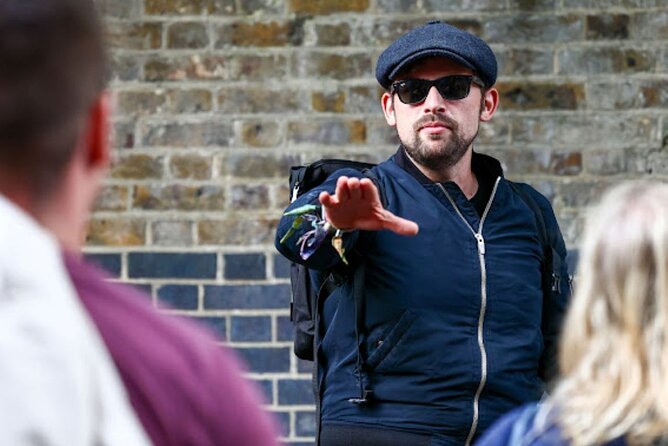
Nick is the guide most often associated with this experience. His approach is described as factual, theatrical, friendly, and respectful. He is also a trained historian and a native of the East End, which gives him a personal connection to the streets he describes. Matt leads some tours and brings an engaging style of his own.
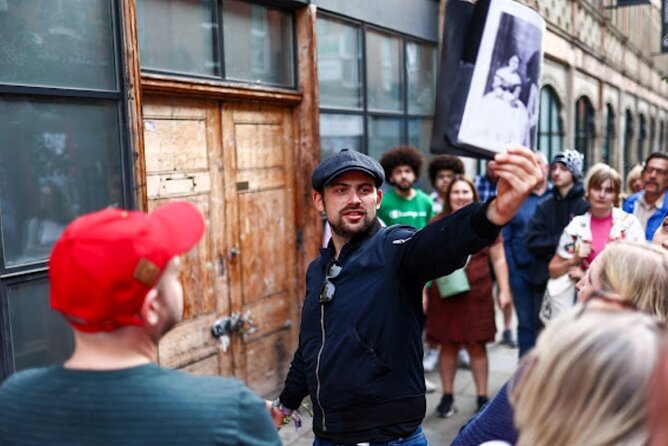
The guide’s role is important because this subject can quickly become sensational. Nick’s style uses storytelling, questions, period photographs on an iPad, and discussion rather than a string of grisly details. You still get the mystery and unease, but the women remain people rather than props in a horror story.
More Ripper walks in the East End:
- London: The Original Jack the Ripper Walking Tour
★ 4.7 · 7,833 reviews - London Jack the Ripper Guided Tour with Ripper-Vision
★ 4.5 · 4,840 reviews - London: Jack the Ripper Small Group Tour
★ 4.7 · 3,159 reviews
Starting at Braham Street at 7:30 pm
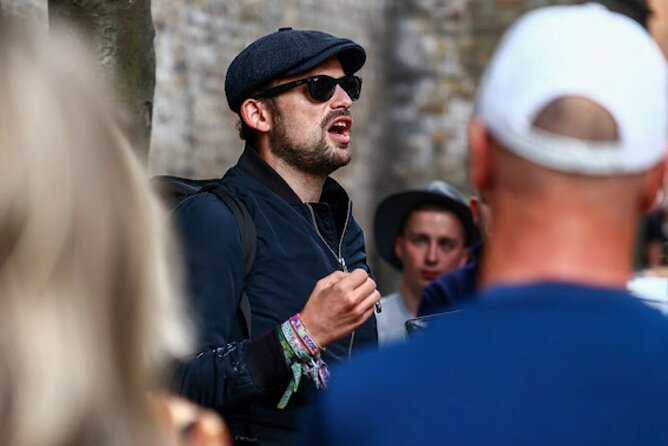
The tour begins at Braham Street in London’s E1 district at 7:30 pm. That late start is part of the appeal. Victorian London’s East End feels more atmospheric after dark, and the subject naturally suits an evening walk.
It also affects how you should prepare. You will be outside for roughly two and a half hours, and at least one person specifically noted that the tour involves a lot of walking. Wear shoes you can trust on city pavements. A coat or extra layer is sensible, since London evenings can feel cool even when the afternoon was mild.
The group can include up to 40 people. That is large enough to provide the energy of a public tour, but it is not an intimate private walk by default. The guide’s interactive style helps keep people involved, though you should stand close enough to hear clearly when the group gathers in busy areas.
The tour is offered in English and comes with a mobile ticket. It is near public transportation, which helps with reaching the start and continuing afterward. The walk ends at Spitalfields Market, at 65 Brushfield Street, rather than returning to Braham Street. That is useful: you finish in an active part of East London with food, shops, and transport nearby.
Brick Lane and the East End before the murders
Brick Lane is more than a colorful food and shopping street today. The tour uses it to explain the social and economic pressures that shaped the East End in 1888.
You’ll hear about the people who occupied these streets, the ways they made a living, and the difficult conditions faced by those with little security. The point is not to pretend that one neighborhood explains every part of the Ripper case. Instead, Brick Lane gives you a setting for understanding why poverty, casual work, lodging, alcohol, and limited support mattered so much.
The area has changed sharply over time. Modern Brick Lane is known for restaurants, clothing, markets, and creative culture. The tour connects that present-day identity with the district’s longer story, showing how the East End moved through periods of deprivation, migration, social tension, and redevelopment.
This is one of the better reasons to choose this walk over a narrow crime tour. You are not simply moving from one alleged crime location to another. You are learning how a district evolves, and how the same streets can carry very different meanings for different generations.
Brick Lane can be busy, so do not expect a quiet, empty setting for every explanation. The street’s modern energy is part of the contrast. It may be harder to hear at times, and the current shops and restaurants can compete with the Victorian story. Still, that contrast helps you see the East End as a living part of London rather than a preserved crime scene.
Spitalfields Market and the modern East End
Spitalfields Market is one of the tour’s key public spaces and the finishing point. Today, it offers food, clothing, music, and other goods, with locals and sightseers moving through the market.
The market gives the tour a useful present-day ending. After hearing about hardship and fear in Victorian Whitechapel, you arrive at a place that represents commerce, leisure, and the East End’s newer identity. The change is not presented as a simple success story. Neighborhood improvement can bring better streets and more activity, but it can also make it easy to forget the people and problems that came before.
This stop is also practical. If you are hungry after the walk, the market area gives you options, although the tour information does not promise that particular food stalls will still be open at the end of your departure. Since the tour ends here, plan your onward route before setting out, especially if you are staying outside East London.
Spitalfields is not presented as a museum stop with a long formal visit. Think of it as part of the street experience and as a final point for discussing the area’s changing culture. The value lies in the setting and the comparison between past and present.
Something completely different for your London days:
- London: The London Eye Entry Ticket
★ 4.6 · 35,875 reviews - From London: Harry Potter Warner Bros Studio Tour
★ 4.7 · 26,588 reviews - London: Westminster to Greenwich River Thames Cruise
★ 4.5 · 22,836 reviews - Magical London: Harry Potter Guided Walking Tour
★ 4.7 · 22,044 reviews
Ten Bells, film fame, and historical caution
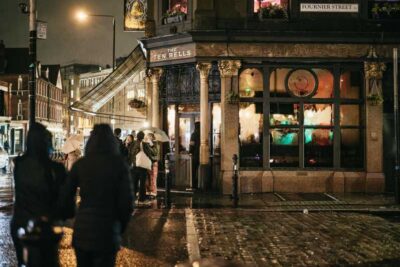
The Ten Bells pub is linked to the Ripper case and has appeared in documentaries and films about it. For many people, this will be the most recognizable stop. The pub carries the atmosphere of a place that has been repeatedly pulled into the story of Victorian crime.
The important thing is to separate the site’s cultural fame from proven fact. A pub can be tied to a case through stories, associations, and later retellings without every dramatic claim being certain. A careful guide helps you understand those layers instead of presenting folklore as settled evidence.
This is where Nick’s factual approach is especially useful. He is described as careful about accuracy and willing to challenge common assumptions. The tour also explores how films, documentaries, and popular culture have shaped the public image of Jack the Ripper.
You should not expect a theatrical haunted-house attraction. The appeal comes from standing in a real East End setting while hearing how the place became connected with the case. If you want graphic detail and a killer-centered presentation, you may find the tone more restrained than expected. If you want context and a more respectful account of the women involved, that restraint is a strength.
Goulston Street and the aftermath of September 30, 1888
Goulston Street brings the tour to another location tied to the case. It is also connected with the riots that followed the double murders of Elizabeth Stride and Catherine Eddowes on September 30, 1888.
This stop shows why the tour is not only about identifying a killer. The murders created fear, anger, suspicion, and public unrest. The East End was already under strain, and the killings intensified distrust of authorities and anxiety about safety.
Walking through Goulston Street while hearing about those events gives the story a civic dimension. You learn how crimes affect a whole community, not just the victims and investigators. The discussion also helps explain why the Ripper case became such a lasting public obsession.
The location itself may not look dramatic today. That is worth knowing. You are not visiting a preserved Victorian crime scene, and modern London can make the past feel distant. The guide’s explanation supplies the connection, using the street as a point of reference rather than pretending that the present-day setting has remained unchanged.
The women behind the headlines
For me, the most valuable feature of this experience is its attention to the victims. You learn about their struggles and the broader circumstances of women living with poverty and insecure work in Victorian London.
That focus gives the tour a more humane center. It also makes the familiar case less familiar. Instead of asking only who the killer was, you are encouraged to think about who these women were, how they lived, and why their stories were often flattened after their deaths.
The tour does not erase the mystery. You still follow the known events and consider the evidence. But the guide’s approach keeps the investigation from overwhelming the people at the center of it.
This is a good fit if you want a true crime tour with social history. It may be less suitable if your main goal is a fast list of suspects or a highly graphic account of the murders. The tone is serious and sympathetic, with room for humor and audience interaction.
Nick’s storytelling style and use of photographs
A guide can make or break this kind of walk. The subject is already dramatic, so simply reciting facts is not enough. Nick is praised for telling the story in chronological order, asking questions, involving the whole group, and using an iPad to show real photographs connected with the material.
The photographs add a useful visual layer. Victorian streets, people, and documents can be difficult to picture from spoken descriptions alone. At the same time, you should expect the images to be part of a serious crime and social history tour. Anyone uncomfortable with period crime photographs should keep that in mind.
Nick’s style is not stiff. He is described as funny, friendly, passionate, and theatrical, while still treating the subject with care. One unusual strength is his willingness to answer questions and discuss different interpretations. History buffs who like to test evidence and assumptions will have plenty to ask about.
The tour can still work with a very small group. One departure continued with only two people, and the guide provided the full experience rather than cutting it short. That flexibility is reassuring, though group size can vary and the normal maximum is 40.
Price, timing, and practical value
At $24.98 per person, this is a reasonably priced specialist walk. You receive about two and a half hours of guiding through several East End locations, plus historical interpretation that reaches beyond the Ripper case.
The value depends on what you want from London sightseeing. If you prefer major monuments and formal museums, this may not be your best use of an evening. If you are interested in social history, crime, local neighborhoods, and the way cities change, the price is modest for the amount of ground and context covered.
The tour is often booked well ahead, with an average booking lead time of 63 days. That suggests you should reserve early if the walk is important to your plans, particularly if you have only one evening available.
Confirmation arrives when you book. Service animals are allowed, and most people can participate, but this remains a walking experience with no promise of a seated break. The maximum group size is 40, and the start time is fixed at 7:30 pm.
Free cancellation is available up to 24 hours before the start time for a full refund. Cancellations or changes made inside that 24-hour window are not accepted for a refund, with cut-off times based on London local time.
Who should take this tour
I would recommend this walk to:
- True crime fans who want evidence and context rather than only sensational stories
- History buffs interested in Victorian poverty, social conditions, and public fear
- Visitors who want to see Brick Lane and Spitalfields through a historical lens
- People who enjoy conversational guides and audience questions
- Families with older children or teenagers who can manage a late-night, serious walking tour
- Repeat visitors looking for a side of London beyond Westminster and the main sights
I would be more cautious if you dislike walking at night, need frequent seated breaks, or want a tightly focused investigation into suspects and theories. The tour’s purpose is wider and more human than that.
Should you book Jack the Ripper and Victorian London Beyond the Shadows?
Book it if you want the Ripper case placed inside the real life of East London. The strongest reasons are Nick’s local connection, his careful treatment of the victims, the use of period photographs, and the way the walk connects the murders to the East End’s social changes.
Do not book it expecting a horror show or a quick parade of crime scenes. You’ll walk a lot, the evening can be cool, and modern streets do not always resemble their Victorian past. But at $24.98, the tour offers a thoughtful, well-paced look at one of London’s most famous mysteries and the people who lived through it.
FAQ
How long does the tour last?
The tour lasts approximately 2 hours and 30 minutes.
What time does the tour start?
The tour starts at 7:30 pm.
Where does the tour begin?
The meeting point is Braham Street, London E1, UK.
Where does the tour end?
The tour ends at Spitalfields Market, 65 Brushfield Street, London E1 6AA.
Which locations are included?
The walk includes Brick Lane, Spitalfields Market, the Ten Bells pub, and Goulston Street.
Is the tour offered in English?
Yes. The tour is offered in English.
What is the cancellation policy?
You can cancel at least 24 hours before the start time for a full refund. Cancellations or changes made less than 24 hours before the start time are not accepted for a refund.
Latest arrivals on the London list
- Heathrow Airport to London Arrival Transfer★ 4.5 · 50 reviews
- London Beatles Tour★ 5.0 · 50 reviews
- One Way Taxi Transfer from London to Gatwick Airport★ 5.0 · 51 reviews
- City & Secrets: Explore London’s Hidden Gems★ 5.0 · 51 reviews
- London: Hidden Baker Street Tube Station Tour★ 4.7 · 51 reviews
- London Christmas Lights Open-Top Bus Tour. 2025 Early Bird★ 3.6 · 51 reviews
- 4 hour London Private Tour, with your own Black Cab Tour Guide★ 5.0 · 51 reviews
- The Beatles Magical History Black Taxi Tour London★ 5.0 · 51 reviews
Jack the Ripper Tours, compared.
London Jack the Ripper Guided Tour with Ripper-Vision
Read our review →
German Language : Original Jack the Ripper Tour
Read our review →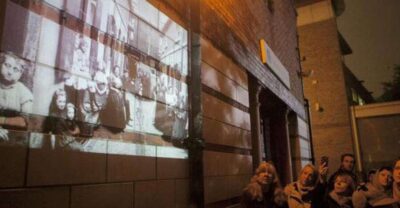
Jack the Ripper Walking Tour – Ripper Vision Tours
Read our review →
Ultimate Jack the Ripper : Guided Tour of London
Read our review →
Browse the lists this tour appears in