
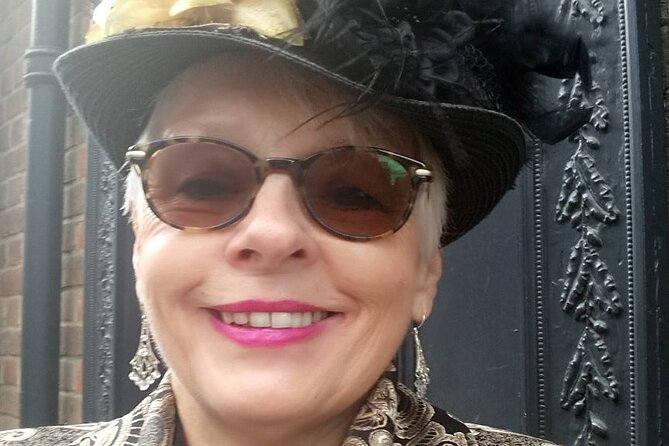
Reviewed · JACK THE RIPPER TOURS
Jack the Ripper Walking Tour with Expert Ripperologist
Jack the Ripper’s story becomes far more unsettling when you walk the actual streets where it unfolded. This 2.5-hour Whitechapel walk links churches, market lanes, pubs, courtyards, and police boundaries while a costumed ripperologist explains what happened in 1888 and what remains uncertain.
I like two things in particular: the guides, including Lindsey, Jenny, and Paul, bring solid historical research rather than a Hollywood thriller; and the backlit tablet images let you compare victims, buildings, and old photographs with the streets around you. The main drawback is the group size, which can reach 30 people, so this is not a quiet private investigation.
- Mitre Square and the double event: Follow the final movements of Elizabeth Stride and Catherine Eddowes.
- A guide-led route: Move from Aldgate to Spitalfields without stopping to study a map.
- 1888 images on a 14-inch tablet: See murder victims, locations, and the old Whitechapel setting clearly.
- The police boundary matters: Learn why City of London and Metropolitan police forces complicated the case.
- A serious look at the victims: The tour gives their lives and surroundings more attention than the killer’s legend.
- A practical evening plan: Finish near Liverpool Street Station, with several Tube lines close by.
In This Review
- Starting at St Botolph’s Church in Aldgate
- Whitechapel poverty at Aldgate Square
- Mitre Square and the night of two murders
- Petticoat Lane and two police forces
- Goulston Street and the only clue
- Gunthorpe Street and Martha Tabram
- Thrawl Street and Mary Ann Nichols
- Hanbury Street and Annie Chapman
- Wilkes Street and the Dear Boss letter
- The Ten Bells and Itchy Park
- Old Spitalfields Market and the Lusk letter
- Mary Kelly and the finish near Liverpool Street
- What the guide and tablet add
- Price, timing, and physical demands
- Who should book this Whitechapel walk?
- Should you book it?
- FAQ
- Where does the Jack the Ripper walking tour start?
- Where does the tour finish?
- How long does the tour last?
- Is the tour suitable for children?
- How large is the group?
- Is the tour accessible to people who cannot walk for long periods?
Starting at St Botolph’s Church in Aldgate

Meet outside St Botolph’s Church at Aldgate Station. This is a useful starting point because it places you right beside the old City of London boundary and gives the guide room to explain the district before the murders take over the story.
The church was known as the Prostitutes Church, a name tied to women who solicited on the island where the church stood. That detail immediately shows you that this walk is about more than identifying murder sites. It looks at the people, work, housing, and public spaces that shaped Whitechapel.
The first stop lasts only about five minutes, but it sets the tone. You are standing in a busy modern part of London while hearing about a district with very different social conditions. Comfortable shoes matter from the first step, since you will be walking and standing for more than two hours.
Whitechapel poverty at Aldgate Square
At Aldgate Square, the guide explains what life was like in overcrowded, poverty-stricken Whitechapel. The focus is on squalor, crime, insecure work, and the people living on the breadline.
I find this context valuable because the murders did not happen in an empty historical stage set. They took place among crowded lodging houses, drinking places, dark routes, and people trying to survive with very little money. Understanding that setting helps you see why the victims were vulnerable and why the police struggled to establish what had happened.
This is also where the tour begins to separate fact from later legend. The costumed presentation adds a theatrical touch, but the strongest parts are the social details and the attention given to the victims rather than treating them as props in a ghost story.
More Ripper walks in the East End:
- London: The Original Jack the Ripper Walking Tour
★ 4.7 · 7,833 reviews - London Jack the Ripper Guided Tour with Ripper-Vision
★ 4.5 · 4,840 reviews - London: Jack the Ripper Small Group Tour
★ 4.7 · 3,159 reviews
Mitre Square and the night of two murders
Mitre Square is one of the key locations on the route. Here you hear about Elizabeth Stride, known as Long Liz, described as the first victim killed on the night later called the double event.
A few yards away, the guide covers Catherine Eddowes, murdered about 45 minutes later. The close timing makes this one of the most gripping parts of the walk. You can follow the geography and understand how the police response moved from one scene to another.
The site is now surrounded by modern streets and buildings, so do not expect a preserved Victorian crime scene. That contrast is part of the point. The guide uses the tablet to show images of the people and places involved, helping you picture an area that has changed while the street plan still gives the story a physical shape.
Petticoat Lane and two police forces
The route continues to Petticoat Lane Market, now called Middlesex Street. This is an important boundary between the City of London and the Metropolitan Police area.
The distinction may sound like a dry administrative detail, but it matters here. Two separate police forces were responsible for nearby parts of London, and that split affected communication, authority, and the search for the killer. I like this section because it explains how a city’s organization could make an already difficult case even harder.
You spend only about five minutes here, but the stop connects the locations in a practical way. The walk is not simply a list of murder addresses. It shows how streets, jurisdictions, and police work fitted together.
Goulston Street and the only clue
At Goulston Street, you stop at the doorway associated with the only clue found along the route taken by the police that night. The guide explains how officers followed the trail while trying to catch Jack the Ripper.
This stop works best if you enjoy the uncertain parts of the case. The evidence is limited, and the tour does not pretend that one doorway solves the mystery. Instead, it gives you a real location where the investigation and later speculation overlap.
The guide’s tablet presentation is especially useful here. Printed photographs can be hard to see in a group, but the supplied 14-inch backlit tablet is designed to show images clearly. You may still need to position yourself so you can see, particularly if the group is near its maximum size.
More London walking tours:
- Magical London: Harry Potter Guided Walking Tour
★ 4.7 · 22,044 reviews - Tour for Muggles The Ultimate Harry Potter Walking Tour in London
★ 5.0 · 4,684 reviews - London Jack The Ripper Guided Walking Tour
★ 5.0 · 3,131 reviews - London: Harry Potter Movies Walking Tour (Kids Go Free)
★ 4.7 · 3,071 reviews
Gunthorpe Street and Martha Tabram
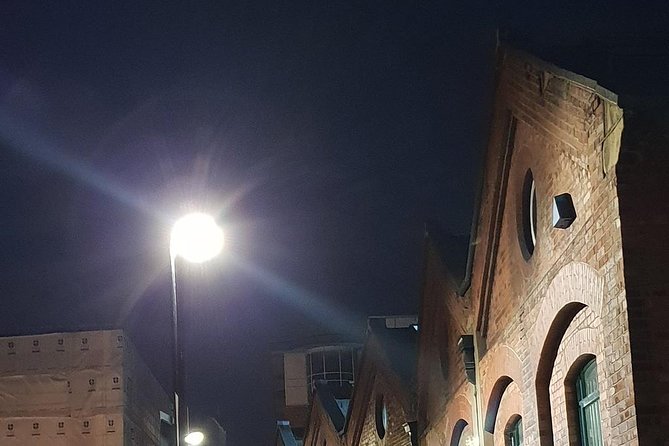
From Wentworth Street, you view Gunthorpe Street and the spot where Martha Tabram was found murdered on August 7, 1888, at George Yard Buildings. She is now considered by some investigators to be the most likely first victim linked to Jack the Ripper.
This stop adds an important layer to the usual story. Many accounts begin with the canonical five victims, but Tabram’s case raises questions about how the series should be defined. The guide presents her place in the story as a matter for examination, not as a simple fact that removes all doubt.
You do not enter a preserved building or pay an admission fee. The value comes from the explanation and the location itself. Like several stops on the walk, it is best for people who enjoy weighing evidence and competing interpretations.
Thrawl Street and Mary Ann Nichols
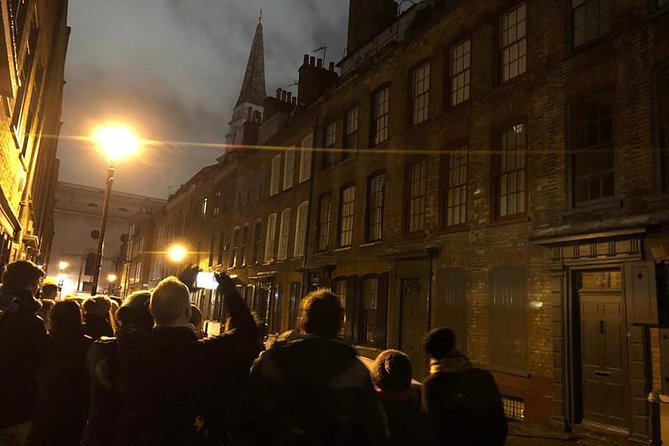
The walk continues toward Brick Lane and pauses opposite the Frying Pan Pub, on the corner of Thrawl Street. Here you hear about Mary Ann Nichols and her last drink before she made her way down Whitechapel Road.
Nichols was later murdered in Bucks Row, behind Whitechapel Station. The route lets you connect her final known movements with the wider neighborhood rather than hearing her story as an isolated paragraph.
The tour’s treatment of the women is one of its better features. The guide gives attention to their circumstances and the streets they knew, not just the injuries that made the case notorious. If you prefer a respectful historical account over sensational storytelling, this balance matters.
Hanbury Street and Annie Chapman
At Hanbury Street, you turn off Brick Lane to discuss Annie Chapman, murdered in the backyard of number 29 Hanbury Street. The stop lasts about 12 minutes, giving the guide time to explain the location and the case in more detail.
The street itself is not a frozen Victorian set. London has changed, and the original backyard is not presented as a museum exhibit. Still, standing in the area gives you a stronger sense of distance and direction than a book or podcast can provide.
I recommend listening for the guide’s explanation of the surrounding housing and movement through the neighborhood. The physical route helps you understand how close these locations were to one another and why the area’s narrow streets became so central to the investigation.
Wilkes Street and the Dear Boss letter
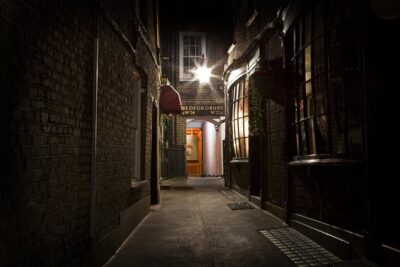
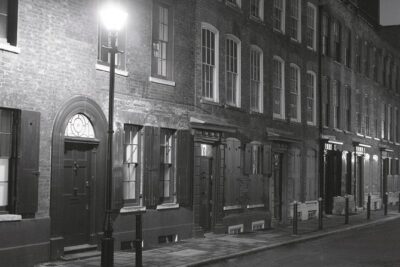
Wilkes Street offers one of the more atmospheric stretches of the walk. The route is described as largely untouched by time since the 1800s, and from here you continue toward Puma Court to hear about the Dear Boss letter.
The street’s older appearance adds visual interest, but keep expectations sensible. This is still an urban walking tour, not a preserved film set. Modern life continues around the historic fabric.
The letter is a good reminder that the Ripper case grew through publicity as much as through police work. Claims, messages, newspapers, and public fear helped create the killer’s identity in the popular imagination. Your guide can explain where evidence ends and the mythology begins.
The Ten Bells and Itchy Park
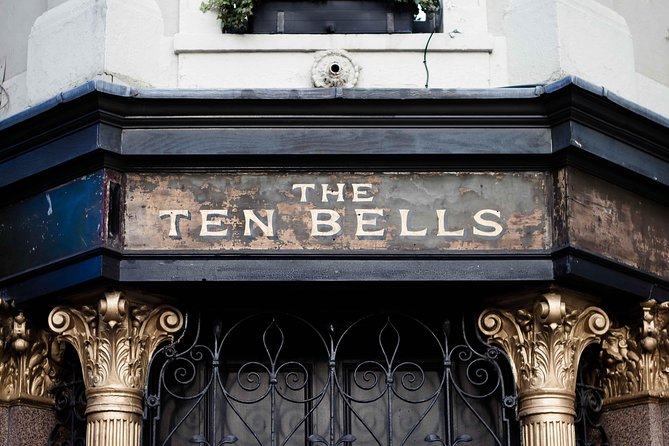
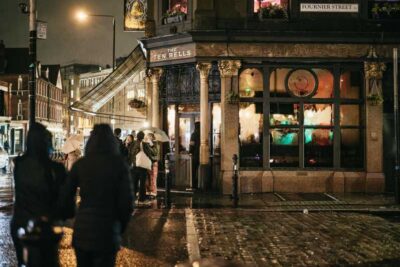
Opposite the Ten Bells, you hear about Mary Kelly’s connection with the pub. The stop also looks toward Christchurch Graveyard, known as Itchy Park, where homeless people would sleep during the day.
This part of the route brings together two very different kinds of place: a pub linked to the case and a public space used by people without shelter. Once again, the setting helps explain the social world around the murders.
The Ten Bells is not simply a photo stop. It gives the guide a chance to discuss drinking culture, poverty, and the places where people met, waited, and sought warmth. I would not plan on a long pub visit as part of the tour, since the stop is scheduled for about five minutes.
Old Spitalfields Market and the Lusk letter
Near Old Spitalfields Market, the route pauses at the entrance of the London Fruit and Wool Exchange. Here you hear about the letter sent to George Lusk, head of the Whitechapel Vigilance Group.
This location broadens the story beyond the police. Local groups, business owners, and residents were also trying to respond to fear in the district. The Whitechapel Vigilance Group reflected the public pressure surrounding the murders and the demand for answers.
The market area also makes a useful transition toward the end of the walk. You have moved from Aldgate through Whitechapel and Brick Lane into Spitalfields, following a route that is easy to continue exploring on your own after the tour.
Mary Kelly and the finish near Liverpool Street
The tour ends in the square behind the London Fruit and Wool Exchange with the story of Mary Kelly, described here as the final victim, killed on November 9, 1888.
Ending with Kelly gives the walk a clear final chapter, but it is also the most difficult section emotionally. The subject involves murder and mutilation, and the tablet images are intended to make the people and places more real. This is not suitable for young children, and no one under 15 may join. Those aged 16 or 17 must be accompanied by an adult.
From the end point at 66 to 68 Bell Lane, it is about a five-minute walk to Liverpool Street Station. Your guide directs you there, and you will find a choice of Tube lines. That makes the finish convenient if you want dinner, another evening activity, or a quick return to your hotel.
What the guide and tablet add
The guide is central to the experience. Lindsey is praised for her years of research, upbeat manner, and occasional wit. Jenny is described as punctual and clear, with a strong grasp of both the murders and the period. Paul has also led the walk and is singled out for an engaging presentation.
Because the guide may vary, the tone can differ slightly from one departure to another. The shared strengths are the historical focus, the costumed presentation, and the use of visual material.
The tablet contains photographs of the victims, locations, and surrounding area. The images are shown on a 14-inch backlit screen, which is a practical advantage in London’s dimmer streets or poor weather. The visuals also help you compare the neighborhood in 1888 with what you see now.
One caution: a group of 20 to 30 people can make it harder to stand close to the screen or hear every word. A microphone is used to help the group, but if you want individual attention or a slower discussion of suspects, a private tour is the better choice.
Price, timing, and physical demands
At $23.61 per person, this is a reasonable price for a 2.5-hour guided walk in central London. You are paying for a researched route, live interpretation, visual material, and the convenience of moving between sites without managing a map.
The value is strongest if you want context. A cheaper self-guided walk can take you to some of the same streets, but it will not easily explain police boundaries, victim biographies, witness accounts, or the difference between accepted evidence and later theory.
You need a moderate level of fitness. The route requires walking and standing for more than two hours, and toilet access is very limited. Wear comfortable shoes, check the weather, and arrive ready to remain outdoors for most of the experience.
The tour is offered in English and includes a mobile ticket. It is near public transport at both ends, with Aldgate Station at the start and Liverpool Street Station close to the finish. The group maximum is 30 people, and the tour is often booked about 40 days ahead, so popular dates may require planning.
Free cancellation is available up to 24 hours before the start time. If the minimum number of participants is not reached and the tour is canceled, you are offered another date or experience, or a full refund.
Who should book this Whitechapel walk?
I would choose this tour if you like crime history, Victorian London, police investigations, or stories where the evidence remains incomplete. It also suits anyone who wants to see an older side of London beyond the major sights.
The tour is especially useful if you know only the popular version of Jack the Ripper. The guide can correct the Hollywood image by focusing on the victims, the period, the poor conditions, and the uncertain evidence.
I would not choose it for children, anyone uncomfortable with grisly subject matter, or anyone unable to walk and stand for at least two hours. It is also not ideal if you want a very small group or a long, academic discussion of every suspect.
Should you book it?
Book this walk if you want a well-organized route through Whitechapel with a guide who can connect the murders to the real streets and social conditions of 1888. The tablet images, costumed delivery, and strong attention to the women involved give it more substance than a simple spooky stroll.
Think twice if crowds bother you or if your main interest is a detailed ranking of suspects. The emphasis is on victims, witnesses, police work, and the neighborhood, with suspect theories receiving less attention.
For most dark-history fans, the price is fair and the route is well chosen. Wear good shoes, keep your expectations grounded, and treat the subject with respect. That is the best way to get value from this walk.
FAQ
Where does the Jack the Ripper walking tour start?
The tour starts outside St Botolph’s Church at Aldgate Station, Aldgate High Street, London EC3N 1AH.
Where does the tour finish?
It ends at 66 to 68 Bell Lane, inside the square of the London Fruit and Wool Exchange on Brushfield Street. From there, it is about a five-minute walk to Liverpool Street Station.
How long does the tour last?
The walk lasts approximately two hours and 30 minutes.
Is the tour suitable for children?
No children under 15 are allowed. Participants aged 16 or 17 must be accompanied by an adult.
How large is the group?
The tour can have a maximum of 30 participants.
Is the tour accessible to people who cannot walk for long periods?
No. A moderate level of physical fitness is required, and the tour is not recommended for anyone unable to walk and stand for more than two hours. Toilet access along the route is very limited.
Latest arrivals on the London list
- One Way Taxi Transfer from London to Gatwick Airport★ 5.0 · 51 reviews
- Heathrow Airport to London Arrival Transfer★ 4.5 · 50 reviews
- London Beatles Tour★ 5.0 · 50 reviews
- London: Hidden Baker Street Tube Station Tour★ 4.7 · 51 reviews
- City & Secrets: Explore London’s Hidden Gems★ 5.0 · 51 reviews
- London Christmas Lights Open-Top Bus Tour. 2025 Early Bird★ 3.6 · 51 reviews
- 4 hour London Private Tour, with your own Black Cab Tour Guide★ 5.0 · 51 reviews
- The Beatles Magical History Black Taxi Tour London★ 5.0 · 51 reviews
Jack the Ripper Tours, compared.
London Jack the Ripper Guided Tour with Ripper-Vision
Read our review →
German Language : Original Jack the Ripper Tour
Read our review →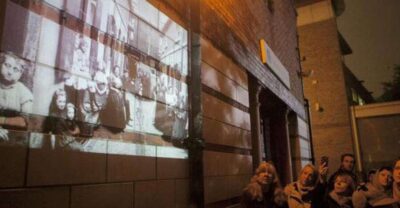
Jack the Ripper Walking Tour – Ripper Vision Tours
Read our review →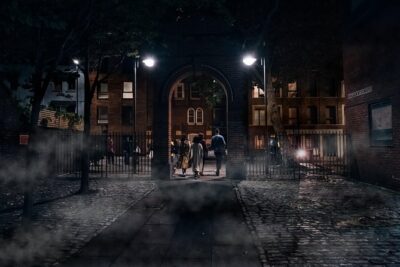
Ultimate Jack the Ripper : Guided Tour of London
Read our review →
Browse the lists this tour appears in