
Reviewed · JACK THE RIPPER TOURS
Jack the Ripper – What About the Women?
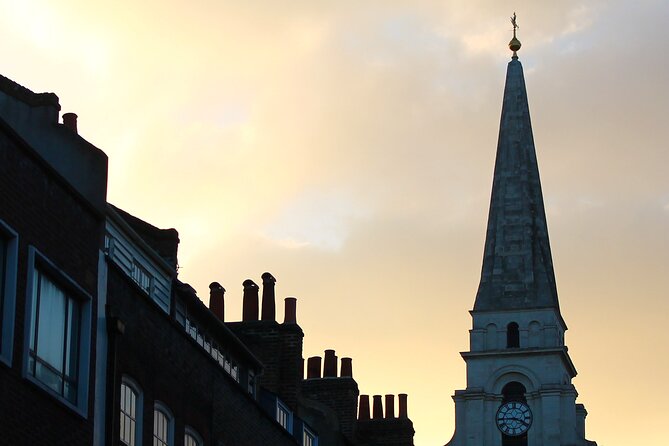
Jack the Ripper tours usually give the killer the starring role. This one turns the spotlight toward the women he killed, including Martha Tabram, Polly Nichols, Annie Chapman, Elizabeth Stride, Catherine Eddowes, and Mary Jane Kelly. Along the way, you get a grounded look at poverty, addiction, migration, housing, and daily life in Victorian East London.
I like the women-first approach, which treats the victims as people rather than footnotes in a murder story. I also like the route through Brick Lane, Spitalfields, Petticoat Lane, and Mitre Square, where old streets meet modern London. The main drawback is that this is a two-hour walking tour at night, so you should be ready to cover a fair amount of ground and stand outdoors.
In This Review
- Key points to know
- A different kind of Jack the Ripper walk
- Starting at Aldgate and entering Victorian Whitechapel
- Brick Lane, Polly Nichols, and a changing East End
- Truman Brewery, Annie Chapman, and the Ten Bells
- Old Spitalfields Market and Mary Jane Kelly
- Petticoat Lane and the working East End
- St Botolph’s, Elizabeth Stride, and Mitre Square
- What the guides add to the experience
- Price, timing, and overall value
- Who should book Jack the Ripper: What About the Women?
- FAQ
- Where does the tour start?
- What time does the tour begin?
- How long does the walking tour last?
- Where does the tour end?
- What language is the tour offered in?
- Is the tour about Jack the Ripper or the women?
- Which places does the route visit?
- How many people can join the tour?
- Can I cancel for a refund?
Key points to know
- The focus is on the victims: You hear about their lives, families, work, hardships, and final days instead of spending the evening guessing at the killer’s identity.
- Cecily and Ellie lead the tour: Both guides are praised for clear storytelling, warmth, strong local knowledge, and an ability to answer questions.
- The route covers several East London landmarks: Expect Whitechapel Road, Brick Lane, the former Truman Brewery, Old Spitalfields Market, Petticoat Lane, St Botolph’s Church, and Mitre Square.
- It is more social history than crime spectacle: The tour discusses dosshouses, workhouses, alcohol addiction, immigration, charity work, and the treatment of poor women.
- The evening setting adds atmosphere: You see East London after dark, when the streets feel closer to the period being discussed, though weather and footwear matter.
- The group is capped at 20 people: That is small enough for questions and personal attention without the cost of a private tour.
A different kind of Jack the Ripper walk
The central idea is simple but important: the women deserve more attention than the man who murdered them. That choice shapes every stop.
You will hear about the circumstances that brought women to Whitechapel, the limited options open to poor people, and the assumptions later attached to the victims. The tour also takes care with the common claim that all the women were prostitutes. Their lives were more varied than that label suggests, and the guide explains how poverty, unstable housing, alcohol addiction, and social prejudice affected them.
This makes the experience closer to a social history walk than a traditional true-crime outing. You still visit places connected with the Whitechapel murders, but the emphasis is on the people who lived there and the society around them.
The tour is also deliberately light on gore. There are no grisly pictures, and the murders are handled without turning suffering into entertainment. That makes it a reasonable choice for families with mature children. One family brought daughters aged 12 and 15 and found the subject appropriate, though you should make your own call about how your children handle crime and poverty.
More Ripper walks in the East End:
- London: The Original Jack the Ripper Walking Tour
★ 4.7 · 7,833 reviews - London Jack the Ripper Guided Tour with Ripper-Vision
★ 4.5 · 4,840 reviews - London: Jack the Ripper Small Group Tour
★ 4.7 · 3,159 reviews
Starting at Aldgate and entering Victorian Whitechapel
The meeting point is outside Aldgate station on Aldgate High Street, London EC3N 1AH. The tour begins at 6:30 pm, a useful time for seeing the East End as daylight fades and the streets take on a different mood.
The first section follows Whitechapel Road and introduces Martha Tabram and Polly Nichols. Instead of rushing to the murder details, the guide explains how working-class residents lived in the late 19th century.
You will hear about dosshouses, workhouses, spikes, and other forms of cheap or emergency accommodation. These details matter because housing was not just a background issue. For women without steady money or family support, finding a bed for the night could shape nearly every decision.
The stop lasts about 20 minutes and includes discussion of charities still working in the area today. That link between Victorian hardship and present-day support gives the walk a useful sense of continuity. Whitechapel is not treated as a frozen crime set. It remains a living part of London with present problems and present efforts to help.
This is one of the strongest parts of the experience if you want context. The main limitation is that the opening section can feel heavy, since it deals with poverty, insecure housing, and the narrow choices available to working women. The guide’s respectful tone helps keep it focused rather than sensational.
Brick Lane, Polly Nichols, and a changing East End
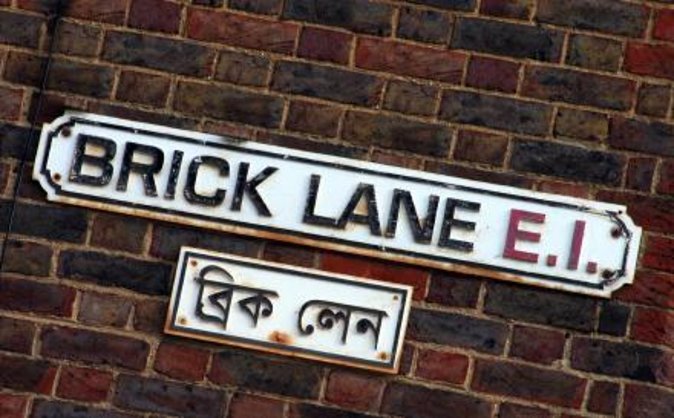
The walk continues toward Brick Lane, one of the best-known streets in East London. Here, you stop at the site of the pub where Polly Nichols spent her final night.
The point is not simply to place a victim on a map. The guide uses Polly’s story to discuss alcohol addiction in Victorian England and the way drinking was tied to poverty, social life, and survival. You get a clearer sense of her life before she became a name in a murder case.
Brick Lane also provides a natural opening into the history of immigration in the East End. At the Brick Lane Mosque, the guide explains the area’s changing communities and cultural life. The building itself reflects the layered story of the neighborhood, and this stop helps you see that East London has long been shaped by migration.
The Brick Lane portion lasts about 15 minutes. It is especially useful if you are interested in how a neighborhood changes over time. You are not only following a Victorian crime route. You are also looking at the people and communities who gave the East End its character across different periods.
Truman Brewery, Annie Chapman, and the Ten Bells
At Spitalfields, the route takes in the former Truman Brewery, once described as the largest brewery in the world. Its scale helps explain the industrial power of Victorian London, but it also sharpens the contrast between wealth and poverty.
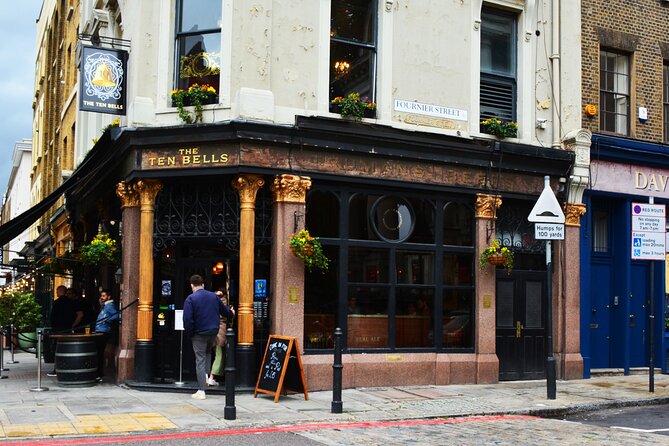
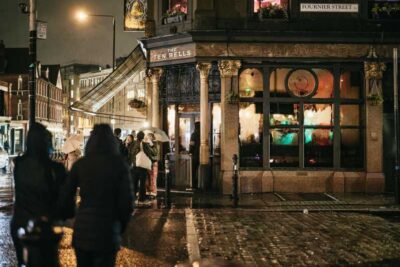
Nearby is 29 Hanbury Street, where Annie Chapman was found on the morning of September 8. The guide then moves around the corner to the Ten Bells pub, a familiar name in the Jack the Ripper story.
Here, Annie’s life receives more attention, including the heartbreak and personal difficulties she faced. The value of this stop comes from the shift in tone. You are not left with only a date, an address, and a crime scene. You are given a person with relationships, setbacks, and a life that existed before the headlines.
The Ten Bells also raises the question of how places profit from dark history. The pub was once renamed the Jack the Ripper pub, but the Reclaim the Night movement helped push it back to the Ten Bells name. That detail connects the tour to a wider challenge: how should London remember violence against women without turning it into a brand?
The stop itself takes about 10 minutes. It is short, but it carries a lot of meaning. If you want a tour built around theories, suspects, and forensic clues, this section may seem restrained. If you want to think about memory and respect, it is one of the more useful moments.
Something completely different for your London days:
- London: The London Eye Entry Ticket
★ 4.6 · 35,875 reviews - From London: Harry Potter Warner Bros Studio Tour
★ 4.7 · 26,588 reviews - London: Westminster to Greenwich River Thames Cruise
★ 4.5 · 22,836 reviews - Magical London: Harry Potter Guided Walking Tour
★ 4.7 · 22,044 reviews
Old Spitalfields Market and Mary Jane Kelly
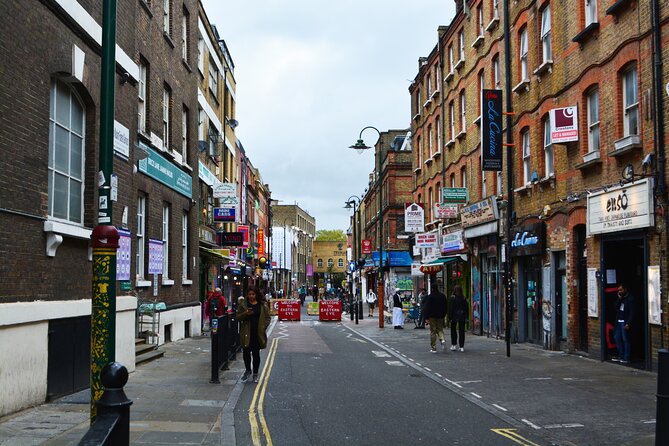
Old Spitalfields Market opened in 1887, the year of Queen Victoria’s Golden Jubilee and one year before the Whitechapel murders began. The market gives the guide a place to explain the sharp contrasts of Victorian London.
Markets could bring together workers, shoppers, traders, and wealthy observers, yet those groups did not share the same opportunities. The setting makes it easier to picture the tension between public celebration and private hardship during the period.
The route then heads toward Crispin Street, where you see the former site of a refuge for working-class people that actually provided useful support. That is a welcome counterpoint to the usual story of Victorian poverty. Not every institution failed, and the guide points to an example that offered practical help.
Across the street is the former site of Mary Jane Kelly’s residence. Kelly is often treated as the most mysterious of the victims, and the tour addresses that uncertainty without allowing mystery to erase her humanity.
This section takes about 15 minutes. Old Spitalfields Market is also one of the more practical places to pause, look around, and get your bearings. The modern market, shops, street art, and older buildings make this part of the walk visually varied, even though the tour remains firmly focused on the past.
Petticoat Lane and the working East End
Petticoat Lane Market marks the former heart of the East End textile industry. The stop is brief, about five minutes, but it adds another piece to the economic picture.
Textiles supported many workers and helped shape the area’s identity. It also reminds you that the East End was not only a place of crime and poverty. It was a place of trade, labor, small businesses, markets, and crowded working lives.
This may be the least detailed stop on the route, simply because the schedule allows only a short pause. Still, it helps connect the murder sites to the ordinary economy of the neighborhood. You see how the women’s lives were tied to a district where work was often insecure and housing could be precarious.
St Botolph’s, Elizabeth Stride, and Mitre Square
Near St Botolph’s Church without Aldgate, you are introduced to Elizabeth Stride. Born in Sweden, Stride had a difficult early life in Gothenburg before making her way to London.
Her story broadens the tour beyond a narrow English crime narrative. Migration, personal trauma, and the search for a new life were part of the East End story, and Stride’s experiences show how women arrived in London with complicated pasts and limited protection.
The final section concerns Catherine Eddowes, a woman from Wolverhampton, whose body was found in Mitre Square. The guide presents her as a spirited, individual person rather than another entry in a list of victims.
This concluding stretch lasts about 25 minutes and gives the tour room to return to its main message. The women were not simply people who happened to be in the wrong place. Their lives were shaped by social conditions, relationships, work, migration, and the absence of safety nets.
The route is listed as ending at Spitalfields Market, 65 Brushfield Street, London E1 6AA. Since the final storytelling is near Mitre Square, I would pay attention to the guide’s exact end point on the evening. That small detail matters if you have dinner plans or a timed connection afterward.
What the guides add to the experience
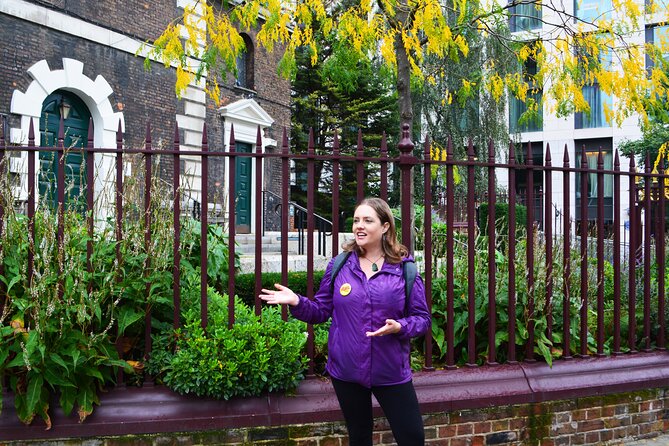
The guide can make or break a walking tour, and this experience has received especially strong praise for Cecily and Ellie. Cecily is described as warm, clear, and deeply engaged with the women’s stories. Ellie is also praised for her friendly manner and strong grasp of both the victims and the East End.
That matters for a subject like this. A guide who focuses only on dates and crime scenes can make the walk feel cold. Here, the goal is to make the social setting understandable while keeping the victims at the center.
Clear speaking is another practical plus. One person with hearing difficulty found Cecily unusually easy to follow, which is useful information if you sometimes struggle with outdoor tours. The guide also offers suggestions for local restaurants, pubs, and shops, adding value if you want to continue exploring after the walk.
The group limit is 20 people. That is not the same as a private tour, but it should allow a more personal feel and make it easier to ask questions. Most people can participate, service animals are allowed, and the route is near public transport.
Price, timing, and overall value
At $34.28 per person, the price is fair for a two-hour guided walk in central London, especially when you consider the small maximum group and the amount of interpretation involved. You are paying for a guide who connects addresses and murder dates to housing, immigration, social welfare, gender, and public memory.
The value is strongest if you would otherwise book a standard Jack the Ripper tour. This gives you a different purpose and a more thoughtful use of your evening. It also saves you the work of finding each location and figuring out how the sites relate to one another.
The value is weaker if you want a fast-paced sightseeing walk or a detailed investigation of the killer’s identity. This is not built around dramatic reveals, gruesome evidence, or a long list of suspects. It asks you to listen, think, and look closely at the neighborhood.
Plan for about two hours, frequent stops, and a fair amount of walking. Some stops offer places to sit if needed, but you should wear comfortable shoes and dress for London’s changeable evening weather. The tour requires good weather and a minimum number of participants, so a cancellation can lead to another date or a full refund.
You can cancel for a full refund up to 24 hours before the start time. Cancellations or changes inside that window are not refunded or accepted.
Who should book Jack the Ripper: What About the Women?
I recommend this tour if you want a respectful look at the Whitechapel murders and the women whose lives were overshadowed by them. It suits people interested in Victorian society, women’s history, poverty, migration, social welfare, and the changing East End.
It is also a good fit for families with mature children who can handle serious subjects but do not want graphic material. The clear guides and small group make it easier to follow than a large, theatrical night walk.
I would skip it if your main goal is grisly crime detail, killer theories, or a highly dramatic ghost-story mood. For everyone else, the $34.28 price buys something more useful than a collection of spooky anecdotes: a human account of six women and the city that shaped their lives.
FAQ
Where does the tour start?
It starts at Aldgate High Street, London EC3N 1AH, outside Aldgate station.
What time does the tour begin?
The start time is 6:30 pm.
How long does the walking tour last?
It lasts approximately two hours.
Where does the tour end?
The listed end point is Spitalfields Market at 65 Brushfield Street, London E1 6AA. The route also includes the final storytelling near Mitre Square.
What language is the tour offered in?
The tour is offered in English.
Is the tour about Jack the Ripper or the women?
It focuses on the female victims, their lives, Victorian East End society, and the circumstances that shaped their experiences. It is more a social history tour than a traditional true-crime tour.
Which places does the route visit?
The route includes Whitechapel Road, Brick Lane, the Brick Lane Mosque, the former Truman Brewery, 29 Hanbury Street, the Ten Bells area, Old Spitalfields Market, Crispin Street, Petticoat Lane, St Botolph’s Church, and Mitre Square.
How many people can join the tour?
The maximum group size is 20 people.
Can I cancel for a refund?
Yes. You can cancel at least 24 hours before the start time for a full refund. Cancellations within 24 hours are not refunded, and poor weather or an insufficient number of participants may lead to a new date or a full refund.
Latest arrivals on the London list
- Easy Access Tower of London Royal Secrets & Scandals Tour★ 5.0 · 3 reviews
- Stonehenge Special Access Guided Morning Tour from London★ 4.5 · 3 reviews
- Shoreditch & East London Walking Tour with a Local, Custom & Private★ 5.0 · 3 reviews
- Madame Tussauds London Fast Track and Champagne Experience★ 3.5 · 3 reviews
- London Private Brixton Tour with a Local – Culture & Stories★ 4.9 · 3 reviews
- Private Full Day Tour – Fast Track Tower of London and Lunch★ 4.6 · 3 reviews
- Private transfer from London Heathrow Airport to Southampton★ 5.0 · 3 reviews
- London Soho District – Guided Walking Tour 12 guests 2,5h★ 4.8 · 3 reviews
Jack the Ripper Tours, compared.
London Jack the Ripper Guided Tour with Ripper-Vision
Read our review →
German Language : Original Jack the Ripper Tour
Read our review →
Jack the Ripper Walking Tour – Ripper Vision Tours
Read our review →
Ultimate Jack the Ripper : Guided Tour of London
Read our review →
Browse the lists this tour appears in