Reviewed · TOURS
London: Hidden Tube Tour of Holborn’s Secret Platforms
Holborn station still carries thousands of people beneath central London, but behind its public corridors sit two long-closed Aldwych branch platforms, vintage posters, an early signalling cabin, and spaces most passengers never see. This 85-minute walking tour takes you into that sealed-off side of the Underground.
I like the close look at Leslie Green’s Edwardian station design, and I like the human side of the story: wartime shelter, scientific laboratories, a model rail club, and the staff who kept the system running during the Blitz. The main drawback is practical rather than historical. You’ll face stairs, dim light, uneven ground, and tight spaces, with no elevators.
In This Review
- Key points to know
- Behind Holborn’s concealed doors
- The Aldwych branch and its two silent platforms
- Looking toward the Piccadilly line
- Edwardian design still visible underground
- How the 1930s reshaped the station
- Wartime shelter, laboratories, and a model rail club
- An 85-minute route that requires steady walking
- Meeting at Gate Street and Kingsway
- Is $60.61 a fair price?
- Who will enjoy Holborn’s secret platforms?
- Booking flexibility and timing
- Should you book this Holborn tour?
- FAQ
- How long is the Holborn Hidden Tube Tour?
- Where does the tour start?
- Where does the tour end?
- What language is the tour in?
- What can I see during the tour?
- Is the tour suitable for children?
- Is the tour accessible for people with mobility impairments?
- What should I bring and what is not allowed?
- Can I cancel or pay later?
Key points to know
- Two Aldwych platforms: See parts of a branch line that have been closed for around 30 years.
- A working Tube station: Look toward the Piccadilly line and watch the modern Underground continue around you.
- 1930s change: Learn how station upgrades led to the closure of nearby British Museum station.
- Unexpected past uses: Hear how the closed areas served as wartime shelter, laboratories, and a model railway club.
- Serious walking requirements: Wear closed, comfortable shoes and expect stairs, low lighting, and uneven surfaces.
- Central London meeting point: Start at the corner of Gate Street and Kingsway, then finish at the same place.
Behind Holborn’s concealed doors
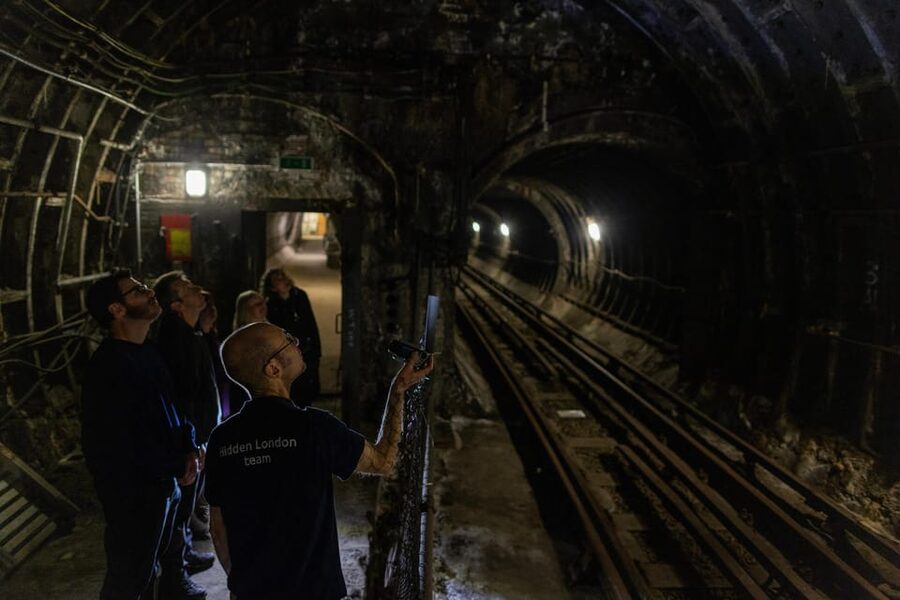
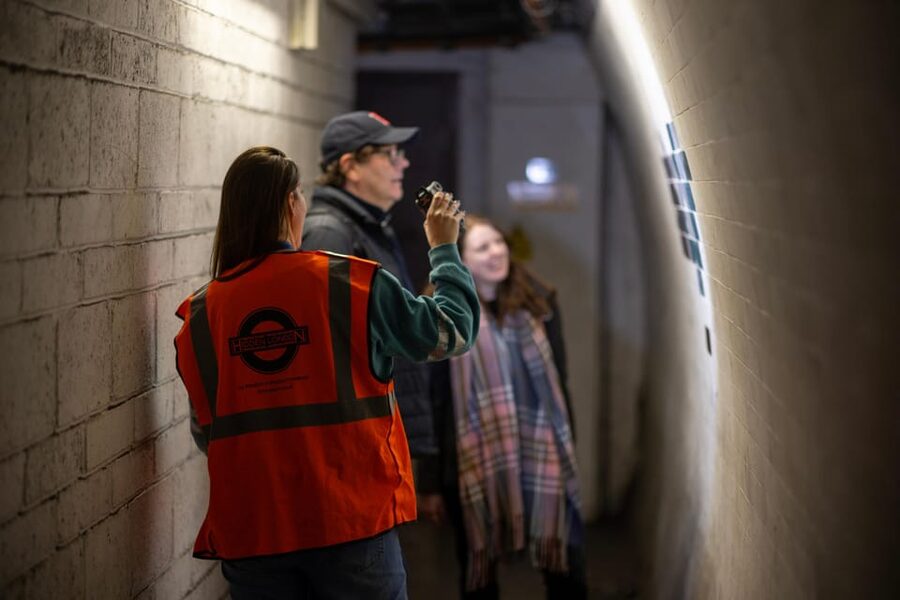
Holborn is not a quiet museum setting. It is a working London Underground station in the heart of the city, opened in 1906 with four platforms serving the Piccadilly line. That contrast gives the tour its character. You begin in an ordinary transport hub, then pass through concealed doors into areas that feel cut off from the daily rush above.
The guide leads the group through disused sections rather than simply showing photographs or historic signs. You can expect the route to focus on what remains in place: old platform areas, Edwardian design details, vintage posters, and equipment linked to the station’s earlier life.
The tour lasts 85 minutes, so it is long enough to tell a proper story without taking up half your day. You can fit it before a museum visit, between central London sights, or into a day built around the West End and Covent Garden.
You should not expect a general London sightseeing tour. The focus stays tightly on Holborn, the Aldwych branch, and the way Tube stations changed over the 20th century. That narrow subject is a strength if you like transport, engineering, architecture, or places normally shut to the public.
Other London favourites people book with this one:
- London: The London Eye Entry Ticket
★ 4.6 · 35,875 reviews - From London: Harry Potter Warner Bros Studio Tour
★ 4.7 · 26,588 reviews - London: Westminster to Greenwich River Thames Cruise
★ 4.5 · 22,836 reviews
The Aldwych branch and its two silent platforms
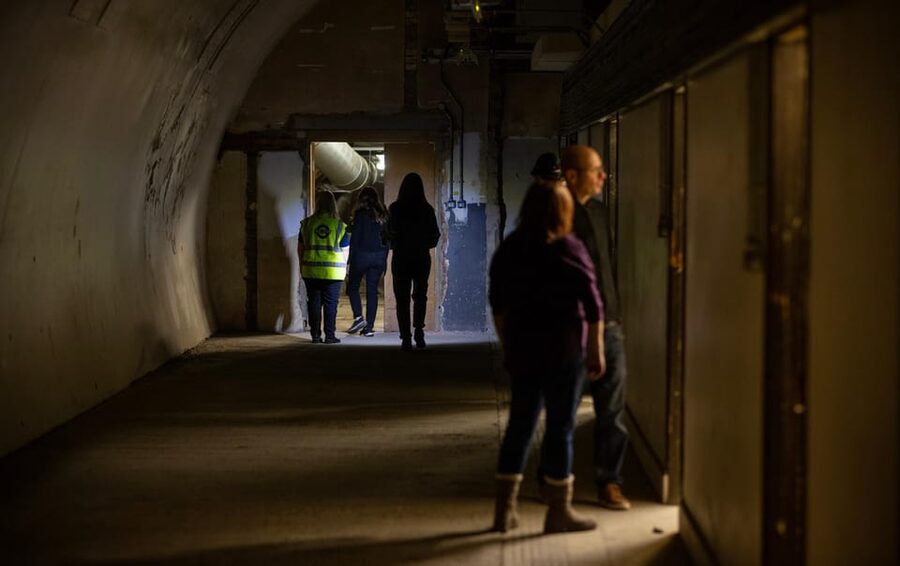
The strongest part of the visit is the former Aldwych branch. The branch once connected the Underground network to Aldwych, but its platforms at Holborn have been closed for about 30 years. Here, the interest comes from seeing a transport space that was never fully erased.
The platforms retain vintage posters and original Edwardian design elements associated with Leslie Green. These details matter because they show how early Underground stations were built and presented to the public. You are not just looking at an empty tunnel. You are seeing surviving parts of a transport system designed for a very different London.
The old platforms also help explain how plans for the Underground changed over time. A branch that once made sense could later become unnecessary, while the main station continued serving a growing city. That mixture of use and abandonment is what makes the visit more revealing than a standard station tour.
You may find the platforms less polished than a regular museum display. That is part of the appeal, but it also means you should prepare for a working historic space rather than a carefully staged attraction. Lighting is low, the ground can be uneven, and stairs are part of the route.
Looking toward the Piccadilly line
The tour also gives you an unexpected view of the Piccadilly line. This is a useful reminder that Holborn is not a frozen historical site. The old spaces sit beside a live railway carrying on with its daily work.
That view connects the past and present in a simple way. The station began as a complex of four platforms in 1906. Some areas later closed, while other parts remained essential to London’s transport network. You can see how a station grows in layers rather than being built once and left unchanged.
For you, this means the tour has more movement and context than a visit to an isolated abandoned station. Trains, platforms, staff areas, and old structures form one story. At the same time, the live station setting can mean some parts feel less hushed than you might expect from a tour of disused spaces.
The guide’s role is important here. The English-speaking guides explain what you are seeing and place it within the wider development of London Underground. A previous participant rated the guides highly for their expertise, and that is exactly the quality you need on a visit where old walls alone cannot explain every change.
Edwardian design still visible underground
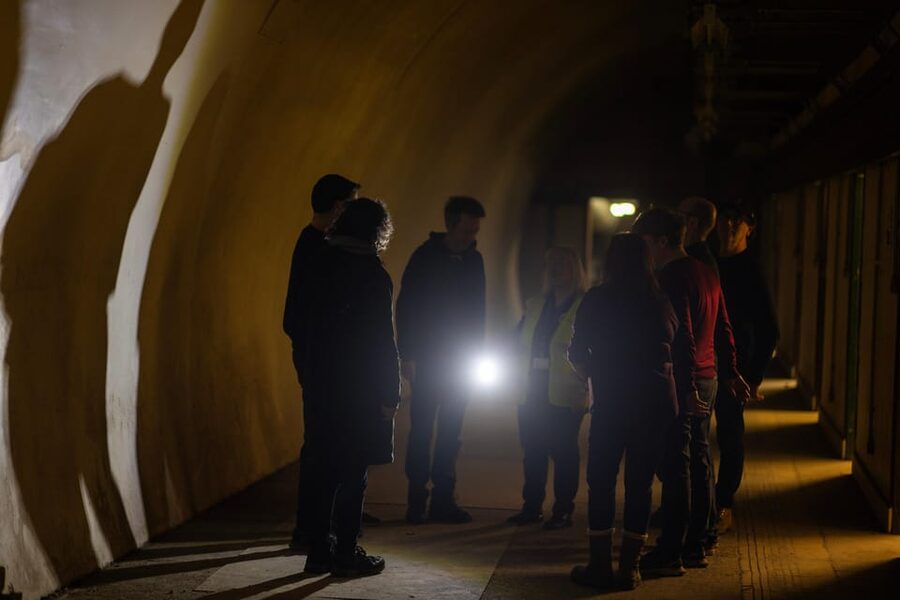
Leslie Green’s design is one of the details worth watching for. The tour includes original early 20th-century features connected to the station’s Edwardian beginnings, along with the early signalling cabin.
The signalling cabin is especially useful for anyone interested in how the Underground was controlled before modern systems. You will hear about the equipment and working spaces that helped staff manage trains and platforms. The information supplied for the tour does not promise that every control will still operate, so think of it as a preserved piece of railway infrastructure rather than a live demonstration.
Vintage posters add another layer. They show how the Underground once sold destinations, travel, and city life to its passengers. In a public station, posters are easy to pass without a glance. In a closed platform area, they become part of the room’s identity.
I would give yourself time to look at these small details. The main story may concern station plans and wartime use, but the signs, walls, posters, and design features tell you what the Underground looked and felt like in its earlier years.
Something completely different for your London days:
- Magical London: Harry Potter Guided Walking Tour
★ 4.7 · 22,044 reviews - London: Madame Tussauds London
★ 4.6 · 20,915 reviews - Stonehenge, Windsor Castle, and Bath from London
★ 4.5 · 18,662 reviews - London: Warner Bros. Studio Tour with Transfers
★ 4.7 · 17,586 reviews
How the 1930s reshaped the station
One of the tour’s most useful stories concerns the large modernization program of the 1930s. This work led to the closure of nearby British Museum station, a change that affected how passengers used the area.
The point is not simply that one station closed. The story shows how transport planning can make one location more important while making another obsolete. Holborn’s position and improvements helped it take on a larger role, while British Museum no longer fit the changing system.
You will hear how the modernization program affected Holborn and the surrounding district. The station had helped change an area once regarded as disreputable into a major business district. That shift gives the Underground a larger role in London’s development. It was not just a way to move people. It helped change where offices, shops, and daily work gathered.
This part should appeal to you if you enjoy city history rather than only railway machinery. The station’s story links transport decisions to changes on the streets above. It also explains why a place that looks like a simple interchange has so many layers beneath it.
Wartime shelter, laboratories, and a model rail club
The closed areas had several surprising uses over the years. They served as scientific laboratories, provided shelter for London Transport staff during wartime, and even housed a model rail club.
The wartime material is likely to be one of the most personal parts of the tour. You will hear how staff members may have felt working there during the height of the Blitz and how these underground spaces were used for protection. The focus includes the people who worked in and used Holborn and the Aldwych branch, not only the machinery and construction.
That human detail keeps the tour from becoming a list of dates. A platform can seem empty now, yet it once had a practical role in difficult conditions. Staff still had to keep the transport system operating while London faced bombing and disruption.
The laboratories and model rail club show another side of disused space. Once an area stops serving passengers, it does not necessarily become useless. It may support work, storage, recreation, or emergency needs. These changes give you a better sense of how London adapts old infrastructure instead of simply throwing it away.
The exact time spent on each use can vary with the guide and group, but the themes are clear. Expect a broad story about changing purpose, not a single event retold from start to finish.
An 85-minute route that requires steady walking
The tour is short by London standards, but the physical demands are real. You will walk through areas with uneven ground, low lighting, and stairs. There are no elevators, and the experience is not suitable for people with mobility impairments or claustrophobia.
Wear comfortable, closed shoes. Open-toed shoes are not allowed, and that rule makes sense on an old Underground route with rough surfaces and steps. Bring water for the walking, but food and drinks are not allowed during the tour.
You should also leave large bags and luggage behind. The instructions specifically exclude luggage and large bags, so this is not a convenient activity to schedule between hotel checkout and a train departure. A small, practical day bag is the safer choice, subject to the tour’s rules.
Children must be at least 10 years old. There can be no more than four children aged 10 to 15 per adult. That ratio matters if you are arranging a family visit, especially since the route has dim areas and stairs rather than the easy access of a normal museum gallery.
Bring a passport or identity card as requested. Even if you are spending the day in central London, do not assume an ordinary sightseeing routine will cover every requirement for a restricted Underground area.
Meeting at Gate Street and Kingsway
The meeting point is on the corner of Gate Street and Kingsway, London WC2B 6AA. The What3Words location is ///towers.rift.forest. The tour ends at the same meeting point, which makes the rest of your day easier to plan.
Allow enough time to find the corner before the start. Holborn and Kingsway are central, but busy streets and multiple Underground entrances can make a last-minute meeting stressful. The tour does not include pickup or drop-off, so you need to reach the meeting point on your own.
Because the activity returns to the start, you can continue toward nearby central London sights afterward. The supplied details do not promise a particular onward route or transport arrangement, so plan your next stop independently.
Starting times vary. Check availability for the date you want rather than assuming a fixed departure. An 85-minute tour is easy to fit into a day, but a late start could affect lunch, theatre bookings, or other timed attractions.
Is $60.61 a fair price?
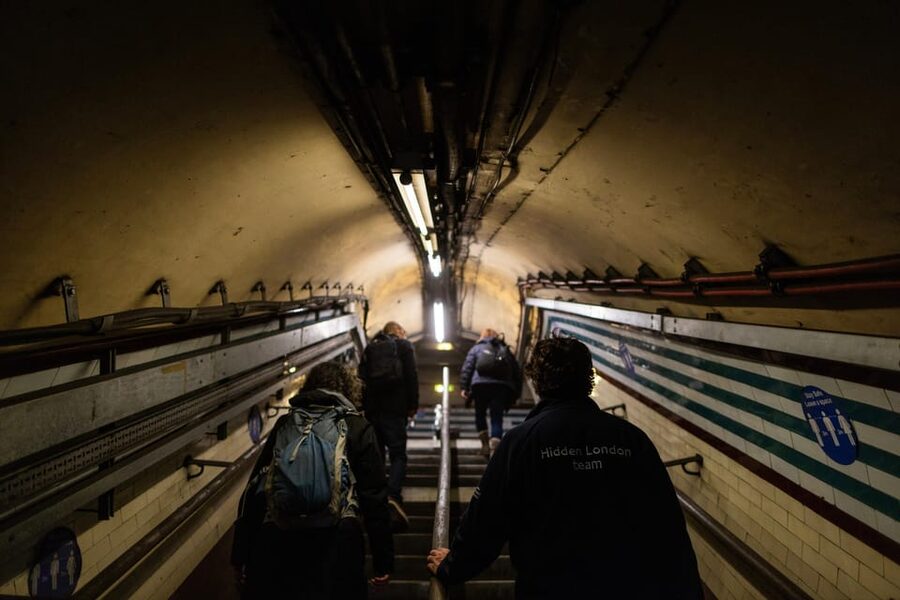
At $60.61 per person, this is not a cheap way to spend an hour and 25 minutes underground. The value depends on what you want from London. If you only need a quick Tube history overview, a museum visit or ordinary station ride will cost less and offer more freedom.
The price makes better sense if you care about access. You are paying for a guided visit into areas that are normally closed, with a specialist route through two former Aldwych platforms and other behind-the-scenes spaces. The guide’s explanation is also part of the value, since the meaning of the signalling cabin, old posters, station upgrades, and wartime uses would be easy to miss alone.
The tour is run by the London Transport Museum, which gives the experience a direct connection to London’s transport heritage. That does not make every minute equally exciting, and the route will appeal more to transport fans than to visitors looking for grand architecture or panoramic views.
I would consider the price reasonable for a rare access experience, especially if you already plan to visit the London Transport Museum or enjoy historic infrastructure. I would skip it if you dislike stairs, confined spaces, or tours that concentrate on one station rather than covering many London landmarks.
Who will enjoy Holborn’s secret platforms?
You are a good match for this tour if you like:
- London Underground history and railway engineering
- Closed stations and old transport technology
- Architecture from the Edwardian period
- Stories about wartime London and transport workers
- Urban change, including the growth of business districts
- Small-group experiences in places normally closed to the public
It can also work for older children aged 10 and above who are genuinely interested in trains or unusual city history. The adult-to-child limit and physical route mean you should plan carefully rather than treat it as a casual family attraction.
You may not enjoy it if you need step-free access, dislike low light, or feel uneasy in confined underground areas. The tour is not suitable for people with mobility impairments or claustrophobia, and the no-elevator rule is firm.
The English-only format also matters. If you need a tour in another language, this is not the right choice. No guide names are provided in the tour details, so you should book for the subject and format rather than expecting a particular individual.
Booking flexibility and timing
You can cancel up to 24 hours before the tour for a full refund. You can also reserve now and pay later, which helps if your London schedule is still changing.
Those policies are useful, but they do not remove the need to choose a suitable time. The tour has a fixed 85-minute duration and a specific meeting point, so allow time to reach Gate Street and Kingsway before the start.
I would avoid combining it with luggage handling, a tight train connection, or an attraction with a strict entry time immediately afterward. Central London traffic, station entrances, and the physical route all make a little breathing room worthwhile.
Should you book this Holborn tour?
Book it if you want to see the London Underground from the inside, not just ride through it. The closed Aldwych platforms, original design details, old signalling cabin, and stories of wartime shelter give you access to a side of London that a normal Tube ticket cannot provide.
Skip it if your priority is easy walking, broad sightseeing, or a low-cost activity. The price is significant for 85 minutes, and the route includes stairs, dim light, uneven ground, and no elevators.
For the right visitor, this is a focused and worthwhile history tour. Wear proper shoes, leave large bags behind, bring identification and water, and arrive ready to listen as much as look. The best reason to book is not simply that the platforms are closed. It is that the guide helps you understand why Holborn changed, how the Aldwych branch fitted into the system, and how old underground spaces continued to serve London long after passengers stopped using them.
FAQ
How long is the Holborn Hidden Tube Tour?
The tour lasts 85 minutes. Starting times vary, so check availability for your preferred date.
Where does the tour start?
It starts on the corner of Gate Street and Kingsway, WC2B 6AA. The What3Words location is ///towers.rift.forest.
Where does the tour end?
The activity ends back at the meeting point on Gate Street and Kingsway.
What language is the tour in?
The live guided tour is in English.
What can I see during the tour?
You can see disused areas of Holborn station, two closed platforms of the former Aldwych branch, vintage posters, original Leslie Green Edwardian design, an early 20th-century signalling cabin, and an unexpected view of the Piccadilly line.
Is the tour suitable for children?
Children under 10 are not allowed. A maximum of four children aged 10 to 15 is allowed per adult.
Is the tour accessible for people with mobility impairments?
No. The route includes substantial walking, uneven ground, low lighting, and stairs. There are no elevators, and the activity is not suitable for people with mobility impairments.
What should I bring and what is not allowed?
Bring a passport or identity card, comfortable closed shoes, and water. Food, drinks, luggage, large bags, and open-toed shoes are not allowed.
Can I cancel or pay later?
You can cancel up to 24 hours in advance for a full refund. You can also reserve your place and pay later.
Latest arrivals on the London list
- Easy Access Tower of London Royal Secrets & Scandals Tour★ 5.0 · 3 reviews
- Stonehenge Special Access Guided Morning Tour from London★ 4.5 · 3 reviews
- Shoreditch & East London Walking Tour with a Local, Custom & Private★ 5.0 · 3 reviews
- Madame Tussauds London Fast Track and Champagne Experience★ 3.5 · 3 reviews
- London Private Brixton Tour with a Local – Culture & Stories★ 4.9 · 3 reviews
- Private Full Day Tour – Fast Track Tower of London and Lunch★ 4.6 · 3 reviews
- Private transfer from London Heathrow Airport to Southampton★ 5.0 · 3 reviews
- The women of London★ 4.5 · 3 reviews
Tours, compared.
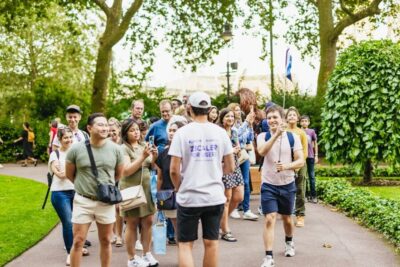
Magical London: Harry Potter Guided Walking Tour
Read our review →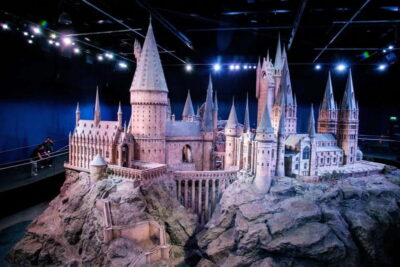
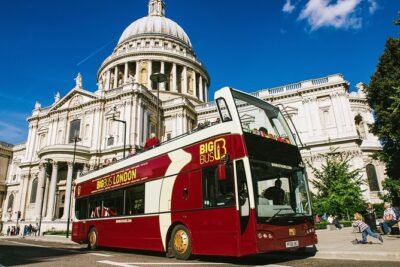
London Big Bus Hop-On Hop-Off Tour with Optional River Cruise
Read our review →
Warner Bros. Studio Harry Potter Tour with Transfers
Read our review →