Reviewed · WALKING TOURS
London: Modern Architecture & Building Guided Walking Tour
London’s modern skyline makes far more sense when someone explains why each building looks the way it does. This small-group walking tour with Sam, a former Construction Management professional who has worked in London and Sydney, connects bold towers above ground with major engineering works below the streets.
I like the practical building knowledge and the way the route mixes famous landmarks with less obvious structures, including the Can of Ham and the Barbican. I also like the free visit to the NLA at the end, where you can inspect scale models of London’s future skyline. The main drawback is simple: you do not enter any of the buildings, and the walk is not suitable for wheelchair users or people with mobility impairments.
In This Review
- Key points at a glance
- Why this modern architecture walk is different
- Starting beside the Thames at Sugar Quay
- City Hall, the Thames, and the Shard
- The Walkie Talkie and London’s unusual shapes
- Lloyd’s, the Cheesegrater, and the Gherkin
- The Can of Ham and the smaller details
- Liverpool Street and the route toward the Barbican
- Finishing at the NLA and London Centre
- How much walking and what to bring
- Is the $52.53 price good value?
- Who will enjoy this tour most?
- Should you book the London modern architecture tour?
- FAQ
- How long does the London modern architecture tour last?
- Where does the tour start?
- Where does the tour finish?
- Which buildings can I see on the walk?
- Can I enter the buildings?
- Can I visit the NLA on every tour?
- Is the tour suitable for wheelchair users?
Key points at a glance
- A construction professional leads the walk: Sam can explain building methods and city development in clear, useful terms.
- The route links major landmarks: See the Shard, Walkie Talkie, Gherkin, Lloyd’s of London, Cheesegrater, Barbican, and more.
- London’s underground story matters too: Hear about major past and present engineering projects beneath the streets.
- The NLA adds value at the finish: View scale models and information about London’s current and future development.
- Plan for two hours on foot: Add another 15 to 30 minutes if you want time at the NLA.
- Weather affects the experience: The tour runs in most conditions, so wear proper shoes and bring water.
Why this modern architecture walk is different
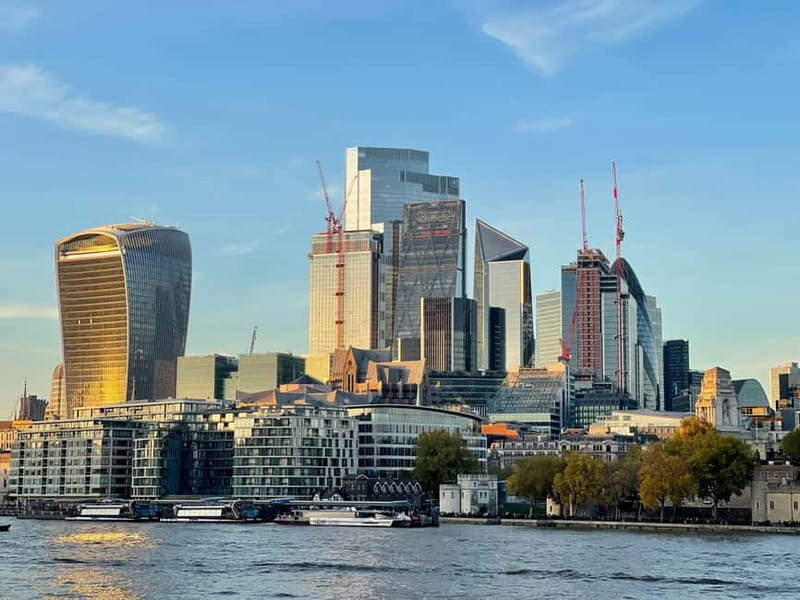
Many London sightseeing walks focus on royal buildings, old churches, and famous squares. This one looks at the city as a working construction project. You get the medieval Tower of London nearby, then move into the financial district, where glass, steel, concrete, and unusual engineering shapes define the view.
That shift in focus is the real reason to book. Sam does not simply point at a tower and name it. He explains the stories behind the buildings, the architects, the engineering choices, and the way London keeps changing. If you enjoy understanding why a building looks strange, this approach gives you more than a photo stop.
The tour also works for people who are not architecture specialists. Sam’s explanations are designed to be clear and entertaining, while his professional background allows him to answer more technical questions. That mix is useful if you are walking with someone who loves construction but you only have a mild interest yourself.
The price is $52.53 per person. That is not a bargain basement city walk, but it is fair if you care about modern architecture and want a specialist guide rather than a general introduction to London. You are paying for roughly two hours of guided attention, a carefully linked route, and professional insight into buildings and infrastructure that are easy to miss when seen alone.
More London walking tours:
- Magical London: Harry Potter Guided Walking Tour
★ 4.7 · 22,044 reviews - London: The Original Jack the Ripper Walking Tour
★ 4.7 · 7,833 reviews - Tour for Muggles The Ultimate Harry Potter Walking Tour in London
★ 5.0 · 4,684 reviews
Starting beside the Thames at Sugar Quay
The meeting point is the Sugar Quay Jetty near the Tower of London, on the northern side of the River Thames. This is a strong starting place because it gives you an immediate contrast between old London and new London.
From the riverside, you can begin looking across the water toward City Hall and the Shard. The Thames also helps explain why London’s modern buildings are placed where they are. The river corridor offers some of the clearest views of the skyline, while the financial district behind it packs major towers into a tight area.
Bring a camera, but do not expect this to be a stop-and-go photo tour. The value comes from listening while moving through the City. Comfortable shoes matter, and water is sensible. The walk continues in ordinary city conditions unless the weather becomes extreme, so check the forecast and dress for rain, wind, or sun.
City Hall, the Thames, and the Shard
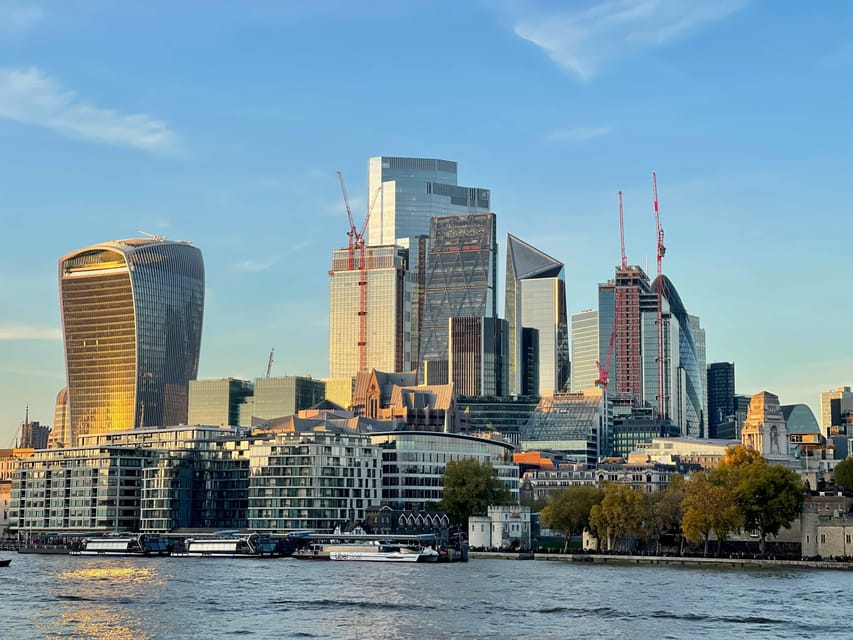
The first sights include City Hall, the Thames, and the Shard. City Hall gives you an early example of London’s willingness to experiment with form. The building is part of the riverside view and helps set up the discussion about how newer structures change the look and function of the city.
The Thames stop is less about a single building than about seeing London from the right angle. Along the river, you can understand how the skyline is layered, with older landmarks and new towers sharing the same view. Sam uses this setting to talk about London’s development and the engineering projects that have shaped the city.
The Shard is the headline building for many people. Its height and pointed profile make it easy to recognize, but seeing it up close gives the structure more presence than a distant skyline photograph. You will hear about its design and construction, along with the role it plays in London’s modern identity.
The tour does not include entry into the Shard. That is worth knowing before booking. If your main goal is an observation deck, you need a separate ticket and a separate visit. Here, the focus is on understanding the building from street level and fitting it into the wider City.
The Walkie Talkie and London’s unusual shapes
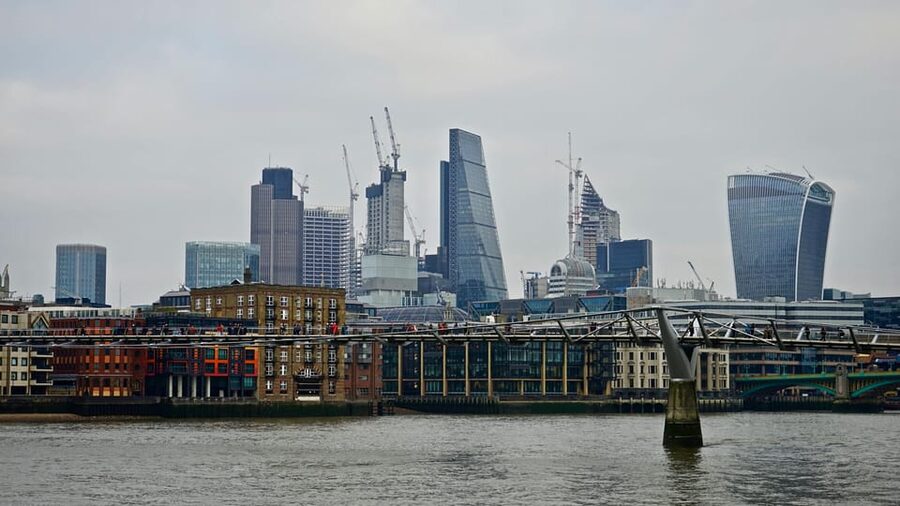
The route then moves toward the Fenchurch Building, better known as the Walkie Talkie. Its broad upper section and narrower base make it one of the easiest modern buildings in London to identify. It has also become a useful example of how an unusual shape can affect the public reaction to a building.
Sam’s professional background should be particularly helpful here. The tour is built around stories and facts, but it also looks at construction decisions and the practical issues involved in creating large buildings in a crowded central district.
Again, you only see the building from outside. That keeps the tour moving, though it may disappoint you if you hoped to visit the Sky Garden or another interior space. The walk is best for people who want context, not a collection of building admissions.
A few more London days worth a look
- London: Emirates Stadium Entry Ticket and Audio Guide
★ 4.7 · 5,513 reviews - Stonehenge, Windsor Castle and Bath Full Day Guided Tour
★ 4.5 · 5,346 reviews - London Jack the Ripper Guided Tour with Ripper-Vision
★ 4.5 · 4,840 reviews - Original Harry Potter Locations Tour – Guided Tour of London
★ 5.0 · 4,117 reviews
Lloyd’s, the Cheesegrater, and the Gherkin
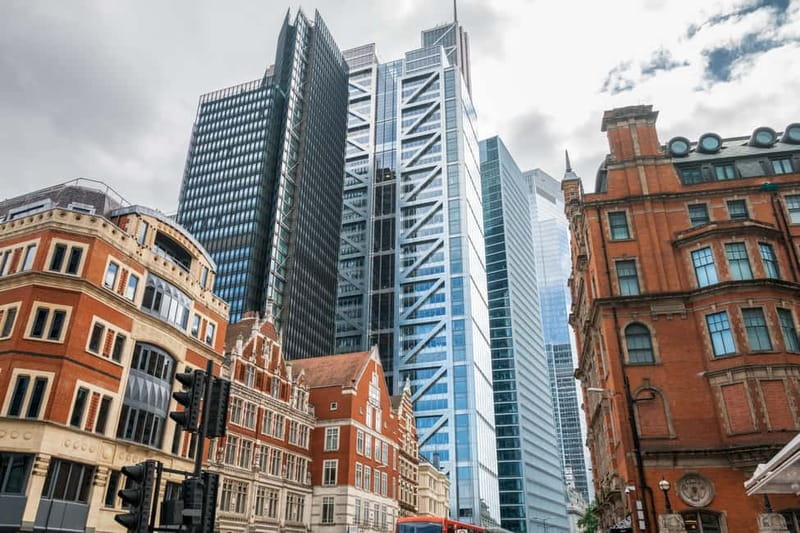
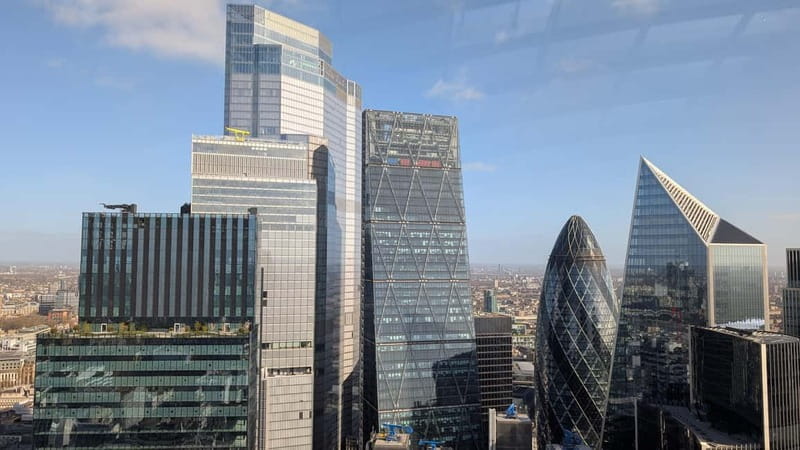
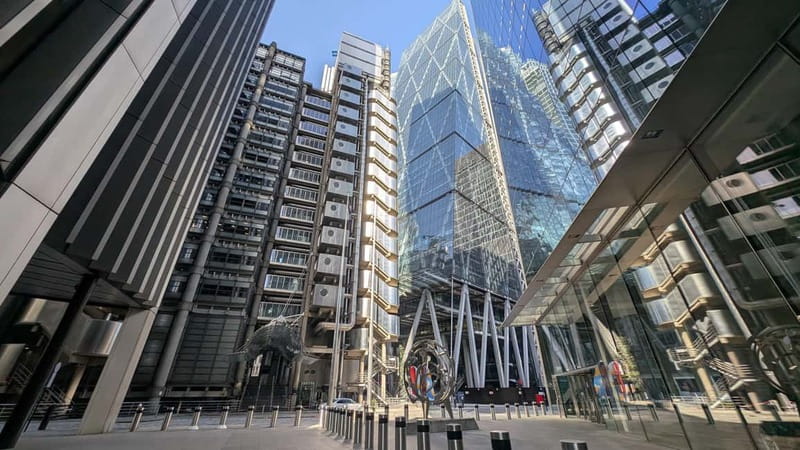
The next part of the route brings several of London’s most recognizable towers together. Lloyd’s of London is known for placing much of its services and structure on the outside, giving it a mechanical, almost industrial appearance. It is one of the City’s clearest examples of architecture that exposes its working parts instead of hiding them.
The Leadenhall Building, often called the Cheesegrater, offers another strong comparison. Its sloping profile was shaped by the site and the need to work around important views. From the street, you can see how the building’s form is not simply decoration. The shape relates to planning, neighboring structures, and the tight conditions of central London.
Then comes 30 St Mary Axe, the Gherkin. Its rounded form is one of the most familiar sights in the City. Sam explains the stories and design ideas connected with the building, helping you look beyond its nickname and glass exterior.
This cluster is one of the tour’s best sections because the buildings are close enough to compare. You are not just seeing three unrelated towers. You are looking at different answers to the same urban problem: how to build tall in a dense historic district without producing a row of identical boxes.
The Can of Ham and the smaller details
The stop at 70 St Mary Axe, known as the Can of Ham, adds a little humor and variety. Its nickname makes it easy to remember, but the important point is that London’s modern architecture is not limited to the most famous towers.
This is where a guided walk earns its keep. On your own, you might photograph the Gherkin and move on. With Sam, you are encouraged to notice the buildings around it, including structures that have less fame but still help define the City.
The route appears carefully chosen for visual comparisons. You see rounded, angled, exposed, and highly vertical designs within a relatively short walk. That makes the tour useful for anyone who wants to train their eye and begin spotting design choices rather than simply collecting landmark names.
Liverpool Street and the route toward the Barbican

Liverpool Street Station brings transport into the story. London’s modern construction is not only about office towers. Stations, rail links, public spaces, and the connections beneath the ground all shape how the City works.
Sam also talks about major engineering projects below London’s streets, both past and present. The information provided does not promise access to underground sites, so think of this as an explanatory part of the walk rather than a subterranean visit. That is still valuable. London’s visible towers depend on foundations, transport systems, utilities, and other infrastructure you normally never see.
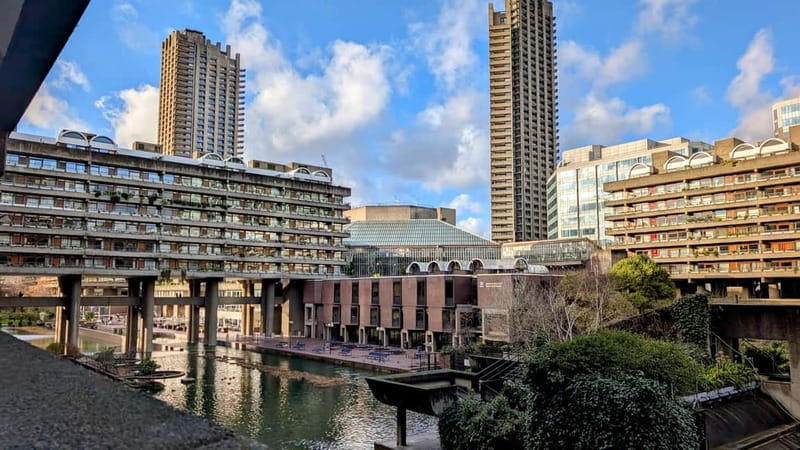
The route continues toward the Barbican, one of London’s most distinctive large-scale developments. Its concrete architecture and planned spaces offer a sharp contrast with the glass towers of the financial district. The Barbican also broadens the tour beyond commercial skyscrapers, showing how modern design can shape housing, culture, walkways, and public space.
You may find this section especially useful if you want a wider view of modern architecture. The tour is not only about height. It is also about how people move, work, live, and meet in a changing city.
Finishing at the NLA and London Centre
The scheduled finish is at the NLA, inside The London Centre. Entry is free, and you can look at information and scale models of London’s skyline at your own pace.
This final stop gives the tour a useful sense of direction. After seeing completed buildings, you can consider what London may look like next. Models make future development easier to understand than a list of proposed projects, especially when you can see how new structures may fit beside existing landmarks.
Allow another 15 to 30 minutes here if you want to read the displays and study the models. The NLA is open Tuesday through Saturday until 17:00. Sunday, Monday, and evening tours cannot enter, so check the timing carefully if this part matters to you.
The NLA visit is not a replacement for entering a famous tower. It is better thought of as a quiet final chapter, giving you room to process what you saw on the walk. If you are interested in planning and future construction, it adds real value. If you only want exterior photographs, you may be ready to leave after the guided portion.
How much walking and what to bring

The tour lasts about two hours and takes place on foot through the City of London. The exact group size is not given, but it is described as a small-group experience. That usually suits you if you want to ask questions and hear the guide without the feel of a large crowd.
The route includes city streets, riverside areas, and several stops for sightseeing. It is not suitable for people with mobility impairments or wheelchair users. Anyone who finds extended walking difficult should choose a different way to see these buildings.
Pack:
- Comfortable walking shoes
- Water
- A camera
- Weather-appropriate clothing
The tour proceeds in most weather conditions, except extreme conditions. London rain can arrive without much warning, so a waterproof layer is more useful than relying on a good forecast. Since the route is outdoors, poor weather may reduce your comfort and the quality of your photographs, even when the commentary remains worthwhile.
Is the $52.53 price good value?
At $52.53, this is more expensive than a basic orientation walk, but it offers a narrower subject and a more specialized guide. The value depends on what you want from London.
I think the price works best if you have already seen the main historic sights or you want to understand the City from a construction and design angle. You get a focused route covering many well-known buildings, plus discussion of underground engineering and future development. The free NLA visit helps, especially if you spend time with the skyline models.
The price is less attractive if you mainly want to go inside buildings. No entry fees are included, and the tour does not take you onto an observation deck or into the interiors of the Shard, Walkie Talkie, Gherkin, Lloyd’s, or the other buildings.
Free cancellation up to 24 hours before the tour and the reserve-now, pay-later option make the booking less rigid. Still, the bigger decision is practical: can you comfortably walk for two hours outdoors, and are you interested enough in buildings to listen closely?
Who will enjoy this tour most?
I would choose this walk for:
- Architecture fans who want more than landmark names
- Engineering and construction enthusiasts
- Visitors curious about London’s current and future development
- Couples or families with mixed levels of architecture interest
- Repeat London visitors looking for a new subject
- Anyone who enjoys city walks with plenty of explanation
Sam’s style appears suited to both technical and casual questions. You can follow the main story without specialist training, while someone with construction experience can ask more detailed questions.
I would skip it if you want a relaxed ride, indoor sightseeing, or entry to major landmarks. The route is also not a good match for wheelchair users or people who need an accessible walking plan.
Should you book the London modern architecture tour?
Book it if you want to see London as a living construction project rather than a collection of old monuments. The combination of Sam’s professional background, the close run of major City buildings, the underground engineering stories, and the NLA models gives the walk a clear purpose.
My best tip is to choose a Tuesday through Saturday daytime tour if the NLA matters to you. Add 15 to 30 minutes afterward, wear shoes made for walking, and do not expect interior access. For the right audience, $52.53 buys a sharper understanding of the skyline, not just another set of photographs.
FAQ
How long does the London modern architecture tour last?
The guided walking tour takes approximately two hours. Allow another 15 to 30 minutes if you want time at the NLA to read information and view the scale models.
Where does the tour start?
The tour starts at the Sugar Quay Jetty near the Tower of London, on the northern side of the River Thames.
Where does the tour finish?
The route finishes at the NLA, inside The London Centre.
Which buildings can I see on the walk?
The route includes City Hall, the Shard, the Fenchurch Building known as the Walkie Talkie, Lloyd’s of London, the Leadenhall Building known as the Cheesegrater, the Gherkin, the Can of Ham, Liverpool Street Station, and the Barbican.
Can I enter the buildings?
No. Entry into the buildings seen during the tour is not included.
Can I visit the NLA on every tour?
No. The NLA is open Tuesday through Saturday until 17:00. Sunday, Monday, and evening tours cannot enter the NLA.
Is the tour suitable for wheelchair users?
No. The activity is not suitable for wheelchair users or people with mobility impairments.
Latest arrivals on the London list
- Easy Access Tower of London Royal Secrets & Scandals Tour★ 5.0 · 3 reviews
- Stonehenge Special Access Guided Morning Tour from London★ 4.5 · 3 reviews
- Shoreditch & East London Walking Tour with a Local, Custom & Private★ 5.0 · 3 reviews
- Madame Tussauds London Fast Track and Champagne Experience★ 3.5 · 3 reviews
- London Private Brixton Tour with a Local – Culture & Stories★ 4.9 · 3 reviews
- Private Full Day Tour – Fast Track Tower of London and Lunch★ 4.6 · 3 reviews
- Private transfer from London Heathrow Airport to Southampton★ 5.0 · 3 reviews
- London Crimes And Punishment Private Walking Tour★ 5.0 · 3 reviews
Walking Tours, compared.

Magical London: Harry Potter Guided Walking Tour
Read our review →
Tour for Muggles The Ultimate Harry Potter Walking Tour in London
Read our review →

Harry Potter Movies Walking Tour (Kids Go Free)
Read our review →
Changing of the Guard Guided Walking Tour in London
Read our review →
The Great British Rock and Roll Music Walking Tour
Read our review →