
Reviewed · WALKING TOURS
London: Secrets of the London Underground Walking Tour
The most surprising part of London’s Underground is how much of the city’s story is hiding in plain sight. This 2.5-hour walk begins at Baker Street Station, one of the original stops on the Metropolitan Railway, and follows the Tube from steam trains and hand-built tunnels to wartime shelters, abandoned stations, and the famous red-and-blue roundel.
I like the tour’s mix of practical sightseeing and odd little stories. You hear how the first tunnels were made, why more than 40 stations were abandoned, and how Tube stations once stored British Museum treasures. I also like the audio headsets, which help you follow the guide in noisy stations. The main drawback is that you do not enter a disused station, so anyone expecting a true behind-the-scenes tour may find the visit more like a detailed history walk.
In This Review
- Key points to know before you book
- Baker Street and the birth of the Underground
- From steam trains to electric rails
- Stations that disappeared from the map
- The Tube during war and crisis
- Buried bodies and haunted platforms
- Moving through the city by Tube
- The London Transport Museum finish
- How much walking and how many steps?
- What makes the $40 price worthwhile?
- Who should book this Tube history walk?
- Practical tips for a smoother tour
- Should you book the Secrets of the London Underground tour?
- FAQ
- Where does the London Underground walking tour begin?
- Where does the tour finish?
- How long does the tour last?
- Is the Underground ticket included?
- What language is the tour in?
- Can I enter a disused Underground station?
- Is the tour suitable for wheelchair users?
Key points to know before you book
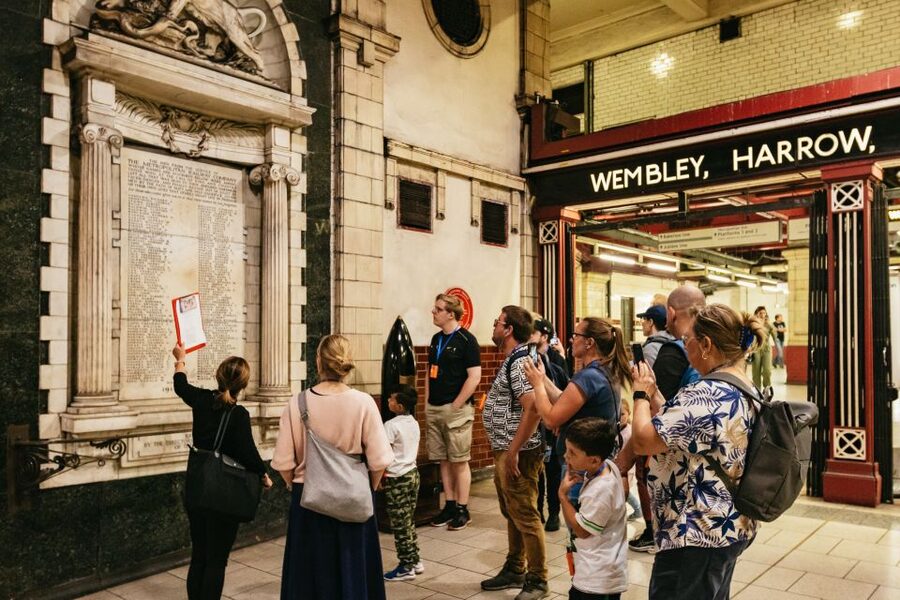
- Baker Street is the starting point: Meet beside the Sherlock Holmes statue outside Baker Street Station, close to one of the Underground’s original stations from 1863.
- The stories go far beyond trains: Hear about Blitz shelters, an aircraft factory, museum storage, buried bodies, haunted stations, and the development of the roundel.
- You use public transport during the tour: Bring an Oyster card or a Zones 1 to 2 day travel card. The fare is not included.
- The guides make a big difference: John, Aaron, Angela, Peter, and other English-speaking guides have been praised for clear explanations, humor, and strong group management.
- Expect steps and steady walking: The tour is not suitable for wheelchair users or people with reduced mobility, and large bags and strollers are not allowed.
- The finish is at the London Transport Museum: The tour ends at 10B Bridge Street in Westminster after a short public transport connection.
Baker Street and the birth of the Underground
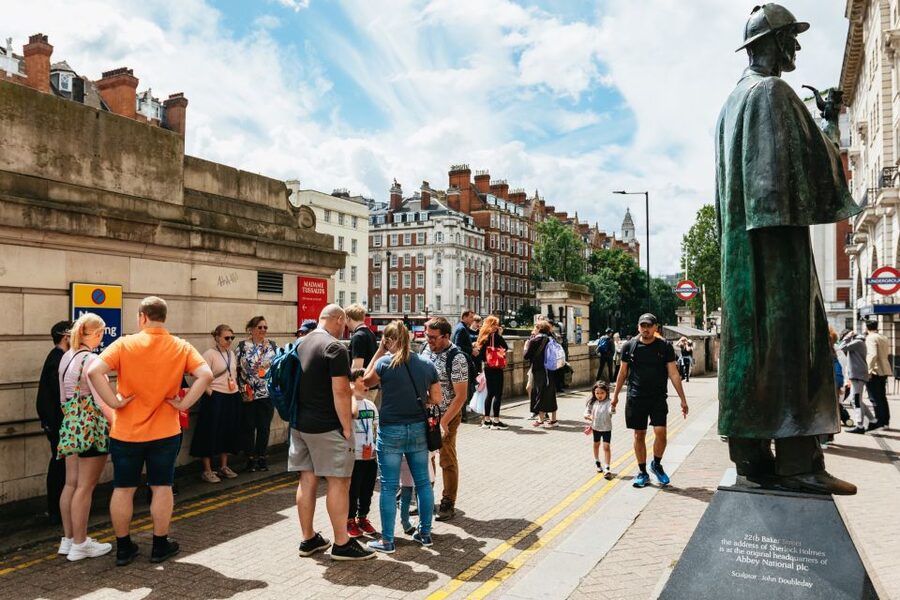
Begin by the Sherlock Holmes statue outside Baker Street Station. It is an easy meeting point, but allow enough time to find the correct station exit. London Underground stations can have several entrances, and the guide will be waiting outside by the statue rather than down on the platform.
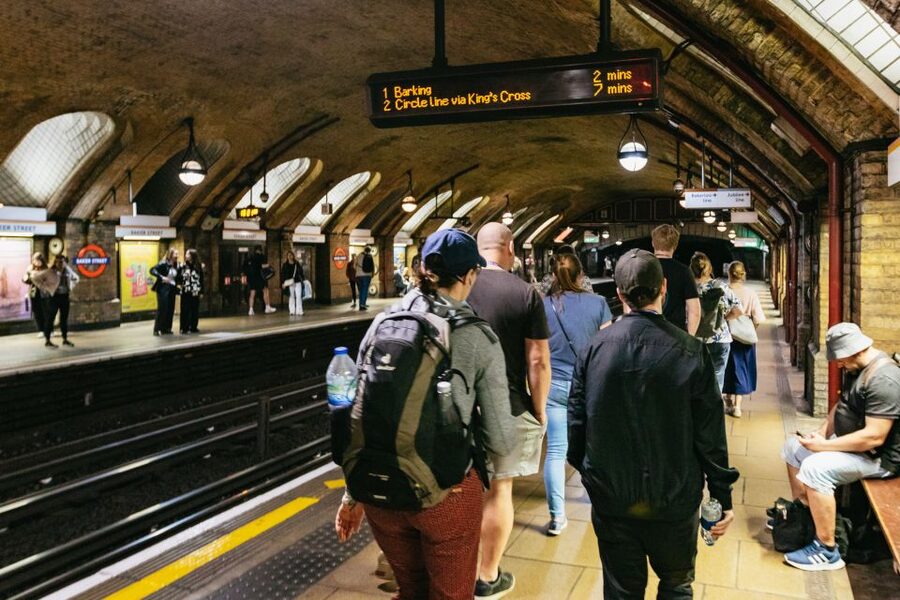
Baker Street matters because it was one of the first stops on the Metropolitan Railway, which opened in 1863. That railway became the world’s first underground railway, changing how people moved through London and helping shape the city you see today.
This opening section gives the tour a useful frame. The Tube was not designed all at once as one tidy network. Different companies built different lines, with different engineering methods, station designs, and goals. Your guide explains how the system grew from steam-powered trains to electrified rails and how early engineers tackled the difficult work below busy streets.
I especially like beginning here because you are standing in a working station that also feels like a museum piece. You do not need a special entrance or a rare ticket to connect with the early Tube. The history is built into the station itself, even as modern commuters hurry past.
Guides including John, Aaron, Angela, Peter, Aran, and Nick have led this experience at different times. The strongest part of the tour depends on the guide’s delivery, and the feedback points to a clear pattern: guides tend to explain technical subjects in an approachable way, add humor, and answer questions rather than simply reciting dates.
More London walking tours:
- Magical London: Harry Potter Guided Walking Tour
★ 4.7 · 22,044 reviews - London: The Original Jack the Ripper Walking Tour
★ 4.7 · 7,833 reviews - Tour for Muggles The Ultimate Harry Potter Walking Tour in London
★ 5.0 · 4,684 reviews
From steam trains to electric rails
The Underground’s early trains were steam-powered, which sounds awkward in enclosed tunnels. Your guide explains how the first lines were built and how engineers dealt with smoke, ventilation, and the practical limits of digging beneath London.
The earliest construction method was not the same as the deep Tube tunneling used on later lines. The first tunnels were built close to the surface, which meant cutting into streets, creating the railway, and covering it again. This helps explain why some early Underground routes feel broad and relatively shallow, while newer lines descend through long stairways and escalators.
As the network expanded, electric trains made deeper tunnels more workable. You will hear how this change allowed the Underground to reach farther through central London without relying on steam locomotives in enclosed spaces.
This is one of the tour’s best sections for anyone who normally sees the Tube only as a way to get from one sight to another. The journey becomes a lesson in engineering, urban planning, and the practical problems of building under a crowded capital.
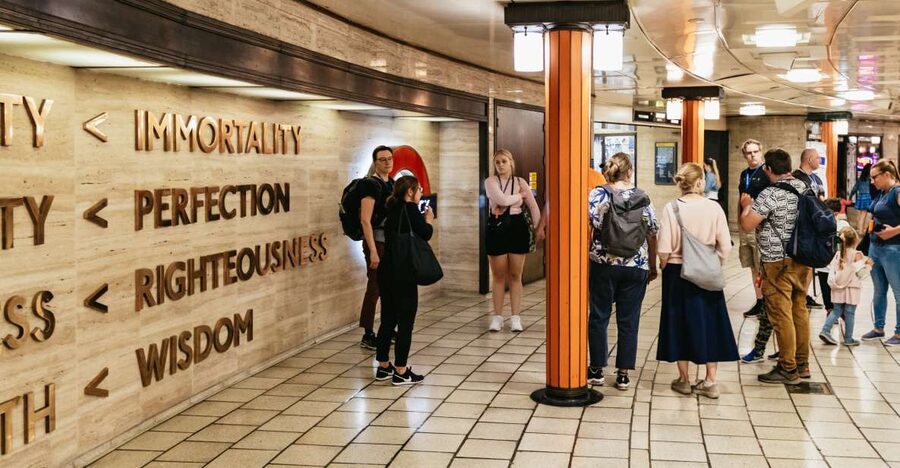
The guide also explains the famous Underground roundel. That simple symbol is now one of London’s most familiar signs, but its design and use reflect the growing need to make a complicated transport network easy to read. You will begin noticing the signs, tiles, station details, and small design choices around you.
Stations that disappeared from the map
London has more than 270 Underground stations, but not all of them are still in use. The tour explains why more than 40 stations have been abandoned or closed, with reasons linked to changing routes, low passenger numbers, station rebuilding, and network changes.
Do not book this tour expecting to walk through a closed platform or explore a sealed station interior. That is the most important expectation to set. The route may let you see a ghost station from a passing train or point out traces that most passengers miss, but access to disused stations is not part of the standard experience.
That limitation disappointed some people who wanted a more restricted, behind-the-scenes visit. Still, the stories work because London’s closed stations are not just curiosities. They show how a transport system changes as neighborhoods, technology, and passenger habits shift.
You may also hear about stations that have been altered, renamed, or absorbed into newer parts of the network. Looking at these changes gives you a better sense of how old the Tube is. It is a living system with layers of construction rather than a single finished design.
I find this angle more useful than a simple list of abandoned stations. The real question is not only where the stations went, but why a city keeps, replaces, or abandons parts of its infrastructure.
The Tube during war and crisis
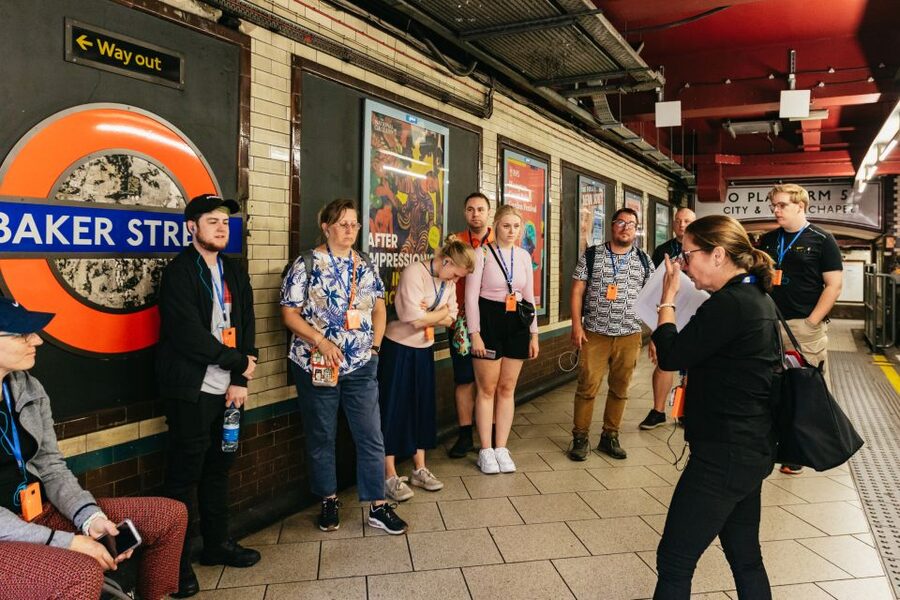
The Underground has served purposes far beyond daily commuting. During the Blitz, stations became refuges for people seeking shelter from bombing. Your guide explains how these spaces were adapted during wartime and how the network became part of London’s civilian defense.
The stories also include less familiar wartime uses. Parts of the Underground were used as an aircraft factory, while other areas stored treasures from the British Museum. These details make the system feel less like a set of train tunnels and more like a large underground resource that London could repurpose in an emergency.
One of the strongest features of a live guide is the chance to ask about these changes. If you are curious about how stations were organized or what happened to the spaces later, guides such as John and Aaron have been praised for handling questions well.
The wartime section also adds a human scale to the tour. Engineering facts can tell you how a tunnel was made, but stories about people sheltering below the city explain why the Underground mattered so much.
Something completely different for your London days:
- London: The London Eye Entry Ticket
★ 4.6 · 35,875 reviews - From London: Harry Potter Warner Bros Studio Tour
★ 4.7 · 26,588 reviews - London: Westminster to Greenwich River Thames Cruise
★ 4.5 · 22,836 reviews - London: Madame Tussauds London
★ 4.6 · 20,915 reviews
Buried bodies and haunted platforms
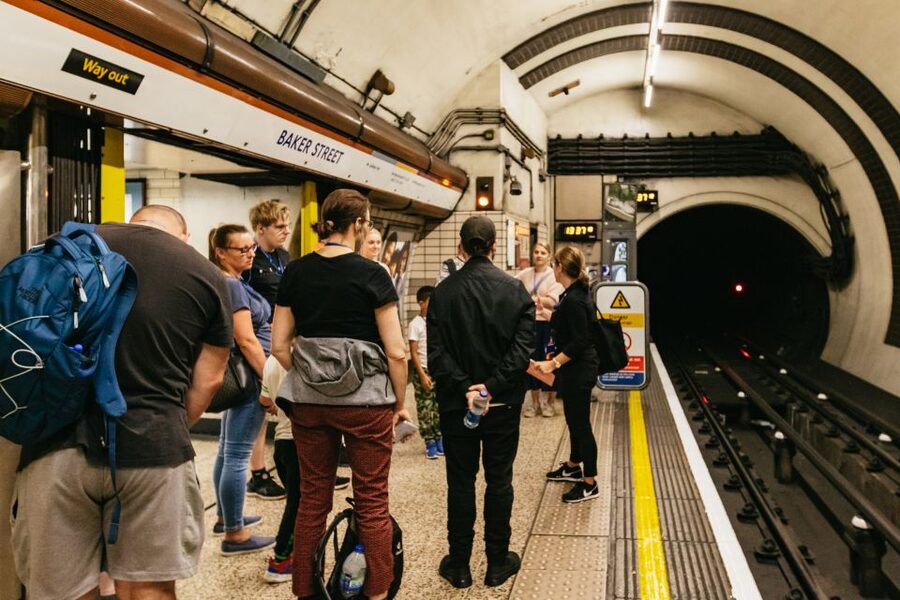
The tour brings in the stranger side of Tube history, too. You hear which station lies above the remains of 1,000 bodies, along with stories about stations reputed to be haunted by the ghost of a Pharaoh’s daughter and a nun.
These tales are presented as part of the folklore and history surrounding the network. They add fun without turning the whole walk into a ghost tour. If you enjoy London’s darker stories, this gives the tour extra appeal. If you prefer engineering and architecture, the supernatural material is only one part of a much wider program.
The mention of buried bodies also shows how the Underground often intersects with older London. Building a railway beneath a city with centuries of churches, burial grounds, streets, and buildings was never a simple matter. The Tube cut through layers of the capital that existed long before electric trains.
Guides tend to use these stories as memorable hooks. You may forget a date, but you are less likely to forget a station linked to a Pharaoh’s daughter or a nun. That balance of solid transport history and unusual detail is why the tour suits people who want something different from a standard London sightseeing walk.
Moving through the city by Tube
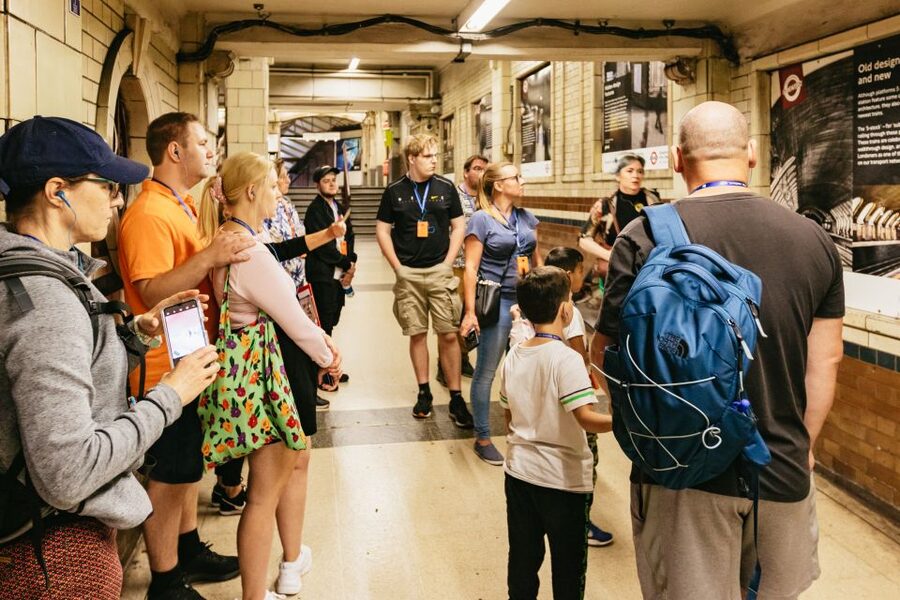
The experience is not a talk delivered in one room. You walk through stations, stop for explanations, and make a short public transport connection of about 10 minutes. The itinerary includes a public transport segment before the visit to the London Transport Museum.
You must bring your own transport ticket. A Zones 1 to 2 day travel card or an Oyster card is recommended. The tour price is about $40 per person, but that does not cover the Underground fare.
Pay attention to this extra cost. One participant reported being charged £17 after using a bank card for the journey, while having a suitable travel pass was much cheaper. Prices and fare rules can change, but the practical lesson is steady: arrange your Tube payment method before you meet the guide, and do not assume your tour booking includes transport.
The moving parts can also be affected by service problems. One tour had to change its route during line closures and delays, with the guide leading the group on foot between stations. That is not necessarily a flaw in the tour, but it is a reminder that you are using the real London Underground, not a private attraction with a fixed route.
I like this part because you experience the network as Londoners do. You are not just looking at historic objects. You are navigating platforms, corridors, stairs, and trains while learning why the system developed as it did.
The audio headsets are useful here. Stations can be loud, and the guide may be speaking while trains arrive or groups pass through. Most feedback about the equipment is positive, though one person found the headsets crackly above ground. Keep the volume comfortable and stay close enough to the guide to follow visual directions.
The London Transport Museum finish

The tour ends at the London Transport Museum, at 10B Bridge Street in Westminster. The museum visit gives the Underground story a natural closing point, shifting from stations and tunnels to preserved transport objects and displays.
The museum is especially useful after the walking portion because you have already heard about the system’s early trains, signs, symbols, and changing technology. The visit can help you put those ideas into a broader timeline.
Check the exact booking details for what is included in the museum visit. The supplied information lists a visit to the museum, but it does not state that admission, a guided museum tour, or additional activities are included. Do not assume every museum exhibit is covered beyond the listed visit.
Ending near Westminster is practical. You can continue sightseeing in central London after the tour, though the activity does not include hotel pickup, hotel drop-off, food, or drinks. Plan a snack before or after, since the 2.5 hours include steady movement and time underground.
How much walking and how many steps?
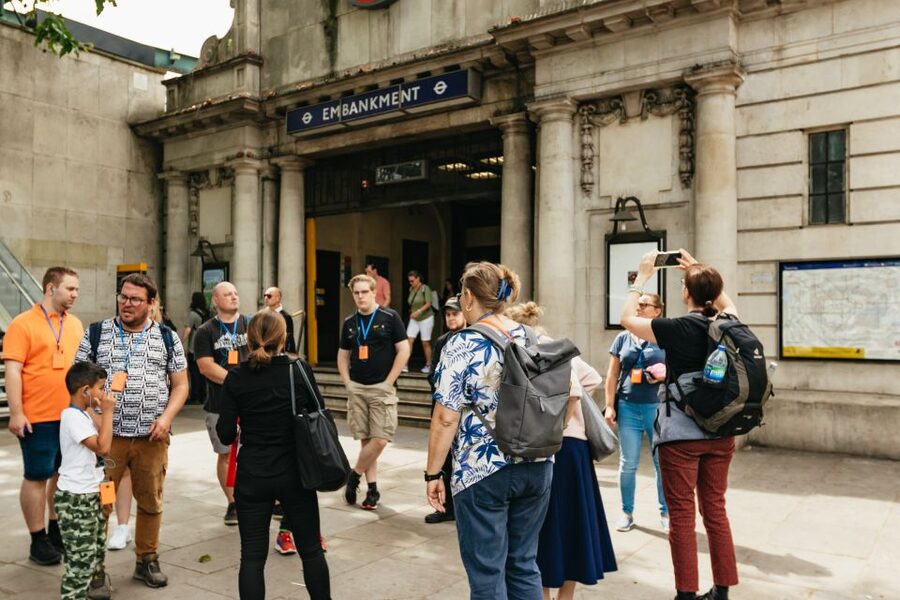
This is a walking tour in the full sense. You move through stations and streets, use public transport, and encounter the stairs that are part of London’s Underground system.
The activity is not suitable for wheelchair users or people with reduced mobility. Baby strollers and luggage or large bags are also not allowed. If stairs are difficult for you, this is not the right way to explore the Tube.
The pace has generally been described as manageable, but the amount of walking is real. One person liked the step count, while another felt the tour ran a little long. Most people should allow for a moderate physical effort rather than treating this as a short lecture with occasional stops.
Wear comfortable shoes and carry only what you need. A small day bag is more practical than a suitcase, and leaving extra luggage at your accommodation will make transfers and station stairs easier.
What makes the $40 price worthwhile?
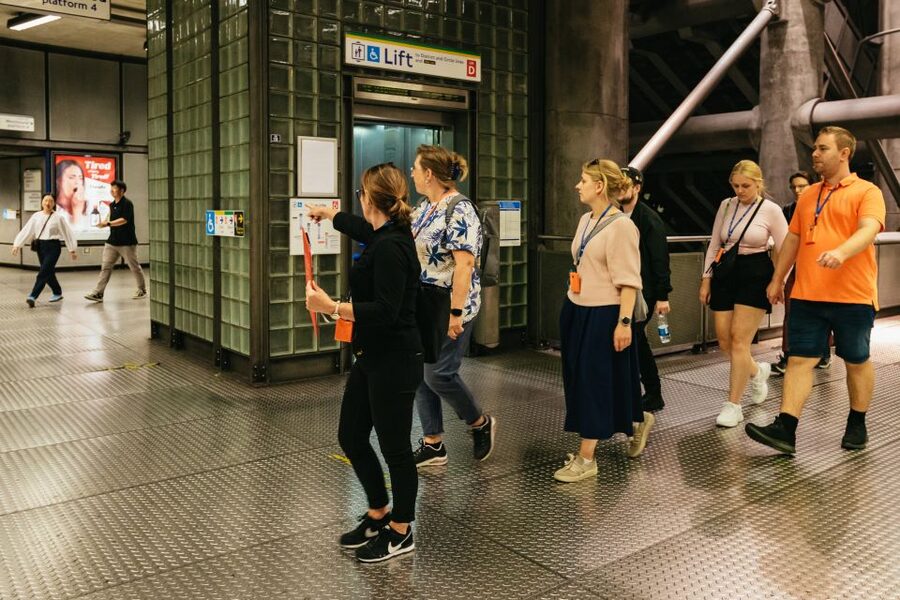
At around $40 per person, this is not the cheapest way to ride the Tube, since you still pay for your transport. You are paying mainly for the guide’s research, storytelling, route planning, and the chance to notice details you would probably miss alone.
The value is strongest if you like history, transport, architecture, urban design, or unusual London stories. A good guide can connect the station you are standing in with the wider development of the city, then answer questions when a detail catches your interest.
Guides named in the feedback include John, Aaron, Angela, Peter, Aran, and Nick. John and Aaron receive especially frequent praise for humor, clear explanations, and strong command of the subject. Angela is also noted for managing groups well and keeping explanations easy to follow.
The value is weaker if you want restricted access. You will not automatically enter a closed station, walk along abandoned platforms, or see a large collection of staff-only areas. For that, you should seek a tour specifically advertised as an access visit to a disused station.
For most visitors, the price makes sense as a focused history walk rather than as a transport ticket. You get a guide, an audio headset, the moving route through the network, and a museum visit. Just add your own fare and plan for the physical effort.
Who should book this Tube history walk?
I would recommend it to first-time visitors who want a fresh angle on London, but it also suits long-time residents who use the Underground without thinking about its origins. Several people who had used the Tube for years still found unfamiliar details at stations they already knew.
It is a good choice for families with older children who ask questions and can manage stairs. One guide handled a curious child’s questions particularly well, which is a useful sign for parents looking for more than a passive sightseeing activity.
The tour also works for international visitors. English is the only listed language, but one person who was not a native English speaker found the guide easy to understand. The audio equipment helps, especially in noisy stations.
I would skip it if you dislike group walking, need step-free access, or mainly want to see restricted areas. I would also avoid booking it immediately after a long arrival journey if you are tired. The subject is interesting, but the Tube’s stairs, transfers, and station noise demand attention.
Practical tips for a smoother tour
- Meet by the Sherlock Holmes statue outside Baker Street Station, not on the platform.
- Buy a Zones 1 to 2 day travel card or load an Oyster card before arrival.
- Do not rely casually on contactless payment without checking the current fare rules.
- Wear shoes suited to several hours of walking and stairs.
- Bring a small bag only. Large bags, luggage, and baby strollers are not allowed.
- Keep close to the guide during station transfers and listen for route changes.
- Expect stories and viewing points rather than entry into a disused station.
- Use the headset, especially when trains and crowds make the station noisy.
- Leave time after the tour if you want to explore more around Westminster.
Should you book the Secrets of the London Underground tour?
Book it if you want to understand why the Tube looks and works the way it does. The best parts are the original Baker Street setting, the story of steam trains becoming electric, the wartime uses of the tunnels, and the strange tales tied to stations that many people pass without a thought.
The guides are the tour’s main strength. John, Aaron, Angela, and Peter have all been praised for clear speaking, humor, patience, and strong command of the subject. The headset is a small but important help in a noisy public system.
Do not book it for secret access alone. The tour can point out ghost stations and explain abandoned parts of the network, but it does not promise entry into closed stations. If that distinction suits you, the $40 fee is fair for a lively, detailed look at one of London’s most important institutions.
Free cancellation is available up to 24 hours before the start, and you can reserve now and pay later. Check the available starting time, arrange your Tube fare, and come ready to walk. For curious minds, this is one of the better ways to turn an ordinary Underground journey into part of London’s story.
FAQ
Where does the London Underground walking tour begin?
It begins at Baker Street Station. Meet the guide by the Sherlock Holmes statue outside the station.
Where does the tour finish?
The tour finishes at 10B Bridge Street, Westminster, London SW1A 2JR, after a visit to the London Transport Museum.
How long does the tour last?
The tour lasts 2.5 hours.
Is the Underground ticket included?
No. You need to bring your own public transport ticket. A Zones 1 to 2 day travel card or an Oyster card is recommended.
What language is the tour in?
The live tour guide speaks English.
Can I enter a disused Underground station?
Entry into a disused station is not listed as part of the activity. You may hear about abandoned stations and possibly see a ghost station from the network, but you should not expect interior access.
Is the tour suitable for wheelchair users?
No. The tour involves many Underground steps and is not suitable for wheelchair users or people with reduced mobility. Baby strollers and luggage or large bags are also not allowed.
Latest arrivals on the London list
- One Way Taxi Transfer from London to Gatwick Airport★ 5.0 · 51 reviews
- Heathrow Airport to London Arrival Transfer★ 4.5 · 50 reviews
- London Beatles Tour★ 5.0 · 50 reviews
- London: Hidden Baker Street Tube Station Tour★ 4.7 · 51 reviews
- City & Secrets: Explore London’s Hidden Gems★ 5.0 · 51 reviews
- London Christmas Lights Open-Top Bus Tour. 2025 Early Bird★ 3.6 · 51 reviews
- 4 hour London Private Tour, with your own Black Cab Tour Guide★ 5.0 · 51 reviews
- The Beatles Magical History Black Taxi Tour London★ 5.0 · 51 reviews
Walking Tours, compared.

Magical London: Harry Potter Guided Walking Tour
Read our review →

Tour for Muggles The Ultimate Harry Potter Walking Tour in London
Read our review →

Harry Potter Movies Walking Tour (Kids Go Free)
Read our review →
Changing of the Guard Guided Walking Tour in London
Read our review →
The Great British Rock and Roll Music Walking Tour
Read our review →
Jack the Ripper Walking Tour – Ripper Vision Tours
Read our review →Browse the lists this tour appears in