
Reviewed · WORKSHOPS
Private DJ Class
Private DJ Class Review
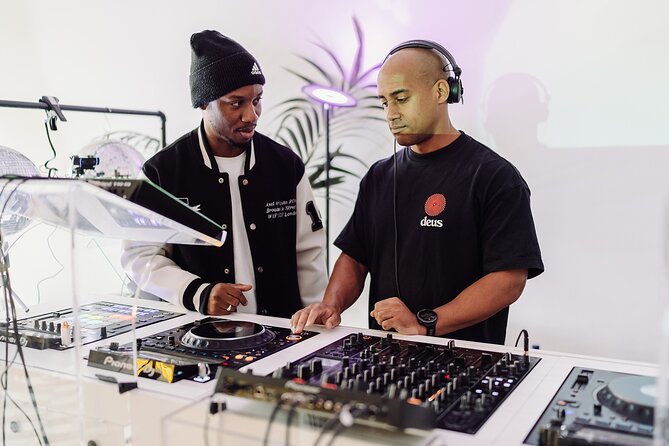
Mixing two tracks well is harder than pressing play and turning a knob. This private two-hour DJ class in London gives you focused time with a trainer and industry-standard Pioneer DJ decks, so you can work through the basics without an audience listening to every mistake.
I like the one-to-one format, since the lesson can focus on your pace rather than a room full of beginners. I also like the practical skill list: beatmatching, phrasing, harmonic mixing, EQ and filters all matter if you want to understand what a DJ is actually doing.
The main drawback is the price, $137.13 per person, for only about two hours. That is fair for a private lesson and professional equipment, but it may feel steep if you only want a quick novelty activity or already know your way around DJ software.
In This Review
- Key Points Before You Book
- What This London DJ Lesson Really Teaches
- Beatmatching, Phrasing, and the Logic of a Smooth Mix
- EQ and Filters on Pioneer DJ Decks
- Why the Private Format Matters
- Working on Industry-Standard Pioneer Equipment
- The Two-Hour Schedule at 93a Bayham Street
- Is $137.13 a Fair Price?
- Who Will Enjoy This Most?
- What the Strongest Praise Tells You
- Planning Tips for a Smoother Session
- Should You Book the Private DJ Class?
- FAQ
- Where does the private DJ class begin?
- Where does the activity end?
- How long does the DJ class last?
- How much does the experience cost?
- Is the class private?
- What equipment will you use?
- What DJ skills are covered?
- Is the class offered in English?
- Is the meeting point near public transportation?
- Can I cancel for a full refund?
Key Points Before You Book
- Private instruction: Only your group takes part, so you do not need to worry about strangers hearing you learn.
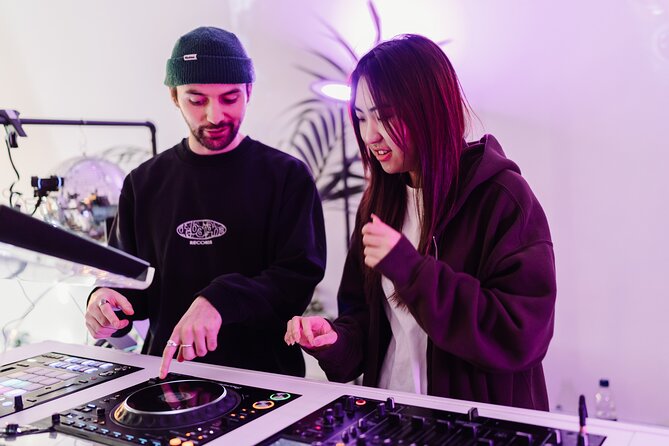
- Pioneer DJ decks: You practice on industry-standard equipment rather than a simplified tourist setup.
- Useful core skills: The class covers beatmatching, phrasing, harmonic mixing, EQ and filters.
- Central London meeting point: You meet at 93a Bayham St, London NW1 0AG, and finish there.
- Two hours of hands-on time: The lesson is long enough to cover several basic techniques without taking up a full day.
- Flexible booking protection: You can cancel for a full refund up to 24 hours before the local start time.
What This London DJ Lesson Really Teaches
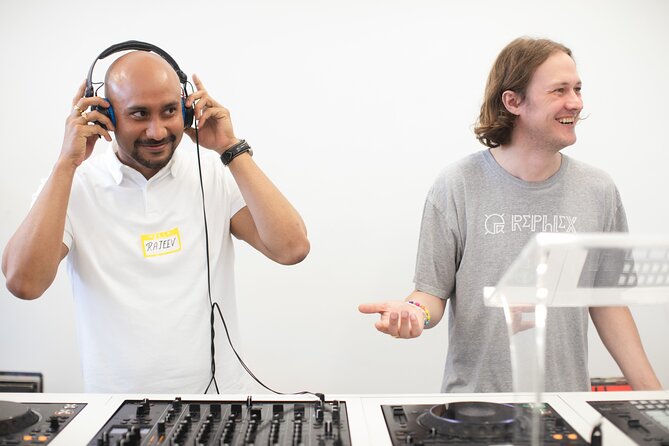
The class is built around the practical mechanics of mixing. You will learn how to beat-match tracks, which means aligning their beats so one song can move into another without a jarring clash.
That sounds simple until you try it. Even when two tracks have a similar tempo, their beats can drift apart. A trainer can show you how to listen for that movement and make corrections on the decks. This kind of immediate guidance is the main reason to choose a private session instead of trying to learn from a video alone.
You will also work on blending tracks together. Blending is not just fading one song out while another comes in. You need to decide when to bring in the next track, how much of it to reveal, and how to keep the change sounding controlled.
The class includes phrasing, a basic DJ idea that helps you bring in a new section of music at a natural point. Songs are often structured in musical phrases, so timing your transition to those sections can make a mix sound far more polished.
A few more London days worth a look
- London: Traditional English Scone Making and Tea Workshop
★ 5.0 · 702 reviews - London: East End Street Art Tour and Spray Painting Workshop
★ 4.8 · 297 reviews - London Traditional English Scone Making and Tea Workshop
★ 5.0 · 271 reviews
Beatmatching, Phrasing, and the Logic of a Smooth Mix
Beatmatching is likely to take much of your attention at first. The goal is to get two tracks moving at the same speed and keep their beats lined up. The trainer teaches this on the decks, where you can hear and see what changes as you adjust the tracks.
Phrasing adds another layer. A technically aligned mix can still sound awkward if the new track enters at the wrong moment. Learning to count and recognize sections gives you a better sense of structure, rather than leaving you to rely on trial and error.
The lesson also covers harmonic mixing. This means paying attention to the musical keys of tracks when choosing what to play next. Tracks in compatible keys can blend more naturally, while poorly matched keys may sound uncomfortable even if the tempos line up.
You do not need to become an expert in music theory to benefit from this section. The value is in learning why some combinations work better than others. If you have tried to mix songs before and wondered why one transition sounded wrong, this part may help explain the problem.
EQ and Filters on Pioneer DJ Decks
The class includes EQ work, which gives you control over the low, middle and high parts of a track. Used carefully, EQ helps you avoid having two bass-heavy tracks fight each other during a transition.
This is one of the more useful skills for anyone who wants to continue DJing after the lesson. It teaches you to shape the sound rather than simply start and stop songs. You can expect the trainer to connect the controls to what you hear, which is more helpful than memorizing knob names without understanding their effect.
Filters are also part of the lesson. They can change the tone of a track by letting more or less of certain frequencies through. Filters are often used to build tension or soften a transition, but they can sound overdone when used without control.
Learning both EQ and filters in the same class gives you a basic toolkit for shaping a mix. Still, two hours is not enough to master them. You should see this as a guided introduction, not a complete DJ education.
Why the Private Format Matters
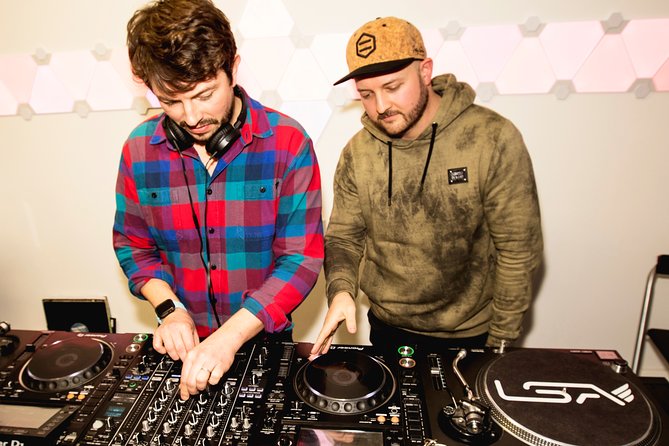
The private setup is the strongest feature here. Only your group participates, so you can ask basic questions and repeat a technique without feeling that you are slowing down a larger class.
That matters with DJing because small errors are part of the process. You might bring in a track too early, lose the beat, or turn a control too far. In a group class, you may hesitate to try again. With a private trainer, the focus stays on your progress.
A one-to-one format can also make the class more suitable for different starting points. A complete beginner may need time to understand the deck layout, while someone with a little experience may want to move faster into transitions and sound shaping. No specific course level is listed, so it is sensible to explain your background at the start.
The private format does not automatically make the class right for everyone. If you are hoping for a lively social activity with several other people, this is not that. It is a focused lesson in a studio, with the attention directed at your group and your work on the equipment.
Something completely different for your London days:
- London: The London Eye Entry Ticket
★ 4.6 · 35,875 reviews - From London: Harry Potter Warner Bros Studio Tour
★ 4.7 · 26,588 reviews - London: Westminster to Greenwich River Thames Cruise
★ 4.5 · 22,836 reviews - Magical London: Harry Potter Guided Walking Tour
★ 4.7 · 22,044 reviews
Working on Industry-Standard Pioneer Equipment
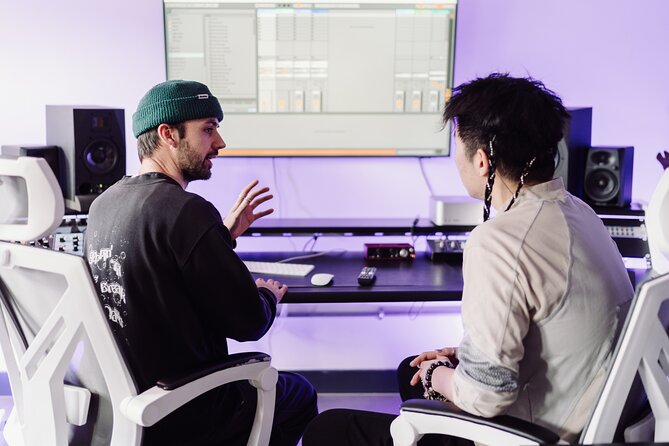
The class uses Pioneer DJ decks, described as industry-standard equipment. That is useful because the controls and workflow should feel closer to the tools used in professional DJ settings than a basic phone app or small home controller.
For a beginner, professional equipment can look intimidating. A private trainer helps you get your bearings and learn what each part does without having to figure it out alone. The equipment is not just decoration. You will use it to practice the techniques covered in the class.
One participant, Josh, described being made to feel comfortable with the high-end software and technology. That detail is worth noting if you are nervous about entering a professional studio. The equipment may seem complex at first, but the lesson is designed to guide you through it.
There is also a limit to this advantage. Becoming comfortable with Pioneer decks in two hours does not mean you will remember every control afterward. If you enjoy the lesson, you may need regular practice to build speed and confidence.
The Two-Hour Schedule at 93a Bayham Street
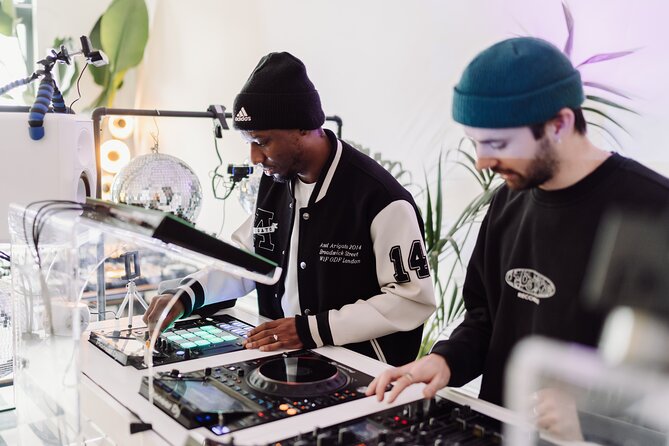
The class begins at 93a Bayham St, London NW1 0AG, and ends at the same meeting point. There is no sightseeing portion, transfer, or second venue to manage. You arrive at the studio, take the lesson, and leave from where you started.
A two-hour session is a sensible length for this kind of activity. It gives you enough time to move beyond a quick demonstration and try several techniques yourself. At the same time, it is short enough to fit into a London day without taking over your entire itinerary.
You should allow extra time to reach Bayham Street, since the booking information only identifies the meeting address and says the venue is near public transportation. The exact station, route and arrival instructions are not provided, so check the confirmation carefully after booking.
The fixed meeting point makes planning easier than a mobile activity. You do not need to chase a guide around London or arrange a pickup. Just remember that the class returns to the same address, not to a different central landmark.
Is $137.13 a Fair Price?
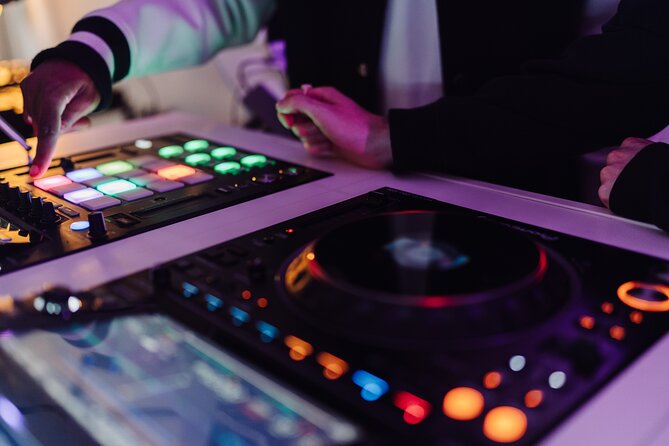
At $137.13 per person, the class costs more than a casual group workshop or a self-guided experiment with DJ software. The comparison is not quite like-for-like, though. You are paying for private attention, studio access and use of professional Pioneer equipment.
I see the price as reasonable for someone who has a real interest in DJing and wants a structured introduction. The trainer can correct your technique as you work, which is the part that makes a private lesson more useful than simply watching a tutorial.
The value is weaker if you are booking on a whim and have no interest in practicing afterward. You will learn several important ideas, but the class cannot turn a first-time participant into a polished DJ in two hours.
It may also be good value for a special London activity. Unlike many short creative workshops, this one gives you a clear skill to try during the session. You are not just watching a performance. You are learning how tracks are matched, timed and shaped.
If two people in your group are attending, compare the total price carefully. The listed cost is per person, and the activity remains private for your group. The benefit is shared privacy, but each person is charged individually.
Who Will Enjoy This Most?
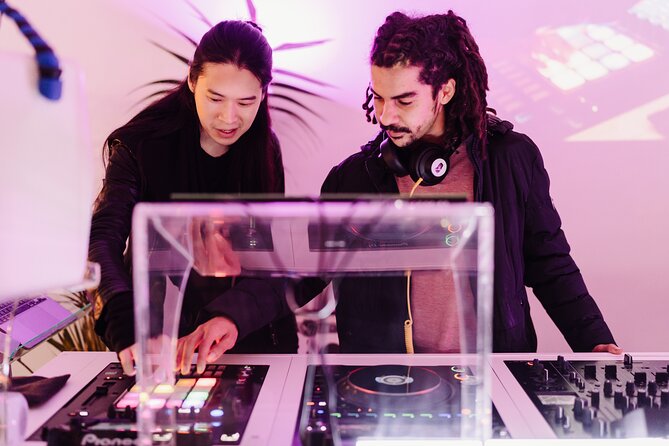
This class suits a beginner who wants a practical introduction rather than a lecture. You do not need to perform for an audience, and the private format gives you room to make mistakes while learning.
It also works well for someone who has used DJ software casually and wants to understand the physical controls on a proper deck. The lesson covers the gap between knowing what a beat or transition is and actually making one.
Music fans looking for an unusual London activity may enjoy it too. The class offers something different from the usual museum visit or walking tour, and it takes only about two hours. You can place it alongside other plans without giving up a full day.
The experience may be less suitable for an experienced DJ. The stated focus is on basic DJ skills, so advanced subjects are not promised. If you already mix comfortably, ask the provider if the trainer can adapt the session to your level before booking.
It is also not ideal for anyone hoping to hear a finished DJ set. The point is to learn, not to watch a professional perform. Your time is spent working through techniques on the equipment.
What the Strongest Praise Tells You
The most useful positive detail is the sense of comfort around high-end software and technology. That suggests the trainer pays attention to the beginner experience, rather than assuming you already know how a professional setup works.
The private studio also received especially strong approval. A perfect 5 rating from 11 reviews and a 100 percent recommendation rate provide a good signal, though the sample is small. I would treat it as encouraging rather than proof that every session will suit every person.
The praise centers on the equipment and the one-to-one learning format. Those are the features to value most when deciding. If you are mainly attracted by the idea of using professional decks with a trainer beside you, the class has a clear purpose.
The high rating does not remove the practical limits. You still have only two hours, and the class covers several subjects. You may leave with a good first understanding, but not with every technique fully mastered.
Planning Tips for a Smoother Session
Book ahead if your London dates are fixed. The class is booked an average of 15 days in advance, which suggests that last-minute places may not always be available.
Wear whatever allows you to stay comfortable while standing and working at the decks, though no specific dress requirement is given. The important preparation is mental: arrive ready to try the controls yourself rather than waiting for a demonstration to carry the whole session.
If you have favorite music or a preferred style, you can ask about it when arranging the class, but the available information does not promise a particular genre or playlist. Do not assume that your chosen songs will be used unless the provider confirms it.
You can use a mobile ticket, and confirmation is provided when you book. The activity is offered in English. Service animals are allowed, the venue is near public transportation, and most people can participate.
Cancellation is free if you cancel at least 24 hours before the local start time. Cancellations or changes made inside that window are not accepted for a refund, so keep the cutoff in mind when building your London schedule.
Should You Book the Private DJ Class?
Book it if you want a focused introduction to DJing, value private instruction, and like the idea of learning on Pioneer decks in a London studio. The class gives you real time with the equipment and covers the core building blocks of a mix.
Think twice if you want a social group activity, a full professional course, or a cheap two-hour diversion. The price reflects private attention, and the basic syllabus is best for beginners.
For the right person, this is a memorable way to spend part of a London day. You leave with a clearer idea of how beatmatching, phrasing, harmonic mixing, EQ and filters fit together. That is a useful start, as long as you treat it as the first lesson rather than the final word.
FAQ
Where does the private DJ class begin?
The class begins at 93a Bayham St, London NW1 0AG, UK.
Where does the activity end?
The activity ends back at the meeting point on Bayham Street.
How long does the DJ class last?
The class lasts approximately two hours.
How much does the experience cost?
The listed price is $137.13 per person.
Is the class private?
Yes. Only your group participates in the activity.
What equipment will you use?
You will learn on industry-standard Pioneer DJ decks.
What DJ skills are covered?
The class covers beatmatching, blending tracks, phrasing, harmonic mixing, EQing and filters.
Is the class offered in English?
Yes. The activity is offered in English.
Is the meeting point near public transportation?
Yes. The meeting point is near public transportation.
Can I cancel for a full refund?
Yes. You can cancel at least 24 hours before the experience start time for a full refund. Cancellations or changes made less than 24 hours before the start time are not accepted for a refund.
Latest arrivals on the London list
- Easy Access Tower of London Royal Secrets & Scandals Tour★ 5.0 · 3 reviews
- Stonehenge Special Access Guided Morning Tour from London★ 4.5 · 3 reviews
- Shoreditch & East London Walking Tour with a Local, Custom & Private★ 5.0 · 3 reviews
- Madame Tussauds London Fast Track and Champagne Experience★ 3.5 · 3 reviews
- London Private Brixton Tour with a Local – Culture & Stories★ 4.9 · 3 reviews
- Private Full Day Tour – Fast Track Tower of London and Lunch★ 4.6 · 3 reviews
- Private transfer from London Heathrow Airport to Southampton★ 5.0 · 3 reviews
- London Soho District – Guided Walking Tour 12 guests 2,5h★ 4.8 · 3 reviews
Workshops, compared.

Traditional English Scone Making and Tea Workshop
Read our review →
East End Street Art Tour and Spray Painting Workshop
Read our review →London Traditional English Scone Making and Tea Workshop
Read our review →


Street Art Tour and Spray Painting Workshop in London
Read our review →
3 Hour Chinese Dumpling Cooking Class for 2-6 people in London
Read our review →Browse the lists this tour appears in