Reviewed · WALKING TOURS
Private Ghosts and Gore Walking Tour of London
London’s darkest stories are tucked beside its busiest streets. On this private walk, you pass plague pits, old execution sites, haunted churches, ruined medieval buildings, and pubs with reputations far worse than their drinks. The ghost stories are the hook, but the real appeal is the way they open up London’s long, often brutal past.
I like two things right away: the private format means your group of up to 15 gets a more personal walk, and the tour covers a remarkable stretch of the City of London on foot. I also like the historical detail. Guide Michael is described as more than a guide, with a strong grasp of the stories behind the supernatural tales. The main drawback is simple: 24 stops in about two hours means a brisk pace, with only about five minutes at each location.
In This Review
- Key points to know before you book
- A ghost walk with London underneath it
- From St. Magnus to the Bank’s gangly ghost
- Churches, a ghostly cat, and Jimmy the Mummy
- Roman walls, plague pits, and ruined Greyfriars
- Temple Bar, Newgate Prison, and the Black Dog
- Execution bells and a murder story on Cock Lane
- Grave robbers, Smithfield, and the cost of fresh bodies
- Rahere, the haunted pubs, and the Charterhouse finale
- Pace, access, and the practical details
- Who will get the most from this walk?
- Should you book the Private Ghosts and Gore Walking Tour?
- FAQ
- Where does the tour begin?
- Where does the tour end?
- How long does the tour last?
- How many people can join the private tour?
- What language is the tour offered in?
- Is the tour wheelchair accessible?
- Are strollers allowed?
- Are service animals allowed?
- Does the price include a guide?
- Can I cancel for a full refund?
Key points to know before you book
- Twenty-four stops in two hours: The route moves from the Monument to the Great Fire of London to Farringdon Station, with a steady run of churches, alleys, pubs, ruins, and old criminal sites.
- History comes before cheap scares: You hear about plague pits, Roman walls, executions, grave robbing, Dickens, the Great Fire, and the Reformation alongside ghost stories.
- A genuinely private walk: Your party is the only group on the activity, with space for questions and a more tailored feel.
- Michael adds serious historical context: His approach combines macabre tales with clear explanations of how London developed.
- Free cancellation up to 24 hours ahead: This gives you some breathing room if your evening plans change.
- Wheelchair and stroller accessible: Service animals are allowed, and the route is near public transportation, though you should expect a substantial amount of walking.
A ghost walk with London underneath it
The route begins at the Monument to the Great Fire of London on Fish Street Hill. That is a useful starting point because you are immediately in the old City, the compact historic core where Roman London, medieval churches, banks, courts, markets, and modern offices crowd together.
From there, the walk heads west through a chain of locations that can seem ordinary in daylight. A churchyard may look quiet. A bank entrance may look purely functional. A pub may appear to be an old drinking hole and nothing more. The guide’s job is to connect those places with the people, crimes, disasters, and beliefs that shaped them.
That is what makes this tour more useful than a simple collection of spooky anecdotes. You are not only asked to believe in a ghost. You are shown why a particular place gained its reputation, what happened there, and how London’s older customs turned fear into folklore.
The booking price is $247.70 for the whole group, up to 15 people. For one or two people, that is a serious expense. For a larger family or group of friends, the math improves quickly. You are paying for a private two-hour experience rather than a per-person ticket, and the personal format is especially valuable if you want to ask questions or avoid being folded into a large crowd.
More London walking tours:
- Magical London: Harry Potter Guided Walking Tour
★ 4.7 · 22,044 reviews - London: The Original Jack the Ripper Walking Tour
★ 4.7 · 7,833 reviews - Tour for Muggles The Ultimate Harry Potter Walking Tour in London
★ 5.0 · 4,684 reviews
From St. Magnus to the Bank’s gangly ghost
The first stretch concentrates on the City’s churches and financial district.
At St. Magnus the Martyr, you hear about a dark figure repeatedly seen near one particular grave. A spiritual medium reportedly identified the figure in 1951 and explained the ghost’s unfinished demand. The story works well as an opening because it sets the tone: the focus is not only on a sudden apparition, but on motive, memory, and why a spirit might remain tied to one spot.
At 54 and 55 Cornhill, look upward. Devils appear in the architecture where you might expect angels, and the story turns into a lesson about an architect, a local vicar, and a long-running dispute. This is a good reminder to keep your eyes on the buildings. Some of the tour’s best details are above street level.
St. Peter-upon-Cornhill brings in literature. This is the churchyard associated with Ebenezer Scrooge’s frightening glimpse of his own grave in A Christmas Carol. The stop also connects London’s supernatural traditions with fiction produced in the city over many centuries. If you like Dickens, this is one of the more appealing early stops.
At St. Michael’s Cornhill, the subject is a storm and the day the devil supposedly visited London. The tale adds a sharper supernatural note after the literary and architectural stories.
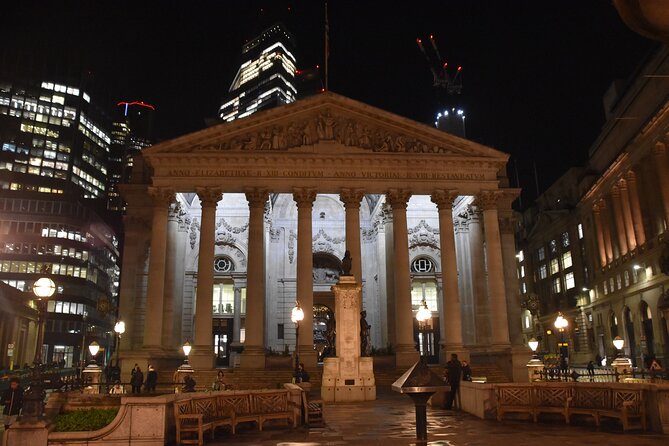
St. Margaret Lothbury brings the ghostly action close to the Bank of England. A very tall spirit is said to haunt the bank after his bones were disturbed and his fears came true. The story includes rattling guns, heavy footsteps, and terrified tellers. You may not see a ghost, of course, but the setting helps explain why old banks and buried remains make such effective material for local legends.
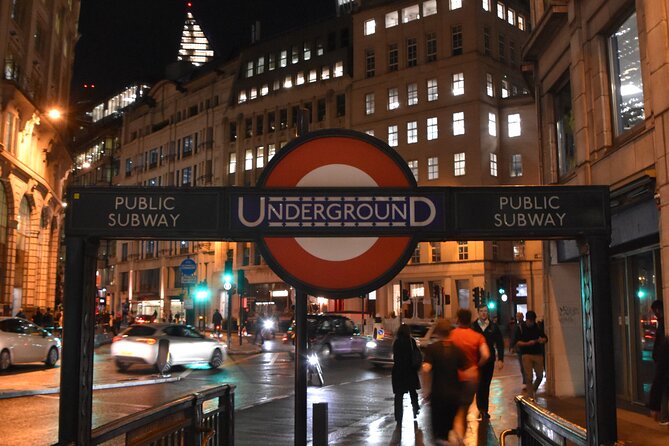
St. Mary Woolnoth is home to the famous Black or Bank Ghost. The story reaches through Bank Station, the Bank of England, and the surrounding streets. You also hear about a woman in black who asks about her brother, followed by the disturbing secret of the Bank Station booking hall.
This section is strong for first-time visitors because it gives you your bearings in the City at night. You are not wandering randomly through unfamiliar lanes. You have a guide, a clear route, and a series of stories that make the banks and churches easier to read.
Churches, a ghostly cat, and Jimmy the Mummy
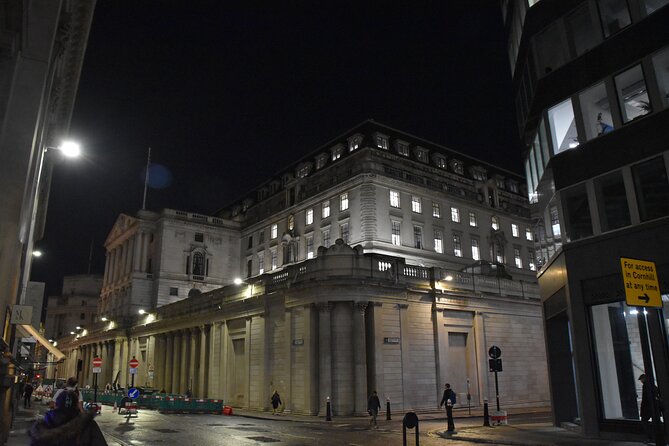
The next stops shift toward old lanes, churches, and stories with a strange streak of humor.
At St. Michael Paternoster Royal, you learn about a famous Lord Mayor of London and his cat, a remarkable rat catcher said to roam between this church and the next stop. The feline thread gives the walk a lighter moment before the stories become more gruesome again.
St. James Garlickhythe has one of the tour’s oddest tales. In 1835, workers found a mummified body near the altar. The remains were put on display and became known as Jimmy the Mummy. Children associated with the church reportedly played with the body, and the ghost is now said to point toward the place where it was buried.
That story is unsettling because it reflects an older attitude toward human remains. The macabre was not always kept behind museum glass or treated with modern respect. A guide who explains that context can make this stop more meaningful than a simple claim that the church is haunted.
Williamson’s Tavern adds pub folklore. The building is associated with Lord Mayors, poltergeists, phantoms, banging doors, and footsteps. Police dogs are said to become frightened when they try to enter, and the single exit gives the story a suitably ominous twist. The tour does not appear to include a drink or a pub stop, so treat this as an exterior storytelling location rather than a planned break.
St. Mary le Bow changes the mood again. If you were born within the sound of its bells, you are traditionally a Cockney, or a proper Londoner. The church is presented less as haunted than cursed, with a record of fires, collapses, accidents, murders, and other deaths. It is a fine example of how a place can gather an unlucky reputation through repeated disasters.
Roman walls, plague pits, and ruined Greyfriars
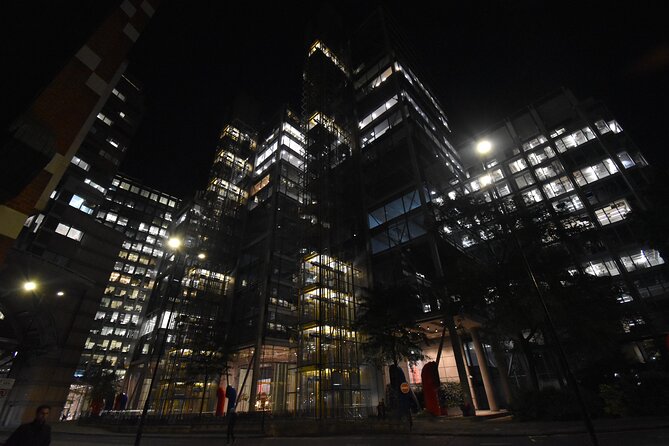
Noble Street offers some of the route’s oldest physical remains. The street is linked with the Roman garrison and the founding of the City, as well as sections of the Roman and medieval walls. It is also associated with strange events and so-called orb photographs.
This is a useful stop for anyone who wants more than ghosts. You can place the supernatural stories against the city’s earliest layers, when London was a Roman settlement and its walls marked a hard boundary around urban life. The guide may discuss unusual photographs and reports of strange activity, but your own experience will depend on conditions, lighting, and what you happen to notice.
At St. Anne and St. Agnes Garden, the focus turns to one of London’s plague pits. You hear how the plague affected the city and why glowing orbs sometimes appear in photographs taken here. The suggestion to take a picture is part of the fun, but it is best approached as a playful test rather than proof of anything supernatural.
Christchurch Greyfriars Church Garden is one of the more crowded ghost-story locations. The ruined church was once the second-largest in London, and its reported spirits include Queen Isabella and her lover, a quarrelling couple, a religious prophetess, a monk, and a greyhound.
The number of stories here may appeal to scare-seekers, though it can also feel like a lot to absorb in five minutes. That is the pattern across the whole route: you get a strong sample of many sites, not a long examination of each one.
A few more London days worth a look
- The Premier Classic London: Private 4-Hour Tour in a Black Cab
★ 5.0 · 2,737 reviews - Stonehenge Inner Circle Private Tour from London with Bath Visit
★ 5.0 · 1,909 reviews - London: Tower of London Entry & Beefeater Private Audience
★ 4.4 · 1,441 reviews - Private Tour: Black Taxi Tour of London
★ 5.0 · 1,153 reviews
Temple Bar, Newgate Prison, and the Black Dog
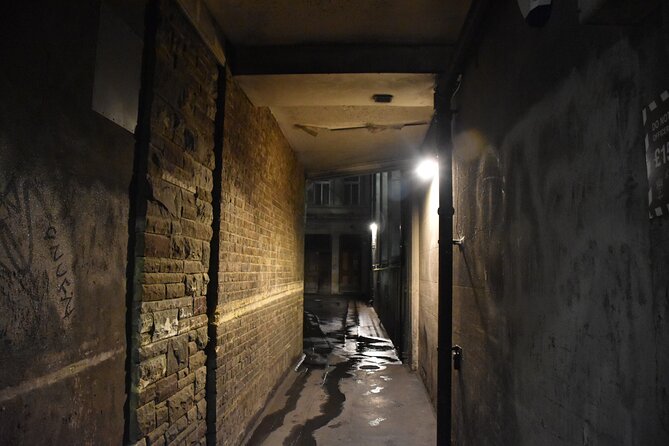
The walk then moves into London’s grim criminal past.
Temple Bar was designed by Sir Christopher Wren and once marked the main western entrance to the City. It also became a place where the severed heads of traitors and criminals were displayed. The reported haunting is tied to those condemned souls.
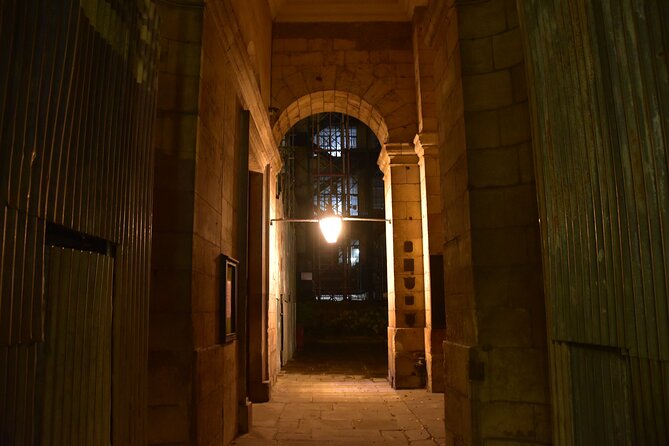
From Amen Court, you can see surviving sections of the walls of Newgate Prison. The prison was notorious, and the ground around it carries a particularly grim memory: people who live in the area may not realize that the foundations of their homes were built over the bones of people condemned to death. Children now play over that ground, a detail that gives the story its uncomfortable modern edge.
The Viaduct Tavern is described as London’s most haunted pub, with a mischievous ghost named Fred. His tricks are not murderous. He is associated with flushing the ladies’ toilets while they are in use and other confusing, harmless acts. A medium once questioned his identity, adding another layer to the tale.
At the Old Bailey, you are on the former site of Newgate Prison, where public hangings continued until 1868. The location is linked with the Black Dog of Newgate, a large phantom hound with a warning attached. If you see one in this area, the story says, you should update your will.
This is where the tour’s title, Ghosts and Gore, earns its keep. You hear about judicial violence, public punishment, prison life, and the way these events created lasting legends. If you have a low tolerance for descriptions of executions, grave robbing, or human remains, keep that in mind before booking.
Execution bells and a murder story on Cock Lane
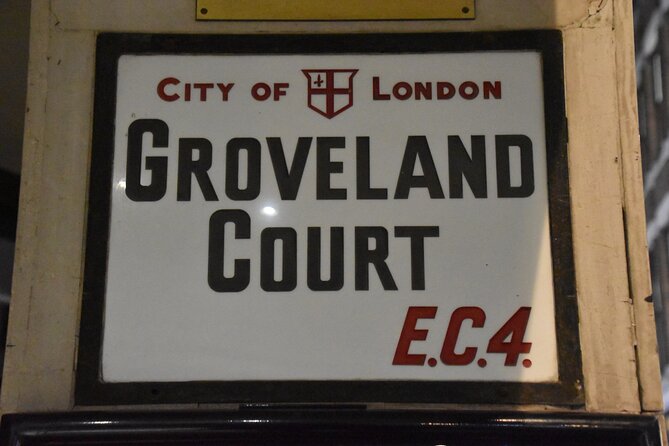
Holy Sepulchre Church houses an execution bell. It was rung before executions at Newgate Prison and the Old Bailey, and the guide explains the custom and the clerk responsible for one of London’s most notorious ghost stories.
The story reaches its climax on Cock Lane. A young girl is said to have channelled the spirit of a dead woman who claimed she had been murdered. The case attracted some of London’s greatest minds, who tried to save a man’s life.
This is an excellent example of the tour’s broader subject. Ghost stories were not always private fireside tales. Some became public scandals, legal questions, and serious investigations. The line between belief, entertainment, and evidence could be surprisingly thin.
Grave robbers, Smithfield, and the cost of fresh bodies
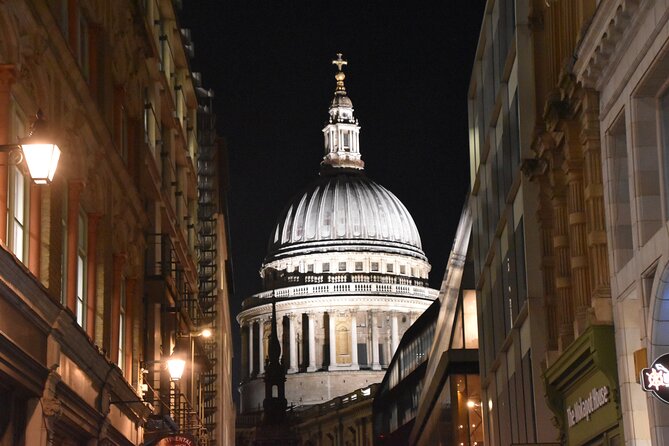
At the Golden Boy of Pye Corner, you learn about the western limit of the Great Fire of London. The statue looks cheerful, but the story attached to the site is grim. A former pub here was linked with the display of stolen bodies, which doctors at nearby St. Bartholomew’s Hospital wanted for dissection.
The guide explains the resurrection men who robbed graves, why fresh bodies were in demand, and how that demand helped lead to murder. This is one of the most historically revealing stops because it connects medicine, law, poverty, and crime. It also shows how a ghost tour can deal with real social problems rather than only theatrical scares.
West Smithfield was one of London’s major execution sites. William Wallace and Wat Tyler were among those killed here, and the punishment known as being hanged, drawn, and quartered was used on some rebels. Others were burned at the stake or boiled alive.
The neighboring butcher’s market added the smell of meat, blood, and bone to an already horrible setting. Nearby St. Bartholomew’s Hospital is also tied to reports of poltergeists, a haunted lift, and strange happenings among students working late in rooms, laboratories, and study spaces.
This is likely the most intense section of the tour. You are hearing about public death, medical dissection, and supernatural stories in the same small area. The material is powerful, but it is not gentle family entertainment.
Rahere, the haunted pubs, and the Charterhouse finale
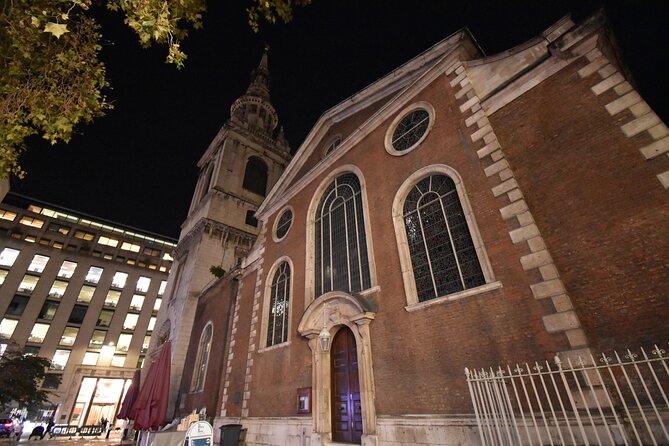
St. Bartholomew the Great is one of the route’s finest historical stops. It is the oldest surviving church in London and is said to be haunted by its founder, Rahere. The ghost reportedly walks with a limp, despite having walked normally for centuries. The guide explains who may be responsible for the change.
The Rising Sun returns to resurrectionist history, but this time the ghost is more disturbing. The pub is linked with a so-called sex pest ghost, and women on the tour are advised to stay alert while hearing why female staff have been reluctant to live on the premises. The story is unpleasant by design, so this stop may not suit everyone.
The final stop is the Charterhouse, a short walk from the Elizabeth Line entrance at Farringdon Station. Beneath the buildings is one of London’s large plague pits, said to contain around 50,000 people. The site also connects to monks executed during the Reformation, a phantom monk seen praying, and a duke who lost his head.
The ending adds an unusual modern note. Charterhouse Square is also home to one of the United Kingdom’s respected schools of psychiatry, giving the guide a chance to discuss possible medical explanations for strange experiences. That balance is welcome. You can enjoy the stories without being pushed to accept every haunting as fact.
Pace, access, and the practical details
The tour lasts about two hours and is offered in English. With 24 stops, the average stop works out to roughly five minutes, although walking time and storytelling will vary. Wear comfortable shoes and expect to remain on your feet for most of the experience.
The start point is the Monument to the Great Fire of London on Fish Street Hill. The walk finishes near the Elizabeth Line entrance to Farringdon Station, which is useful if you are heading onward after the tour. The route is near public transportation.
The activity is wheelchair and stroller accessible, and service animals are allowed. Still, because this is a walking route through historic streets, churchyards, gardens, and old lanes, it is sensible to confirm any specific mobility needs when booking. A moderate level of physical fitness is requested.
This is a private tour, with only your group participating. It is offered for up to 15 people, so the $247.70 group price makes the most sense when shared among several people. Confirmation arrives when you book, and you can cancel for a full refund up to 24 hours before the start time. Changes or cancellations inside that window are not accepted.
The tour is booked, on average, about 45 days ahead. That does not guarantee every date will sell out, but it suggests you should plan ahead if you have a fixed evening during a London visit.
Who will get the most from this walk?
I would choose this experience if you enjoy history, old churches, criminal justice, literature, folklore, and the darker side of city life. It is especially well suited to a group of friends or family members who want a private evening activity with a clear theme.
You should also like walking and be comfortable with unpleasant subjects. The route includes executions, plague victims, grave robbing, corpses, murders, public punishment, and sexual harassment by a ghost. The guide may tell these stories with humor, but the material remains grim.
This is less suitable if you want a slow architectural tour, a pub crawl, or a formal paranormal investigation. You will not spend long inside each location, and the supplied details do not indicate that drinks, attraction admissions, or special equipment are included. The value lies in the guide’s storytelling and the sheer range of places covered.
Should you book the Private Ghosts and Gore Walking Tour?
Book it if you want a lively introduction to London’s oldest center, with ghost stories used as a way into real history. Michael’s approach, as described, is a major strength: you get macabre tales, but also the context that makes them memorable.
For a couple, the price is high. For a larger private group, it becomes much easier to justify, especially if you value a personal guide and a route that ends near a useful rail connection. I would choose it for a first or second London visit when you want something different from the usual museums and viewpoints.
If you are sensitive to gore, dislike fast walking, or prefer one site explored in depth, choose another activity. If you want 24 eerie locations, sharp historical detail, and a safe way to get your bearings in London after dark, this tour is a strong pick.
FAQ
Where does the tour begin?
The tour begins at the Monument to the Great Fire of London on Fish Street Hill, London EC3R 8AH.
Where does the tour end?
The walk ends near the Elizabeth Line entrance to Farringdon Station on Cowcross Street, London EC1M 6BY.
How long does the tour last?
The tour lasts approximately two hours.
How many people can join the private tour?
The private tour can include up to 15 people in one group.
What language is the tour offered in?
The tour is offered in English.
Is the tour wheelchair accessible?
Yes. The tour is listed as wheelchair accessible.
Are strollers allowed?
Yes. The tour is listed as stroller accessible.
Are service animals allowed?
Yes. Service animals are allowed.
Does the price include a guide?
Yes. All guiding fees are included in the cost.
Can I cancel for a full refund?
Yes. You can cancel at least 24 hours before the experience start time for a full refund. Cancellations or changes made less than 24 hours ahead are not accepted.
Latest arrivals on the London list
- Easy Access Tower of London Royal Secrets & Scandals Tour★ 5.0 · 3 reviews
- Stonehenge Special Access Guided Morning Tour from London★ 4.5 · 3 reviews
- Shoreditch & East London Walking Tour with a Local, Custom & Private★ 5.0 · 3 reviews
- Madame Tussauds London Fast Track and Champagne Experience★ 3.5 · 3 reviews
- London Private Brixton Tour with a Local – Culture & Stories★ 4.9 · 3 reviews
- Private Full Day Tour – Fast Track Tower of London and Lunch★ 4.6 · 3 reviews
- Private transfer from London Heathrow Airport to Southampton★ 5.0 · 3 reviews
- London Soho District – Guided Walking Tour 12 guests 2,5h★ 4.8 · 3 reviews
Walking Tours, compared.
Magical London: Harry Potter Guided Walking Tour
Read our review →
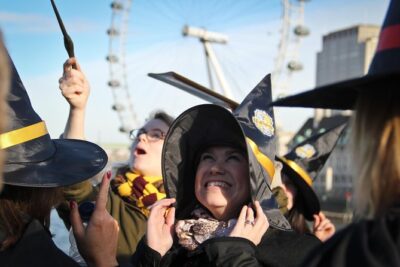
Tour for Muggles The Ultimate Harry Potter Walking Tour in London
Read our review →

Harry Potter Movies Walking Tour (Kids Go Free)
Read our review →
Changing of the Guard Guided Walking Tour in London
Read our review →
The Great British Rock and Roll Music Walking Tour
Read our review →