Reviewed · WALKING TOURS
Private Guided Walking Tour of Bloomsbury, London
Bloomsbury looks calm at first: leafy squares, handsome Georgian buildings, bookish streets, and the grand dome of the British Museum. But beneath that polished surface are stories of violence, abandoned children, royal illness, feminist publishing, war, and artistic rebellion. That contrast is the real point of this private walking tour.
I like the one-to-one format because you can stop to ask questions instead of waiting for a large group. I also like the way the walk links famous sights with less obvious stories, especially the Foundling Hospital, the children’s hospital, and the members of the Bloomsbury Group. The main drawback is simple: two hours is not enough to see every corner, and the British Museum interior is not included unless you add it.
In This Review
- Key points to know
- Why Bloomsbury works best on foot
- Elegant gardens and Bloomsbury’s violent side
- A historic shopping street and the rise of feminist publishing
- Hospitals, literature, and royal treatment
- The Foundling Hospital and abandoned children
- The Brunswick Centre’s bold post-war break
- Tavistock Square and monuments to conflict
- Senate House and the Bloomsbury Group
- The British Museum from the outside
- What the private format is worth at $140.49
- Who should book this Bloomsbury walk
- My call on this private London experience
- FAQ
- Where does the Bloomsbury walking tour begin?
- Where does the tour end?
- How long does the tour last?
- Is the tour private?
- Is the British Museum interior included?
- What language is the tour offered in?
- Is food included?
- Can I cancel for a full refund?
Key points to know
- Bloomsbury’s polished streets conceal difficult stories: Learn about violence, abandoned children, illness, empire, and war alongside the area’s elegant architecture.
- A private guide keeps the pace flexible: Your group can ask questions, linger at a square, or focus on a particular interest.
- The walk connects literature with real places: Hear about a children’s hospital’s surprising link to classic literature and the Foundling Hospital’s effect on writers and composers.
- The British Museum is an exterior stop by default: You see the iconic building and learn about its role in empire, status, and exploration.
- The route includes both Georgian and post-war London: The Brunswick Centre provides a sharp contrast to Bloomsbury’s older squares.
- Jack is one named guide associated with the experience: If you hope for him, ask about guide availability when booking.
Why Bloomsbury works best on foot
Bloomsbury is not a single grand sight. It is a neighbourhood of small clues. A square explains a political movement. A hospital points toward literature. A university building brings in writers and thinkers. A shopping street reveals the changing role of women in publishing and public life.
That makes walking the right way to see it. You move slowly enough to notice the architecture, but the guide supplies the links between places. Without that local explanation, several stops could look like pleasant streets or formal buildings with little to say.
The tour begins at Underground Ltd, Holborn Station, on Kingsway. That is a practical meeting point, close to public transport and easy to use as a starting marker in central London. The experience lasts about two hours and returns to the same meeting point, so you do not need to plan a complicated pickup arrangement.
Because this is a private activity, only your group takes part. That matters if you like asking frequent questions, need a slower pace, or want to shape the discussion around literature, architecture, medicine, politics, or London’s social history.
More London walking tours:
- Magical London: Harry Potter Guided Walking Tour
★ 4.7 · 22,044 reviews - London: The Original Jack the Ripper Walking Tour
★ 4.7 · 7,833 reviews - Tour for Muggles The Ultimate Harry Potter Walking Tour in London
★ 5.0 · 4,684 reviews
Elegant gardens and Bloomsbury’s violent side
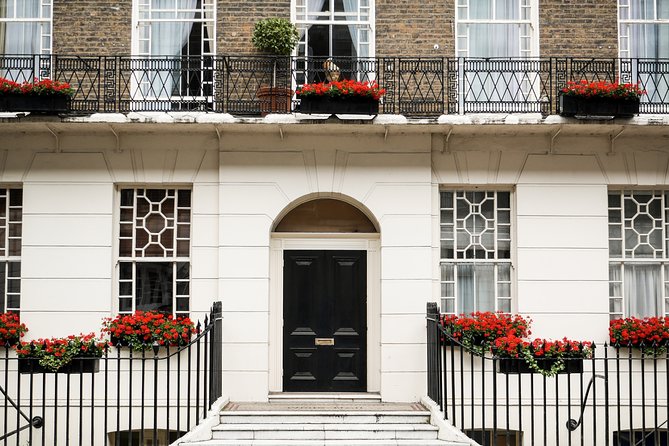
The opening section introduces the early history of Bloomsbury through its gardens and squares. The setting may feel peaceful, but the stories beneath it are not always gentle. Your guide brings out the contrast between attractive public spaces and the violence connected with the neighbourhood’s past.
This is a good start because it sets the tone for the rest of the walk. You are not simply being shown pretty façades. You are being asked to look at how power, wealth, medicine, charity, and culture shaped the area.
I would pay close attention here if you are interested in how London changed over time. The tour does not treat Bloomsbury as a frozen Georgian postcard. Instead, it presents a district where grand buildings and troubling events occupy the same streets.
The guide’s storytelling is especially important at this point. A private format gives you room to ask what happened, who benefited, and how the neighbourhood changed. The exact balance can also be adjusted if your group prefers architecture over darker historical episodes.
A historic shopping street and the rise of feminist publishing
The route continues along a beautiful historic shopping street. Here, the focus shifts to Elizabethan traders and feminist publishers, giving you two very different windows onto commercial and cultural life.
That combination is useful. Trade tells you how the street functioned, while feminist publishing shows how printed ideas could challenge the limits placed on women. Instead of treating the street as a place for shops alone, the guide shows how commerce and publishing helped shape public life.
This stop should appeal to readers, writers, and anyone interested in the history of women’s voices. It also adds variety after the earlier discussion of gardens and violence. You get a street-level story rather than another formal square.
The attraction is not a shopping break. The value comes from the history attached to the street. If you want time to browse stores or stop for coffee, ask your guide whether the pace can allow it. Two hours passes quickly, and the advertised focus is the walking tour rather than free time.
Hospitals, literature, and royal treatment
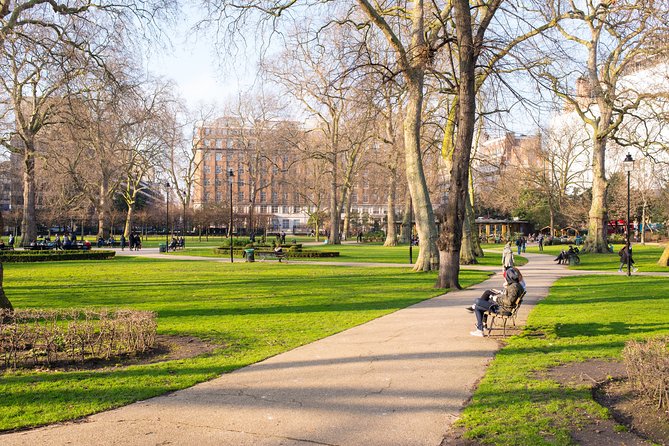
One of the more unusual parts of the route concerns a world-famous children’s hospital. Your guide explains its surprising connection to a classic work of literature, then turns to the adjoining square and the private treatment of one of England’s most famous monarchs.
This gives Bloomsbury a strong medicinal thread. Hospitals are not usually the first thing people associate with the area, yet this stop shows how medical institutions influenced both public memory and private life.
The literary connection adds a human touch. Rather than hearing only about buildings and dates, you get a story that links a real children’s institution with a work known far beyond London. The royal treatment brings a different kind of drama, showing how health care, status, and privacy once intersected.
I like this stop because it is hard to predict from Bloomsbury’s outward appearance. It also demonstrates the benefit of a guide who can connect places that are not obvious tourist markers. You might walk past the square on your own and never know why its medical past matters.
A few more London days worth a look
- The Premier Classic London: Private 4-Hour Tour in a Black Cab
★ 5.0 · 2,737 reviews - Stonehenge Inner Circle Private Tour from London with Bath Visit
★ 5.0 · 1,909 reviews - London: Tower of London Entry & Beefeater Private Audience
★ 4.4 · 1,441 reviews - Private Tour: Black Taxi Tour of London
★ 5.0 · 1,153 reviews
The Foundling Hospital and abandoned children
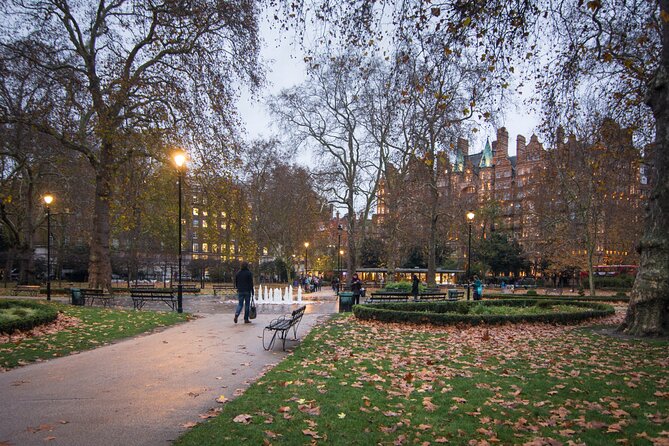
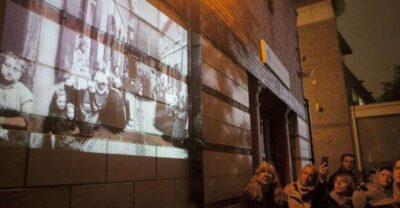
The Foundling Hospital is one of the tour’s most affecting subjects. Your guide shows where it was created and explains how the plight of poor abandoned children moved people across England.
The story reaches beyond charity. It touches music, literature, public feeling, and the way society responded to poverty. Illustrious composers and renowned writers were drawn into the cause, giving the subject a cultural reach that surprises many first-time visitors.
This stop also adds weight to the idea of charity in Georgian London. Fine architecture can make the past seem orderly, but the Foundling Hospital points toward the children and families left outside that comfort. The tour is strongest when it places those difficult lives alongside the grander story of Bloomsbury.
You should expect a thoughtful pause here rather than a light sightseeing anecdote. If your group includes older children, the subject may prompt useful questions, though the material concerns abandonment and poverty. The private setting lets you decide how much time to spend on it.
The Brunswick Centre’s bold post-war break
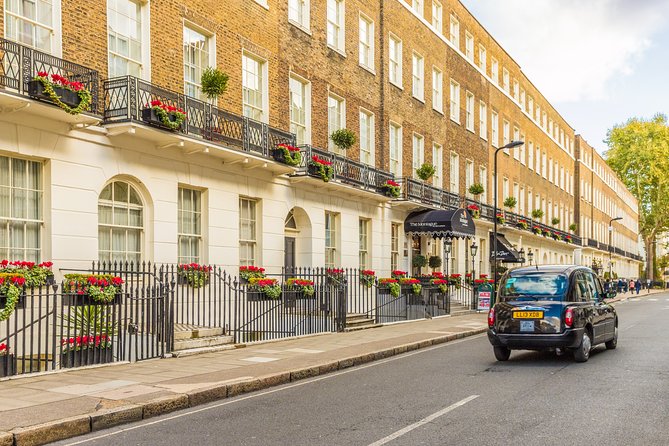
After the Georgian architecture, the route takes you to the Brunswick Centre. Its imposing modern form offers a clear change of mood and scale.
The centre is presented as a milestone of post-war urban planning in London, as well as one of the more contentious developments in Bloomsbury. That tension makes it worth seeing. You are not asked to admire it simply because it is architecturally important, nor to dismiss it because it differs from the older streets.
The Brunswick Centre helps you read London as a living city. Historic districts do not stop changing, and new buildings often provoke arguments about preservation, housing, design, and public space. Here, the contrast with Georgian Bloomsbury becomes part of the lesson.
Architecture lovers will likely appreciate this stop most. If your ideal walking tour contains only old buildings, the Brunswick Centre may feel like a detour. For me, its inclusion improves the route because it prevents the neighbourhood from becoming a collection of antique façades.
Tavistock Square and monuments to conflict
Tavistock Square brings the tour back to a quieter setting. Bloomsbury is often linked with writers, thinkers, and artists, but this square has a more specific connection with monuments and some of the bloodiest conflicts in history.
The square gives you time to look closely. Monuments can seem easy to skip when you are focused on major buildings, yet their placement and subjects can reveal what a community chooses to remember.
Your guide helps put those memorials into context. The result is a shift from private lives and social reform toward war and public memory. That change keeps the walk from following one narrow theme.
This is also a good point for questions. Ask about the people commemorated, why the monuments are here, and how they fit the surrounding university and literary district. With a private guide, you do not have to save those questions for the end.
Senate House and the Bloomsbury Group
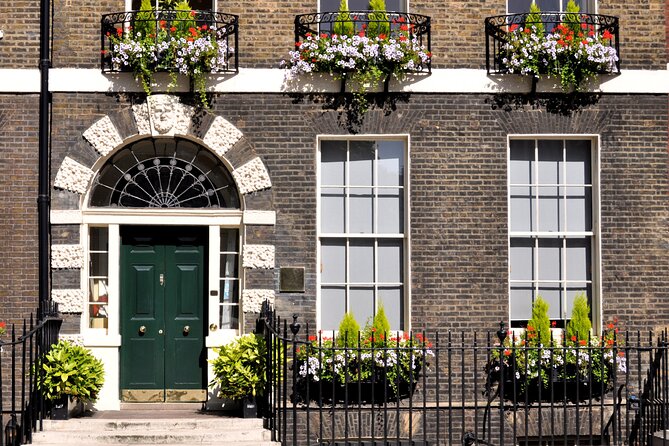
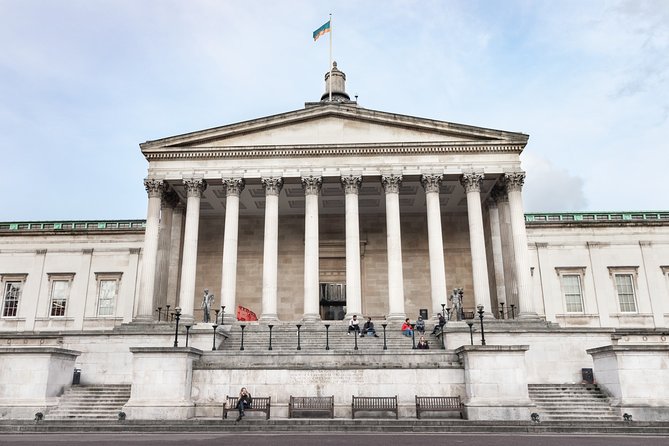
Senate House provides one of the route’s most imposing views. The building marks the home of the University of London, and its scale gives the neighbourhood a different kind of authority.
The story then turns to members of the elite and artistic Bloomsbury Group who made their homes in and around the square. That connection helps explain why Bloomsbury became associated with writers, artists, and thinkers. The area’s cultural identity was shaped not only by institutions but also by the people who lived nearby.
This stop is valuable if you want context for the name Bloomsbury Group rather than a simple label. The guide can explain how the group fits into the wider character of the neighbourhood, while the buildings give that story a physical setting.
Senate House is also a strong visual pause near the end of the walk. After hospitals, charity, war, and urban planning, the building brings the discussion back to education and ideas.
The British Museum from the outside
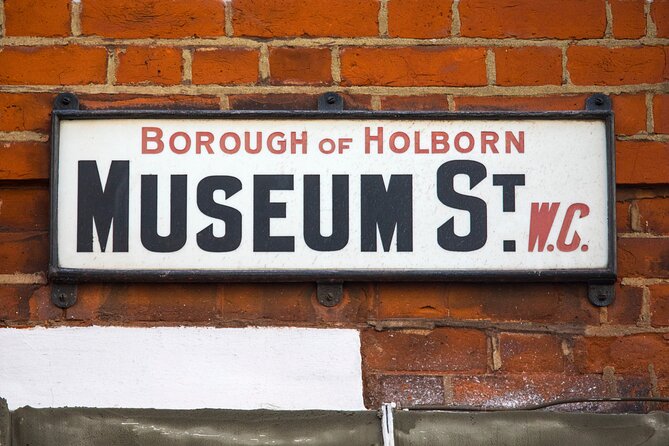
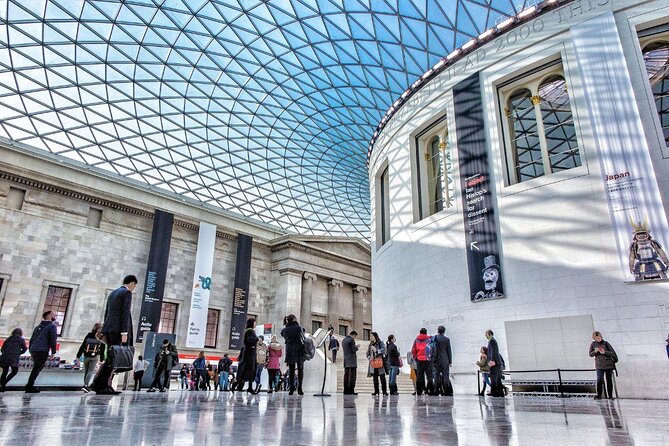
The final major stop is the British Museum. You get exterior views of its famous domed building and hear how the museum came to represent empire, status, and exploration.
That framing is more useful than a quick photo stop. The museum is one of London’s best-known institutions, but its architecture and collections also raise questions about who collected objects, who displayed them, and how Britain presented its power.
An interior visit is not part of the standard tour. You can add a short museum tour if you want to continue inside, and one published account describes the guide, Jack, showing museum highlights and providing extra perspective at the end. If the museum is a priority, confirm the upgrade before you book rather than assuming the exterior stop includes entry.
The exterior finish also makes practical sense. A two-hour walk can introduce the museum’s story without trying to squeeze a full visit into the same time. You can then choose to enter on your own, add the short guided option, or return another day with enough time for the galleries.
What the private format is worth at $140.49
The listed price is $140.49 per person. That is a serious amount for a two-hour walk, especially compared with a general group stroll. The value depends on how much you use the private format.
I would consider it worthwhile for a couple or small group that wants a tailored introduction to Bloomsbury and plans to ask plenty of questions. The guide is available for the full tour, and you receive bespoke advice for the rest of your time in London. That advice can make the price more useful if you are at the start of a longer visit and want help choosing what to do next.
The tour also includes the option to personalise your interests. You can tell the provider if you care most about literature, architecture, medicine, social history, or another part of Bloomsbury’s story. The guide can then give more attention to the subjects that matter to you.
A further convenience is help arranging a restaurant reservation to suit your tastes. Lunch and dinner are not included, so treat this as planning assistance rather than a meal package.
For a solo visitor, the per-person cost may feel harder to justify. For a private group sharing the guide, the personal attention and flexible conversation become more appealing. The average booking lead time is 68 days, so popular dates may require planning well ahead.
Who should book this Bloomsbury walk
I would recommend the tour most strongly to:
- First-time London visitors who want more context than a photo stop provides
- Readers and culture lovers interested in writers, publishers, hospitals, and the Bloomsbury Group
- Architecture fans who enjoy comparing Georgian buildings with post-war planning
- Couples or families who prefer a private pace
- Visitors who want a guide to shape the route around a particular interest
- Anyone adding the British Museum and wanting an introduction before going inside
It may be less suitable if you want a long museum visit, a shopping afternoon, or a tour built around major interiors. The standard experience is outdoors and lasts about two hours. You should also be comfortable walking between stops, since the neighbourhood is best understood from the pavement.
The tour is offered in English. Most people can participate, and service animals are allowed. Confirmation arrives at booking, and free cancellation is available up to 24 hours before the start time. Changes or cancellations inside that window are not accepted for a refund.
My call on this private London experience
Book this tour if you want Bloomsbury to feel like a neighbourhood rather than a backdrop. Its best moments come from the links between places: gardens and violence, a children’s hospital and literature, abandoned children and famous artists, Senate House and the Bloomsbury Group, the British Museum and empire.
I would especially consider it for a first or second day in London, when a private guide can help you get your bearings and suggest what to see next. Ask about Jack if you hope to have the guide featured in the published account, and confirm the British Museum upgrade if interior highlights matter to you.
Skip it if your priority is entering the museum for several hours or covering a long list of major attractions. For everyone else, the price buys more than a walk. It buys time for questions, a flexible pace, and a sharper understanding of one of central London’s most layered neighbourhoods.
FAQ
Where does the Bloomsbury walking tour begin?
It begins at Underground Ltd, Holborn Station, Kingsway, London WC2B 6AA, UK.
Where does the tour end?
The activity ends back at the meeting point.
How long does the tour last?
The walking tour lasts approximately two hours.
Is the tour private?
Yes. Only your group participates in this private activity.
Is the British Museum interior included?
No. The standard tour includes exterior views and stories about the British Museum. An interior tour can be added.
What language is the tour offered in?
The tour is offered in English.
Is food included?
No. Lunch and dinner are not included. The provider can make a restaurant reservation to suit your tastes if requested.
Can I cancel for a full refund?
Yes. You can cancel at least 24 hours before the experience start time for a full refund. Changes or cancellations made less than 24 hours before the start time are not accepted for a refund.
Latest arrivals on the London list
- Easy Access Tower of London Royal Secrets & Scandals Tour★ 5.0 · 3 reviews
- Stonehenge Special Access Guided Morning Tour from London★ 4.5 · 3 reviews
- Shoreditch & East London Walking Tour with a Local, Custom & Private★ 5.0 · 3 reviews
- Madame Tussauds London Fast Track and Champagne Experience★ 3.5 · 3 reviews
- London Private Brixton Tour with a Local – Culture & Stories★ 4.9 · 3 reviews
- Private Full Day Tour – Fast Track Tower of London and Lunch★ 4.6 · 3 reviews
- Private transfer from London Heathrow Airport to Southampton★ 5.0 · 3 reviews
- London Soho District – Guided Walking Tour 12 guests 2,5h★ 4.8 · 3 reviews
Walking Tours, compared.
Magical London: Harry Potter Guided Walking Tour
Read our review →
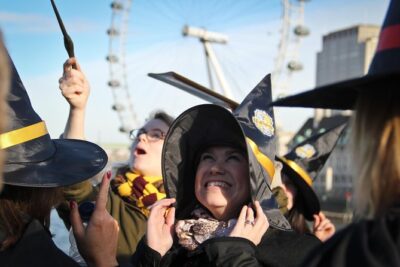
Tour for Muggles The Ultimate Harry Potter Walking Tour in London
Read our review →

Harry Potter Movies Walking Tour (Kids Go Free)
Read our review →
Changing of the Guard Guided Walking Tour in London
Read our review →
The Great British Rock and Roll Music Walking Tour
Read our review →