
Reviewed · HISTORICAL TOURS
Roman Ruins to Blitz Bombings: A Walking Tour of London’s Fiery History
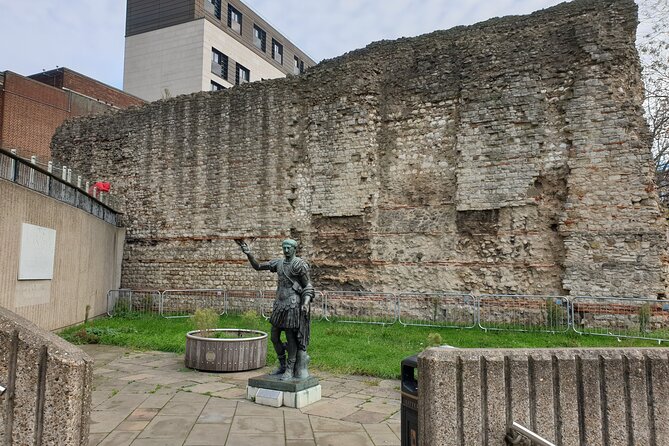
London’s past is packed into this walk: a royal fortress, a ruined church garden, a legendary stone, the Great Fire, and the scars left by the Blitz. Guide Tom brings these layers together with clear stories rather than a flood of dates. I like the way the route connects famous sights with smaller places you could easily walk past, and I like the small maximum of 15 people, which gives you room to ask questions.
The main caution is the pace and length. Although the tour lasts about two hours, it is an extended walking tour, and one participant specifically warned that it may not suit anyone with mobility problems. The advertised stops are short, so much of the value comes from walking and listening between them.
In This Review
- Key points at a glance
- Why this London walk feels different
- Starting at the Tower of London
- St. Dunstan in the East and the beauty of damage
- The Monument and the Great Fire of 1666
- The London Stone and the city’s old legends
- The Bank of England and London’s financial power
- Guildhall and the medieval City
- St. Paul’s Cathedral and Christopher Wren’s London
- Finishing on Fleet Street
- How much walking should you expect?
- Is $27.78 good value?
- Who will enjoy this walk most?
- Booking details and cancellation
- Should you book Roman Ruins to Blitz Bombings?
- FAQ
- How long does the walking tour last?
- Where does the tour begin?
- Where does the tour end?
- Is admission to the attractions included?
- How many people can join the tour?
- Is the tour suitable for people with mobility issues?
- What is the cancellation policy?
Key points at a glance
- Roman and wartime London in one route: The walk links the Tower, medieval churches, the Great Fire, and Blitz damage.
- A useful guide makes the difference: Tom is praised for bringing ordinary streets and overlooked sights to life.
- Small-group format: The group is capped at 15 people, allowing more personal attention.
- Short stops, plenty of walking: Each listed stop is about five minutes, so expect continuous movement between landmarks.
- Good value for history fans: At $27.78, you get two hours of guided context without paying entrance fees for a packaged attraction.
- A practical starting and ending route: Begin near the Tower of London and finish outside Ye Olde Cheshire Cheese on Fleet Street.
Why this London walk feels different
Many city walks stick to the biggest names and leave you with a string of photographs. This route works differently. It uses familiar places as anchors, then explains how London grew, burned, rebuilt, and suffered wartime destruction around them.
You begin near the Tower of London and finish on Fleet Street, crossing a compact part of the City of London. The route gives you a useful timeline. You start with royal and Roman-era London, move through medieval institutions, reach the Great Fire of 1666, and then see how the Second World War altered the city.
I like that mix. You are not studying one narrow subject for two hours. Instead, you are learning how several disasters and rebuilding projects changed the same streets.
The tour is offered in English and uses a mobile ticket. It has a maximum of 15 people, which is small enough for direct questions but not necessarily a private tour. If Tom is leading your group, expect a guide who encourages questions and offers suggestions for other places to visit after the walk.
More London history walks:
- London Small Group Tour of Historical Pubs
★ 5.0 · 10,422 reviews - Soho Music & Historic Pubs Tour
★ 5.0 · 1,993 reviews - London: Historic Pubs of Central London Walking Tour
★ 4.9 · 1,065 reviews
Starting at the Tower of London
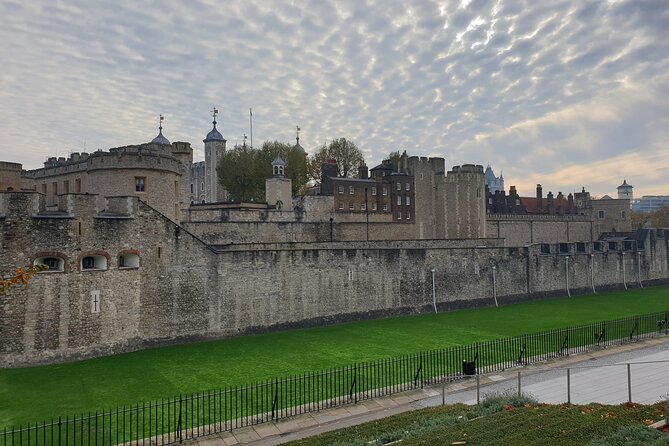
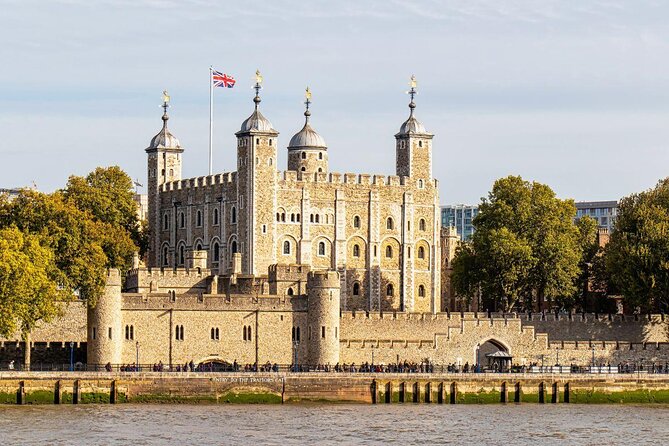
The meeting point is at 38 Trinity Square, London EC3N 4DJ, near the Tower of London. The Tower itself is the first stop, though admission to the interior is not included.
That distinction matters. This experience is a walking tour, not a ticketed visit to the Tower. You will receive historical context around Europe’s oldest surviving royal palace, but you should not expect time inside the complex unless you arrange a separate visit.
The Tower is an excellent place to begin because it gives the route a strong sense of scale. London’s story is not only about streets and churches. It is also about royal power, defense, imprisonment, and the city’s place beside the River Thames.
The stop is listed as about five minutes, so I would treat it as an introduction rather than a full Tower tour. If you want to explore the Crown Jewels, walls, towers, or exhibits, plan that for another visit. You will get more from this walk if you arrive ready to listen, not expecting a long indoor attraction.
St. Dunstan in the East and the beauty of damage
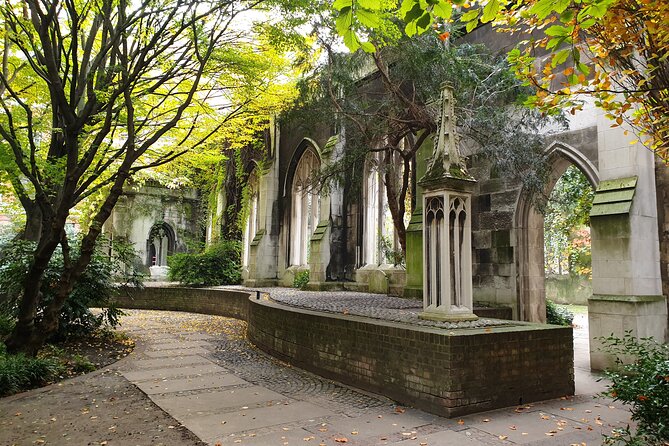
St. Dunstan in the East is one of the more memorable stops. This medieval church was damaged during the Second World War, and its remains now form a garden. Admission is free.
The appeal is not simply that the place is old. It shows how London sometimes preserves destruction instead of rebuilding every structure from scratch. Stone walls and church ruins can make wartime history feel more immediate than a date in a guidebook.
The stop lasts about five minutes, but the setting gives Tom a useful chance to explain the effect of bombing on the City. You see how a religious building, once part of daily life, became a fragment within the modern city.
I would not plan the whole tour around this one place, since the visit is brief. Still, it is exactly the kind of stop that rewards a guided walk. Without context, you might see a pleasant garden. With context, you can read the broken walls as evidence of London’s wartime past.
The Monument and the Great Fire of 1666
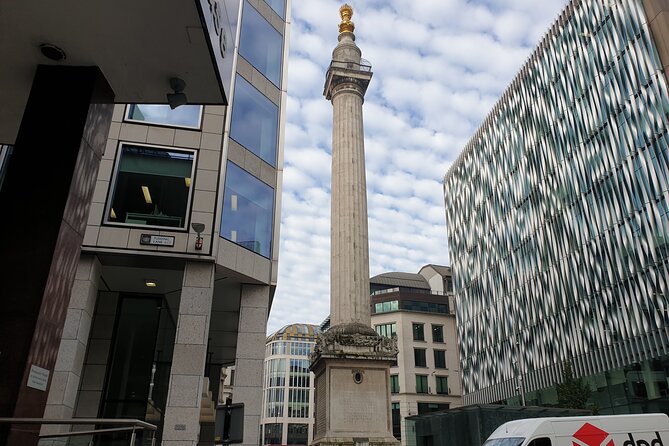
The Monument to the Great Fire of London marks the next major chapter. It commemorates the fire that devastated much of the City in 1666. Admission is not included, so the tour does not provide a paid climb or interior visit.
The Monument is valuable even from street level. It gives you a fixed point for understanding how a single disaster reshaped London. The fire was not just a dramatic event. It affected buildings, streets, regulation, and the way the city rebuilt itself.
This is one place where a guide can add much more than a plaque. Tom’s role is to connect the column to the streets around it, helping you picture the scale of the destruction and the work that followed.
The five-minute stop keeps the tour moving, but that also means you should not expect a detailed architectural lecture or a climb. If you want time inside the Monument, you will need to arrange that separately. For the walking tour, the real value is the story and its position in the wider route.
More London walking tours:
- Magical London: Harry Potter Guided Walking Tour
★ 4.7 · 22,044 reviews - London: The Original Jack the Ripper Walking Tour
★ 4.7 · 7,833 reviews - Tour for Muggles The Ultimate Harry Potter Walking Tour in London
★ 5.0 · 4,684 reviews - London Jack The Ripper Guided Walking Tour
★ 5.0 · 3,131 reviews
The London Stone and the city’s old legends
The London Stone is a small but intriguing stop. It is a stone associated with several legends, and admission is free.
This is a welcome change of pace after grand royal and civic landmarks. The stone has no sweeping view or imposing facade. Its interest comes from the stories attached to it and from the question of why certain objects become symbols of a city.
The stop also shows why a walking guide can be useful in London. A large attraction announces itself. A modest object in the street may not. You could pass the London Stone without understanding why it matters, while Tom can explain the legends and place them within London’s long story.
The scheduled visit is about five minutes. That is enough for an introduction, but not a full study of every theory connected with the stone. Think of it as a compact story stop that adds character to the route.
The Bank of England and London’s financial power
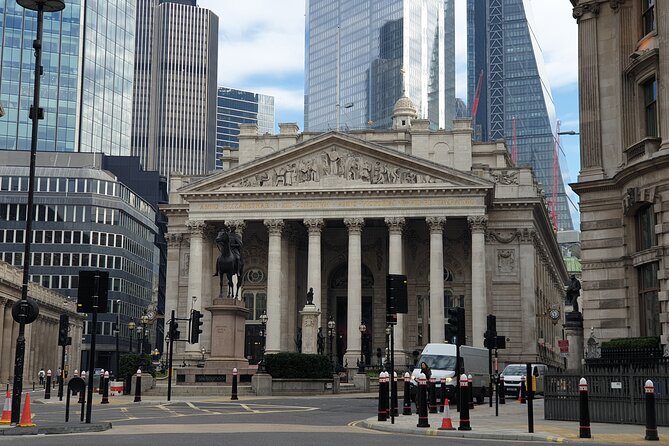
The Bank of England Museum is the next listed landmark. The museum represents the United Kingdom’s central bank, and admission is not included in the walking tour.
This stop broadens the subject beyond fires and war. London’s identity has also been shaped by finance, government, and trade. The Bank of England helps explain why this part of the city became such an important center of national power.
The tour does not include a full museum visit. You receive an introduction from outside or around the site, then continue. If the museum interests you, plan a separate visit when you can give it proper time.
That is a recurring theme here. The route is designed to connect places, not replace every museum or paid attraction along the way. At $27.78, that is fair value, but you should know what you are buying: guided interpretation across the city, not admission to a collection of interiors.
Guildhall and the medieval City
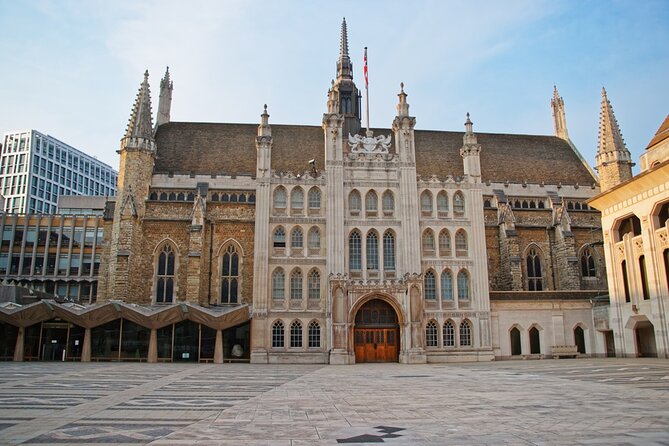
Guildhall adds another layer, taking you into the civic history of London. This fifteenth-century hall is home to the Corporation of London, and admission is not included.
The building matters because it represents the City as a political body, not only as a cluster of old buildings. London has long had its own civic structures, institutions, ceremonies, and sources of authority. Guildhall gives the tour a place to explain that side of the city.
The five-minute stop is brief, yet it fits the walk’s purpose. You are collecting connected pieces: royal authority at the Tower, religious life at St. Dunstan, financial power at the Bank of England, and civic power at Guildhall.
If you want to inspect Guildhall in detail, check its access separately. The tour promises a stop and explanation, not an included interior tour. That limitation is easy to accept if you view this as a guided overview.
St. Paul’s Cathedral and Christopher Wren’s London
The route continues to St. Paul’s Cathedral, Christopher Wren’s seventeenth-century cathedral. Admission is not included.
St. Paul’s is one of London’s great visual landmarks, but this walk uses it as the final major historical point rather than as a full cathedral visit. Wren’s building connects to the period after the Great Fire, when London had to rethink and rebuild much of the City.
That makes St. Paul’s a fitting part of the route. The Cathedral is not an isolated monument. It belongs to a larger story about destruction, design, religion, and civic renewal.
Again, the listed stop is about five minutes. You will not have time to explore the crypt, climb the dome, or study the interior during this tour. Those require a separate ticket and a longer visit. The benefit here is seeing St. Paul’s in sequence with the Great Fire and Guildhall, rather than treating it as a stand-alone photograph.
Finishing on Fleet Street
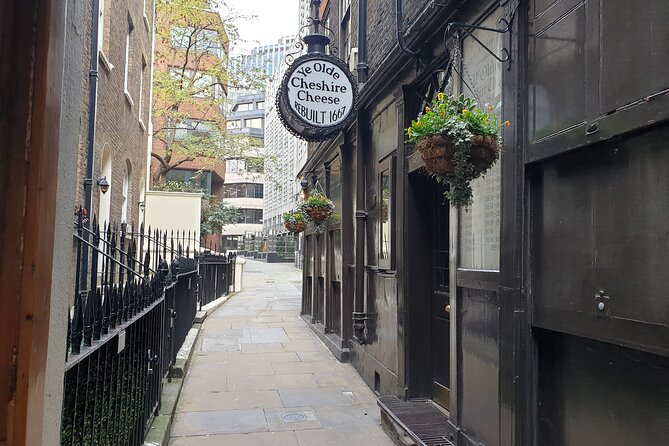
The tour ends outside Ye Olde Cheshire Cheese at 145 Fleet Street, EC4A 2BP, not far from Blackfriars Station. This is a practical finish because you are left in a central part of London with a famous historic pub as a clear landmark.
The ending also gives the walk a satisfying geographic shape. You begin near the Tower and cross west through the City toward Fleet Street. The route is not a simple return to the starting point, so you can continue exploring from the finish.
Blackfriars Station is nearby, which helps if you want to move on by public transport. The tour does not include food or drinks, so any pub stop afterward is your own plan. Still, ending at Ye Olde Cheshire Cheese makes it easy to continue the historical mood over a meal or drink.
How much walking should you expect?
Do not let the five-minute stop times fool you. The total activity lasts about two hours, and the route involves walking between seven locations. One direct warning from the available feedback is that this is an especially long walking tour and may not suit anyone with mobility issues.
The group size helps in one way: a maximum of 15 people should make it easier to hear the guide and keep the group together. It does not remove the physical demands of city walking. You should be comfortable walking for the full tour and standing at several stops.
The tour is near public transportation, and service animals are allowed. Most people can participate, but the supplied information does not promise step-free access, seating, or a slower pace. If those details matter to you, ask before booking.
Wear sensible shoes and allow a little extra time to reach Trinity Square. The tour starts near one of London’s busiest sightseeing areas, and the finish is across the City. You will get more from it if you arrive rested rather than squeezing it between two rushed appointments.
Is $27.78 good value?
At $27.78 per person, the price is reasonable for a two-hour, small-group walking tour led in English. The fee covers the guide and the route, but not entrance to the Tower of London, the Monument, the Bank of England Museum, Guildhall, or St. Paul’s Cathedral.
That can be a strength. You are not paying for attractions you may already have visited or do not plan to enter. You are paying for the connections between them, which is where the tour earns its keep.
The value is highest for someone who wants an informed overview before choosing which sights deserve more time. After the walk, you may know that St. Paul’s or the Tower deserves a separate visit, while a short exterior stop was enough for another place.
The price is less attractive if you want long interior visits, free time for photography, or a slow architectural study. This is a moving historical lesson, not seven mini-tours.
Who will enjoy this walk most?
I would recommend it first to history fans who want more than London’s standard royal and literary highlights. It suits you if you enjoy seeing how different periods overlap in the same streets.
It is also a good choice early in a London stay. The route can help you get your bearings in the City, and Tom has offered practical suggestions for other places to visit and local spots to enjoy afterward.
Families with older children may appreciate the short stories and changing locations, though the two-hour walk still requires patience and stamina. The route should also appeal to repeat visitors who have already seen the major attractions but want more context for the streets between them.
I would hesitate if you have mobility limitations, dislike walking in a group, or want to spend substantial time inside the Tower, St. Paul’s, or the museums. The tour does not include those admissions, and its short stops leave little time for independent exploration.
Booking details and cancellation
Confirmation is provided when you book, and the activity is offered in English with a mobile ticket. The group maximum is 15 people, so booking ahead makes sense, especially since it is commonly reserved more than a month before the date.
Free cancellation is available if you cancel at least 24 hours before the local start time. Cancellations or changes made less than 24 hours before the start are not refunded or accepted.
Should you book Roman Ruins to Blitz Bombings?
Book this tour if you want a compact, story-led walk through London’s changing past and you are happy to see most landmarks from outside. The route is especially useful if you want Roman connections, medieval London, the Great Fire, and the Blitz tied into one clear journey.
Tom’s friendly delivery and ability to answer questions are important strengths when he leads the tour. At $27.78, the experience offers good value for a small group and two hours of historical context.
Skip it if your priority is entering every major sight, taking your time at each stop, or avoiding a long walk. For everyone else, this is a smart way to turn familiar London streets into a readable story, with enough practical guidance to shape the rest of your visit.
FAQ
How long does the walking tour last?
The tour lasts approximately two hours.
Where does the tour begin?
It begins at 38 Trinity Square, London EC3N 4DJ, UK, near the Tower of London.
Where does the tour end?
It ends outside Ye Olde Cheshire Cheese at 145 Fleet Street, London EC4A 2BP, not far from Blackfriars Station.
Is admission to the attractions included?
No. Admission is not included for the Tower of London, the Monument to the Great Fire of London, the Bank of England Museum, Guildhall, or St. Paul’s Cathedral. St. Dunstan in the East and the London Stone are listed as free.
How many people can join the tour?
The tour has a maximum group size of 15 people.
Is the tour suitable for people with mobility issues?
Most people can participate, but the tour involves an extended amount of walking. The available information does not recommend it for anyone with mobility issues.
What is the cancellation policy?
You can cancel for a full refund up to 24 hours before the experience start time. Cancellations or changes made less than 24 hours before the start are not accepted and are not refunded.
Latest arrivals on the London list
- Heathrow Airport to London Arrival Transfer★ 4.5 · 50 reviews
- London Beatles Tour★ 5.0 · 50 reviews
- One Way Taxi Transfer from London to Gatwick Airport★ 5.0 · 51 reviews
- London: Hidden Baker Street Tube Station Tour★ 4.7 · 51 reviews
- City & Secrets: Explore London’s Hidden Gems★ 5.0 · 51 reviews
- London Christmas Lights Open-Top Bus Tour. 2025 Early Bird★ 3.6 · 51 reviews
- 4 hour London Private Tour, with your own Black Cab Tour Guide★ 5.0 · 51 reviews
- The Beatles Magical History Black Taxi Tour London★ 5.0 · 51 reviews
Historical Tours, compared.


Royal Historic Pubs Walking Guided Tour in London
Read our review →
Private Group: Historical Pub Walking Tour of London
Read our review →

Browse the lists this tour appears in