

Reviewed · GREENWICH TOURS
Royal Observatory Greenwich & Prime Meridian Entry Ticket London
Standing with one foot in the eastern hemisphere and one in the western hemisphere is the fun headline here, but the real reward is learning why time and longitude changed the world. Inside the Royal Observatory, you’ll see Harrison’s clocks, the old time signals, and the telescope beneath the famous onion dome.
I like the free multilingual audio guide, which lets you set your own pace, and the chance to pair the observatory with Greenwich Park, the Queen’s House, the National Maritime Museum, and Cutty Sark. The main drawback is the steep hill and stairs, which can make this visit difficult for anyone with limited mobility.
In This Review
- Key points to know before you go
- Why the Prime Meridian is only the beginning
- Reaching the observatory through Greenwich Park
- Inside Flamsteed House and the Octagon Room
- Harrison’s clocks and the problem of longitude
- The Time Ball and the Shepherd Gate Clock
- The Great Equatorial Telescope beneath the onion dome
- How much time should you allow?
- Is the $33.90 ticket good value?
- Accessibility, children, and practical expectations
- Who will enjoy this Greenwich visit most?
- Should you book the Royal Observatory Greenwich ticket?
- FAQ
- What does the Royal Observatory Greenwich ticket include?
- Can I stand on the Prime Meridian?
- Is this a guided tour?
- How long does the visit take?
- How many languages are available for the audio guide?
- Is transportation included?
- Are nearby attractions included?
- Are children under four admitted free?
- Can I cancel the ticket for a refund?
Key points to know before you go
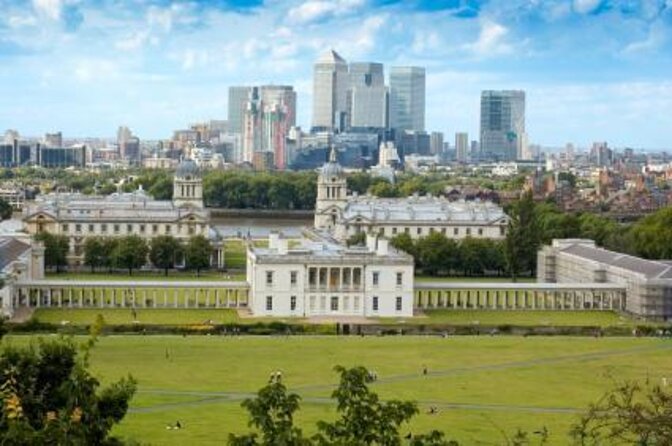
- Stand on the Prime Meridian: Pose with one foot east and one foot west at the official Greenwich reference line.
- See Harrison’s clocks: These ingenious timekeepers helped solve the problem of finding longitude at sea.
- Look for the red Time Ball: It has signaled Greenwich time publicly since 1833 and still operates.
- Expect a self-guided visit: Your ticket includes admission and a downloadable audio guide, not a standard guided tour.
- Plan for the hill: The observatory sits high in Greenwich Park, with a steep approach and some stairs inside.
- Add the nearby attractions: The National Maritime Museum and Queen’s House are free, while Cutty Sark is close by and separately ticketed.
Why the Prime Meridian is only the beginning
The brass line in the Meridian Courtyard is the obvious photo stop. It marks the historic reference point used to divide east from west, giving you a simple, physical way to understand a concept that usually appears only on maps and clocks.
Expect a small crowd around the line, especially soon after opening. If you want a clean photograph, go there first rather than leaving it until the end. The line itself is brief to see, but it gives the visit its memorable moment.
The observatory is more than a photo opportunity. It was the home of the Astronomers Royal and a workplace tied to major advances in astronomy, navigation, and timekeeping. The displays connect the building to figures including John Harrison, Isaac Newton, Edmond Halley, James Bradley, Annie Maunder, George Airy, and Albert Einstein.
You do not need to be an astronomy expert. The strongest parts explain practical problems: how sailors found their position at sea, why accurate clocks mattered, and how a fixed time reference helped organize modern life.
More Greenwich days out:
- London: Westminster to Greenwich River Thames Cruise
★ 4.5 · 22,836 reviews - Westminster to Greenwich Sightseeing Thames Cruise in London
★ 4.5 · 2,969 reviews - Royal Observatory Greenwich & Prime Meridian Entrance Ticket
★ 4.5 · 1,095 reviews
Reaching the observatory through Greenwich Park
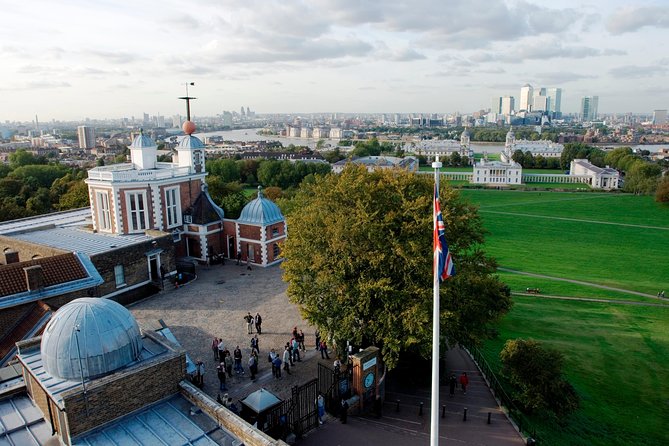
The Royal Observatory sits on a hill inside Greenwich Royal Park. That setting is part of the attraction, but you should not treat the approach as a flat stroll from the river.
The walk uphill can be tiring, especially for anyone with knee, heart, or mobility problems. Several people find the climb longer or steeper than expected, and one route may be affected by park access arrangements. Give yourself extra time rather than arriving at the last minute.
At the top, you get broad views over Greenwich Park, the River Thames, and central London. The outlook is one of the best reasons to come even if clocks and astronomy are not your main interests. On a clear day, it helps you understand Greenwich as a historic river settlement connected to the wider city.
The experience works well as part of a full Greenwich day. You can reach the observatory, walk through the park, visit the historic buildings nearby, and stop for lunch in the town. One useful tip from the visit feedback is that the Thames ferry can be a pleasant way to reach the area, though transportation is not included in this ticket.
Inside Flamsteed House and the Octagon Room
Your visit takes you through Flamsteed House, where the Astronomers Royal worked and lived. The rooms give the observatory a more human scale. You are not only looking at scientific instruments in cases. You are walking through the place where astronomers watched the sky and worked on problems that affected ships, trade, and navigation.
The Octagon Room is a highlight. Designed by Sir Christopher Wren, it is one of the best-preserved Wren interiors in London. The room brings a sense of ceremony to the building, with its elegant proportions and connection to the earliest work of the observatory.
Use the audio guide as you move through these rooms. It is free to download and available in 10 languages, while the general tour information also describes seven language options at the attraction. The guide helps explain why an apparently simple clock or observation room mattered.
This is a self-guided experience, so you choose where to linger. That suits visitors who want to read carefully or focus on particular subjects. It is less suitable if you expect a guide to lead a group from room to room and answer questions throughout.
There may also be staff or volunteer talks. Ross, one guide praised by name, gave an especially interesting presentation and answered questions. Still, you should book this expecting an audio-led visit rather than a guaranteed live tour with a named guide.
Harrison’s clocks and the problem of longitude

For many people, the clocks are the best part of the observatory. John Harrison’s inventions changed navigation by making it possible to keep accurate time at sea.
The basic idea is worth understanding. Sailors could estimate their position north or south by observing the sun and stars, but finding their east-west position required an accurate comparison between local time and a fixed reference time. A clock that kept working aboard a moving ship could help solve that problem.
The displays explain how difficult that task was and how much depended on it. Harrison’s clocks are not merely old machines. They represent a major shift in travel, mapping, shipping, and global trade.
If you think you have little interest in clocks, keep an open mind. This section often becomes the most engaging because it links a technical invention to a clear human problem. You can see why accurate time became far more than a matter of setting a watch.
The observatory also introduces the work of several scientists connected with its story. The audio guide helps tie those names to discoveries rather than presenting a long list of people to memorize.
A few more London days worth a look
- London: The London Eye Entry Ticket
★ 4.6 · 35,875 reviews - London: Tower Bridge Entry Ticket
★ 4.7 · 15,560 reviews - London: Westminster Abbey Entrance Ticket
★ 4.6 · 11,254 reviews - London: St Paul’s Cathedral Entry Ticket
★ 4.7 · 9,813 reviews
The Time Ball and the Shepherd Gate Clock
Look up at Flamsteed House and you’ll see the bright red Time Ball. It was first used in 1833 as a public time signal, allowing people nearby to set their clocks. It still operates today.
The ball is a charming reminder that public timekeeping once depended on a visible signal. Today, your phone updates itself silently. At Greenwich, you can see the older, more dramatic method of announcing the time.
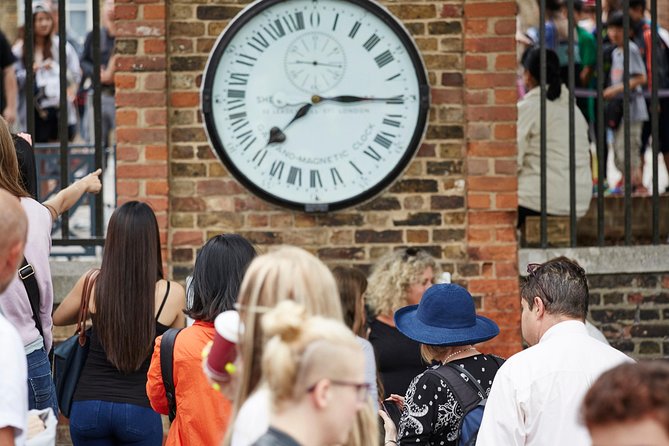
Outside the building, the Shepherd Gate Clock has another important distinction. It was the first clock to show Greenwich Mean Time to the public. Its position on the exterior made the official time visible to people passing by.
These details make the visit more than a quick photograph beside a line in the courtyard. You begin to see Greenwich Mean Time as a public system that had to be demonstrated, maintained, and trusted.
The Great Equatorial Telescope beneath the onion dome
The Great Equatorial Telescope sits under the observatory’s large, familiar onion dome. More than a century ago, it gave astronomers new views of the universe.
The telescope provides the visit’s strongest link to traditional observing. After learning about time on the lower levels, you see the equipment that turned the building toward the stars.
The observatory is not the same thing as a planetarium visit. That is an important distinction. This ticket covers the historic observatory and its displays, not a planetarium show. A planetarium may be available separately, but it is not included in the admission described here.
If you arrive expecting a modern space center or a long sequence of spectacular visual effects, you may find the visit smaller and more focused than expected. It is best understood as a historic working site with exhibits about astronomy and time.
How much time should you allow?
The stated visit lasts about two hours, and that is a sensible minimum for the observatory itself. You can move through more quickly, but rushing means missing the stories behind the clocks, time signals, and telescope.
I would allow at least 1.5 to 2 hours inside, then add time for the views and the hill. If you want to visit the National Maritime Museum, Queen’s House, and Cutty Sark, plan a much longer Greenwich day.
The National Maritime Museum and Queen’s House are within short walking distance and free to enter. Cutty Sark, the surviving tea clipper, is now a museum and visitor attraction with its own admission. The combination works well because each site offers a different angle on Britain’s relationship with the sea, navigation, art, and empire.
You can also walk through Greenwich Park or stop in town for a pub lunch. This is one of the better London attractions for building your own day instead of being locked into a tight group schedule.
Is the $33.90 ticket good value?

At $33.90 per person, the ticket is reasonable if you want the convenience of arranging admission ahead of time and you plan to spend two hours exploring the observatory. The audio guide is included, and the ticket covers all attraction fees.
The value is less clear if you only want to stand on the Prime Meridian line and leave. The line is the quickest part of the visit, while the price makes more sense when you also explore Flamsteed House, the clocks, the Octagon Room, the Time Ball, and the telescope.
Advance booking can help during busy periods. The attraction is popular, and some people find it fills quickly after opening. However, there have been serious problems with some mobile vouchers. At times, staff could not scan the barcode, the app would not display the ticket correctly on an iPhone 12 Pro, or the attraction’s scanner was unavailable. Some people had to buy a second ticket at the box office.
Take a screenshot of your ticket before arriving, keep the booking confirmation available, and check that the barcode is visible. If the ticket system fails, speak with the attraction staff before paying again and keep proof of any extra purchase. The problem does not affect the quality of the observatory itself, but it can spoil an otherwise simple visit.
Accessibility, children, and practical expectations
Children under four enter free, and all children must be accompanied by an adult. The subject works well for families because the Prime Meridian gives young visitors a playful physical activity, while the clocks and telescope provide clear visual points of interest.
The attraction is not fully accessible. The hill is steep, there are stairs, and internal lifts are not available throughout the observatory. A small lift covers one outside section of about five stairs, but that does not make the whole route wheelchair friendly.
If you need assistance, contact the attraction before your visit to discuss the route. Service animals are allowed. Most people can take part, but anyone with limited mobility should treat the climb and stairs as a serious consideration.
Rain also matters. Parts of the visit are outdoors, including the walk through the park and movement between sections. A rainy day can make the climb and the open-air portions less pleasant, while the London view is best appreciated in fair weather.
Who will enjoy this Greenwich visit most?
I would recommend it to you if you like practical history, old instruments, astronomy, or the small thrill of standing on a famous geographical line. Families, couples, solo visitors, and anyone planning a full day in Greenwich can all get good value from it.
It is especially useful for people who want to explore independently. The audio guide lets you pause, move back, or spend extra time with Harrison’s clocks without waiting for a group.
You may want to skip it if you only want a planetarium or a modern space exhibition. You should also think twice if the steep hill and stairs would make the visit uncomfortable. The building is historic, and that means access is limited in places.
The overall rating is 4.1 from 367 ratings, which fits the experience well: the observatory itself is often fascinating, but the approach, access limits, and occasional voucher trouble can affect the day.
Should you book the Royal Observatory Greenwich ticket?
Book it if the Prime Meridian is on your London list and you want the story behind GMT, not just a photograph. The best parts are the combination of the courtyard line, Harrison’s clocks, Wren’s Octagon Room, the red Time Ball, and the high view across London.
I would pair the visit with the free National Maritime Museum and Queen’s House, then add Cutty Sark if your schedule allows. Go earlier if the Prime Meridian photo matters, allow extra time for the uphill walk, and arrive with your mobile voucher ready in more than one format.
For a self-guided visit that connects astronomy with navigation and everyday timekeeping, this is a worthwhile Greenwich stop. Just book with clear expectations: it is a historic observatory and museum, not a planetarium, and reaching it takes some effort.
FAQ
What does the Royal Observatory Greenwich ticket include?
It includes admission to the Royal Observatory, attraction fees and taxes, and a free downloadable audio guide. Transportation is not included.
Can I stand on the Prime Meridian?
Yes. The Meridian Courtyard has the Prime Meridian Line, where you can pose with one foot in the eastern hemisphere and one in the western hemisphere.
Is this a guided tour?
The visit is mainly self-guided with an audio guide. Staff or volunteer talks may also be available, but a live guide is not guaranteed.
How long does the visit take?
The experience lasts approximately two hours. Allow additional time for the hill, the views, and nearby Greenwich attractions.
How many languages are available for the audio guide?
The included downloadable audio guide is available in 10 different languages. The attraction information also lists seven languages available on site.
Is transportation included?
No. You must arrange your own transportation to and from the Royal Observatory.
Are nearby attractions included?
The National Maritime Museum and Queen’s House are free to visit and within a short walk. Cutty Sark is nearby but is a separate museum and visitor experience.
Are children under four admitted free?
Yes. Children under four enter free, and children must be accompanied by an adult.
Can I cancel the ticket for a refund?
You can cancel at least 24 hours before the experience start time for a full refund. Cancellations or changes made less than 24 hours in advance are not accepted for a refund.
Latest arrivals on the London list
- Heathrow Airport to London Arrival Transfer★ 4.5 · 50 reviews
- London Beatles Tour★ 5.0 · 50 reviews
- One Way Taxi Transfer from London to Gatwick Airport★ 5.0 · 51 reviews
- London: Hidden Baker Street Tube Station Tour★ 4.7 · 51 reviews
- City & Secrets: Explore London’s Hidden Gems★ 5.0 · 51 reviews
- London Christmas Lights Open-Top Bus Tour. 2025 Early Bird★ 3.6 · 51 reviews
- 4 hour London Private Tour, with your own Black Cab Tour Guide★ 5.0 · 51 reviews
- The Beatles Magical History Black Taxi Tour London★ 5.0 · 51 reviews
Greenwich Tours, compared.

Westminster to Greenwich River Thames Cruise
Read our review →
Westminster to Greenwich Sightseeing Thames Cruise in London
Read our review →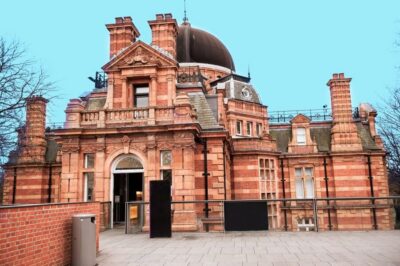
Royal Observatory Greenwich & Prime Meridian Entrance Ticket
Read our review →
Leeds Castle, Canterbury, Dover & Greenwich Boat ride
Read our review →
Leeds Castle, Canterbury, Dover & Greenwich Cruise from London
Read our review →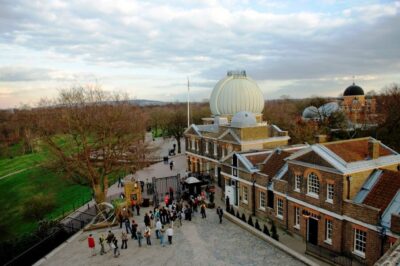

Leeds Castle, Canterbury, Dover, Greenwich & Free Snack Pack
Read our review →
Browse the lists this tour appears in