
Reviewed · WALKING TOURS
Secret Old London Walking Tour
London’s modern City hides a surprisingly grim past. On this 90-minute walk from Barbican, you’ll pass plague grounds, medieval execution sites, an ancient church, a lost Roman amphitheatre, and the roofless shell of a church destroyed in the Blitz. It is history with rough edges, not a greatest-hits tour of royal palaces.
I like the way the tour reaches places many visitors simply walk past, and I like the guides’ lively storytelling. Rosie, Jess, Jeremy, Pepe, and Jesse have all led this walk, and the comments about their humor, passion, and clear delivery are remarkably consistent. The main drawback is that there is a lot to absorb in a short time, and winter stops can feel chilly when the guide pauses over pictures or details.
In This Review
- Key points at a glance
- Why this small corner of London matters
- Starting at Barbican and entering old London
- Charterhouse Square and the memory of plague
- Smithfield, tournaments, and public executions
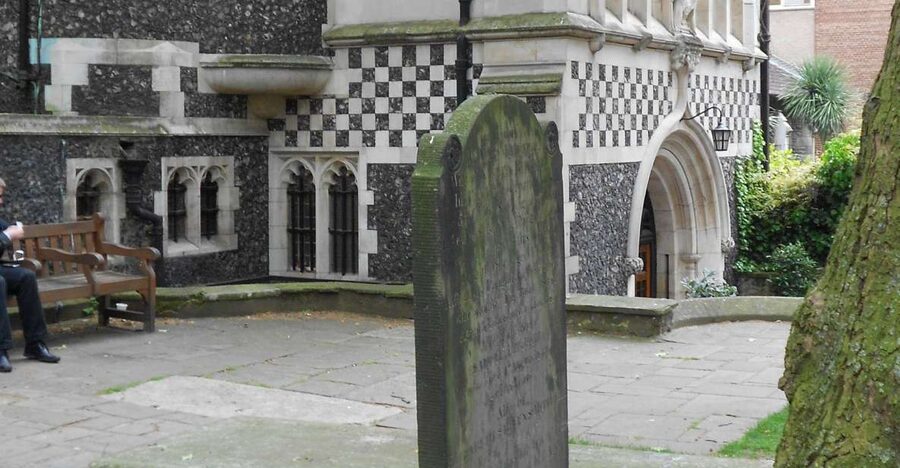
- St Bartholomew the Great, a medieval survivor
- A church shell marked by the Blitz
- The memorial to self-sacrifice
- Finding London’s Roman amphitheatre
- Guides who turn facts into stories
- Price, pace, and who gets good value
- Is the Secret Old London Walking Tour worth booking?
- FAQ
- Where does the Secret Old London Walking Tour begin?
- How long does the tour last?
- What language is the tour conducted in?
- Is the tour wheelchair accessible?
- Is the tour suitable for children?
- Are dogs allowed on the tour?
- What should I bring, and what is not allowed?
Key points at a glance
- Charterhouse Square: A calm green space with a brutal connection to the Black Death.
- Smithfield: A former jousting ground and execution site linked with William Wallace.
- St Bartholomew the Great: A medieval church with a film-famous setting and a powerful sense of age.
- Roman London: Locate the outline of the City’s long-lost amphitheatre.
- Blitz remains: Step into the shell of a church destroyed during the Second World War.
- Practical format: Expect an English-language, wheelchair-accessible walk costing $26 per person, with free cancellation up to 24 hours before departure.
Why this small corner of London matters
You probably know London for Westminster Abbey, the Tower, Buckingham Palace, and the Thames. Those places deserve their fame, but they can also make the city feel polished and carefully arranged.
This walk takes you into a different London. The City is packed with office towers, paved squares, and modern traffic, yet traces of older lives survive in churchyards, narrow lanes, ancient foundations, and oddly shaped open spaces. The pleasure comes from learning how to read those clues.
You are not simply looking at old buildings. You are hearing why a particular patch of ground mattered, who died there, what once occupied it, and how war, disease, religion, and rebuilding changed the area. The tour’s subject matter is often dark, but the guides use humor and vivid stories to keep the experience from becoming gloomy.
The overall rating is 4.8 from 154 bookings, with especially strong praise for the guides’ delivery. That matters here. A walk through the City can otherwise become a string of dates and names. A good guide gives the stones a human voice.
More London walking tours:
- Magical London: Harry Potter Guided Walking Tour
★ 4.7 · 22,044 reviews - London: The Original Jack the Ripper Walking Tour
★ 4.7 · 7,833 reviews - Tour for Muggles The Ultimate Harry Potter Walking Tour in London
★ 5.0 · 4,684 reviews
Starting at Barbican and entering old London
The meeting point is outside Barbican Underground Station. From there, the route heads toward Charterhouse Square, moving through an area where modern London and medieval London sit almost on top of each other.
Barbican is a useful starting place because it immediately sets up the tour’s main contrast. You begin amid one of London’s best-known modern postwar developments, then move toward places that carry memories from hundreds of years earlier. The change is not dramatic in distance, but it is dramatic in mood.
Bring comfortable shoes. The walk lasts only an hour and a half, yet you will be on your feet throughout, with repeated stops for explanations and photographs. The pace has been described as comfortable, though one winter booking found that spending less time looking at images and more time moving would have helped keep warm.
This is a walking tour for people who enjoy listening while standing. If you need frequent indoor breaks, the format may feel demanding in cold or wet weather. The route is wheelchair accessible, which makes the old streets and open spaces easier to approach than you might expect, though anyone with specific mobility needs should still check the current route before booking.
Charterhouse Square and the memory of plague
Charterhouse Square looks peaceful today. Its quiet atmosphere makes the story beneath it all the more unsettling.
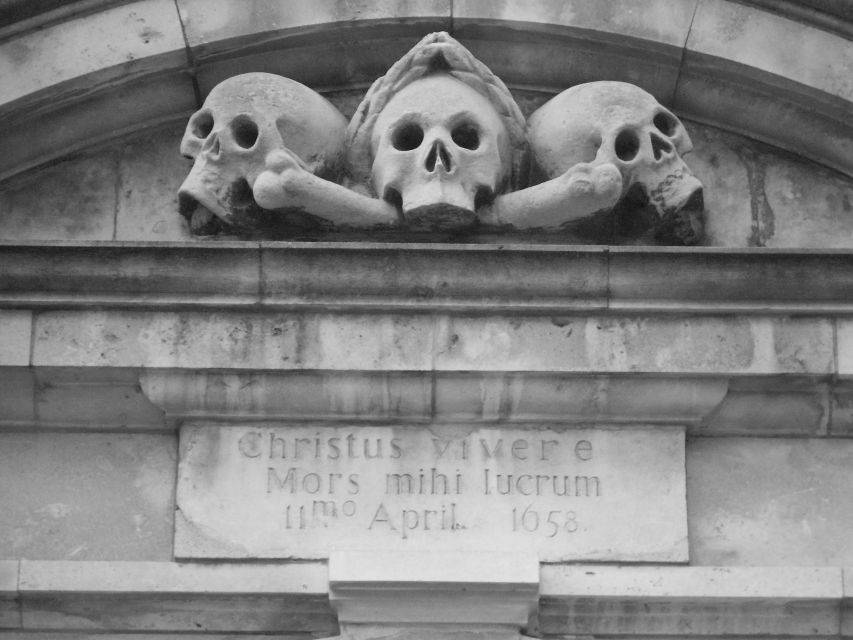
Around six centuries ago, this area was connected with the disposal of victims of the Black Death, the plague that tore through London and much of Europe. The tour uses the square to show how ordinary urban spaces can carry memories of catastrophe even when little of the original scene remains visible.
That contrast is one of the best features of the walk. You are not being led to a dramatic ruin with an obvious sign explaining everything. You are looking at an open space and then learning what happened there. The effect depends on the guide’s storytelling, and this is where guides such as Jess and Rosie have earned strong praise for making past lives feel close and real.
The subject is difficult, but the tour does not treat the victims as a spooky prop. The point is to understand how disease shaped London’s growth, fears, burial practices, and public spaces. You get a sense of how quickly a familiar city could become dangerous.
Charterhouse Square also helps set the tone for the rest of the route. The tour is about locations with layers. A quiet park may have a violent past. A church may have survived centuries of change. A modern street may follow a route first used long before London looked anything like it does now.
Smithfield, tournaments, and public executions
From Charterhouse Square, the walk continues toward Smithfield. This broad area has been associated with markets, medieval gatherings, jousts, punishment, and public spectacle.
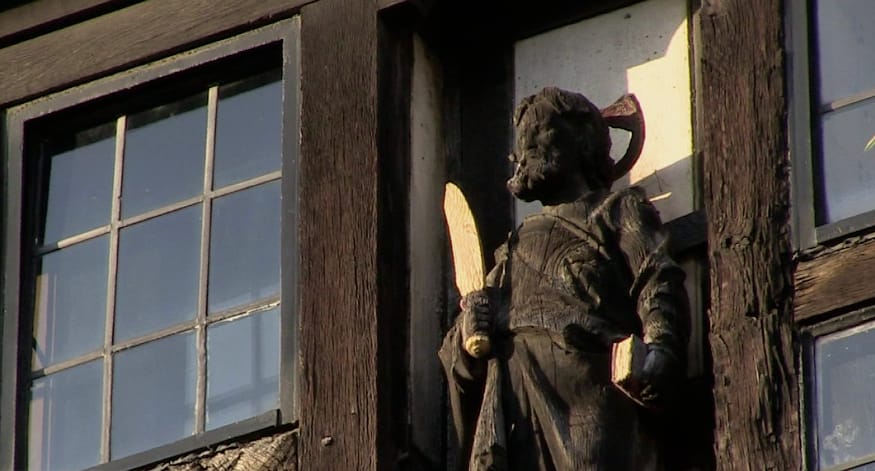
The tour highlights Smithfield as one of London’s principal execution sites. This is where the experience earns its guts and gore description. You will hear about people who were condemned and killed here, including William Wallace, the Scottish figure later made famous by the film Braveheart.
The important thing is not simply the shock of the story. Smithfield shows how public space once worked. A place could host celebrations and tournaments, then become a setting for state punishment. Crowds came to watch, and authorities used such events to send a message.
You may find this section more theatrical than the plague material, since executions naturally invite vivid description. That can be entertaining, but it also means the quality of the presentation matters. The guides who receive the strongest praise, including Jeremy, Pepe, and Jesse, appear to balance drama with background rather than turning the whole stop into a horror show.
The tour information specifically promises William Wallace, but one booking found that this part was not mentioned. If that story is the main reason you are booking, keep your expectations flexible. Smithfield itself remains an important stop, and the wider material covers centuries of local history.
Something completely different for your London days:
- London: The London Eye Entry Ticket
★ 4.6 · 35,875 reviews - From London: Harry Potter Warner Bros Studio Tour
★ 4.7 · 26,588 reviews - London: Westminster to Greenwich River Thames Cruise
★ 4.5 · 22,836 reviews - London: Madame Tussauds London
★ 4.6 · 20,915 reviews
St Bartholomew the Great, a medieval survivor
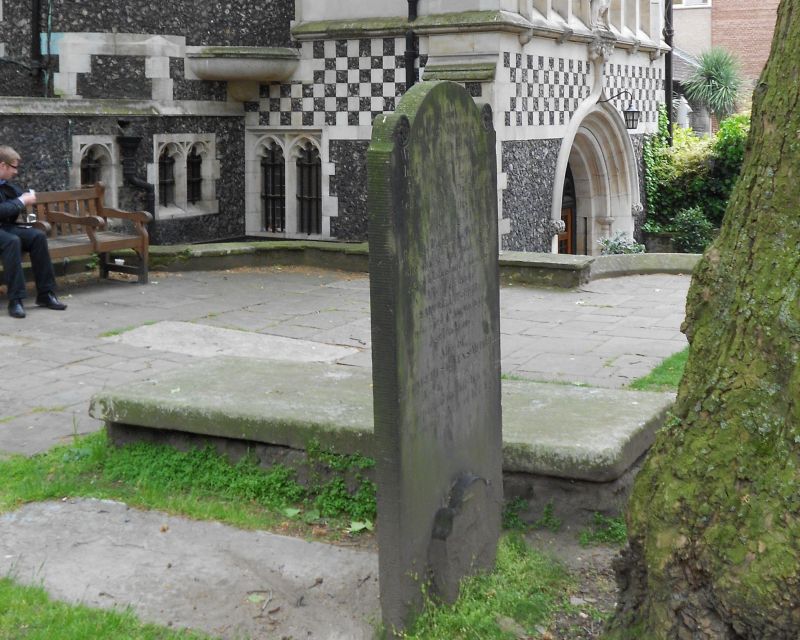
Between the old plague ground and Smithfield is St Bartholomew the Great, one of London’s finest medieval churches.
Even from outside, the church gives the route a welcome change of pace. After stories of mass death and executions, you get a building associated with worship, monastic life, architecture, and endurance. The church has survived while much of the surrounding city changed beyond recognition.
It has also appeared in films including Four Weddings & A Funeral and Sherlock Holmes. That film connection may help you notice the church, but it is not the main reason to visit. The real appeal is the sense that this is a surviving fragment of medieval London still embedded in the modern City.
Guide Rosie has been praised for explaining monasteries, church history, architecture, politics, and even language history. That range is useful at St Bartholomew the Great, where a quick photo stop would miss much of the point. You want someone to explain not only what the building is, but why it survived and how its role changed.
The tour does not promise an extended interior visit or a private church access experience, so you should think of this as a guided look at an exceptional historic church within a wider city walk. If you want a full architectural tour, you may need extra time on another visit.
A church shell marked by the Blitz
The next layer of London’s past comes from the Second World War. You will pass through the shell of a church destroyed during the Blitz, the sustained German bombing campaign against British cities during the war.
A bombed-out church has a different emotional weight from a medieval ruin. The damage is much more recent, and the gap between the original building and the present shell is easier to imagine. You are not dealing with an event from an almost mythical past. The destruction belongs to living memory.
This stop also shows how London chooses what to preserve. A ruined church can be rebuilt, cleared, or left as a memorial. The remains become part of the city’s daily life, surrounded by newer buildings and modern movement.
The tour’s strength is its range. You move from plague to executions, from Roman entertainment to wartime destruction, without leaving this compact part of London. You see that the City’s story is not one straight march from Roman Britain to glass towers. It is a series of breaks, losses, repairs, and decisions about what deserves to remain.
The memorial to self-sacrifice
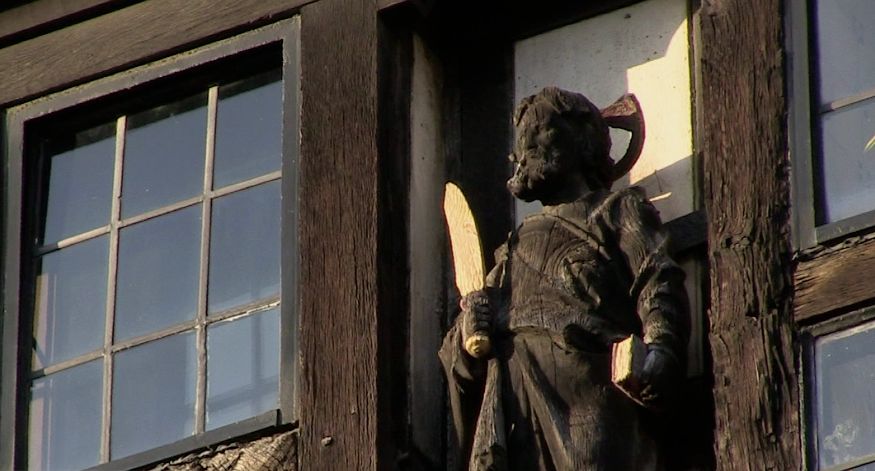
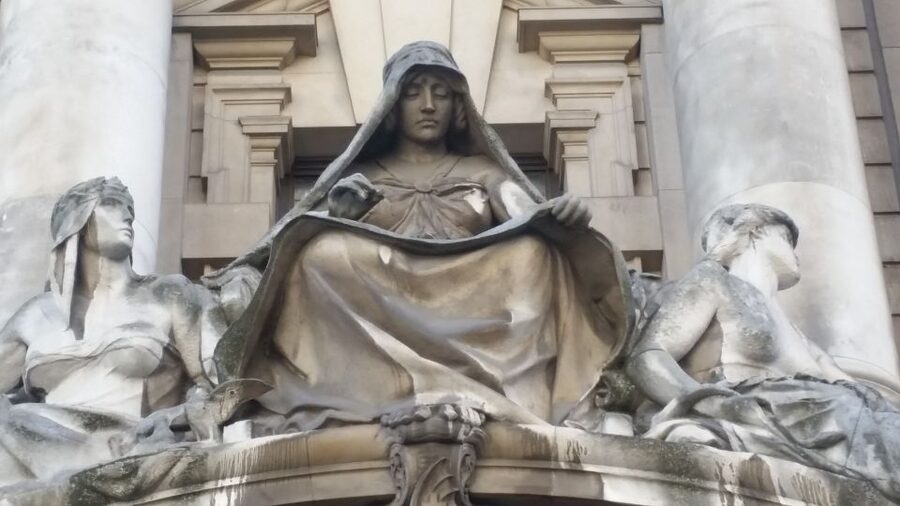
The walk also reaches a park containing what the tour calls one of London’s most touching memorials, dedicated to heroic self-sacrifice.
The exact nature of the memorial is not specified in the tour information, so I would not book this section expecting a particular name or story. What you can expect is a change in mood. The route moves away from public violence and mass catastrophe toward an individual act remembered for courage.
That contrast is valuable. History can become abstract when it is reduced to large events. A memorial gives the guide a chance to focus on one person, one decision, and the cost of helping others.
The green space itself is part of the appeal. Several guides have been praised for taking people through beautiful parks, hidden gardens, and quiet corners that are easy to miss on a normal visit. These pauses break up the denser historical material and give you time to look around rather than simply move from one grim story to the next.
Finding London’s Roman amphitheatre
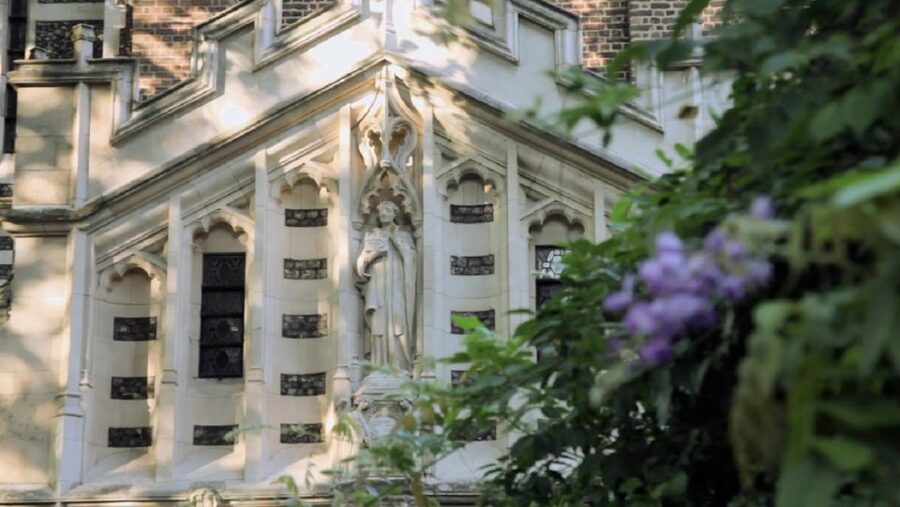
One of the tour’s most intriguing stops is the location of the City’s long-lost Roman amphitheatre.
You are not promised a complete arena rising before you. The appeal is in locating its perimeter and understanding where Roman public life once occupied the ground beneath the modern city. This is a classic London experience: the past survives through outlines, foundations, street patterns, and fragments rather than through a fully preserved monument.
The amphitheatre adds a much older layer to the route. Before medieval churchyards and Tudor punishments, Roman London had its own public spectacles and civic structures. Once you know where the building was, nearby streets and buildings can seem less random.
This is also a good example of why a guide adds value. A map or a quick internet search may tell you that an amphitheatre existed. A guide can point to the ground, orient you in the present-day City, and explain how archaeologists know where the structure stood.
The stop suits anyone who enjoys connecting invisible history with the city underfoot. If you need large ruins and grand visual remains, it may feel modest. If you like clues and reconstruction, it is likely to be one of the walk’s most satisfying moments.
Guides who turn facts into stories
The most praised part of this tour is the guiding. Across different departures, guides named Rosie, Jess, Jeremy, Pepe, and Jesse are described as friendly, funny, passionate, approachable, and full of useful detail.
That consistency matters because this is not a self-explanatory route. Many stops depend on a person telling you what happened there. The guide needs to hold your attention while standing in ordinary-looking streets, explain difficult subjects without losing sensitivity, and connect Roman, medieval, Tudor, and wartime London.
You can expect more than dates. The commentary has included politics, architecture, monasteries, hidden gardens, and the history of language. That wider approach helps explain how London functioned, rather than treating history as a list of battles and monarchs.
The walk has also worked well for London residents. One local booking described the experience as a way to become a tourist in their own city and discover places they had never noticed. That is a useful test. If you already know the major sights, this route offers a better chance of surprise than another standard central London circuit.
There is a lot of information packed into 90 minutes. One person found it difficult to remember everything, even while enjoying the commentary. I suggest treating the tour as an introduction rather than a final lesson. Write down the names of places that catch your interest, then return later with more time.
Price, pace, and who gets good value
At $26 per person, the tour is reasonably priced for a live, guided walk through several historic areas. You are paying for the guide’s research, interpretation, and route planning, not for refreshments or a major attraction admission.
The value is strongest if you want context. You could pass Charterhouse Square, Smithfield, St Bartholomew the Great, and the Roman amphitheatre site on your own, but you would not necessarily understand the connections among them. The guide turns scattered places into one story about how London was built, damaged, and rebuilt.
The 1.5-hour length is another advantage. It fits neatly into a morning or afternoon and leaves room for a museum, meal, or additional sightseeing. The tradeoff is density. You will cover many subjects quickly, and you may want more time at the church, memorial, or Roman site.
The walk is aimed at people over 12. Its themes include executions, plague, and death, so younger children may not be suited to the subject matter even if they enjoy walking. Comfortable shoes are essential, and you should dress for London weather since much of the experience takes place outdoors.
Dogs are not allowed, except guide dogs. Large bags and luggage are also not permitted, and video recording is not allowed. The tour is in English and includes only the guide, so plan to buy or carry refreshments separately if needed.
Booking remains fairly flexible: you can reserve now and pay later, and cancel up to 24 hours before departure for a full refund. Check the available start times when booking.
Is the Secret Old London Walking Tour worth booking?
Book this tour if you enjoy atmospheric places, unsettling stories, and small historical details more than big-ticket sights. It is especially well suited to repeat visitors, London residents, history fans, and anyone who wants to see the City from a different angle.
You should also book it if a lively guide matters to you. The strongest pattern in the feedback is not one particular stop, but the quality of the storytelling. Rosie, Jess, Jeremy, Pepe, and Jesse have all been singled out for making the walk entertaining and clear.
Think twice if you want a slow architectural tour, a food stop, or a long indoor visit. The route is compact but information-heavy, and the weather can affect your comfort. On a cold day, keep moving when you can.
For $26, this is a smart way to spend 90 minutes in London. You will leave with a better sense of what lies beneath the City’s office blocks and modern streets, along with several places you can revisit on your own.
FAQ
Where does the Secret Old London Walking Tour begin?
The meeting point is outside Barbican Underground Station.
How long does the tour last?
The walking tour lasts 1.5 hours.
What language is the tour conducted in?
The tour is conducted in English with a live English-speaking guide.
Is the tour wheelchair accessible?
Yes, the activity is listed as wheelchair accessible.
Is the tour suitable for children?
It is suitable for people over 12. The subject matter includes plague, executions, and death.
Are dogs allowed on the tour?
Dogs are not permitted, except for guide dogs.
What should I bring, and what is not allowed?
Wear comfortable shoes. Luggage and large bags are not allowed, and video recording is prohibited. Refreshments are not included.
Latest arrivals on the London list
- Heathrow Airport to London Arrival Transfer★ 4.5 · 50 reviews
- London Beatles Tour★ 5.0 · 50 reviews
- One Way Taxi Transfer from London to Gatwick Airport★ 5.0 · 51 reviews
- London: Hidden Baker Street Tube Station Tour★ 4.7 · 51 reviews
- City & Secrets: Explore London’s Hidden Gems★ 5.0 · 51 reviews
- 4 hour London Private Tour, with your own Black Cab Tour Guide★ 5.0 · 51 reviews
- The Beatles Magical History Black Taxi Tour London★ 5.0 · 51 reviews
- London Christmas Lights Open-Top Bus Tour. 2025 Early Bird★ 3.6 · 51 reviews
Walking Tours, compared.
Magical London: Harry Potter Guided Walking Tour
Read our review →
Tour for Muggles The Ultimate Harry Potter Walking Tour in London
Read our review →

Harry Potter Movies Walking Tour (Kids Go Free)
Read our review →
Changing of the Guard Guided Walking Tour in London
Read our review →
The Great British Rock and Roll Music Walking Tour
Read our review →
Jack the Ripper Walking Tour – Ripper Vision Tours
Read our review →Browse the lists this tour appears in