Reviewed · WALKING TOURS
Secrets of the London Underground Small Group Walking Tour
London’s Underground is more than a way to get across town. It is a Victorian engineering experiment, a wartime shelter, a political tool, and a maze of old stations hiding beneath familiar streets. This small-group walking tour follows that story from Baker Street to Westminster, using the Tube itself as the thread.
I like the route’s mix of station history and city walking. I also like that guides such as John, Angela, and Peter bring different strengths, from engineering and wartime stories to lively anecdotes and photographs. The main catch is simple: this is not a behind-the-scenes tour of locked platforms, and you must pay for your own Tube travel.
In This Review
- Key points to know
- Why London’s Underground makes a fine walking subject
- Baker Street and the birth of the Underground
- Oxford Circus and the Tube as a growing network
- Green Park and the abandoned Down Street station
- Piccadilly Circus and the early electric Tube
- Embankment and the city built beside the Thames
- Westminster and a fitting finish
- What the guides add to the experience
- Price, transport costs, and what you receive
- Walking, stairs, weather, and group size
- Who should book this Tube tour?
- Should you book the Secrets of the London Underground tour?
- FAQ
- How long does the tour last?
- Where does the tour begin?
- Where does the tour finish?
- What time does the tour start?
- Is Tube travel included in the price?
- What type of travel payment do I need?
- Is the tour suitable for people with reduced mobility?
- What days does the tour operate?
Key points to know
- Start at Baker Street Station: Begin at one of the original Metropolitan Railway stations, linked to the first underground railway in the world.
- Follow the Tube through central London: The route includes Oxford Circus, Green Park, Piccadilly Circus, Embankment, and Westminster.
- Hear the hidden stories: Learn about abandoned stations, wartime uses, Victorian construction, politics, and the many jobs the Underground has performed.
- Plan for stairs and walking: The tour is not suitable for reduced mobility and requires a moderate level of fitness.
- Bring your own travel payment: A contactless card, Oyster Card, or suitable travel card is required. It is not included in the ticket price.
- Expect a history-led outing: The focus is explanation and storytelling, not access to restricted Tube areas.
Why London’s Underground makes a fine walking subject
At first, a Tube tour may sound like a lot of standing on platforms. The better way to think about this outing is as a history walk with short rail journeys between chapters. You move through central London while learning why stations were built where they were, how lines expanded, and why some platforms disappeared from public use.
The Underground opened in the Victorian era, before modern tunnelling equipment and many of the construction methods we take for granted. That makes the system especially useful for understanding nineteenth-century London. The city grew above ground while engineers worked below it, often dealing with crowded streets, riverside marshland, political pressure, and difficult soil.
The tour lasts about two and a half hours and begins at 1 p.m. With a maximum of 25 people, it is not private, but it is more manageable than a large coach excursion. You should still expect to keep an eye on the guide in busy stations. One useful detail from the guide feedback is that John was especially good at keeping a group moving at a lively pace without losing the thread of the story.
This pace matters. The itinerary gives roughly 10 minutes to each named stop, so you are not settling in for long lectures at every station. The remaining time goes into walking, changing locations, and using the Tube. That makes the outing active rather than museum-like.
More London walking tours:
- Magical London: Harry Potter Guided Walking Tour
★ 4.7 · 22,044 reviews - London: The Original Jack the Ripper Walking Tour
★ 4.7 · 7,833 reviews - Tour for Muggles The Ultimate Harry Potter Walking Tour in London
★ 5.0 · 4,684 reviews
Baker Street and the birth of the Underground
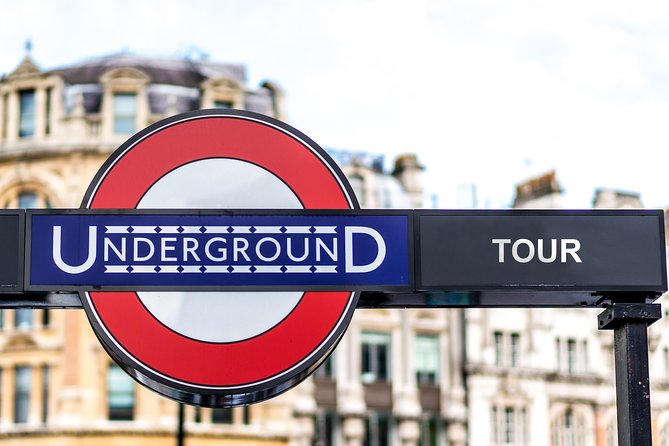
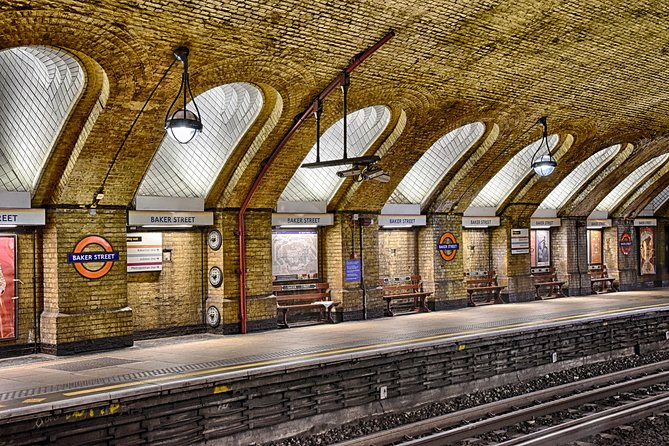
Baker Street is a fitting starting point. It was one of the original stops on the Metropolitan Railway, which opened in 1863 and became the world’s first underground railway. The station gives the tour an immediate sense of scale: London’s subway system began as a bold Victorian answer to traffic and overcrowding, not as the carefully planned network you see today.
You will hear how the railway was built during an age when technology was limited compared with today. This part of the tour is especially useful if you have used the Tube for years but never stopped to ask how its earliest sections were constructed.
The visit here is brief, listed at about 10 minutes, and admission is not a separate included attraction. Do not expect an extensive station inspection or access to staff-only rooms. You are learning from the guide in and around the working station.
Baker Street also sets up one of the tour’s larger themes: the Underground has always been both practical and theatrical. Its stations were built to move people, but they also reflect changing ideas about design, transport, public safety, and the city itself.
Oxford Circus and the Tube as a growing network
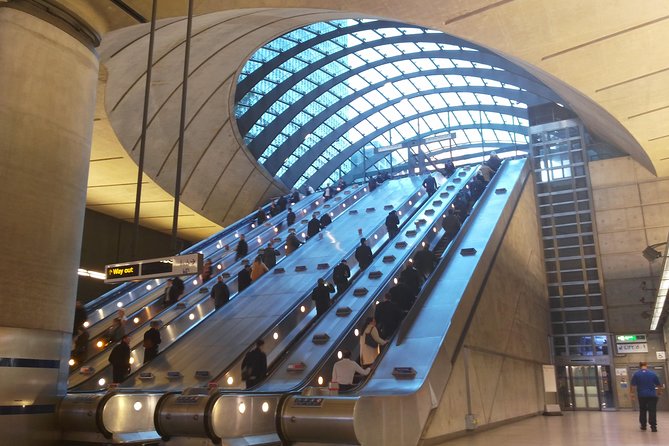
The next stop is Oxford Circus Station, where the story shifts from the first underground railway to later expansion. Construction began in 1962 on the initial Walthamstow to Victoria section of the Victoria line, with cross-platform interchange planned at Oxford Circus. The Victoria line platforms opened on March 7, 1969.
That detail helps you see the Tube as a layered system. The network was not created in one burst. Different companies built different lines at different times, then later changes added new interchanges and routes. Oxford Circus is a useful place to discuss how a railway adapts to a growing city.
You should expect around 10 minutes here, not a long architectural tour. The value comes from connecting the station you use today with the decisions that shaped the modern network. A guide who explains the politics and practical problems behind construction can make a familiar commute feel newly understandable.
The station itself can be crowded, particularly around one of London’s busiest shopping areas. Stay close to the guide and avoid assuming the group will pause in a quiet corner. This is one reason the smaller group size helps, though 25 people still requires attention.
Green Park and the abandoned Down Street station
Green Park introduces one of the most unusual subjects on the route: Down Street, a station that opened in 1907 and closed in 1932. It was located between Dover Street, now called Green Park, and Hyde Park Corner. Its short working life was linked to low passenger use and its closeness to other stations.
This is the kind of Tube story that makes the tour different from a standard London sightseeing walk. The Underground has many traces of plans that did not work, stations that lost their purpose, and platforms that remain part of the network’s memory even after public service ends.
Down Street is not presented as a regular public attraction on this outing. You are not promised entry into the abandoned station. Instead, the guide explains what happened and places it within the wider story of unused and haunted stations.
That distinction is important. If you want a formal behind-the-scenes visit to sealed platforms, this tour may not meet your expectations. If you enjoy stories about what lies just out of sight, Green Park is likely to be one of the most memorable stops.
Something completely different for your London days:
- London: The London Eye Entry Ticket
★ 4.6 · 35,875 reviews - From London: Harry Potter Warner Bros Studio Tour
★ 4.7 · 26,588 reviews - London: Westminster to Greenwich River Thames Cruise
★ 4.5 · 22,836 reviews - London: Madame Tussauds London
★ 4.6 · 20,915 reviews
Piccadilly Circus and the early electric Tube
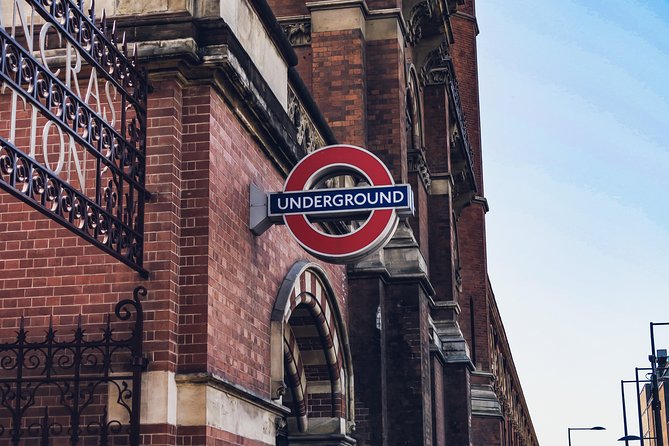
Piccadilly Circus brings together two early Tube lines. The station opened on March 10, 1906, for the Baker Street and Waterloo Railway, now the Bakerloo line. Platforms for the Great Northern, Piccadilly and Brompton Railway, now the Piccadilly line, opened later that same year, on December 15.
The dates show how quickly underground railways were spreading through central London. They also reveal the complicated ownership and naming changes that make Tube history hard to follow without a guide. Lines changed names, companies joined or disappeared, and stations developed in stages.
This stop is less about seeing a single historic room and more about understanding the railway’s evolution. You may find the explanations especially helpful if Tube maps usually look like a tangle of colored spaghetti. A calm, clear delivery makes a real difference here. That quality was repeatedly associated with the strongest guide experiences, along with humor and well-chosen small facts.
Piccadilly Circus is also a place where the tour’s practical side becomes clear. You are walking through active transport spaces, not entering a quiet historical exhibit. Listen carefully, keep moving when asked, and allow room for other passengers.
Embankment and the city built beside the Thames

At Victoria Embankment, the Underground story meets the river. The Embankment runs along the north bank of the Thames from the City of Westminster toward the City of London. The area was developed in the nineteenth century on land reclaimed from the river’s marshy banks.
This stop gives the tour some welcome air and a change of setting. Instead of concentrating only on corridors and platforms, you can connect the railway with London’s wider public works. Streets, riverside improvements, sewers, railways, and new public spaces were all part of the same period of urban change.
The location is useful for understanding why transport projects mattered so much. The Underground was not an isolated invention. It helped connect districts that were changing quickly, while other projects reshaped the riverfront above.
Weather matters here. One person found the walking difficult on a very wet day and wished the tour had made an umbrella recommendation clearer. I would bring a compact umbrella or waterproof layer, especially since the outing operates through much of the year. The tour continues in poor weather unless the provider cancels it, so dress for a real London walk rather than a sheltered museum visit.
Westminster and a fitting finish
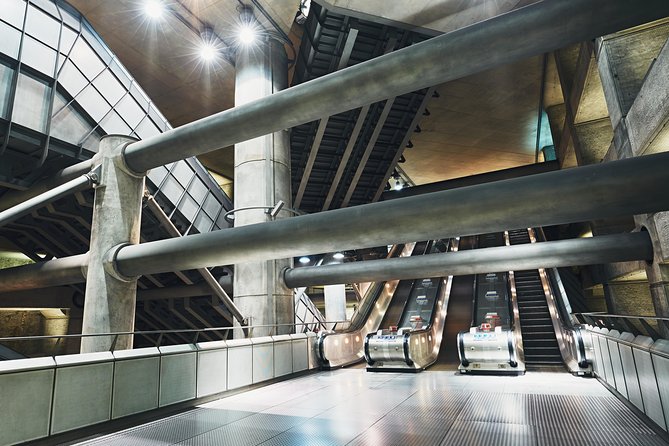
The final stop is Westminster Tube Station, originally opened as Westminster Bridge on December 24, 1868. It was served by the steam-operated District Railway, now the District line, when the first section opened from South Kensington.
That steam-powered beginning is a useful reminder of how different the early Underground was. Westminster also shows how transport access was handled before today’s station entrances and escalator networks. Early access involved a passage from Bridge Street and a pedestrian subway beneath the road.
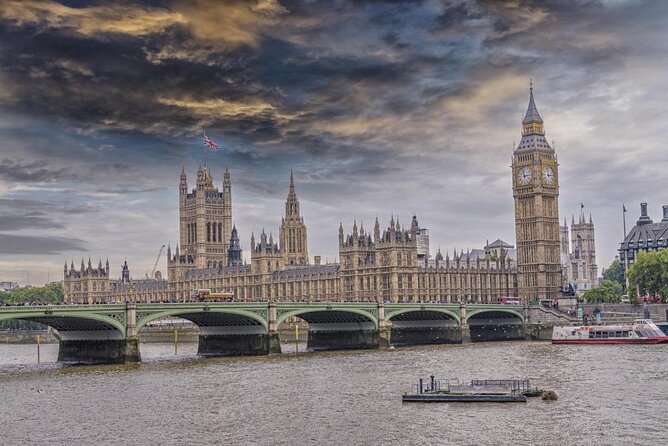
The tour ends at Westminster Station on Bridge Street. From here, you are well placed for central London sightseeing, though the experience itself does not include a separate Westminster attraction ticket. The stop provides a natural final chapter because it links the Tube to the political heart of the city.
You may also hear about the Underground’s role during the Second World War. The system served more than commuters. Its stations became part of London’s experience of shelter, movement, communication, and survival during wartime. Angela was particularly praised for using photographs and for connecting construction, politics, and wartime events in a way that made the subjects easier to picture.
What the guides add to the experience
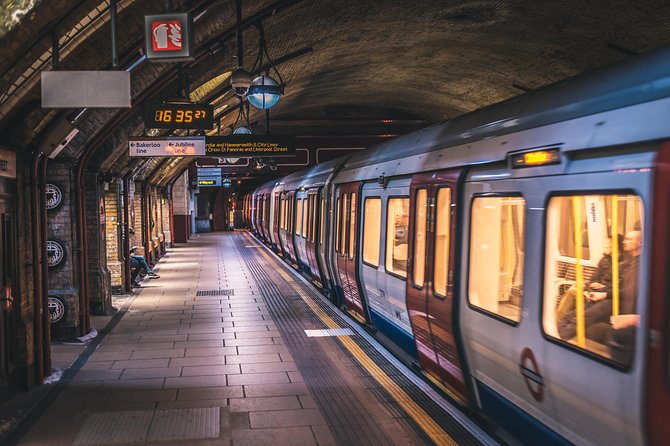
The guide is the make-or-break element here. The route itself is made up of ordinary working stations and streets, so the value comes from the stories, timing, and connections.
John has been associated with an enthusiastic, lively approach to Tube history and engineering. Peter brings historical anecdotes and humor, while Angela has used photographs to give extra visual context to construction and wartime subjects. These names are useful when you are choosing a date, but guide assignments can change, so you should not book solely on the expectation of one person.
The strongest version of this tour gives you a clear explanation, a few surprising facts, and enough context to link separate stations into one story. You are not simply told when a station opened. You learn why it was built, how the railway changed, and what happened when a station lost its purpose.
The guide also needs to manage a moving group. The Tube can be confusing, and the tour includes several train stops. Good group control is more than a minor convenience. It keeps the experience from becoming a stressful exercise in trying to spot one person in a crowd.
Price, transport costs, and what you receive
The advertised price is $41.13 per person. That is fair if you want a focused history walk led by a specialist guide, but it is not an obvious bargain once you add your transport costs.
Travel cards are not included. You need a contactless card, Oyster Card, or travel card valid for the required zone, and the tour information advises purchasing a day travel card for Zones 1 and 2. Budget for this separately and confirm that your chosen payment method covers the journeys made during the tour.
This extra cost has caused some confusion, so I would not treat the ticket price as the complete cost. The tour includes the guide and the historical content, but not the Tube rides that help you move between stops.
At about 2 hours and 30 minutes, the price works best for people who place real value on expert explanation. It is less attractive if you expect admission to closed stations, a museum-style collection of artifacts, or a long visit inside each location. The tour’s value lies in the interpretation, not in exclusive access.
Walking, stairs, weather, and group size
You need moderate physical fitness. This is a walking tour with many steps, and it is not suitable for people with reduced mobility. The itinerary moves through several active stations, so comfortable shoes are essential.
Allow for a brisk pace. The route is not presented as a slow stroll with frequent long rests. John, in particular, was praised for keeping the group moving while maintaining interest. That style will suit you if you like covering ground, but it may feel tiring if you want an easy afternoon.
The maximum group size is 25 people. That is smaller than a large sightseeing coach group, but it is not intimate in the private-tour sense. In busy Tube stations, you may need to listen carefully and keep the guide in sight.
The tour operates on Tuesdays, Thursdays, and Sundays from April through March, except December 24 to 26 and January 1. It starts at 1 p.m. The booking confirmation is provided at the time of purchase, and free cancellation is available up to 24 hours before the start time. If the minimum number is not met and the experience is canceled, you are offered another date or experience, or a full refund.
Who should book this Tube tour?
I would choose this experience if you are interested in transport, Victorian engineering, urban planning, wartime London, or the odd corners of familiar cities. It is also a good pick for repeat visitors who already know the major sights and want a different way to understand central London.
It suits history fans who enjoy details such as opening dates, changing railway companies, abandoned stations, and the practical problems of building below crowded streets. The tour can also work well for first-time visitors, provided you do not expect it to replace a standard London landmarks tour.
I would be cautious if your main goal is entering disused stations. The tour explains abandoned and haunted places, but the supplied details do not promise access behind closed doors. I would also reconsider if you dislike public transport, stairs, or walking in wet weather.
Should you book the Secrets of the London Underground tour?
Book it if you want the Tube explained as a living part of London rather than treated as a simple ride between sights. The guides can turn dates, construction methods, station closures, politics, and wartime use into a clear story, and the route gives you several useful central London reference points.
Skip it if you want a true hidden-station access tour or if the added cost of Tube travel feels poor value. Before booking, bring a working contactless card or Oyster Card, wear shoes for stairs, check the weather, and allow enough time to reach Baker Street for the 1 p.m. start. With those expectations in place, this is a smart, active choice for anyone who has ever used the London Underground and wondered how it came to be.
FAQ
How long does the tour last?
The tour lasts approximately 2 hours and 30 minutes.
Where does the tour begin?
It begins at Baker Street Underground Station on Marylebone Road, London NW1 5LJ.
Where does the tour finish?
The tour ends at Westminster Station on Bridge Street, London SW1A 2JR.
What time does the tour start?
The scheduled start time is 1 p.m.
Is Tube travel included in the price?
No. Travel cards are not provided, and you must pay for the Tube journeys made during the tour.
What type of travel payment do I need?
You need a contactless card, Oyster Card, or travel card valid for the required zone. The tour information advises purchasing a day travel card for Zones 1 and 2.
Is the tour suitable for people with reduced mobility?
No. The tour includes many steps and requires a moderate level of physical fitness, so it is not suitable for people with reduced mobility.
What days does the tour operate?
It operates on Tuesdays, Thursdays, and Sundays from April through March, except December 24 to 26 and January 1.
Latest arrivals on the London list
- Easy Access Tower of London Royal Secrets & Scandals Tour★ 5.0 · 3 reviews
- Stonehenge Special Access Guided Morning Tour from London★ 4.5 · 3 reviews
- Shoreditch & East London Walking Tour with a Local, Custom & Private★ 5.0 · 3 reviews
- Madame Tussauds London Fast Track and Champagne Experience★ 3.5 · 3 reviews
- London Private Brixton Tour with a Local – Culture & Stories★ 4.9 · 3 reviews
- Private Full Day Tour – Fast Track Tower of London and Lunch★ 4.6 · 3 reviews
- Private transfer from London Heathrow Airport to Southampton★ 5.0 · 3 reviews
- London Crimes And Punishment Private Walking Tour★ 5.0 · 3 reviews
Walking Tours, compared.

Magical London: Harry Potter Guided Walking Tour
Read our review →
Tour for Muggles The Ultimate Harry Potter Walking Tour in London
Read our review →
Harry Potter Movies Walking Tour (Kids Go Free)
Read our review →
Changing of the Guard Guided Walking Tour in London
Read our review →
The Great British Rock and Roll Music Walking Tour
Read our review →