
Reviewed · SHAKESPEARE & LITERARY LONDON TOURS
Shakespeare Promenade
The most appealing part of the Shakespeare Promenade is that it takes you beyond the Globe. In about two hours, you follow a broad trail through the City of London, across the Millennium Bridge, past Roman remains, through the Barbican, and into Shoreditch, where England’s first playhouse once opened.
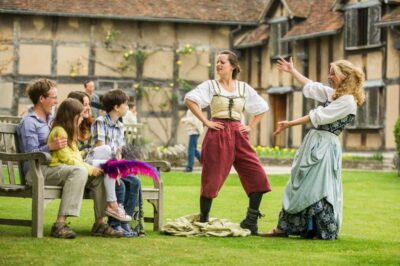
I like the small maximum group of six, which gives you room to ask questions instead of trailing behind a large crowd. I also like the theatrical approach. Actor-guide Dee uses lines from Shakespeare’s plays and short performances to explain the people and places behind the stories.
The main drawback is the pace. You cover a fair stretch of central London, with stairs, road crossings, and a 20-minute interval at the Barbican. This is not a gentle stroll for anyone with mobility problems or difficulty keeping up.
In This Review
- Key points about the Shakespeare Promenade
- From Dowgate Hill to the Thames
- Blackfriars and the lost playhouses
- St. Paul’s Cathedral and the City streets
- Guildhall, Shakespeare’s folio, and civic London
- Roman London and Shakespeare’s Silver Street lodging
- The Barbican Highwalk and its 20-minute pause
- The Barbican Centre and the Royal Shakespeare Company
- From Whitecross Street to Bunhill Fields
- New Inn Yard and England’s first playhouse
- What the actor-guide style adds
- Is $23.08 a fair price?
- Who should book this walk?
- Should you book the Shakespeare Promenade?
- FAQ
- How long does the Shakespeare Promenade last?
- Where does the tour begin?
- Where does the tour end?
- Is the Millennium Bridge included?
- What should I bring?
- Is the walk suitable for people with mobility issues?
- What is the cancellation policy?
Key points about the Shakespeare Promenade
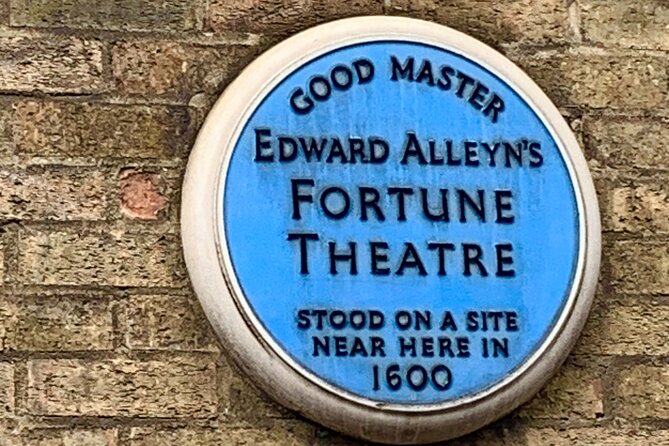
- The route links several playhouse sites, including the Blackfriars Playhouses, the Fortune Playhouse site, and the location of The Theatre, England’s first playhouse.
- The Millennium Bridge provides city views and a strong visual link between Shakespeare’s South Bank and the City.
- Actor-guide Dee uses performance and Shakespearean lines to make historical details easier to remember.
- The six-person limit matters, especially if you want to ask about Shakespeare, theatre, London history, or the buildings along the way.
- The walk ends in Shoreditch, outside the Shakespeare Museum in New Inn Yard, rather than returning to the starting point.
- Plan for stairs, weather, and a brisk walk, and wear shoes suited to pavement and steps.
From Dowgate Hill to the Thames
The tour begins at The Tallow Chandlers Company on Dowgate Hill, in the City of London. This is a useful starting point because you are already near the Thames and close to the older streets that shaped London’s commercial and theatre life.
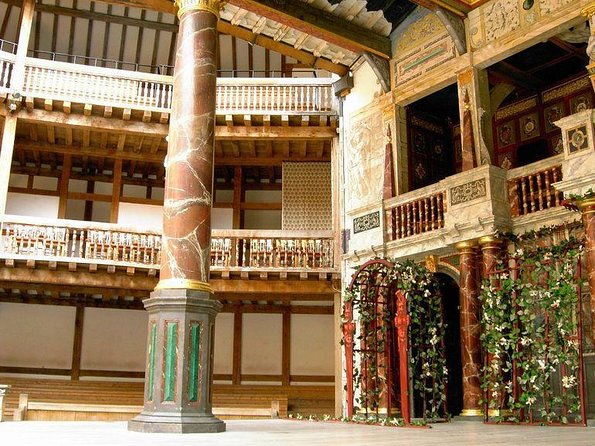
From there, you walk along the Thames path on the north bank. The first major view is across the river toward Shakespeare’s Globe. You do not enter the Globe on this walk, but seeing it from the opposite bank gives you a clear sense of its place beside the river.
The river section lasts about 20 minutes and costs nothing beyond the tour price. It also helps set the scene. Shakespeare’s London was tied closely to the Thames, both for transport and for the movement of people between the City and the South Bank theatres.
The Millennium Bridge is one of the visual highlights. You cross it with open views along the river and toward major London landmarks. The bridge is modern, but it creates a useful connection between the theatre district and the City, two areas that can feel separate when explored on their own.
More literary London walks:
- Shakespeare’s Globe Guided Tour
★ 4.5 · 481 reviews - From London: Shakespeare’s Stratford-upon-Avon Day Trip by Coach
★ 4.5 · 352 reviews - Full Day Cotswolds Tour & Shakespeare’s Stratford From London
★ 5.0 · 204 reviews
Blackfriars and the lost playhouses
The walk continues toward Playhouse Yard, a small site with several layers of London history. It was once associated with the Blackfriars Dominican Monastery and later with the first and second Blackfriars Playhouses.
You spend only about five minutes here, so do not expect a long stop or a preserved theatre interior. The value comes from understanding how a religious site later became tied to indoor theatre. That change helps explain how Shakespearean performance moved beyond the large open-air playhouses.
This is also where the guide’s storytelling matters. A bare address would tell you little. Dee’s theatrical style, with spoken lines and performed details, gives the places more shape. You are not simply checking off a plaque. You are being shown how London’s streets connect to the world of the plays.
St. Paul’s Cathedral and the City streets
Next comes St. Paul’s Cathedral, approached around Cheapside and up Milk Street. The stop itself is brief, about five minutes, and the tour does not include entry into the cathedral.
That limitation is worth noting. If your main aim is to visit St. Paul’s, you will need a separate ticket and more time. Here, the cathedral and nearby streets serve as markers in the wider story of Shakespeare’s London.
The route through Cheapside and Milk Street also gives you a change of setting. You move from the riverside to the dense City, where business, religion, civic power, and theatre history sit close together. The walk is more about orientation and context than grand sightseeing.
Guildhall, Shakespeare’s folio, and civic London
At Guildhall, the tour pauses near the Heminges and Condell Shakespeare statue on Love Lane. You also hear about the folio housed at Guildhall, along with the building’s history and a speech connected with the site.
This is one of the more specific Shakespeare stops. Heminges and Condell were associated with preserving Shakespeare’s plays in the First Folio, so the statue and folio provide a direct link between the playwright’s work and its later survival.
The 10-minute stop is enough for an explanation and questions, though it is not long enough for a full Guildhall visit. I would treat this as a useful outside look, especially if you have an interest in how Shakespeare’s plays reached later generations.
The guide’s spoken delivery should work well here. A speech in a civic setting can feel more memorable than a list of dates, and the tour is designed around that kind of presentation.
Something completely different for your London days:
- London: The London Eye Entry Ticket
★ 4.6 · 35,875 reviews - From London: Harry Potter Warner Bros Studio Tour
★ 4.7 · 26,588 reviews - London: Westminster to Greenwich River Thames Cruise
★ 4.5 · 22,836 reviews - Magical London: Harry Potter Guided Walking Tour
★ 4.7 · 22,044 reviews
Roman London and Shakespeare’s Silver Street lodging
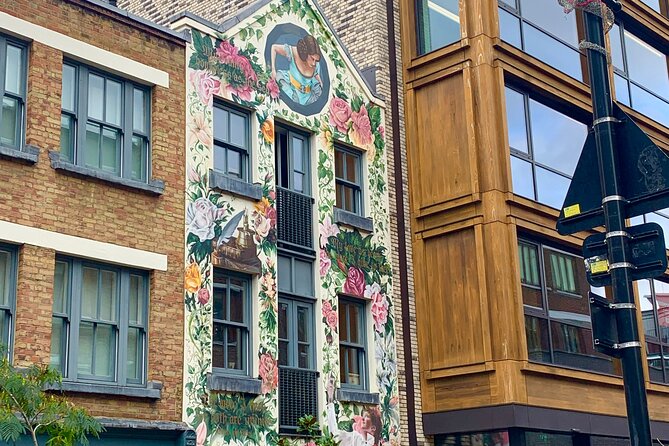
At Noble Street, you see remains of the Roman wall of Londinium. This is a short five-minute stop, followed by the plaque marking Shakespeare’s lodgings on Silver Street.
The pairing is effective. In just a few minutes, you move from Roman London to the city Shakespeare knew. It is a reminder that London’s streets were old long before the Elizabethan theatre took shape.
Do not expect a large archaeological site. The Roman wall ruins are a compact urban remnant, and the Silver Street marker is a plaque rather than a preserved lodging. Still, these small traces are exactly the sort of details you might miss on your own.
This part of the route suits you if you enjoy reading a city through fragments. The tour does not rely only on famous buildings. It points out modest places that help fill in Shakespeare’s daily surroundings.
The Barbican Highwalk and its 20-minute pause
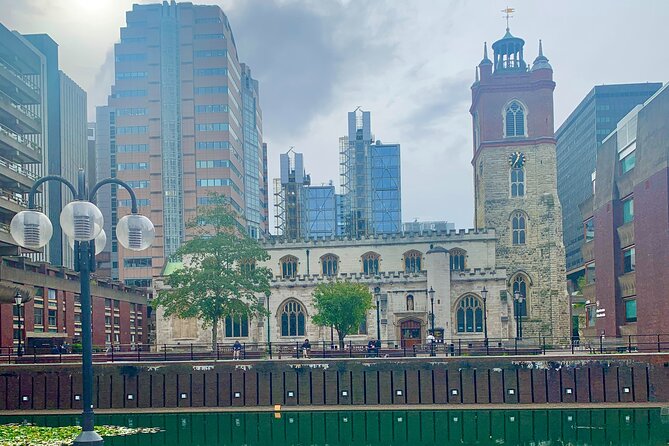
The Barbican Highwalk is one of the route’s more unusual sections. You pass through elevated walkways in the Barbican estate and hear about the estate and the Barbican Centre, with views that differ sharply from the older City streets.
The Highwalk includes steps and can be confusing if you do not know the area. That is part of the appeal here. You get to see a less familiar side of London while the guide explains how the Barbican became an important arts center.
There is a 20-minute interval at the Barbican. Restrooms are available here, which is helpful during a walking tour with no refreshments included. Bring your own bottled water, since the host does not provide food or drinks.
The break also gives you a chance to reset before the second half. Even though the tour lasts about two hours, the distance and steady movement can make it feel fuller than a short sightseeing loop.
The Barbican Centre and the Royal Shakespeare Company
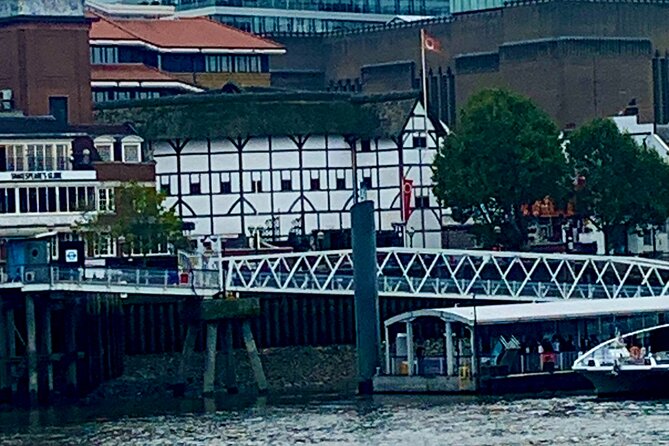
The walk enters the Barbican Centre via its walkways. You hear about the center’s history and its role as the London home of the Royal Shakespeare Company.
This stop lasts about 10 minutes and is the only place on the route specifically listed with admission included. It is not a full theatre performance, and you should not book this expecting a show. Instead, the stop connects Shakespeare’s stage tradition with a major modern arts complex.
That link adds useful balance. The tour is not only about Elizabethan London. It shows how Shakespeare continues to shape London’s theatre identity today.
The Barbican also gives the tour a visual change. After Roman ruins, medieval streets, and old civic buildings, the elevated concrete walkways and arts spaces feel distinctly modern. The contrast makes the route more varied than a standard Shakespeare-only walk.
From Whitecross Street to Bunhill Fields
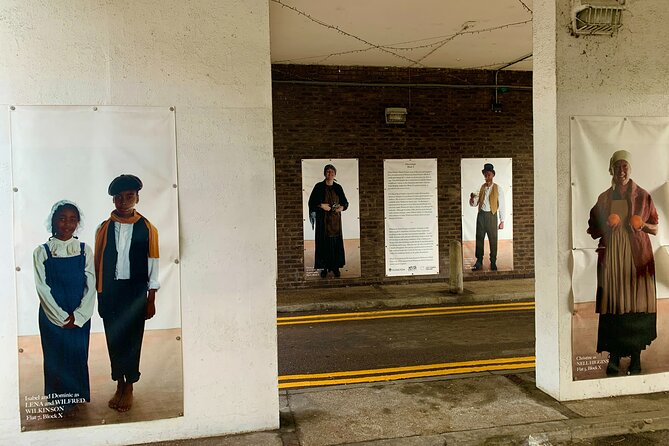
After the Barbican, you walk up Whitecross Street and pass the site of the Fortune Playhouse. The stop at Bunhill Fields lasts about 10 minutes and includes an explanation of the burial ground’s history.
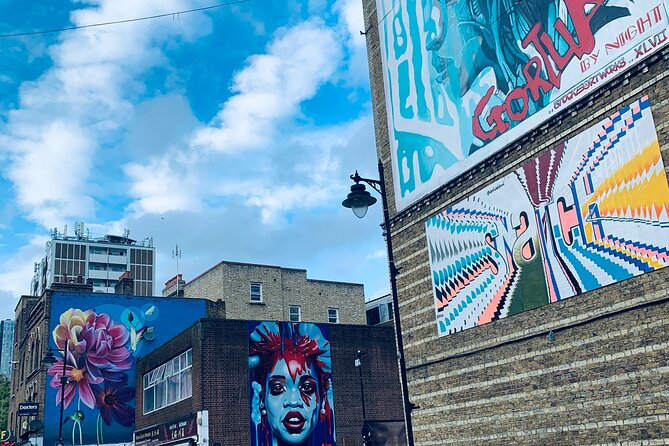
The route then crosses into Shoreditch. This transition is easy to miss on a normal visit, but it helps show how the tour moves from the City toward the former theatre quarter around Curtain Road and New Inn Yard.
The Fortune Playhouse site is another example of a place where the original building is no longer the main attraction. You are using the modern street plan to imagine an earlier London. The guide’s performance style is especially useful in places like this, since there may not be much left to see.
You should also note the physical demands here. The tour includes road crossings, stairs, and ordinary city walking. Wear comfortable shoes and bring rain protection. London weather can change quickly, and parts of the route are exposed.
New Inn Yard and England’s first playhouse
The walk ends at New Inn Yard, the site of The Theatre, often described as England’s first purpose-built playhouse. The Shakespeare Museum is now located here, and the tour finishes outside its entrance.
This is a satisfying ending because the route has gradually moved from Shakespeare’s wider London world to a specific theatre site. You finish with a clearer idea of how playhouses developed and how much of that story now survives through street names, plaques, buildings, and modern cultural spaces.
The stop itself is brief, about five minutes. The tour does not include a museum visit as a separate activity, so check your remaining time and make your own plans if you want to go inside.
The endpoint is practical for continuing your day. New Inn Yard is about 10 minutes from Old Street Tube on the Northern Line and about 15 minutes from Liverpool Street on the Central Line. Since this is a point-to-point walk, you should plan your onward route before setting out.
What the actor-guide style adds
The guide is an actor narrator, and Dee is specifically associated with the tour. Her approach uses Shakespearean lines, performances, and amusing theatrical touches rather than a dry lecture.
That choice changes the feel of the walk. You are likely to remember a short speech or performed moment more easily than a string of dates. It also suits the subject: Shakespeare’s work was written for voices, bodies, and live audiences, not just for silent reading.
The theatrical style will not appeal to everyone. If you prefer a quiet architectural walk with long time at each monument, this may feel too animated and too fast. If you want a guide who can make small sites feel connected to Shakespeare’s world, the format is a good fit.
The group limit of six strengthens the format. You can ask about a line, a playhouse, or a confusing stretch of London without waiting for a large crowd to catch up.
Is $23.08 a fair price?
At $23.08 per person, the tour is reasonably priced for a two-hour guided walk in central London, particularly with an actor guide and a maximum of six people.
You are paying for interpretation rather than entry tickets. Most stops are outside sites, and the only listed included admission is at the Barbican Centre. That means the value depends on how much you want explanation, performance, and route planning.
I think the price works best if you are interested in Shakespeare, theatre, or London’s older street plan. A self-guided walk could take you past some of these locations, but you would need to research the playhouses, find the plaques, and connect the sites yourself.
There are no refreshments included, and you will need to pay separately if you choose to visit the Shakespeare Museum or other attractions after the walk. Bring water and a small snack if needed.
Who should book this walk?
I would choose this tour if you want a compact introduction to Shakespeare’s London and prefer a guide who performs as well as explains. It is also a smart option if you have already seen the Globe and want to explore less obvious places connected with theatre history.
The walk suits adults and older teenagers, but it is not suitable for children under 16. It also requires moderate physical fitness. You need to manage stairs, road crossings, city pavements, and a steady walking pace.
It is less suitable if you have mobility issues or difficulty walking for two hours. There is a break at the Barbican, but the break does not remove the steps or distance along the rest of the route.
You can cancel for a full refund if you do so at least 24 hours before the local start time. Last-minute changes or cancellations are not accepted under the stated policy.
Should you book the Shakespeare Promenade?
Book it if you want theatre history told with performance, not just a list of locations. The small group, actor-guide format, and unusual route from the Thames through the Barbican to Shoreditch make this a more personal choice than a standard central London walk.
Skip it if you want to enter several major attractions, avoid stairs, or spend a long time at each stop. For the right walker, though, $23.08 buys a lively route through pieces of London that are easy to miss, with a strong finish at the site of The Theatre and the Shakespeare Museum.
FAQ
How long does the Shakespeare Promenade last?
The tour lasts approximately two hours, including walking time and a 20-minute interval at the Barbican.
Where does the tour begin?
The meeting point is The Tallow Chandlers Company, 4 Dowgate Hill, London EC4R 2SH, United Kingdom.
Where does the tour end?
The tour ends at New Inn Yard, outside the new Shakespeare Museum. The endpoint is about 10 minutes from Old Street Tube and 15 minutes from Liverpool Street.
Is the Millennium Bridge included?
Yes. Crossing the Millennium Bridge is one of the tour highlights, and you get views of London along the Thames.
What should I bring?
Bring suitable walking shoes, your own bottled water, and an umbrella or rain mac if the weather may be wet.
Is the walk suitable for people with mobility issues?
The walk is not recommended for people with mobility issues or for anyone who has difficulty walking or keeping up with a group. Steps, stairs, and road crossings are included.
What is the cancellation policy?
You can cancel at least 24 hours before the experience start time for a full refund. Cancellations or changes made less than 24 hours before the start time are not accepted.
Latest arrivals on the London list
- Easy Access Tower of London Royal Secrets & Scandals Tour★ 5.0 · 3 reviews
- Stonehenge Special Access Guided Morning Tour from London★ 4.5 · 3 reviews
- Shoreditch & East London Walking Tour with a Local, Custom & Private★ 5.0 · 3 reviews
- Madame Tussauds London Fast Track and Champagne Experience★ 3.5 · 3 reviews
- London Private Brixton Tour with a Local – Culture & Stories★ 4.9 · 3 reviews
- Private Full Day Tour – Fast Track Tower of London and Lunch★ 4.6 · 3 reviews
- Private transfer from London Heathrow Airport to Southampton★ 5.0 · 3 reviews
- The women of London★ 4.5 · 3 reviews
Shakespeare & Literary London Tours, compared.

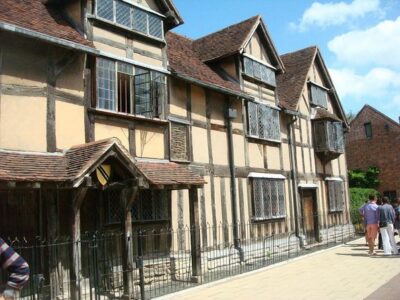
Shakespeare’s Stratford-upon-Avon Day Trip by Coach
Read our review →
Full Day Cotswolds Tour & Shakespeare’s Stratford From London
Read our review →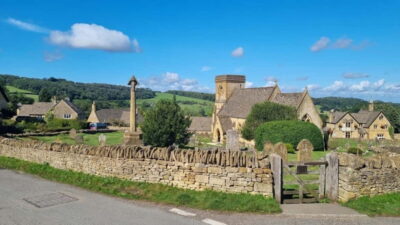
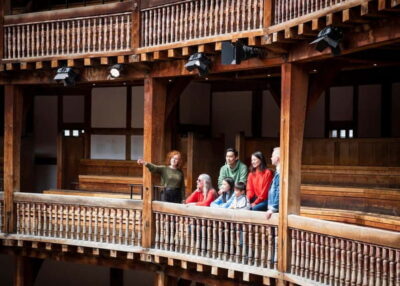
Shakespeare in the City Walk – In Shakespeare’s footsteps North of the Thames
Read our review →
London Christmas Carol & Charles Dickens Small Group Walking Tour
Read our review →Browse the lists this tour appears in