
Reviewed · STREET ART
The Original London Street Art Tour
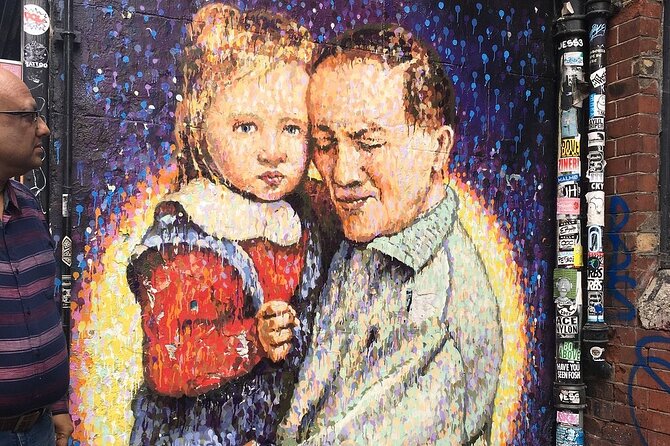
East London’s street art is not confined to one famous wall. It appears above shopfronts, down side streets, on shutters, and in spots you could pass without noticing. This walking tour helps you read the area as an open-air art gallery, with local artist guides explaining the styles, techniques, politics, and personalities behind the work.
I like the artist-led perspective, especially when guides such as Eva, Josh, Gabby, Laura, and Natalie explain the difference between tagging, graffiti, paste-up art, and commissioned pieces. I also like the route’s frequent stops, which give you time to take photographs without dealing with traffic or parking. The main drawback is that the group can reach 18 people, and one person found that size a little too large.
In This Review
- Key points to know before you book
- Why this East London walk is more than a mural hunt
- Starting at Old Spitalfields Market and Brushfield Street
- Brick Lane, where the tour finds its strongest material
- Shoreditch High Street and the final stretch
- The value of having an artist as your guide
- What the tour does best, and where it falls short
- Price, timing, and practical value
- Who will enjoy this street art tour most
- Should you book The Original London Street Art Tour?
- FAQ
- Where does The Original London Street Art Tour start?
- Where does the tour finish?
- How long does the tour last?
- What areas does the tour visit?
- Is the tour offered in English?
- How many people can join the tour?
- Does the tour operate in bad weather?
- What is the cancellation policy?
Key points to know before you book
- See art you might walk past: Guides point out discreet, camouflaged, and hard-to-spot works around Brick Lane and Shoreditch.
- Learn from working artists: Guides including Eva, Gabby, Josh, Laura, and Natalie bring personal insight into technique, style, and the local art culture.
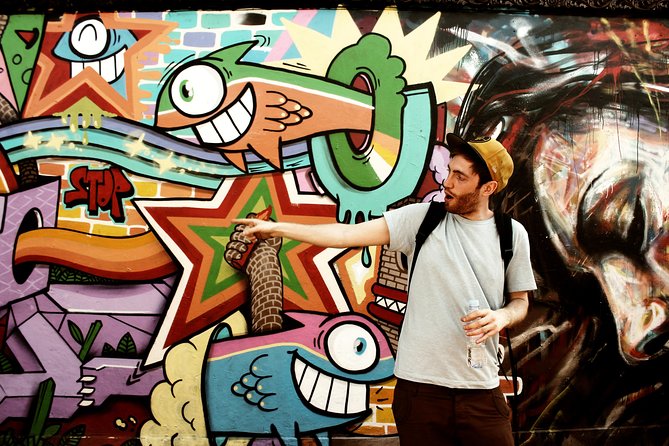
- Expect more graffiti than polished murals: The tour gives real attention to tags, paste-ups, political messages, and less formal work.
- Walk through East London’s changing streets: Brushfield Street, Brick Lane, and Shoreditch High Street provide the setting.
- Plan for a small but active group: The maximum is 18 people, and you need a moderate level of fitness.
- Allow about two hours: The route ends at 19 Hessel Street, not where it begins.
Why this East London walk is more than a mural hunt
I find street art easiest to appreciate when someone explains its rules. Without context, a wall covered in paint can look like random decoration, while a guide can show you how lettering, placement, repetition, layering, and timing all matter.
That is the useful purpose of this tour. It is not simply a stroll past large, colorful murals. You learn how street art differs from graffiti, how artists work with paste-ups and stencils, and why a small piece in an alley can matter as much as a large commissioned wall.
The guides are artists themselves or have strong experience with the subject. Eva is described as an artist who offers an insider’s view. Natalie brings insight into techniques and mediums. Josh has led groups through the area while explaining the social role of street art. Gabby is praised for connecting the art with the past and present of Brick Lane and Shoreditch.
That variety matters because street art changes quickly. A guide who follows the local scene can help you focus on ideas and methods, not just on one particular mural that may later disappear.
A few more London days worth a look
- London: Street Art and Graffiti Guided Walking Tour
★ 4.9 · 1,354 reviews - London Bike Tour: Landmarks, Secret Gems, Pub Stop & Street Art
★ 5.0 · 943 reviews - Shoreditch Street Art Tour London
★ 5.0 · 481 reviews
Starting at Old Spitalfields Market and Brushfield Street
The walk begins near Old Spitalfields Market at Brushfield Street, with the first section lasting about 20 minutes. This is a practical starting point because the market gives you a recognizable area in which to meet, while the surrounding streets offer an early introduction to the art.
You begin by looking at examples along Brushfield Street. The guide starts building the basic vocabulary of the tour here, so you can pay closer attention later. You may learn to distinguish a quick tag from a more planned piece, or notice how an artwork uses a wall, sign, doorway, or shutter as part of its design.
This first section is not the longest part of the walk, but it sets the tone. You are not being rushed from attraction to attraction. The guide stops often, talks through what you are seeing, and gives you time to take photographs.
Old Spitalfields Market also makes the meeting area fairly easy to identify, though you should still use the exact map link supplied with your booking. One unhappy booking experience involved a missed meeting point and confusion about where to catch up with the group. The practical lesson is simple: arrive early, check the address before setting out, and do not assume you can easily join the group later. The route can change to include new art.
Brick Lane, where the tour finds its strongest material
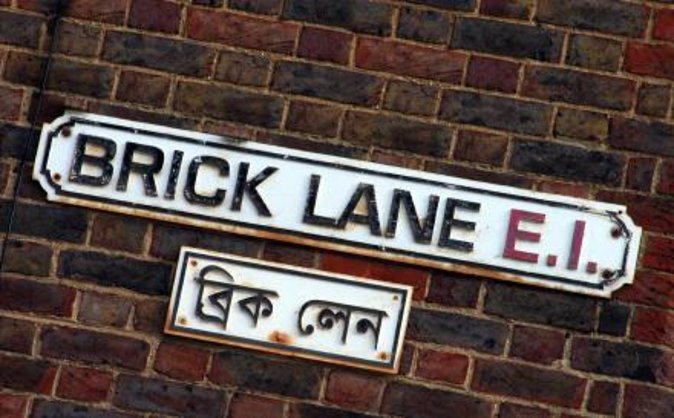
The walk then moves along Brick Lane and its side streets for about 30 minutes. This is the heart of the experience, and it is where you are likely to get the fullest explanation of East London’s street art culture.
Brick Lane is known for its layers. New work appears over old work, while small pieces sit beside large murals and formal commissions. A guide can show you how artists use these layers, and how the street itself becomes part of the work.
I particularly like the emphasis on pieces you might not find alone. Some art is discreet. Some is camouflaged. Some appears in places that do not look important until the guide points it out. This is why a walking tour can offer more than a quick self-guided visit to the best-known walls.
The guide also connects the artwork to the area around Brick Lane. You hear about the complicated past of the East End, its residents, its changing identity, and the way street art fits into that story. The art is not treated as decoration floating apart from the neighborhood.
Expect discussion of political and anti-establishment ideas, too. The tour can challenge your assumptions about what counts as art. You may not like every piece, and that is part of the value. The subject gives you something to discuss rather than handing you a row of universally pretty images.
Families can find this section especially useful. One family with a 10-year-old appreciated that the tour sparked discussion, even when everyone did not agree about the art. Teenagers also have a reason to stay involved because the walk covers current techniques, artists, and social messages rather than only historical facts.
Shoreditch High Street and the final stretch
The next named stop is Shoreditch High Street Station, specifically Stop F, with about 20 minutes of explanation. Here, the guide points out more examples and adds stories about the history and culture of the medium.
This part helps broaden the picture. Brick Lane may be the area most people associate with street art, but the walk does not treat it as an isolated strip. Shoreditch adds another layer, showing how the art spreads through nearby streets and how different types of work share the same public spaces.
Guides often use anecdotes to explain why a piece was made, how it was placed, or how one artist’s style differs from another’s. That kind of detail is useful because street art is often anonymous or temporary. You may never get a full label beside the work, so the guide’s explanation becomes your way into it.
The route finishes at 19 Hessel Street. The listed stops account for much of the tour, but the full experience lasts about two hours, including the walking between areas and the many short pauses. Wear shoes suited to city streets and expect to be on your feet for the duration.
Something completely different for your London days:
- London: The London Eye Entry Ticket
★ 4.6 · 35,875 reviews - From London: Harry Potter Warner Bros Studio Tour
★ 4.7 · 26,588 reviews - London: Westminster to Greenwich River Thames Cruise
★ 4.5 · 22,836 reviews - Magical London: Harry Potter Guided Walking Tour
★ 4.7 · 22,044 reviews
The value of having an artist as your guide
The most praised feature of this experience is the quality of its guides. Eva, Gabby, Josh, Laura, and Natalie are all singled out for warmth, humor, passion, or insight. Those qualities matter more here than a memorized script.
Street art has its own language and history. A guide with an art background can explain why two pieces that look similar may have very different aims. You can learn about style, meaning, materials, political context, and the difference between planned work and fast, unofficial marking.
Several guides are also described as approachable and funny. That helps because the subject can become technical or political. You can ask questions without feeling that you need an art degree first.
I would not expect every guide to present the route in exactly the same way. That can be a plus. One may focus more on technique, another on local history, and another on the politics of public space. The common thread is a personal connection to the subject.
The tour also gives you a better way to continue exploring on your own. Once you understand terms such as slap and paste art, you can spot examples elsewhere in London. You begin looking up at shutters, scanning side streets, and noticing how work has been placed rather than merely seeing a colorful wall.
What the tour does best, and where it falls short
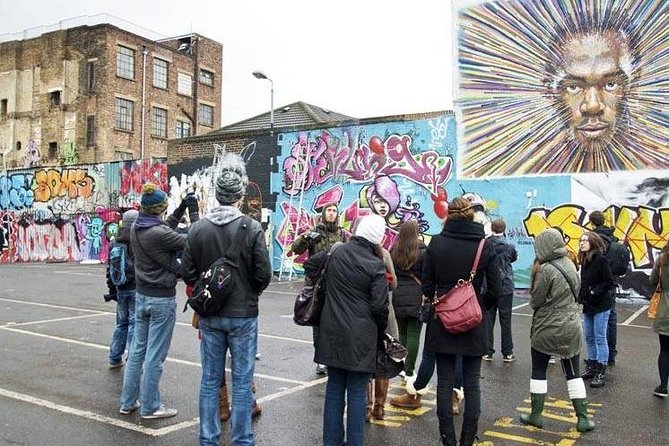
The strongest part is the combination of art and place. You are not looking at isolated objects in a gallery. You are walking through the East End and seeing how art responds to buildings, businesses, residents, political ideas, and neighborhood change.
The second strength is access. A self-guided walk can show you famous works, but it may miss the small pieces hidden in plain sight. It is also easy to walk down Brick Lane without understanding what separates a tag, a stencil, a paste-up, and a commissioned mural.
The main limitation is group size. With a maximum of 18 people, the tour is not private or intimate. A group that size can make it harder to hear in a noisy street, especially when everyone gathers around a small piece. One person found the group larger than ideal, though another account described the group size as good.
The route can also feel more focused on graffiti than on polished public art. If you want a tour of large, colorful murals only, this may not be your best match. If you are willing to consider rougher, smaller, or more confrontational work, the format makes much more sense.
Street art is temporary. Walls change, pieces disappear, and routes may shift. That is not a flaw in the experience, but it does mean you should value the guide’s explanations rather than expect a fixed checklist of artworks.
Price, timing, and practical value
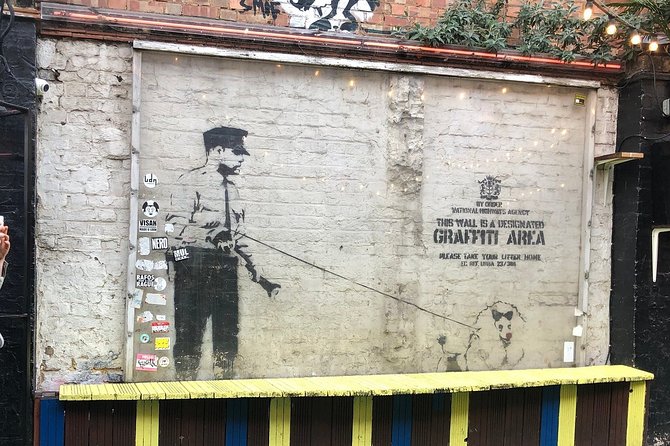
At $27.73 per person, this is reasonably priced for a two-hour guided walk in central London. You are paying for a professional guide, local art knowledge, and the chance to see work that is difficult to locate on your own.
The value is strongest if you are new to street art or want more than photographs. A self-guided walk costs less, but you would need to research the area, identify the art, and work out the meaning and background yourself. The tour saves that preparation time.
It is also a good choice for a repeat visit to London. You can use it to spend time in a part of the city that feels different from the standard royal and museum circuit. The route gives you a way to connect the neighborhood’s past with its present creative life.
The experience is offered in English and uses a mobile ticket. It operates in all weather, so bring clothing suited to the forecast. Since the walk requires a moderate fitness level, it is not ideal if standing and walking for roughly two hours would be difficult.
Children must be accompanied by an adult. The tour has worked well for families with children and teenagers, especially those who enjoy asking questions or forming their own opinions about art.
Bookings are often made around 25 days ahead, so popular dates may fill before your trip. Free cancellation is available if you cancel at least 24 hours before the start time. Cancellations or changes made later are not refunded or accepted.
Who will enjoy this street art tour most
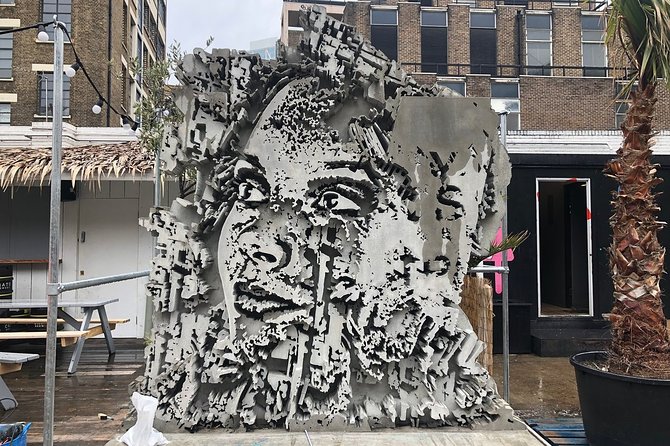
I would choose this experience if you like contemporary art, urban culture, photography, or neighborhoods that reward close attention. It is also a good fit if you are visiting London for the first time and want to spend part of a day away from the standard sights.
Families can enjoy it, but the adults should be ready for art that may be political, rough, or hard to interpret. The tour does not present every work as attractive. Instead, it asks you to think about why it is there and what it is trying to do.
First-time street art visitors are likely to gain the most. The guide explains the basics without requiring previous knowledge, and you leave with a clearer idea of the different forms within the larger street art and graffiti world.
Experienced fans may still find value in the lesser-known works and the guide’s personal perspective. I would simply keep expectations flexible. The route may feature more informal graffiti than famous commissioned murals, and not every artist or piece will be familiar.
Should you book The Original London Street Art Tour?
Book it if you want to understand East London street art rather than simply photograph it. The guide-led route, artist perspectives, hidden works, and local context make the $27.73 fee worthwhile for most people interested in the subject.
Skip it if you dislike walking in all weather, prefer a private group, or want only large murals with polished finishes. Also arrive early and confirm the meeting point carefully. With that small bit of planning, you get an engaging two-hour look at Brick Lane, Shoreditch, and the many forms of art that make these streets worth watching.
FAQ
Where does The Original London Street Art Tour start?
The tour starts at Old Spitalfields Market, near Brushfield Street, London E1 6AA, UK.
Where does the tour finish?
The tour ends at 19 Hessel Street, London E1 2LR, UK.
How long does the tour last?
The experience lasts about two hours.
What areas does the tour visit?
The route includes Brushfield Street near Old Spitalfields Market, Brick Lane and nearby streets, and the area around Shoreditch High Street Station.
Is the tour offered in English?
Yes. The tour is offered in English.
How many people can join the tour?
The maximum group size is 18 travelers.
Does the tour operate in bad weather?
Yes. It operates in all weather conditions, so you should dress appropriately.
What is the cancellation policy?
You can cancel at least 24 hours before the start time for a full refund. Cancellations or changes made less than 24 hours before the experience are not accepted, and the amount paid is not refunded.
Latest arrivals on the London list
- Heathrow Airport to London Arrival Transfer★ 4.5 · 50 reviews
- London Beatles Tour★ 5.0 · 50 reviews
- One Way Taxi Transfer from London to Gatwick Airport★ 5.0 · 51 reviews
- London: Hidden Baker Street Tube Station Tour★ 4.7 · 51 reviews
- City & Secrets: Explore London’s Hidden Gems★ 5.0 · 51 reviews
- London Christmas Lights Open-Top Bus Tour. 2025 Early Bird★ 3.6 · 51 reviews
- 4 hour London Private Tour, with your own Black Cab Tour Guide★ 5.0 · 51 reviews
- The Beatles Magical History Black Taxi Tour London★ 5.0 · 51 reviews
Street Art, compared.

London Bike Tour: Landmarks, Secret Gems, Pub Stop & Street Art
Read our review →

Landmarks & Secrets Bike Tour with Pub & Street Art
Read our review →
East End Street Art Tour and Spray Painting Workshop
Read our review →
Shoreditch Street Art and Graffiti Tour (Private Group Booking)
Read our review →
Street Art Tour and Spray Painting Workshop in London
Read our review →Browse the lists this tour appears in