

Reviewed · EAST END & SHOREDITCH TOURS
Walking Tour around Spitalfields in the East End of London
Spitalfields is where London’s grand churches, immigrant stories, old markets, breweries, and changing streets meet. This two-hour walk takes you well beyond the usual central London circuit, with time to notice small details and hear the human stories behind the buildings. The final treat is unusual: tea and cakes in an 18th-century drawing room overlooking Christ Church Spitalfields.
I like the tiny group, limited to five people, because it gives the guide room to answer questions and adjust the pace. I also like the thoughtful storytelling, especially the links between buildings and the people who used them, from Jewish immigrants from Eastern Europe to the women who worked at a brewery. The main drawback is physical: you need to walk and stand for about two hours, and the tour depends on good weather.
In This Review
- Key points before you book
- Why Spitalfields makes a better walking subject than central London
- Christ Church Spitalfields and the grand opening
- The Jewish institution and East End immigration
- An ancient market and the business of daily life
- The medieval survival and St Mary Spital
- The brewery story told through two women
- Commercial Street and the argument over its future
- One building, three faiths
- Georgian houses and the people behind the façades
- Nicholas Culpeper’s herb garden
- Tea in an eighteenth-century drawing room
- Group size, timing, and practical comfort
- Who will get the most from this Spitalfields walk
- Should you book it?
- FAQ
- Where does the Spitalfields walking tour start?
- What time does the tour begin?
- How long does the experience last?
- How many people can join the tour?
- Is tea and food included?
- Can I cancel for a refund?
Key points before you book
- Small group of five: You get a more personal walk, with less crowding around the guide.
- A people-focused East End story: The route connects churches, markets, migration, work, and changing communities.
- Ten varied stops: Expect old landmarks, fine Georgian houses, a former religious building, a brewery story, and a herb garden.
- A gentle finish indoors: The tour ends with tea and cakes baked from a 1720 recipe.
- Good value for history fans: At $90.28 per person, the price is high for two hours, but includes a small group and refreshments.
- Plan for steady walking: The activity is not suited to anyone who cannot walk or stand for two hours.
Why Spitalfields makes a better walking subject than central London
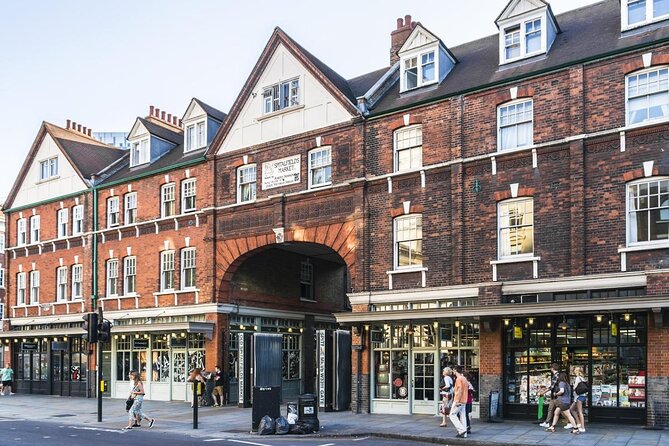
Central London gives you famous sights at every turn. Spitalfields gives you something different: a close look at how a neighborhood changes as people, faiths, trades, and fashions move through it.
The area can feel like several Londons layered together. You find imposing religious buildings beside modest homes, old commercial streets beside newer development, and traces of communities that arrived from elsewhere. A good guide helps you read those layers instead of simply pointing at attractive façades.
That is the strength of this walk. It is not built around a single blockbuster sight. It uses a sequence of places to explain how Spitalfields worked. You hear about worship, charity, trade, housing, brewing, immigration, and public space. The result is a more useful picture of London than a quick parade of famous names.
The tour begins at Christ Church Spitalfields on Commercial Street at 2 p.m. You return to the same meeting point at the end, which makes the route easy to fit into a day of sightseeing. The afternoon start also leaves your morning free for another part of London.
More East End and Shoreditch walks:
- Jack The Ripper Tour in London’s East End
★ 4.5 · 718 reviews - Shoreditch Street Art Tour London
★ 5.0 · 481 reviews - Gangster Tour of London’s East End Led by Actor Vas Blackwood
★ 5.0 · 389 reviews
Christ Church Spitalfields and the grand opening
Your first stop is Nicholas Hawksmoor’s English Baroque masterpiece, Christ Church Spitalfields. The building gives the tour a powerful opening because it is much grander than you might expect from the surrounding streets.
Here, the guide can set up the central contrast of Spitalfields: impressive institutions were built for a district whose residents often lived and worked under far less comfortable conditions. The church is not treated as an isolated architectural object. It becomes part of the story of authority, money, worship, and urban change.
I would pay attention to the explanation of why the building was placed here and what it meant to the area. You are not simply asked to admire its form. You are encouraged to consider the people who encountered it in daily life.
The stop is also useful for orientation. Once you understand where Christ Church sits in relation to Commercial Street and the surrounding streets, the rest of the walk becomes easier to follow. Wear shoes that are comfortable on pavement, since the route keeps moving between buildings and streets.
The Jewish institution and East End immigration
One of the most moving parts of the route focuses on an institution linked to Jewish immigrants from Eastern Europe, including the area now known as Ukraine. The emphasis is on the people whose lives were tied to the institution and its work serving newcomers.
This gives you a more personal view of migration. Instead of treating immigration as a broad political subject, the tour connects it to a particular place and the practical needs of people building new lives. Institutions like this mattered because they could offer support, community, and a sense of belonging in an unfamiliar city.
The subject also shows why Spitalfields is so useful for understanding London. Its identity was never fixed. Different groups shaped the neighborhood at different times, leaving behind buildings and memories that still overlap.
The guide’s personal research into individuals who lived in the area is especially valuable here. Details about specific lives can make a large subject easier to grasp. If you enjoy social history more than royal stories, this part may be one of the tour’s strongest moments.
An ancient market and the business of daily life

The route then turns to an ancient market. Markets are often the best places to understand how an urban district functioned, since they bring together food, work, money, and public life.
Rather than treating the market as scenery, the tour explains its story and place in Spitalfields. You learn how a market can shape the streets around it and help attract workers, sellers, residents, and customers. That context matters if you later return to explore the area on your own.
The market stop also brings a welcome change of pace. The tour is not only about grand buildings or religious institutions. It includes the ordinary commerce that kept the district going.
You may also sample local treats along the way. The information provided does not promise a set tasting menu, so do not book this expecting a food tour. Think of the food as a small local touch added to a walk whose main purpose is history, architecture, and storytelling.
More London walking tours:
- Magical London: Harry Potter Guided Walking Tour
★ 4.7 · 22,044 reviews - London: The Original Jack the Ripper Walking Tour
★ 4.7 · 7,833 reviews - Tour for Muggles The Ultimate Harry Potter Walking Tour in London
★ 5.0 · 4,684 reviews - London Jack The Ripper Guided Walking Tour
★ 5.0 · 3,131 reviews
The medieval survival and St Mary Spital
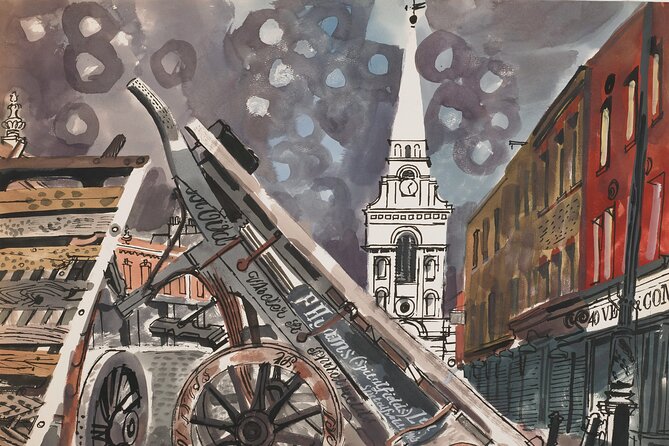
Another stop reveals the purpose of an astonishing medieval survival. The wording points to a building or remnant that has lasted while much of the surrounding city changed. This is the sort of detail that is easy to miss if you walk through Spitalfields without a guide.
The value here is the explanation. Old structures can seem mysterious when you do not know what they were for. Once the original purpose is clear, the place becomes easier to imagine as part of a working medieval district rather than a disconnected relic.
The tour also visits the site of the Priory of St Mary Spital. The priory gives the area its name and adds a much older layer to the story. You are reminded that Spitalfields did not begin with its Georgian houses, markets, or immigrant communities. Its roots reach back much further.
These stops should appeal to anyone who likes London’s less obvious remains. They are not presented as a grand ruin complex, so keep your expectations realistic. The interest lies in the guide’s interpretation and in seeing how a small surviving trace can point to a much larger institution.
The brewery story told through two women

The brewery stop shifts the focus from religion and charity to work. Rather than giving you only the name or age of a brewery, the guide tells its story through the lives of two women who worked there.
That choice gives the subject a human scale. Breweries are often described through owners, buildings, and production figures. Focusing on workers helps you think about the people behind the trade and the roles women played in the neighborhood’s working life.
This is also where the tour’s storytelling style matters most. A list of dates would tell you when the brewery operated. Stories about individuals can show you what employment meant and how a business fitted into the local community.
If you are interested in the history of labor, this may be one of the most distinctive stops. It is a reminder that the East End should not be viewed only through architecture. Its story also belongs to workers, families, and businesses.
Commercial Street and the argument over its future
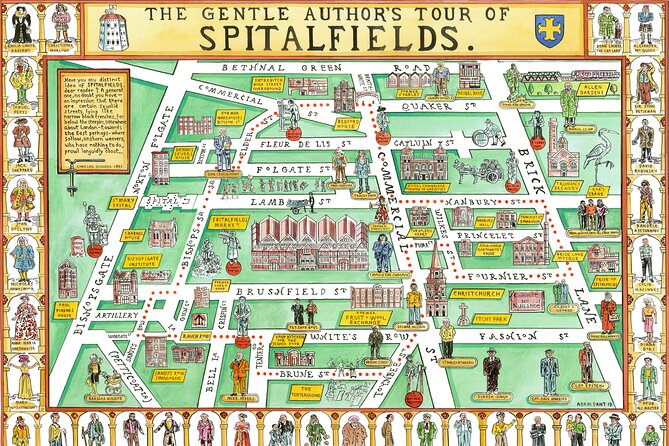
The walk continues along the famous thoroughfare and explains its story, including the continuing controversy over its future. This adds a modern edge to the tour.
Many historic streets are presented as finished products, as if their meaning ended when their oldest buildings were completed. Commercial Street is treated as a living place. The discussion of its future shows that preservation, development, traffic, business, and local identity can pull in different directions.
For you, this makes the walk more than a look backward. You begin to see why old districts can be difficult to manage. Keeping historic character does not automatically answer questions about housing, commerce, transport, or new construction.
The route’s small size is helpful here. With no more than five people, the guide can explain the issue without turning the stop into a lecture for a large crowd. You can ask for clarification if the planning debate raises questions.
One building, three faiths
One of the most memorable stops is a building that began as a Huguenot chapel, later became a synagogue, and then became a mosque. Few places explain Spitalfields’ changing population so directly.
The building’s sequence of uses shows how religious spaces can be adapted by new communities. It also gives you a simple, powerful way to understand the area’s past: people arrived, settled, worshipped, and left their mark on structures that had already served others.
This is the kind of stop I value on a city walk because it joins architecture to real social change. You are not just looking at an old façade. You are seeing how a building can carry several identities over time.
The stop also prevents a narrow reading of East End history. Spitalfields is not only a story of one community replacing another. It is a record of overlapping communities and practical reuse.
Georgian houses and the people behind the façades
The route includes fine eighteenth-century houses and tells the story behind them. Their appearance may suggest wealth and order, but the guide adds the human context that façades cannot provide.
Look closely at these houses rather than rushing past them. The interest is not only in decorative details. It is in asking who built them, who lived there, and how their presence fits the broader story of Spitalfields.
This section may appeal to architecture fans, but it should not feel like a technical survey. The tour’s best material connects buildings to people, and the Georgian houses offer another chance to do that.
If you have already spent several days touring London’s grand residences, this stop provides a smaller and more local counterpoint. You see domestic architecture in the setting of a changing neighborhood, not as a display detached from ordinary city life.
Nicholas Culpeper’s herb garden
The visit to the herb garden associated with seventeenth-century herbalist Nicholas Culpeper adds a compact botanical and medical note to the walk. It breaks up the architectural material and reminds you that plants once played a central role in everyday health care.
A herb garden may be modest in size, but it can open a window onto older ideas about medicine and self-treatment. The stop also suits visitors who enjoy practical details about how people lived, not just stories about institutions and buildings.
Do not expect a long garden visit. It is one stop within a two-hour walking route. Its value is the connection to Culpeper and the chance to see another kind of historical evidence in the middle of an urban neighborhood.
Tea in an eighteenth-century drawing room
The final stop is a townhouse where you sit in an eighteenth-century drawing room overlooking Christ Church Spitalfields. Tea and cakes baked from a recipe dating to 1720 are included in the tour price.
This ending gives the walk a calm finish. After two hours on foot, sitting down is practical as well as pleasant. It also brings the experience back to domestic life, after the route has covered churches, markets, migration, industry, and public streets.
The old recipe is a fine touch because it links the refreshment to the period discussed during the tour. You are not simply handed a snack at the end. The setting and food reinforce the sense of stepping briefly into another era.
The tea is also a real part of the value calculation. At $90.28 per person, two hours of sightseeing is not cheap. The small group, specialized route, guide’s research, and included tea and cakes help explain the price. If you want a low-cost orientation walk, this is not the best choice. If you want a focused, personal experience with a distinctive finish, the cost is easier to justify.
Group size, timing, and practical comfort
A maximum of five people is one of the clearest advantages. You are less likely to lose the guide’s voice, and you can ask questions without holding up a large crowd. A small group can also make the townhouse ending feel more natural than it would with dozens of people.
The walk lasts about two hours and starts at 2 p.m. It ends back at Christ Church Spitalfields, so you do not need to arrange a separate pickup or work out where the route finishes. The meeting point is near public transportation.
The tour is offered in English and includes a mobile ticket. Confirmation is provided when you book. Service animals are allowed, and most people can take part, but you should be comfortable walking and standing for the full duration.
Good weather is required. If poor weather cancels the tour, you are offered another date or a full refund. The experience also requires a minimum number of participants, so a cancellation is possible if that number is not reached.
You can cancel for a full refund up to 24 hours before the start time. Changes or cancellations made less than 24 hours ahead are not accepted for a refund, so keep the local cutoff time in mind.
Who will get the most from this Spitalfields walk
I would choose this tour if you have already seen the main central London sights and want a more local, people-centered afternoon. It is also a strong match for anyone interested in architecture, migration, religious buildings, working life, and the small clues that reveal how a neighborhood changed.
The tour suits solo visitors and couples especially well because the five-person limit allows for conversation. It can also work for a small family group, provided everyone can manage two hours of walking and standing.
You may want to skip it if you are looking for a fast-paced attraction tour, a major interior sightseeing program, or a full meal. The route is thoughtful rather than flashy. Its rewards come from listening closely and noticing connections between stops.
The five-star rating from 131 reviews and a 100 percent recommendation rate point to a very consistent experience. The praise centers on the guide’s storytelling, the intellectual explanation of why facts matter, personal research into former residents, and the unusual tea-and-cake ending. Those are the features I would use to judge the tour, rather than expecting a long list of major ticketed attractions.
Should you book it?
Book this walk if you want a small, carefully told story of Spitalfields rather than a standard London highlights tour. The route has enough variety to keep two hours moving, and the final tea in an eighteenth-century room gives it a memorable shape.
At $90.28, the price is best justified by the five-person group, the guide’s research, and the included refreshments. I would not recommend it to anyone who dislikes walking, needs a weather-proof plan, or wants a bargain introduction to London.
For curious visitors who value detail, local stories, and a slower look at how communities shape a city, this is a strong booking. The tea is a pleasant bonus, but the real reason to go is the way the guide turns ordinary streets and old buildings into a connected human story.
FAQ
Where does the Spitalfields walking tour start?
The tour starts at Christ Church Spitalfields, Commercial Street, London E1 6LY, UK.
What time does the tour begin?
The tour starts at 2 p.m.
How long does the experience last?
The walking tour lasts approximately two hours.
How many people can join the tour?
The tour has a maximum of five participants.
Is tea and food included?
Yes. At the end of the tour, you enjoy tea and cakes baked from a recipe dating to 1720. The tea is served in an eighteenth-century drawing room overlooking Christ Church Spitalfields.
Can I cancel for a refund?
Yes. You can cancel at least 24 hours before the start time for a full refund. Cancellations or changes made less than 24 hours before the start time are not accepted for a refund.
Latest arrivals on the London list
- Heathrow Airport to London Arrival Transfer★ 4.5 · 50 reviews
- London Beatles Tour★ 5.0 · 50 reviews
- One Way Taxi Transfer from London to Gatwick Airport★ 5.0 · 51 reviews
- London: Hidden Baker Street Tube Station Tour★ 4.7 · 51 reviews
- City & Secrets: Explore London’s Hidden Gems★ 5.0 · 51 reviews
- 4 hour London Private Tour, with your own Black Cab Tour Guide★ 5.0 · 51 reviews
- The Beatles Magical History Black Taxi Tour London★ 5.0 · 51 reviews
- London Christmas Lights Open-Top Bus Tour. 2025 Early Bird★ 3.6 · 51 reviews
East End & Shoreditch Tours, compared.


Gangster Tour of London’s East End Led by Actor Vas Blackwood
Read our review →
East End Street Art Tour and Spray Painting Workshop
Read our review →
PRIVATE London Food Tours – Borough Market, Soho, East End
Read our review →
Private East End Food Tour: 7 Tastings with Bagels & Fish & Chips
Read our review →

Food & Drink walking tours In London. Discover the East End of London.
Read our review →Browse the lists this tour appears in