
Reviewed · PHOTOGRAPHY SESSIONS
Wildlife Photography Workshop in Richmond Park in London
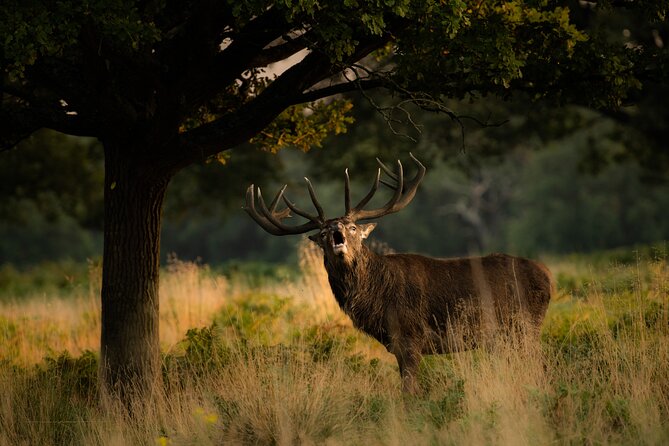
Richmond Park gives this workshop an unusually good setting: you can leave central London behind without making a long journey, then work with your camera beside Red and Fallow deer, ancient oaks, silver birch, ferns, and lakes. Matt, also known as Matthew Williams-Ellis, teaches in the field, so you learn by reacting to real animals and changing light rather than sitting through a classroom lecture.
I like the evening timing, which brings softer light and a better chance of atmospheric pictures. I also like the small maximum of eight people, since Matt can help with everything from basic camera controls to manual settings for birds in flight.
The main caution is that wildlife photography depends on wildlife and weather. One disappointing outing is possible, and the park’s closing gates require attention if you stay on your own after the session.
In This Review
- Key points
- Why Richmond Park makes a strong classroom
- What Matt teaches in three hours
- The wildlife you may work with
- How the evening light changes the session
- Following the route through Richmond Park
- Why the small group matters
- Is the $161.56 price good value?
- Who will get the most from this workshop
- What to bring and how to prepare
- The main drawback: wildlife and park access are unpredictable
- Cancellation and weather protection
- Should you book the Richmond Park workshop?
- FAQ
- Where does the workshop meet?
- Where does the activity finish?
- How long does the workshop last?
- What language is the workshop offered in?
- How many people can join?
- Is Richmond Park the only stop?
- Do I need to arrange my own transport to the park?
- Can I cancel for a full refund?
- What happens if bad weather cancels the workshop?
Key points
- A three-hour field lesson in Richmond Park: You learn while standing near real wildlife, not from a slide show.
- Matt teaches both camera technique and visual judgment: Expect help with shutter speed, manual settings, light, framing, and composition.
- Evening light improves the picture-making conditions: The later timing can give you softer, more flattering light than the middle of the day.
- Red and Fallow deer are the main draw: Birds and other subjects may also appear, including kestrels, woodpeckers, and a little owl.
- The group is capped at eight people: This suits beginners and photographers who want individual guidance.
- You meet and finish at Queen’s Road: Make your own way to Queen’s Rd, Richmond TW10 6JJ, and plan your route home carefully around park gate times.
Why Richmond Park makes a strong classroom
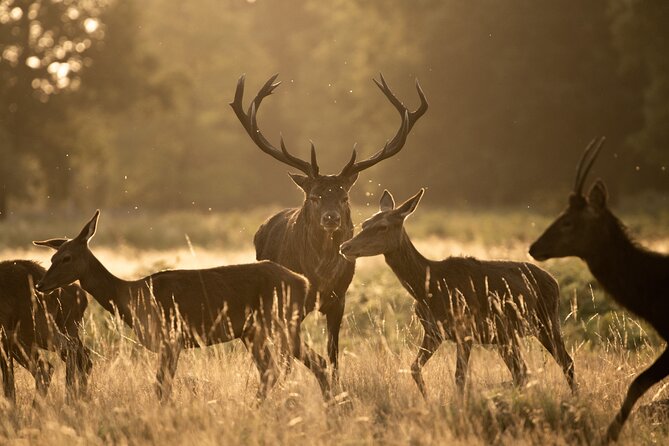
This is not a tour of London with a camera held up now and then. It is a practical photography session built around the animals and open spaces of Richmond Park.
The park offers several types of picture in one outing. You might frame a deer against silver birch trees, use a lone oak as a bold shape, photograph animals near ferns, or work with reflections and open views around the lakes. These different settings help you see how the same camera can produce very different results.
I like this approach because wildlife photography is rarely just about pointing a long lens at an animal. You need to notice the background, the direction of the light, the animal’s pose, and the moment before you press the shutter. Matt’s teaching focuses on that thought process as well as the technical settings.
The setting also makes this a pleasant half-day break from London. You are still close to the city, but the park gives you room to slow down and pay attention. If you want a nature outing with a clear purpose, this is more focused than simply walking through the park hoping something interesting appears.
Other London favourites people book with this one:
- London: The London Eye Entry Ticket
★ 4.6 · 35,875 reviews - From London: Harry Potter Warner Bros Studio Tour
★ 4.7 · 26,588 reviews - London: Westminster to Greenwich River Thames Cruise
★ 4.5 · 22,836 reviews
What Matt teaches in three hours
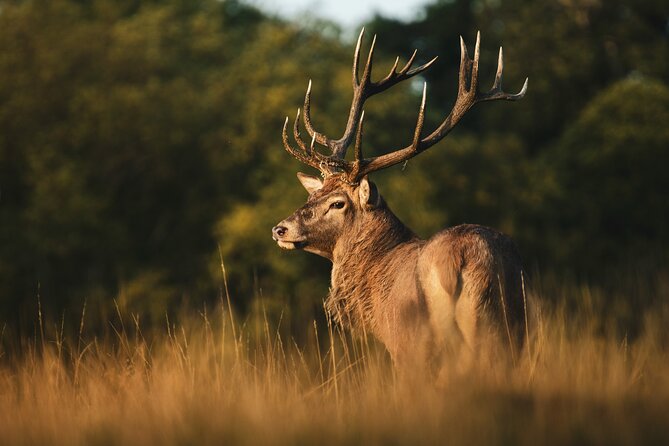
The workshop is designed for a mix of abilities. You do not need to arrive as an expert, and you should not feel that you need a top-end camera to take part. The teaching can begin with photography basics, then move toward more advanced decisions for people who already understand the fundamentals.
Matt covers the technical side of taking wildlife pictures. That includes choosing suitable settings for different situations and learning how to respond when an animal moves quickly. One particularly useful example is his help with programming manual settings for birds in flight, a task that can feel daunting if you have never photographed moving wildlife.
You also work on lighting and framing. A technically sharp picture can still feel flat if the subject is poorly placed or the background is distracting. Matt’s advice is aimed at helping you spot a stronger angle before taking the photograph.
The creative part matters just as much. He encourages you to think about creating a picture instead of simply taking one. That means looking for shape, space, color, direction, and mood. These lessons can carry over to parks, gardens, coastlines, and city streets long after the Richmond Park session is over.
I would find this especially useful if you often take photographs that are in focus but do not quite look the way you imagined. The workshop addresses the decisions behind the image, not only the buttons on the camera.
The wildlife you may work with
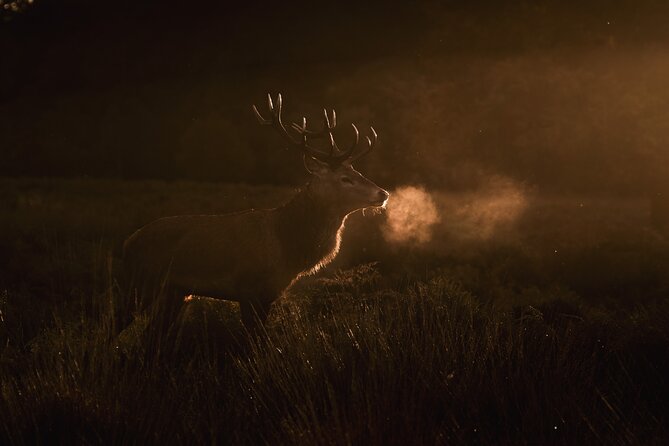
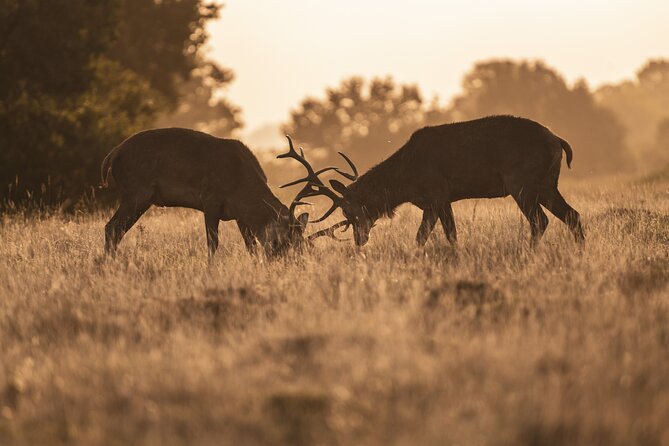
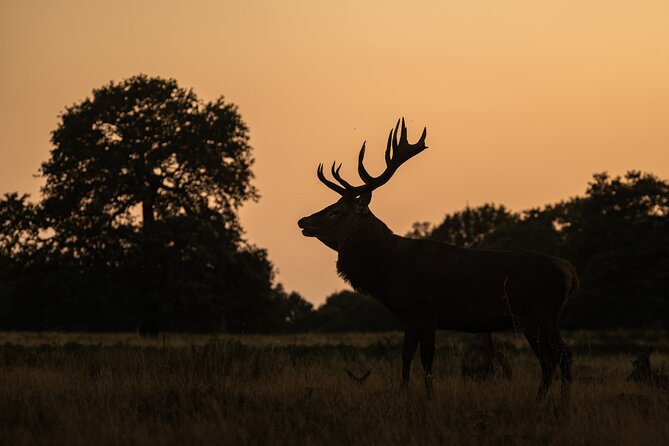
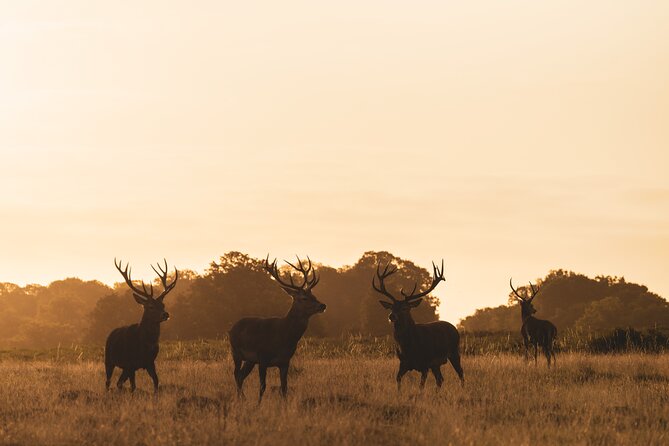
Red and Fallow deer are the headline subjects. They occupy Richmond Park and provide the kind of large, expressive wildlife that is easier for a beginner to follow than a tiny bird high in a tree.
Still, you should not book this expecting a guaranteed checklist of animals or a perfectly timed deer portrait. Wildlife moves according to its own schedule, and the quality of the session will depend partly on the conditions on the day.
The workshop can also include smaller and faster subjects. The session has produced opportunities involving kestrels, woodpeckers, and a little owl, along with gorgeous birds more generally. Those sightings are a welcome bonus, but they also show why the technical coaching is useful. Birds require faster reactions and more careful settings than a stationary deer.
You may come home with fewer dramatic images than you hoped for. That is the honest risk of any wildlife photography outing. The benefit here is that you still spend the time learning how to find better pictures in the conditions available.
How the evening light changes the session
The workshop is held in the evening because the light is generally more favorable for photography. Softer light can give deer and trees a gentler appearance, while longer shadows add shape and depth to a scene.
Good light also makes the park feel less harsh than it might in the middle of a bright day. You can practice judging exposure without dealing with the strongest overhead glare. For a beginner, this is a useful lesson in itself: light changes the picture before you change a single camera setting.
The timing does create practical limits. You need to make your own way to Queen’s Road for the meeting time, and you should consider your return route before setting out. Richmond Park has gates that close, and one participant had difficulty getting out after the session because several gates were locked.
That does not make the workshop a poor choice, but it is an important reminder. Confirm the gate situation and your way home before the evening begins. Do not assume every exit will remain open late.
A few more London days worth a look
- London: Private Photoshoot with Video Clip Option
★ 4.8 · 182 reviews - Professional Photoshoot in London Photographer
★ 5.0 · 102 reviews - Private landmarks photoshoot for families and couples
★ 5.0 · 92 reviews - London: Private Landmark Tour with Professional Photographer
★ 4.7 · 91 reviews
Following the route through Richmond Park
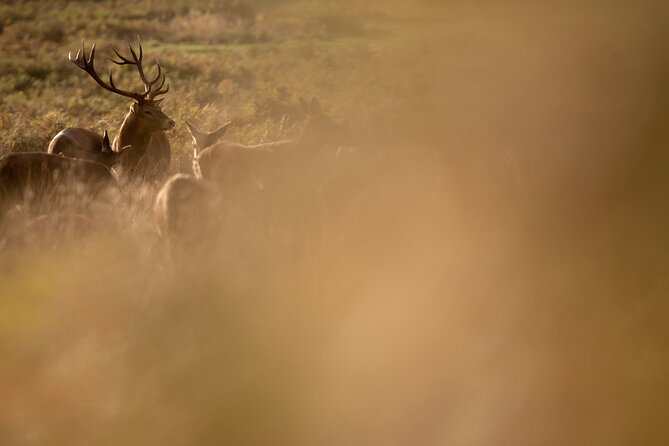
The published itinerary lists Richmond Park as the single stop, with the activity beginning and ending at the same meeting point. That sounds simple, but the value comes from how the time is used inside the park.
You meet Matt at Queen’s Rd, Richmond TW10 6JJ. From there, the session is an in-the-field walk and lesson, with the exact picture opportunities shaped by animal movements, light, and the best spots Matt knows in the park.
Expect to pause often. Wildlife photography needs patience, and the group will likely stop to watch, compose, adjust settings, and wait for a useful moment. This is not a fast sightseeing walk where you race from one attraction to the next.
The single-location format is a strength. You do not lose workshop time traveling between several parts of London. You can keep your attention on the camera and the surroundings, then return to the meeting point when the session ends.
The tradeoff is that the workshop does not include transport from central London. You need to reach the park entrance yourself, and the experience finishes where it starts. Check your journey before booking, especially if you are unfamiliar with the Richmond area.
Why the small group matters
A maximum of eight people is a useful middle ground. The session should have enough variety for you to see how other photographers approach the same subject, but it is small enough for Matt to offer personal help.
This matters when the group contains different skill levels. A beginner may need help finding aperture, shutter speed, or manual controls. Someone with more experience may want advice on tracking a bird, improving composition, or handling changing light.
Matt has shown he can work across that range. The teaching combines technical instruction with advice on framing and lighting, rather than assuming everyone wants the same lesson.
A small group also makes the outing feel more manageable around wildlife. Eight people is still a group, so you should not expect a private photo shoot, but it is far less crowded than a large scheduled excursion.
If personal feedback is your main reason for booking, the group limit is one of the strongest reasons to consider it. If you prefer complete control over where you walk and how long you wait, a private session would offer more freedom, but that is not what this activity provides.
Is the $161.56 price good value?
At $161.56 per person for about three hours, this is not a cheap park walk. You are paying for instruction, local wildlife knowledge, a planned photographic route, and hands-on help with your own camera.
The price makes more sense if you are buying a skill rather than a guaranteed collection of perfect images. Matt’s guidance on composition, light, manual settings, and photographic decision-making can continue to help you on future outings. That lasting value is stronger for a beginner or an intermediate photographer who wants direction.
It is less convincing if you simply want to see deer. Richmond Park can be visited without booking a workshop, and the animals are not guaranteed to pose in ideal light. You should also factor in your transport to and from Queen’s Road.
I would consider the price reasonable for someone who wants a focused lesson with a small group and a guide who can adapt to different camera abilities. It is harder to justify if you already have strong wildlife photography skills and mainly want a casual walk.
Who will get the most from this workshop
This session suits several types of photographer:
- A beginner who wants to learn photography basics outdoors.
- An owner of a new camera who needs practical help with settings.
- An intermediate photographer who wants to improve composition and creative choices.
- A parent and adult child looking for a shared activity with a useful skill attached.
- A visitor who wants a nature break from London without traveling far.
- A photographer interested in birds, deer, and changing outdoor light.
It is also a good gift idea for someone who enjoys photography. The session gives the recipient something to do, rather than simply another object to store, and it can be enjoyed by people at different skill levels.
I would be more cautious about booking it for someone who dislikes walking, waiting, or uncertain results. The stated fitness requirement is moderate, and wildlife does not follow a schedule. You need to accept that patience is part of the activity.
What to bring and how to prepare
The supplied details do not specify a required camera or lens, so you should use the equipment you already understand. A familiar camera is more useful than an impressive one you cannot operate quickly.
Before arriving, make sure you know how to change the basic settings. If you have never used manual mode, do not worry, since the workshop is intended to teach photography basics as well as refine existing skills. Still, a little preparation will give you more time to concentrate on the animals and the light.
Charge your batteries and leave room on your memory card. These are ordinary photography habits, but they matter when you are waiting for a deer to turn its head or a bird to take flight.
Wear clothing and shoes suitable for a moderate outdoor session. The workshop takes place in a large park, and you may spend time walking, stopping, and waiting in open areas. Check the weather before setting out, since the activity requires good weather and may be moved or canceled if conditions are poor.
The workshop is offered in English. Service animals are allowed, and the meeting point is near public transportation. You should still confirm your own route to Queen’s Road before the day.
The main drawback: wildlife and park access are unpredictable
The most important limitation is not the teaching. It is the setting itself.
A wildlife workshop cannot promise that the animals will appear in the right place at the right time. You may see deer but struggle with the background. You may find birds but not have enough light or time to capture them well. A poor weather day can also affect both comfort and image quality.
There is a second issue with park access after the workshop. The experience ends at the meeting point, but if you decide to remain in the park, you are responsible for getting out. Locked gates caused a serious problem for one participant, so treat the closing time as essential information, not a minor detail.
These points do not cancel out the strengths of the session. They simply explain why you should book it as a photography lesson in a wildlife setting, not as a guaranteed animal-spotting tour.
Cancellation and weather protection
You can cancel for a full refund if you do so at least 24 hours before the local start time. Cancellations made less than 24 hours in advance are not refunded, and changes inside that period are not accepted.
The activity requires good weather. If poor conditions cause the workshop to be canceled, you will be offered another date or a full refund. That policy gives you some protection, but you should still avoid scheduling it as the one fixed highlight of a tightly packed evening.
Confirmation is sent within 48 hours of booking, subject to availability. The experience is mobile-ticketed, so keep the booking details available on your phone.
Should you book the Richmond Park workshop?
Book it if you want to improve your photography while working with real wildlife, especially if composition and camera settings still feel uncertain. The small group, evening light, and direct teaching from Matthew Williams-Ellis give the session a clear purpose beyond a standard park visit.
The best reason to go is the mix of technical and creative instruction. You may learn how to set up a shot for a deer, then apply the same thinking to birds, trees, or nature pictures elsewhere. The possible sightings of kestrels, woodpeckers, and a little owl add excitement, but they should be treated as fortunate extras.
Skip it if you only want guaranteed close-up wildlife pictures, dislike moderate walking, or cannot manage an evening return from Richmond Park. Plan your route home carefully, and remember that the park’s gates may close.
For a beginner, an improving photographer, or someone looking for a thoughtful photography gift, this is a strong choice. At $161.56, it earns its price through teaching and personal guidance, not through certainty about what the animals will do.
FAQ
Where does the workshop meet?
Meet at Queen’s Rd, Richmond TW10 6JJ, UK.
Where does the activity finish?
The workshop ends back at the meeting point.
How long does the workshop last?
The session lasts approximately three hours.
What language is the workshop offered in?
The workshop is offered in English.
How many people can join?
The group has a maximum of eight participants.
Is Richmond Park the only stop?
Yes. The workshop takes place in Richmond Park.
Do I need to arrange my own transport to the park?
Yes. You make your own way to the park entrance and meeting point.
Can I cancel for a full refund?
Yes, if you cancel at least 24 hours before the experience start time. Cancellations made less than 24 hours in advance are not refunded.
What happens if bad weather cancels the workshop?
You will be offered a different date or a full refund.
More Workshops in London
- London: Traditional English Scone Making and Tea Workshop
★ 5.0 · 702 reviews - London: East End Street Art Tour and Spray Painting Workshop
★ 4.8 · 297 reviews - London Traditional English Scone Making and Tea Workshop
★ 5.0 · 271 reviews - London: Half-Day Street Art Tour and Workshop
★ 4.9 · 172 reviews
Latest arrivals on the London list
- Easy Access Tower of London Royal Secrets & Scandals Tour★ 5.0 · 3 reviews
- Stonehenge Special Access Guided Morning Tour from London★ 4.5 · 3 reviews
- Shoreditch & East London Walking Tour with a Local, Custom & Private★ 5.0 · 3 reviews
- Madame Tussauds London Fast Track and Champagne Experience★ 3.5 · 3 reviews
- London Private Brixton Tour with a Local – Culture & Stories★ 4.9 · 3 reviews
- Private Full Day Tour – Fast Track Tower of London and Lunch★ 4.6 · 3 reviews
- Private transfer from London Heathrow Airport to Southampton★ 5.0 · 3 reviews
- London Soho District – Guided Walking Tour 12 guests 2,5h★ 4.8 · 3 reviews
Photography Sessions, compared.
Professional Photoshoot in London Photographer
Read our review →
30 Major London Attractions Walking Tour With Photos
Read our review →
Browse the lists this tour appears in