
Reviewed · PHOTOGRAPHY SESSIONS
Beginners Photography Course – Small Group Workshop
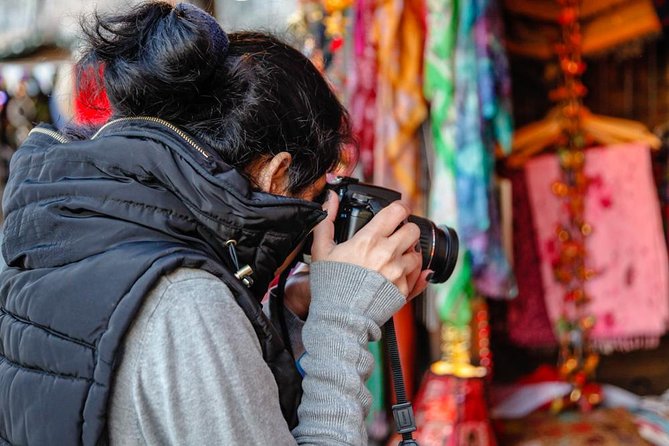
London becomes your classroom on this small-group photography workshop, where you learn by taking pictures rather than sitting through a long technical lecture. Starting near London Bridge, you work with your own camera at City Hall, Tower Bridge, and the Tower of London.
I especially like the maximum group size of six, which leaves room for one-to-one help, and the fact that instruction is geared to the camera you actually carry. The practical assignments on ISO, aperture, and shutter speed are useful because you must apply each setting straight away.
The main consideration is the price, $336.07 per person for about four hours. That is a serious spend for a half-day walk, so this makes the most sense if you own a camera you want to understand properly, not if you only plan to take occasional phone snapshots.
In This Review
- Key points before you book
- Why this London photo workshop is different
- City Hall and More London: learning the controls
- Tower Bridge: composition, focus, and river views
- The Tower of London: lens choice and visual decisions
- What you are likely to learn in four hours
- The value of the six-person format
- Price, equipment, and practical planning
- Who should book this workshop
- Should you book the Beginners Photography Course?
- FAQ
- Where does the photography workshop start?
- Where does the activity finish?
- How long does the course last?
- What camera equipment should I bring?
- How many people can join the workshop?
- What is the minimum age?
Key points before you book
- Small group of six: You get time to ask questions and receive personal help with your own camera.
- London landmarks as practice subjects: City Hall, Tower Bridge, and the Tower of London give you varied subjects, viewpoints, and light.
- Core camera controls: Learn how ISO, shutter speed, aperture, white balance, and focus affect your pictures.
- Hands-on teaching: Short assignments turn technical explanations into immediate practice.
- Best for camera beginners: The workshop is designed to help you move beyond Auto and Scene modes with confidence.
Why this London photo workshop is different
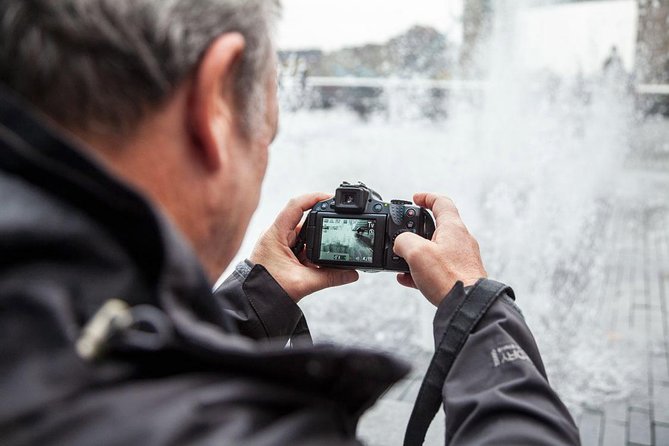
Many beginner photography classes teach general camera theory. This one takes a more useful route: you bring your own camera, and the tutor helps you understand its particular buttons, menus, and controls.
That matters because two cameras can use different names or layouts for the same function. A beginner who understands the idea of aperture but cannot find it on the camera is still stuck. Here, the teaching is aimed at getting you from explanation to action.
The small size helps too. With no more than six people, you are not lost at the back of a large class. The tutor can check your settings, answer questions about your specific model, and help when something behaves unexpectedly.
The teaching is led by London Photo Tours and Workshops, which has run photography courses in London since 2005. Lou is named in the course feedback as an instructor who works patiently with mixed camera types and different skill levels. That is useful if you arrive with a DSLR, mirrorless camera, or another digital model and feel unsure where to begin.
You should still expect to practice between lessons. Four hours can clarify the basics, but it cannot turn you into a finished photographer. The real value is that you leave with a working grasp of the controls, then build skill by using them on your own trips.
A few more London days worth a look
- London: Private Photoshoot with Video Clip Option
★ 4.8 · 182 reviews - Professional Photoshoot in London Photographer
★ 5.0 · 102 reviews - Private landmarks photoshoot for families and couples
★ 5.0 · 92 reviews
City Hall and More London: learning the controls
The workshop begins at London Bridge Station Approach Road, close to City Hall and the More London area. This first section lasts about two hours, making it the main teaching block rather than a quick introduction.
The setting gives you useful subjects without requiring a long transfer. Modern architecture, open public spaces, and views toward the river provide chances to work with lines, shapes, distance, and changing light. You are not simply pointed at a landmark and told to press the shutter. You use the area to see how different settings change the result.
The three controls receiving the most attention are ISO, shutter speed, and aperture. These can sound like dry textbook terms, but they affect almost every photograph you take.
ISO controls how sensitive the camera is to light. Shutter speed affects how long the camera records the scene, which can change the look of movement. Aperture affects the amount of light entering the lens and can alter how much of the image appears sharp.
A beginner often learns these terms separately, then forgets how they work together. The short assignments are designed to make the connection clearer. You change one setting, take a picture, compare the result, and then try again.
This is also where you begin to take control away from Auto and Scene modes. Those automatic settings can be convenient, but they limit your ability to decide how a photograph should look. The course shows you that a small change in shutter speed or aperture can make a noticeable difference.
The tutor can also help you find controls that are buried in a menu or set incorrectly. One participant arrived with a camera problem that required a factory reset, and the instructor took the time to sort it out. That sort of help can be worth a lot if your camera feels intimidating before you even start.
Because this section lasts two hours, you should have time to ask basic questions without feeling rushed. It is likely to be the most technical part of the workshop, so bring your patience and a willingness to take notes or repeat an exercise.
Tower Bridge: composition, focus, and river views
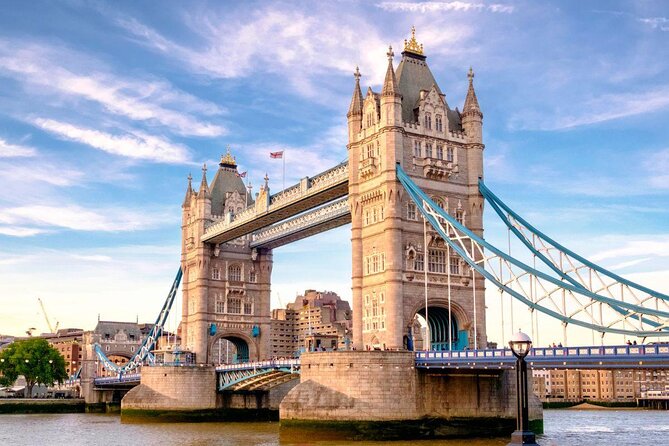
The group then spends about 30 minutes photographing Tower Bridge from across the river. This is a classic London view, but the point is not simply to collect a postcard image.
Here you work on composition and framing, learning how to place the bridge within the picture and how much surrounding space to include. A familiar subject can become a useful test because small changes in position, lens choice, and framing alter the balance of the image.
The tutor also explains depth of field, the area of a photograph that appears acceptably sharp. Depending on your camera and settings, you can explore how to keep more of the scene sharp or draw attention to a particular part of it.
Focusing techniques are another part of this stop. Beginners often rely on the camera to choose what matters, and the camera does not always make the same choice you would. Learning how to select or control focus gives you more say over the final image.
Light is part of the lesson too. River views can look very different depending on the direction and quality of the light. The workshop helps you notice how light affects color, contrast, shadows, and detail rather than treating it as something outside your control.
The short timing is both a strength and a limit. Thirty minutes keeps the walk moving and gives you another setting in which to practice, but it is not enough for a long lesson on every focusing mode or composition style. Think of Tower Bridge as a practical exercise, not a full masterclass on the landmark.
The Tower of London: lens choice and visual decisions
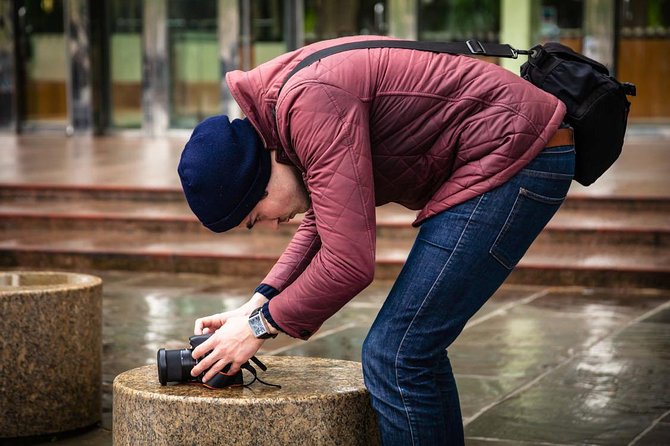
The final named stop is the Tower of London, photographed from across the river. This half-hour section continues the work on composition and light, while adding lens choices and shutter speed.
Lens choice affects more than how close the subject appears. It changes how much of the surroundings you include and how the elements in the frame relate to one another. The tutor can help you decide how to approach the castle, river, and surrounding city rather than leaving you to guess which lens setting will work best.
The Tower also gives you a chance to compare a historic subject with the modern structures around City Hall and the bridge. That variety is important for beginners. You learn that the same camera controls apply to architecture, riverside views, and historic buildings, but the best choices may change with the subject.
You continue to work with shutter speed and light. If a picture looks too dark, too bright, or lacks the mood you expected, you can examine which settings contributed to the result. This cause-and-effect approach is more useful than memorizing rules without seeing them on your own screen.
The workshop ends back at the starting point. The supplied timing accounts for roughly three hours of named stops, with the total activity listed at about four hours. That leaves room for walking, transitions, questions, and additional tuition along the route.
Something completely different for your London days:
- London: The London Eye Entry Ticket
★ 4.6 · 35,875 reviews - From London: Harry Potter Warner Bros Studio Tour
★ 4.7 · 26,588 reviews - London: Westminster to Greenwich River Thames Cruise
★ 4.5 · 22,836 reviews - Magical London: Harry Potter Guided Walking Tour
★ 4.7 · 22,044 reviews
What you are likely to learn in four hours
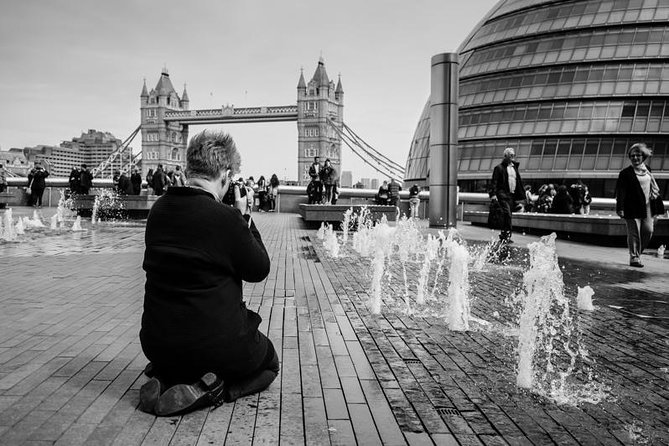
This is a beginner course, but the subject list reaches beyond the three basic exposure controls. You can expect instruction in:
- ISO, aperture, and shutter speed
- Depth of field
- Composition and framing
- Focusing techniques
- Lens choices
- The effect of light on your photos
- White balance, based on the skills covered in the course feedback
- The camera’s main functions and settings
You will not master every menu option on your camera in one morning. You should, however, come away with a clearer idea of which settings matter and when to change them.
The strongest part of the course is its practical nature. You are given small tasks and then helped as you work. That can make technical subjects easier to remember, especially if you have spent years using Auto or Scene modes and found camera manuals hard to follow.
I also like the emphasis on self-sufficiency. The aim is not for the tutor to take over your camera. It is to help you understand how to use it yourself after the class. That is why the workshop can keep paying off on future holidays and city breaks.
The value of the six-person format
The group limit is one of the clearest reasons to consider this workshop. Six people is small enough for personal questions, but large enough for you to see how other cameras and photographers approach the same subject.
This matters when the group has mixed experience levels. One person may be completely new to photography, while another understands some basics but still struggles with manual settings. The tutor has to keep everyone involved without making the class too difficult for the newest participant.
The course feedback describes exactly that sort of mixed group, including people who had inherited a camera, owned an intimidating DSLR, or had taken mediocre photos for years. The common thread is not the brand of camera. It is the need for patient explanation and practice.
The instructor’s ability to work with many camera makes and models is another practical advantage. Still, you should bring the camera manual if you have it, especially if your model has unusual controls. The tutor can help, but no four-hour class can cover every variation across the market.
Price, equipment, and practical planning
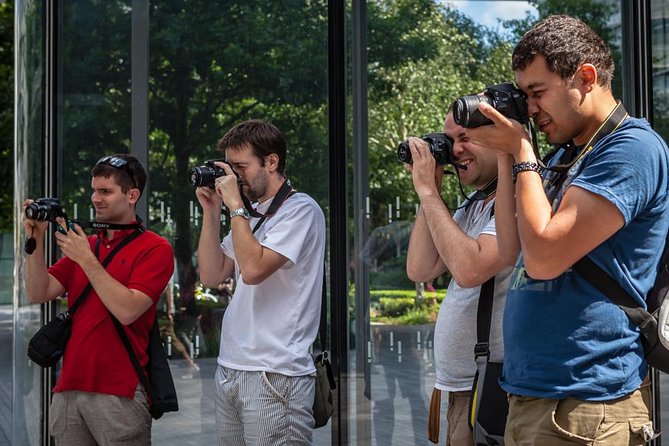
At $336.07 per person, this is not a cheap sightseeing walk. You are paying for a professional photographer, tailored instruction, a very small group, and a lesson built around your own equipment.
The price is easier to justify if you have recently bought a camera, inherited one, or feel stuck using only automatic modes. It is less appealing if you already understand exposure and focus, or if your main goal is a relaxed London stroll with casual photographs.
Bring your own camera with a fully charged battery, a spare battery if you have one, and memory cards. Do not arrive with a nearly empty battery and a full card. You need enough power and storage to repeat exercises and compare results.
Food and drinks are not included, and lunch is not provided. Since the activity lasts about four hours, plan ahead rather than expecting a meal during the workshop.
The meeting point is at London Bridge Station Approach Road, London SE1 9SP. The area is near public transportation, and the activity finishes back at the same meeting point. Confirmation is sent when you book, and free cancellation is available if you cancel at least 24 hours before the start time.
The minimum age is 16. Service animals are allowed, and the activity information says most people can participate. If you have a specific mobility concern, contact the provider before booking rather than assuming every part of the walking route will suit you.
Who should book this workshop
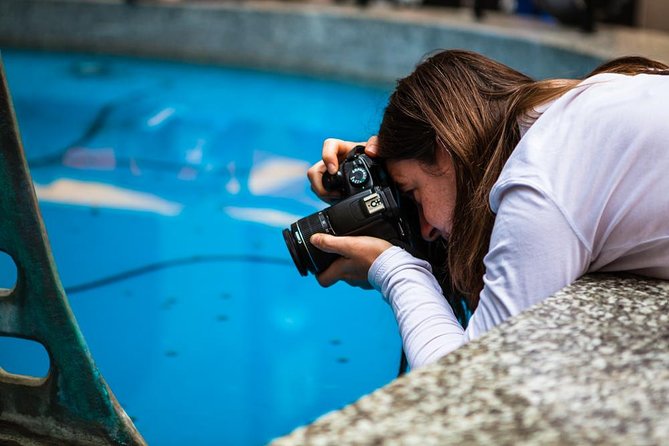
I would recommend this course to you if you meet one or more of these descriptions:
- You own a digital camera but still use Auto for nearly everything.
- You have trouble remembering the difference between ISO, aperture, and shutter speed.
- You want help with your particular camera rather than a generic lecture.
- You learn best by taking pictures and seeing immediate results.
- You want a London activity that produces both sightseeing memories and a useful skill.
- You are considering a later intermediate or night photography course.
It is also a sensible choice if you have just received a camera from someone else and do not know where to start. The instructor can help you find the essential controls and understand how the settings relate to one another.
You may want a different activity if you already shoot comfortably in manual mode. The stops and landmark views are attractive, but the course is built around beginner tuition, not advanced creative technique.
Should you book the Beginners Photography Course?
Book it if you want personal help with your own camera and need a practical push beyond automatic settings. The six-person limit, patient teaching style, and short assignments give the workshop a clear purpose: helping you take control of the camera and keep practicing after the class.
At $336.07, I would not book it solely for the sightseeing. You can see City Hall, Tower Bridge, and the Tower of London without paying for a photography lesson. Book it for the instruction, especially if a camera manual has left you confused or your photos have not matched what you see in front of you.
For a true beginner, this is a focused way to turn a London walk into a useful photography lesson. Bring a charged camera, an open mind, and enough memory space to make mistakes. That is how the new settings begin to stick.
FAQ
Where does the photography workshop start?
It starts at London Bridge Station Approach Road, London SE1 9SP, UK.
Where does the activity finish?
The workshop ends back at the meeting point.
How long does the course last?
The course lasts approximately four hours.
What camera equipment should I bring?
Bring your own camera, a fully charged battery, a spare battery if available, and memory cards.
How many people can join the workshop?
The group has a maximum of six participants.
What is the minimum age?
The minimum age is 16 years.
Latest arrivals on the London list
- Easy Access Tower of London Royal Secrets & Scandals Tour★ 5.0 · 3 reviews
- Stonehenge Special Access Guided Morning Tour from London★ 4.5 · 3 reviews
- Shoreditch & East London Walking Tour with a Local, Custom & Private★ 5.0 · 3 reviews
- Madame Tussauds London Fast Track and Champagne Experience★ 3.5 · 3 reviews
- London Private Brixton Tour with a Local – Culture & Stories★ 4.9 · 3 reviews
- Private Full Day Tour – Fast Track Tower of London and Lunch★ 4.6 · 3 reviews
- Private transfer from London Heathrow Airport to Southampton★ 5.0 · 3 reviews
- The women of London★ 4.5 · 3 reviews
Photography Sessions, compared.
Professional Photoshoot in London Photographer
Read our review →
30 Major London Attractions Walking Tour With Photos
Read our review →
Browse the lists this tour appears in