
Reviewed · GREENWICH TOURS
Greenwich Highlights Private Half Day Tour
Greenwich packs science, naval power, royal art, and the River Thames into one compact outing. The star moment is the Prime Meridian, where you can stand with one foot in the Eastern Hemisphere and one in the Western, then see the clocks that helped sailors solve the deadly problem of finding longitude at sea.
I like the private format, which lets you ask questions and set the pace, and I like the mix of grand buildings and working maritime history. The main drawback is the amount of walking, including the uphill route to the Royal Observatory, so this is not the best choice for anyone wanting a mostly seated tour.
In This Review
- Key points
- Why Greenwich works so well in three and a half hours
- From the Thames to Wren’s Old Royal Naval College
- Walking uphill to the Royal Observatory
- Cutty Sark and the final age of sail
- The National Maritime Museum’s broad sweep
- Queen’s House and the Armada portrait
- Ending at Greenwich Market
- Guides, group size, and the human side of the tour
- Is the price fair for a private half day?
- Who will enjoy this Greenwich walk most?
- Should you book Greenwich Highlights?
- FAQ
- How long is the Greenwich Highlights Private Half Day Tour?
- Where does the tour meet?
- How do I get to Greenwich?
- Is this a private tour?
- What attractions are included?
- Are admission fees included?
- Is food included?
- Is transportation included?
- Can children join for free?
- What is the cancellation policy?
Key points
- Stand on the Prime Meridian: Visit the Royal Observatory, the reference point for zero degrees longitude and Greenwich Mean Time.
- See Harrison’s clocks: Learn how John Harrison’s timepieces helped solve the longitude problem for sailors.
- Explore Cutty Sark: Go aboard the only surviving tea clipper, restored at a reported cost of £50 million.
- Walk through Britain’s naval story: The National Maritime Museum covers the country’s seafaring past and maritime power.
- Admire royal art: Queen’s House includes Elizabeth I’s Armada portrait.
- Finish at Greenwich Market: End near art galleries, antiques, and street food rather than returning to a coach or bus.
Why Greenwich works so well in three and a half hours
Greenwich is one of London’s easiest places to understand through a guided walk. The sights are close together, but each tells a different part of the story: the Thames explains trade and transport, the Old Royal Naval College recalls military training, the Observatory explains time and navigation, and the museums show how Britain connected all of this to the wider world.
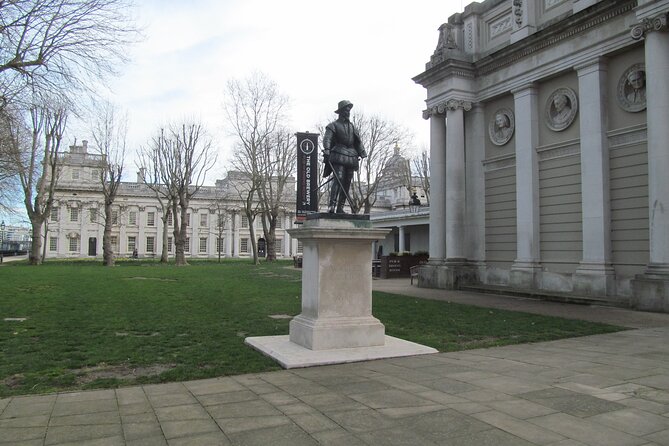
This tour runs daily from 10 a.m. to 1:30 p.m. and remains within Greenwich. That matters because you spend your time seeing the district instead of sitting in traffic. You meet at the Sir Walter Raleigh statue outside the northern entrance to the Greenwich Tourist Information Centre, across from Greenwich Pier.
I like that starting point. It is easy to reach by river boat, rail, or DLR, and the nearby pier gives you a clear reference point. If you arrive by boat, you can begin sightseeing almost at once. If you arrive by train or DLR, allow enough time to walk to the visitor centre and find the statue before 10 a.m.
The tour is private, so it is designed for just your party and an English-speaking guide. That makes a real difference in a museum-heavy morning. You can ask why a particular object matters, pause for a closer look, or keep moving when a display does not catch your interest.
More Greenwich days out:
- London: Westminster to Greenwich River Thames Cruise
★ 4.5 · 22,836 reviews - Westminster to Greenwich Sightseeing Thames Cruise in London
★ 4.5 · 2,969 reviews - Royal Observatory Greenwich & Prime Meridian Entrance Ticket
★ 4.5 · 1,095 reviews
From the Thames to Wren’s Old Royal Naval College
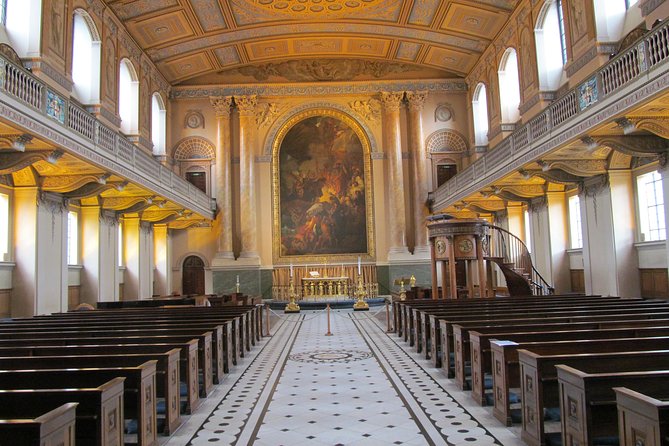
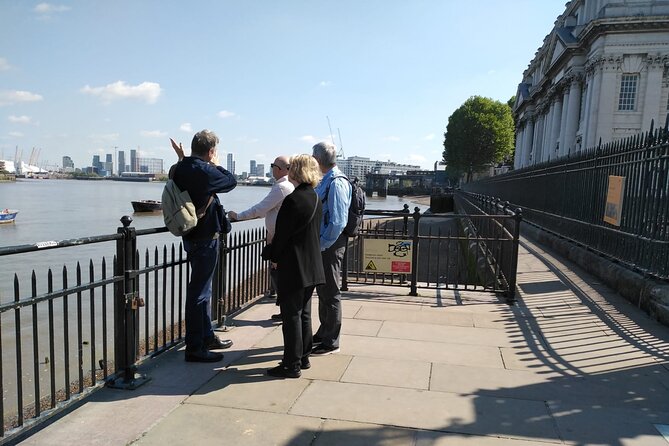
Your walk begins beside the River Thames and continues toward the Old Royal Naval College, designed by Sir Christopher Wren. This opening stretch gives you a useful sense of place before the museums begin.
The river is not just a pretty backdrop here. Greenwich developed around the Thames, and the water helps explain why shipbuilding, naval training, trade, and timekeeping became so important to the area. Your guide can connect the buildings in front of you with the ships and sailors whose work shaped Britain’s reach overseas.
The Old Royal Naval College served as a training college for the Royal Navy until the millennium. That detail gives the site a practical role in the story. You are not simply looking at impressive architecture. You are walking through a place linked to the education and discipline of naval personnel.
The tour information does not promise a long interior visit to every part of the college, so think of this section as a guided introduction while moving toward the Observatory. The walk is part of the experience, not just a way to get from one ticketed attraction to another.
Walking uphill to the Royal Observatory
From the Old Royal Naval College, you walk uphill to the Royal Observatory in Greenwich Park. This is the most physically demanding part of the route. The tour requires moderate fitness, and comfortable shoes are a smart choice.
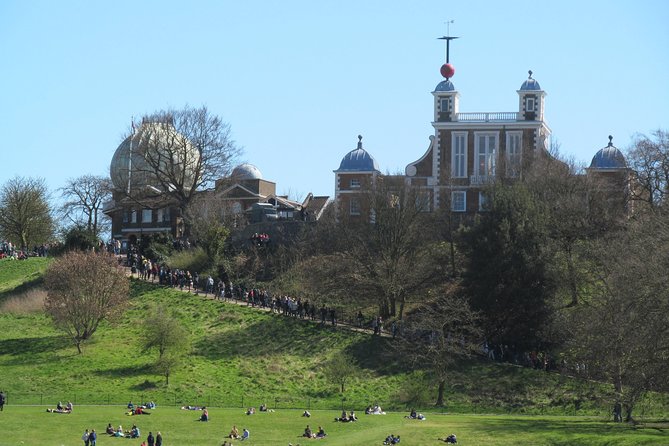
The effort pays off with the central idea of the morning: the Prime Meridian. This line marks zero degrees longitude and divides the Eastern and Western Hemispheres. Greenwich also gave its name to Greenwich Mean Time, the traditional reference point used for world timekeeping.
The line itself is an entertaining photo opportunity, but the larger value is understanding why it is there. Longitude measures position east or west, yet sailors once had no reliable way to calculate it at sea. Latitude was easier to work out, but longitude required an accurate comparison between local time and a known reference time.
That is where the Observatory’s clocks become important. John Harrison’s timepieces eventually helped solve the longitude problem. A ship could carry an accurate clock set to reference time, compare it with local solar time, and use the difference to work out its position east or west.
I would pay close attention during this part of the tour. The clocks are not merely old scientific objects. They represent a practical breakthrough that made long-distance sea travel safer and more reliable. Your guide can turn what might otherwise be a technical display into a story about risk, money, navigation, and human ingenuity.
The Observatory is also where the walking becomes most noticeable. If you have a knee problem, use a walking aid, or simply prefer a slower route, tell your guide at the start. The experience is private, so your group can discuss the pace, although the tour still has several major stops to cover.
Cutty Sark and the final age of sail
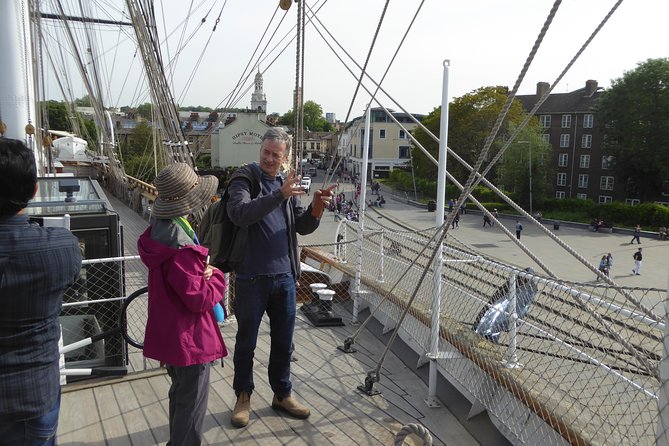
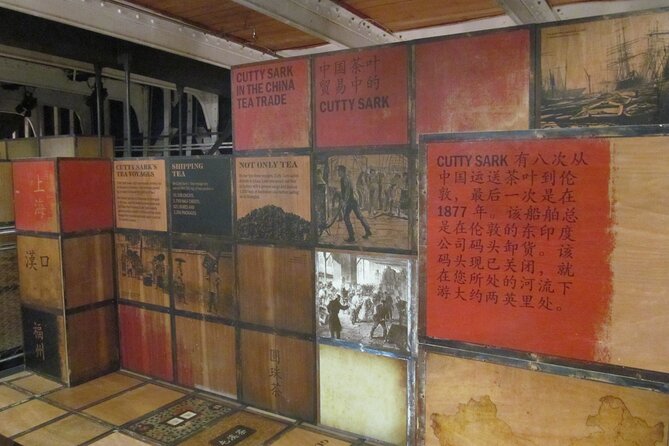
After the Observatory, the route descends toward Cutty Sark. This famous tea clipper is the only surviving tea clipper still in existence, and stepping aboard gives the tour a strong physical connection to the maritime story.
Cutty Sark sailed at the very end of the Age of Sail and was once the fastest ship on the water. That fact helps you picture the competitive world of long-distance trade, when speed could affect a ship’s reputation and commercial success.
The ship was restored at a reported cost of £50 million and reopened to the public on May 1, 2012. The restoration is part of what makes the visit worthwhile. You are not only looking at a vessel from a distance. You can enter a carefully preserved piece of sailing history and get closer to the design and scale of a working clipper.
The supplied tour details describe the visit as going aboard Cutty Sark, with admission included. Allow your guide to provide the context, because the ship makes more sense when you know why tea clippers were built for speed and why this vessel belongs to the closing chapter of commercial sailing.
Cutty Sark is also a good contrast with the Observatory. At the hilltop, you study precise clocks and the measurement of longitude. Down by the river, you see the large, physical machine that carried goods across oceans. Together, the two stops show how science and ship design supported seafaring.
A few more London days worth a look
- The Premier Classic London: Private 4-Hour Tour in a Black Cab
★ 5.0 · 2,737 reviews - Stonehenge Inner Circle Private Tour from London with Bath Visit
★ 5.0 · 1,909 reviews - London: Tower of London Entry & Beefeater Private Audience
★ 4.4 · 1,441 reviews - Private Tour: Black Taxi Tour of London
★ 5.0 · 1,153 reviews
The National Maritime Museum’s broad sweep

The National Maritime Museum is described as the world’s largest maritime museum. It presents Britain’s seafaring past and its development as a naval power through objects, displays, and stories connected to the sea.
This is the broadest stop on the tour, so a guide is particularly useful. A museum of this size can easily swallow half a day, but the visit here is one part of a tightly timed route. Your guide can help you focus on the displays most relevant to Greenwich, navigation, ships, and Britain’s maritime story.
I like the chance to rest your feet here. After the walk up to the Observatory and back down toward the river, a tea or coffee break can make the rest of the tour more comfortable. Food and drinks are not included, so plan to pay for refreshments yourself.
The museum’s subject also needs a little balance. Britain’s naval strength and overseas expansion brought major power and wealth, but those stories affected many countries and communities. The tour description emphasizes British seafaring and naval power, while the guide’s explanations can help you place that material in a wider context. If this part of history matters to you, use the private setting to ask direct questions.
Because the tour includes several major attractions, do not expect enough time to examine every gallery in detail. This is a guided overview with selected highlights, not a full museum day. If you want a slower museum visit, return independently after the tour.
Queen’s House and the Armada portrait
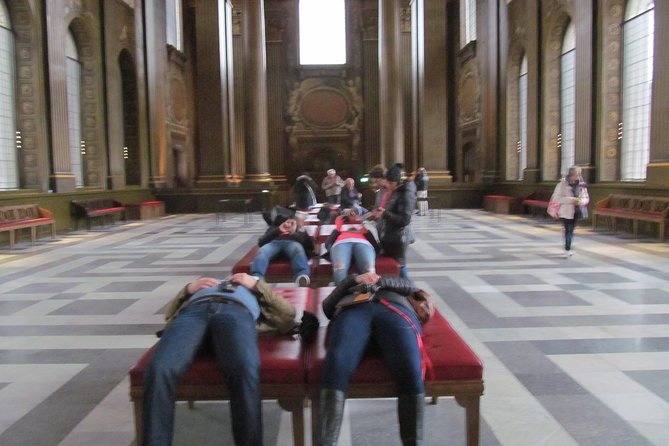
Queen’s House adds a royal and artistic note to a morning otherwise dominated by ships, clocks, and naval institutions. The building houses Greenwich’s art museum and includes Elizabeth I’s Armada portrait.
That painting has a direct connection to national identity and naval history. It recalls the defeat of the Spanish Armada and presents Elizabeth I in a carefully shaped image of royal authority. Seeing it after the Observatory and maritime sites gives you another way to understand how seafaring success was represented and remembered.
The supplied itinerary includes Queen’s House, though the description does not set out how long you spend inside or which additional works the guide selects. Treat this as a focused art stop rather than a complete gallery visit. You will get more from it if you are interested in the way art, monarchy, and military events overlap.
The combination of Queen’s House and the National Maritime Museum is one of the tour’s better features. One gives you a large public story about ships and naval power. The other brings that story into the world of royal image-making.
Ending at Greenwich Market
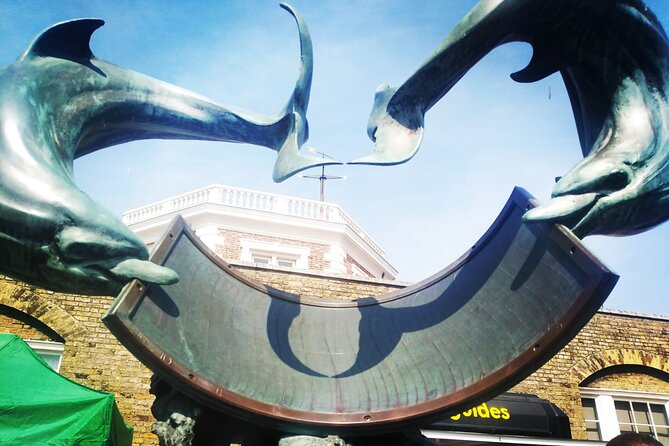
The tour ends at historic Greenwich Market. This is a practical finish because you are left in an area with art galleries, antiques, and street food. You can continue exploring, stop for lunch, or browse without needing to retrace the full route.
Food is not included, but the market gives you an easy place to buy something after the tour. It also means the morning ends with a more informal Greenwich experience after several major institutional sights.
The end point is not listed as a return to the original statue. The activity details show the starting and ending location as the same Greenwich reference point, while the walking description says the tour ends at Greenwich Market. Ask your guide at the beginning where your group will finish so you can make a clear plan for the rest of the day.
Guides, group size, and the human side of the tour
The guide can make or break a tour that covers this much ground. Past guide names associated with especially strong feedback include Nathan, Victoria, and Steven. Nathan was praised for bringing people’s stories to life, while Victoria was noted for clear explanations and a friendly manner. Steven led a highly praised Greenwich visit as well.
That does not mean one of those guides will lead your booking, so do not choose the tour on a guaranteed-name basis. It does show the kind of guiding that suits this route: clear storytelling, historical context, and the ability to keep several very different sights connected.
The overall rating is 4.7 from 18 reviews, with many five-star ratings. There have also been service problems. One booking involved a guide arriving 20 minutes late, and another reported that the guide did not appear at all. The company communicated afterward and processed a refund in the no-show case, but a missed tour can still disrupt a tightly planned London day.
That is worth weighing honestly. A private tour gives you personal attention, but it also makes guide punctuality especially important because there is no larger group already underway. Confirm the meeting point and arrive early.
Is the price fair for a private half day?
The listed price is $398 per person. The detailed pricing information also gives £245 per person for a couple and says the per-person price falls when more people join. Since the figures use different currencies and may reflect different booking arrangements, confirm the exact total before paying.
This is not a budget walking tour. The value comes from the private guide, the four major attractions, and the admissions included in the price. You are paying for interpretation and coordination, not just entry tickets.
For two people, the cost is easier to justify if you want a guided introduction to Greenwich without joining a larger group. For a family or small party, the lower per-person price with additional people can improve the calculation. Children aged five and under go free, which also helps families with very young children.
Transportation, food, and drinks are not included. Greenwich is easy to reach by river boat, rail, or DLR, but you arrange and pay for that journey yourself. Add a drink or market meal to your budget, and remember that the tour involves several admissions even though those fees are covered.
I would book it for the access to a personal guide and the chance to connect the sites. I would not book it if your main goal is to spend hours inside one museum, avoid hills, or keep costs as low as possible.
Who will enjoy this Greenwich walk most?
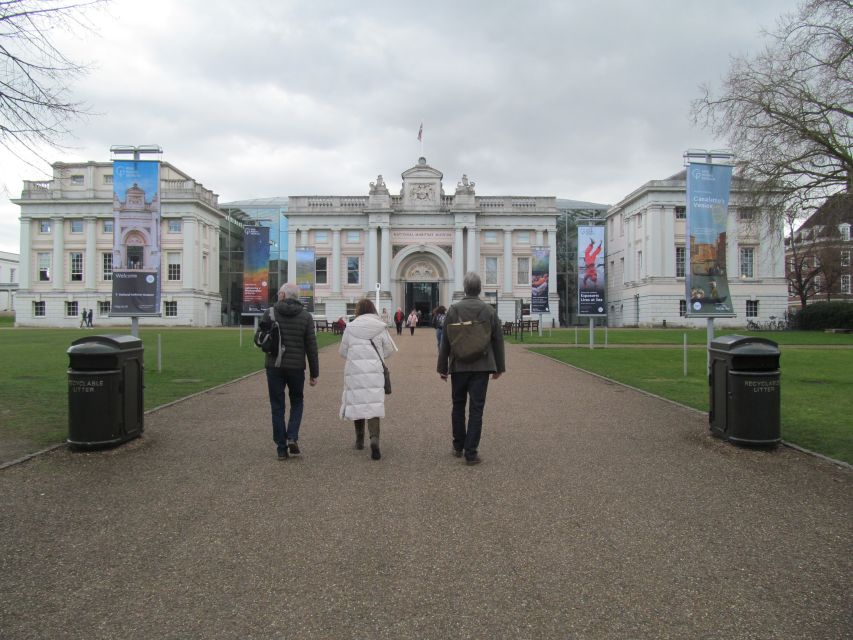
This tour suits first-time visitors who want a clear introduction to Greenwich in one morning. It also works well for couples, families with older children, and small groups who prefer to ask questions without competing with a large crowd.
History and science fans get the strongest mix here. The Prime Meridian and Harrison clocks offer a practical science story, Cutty Sark provides the shipboard experience, and the museums add naval, royal, and artistic context.
You should be comfortable walking for three and a half hours, including the uphill route to the Observatory. The tour is not described as wheelchair accessible, and no accessibility details are provided, so contact the provider before booking if you need a step-free or adapted route.
Children five and under go free, but the route still includes a substantial walk and several museums. Families should consider the child’s stamina as carefully as the ticket price.
Should you book Greenwich Highlights?
Book this tour if you want Greenwich explained as one connected story rather than as a list of separate attractions. The Prime Meridian, Harrison’s clocks, Cutty Sark, the National Maritime Museum, Queen’s House, and the Old Royal Naval College make a strong half-day sequence.
Skip it if you want a slow museum day, dislike walking uphill, or need a guaranteed named guide. The occasional lateness and no-show reports are a reason to confirm details and leave some flexibility in your schedule.
For most visitors with moderate fitness, the private format and included admissions make the experience worthwhile, especially when several people share the booking. Arrive early at the Sir Walter Raleigh statue, wear comfortable shoes, and save room for food at Greenwich Market.
FAQ
How long is the Greenwich Highlights Private Half Day Tour?
The guided tour lasts 3.5 hours, running from 10 a.m. to 1:30 p.m.
Where does the tour meet?
Meet at the Sir Walter Raleigh statue just outside the northern entrance to the Greenwich Tourist Information Centre, across from Greenwich Pier.
How do I get to Greenwich?
Greenwich can be reached by cruise boat, rail, or the DLR.
Is this a private tour?
Yes. The tour is for a private group with an English-speaking live guide.
What attractions are included?
The route includes Cutty Sark, the Royal Observatory and Prime Meridian, the National Maritime Museum, Queen’s House, and the Old Royal Naval College area.
Are admission fees included?
Yes. All admission fees are included.
Is food included?
No. Food, tea, and coffee are not included in the price.
Is transportation included?
No. Transportation to and from Greenwich is not included.
Can children join for free?
Children aged five and under go free.
What is the cancellation policy?
You can cancel up to 24 hours in advance for a full refund. You can also reserve now and pay later.
Latest arrivals on the London list
- Easy Access Tower of London Royal Secrets & Scandals Tour★ 5.0 · 3 reviews
- Stonehenge Special Access Guided Morning Tour from London★ 4.5 · 3 reviews
- Shoreditch & East London Walking Tour with a Local, Custom & Private★ 5.0 · 3 reviews
- Madame Tussauds London Fast Track and Champagne Experience★ 3.5 · 3 reviews
- London Private Brixton Tour with a Local – Culture & Stories★ 4.9 · 3 reviews
- Private Full Day Tour – Fast Track Tower of London and Lunch★ 4.6 · 3 reviews
- Private transfer from London Heathrow Airport to Southampton★ 5.0 · 3 reviews
- London Soho District – Guided Walking Tour 12 guests 2,5h★ 4.8 · 3 reviews
Greenwich Tours, compared.
Westminster to Greenwich River Thames Cruise
Read our review →
Westminster to Greenwich Sightseeing Thames Cruise in London
Read our review →
Royal Observatory Greenwich & Prime Meridian Entrance Ticket
Read our review →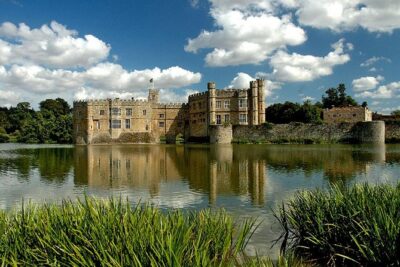
Leeds Castle, Canterbury, Dover & Greenwich Boat ride
Read our review →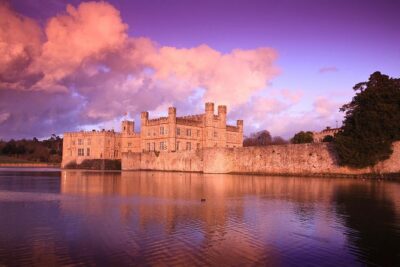
Leeds Castle, Canterbury, Dover & Greenwich Cruise from London
Read our review →
Royal Observatory Greenwich & Prime Meridian Entry Ticket London
Read our review →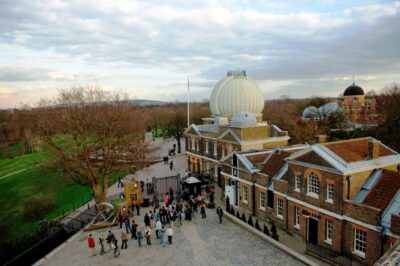
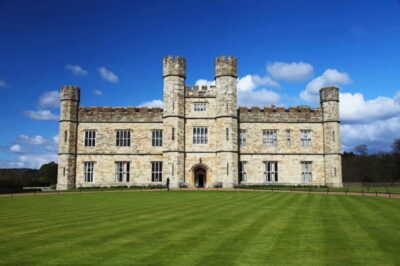
Leeds Castle, Canterbury, Dover, Greenwich & Free Snack Pack
Read our review →Browse the lists this tour appears in