
Reviewed · NATIONAL GALLERY TOURS
Guided Italian Tour of the National Gallery in London
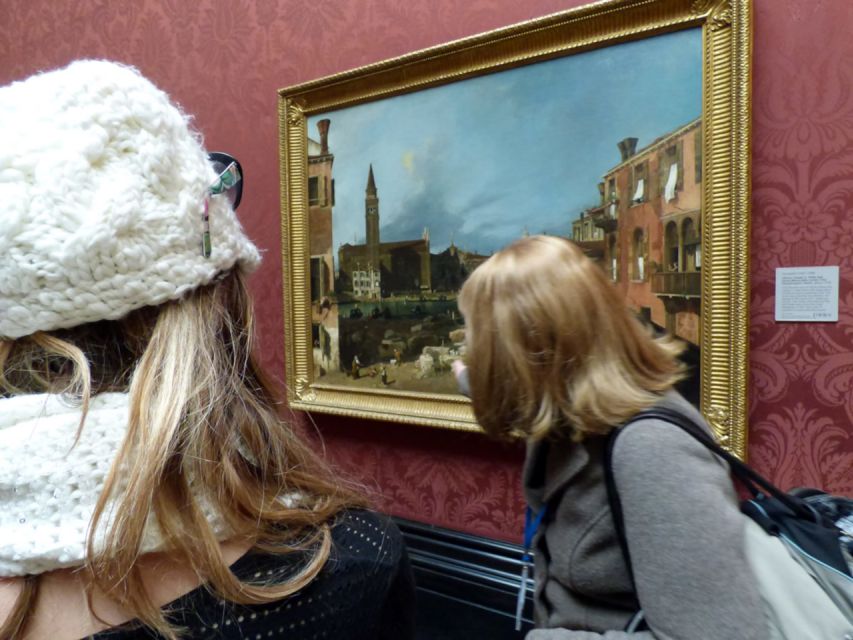
Titian’s Bacchus and Ariadne, Raphael’s Madonna of the Carnation, and Caravaggio’s The Supper at Emmaus are the kind of paintings that can swallow an entire afternoon. This private Italian-language tour gives you two focused hours with a guide who explains what you are seeing instead of leaving you to battle a huge museum map.
I like the customizable route, especially if you already have a favorite artist in mind. I also like the small-group format: at $445 for up to four people, the full-group price works out to $111.25 each, before considering exactly what is included in your booking. The main caution is practical: one February 2024 booking reported a serious failure to connect with the provider at the agreed time, so confirm the meeting details and voucher instructions carefully.
In This Review
- Key points to know before booking
- Why a private Italian visit helps at the National Gallery
- The National Gallery setting and the two-hour pace
- Titian’s color in Bacchus and Ariadne
- Raphael’s Madonna of the Carnation
- Leonardo’s mystery in The Virgin of the Rocks
- Michelangelo’s expressive Deposition
- Caravaggio’s realism in The Supper at Emmaus
- What the private format actually adds
- Guide quality, booking care, and one warning
- Price, accessibility, and what to carry
- Who should book this National Gallery tour
- Should you book it?
- FAQ
- How long does the Italian National Gallery tour last?
- What language does the guide speak?
- Is the tour private?
- Which paintings are highlighted?
- Can I request a particular artist or painting?
- Is the National Gallery wheelchair accessible?
- Can I bring luggage or a large bag?
Key points to know before booking
- Five heavyweight masterpieces: The planned highlights include works by Titian, Raphael, Leonardo da Vinci, Michelangelo, and Caravaggio.
- Italian from start to finish: The live guide speaks Italian, making this a useful choice for Italian-speaking couples, families, and small groups.
- A private two-hour visit: You do not share the guide with strangers, and the route can be adjusted around your interests.
- A strong price for four people: The $445 rate is per group of up to four, not per person, though you should check what admission arrangements are covered.
- Guide Luca receives special praise: Camilla specifically credits Luca with making the National Gallery visit interesting and enjoyable.
- Pack light: Large bags and luggage are not allowed, and the museum is wheelchair accessible.
Why a private Italian visit helps at the National Gallery
The National Gallery contains more than 2,000 paintings. That number sounds impressive until you are standing inside, trying to decide which corridor leads to Leonardo and which room contains Titian. A private guide gives the visit a clear shape.
The advertised route concentrates on major works from the Italian tradition. You will not simply walk past paintings while hearing dates and names. The guide is expected to explain the historical and artistic setting, point out details worth your attention, and connect technique with meaning.
That matters most if you have only two hours. You can spend an entire morning in a major museum and still miss the paintings you came to see. Here, the guide helps you avoid the usual problem of seeing too much and remembering very little.
The tour is available every day, with starting times depending on availability. It is designed for a private group, so you can ask to spend more time with a preferred painter or request a particular work. The experience is not presented as a fixed audio script, which is useful if your group has different levels of interest in art.
More National Gallery visits:
- London: National Gallery Guided Tour with Art Expert Guide
★ 4.7 · 440 reviews - National Gallery of London Museum Tour Semi-Private 8ppl Max
★ 5.0 · 178 reviews - British Museum & National Gallery of London Semi-Private 8ppl Max
★ 5.0 · 168 reviews
The National Gallery setting and the two-hour pace
The National Gallery opened in 1838 under Queen Victoria and holds paintings by many of the best-known names in Western art. That gives the tour plenty of material, but two hours still calls for discipline.
You should think of this as a selected route, not a complete visit to the museum. The five featured works provide a strong backbone, and your guide can add related paintings or respond to your requests if time allows. If you want to see every famous picture in the building, two hours will feel short.
The format should suit you if you prefer depth over quantity. A guide can spend several minutes on one painting, helping you look at color, gesture, composition, light, and subject matter. You leave with a better sense of why these works matter, not just a list of famous names.
The private setup also helps families and mixed groups. Someone interested in Renaissance painting can ask questions without holding up a larger party. A first-time museum visitor can ask for basic explanations, while an art student or regular gallery visitor can request more detail.
Titian’s color in Bacchus and Ariadne
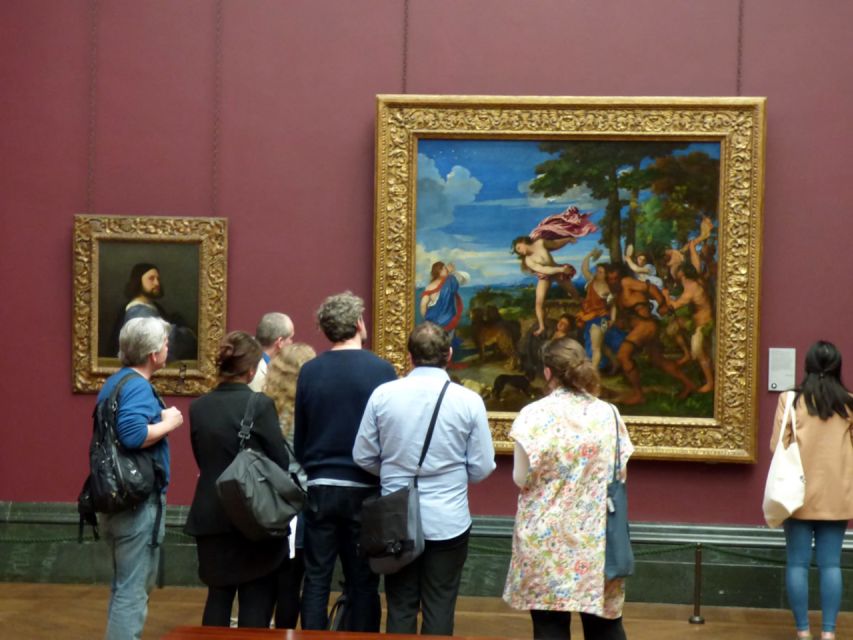
Titian’s Bacchus and Ariadne is a natural early highlight because it rewards close looking. The painting is known for its forceful use of color, and the tour specifically draws attention to Titian’s brilliance in this area.
Your guide can help you see how color creates movement and mood rather than functioning as simple decoration. The mythological subject gives the work drama, but the painting’s impact also comes from the relationship between intense hues, figures, and the surrounding space.
This is the kind of stop where a guide is more useful than a quick label. You may recognize the title and still miss how carefully the color directs your eye. With a private Italian explanation, you can ask about the story, the artistic choices, and the details that make the scene feel urgent.
Do not expect to spend half the tour here unless you request it. Five major paintings in two hours means the pace must keep moving. Still, Titian gives the visit an immediate visual spark and a clear example of how an artist can use color to carry the whole scene.
Raphael’s Madonna of the Carnation
Raphael’s Madonna of the Carnation shifts the mood. The work invites a quieter look at the relationship between the Madonna and Christ Child, with attention to beauty, tenderness, and the idealized style associated with Raphael.
The tour describes this painting as a chance to contemplate divine beauty. That does not mean you need to approach it with specialist knowledge. A good explanation can show you how Raphael balances human feeling with an ideal image, and why his compositions have been admired for centuries.
I like this stop because it prevents the route from becoming a parade of dramatic effects. Titian offers color and movement. Raphael offers calm, balance, and emotional restraint. Seeing them together helps you notice that Renaissance painting is not one single style.
If you are traveling with children or with people who are less comfortable discussing religious art, this is a useful place to ask for context. The guide can explain the subject in plain Italian and connect it to the period’s ideas about devotion and beauty.
More London museums to visit:
- Tower of London and Crown Jewels Exhibition Ticket
★ 4.5 · 6,677 reviews - London: Chelsea Football Club Stadium and Museum Tour
★ 4.8 · 4,576 reviews - Chelsea FC Stadium Tours and Museum
★ 5.0 · 1,908 reviews - London Transport Museum Entrance Ticket
★ 4.5 · 1,323 reviews
Leonardo’s mystery in The Virgin of the Rocks
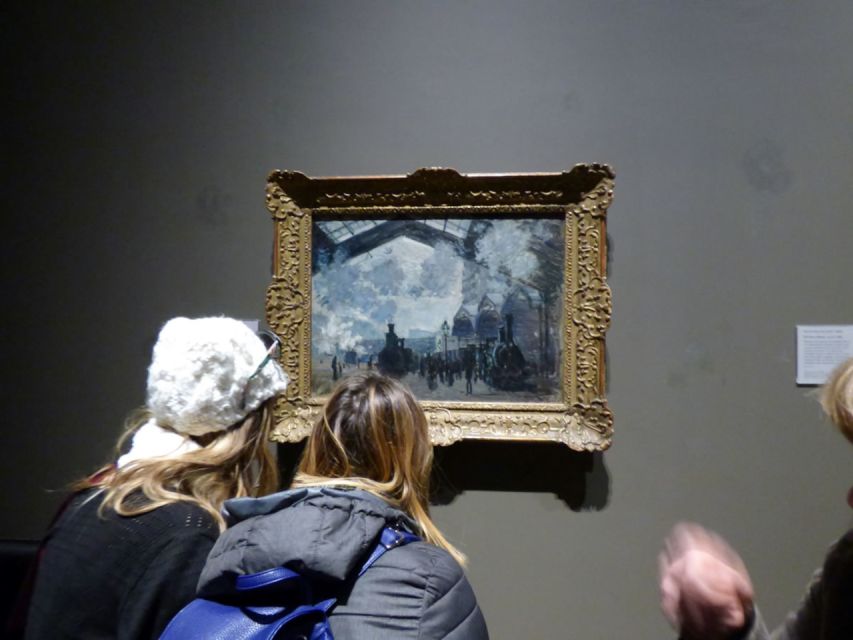
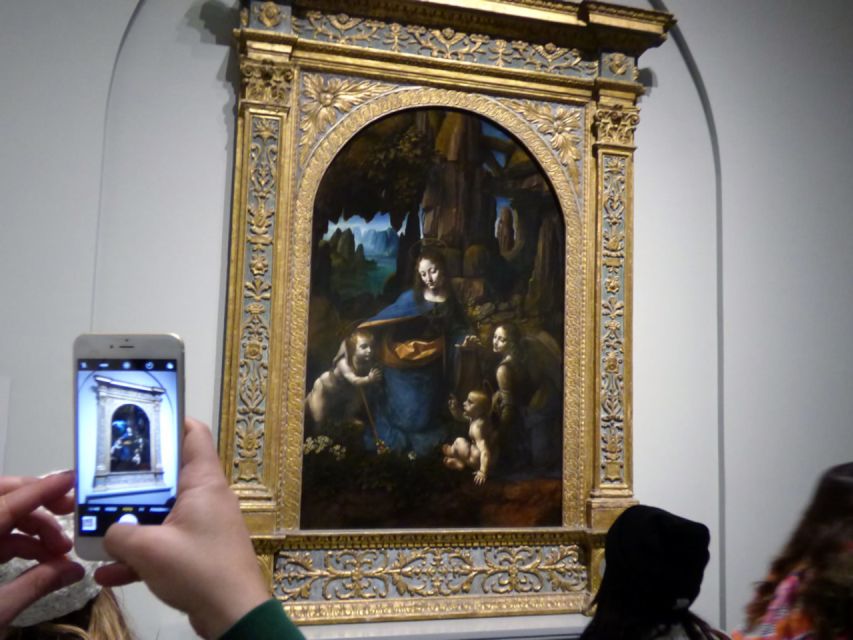
Leonardo da Vinci’s The Virgin of the Rocks brings a different kind of attention. The painting is presented as mysterious, and that description fits a work where atmosphere, figures, and setting invite questions rather than offering a simple visual answer.
Leonardo is often treated as a name everyone already understands. In practice, many visitors benefit from someone showing them how to look at the painting. The guide can direct your eye toward the arrangement of the figures, the unusual rocky setting, and the sense of uncertainty created by the scene.
This is also a good example of why the tour’s historical and artistic explanation matters. A label can identify the artist and subject, but it may not explain why the painting feels so different from a straightforward religious image. You can ask about Leonardo’s approach and spend time with the details that interest your group.
The possible drawback is that mystery takes time. If you want a detailed explanation of every major Leonardo work in the gallery, the two-hour limit will not allow it. Here, the value comes from a focused introduction rather than a complete study.
Michelangelo’s expressive Deposition
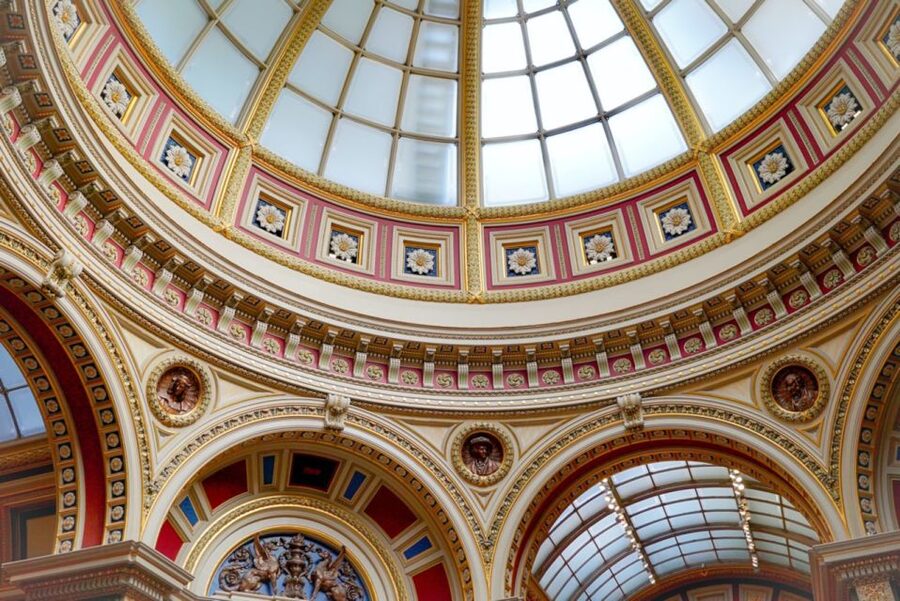
Michelangelo’s The Deposition adds expressive intensity to the route. The subject itself is solemn, and the work gives the guide a chance to discuss how emotion can be carried through the arrangement and physical presence of the figures.
Michelangelo is often associated first with sculpture and the Sistine Chapel. This painting gives you another way to consider his artistic power. Look for the sense of weight, strain, and feeling in the scene. A guide can help you connect those qualities to Michelangelo’s approach to the human form.
This stop should appeal to visitors who want more than a tour of pretty pictures. The painting asks you to slow down and consider grief, movement, and the way bodies communicate emotion. It also gives the route a stronger dramatic center after the quieter mood of Raphael.
Because the tour is private, you can ask the guide to compare Michelangelo with Raphael or Leonardo. Those comparisons are often more useful than isolated facts. You begin to see differences in line, mood, structure, and the treatment of people.
Caravaggio’s realism in The Supper at Emmaus
Caravaggio’s The Supper at Emmaus closes the featured route with dramatic realism. His approach is direct and physical, and the painting can feel immediate even when you know little about its religious subject.
The title points to a biblical moment, but the power comes from the way the scene is presented. Caravaggio’s figures and gestures bring the event close to the viewer. Your guide can explain how realism, lighting, and theatrical staging work together to make the scene feel like it is unfolding in front of you.
This is a smart final stop because it gives you a clear contrast with the Renaissance works earlier in the visit. Titian’s color, Raphael’s balance, Leonardo’s mystery, Michelangelo’s emotional force, and Caravaggio’s realism show different ways artists can control your attention.
I would ask the guide to compare Caravaggio with at least one earlier painter. That simple request can turn five separate stops into a story about changing artistic priorities. You get a better sense of how Western painting developed instead of merely collecting famous titles.
What the private format actually adds
Private does not automatically mean better, but here it solves several common museum problems. You can ask questions without worrying about a group schedule, and the guide can adjust the amount of explanation to match your interests.
The itinerary is explicitly customizable. If you want more Leonardo and less Michelangelo, ask. If your group has come mainly for Caravaggio, request extra time there. The guide is also willing to accommodate a particular work or artist, though the two-hour duration still places a natural limit on how much can be added.
The group size is capped at four people. That is small enough for a more personal conversation and large enough for a family or two couples. At the full group size, the cost becomes easier to justify. For one or two people, the same $445 price is much harder to defend unless the Italian-language service and private attention are especially important to you.
The tour includes a professional art guide, a customizable itinerary, and historical and artistic insights. The supplied details do not clearly state whether museum admission is included, so check that point before paying. Do not assume the guide fee covers every cost connected with entry.
Guide quality, booking care, and one warning
The strongest praise attached to this experience concerns the guide. Luca is specifically credited with making the National Gallery visit interesting, and two other Italian-language bookings describe the guide as excellent or very good. That matches the main reason to book this tour: the guide’s ability to turn a large collection into a personal route.
The overall score is 4.4 from four published ratings, with three five-star results and one one-star result. The negative experience should not be brushed aside. In February 2024, Daniele reported calling at the agreed time and being told that the call center could not locate the provider, despite payment having been made in advance.
That is a serious operational concern, even though the other recorded experiences were highly positive. I would save the voucher offline, confirm the meeting instructions before the day, and allow extra time to reach the meeting point. The meeting instruction is simply to show your voucher to the guide, and no precise public meeting location is provided in the supplied details, so clarification is sensible.
Free cancellation is available up to 24 hours before the tour for a full refund. You can also reserve and pay later, which reduces the financial risk while your London plans are still changing.
Price, accessibility, and what to carry
The price is $445 per group of up to four. If four people join, that is $111.25 per person. If only two people book, the effective price is $222.50 each, making this a premium experience.
The value depends on your priorities. You are paying for a private Italian-speaking guide, a flexible route, and concentrated attention on major paintings. You are not paying for a full-day museum seminar. If you want an expert-led introduction in Italian and have limited time, the cost can make sense. If you are comfortable exploring independently in English, the price is harder to justify.
The museum is listed as wheelchair accessible, which is useful for visitors who need step-free access. Large bags and luggage are not allowed, so do not arrive with airport cases or oversized day bags. Plan to carry only what you need for the visit.
The tour lasts two hours. Check availability for starting times, since the supplied details do not list a single fixed departure hour. The experience operates every day, which gives you more room to fit it around other London plans.
Who should book this National Gallery tour
I would recommend it most strongly to Italian-speaking visitors who want the art explained in their own language. It also suits couples and families who prefer a private conversation to a large scheduled group.
You should book it if at least one of these describes your plans:
- You have only two hours and want to see major Italian paintings.
- You would like to request a specific artist or artwork.
- You want explanations of technique and historical setting, not just names and dates.
- Your group includes people with different levels of art experience.
- Four people can share the $445 group price.
I would think twice if you are traveling alone, watching every pound, or hoping to cover the entire National Gallery. The route is selective by design. You will see important works, but you will not tour all 2,000-plus paintings in two hours.
Should you book it?
Book this tour if an Italian-speaking guide and a private, adjustable visit matter more to you than getting the lowest possible museum cost. The selected paintings give you a strong sequence, from Titian’s color to Caravaggio’s realism, while the small group lets you ask questions and change the emphasis.
The price is most reasonable for four people. Before booking, confirm the exact meeting point, what the voucher covers, and whether admission is included. With those details settled, this is a focused way to meet five major masters without getting lost in the National Gallery’s enormous collection.
FAQ
How long does the Italian National Gallery tour last?
The tour lasts two hours.
What language does the guide speak?
The live tour guide speaks Italian.
Is the tour private?
Yes. It is offered for a private group of up to four people.
Which paintings are highlighted?
The featured works are Titian’s Bacchus and Ariadne, Raphael’s Madonna of the Carnation, Leonardo da Vinci’s The Virgin of the Rocks, Michelangelo’s The Deposition, and Caravaggio’s The Supper at Emmaus.
Can I request a particular artist or painting?
Yes. The itinerary is customizable, and the guide can accommodate a preference for a specific work or artist.
Is the National Gallery wheelchair accessible?
Yes. The activity information lists the tour as wheelchair accessible.
Can I bring luggage or a large bag?
No. Luggage and large bags are not allowed.
Latest arrivals on the London list
- Stonehenge Special Access Guided Morning Tour from London★ 4.5 · 3 reviews
- Easy Access Tower of London Royal Secrets & Scandals Tour★ 5.0 · 3 reviews
- Shoreditch & East London Walking Tour with a Local, Custom & Private★ 5.0 · 3 reviews
- Madame Tussauds London Fast Track and Champagne Experience★ 3.5 · 3 reviews
- London Private Brixton Tour with a Local – Culture & Stories★ 4.9 · 3 reviews
- Private Full Day Tour – Fast Track Tower of London and Lunch★ 4.6 · 3 reviews
- Private transfer from London Heathrow Airport to Southampton★ 5.0 · 3 reviews
- London Soho District – Guided Walking Tour 12 guests 2,5h★ 4.8 · 3 reviews
National Gallery Tours, compared.
National Gallery Guided Tour with Art Expert Guide
Read our review →
National Gallery of London Museum Tour Semi-Private 8ppl Max
Read our review →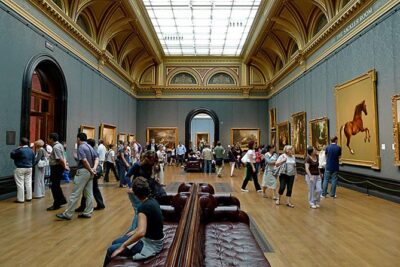
British Museum & National Gallery of London Semi-Private 8ppl Max
Read our review →
Official National Gallery Highlights Guided Tour
Read our review →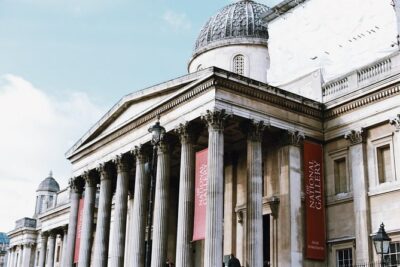
The National Gallery of London – Exclusive Guided Museum Tour
Read our review →
National Gallery of London Masterpieces Guided Tour
Read our review →
Browse the lists this tour appears in