
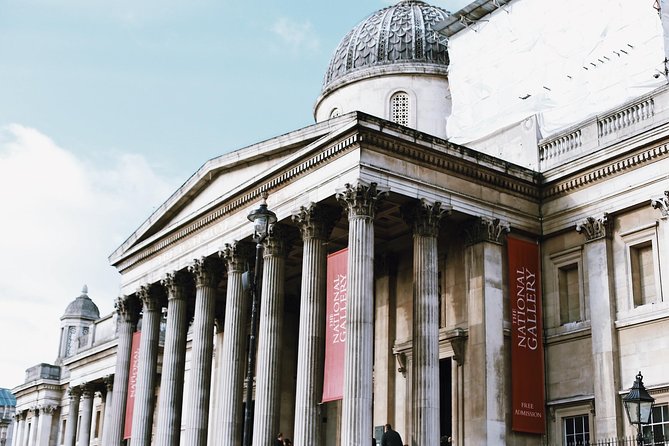
Reviewed · NATIONAL GALLERY TOURS
The National Gallery of London – Exclusive Guided Museum Tour
The best thing about this National Gallery tour is that it turns a huge collection into a clear, human story. Instead of wandering through 2,300 paintings and wondering what matters, you spend two and a half hours with a private guide who can explain why a work is important, what to look for, and how artists changed over time.
I like the freedom to request paintings that matter to you, along with the guide’s ability to point out works you might otherwise pass by. I also like the mix of famous sights, such as Van Gogh’s Sunflowers, and less familiar works, such as Jan van Eyck’s The Arnolfini Portrait. The main consideration is the price: at $108.44 per person, this makes the most sense if you want real discussion rather than a quick look around.
In This Review
- Key points to know
- Meeting your guide at Trafalgar Square
- Why a guide helps inside a 2,300-painting museum
- Famous paintings, with time to actually see them
- Jan van Eyck and the pleasure of an unexpected stop
- How the chronological route makes sense of art
- What the guide adds beyond labels
- The pace, group format, and personal attention
- Practical details before you go
- Who should book this National Gallery tour
- Is the $108.44 price worth it?
- FAQ
- Where does the tour start and finish?
- How long does the tour last?
- Is this a private tour?
- Which artists and paintings might I see?
- Is admission included?
- Is the tour wheelchair accessible?
- What is the cancellation policy?
Key points to know
- A private guide shapes the route: Tell your guide which artists or periods interest you before you begin.
- See centuries of art in 2.5 hours: The route can run from the 1300s to the 1900s, with a useful sense of artistic change.
- Famous paintings get fresh context: Van Gogh, Botticelli, Monet, Rembrandt, Vermeer, and da Vinci fit into a larger story.
- The guide focuses on details: Look for lighting, perspective, technique, symbolism, and small features easy to miss alone.
- The tour ends with a plan: Your guide recommends how to continue through the gallery after the formal visit.
- Pack light: Large bags and suitcases are not permitted, and security checks can still cause delays.
Meeting your guide at Trafalgar Square
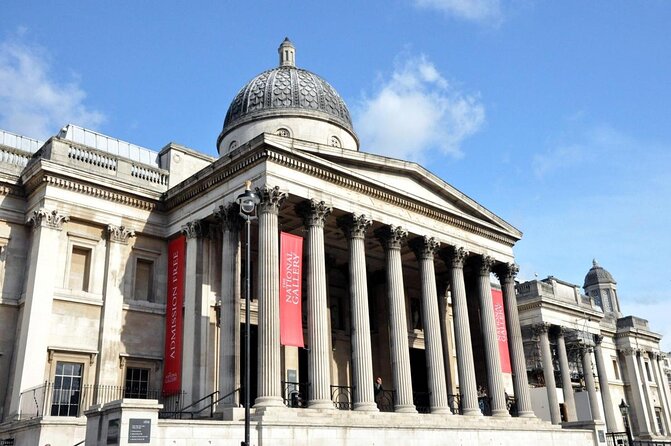
The tour begins at the National Gallery’s front entrance on Trafalgar Square, one of London’s easiest meeting points. The building is hard to miss, and the gallery sits near public transportation, so you do not need a hotel transfer or a complicated trip across town.
You meet your guide outside, then discuss what you want from the visit. This opening conversation matters. If you already love Impressionism, ask for more Monet. If Renaissance painting feels remote, say so. A private format gives the guide room to adjust the pace and explain the art in a way that suits your group.
The tour is offered in English. It is designed for your group alone if you book the fully private option. A lower-priced semi-private choice is also available, but the exclusive guide and wheelchair-friendly arrangements do not apply to that option, so check the exact booking choice carefully.
More National Gallery visits:
- London: National Gallery Guided Tour with Art Expert Guide
★ 4.7 · 440 reviews - National Gallery of London Museum Tour Semi-Private 8ppl Max
★ 5.0 · 178 reviews - British Museum & National Gallery of London Semi-Private 8ppl Max
★ 5.0 · 168 reviews
Why a guide helps inside a 2,300-painting museum
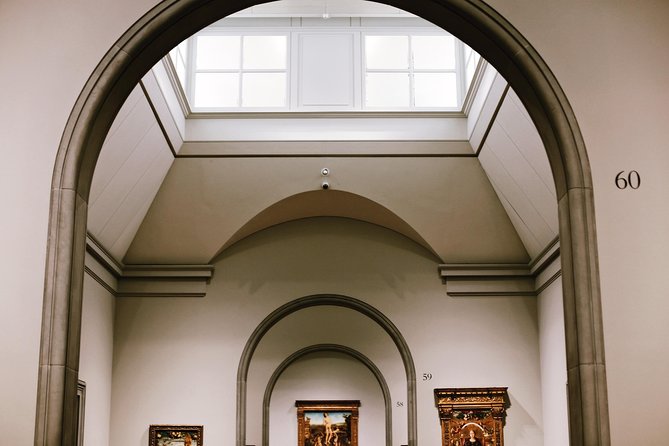
The National Gallery is free to enter for its main collection, but free admission does not make it simple. The museum holds more than 2,300 paintings, covering roughly six centuries. You can spend hours walking from room to room and still leave without a sense of how the works connect.
A guide gives your visit a backbone. You may begin with early European painting, move through the Renaissance, examine Dutch masters, and finish with nineteenth or early twentieth-century work. The point is not to race through every room. It is to spend enough time with selected paintings that you understand what your eyes are seeing.
I find this approach especially useful if you are new to art museums. You do not need to know the difference between a Florentine altarpiece and a Dutch interior before you arrive. The guide supplies the basic terms, then gets you looking. You may learn how an artist creates depth, directs your eye with light, or uses a small object to suggest a larger story.
The strongest guides use questions rather than giving a long speech. Wesley, for example, was praised for asking the group what it noticed and thought before adding his own explanation. That style keeps you involved. You are not simply collecting dates and names. You are learning how to look.
Famous paintings, with time to actually see them
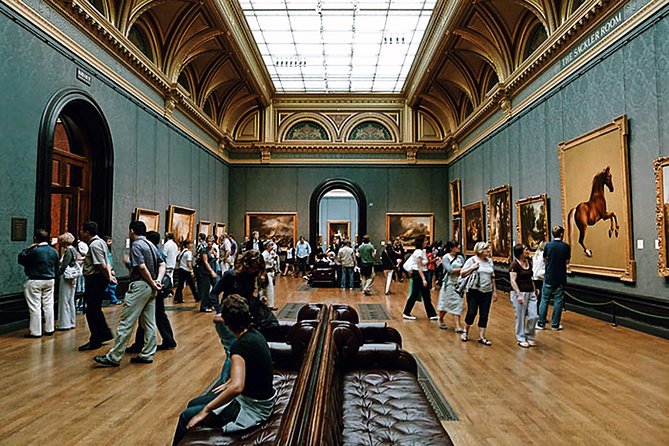
Van Gogh’s Sunflowers is an obvious stop, and rightly so. A guide can move the conversation past the familiar label and toward the painting itself: the thick paint, the force of the brushwork, the limited color range, and the tension between flowers in full bloom and those beginning to fade.
The value of a guide is often greatest after the first glance. You already know that Sunflowers is famous. Your guide helps you notice why the picture has such force and how Van Gogh’s choices shape your response.
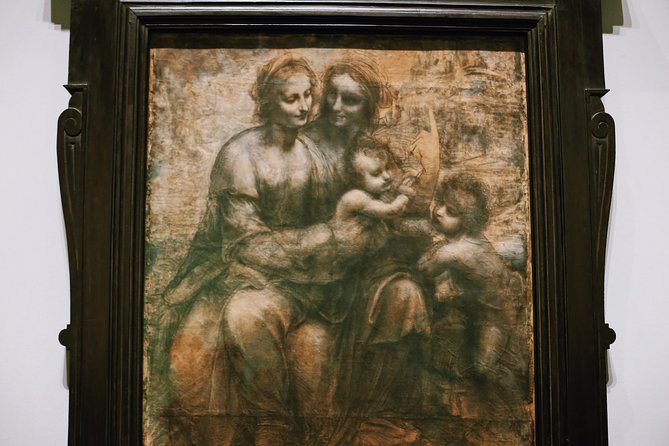
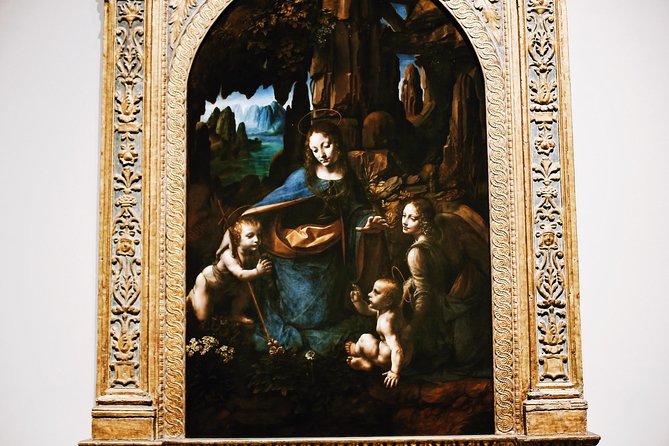
The same is true of Botticelli, Monet, Rembrandt, Vermeer, and Leonardo da Vinci. These names can become museum wallpaper when you see too many masterpieces in one day. A good explanation gives each artist a place in the larger story and shows what makes the work distinctive.
One especially useful feature is comparison. A guide may place different painters or periods into conversation, helping you see changes in color, composition, religious subject matter, portraiture, or everyday life. Becky was praised for comparing major works and creating a chronology that helped make later art easier to understand. That kind of structure is useful far beyond this one museum.
Jan van Eyck and the pleasure of an unexpected stop
A private tour should not consist only of the paintings you already recognize. Jan van Eyck’s The Arnolfini Portrait is a good example of why you want room for surprises.
The picture rewards slow looking. A guide can direct your attention to the objects, clothing, room, mirror, gestures, and careful surface detail. You may begin by seeing a formal portrait, then start asking what the objects suggest about status, marriage, trade, belief, and daily life.
This is the sort of painting many people might walk past without help. It does not have the instant shock of Van Gogh’s color. Its pleasures build as you notice more. The guide’s commentary gives you a reason to stay.
That balance between major attractions and quieter works is one of the tour’s best features. Sheldon was praised for showing favorite pieces that his group might never have selected alone, while still offering detailed explanations of better-known paintings. If you tell your guide to include personal favorites, also leave room for a few of the guide’s own choices.
More London museums to visit:
- Tower of London and Crown Jewels Exhibition Ticket
★ 4.5 · 6,677 reviews - London: Chelsea Football Club Stadium and Museum Tour
★ 4.8 · 4,576 reviews - Chelsea FC Stadium Tours and Museum
★ 5.0 · 1,908 reviews - London Transport Museum Entrance Ticket
★ 4.5 · 1,323 reviews
How the chronological route makes sense of art
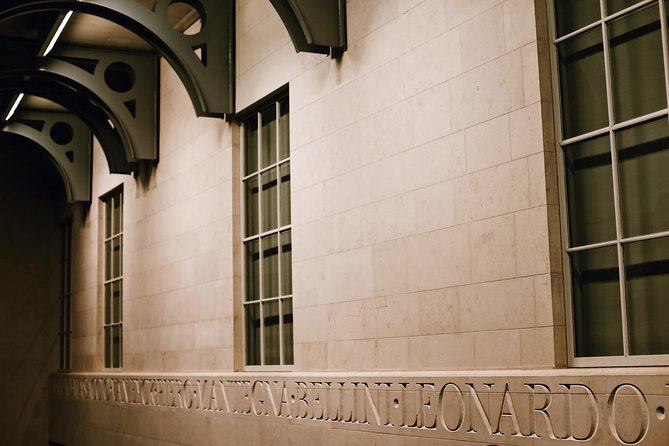
The collection reaches from the 1300s through the 1900s. In two and a half hours, you will not study every period in equal detail, but you can gain a useful outline of how European painting developed.
Early works can show you the importance of religious subjects, symbolic details, and formal composition. Renaissance art brings greater attention to perspective, anatomy, space, and the human figure. Later Dutch painting can shift the focus toward portraits, interiors, objects, and ordinary life.
As you move toward Monet and Van Gogh, the discussion can turn to changing ideas about color, light, brushwork, and the role of the artist. The tour works best when you treat this as a guided introduction rather than an academic course. You will not become an art historian in 150 minutes, but you can leave with a set of questions that makes the rest of the museum more rewarding.
Several guides were praised for giving this chronological shape to the visit. Matilda, Jamie, Sheldon, and Becky were each described as making connections across periods rather than treating each painting as an isolated object. That is an important distinction. The gallery becomes easier to remember when you understand the sequence.
What the guide adds beyond labels
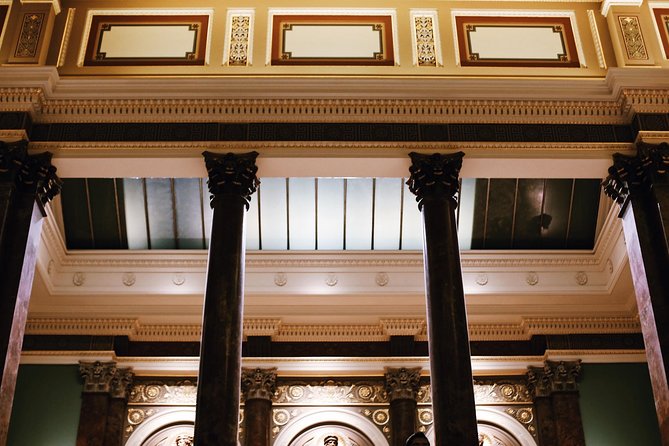
Museum labels give you names, dates, and basic facts. They rarely tell you where to stand, which corner deserves attention, or why a painting changed the course of art. Your guide can fill in those gaps.
Jamie was praised for pointing out details in lighting, perspective, and composition. Another guide used an iPad to show extra information that helped explain a painting. These tools are not the point of the tour, but they can help when a detail is difficult to see or when a comparison adds clarity.
The best commentary also includes artists as people. You may hear about ambitions, working methods, patrons, rivalries, and the problems artists faced. This human context makes the paintings less remote. It can also add humor. Jamie was even willing to sing a song connected to a painting, a small detail that shows how a relaxed guide can make a formal museum feel more approachable.
You should expect plenty of standing and walking. One rating specifically noted that the tour involved a fair amount of walking, though it felt worthwhile. Wear sensible shoes and be ready to keep moving between rooms, especially if the museum is busy.
The pace, group format, and personal attention
Two and a half hours is a good length for a first visit. A shorter tour might feel rushed, while a full day inside a museum can leave you tired and unable to absorb much. Here, the guide can spend enough time on major works without trying to cover the entire building.
The private format is valuable for families and mixed-interest groups. One person can ask about technique, another about history, and someone else can admit that a famous painting does not make sense. The guide can change the explanation rather than delivering the same speech to everyone.
This also helps if your group includes both experienced art lovers and beginners. You can ask for more detail when a painting catches your attention, then move on when it does not. The guide may also help with practical needs such as finding the coat check or bathrooms, as one particularly helpful experience demonstrated.
The advertised price of $108.44 per person is not a bargain museum admission. The gallery’s main collection does not charge a separate admission fee, and temporary exhibitions are not included. You are paying for time, planning, interpretation, and a private expert who helps you use those 150 minutes well.
For one person or a small group, that can feel expensive. For a family or group that would otherwise spend half a day wandering without a plan, the cost may be easier to justify. Group discounts are available, so compare the total price for your party rather than judging the per-person figure alone.
Practical details before you go
Bring your mobile phone and make sure the booking includes a complete mobile number with country code. The operator requires this contact information, which is important if meeting arrangements change.
Pack only what you need. Large bags and suitcases are not allowed inside. Handbags and small, thin backpacks can pass through security, but increased security measures may create lines even when a tour is described as having quick access.
Dress appropriately for museum entry. Some rooms require very quiet behavior or limit speaking, and the guide will explain those rules before you enter. This is not a drawback, but it means the tour cannot be a nonstop conversation in every gallery.
Occasional museum closures or delayed opening times can happen without warning. If opening is delayed by more than an hour, an alternative is provided, but the stated terms do not promise a refund or discount. Leave some flexibility in your day if the gallery is a major priority.
The tour ends back at the National Gallery. There is no hotel pickup or drop-off, so plan to reach Trafalgar Square on your own by public transportation, taxi, or Uber. The main tour is wheelchair friendly, but that provision does not apply to the semi-private option.
You can cancel for a full refund up to 24 hours before the start time. Changes or cancellations inside that window are not accepted for a refund.
Who should book this National Gallery tour
I would choose this tour if you have limited time in London, feel unsure how to approach art, or want more than a checklist of famous paintings. It is also a strong choice for families, couples with different interests, and anyone who has visited large museums before and wants a more focused route.
You should book it if you like conversation and are willing to tell the guide what interests you. Names repeatedly praised in the available feedback include Matilda, Jamie, Sheldon, Becky, Steph, Jake, Wesley, Sacha, Luis, and Laurence M. Guide availability can vary, so treat those names as examples of the team’s praised style, not a guarantee.
I would skip the tour if you prefer complete solitude, want to examine every room at your own pace, or mainly want to see a temporary exhibition. The tour does not include temporary exhibitions, and its purpose is to select and explain key works from the main collection.
Is the $108.44 price worth it?
For a casual museum stop, probably not. You can enter the main collection without paying a separate admission charge and wander on your own.
For a serious first look at the National Gallery, I think the price can be fair. You get a private guide, a personalized route, context across six centuries, and practical advice for continuing alone after the formal tour. The biggest value is not simply seeing Sunflowers or The Arnolfini Portrait. It is learning how to look at the next painting without needing a guide beside you.
The tour earns its price when you use the personal format well. Arrive with two or three artists in mind, ask questions, and let the guide add a few unexpected works. If you do that, you should leave with both memorable paintings and a better plan for exploring the rest of the collection.
FAQ
Where does the tour start and finish?
The tour starts at the National Gallery front entrance at Trafalgar Square, London WC2N 5DN. It ends back at the same meeting point.
How long does the tour last?
The guided museum visit lasts approximately 2 hours and 30 minutes.
Is this a private tour?
Yes, the standard option is a private activity for your group only. The tour guide exclusively for your group does not apply if you select the semi-private option.
Which artists and paintings might I see?
The tour can include works by Botticelli, Monet, Rembrandt, Vermeer, Van Gogh, da Vinci, and Jan van Eyck. Specific works named include Van Gogh’s Sunflowers and Jan van Eyck’s The Arnolfini Portrait. You can also discuss personal interests with your guide.
Is admission included?
The main National Gallery collection has no separate admission charge. Temporary exhibitions are not included in the tour price.
Is the tour wheelchair accessible?
The standard private tour is wheelchair friendly. This does not apply if you choose the semi-private option.
What is the cancellation policy?
You can cancel at least 24 hours before the local start time for a full refund. Cancellations or changes made less than 24 hours before the start time are not accepted for a refund.
Latest arrivals on the London list
- Heathrow Airport to London Arrival Transfer★ 4.5 · 50 reviews
- London Beatles Tour★ 5.0 · 50 reviews
- One Way Taxi Transfer from London to Gatwick Airport★ 5.0 · 51 reviews
- London: Hidden Baker Street Tube Station Tour★ 4.7 · 51 reviews
- City & Secrets: Explore London’s Hidden Gems★ 5.0 · 51 reviews
- London Christmas Lights Open-Top Bus Tour. 2025 Early Bird★ 3.6 · 51 reviews
- 4 hour London Private Tour, with your own Black Cab Tour Guide★ 5.0 · 51 reviews
- The Beatles Magical History Black Taxi Tour London★ 5.0 · 51 reviews
National Gallery Tours, compared.
National Gallery Guided Tour with Art Expert Guide
Read our review →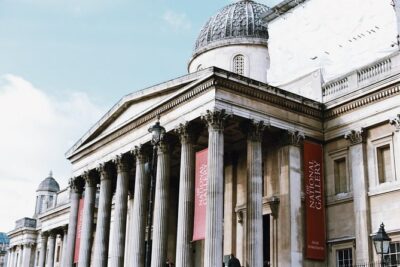
National Gallery of London Museum Tour Semi-Private 8ppl Max
Read our review →
British Museum & National Gallery of London Semi-Private 8ppl Max
Read our review →
Official National Gallery Highlights Guided Tour
Read our review →
National Gallery of London Masterpieces Guided Tour
Read our review →

Browse the lists this tour appears in